Kyoto to Koyasan: 6 Essential Tips for Your 2026 Visit
Plan your trip from Kyoto to Koyasan with our 2026 guide. Includes direct bus schedules, train transfer tips, a one-day itinerary, and temple lodging advice.
On this page
Getting to Koyasan from Kyoto takes around 2.5 to 3 hours depending on the route you choose. The journey involves at least one major transfer — either through Osaka's Namba district or via a seasonal direct highway bus — plus a short cable car ride up the mountain. This guide covers every step for 2026, including exact fares, platform directions, and the one transfer point that trips up most first-timers.
Mount Koya (Koyasan) sits 800 metres above sea level in Wakayama Prefecture, about 100 kilometres south of Kyoto. Founded by the Buddhist monk Kobo Daishi in 819, it is one of Japan's holiest sites and a UNESCO World Heritage destination. Whether you plan a day trip or an overnight temple stay, arriving with a clear route in mind makes the difference between a smooth pilgrimage and a rushed scramble.
How to Get to Koyasan from Kyoto: Train and Bus Options
There are two main ways to reach Koyasan from Kyoto in 2026: the seasonal direct highway bus and the year-round train route via Osaka. The bus is the simpler option; the train is more flexible and runs daily regardless of season.
The Kyoto–Koyasan Direct Highway Bus (Keihan Bus) runs from April through November. It departs from the Hachijoguchi (south) exit of Kyoto Station and arrives at Koyasan's Senjuinbashi bus stop in about 160 minutes with no transfers. Fares are 2,500–2,800 yen one-way, and advance reservations are required — book at least a day ahead for weekdays and two weeks ahead for autumn weekends. Outside this window, or if the bus is fully booked, you must use the train.
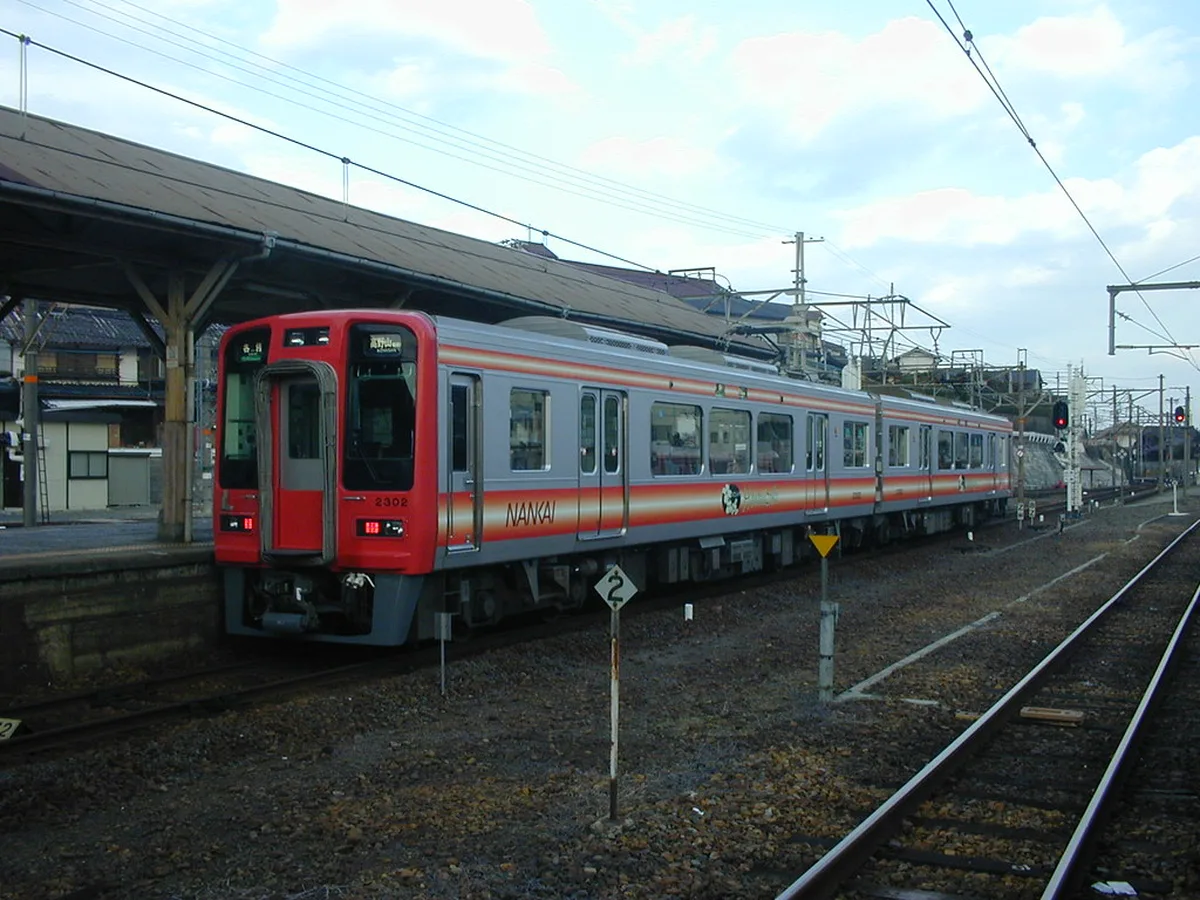
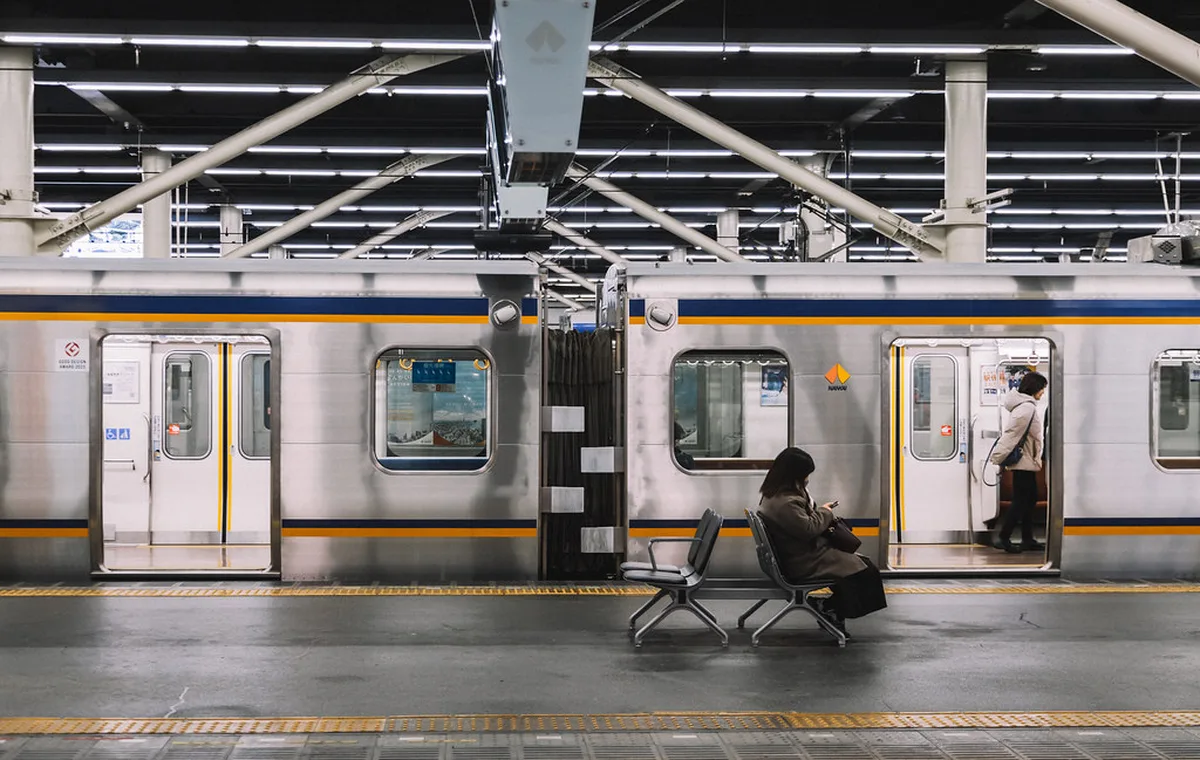
The year-round train route goes Kyoto Station → Osaka Station by JR Special Rapid (28 minutes, 560 yen) → Umeda Subway to Namba Station (9 minutes, 230 yen) → walk to Nankai Namba Station → Nankai Koya Line Limited Express to Gokurakubashi (80 minutes, 1,650 yen) → cable car to Koyasan Station (5 minutes, 390 yen). Total one-way: approximately 2,830 yen and 2 hours 30 minutes. The JR Pass covers only the Kyoto–Osaka segment; the Nankai Koya Line and cable car are private railways not included in the pass.
A shinkansen alternative saves a few minutes on the Kyoto–Osaka leg (12 minutes, Kyoto to Shin-Osaka, 1,420 yen unreserved) but costs significantly more. It is useful if you are carrying bulky luggage and want a guaranteed seat. From Shin-Osaka, take the Midosuji Subway Line to Namba Station (15 minutes, 280 yen).
| Leg or Option | Duration | Approx Fare | Notes |
|---|---|---|---|
| Kyoto Station → Osaka Station (JR) | 28 minutes | 560 yen | Special Rapid; JR Pass valid |
| Osaka Station → Namba (Subway Midosuji) | 9 minutes | 230 yen | From Umeda; requires transfer |
| Namba Subway → Nankai Namba (walk) | ~8 minutes | Free | Follow Midosuji Ave south; Takashimaya landmark |
| Nankai Namba → Gokurakubashi (Koya Line) | 80 minutes | 1,650 yen + 780 yen surcharge | Limited Express; private railway |
| Gokurakubashi → Koyasan Station (cable car) | 5 minutes | 390 yen | Steep mountain ascent |
| Train Total (one-way) | ~2 hrs 30 min | ~2,830 yen | Year-round; most flexible |
| Kyoto → Koyasan (direct bus, seasonal) | 160 minutes | 2,500–2,800 yen | April–November only; advance booking required |
| Kyoto → Shin-Osaka (Shinkansen) | 12 minutes | 1,420 yen (unreserved) | Cost-premium for seat guarantee |
The Namba Transfer: Navigating from Subway Namba to Nankai Namba
The Namba transfer is where most Kyoto travellers lose time. There are three separate "Namba" stations in the same district — JR Namba, Subway Namba (Midosuji Line), and Nankai Namba — and they are not connected by a single corridor. Getting this step wrong can add 20 minutes or more to your journey.
From Subway Namba Station (Midosuji Line), exit via Exit 5 and walk south along Midosuji Avenue for roughly 8 minutes. You will pass the Takashimaya department store on your right; Nankai Namba Station is in the same building complex at the far southern end. Follow signs for "Nankai" — they appear once you reach street level. If you arrive at JR Namba (Osaka Loop Line), the walk to Nankai Namba is slightly longer, around 12 minutes northeast via Namba Parks.
Once inside Nankai Namba Station, purchase your Koya Line ticket at the ground-floor ticket machines or at the staffed window. The Limited Express (Koya-go or Rinkan-go services) departs from platforms 7 or 8 on the upper concourse. A dedicated Limited Express surcharge of 780 yen is added on top of the base fare; without it you can take the Express service for 870 yen total but must transfer to a local train at Hashimoto Station. If you have large bags, stow them in the overhead rack — the mountain terrain at the other end makes rolling luggage impractical, so consider leaving suitcases in coin lockers at Kyoto Station or Nankai Namba before boarding.
Luggage storage: Coin lockers at Kyoto Station and Nankai Namba are essential for day-trippers. A Koyasan temple stay (shukubo) is best enjoyed light — leave rolling luggage behind and carry only an overnight bag. The mountain paths, especially near Okunoin cemetery, are narrow and steep, making large suitcases impractical.
Koyasan World Heritage Ticket: If you are taking the train from Kyoto, buy the Koyasan World Heritage Ticket (2,860 yen, valid 2 days) instead of separate tickets. It covers round-trip Nankai Koya Line + cable car + unlimited Rinkan buses on the mountain, plus 20% off the four main temple sites. The Limited Express upgrade (3,400 yen) guarantees a comfortable outbound seat — worthwhile if you are traveling on a crowded autumn weekend.
A Complete One-Day Koyasan Itinerary from Kyoto
An 08:00 departure from Kyoto puts you on the mountain by 10:30, giving you a full six hours before you need to start the return journey. That is enough time to walk the main cemetery, eat a Buddhist lunch, and visit the temple complex without feeling rushed. Missing the last cable car down (around 21:00) leaves you stranded, so build your return time around a 17:00 departure from Koyasan Station.
Start at Okunoin Cemetery by taking the Rinkan bus from Koyasan Station to the Okunoin-mae stop (bus stop 7, about 15 minutes). Walk the two-kilometre cedar-lined path toward the Torodo Lantern Hall, arriving at the inner mausoleum by 11:00. Photography and food are prohibited beyond the final Gobyo-bashi bridge. Allow 60–90 minutes here. From Okunoin-mae, take the bus back toward the town centre and stop at a shojin ryori restaurant by 12:30.
Spend the afternoon at Kongobuji Temple and the Danjo Garan complex complex, which are within walking distance of each other in the town centre. our Koyasan itinerary for the afternoon fits neatly into two to three hours. Exit the Garan by 16:00, then pick up a return bus to Koyasan Station for the 17:00 cable car down. The last Limited Express back toward Osaka departs Gokurakubashi around 17:09 on most days — check the Nankai timetable for the current 2026 schedule.
- 08:00 — Depart Kyoto Station (train or direct bus)
- 10:15–10:30 — Arrive Koyasan Station via cable car
- 10:30–12:00 — Okunoin Cemetery and Torodo Lantern Hall
- 12:00–13:00 — Shojin ryori lunch in the town centre
- 13:00–14:30 — Kongobuji Temple and gardens
- 14:30–16:00 — Danjo Garan complex and Konpon Daito pagoda
- 16:15 — Bus back to Koyasan Station
- 17:00 — Cable car descent, then Nankai Koya Line toward Osaka
- 20:00–20:30 — Return to Kyoto
Top Attractions: Okunoin, Kongobuji, and Danjo Garan
Okunoin Cemetery is the most sacred ground in all of Koyasan. Over 200,000 memorial stones and lanterns line the two-kilometre approach through cedar trees estimated at 700 years old. At the inner sanctum, the Torodo Lantern Hall houses two flames said to have burned continuously for more than 1,000 years. Admission to the approach is free; the hall itself is open 08:00–17:00 (08:30–16:30 November–April). Many visitors find the atmosphere more powerful in the early morning before large tour groups arrive.
Kongobuji Temple is the administrative headquarters of the Shingon sect of Buddhism and the spiritual heart of Koyasan's 117 temples. Built in its current form in 1593 by Toyotomi Hideyoshi, the complex features intricate sliding-door paintings and the Banryutei rock garden — Japan's largest at 2,340 square metres, with 140 stones arranged to represent two dragons. Admission is 1,000 yen; hours are 08:30–17:00. For those who want to deepen their understanding of Shingon practice, the temple offers a brief ritual called Jukai (receiving Buddhist precepts) during visiting hours.
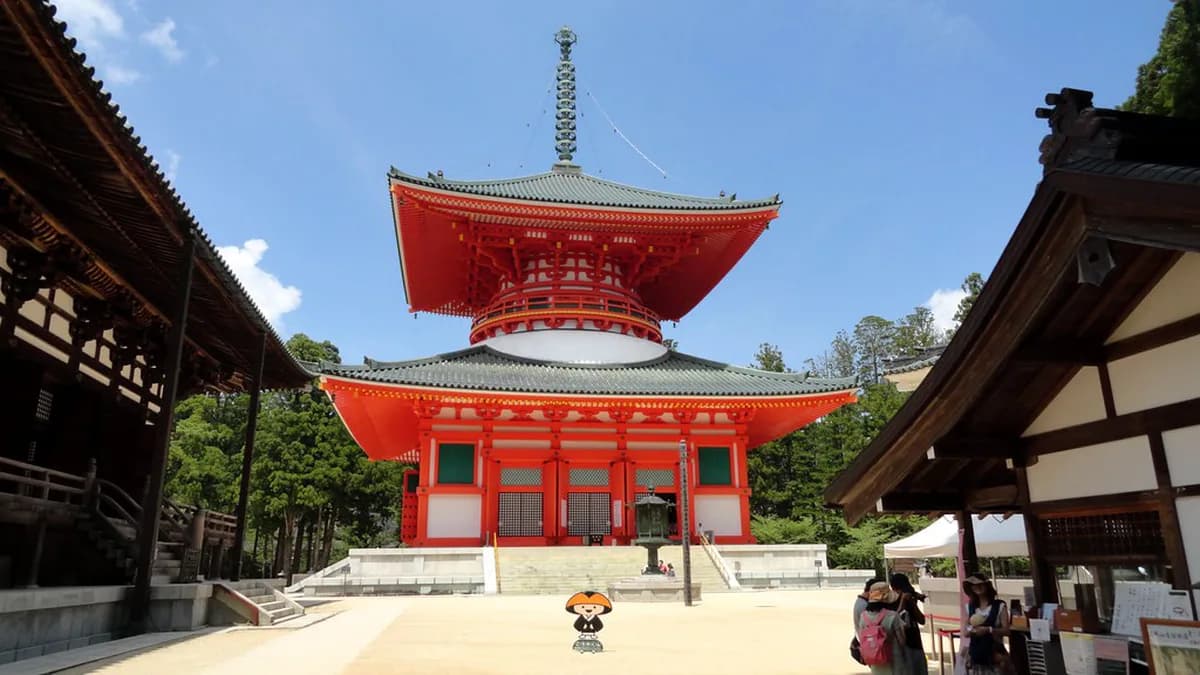
Danjo Garan is the sacred temple precinct that Kobo Daishi began building in 817 as the physical and spiritual centre of his community. The complex contains more than a dozen structures, but the one you will notice first is the Konpon Daito — a 49-metre vermilion pagoda that has become the visual symbol of Koyasan. Entry to the Daito is 200 yen; the grounds themselves are free to walk. The Danjo Garan complex closes at 17:00. Kobo Daishi designed the entire mountain plateau as a physical mandala: the eight surrounding peaks represent the lotus petals, and the Konpon Daito stands at the mandala's centre, with a statue of Dainichi Nyorai — the primal Buddha — at the pagoda's core.
A Short History of Koyasan and Kobo Daishi
A little background makes the temples easier to read. Kobo Daishi (Kukai) returned from studying esoteric Buddhism in Tang China in 806 and founded the Shingon school. In 816 the court granted him the remote mountain plateau, and he began building the Danjo Garan in 817. He founded the monastery here in 819, as noted in the introduction.
- 835: Kobo Daishi is said to have entered eternal meditation at Okunoin. Followers believe he is still alive there, which is why monks carry meals to his mausoleum twice daily.
- Heian and Kamakura periods: Emperors, nobles and warlords sponsored the temples, and burying family members near Kobo Daishi became a prestigious custom. This is why Okunoin holds so many memorial stones.
- 1593: Toyotomi Hideyoshi built the temple now known as Kongobuji, mentioned above.
- 2004: Koyasan was inscribed as part of the UNESCO World Heritage listing “Sacred Sites and Pilgrimage Routes in the Kii Mountain Range.”
Today about 117 temples remain, and roughly 50 of them accept overnight guests. If the history appeals, staying in one is the closest way to experience the monastic routine, including the early morning prayers. Our Koyasan temple stay guide covers booking and etiquette, and the Okunoin guide walks through the cemetery's key monuments in more detail.
Navigating Mount Koya: Buses, Walking, and Maps
Koyasan has no taxis waiting at the station — your main transport on the mountain is the Nankai Rinkan Bus network. Buses board from the rear and exit from the front; take a numbered zone ticket when you board and pay the corresponding fare when you exit. The main route (Route 1) runs from Koyasan Station through the town to Okunoin-mae, covering every major sight. The full-route fare is around 450 yen per trip. Download the Rinkan Bus Route Map before you leave Kyoto so you have it offline.
The Koyasan Shukubo Association also rents bicycles from their Central Information Office for 400 yen per hour (plus 100 yen per extra 30 minutes). Numbers are limited — call ahead on 0736-56-2616 to reserve. Cycling is a pleasant way to move between Danjo Garan and Kongobuji since those sites are close together and relatively flat. The road between the town centre and Okunoin has some elevation change and may be tiring for those not used to cycling.
Portable audio guides in English, French, Chinese, Korean, and Japanese are available for 500 yen from the Shukubo Association's information offices at Chuo (Central) and Ichi-no-Hashi near the Okunoin entrance. The Koyasan Area Map (Official) shows all temple lodgings and walking routes and is the most useful single resource you can have in hand on the mountain.
Where to Eat Lunch in Koya Village
Lunch is the one fixed point of a Koyasan day trip, and the town centre around Kongobuji is where most visitors stop. Restaurants cluster along the main road between the Senjuinbashi and Kongobuji-mae bus stops, so you can eat without doubling back from Okunoin to the afternoon sights.
Many kitchens close between 14:00 and 15:00 and some stop taking last orders by 13:30, so plan to sit down by 12:30 as in the itinerary above. Weekends and the autumn peak fill tables quickly; arriving after 13:00 can mean a wait or a limited menu.
- Shojin ryori set meals: Traditional vegetarian Buddhist cuisine (no meat, fish, onion or garlic) built around sesame tofu, koya-dofu (freeze-dried tofu), seasonal vegetables and tempura. Lunch sets typically run about 2,500–4,500 yen. Some restaurants take reservations, which is worth doing in October and November.
- Quick and cheaper options: Bakeries and noodle shops near the Kongobuji area serve udon, soba and sesame-tofu snacks for roughly 800–1,500 yen if you want to save time for the Garan.
- Convenience stores: Basic supplies are available in the town centre, but there are few options inside the Okunoin approach, so buy water before you walk in.
A sensible rhythm is Okunoin in the morning, lunch around 12:30, then a short walk to Kongobuji at 13:00. This keeps you moving in one direction and avoids extra bus rides. For restaurant picks and what to order, see our guide to the best restaurants in Koyasan. If you avoid animal products, the vegan and vegetarian food guide for Koyasan explains which places handle dietary requests.
Temple Lodging (Shukubo) vs. Day Trips: Which Is Right for You?
A day trip from Kyoto gives you enough time to walk Okunoin and visit the main temples, but you will miss the two things that define the overnight experience: the 06:00 morning fire ceremony (goma) and the pre-dawn prayer service open to temple guests. If your Kyoto schedule is tight, a day trip is perfectly worthwhile. If you have a free evening, one night in a shukubo changes the visit entirely.
Of the 117 temples on Mount Koya, 52 offer shukubo (temple lodging). Rates typically run 13,000–20,000 yen per person including two meals — dinner and breakfast, both shojin ryori vegetarian cuisine prepared by the monks. Ekoin, close to Okunoin, offers English-speaking monks who lead night cemetery tours. Fudoin (founded 906) has 22 air-conditioned rooms and a traditional garden. Saizenin provides one of the quieter settings and accepts non-overnight guests for shojin ryori lunch — useful if you are a day-tripper who still wants the full meal experience. Book popular temples 60–90 days in advance for peak autumn season (mid-October through mid-November).
Day-trippers who want to try shojin ryori without an overnight stay should head to Chuoshokudo Sanbo (open 11:00–16:00, no official website, call 0736-56-2345) or Hanabishi (11:00–18:00, closes at 17:00 in winter) near Kongobuji. Both serve set lunches with dengaku, tofu, and seasonal temple vegetables at around 2,000–3,000 yen. Arrive before 12:30 on weekends as tables fill quickly with tour groups.
Money-Saving Tips: Koyasan World Heritage Ticket and Passes
The Koyasan World Heritage Ticket is the best-value option for most Kyoto travellers making the train journey. It covers round-trip fares on the Nankai Koya Line and the cable car between Nankai Namba and Koyasan, plus unlimited Rinkan bus rides on the mountain, and 20% off entry at four main sites (Reihokan, Kondo Hall, Konpon Daito, and Kongobuji Temple). The standard version costs 2,860 yen and is valid for two days; the Limited Express upgrade costs 3,400 yen and adds a single Limited Express ticket for the outbound leg. Buy it at any major Nankai Railway station or at travel agencies such as JTB.
The Kansai Thru Pass is the right choice if Koyasan is one stop on a wider Kansai trip that includes Nara, Osaka, or the private rail networks around Kyoto. It covers the Nankai Koya Line, cable car, and Rinkan buses, plus most other private rail, subway, and bus routes across the Kansai region. A two-day pass costs around 4,480 yen and a three-day pass costs 5,600 yen (2026 prices). It is not valid on JR lines. Compared side by side: if your trip begins and ends in Kyoto with Koyasan as your only major excursion, the Koyasan World Heritage Ticket saves money. If you are moving between Osaka, Kyoto, Nara, and Koyasan over two or three days, the Kansai Thru Pass covers more ground for a similar price.
The Koyasan Common Ticket (1,500 yen) covers entry to six sites including Kongobuji, the Reihokan Museum, Konpon Daito, Kondo, and the Tokugawa Mausoleum site. Without it, visiting all six would cost 2,200 yen. The Rinkan One-Day Bus Pass (830 yen adults, 420 yen children) adds 20% off the same four sites on top of unlimited bus rides — buy it at Koyasan Station on arrival. Cash is essential on the mountain since many smaller shops and the bus fare system do not accept cards.
Seasonal Travel: Winter Warnings and Autumn Peaks
Koyasan sits 800 metres above sea level and runs 5–10 degrees colder than Kyoto year-round. In winter (December–February) the mountain receives heavy snowfall, the direct highway bus does not operate, and the Koya Line cable car occasionally suspends service due to ice. If you travel in winter, wear insulated layers and check the Nankai Railway website for service advisories before you leave. The cemetery paths can be icy — wear shoes with grip, not fashion trainers.
Autumn foliage (koyo) peaks in mid-to-late October on the mountain, roughly two to three weeks earlier than in Kyoto's central districts. This is the busiest period of the year. The direct bus from Kyoto sells out weeks in advance, temple lodgings fill by August, and the Okunoin path becomes crowded by 11:00. To avoid the worst of the crowds, plan to arrive before 10:00 and head to Okunoin first rather than saving it for the afternoon.
Spring is a quieter time to visit. Cherry blossoms at higher elevation bloom in mid-April — roughly a week after they peak in Kyoto — creating a second wave of sakura season for travellers willing to make the journey. The direct bus resumes in April, making spring one of the most accessible and least-crowded seasons for the trip.
Frequently Asked Questions
Can I use the JR Pass to get to Koyasan from Kyoto?
The JR Pass only covers the segment from Kyoto to Osaka Station. You must pay separately for the Nankai Railway and the cable car. The private Nankai line is not part of the JR network.
How much does a day trip to Koyasan cost?
A typical day trip costs between 7,000 and 10,000 yen per person. This includes round-trip transit, bus fares, and temple entrance fees. Budget extra for a traditional shojin ryori lunch.
Is the path through Okunoin Cemetery difficult to walk?
The main path is paved and mostly flat with some gentle slopes. It is suitable for most fitness levels and takes about 40 minutes. Wear comfortable walking shoes for the stone surfaces.
Visiting Koyasan from Kyoto is a highlight of any Japanese cultural itinerary. The combination of ancient history and natural beauty creates a lasting impression on travelers. By following this guide, you can navigate the transit and see the best sites efficiently.
Remember to respect the sacred atmosphere of the temples and the cemetery. Whether you visit for a day or stay overnight, the mountain offers a unique peace. Enjoy your journey into the heart of Japanese Shingon Buddhism.
Pair this with our things to do in Koyasan guide for the full overview.
Free: The Mount Kōya Essentials guide
Top things to do, where to stay, a perfect day plan, getting around, and the best time to go — a Mount Kōya mini-guide you can take offline.
You might also like

Continue reading
More guides you'll find useful