10 Best Tips for the Best Time to Visit Koyasan
Discover the best time to visit Koyasan with our seasonal guide. Explore Mount Koya's temples, Okuno-in cemetery, and shukubo stays in every season.
On this page
Mount Koya sits high in the Wakayama mountains at roughly 900 metres above sea level, and the elevation alone makes it a different world from Osaka. The best time to visit Koyasan is late October to early November for peak autumn foliage, or late May for mild temperatures and fresh green cedar groves. Choosing between those two windows comes down to one question: do you want fiery colour or peaceful solitude? This guide answers that question season by season, and covers the logistics of getting there, where to sleep, and whether one night is actually enough.
Temperatures here run 5°C to 10°C colder than the Osaka forecast at every time of year. That gap matters for packing and for comfort inside the wooden temple buildings. A well-planned our Koyasan itinerary accounts for morning chill even in August, and for below-zero nights from December through February. Early booking is essential — the most-requested shukubo fill up months in advance for the November foliage peak.
Autumn foliage peaks between late October and early November on Mount Koya — roughly two to three weeks earlier than in Kyoto, thanks to the 900-metre elevation. Book your shukubo at least two to three months in advance for any weekend in this window, as the most-requested temples sell out well ahead.
Mount Koya runs 5–10°C colder than Osaka year-round. Pack a warm layer even in summer, and bring a proper winter coat for autumn and spring visits. Wooden temple corridors have minimal heating; request an in-room heated area when booking your shukubo, especially from October through April.
Seasonal Overview: When Is the Best Time to Visit Koyasan?
Koyasan rewards visitors in every season, but the experience changes dramatically from month to month. The table below gives a quick read on temperature, crowd levels, and the prevailing atmosphere for each window.
| Season | Months | Temp (°C / °F) | Crowds | Atmosphere |
|---|---|---|---|---|
| Spring | March–May | 2–18°C / 36–64°F | Moderate (peak Golden Week) | Cherry blossoms, fresh cedar green |
| Summer | June–August | 18–26°C / 64–79°F | Moderate–High | Cool mountain escape, misty mornings |
| Autumn | Late Sept–Nov | 3–15°C / 37–59°F | Very High (Oct–Nov) | Vivid maples, crisp air |
| Winter | Dec–Feb | -4–6°C / 25–43°F | Low | Snow-covered lanterns, deep quiet |
Autumn is the undisputed crowd peak. Spring sees a second surge around Golden Week (late April to early May). Summer and winter are the quieter shoulders, each with its own appeal depending on what you are looking for.
Spring (March to May): Cherry Blossoms and Festivals
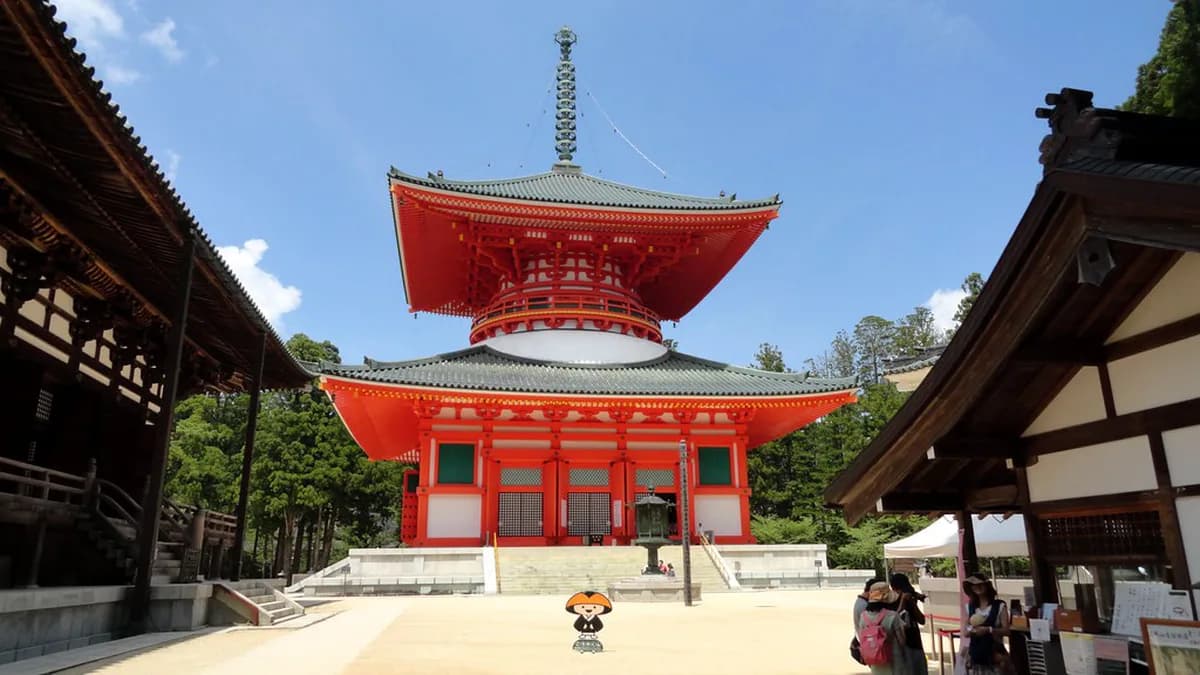
Spring arrives late on the mountain. Cherry blossoms around the Danjo Garan complex typically peak in mid to late April — roughly two weeks after Osaka's bloom. The contrast of pink petals against grey stone lanterns makes this one of the most photogenic weeks of the year. Mornings in late March can still see frost, so pack a thermal layer even if the daytime forecast looks mild.
The Aoba Matsuri festival on 15 June honours the birth of Kobo Daishi, Koyasan's founder, with processions and special ceremonies across the main temples. It falls just outside peak spring crowds, making it an excellent anchor date if your schedule is flexible. Golden Week (late April to early May) is the other spring landmark — crowds spike sharply, accommodation prices rise, and many shukubo post no-vacancy weeks in advance. If you want spring greenery without the crush, the window between the cherry blossom end and Golden Week start (roughly mid-April) is quietly ideal.
Summer (June to August): A Cool Mountain Escape
Koyasan's altitude makes it a natural retreat when Osaka and Kyoto turn humid and oppressive. Daytime highs in July and August stay in the low-to-mid 20s°C, often 10–12°C cooler than Osaka on the same day. This temperature gap is one of the main reasons Japanese domestic visitors make the trip in summer. The mountain also stays lively at night in ways that winter does not, with the cemetery paths remaining walkable without ice or snow.
The trade-off is afternoon rain. July and August bring the heaviest precipitation of the year, with downpours that can arrive quickly. A compact rain jacket is non-negotiable. The Obon festival in mid-August draws significant Japanese family visitors, particularly for the Mitama-e Candle Festival, when thousands of candles are lit along the paths of Okunoin cemetery cemetery — a genuinely spectacular sight that no other season offers. If you are visiting in August, plan the Okunoin evening walk specifically around 13–16 August for this reason.
Autumn (September to November): Vibrant Fall Foliage
Late October to early November is the single best time to visit Koyasan for most travellers. The maples and ginkgos ignite in red, orange, and gold against the dark cedar backdrop, and the light on clear mornings is exceptional for photography. Foliage peaks roughly two to three weeks earlier than in Kyoto, thanks to the higher altitude — plan for peak colour around 25 October to 10 November in most years. The things to do in Koyasan are at their visual best during this window.
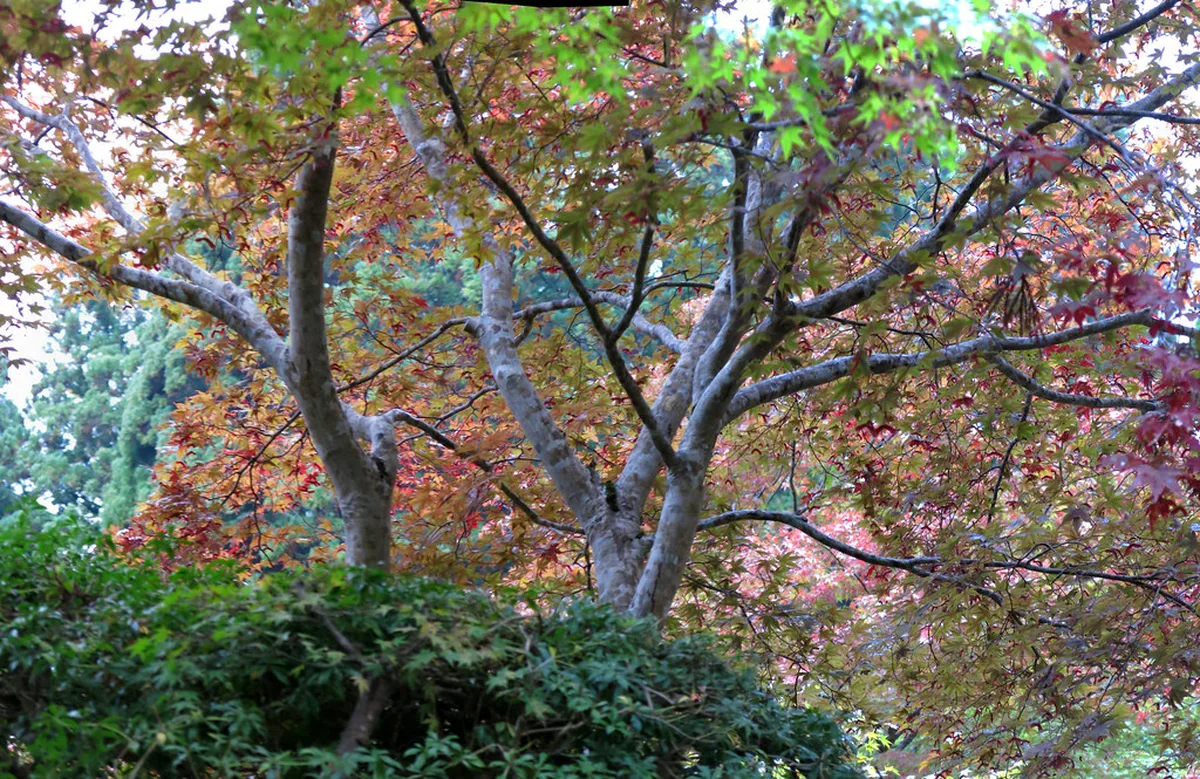
Autumn also brings the most comfortable walking temperatures of the year: crisp, dry air in the low teens by day, dropping to near freezing at night. That overnight chill is important — a warm coat is essential even if you arrive in a T-shirt. Crowds are at their annual high, and shukubo availability tightens dramatically. Book at least two to three months in advance for any weekend in late October or early November. Weekday visits in the third week of October offer the best balance of colour and manageable crowd levels.
Winter (December to February): Snow and Serenity
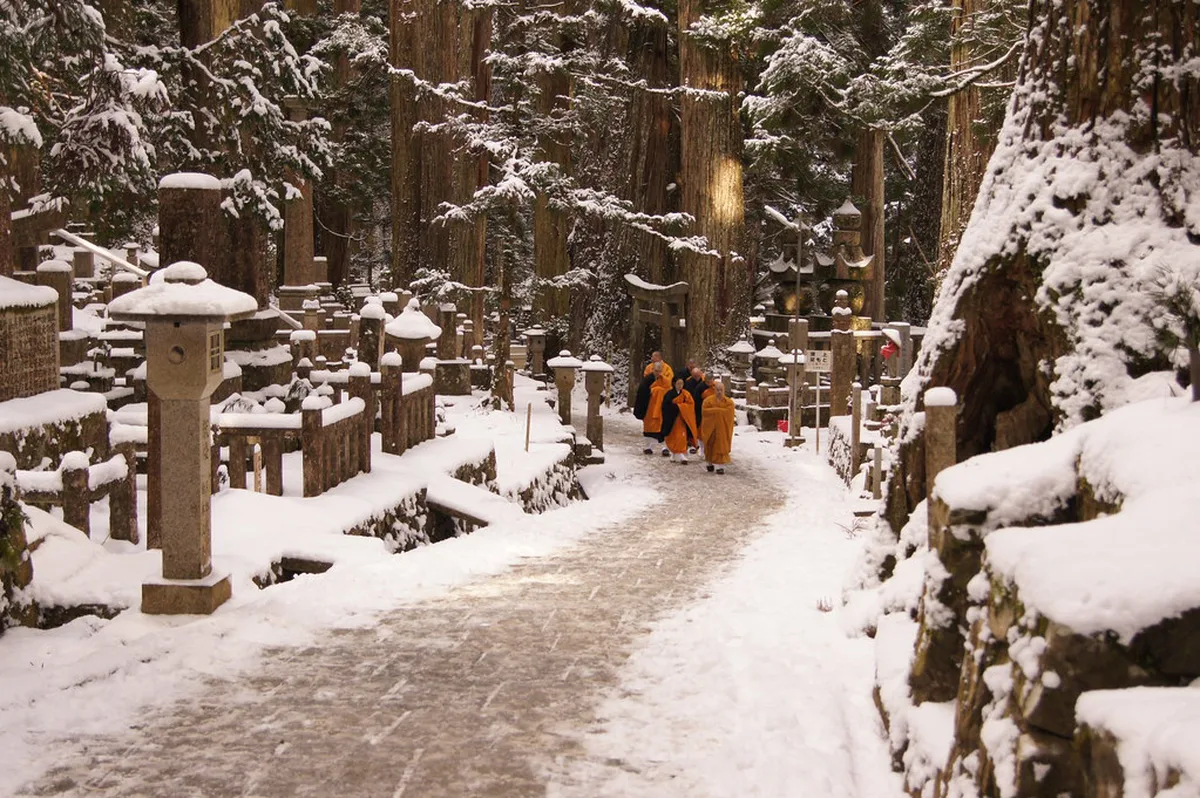
Winter is Koyasan's quietest and most atmospheric season. Snow settles on the stone lanterns of Okunoin and the curved rooflines of the main temples, and visitor numbers drop to a fraction of the autumn peak. January is the coldest month, with overnight temperatures regularly reaching -4°C (25°F). The cemetery in fresh snow, lit only by the glow of the lanterns, is one of the most striking scenes in Japan.
The practical challenges are real and worth planning around carefully. Some smaller restaurants and souvenir shops near the cemetery entrance close from December through March. The Nankai Koyasan Cable Car undergoes maintenance closures in late winter — sometimes lasting several days — requiring a bus substitution from Gokurakubashi Station. Always check the Official Koyasan Tourism Association website before departing. Crucially, shukubo buildings are traditional wood construction with minimal central heating in corridors and common areas. Request a room with a private heated area, or verify the heating setup directly with the temple before booking — guest reviews for winter stays consistently flag the cold as the primary discomfort.
Best Time for the Okunoin Cemetery Night Tour
Walking through Japan's largest cemetery after dark is the one experience most visitors say they regret not doing. Okunoin is accessible at all hours, and the path from the first bridge (Ichinohashi) to the Torodo Hall of Lamps takes around 30–40 minutes each way. At night, the 10,000 stone lanterns along the 2-kilometre avenue create a quality of light that daytime visitors simply never see — soft, flickering, and ancient-feeling. Photography is forbidden past the Gobyohashi Bridge into the inner sanctuary, which only deepens the sense of solitude.
In terms of timing, the night tour works in every season but is most rewarding in autumn (when mist drifts between the maples), winter (when snow cushions every sound), and during the mid-August Mitama-e Candle Festival when extra candles are lit throughout the grounds. Start the walk no later than 20:00 to have the path largely to yourself. Guided English night tours operate from some shukubo — Ekoin in particular is well-known for organising evening cemetery walks as part of the overnight guest experience.
How to Get to Koyasan from Osaka (Nankai Koya Line)
The standard route from Osaka runs on the Nankai Koya Line from Namba Station (not Shin-Osaka). The fastest option is the Limited Express Koya, which runs directly to Gokurakubashi Station in about 80 minutes (¥1,680 one-way from Namba). The budget option is a local express to Hashimoto, then a change to a local train to Gokurakubashi — total journey around 1 hour 35 minutes and costs approximately ¥890. From Gokurakubashi, a 5-minute cable car ride climbs to Koyasan Station, followed by a 10-minute bus into the main temple area.
The Nankai Railway World Heritage Ticket is worth evaluating carefully before you buy. It covers round-trip rail from Namba to Koyasan, unlimited local bus rides within the mountain, and discounted admission to several temples. The ticket costs ¥3,400 for adults (valid for two consecutive days). The round-trip rail fare alone is ¥2,860 on the Limited Express, so the ticket effectively gives you unlimited buses and attraction discounts for an extra ¥540. If you plan to use the bus even twice (¥280 per ride), the pass pays for itself. Day-trippers who walk most of the route may not break even; two-night visitors almost certainly will.
a Koyasan day trip is feasible if you start from Namba by 08:00 and return no later than 20:00, giving you a full nine to ten hours on the mountain. Overnight visitors should book cable car and onward transport in advance during peak autumn weekends, when queues at Gokurakubashi can run 30–45 minutes.
Getting Around Koyasan: Buses, Walking and Bikes
Koyasan is a long, narrow town, and the sights are spread along one main road. Most visitors use a mix of bus and walking. Your timing in each season changes which of the two is practical.
Nankai Rinkan buses
The main bus line runs from Koyasan Station through the town centre to Okunoin-mae. It stops near Kongobuji, the Danjo Garan complex and most shukubo. Buses are frequent in the daytime. Services thin out in the early evening, and the last departures leave earlier in winter. Check the current timetable at the station before you plan a dinner out. The World Heritage Ticket described above includes unlimited bus rides on the mountain, which makes it good value if you plan to hop between the two ends of town.
On foot
The walk from Kongobuji to the Danjo Garan complex takes about 10 minutes on flat pavement. From the town centre to the Okunoin entrance is roughly 2 km, which is 25 to 30 minutes on foot. Walking is the better choice on dry autumn mornings, when the maples along the road are at their best. It is a poor choice in a July downpour or on icy winter pavements, when the bus is worth taking.
Bicycles
Rental bikes, including e-bikes, are available in the town centre from spring to autumn. They suit the gentle slopes between the temples. Skip them from December to March, when frost and snow make the road surface unreliable.
If you are heading to the cemetery after dinner, plan your return carefully. Buses will probably have stopped, so the walk back along the dark lantern avenue is how most night visitors finish. Our Okunoin guide covers the route in more detail.
Choosing the Right Temple Lodging (Shukubo)
Around 50 of Koyasan's 120 sub-temples offer shukubo accommodation. All serve shojin ryori — the vegan Buddhist cuisine of tofu, seasonal vegetables, and wild mountain vegetables — for dinner and breakfast, and most invite guests to join morning fire ceremonies (goma) at around 06:00. Prices typically run ¥9,000 to ¥15,000 per person including both meals, though top-tier temples charge more during foliage season.
The choice between temples comes down to what kind of stay you want. Ekoin is consistently rated as the best option for travellers seeking an immersive spiritual experience: it organises evening cemetery walks, English-language fire ceremonies, and meditation sessions, making it an ideal introduction for first-time visitors. Fudoin suits those who prioritise comfort — it has a private onsen (hot spring bath), more spacious rooms, and slightly more attentive service, but the spiritual programming is less structured. Both are bookable through the Koyasan Shukubo Association website, which also lists all available temples with descriptions and calendars. For the shukubo temple stay, request a room with in-room heating if you are visiting between October and April.
Regardless of which temple you choose, pack slip-on shoes (you will remove them constantly), thick socks for cold wooden floors, and modest clothing. Shojin ryori meals are served in communal dining halls that can be cool, especially in autumn and winter evenings.
Is 1 Night in Koyasan Enough? Pros and Cons
One night unlocks the full Koyasan experience — morning ceremony, evening cemetery walk, and shojin ryori breakfast — without requiring more than two days away from your main itinerary. For most visitors, one night is the right call. The main attractions (Okunoin, Kongobu-ji, Danjo Garan complex) can be covered in a single afternoon combined with the evening and following morning. Using the getting there from Osaka route, you can arrive by noon and depart by 10:00 the next day after the morning ceremony.
- Pros of 1 night: Access to the evening Okunoin walk and morning goma ceremony; shojin ryori dinner and breakfast included; quieter pace than a day trip; modest time commitment from Osaka.
- Cons of 1 night: Limited time for hiking trails like the Choishi Michi; no flexibility if the cable car is delayed; misses the relaxed afternoon of a two-night stay.
- When to choose 2 nights: If you want to hike the Choishi Michi pilgrim trail (23.5 km, roughly 7 hours from Kudoyama Station), explore the Reihokan Museum in depth, or simply slow down and absorb the mountain atmosphere without a schedule.
- When a day trip is acceptable: If budget or time is the constraint, a day trip from Osaka still allows you to walk Okunoin, visit Kongobu-ji, and eat at a shojin ryori restaurant. You sacrifice the night atmosphere and morning ceremony, but you do not miss the mountain entirely.
Hiking Around Koyasan: Pilgrim Trails and Seasonal Conditions
Koyasan is the end point of old pilgrim routes, and a short walk in the surrounding forest adds a lot to a one- or two-night stay. The best season for hiking is not always the best season for foliage.
- Choishi-michi: This is the historic pilgrimage path from Kudoyama up to Koyasan. It is about 20 km of stone-marked trail and takes most of a full day. It is the classic route, and part of the UNESCO-listed Kii Mountain pilgrimage network. Start early and allow about 7 hours with breaks. It is best in late October and November, or in spring once the frost has gone.
- Nyonin-michi: This loop follows the old path once used by women who were not allowed into the sacred precinct. It circles the mountain and passes small halls and viewpoints. Allow a few hours. It works well as a half-day outing after you check out of your shukubo.
- Short forest walks: Quiet cedar paths branch off near the Danjo Garan complex and the Okunoin approach. They are good for a gentle morning walk before the day-trip crowds arrive.
Conditions by season
Spring brings mud and lingering frost on shaded stretches until about April. Summer is cooler than the lowlands, but rain and slippery roots make July and August less pleasant, so carry a rain jacket. Autumn has the best conditions, with dry, cool air and colour overhead. In winter, snow and ice can close or complicate forest trails, so stick to the paved town paths. Our Koyasan in winter guide explains what is realistic in that season.
Wear proper walking shoes, carry water and food (shops on the trails are rare), and tell your shukubo which route you are taking.
Beyond Mount Koya: Nearby Extensions on the Kii Peninsula
Koyasan sits within the Kii Peninsula, a largely overlooked stretch of Japan between Osaka and Nagoya that holds several of the country's most significant spiritual sites. The most natural extension from Koyasan is the Kumano Kodo pilgrimage trail network — a World Heritage-listed route connecting ancient shrines and temples across the peninsula. The Nakahechi Trail, roughly 30 km from Tanabe to Kumano Hongu Taisha, is the most popular section and a comfortable two-day walk. Combined with Koyasan, a five to seven-day Kii Peninsula itinerary covers the full arc of Japanese Buddhist and Shinto heritage in one journey.
For travellers who want to extend without a multi-day trek, Toba on the Ise-Shima Peninsula is accessible by train in roughly 3.5 to 4 hours from Gokurakubashi via Matsusaka or Tsu. Toba is home to Mikimoto Pearl Island, the original cultured-pearl farm, and makes a logical stopover between Koyasan and Nagoya. Shimoda in Shizuoka — about 5 hours from Koyasan by train — offers black-sand beaches and the historical backdrop of Japan's first US consulate. Neither detour is necessary for a first visit, but both reward travellers who want to see more of the Kii region beyond the temple mountain itself.
Frequently Asked Questions
What is the coldest month in Koyasan?
January is typically the coldest month on Mount Koya. Temperatures frequently drop to -4°C (25°F) or lower at night. You should prepare for significant snowfall and icy walking paths during this time.
Is Koyasan worth visiting in winter?
Yes, winter offers a unique and peaceful experience with fewer tourists. The snow-covered temples and cemetery are incredibly photogenic. Just ensure you book a heated shukubo room for a comfortable stay.
When does the fall foliage peak in Mount Koya?
Fall colors usually peak between late October and early November. This is earlier than in Kyoto or Osaka due to the higher altitude. The maple trees around the Danjo Garan are especially vibrant.
Mount Koya is a destination that rewards those who time their visit to match their personal travel style. Whether you choose the fiery colors of autumn or the quiet snows of winter, the mountain's spiritual energy remains constant. By following this guide, you can navigate the seasonal weather and logistics for a seamless and memorable journey. Book your temple stay early and prepare for an unforgettable encounter with Japan's living religious traditions.
Free: The Mount Kōya Essentials guide
Top things to do, where to stay, a perfect day plan, getting around, and the best time to go — a Mount Kōya mini-guide you can take offline.
You might also like

Continue reading
More guides you'll find useful