8 Essential Tips for Visiting Koyasan in Winter
Plan your trip to Koyasan in winter with our guide to temple stays, snow-covered cemetery walks, winter weather gear, and essential transport tips from Osaka.
On this page
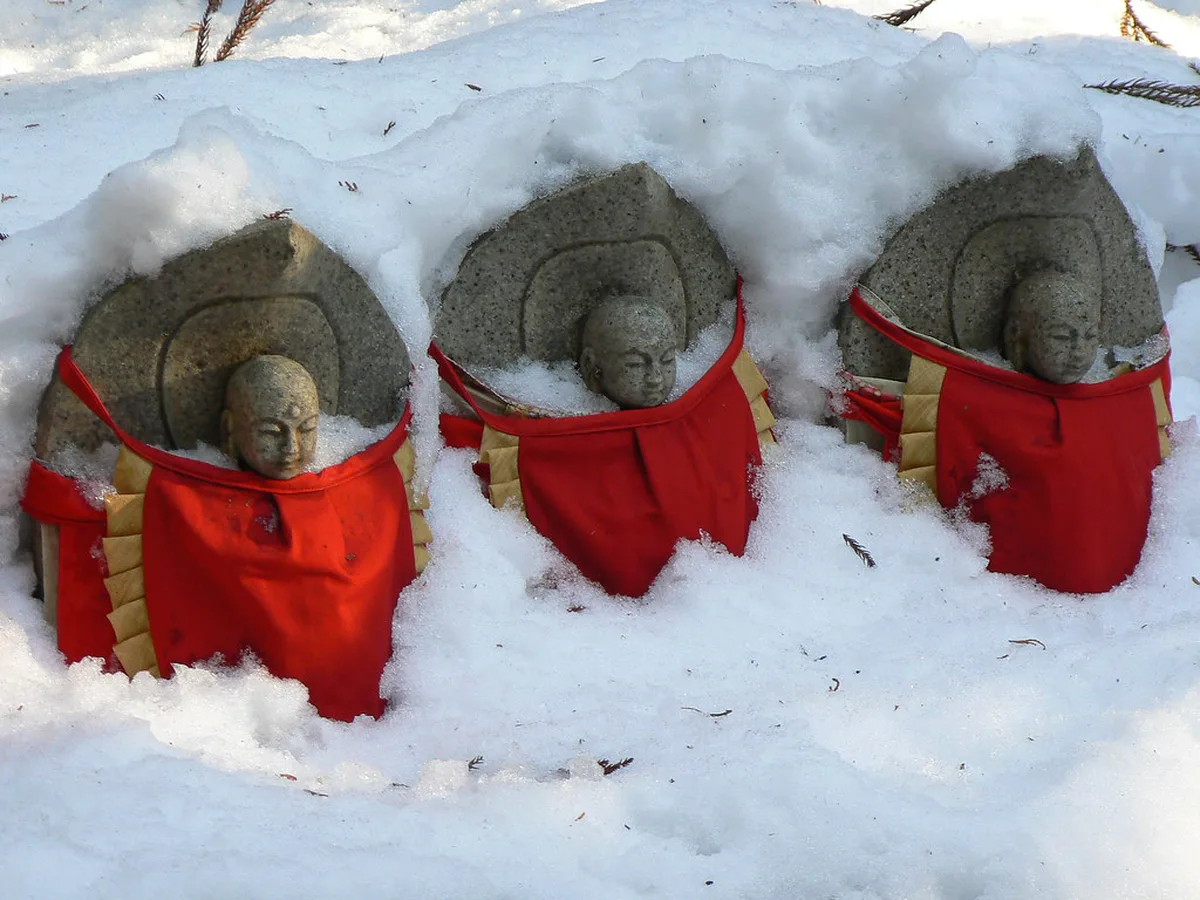
Koyasan in winter is a different world from the mountain town that appears in autumn foliage photos. Snow settles over 200,000 stone monuments in the Okunoin cemetery cemetery, the cedar forest goes silent, and the small pilgrimage town shrinks to its quietest. January and February are the coldest months, with temperatures regularly dropping below freezing, but they are also the most peaceful and photogenic time to visit.
Mount Koya sits at around 800 metres above sea level in Wakayama Prefecture, making it significantly colder than Osaka or Kyoto year-round. the shukubo temple stay in winter takes on a different character — unheated corridors, thick futons, fire ceremonies in the dark, and shojin ryori meals that lean heavily on warming root vegetables. This guide covers the practical side of visiting in 2026: access, gear, what to expect in a shukubo, and how to time your walk through the cemetery before the sun sets.
Why Visit Koyasan in Winter?
Crowd levels are at their lowest between January and mid-February. You can walk the full two-kilometre path through Okunoin cemetery without another tour group in sight, which is nearly impossible in autumn. The snow creates a visual contrast that no other season can replicate: white-capped stone lanterns, dark cedar canopy overhead, and the distant Kii Mountain peaks sharp against a pale sky.
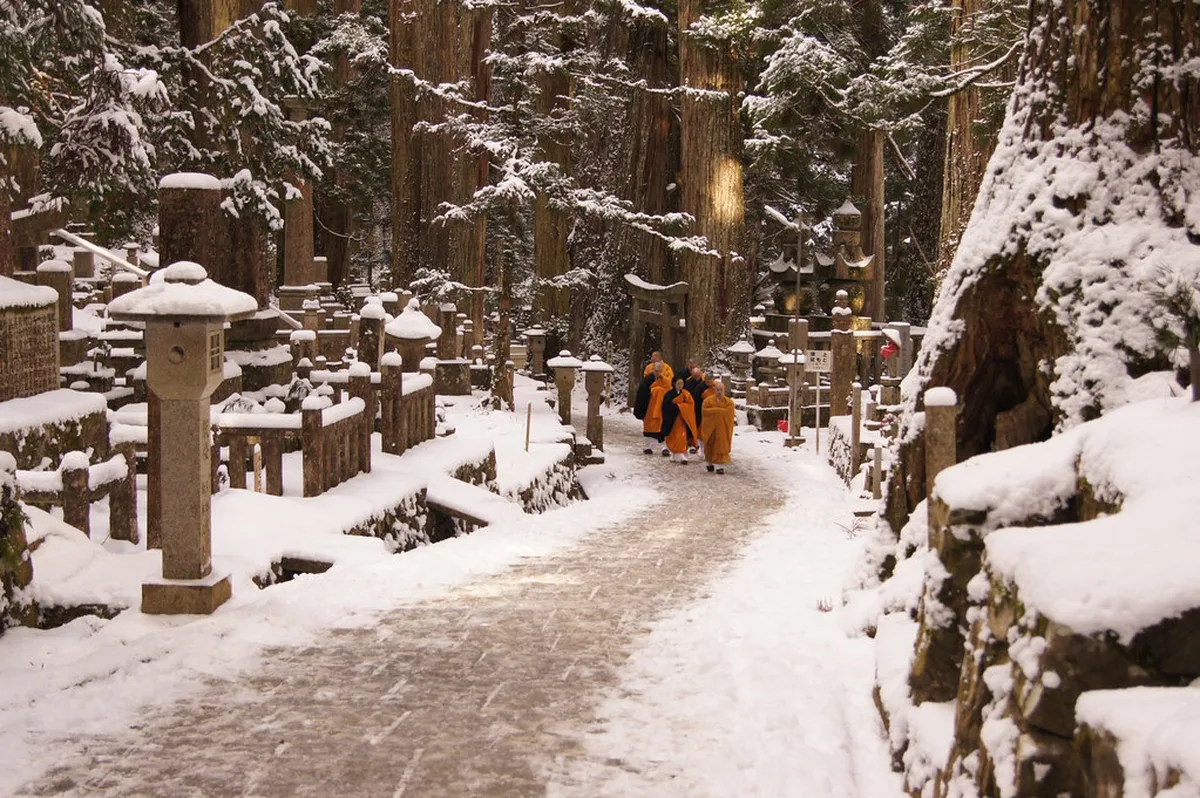
The spiritual atmosphere of Koyasan is also more tangible in winter. Monks wake before dawn for fire ceremonies, the steam from communal baths rises in the cold air, and the quiet of the mountain is not disrupted by tour buses. Prices for temple lodging are generally lower and availability is better. Photographers consistently rate January and February as the most rewarding months for Okunoin — the blue hour effect, when the stone lanterns glow against early dusk, is strongest on overcast winter afternoons.
The main trade-off is cold. Prayer halls and corridors in temples are unheated and the temperature inside can mirror the outside air. Guest rooms use kerosene or electric heaters, but the transition between heated and unheated spaces is constant. Anyone with a low tolerance for sharp cold should target early December or mid-March instead, when conditions soften.
Winter Events: New Year Prayers and the Setsubun Bean-Throwing Ceremony
Koyasan's winter calendar includes two Buddhist observances worth knowing about when you plan your dates. Shushō-e, held over the first three days of January, is the New Year prayer ritual performed at Kongobu-ji and most of the town's other temples — monks chant sutras for the year ahead, and shukubo guests staying over New Year can often observe or join. It is a clear example of how the ceremonial rhythm of a winter stay differs from a summer one, when the temple schedule is quieter and less focused on the turn of the year.
Setsubun, on February 3, marks the traditional change of season and brings a bean-throwing ceremony (mamemaki) to several Koyasan temples, including Kongobu-ji, where priests scatter roasted soybeans to drive out bad fortune for the year ahead. It draws a noticeably larger crowd than a typical January weekday, so if the low-crowd solitude described above is the priority, avoid booking around February 3 and aim for a quieter week either side of it instead. If timing a visit around Koyasan's ceremonial calendar interests you, it is worth mapping the dates against transport and shukubo availability before finalizing a Koyasan itinerary, since temple lodging fills up faster around both events.
Winter Weather and Recommended Clothing
Because Koyasan sits 800 metres above sea level, temperatures run 5–10°C colder than coastal Osaka. Daytime highs in January hover around 1–3°C, and nights regularly drop to −4°C or lower. February is typically the snowiest month. By early March the worst of the cold is lifting, but icy patches persist on shaded paths until mid-month.
Dressing for a winter temple stay is different from standard cold-weather travel because you remove your shoes at every building entrance. You will stand and kneel on tatami and wooden floors in socked feet for the morning prayer ceremony, which can run 30–45 minutes in an unheated hall. Two pairs of wool socks is not excessive. Slip-on waterproof boots make repeated shoe removal manageable on snowy days.
- Heat-tech or merino wool thermal base layer (top and bottom)
- Mid-layer fleece for wearing inside temple corridors
- Heavy outer coat rated below 0°C for outdoor cemetery walks
- Heavy wool or thermal socks — pack two pairs minimum
- Waterproof slip-on boots with grip soles for icy paths
- Portable hand warmers for the Okunoin evening walk
- Lightweight indoor slippers for temple interiors (some temples provide them)
Avoid cotton base layers entirely. Once damp from sweat or snow, they stay cold. The path through Okunoin involves uneven stone surfaces that collect ice overnight, so grip soles are not optional.
Two pairs of wool socks is genuinely not excessive for a winter temple stay. You'll change between outdoor boots and indoor slippers multiple times per day, and the transition between heated guest rooms and unheated prayer halls means your feet experience constant temperature swings. Merino wool socks dry faster and stay warm even when damp from melted snow.
How to Get to Koyasan from Osaka or Kyoto
The standard route from Osaka is via the Nankai Koya Line, departing from Namba Station (also accessible from Shin-Imamiya). Ride to the end of the line at Gokurakubashi Station, then transfer to the Koyasan Ropeway for a five-minute ascent to Koyasan Station. From there, Nankai Rinkan buses connect to all major temple areas. Total journey time from Namba is approximately 1 hour 40 minutes to 2 hours.
From Kyoto, take any shinkansen or limited express to Shin-Osaka, then the Osaka Metro Midosuji Line south to Namba, and follow the route above. The full journey from Kyoto takes roughly 2 hours 30 minutes. The Nankai Koya Line is not covered by the JR Pass, so factor that into your rail pass decision.
For 2026, the Nankai Koya Line launched the GRAN Tenku sightseeing train between Namba and Gokurakubashi, operating from April 2026. It features panoramic one-view seats and sofa-style carriages — reservations open through the Nankai Railway website. Outside its operating schedule the regular limited express (Koyasan Tokkyuu) is the standard choice.
The Koyasan World Heritage Ticket bundles the Nankai Koya Line round trip, ropeway, and unlimited Nankai Rinkan bus rides into one pass. In winter, when bus frequency is reduced and some routes operate less often, the bundled bus access makes this ticket particularly worthwhile compared to buying individual fares. The two-day version costs around ¥3,400 from Namba; check the Nankai Railway site for current pricing. Note that in heavy snowfall the ropeway may suspend temporarily — the bus alternative from Gokurakubashi adds about 30 minutes.
The Temple Stay Experience (Shukubo) in Winter
Around 50 of Koyasan's 117 temples accept overnight guests. Staying in a shukubo means sleeping in a traditional tatami room, eating shojin ryori meals served in your room, and waking before dawn for morning prayer. In winter, all of this is intensified by the cold.
Guest rooms typically have a kerosene heater or electric panel heater. These are effective, but the heater should be switched off before sleeping for safety. Temples provide thick futons and extra blankets on request — most guests sleep comfortably once the futon is layered correctly. The large prayer halls, connecting corridors, and washrooms are generally unheated. The gap between your warm room and the cold corridor can be jarring, especially for an early morning 06:00 ceremony.
Eko-in is the most frequently recommended temple for first-time visitors. Its position directly across from the Okunoin cemetery entrance is a genuine advantage in winter: you can make short visits to the cemetery and return to warm up between them, rather than making a single long cold walk from a more distant temple. Eko-in also organises a nightly Okunoin lantern walk, though exploring independently gives you more control over timing. Hoon-in is a quieter alternative with a slightly more intimate atmosphere.
Curfew at most shukubo is around 21:00, with a lights-out culture that differs from a hotel. The communal bath (ofuro) is the most effective way to defrost after an evening cemetery walk. Bath hours are typically 15:00–22:00; confirm with your temple at check-in. Morning prayer participation is encouraged but not mandatory at most temples.
Dining in Winter: Shojin Ryori
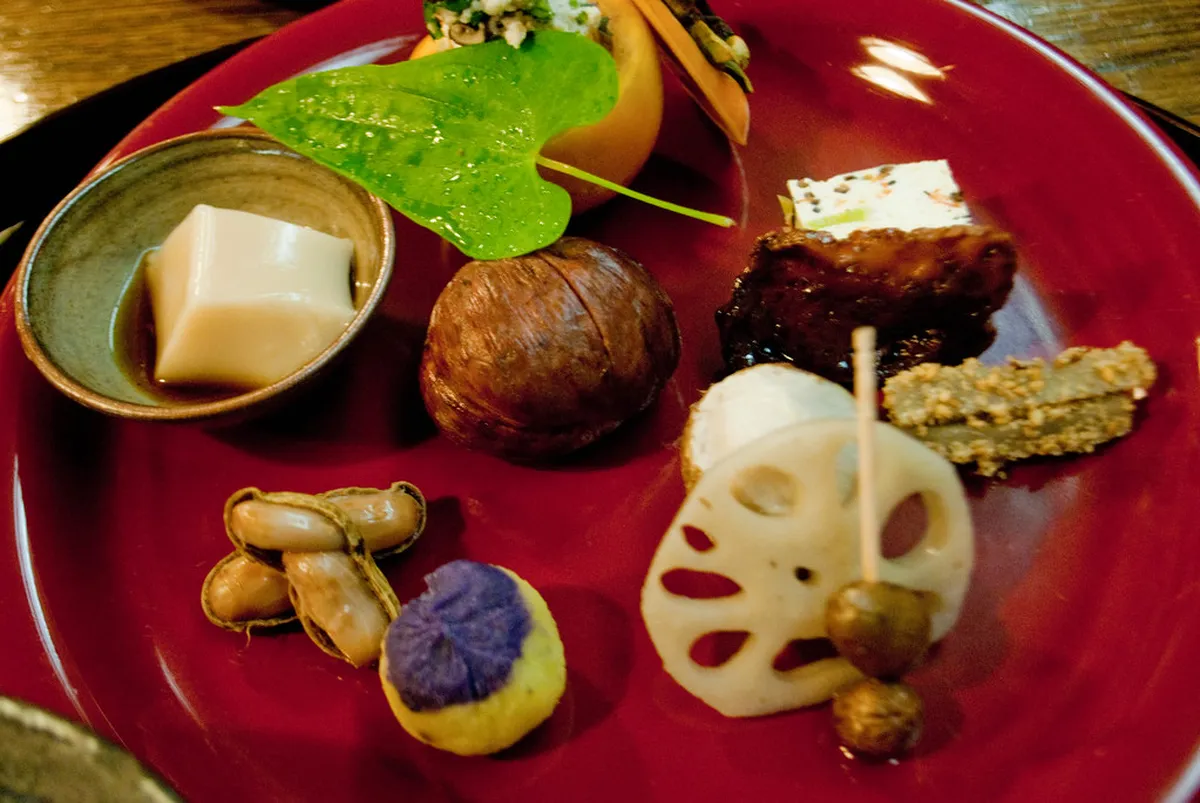
Shojin ryori is the traditional Buddhist vegetarian cuisine served at all Koyasan shukubo. The meal changes with the season, and the winter version is the most comforting: hot nabe broth with tofu and root vegetables, warming miso soup, and heavier preparations that compensate for the cold. Goma-dofu — sesame tofu with a firm pudding-like texture — is a Koyasan signature available year-round and worth ordering specifically if you see it on the menu.
Koya-dofu (freeze-dried tofu, a local speciality) is another dish unique to this area and appears in various forms throughout the meal. The full dinner spread typically includes tempura vegetables, pickled tsukemono, rice, fruit, and tea. Most temples also offer beer and sake on request alongside the meal, which is something many visitors find unexpectedly welcome after a cold day outdoors.
Meals are served in your guest room at set times — usually dinner at 17:30–18:00 and breakfast at 07:00–07:30 after morning prayers. If you arrive on a day trip without staying overnight, the restaurant at Eko-in and a small number of cafes near the Danjo Garan complex complex serve shojin ryori lunches. Town dining options are sparse in January; most small shops close early and some shut entirely. A Family Mart near the Garan park's southern entrance is the reliable option for snacks and warmth between sights.
Walking Through Okunoin Cemetery in the Snow
Okunoin is the largest cemetery in Japan and the spiritual centre of Koyasan. The two-kilometre main path from Ichinohashi bridge to the Torodo Hall passes approximately 200,000 stone monuments, many of them centuries old and topped with snow in winter. At the far end, the Torodo Hall (Hall of Lanterns) houses over 10,000 hanging lanterns that burn continuously. Photography is not permitted inside the inner sanctuary near Kobo Daishi's mausoleum, but the approach path is open to cameras.
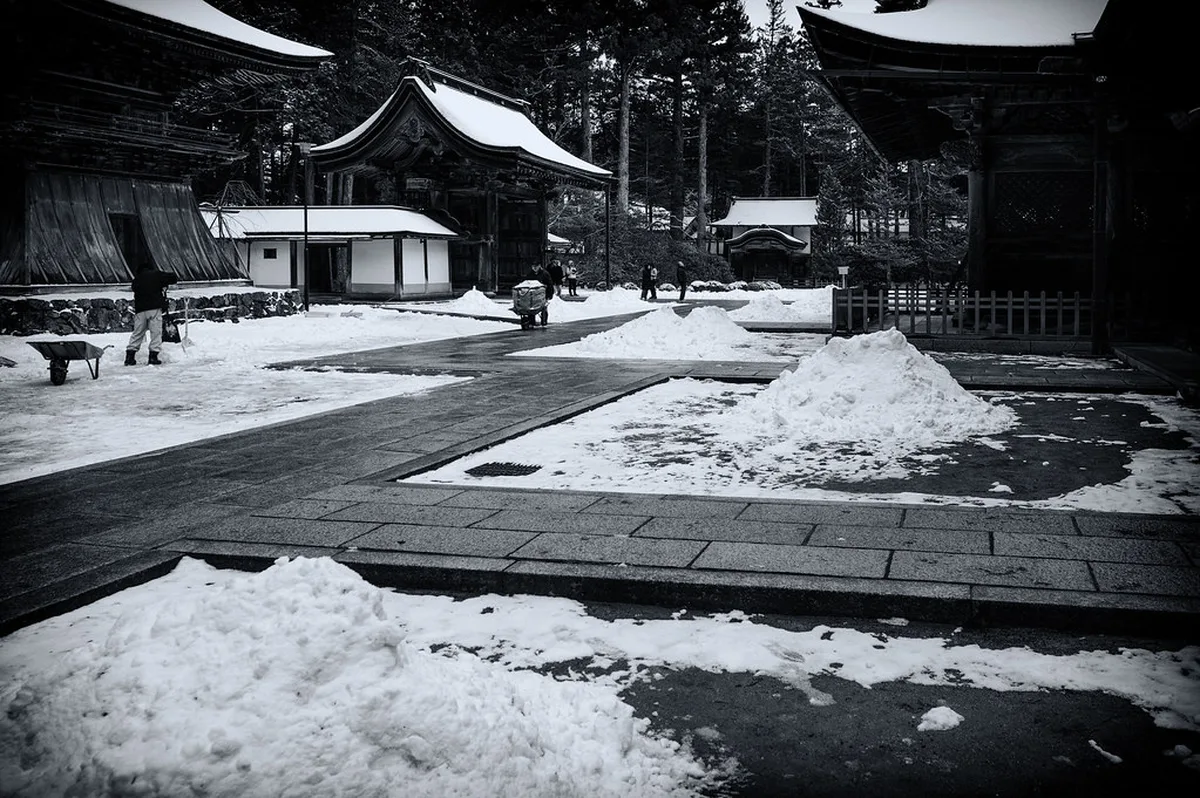
The best time for the winter evening walk is around 16:00–16:30. Sunset at Koyasan falls between 17:00 and 17:15 in January, and the blue hour — when the stone lanterns glow against the last of the sky's light — lasts only about 20 minutes. Arrive too late and the path is fully dark; arrive too early and the lanterns are not yet visible against the daylight. A headlamp is useful for the unlit sections near Ichinohashi. The wooden bridges can be icy after dark, so walk slowly and stay on the gravel path where traction is better.
If you are visiting as a day trip from Osaka, check the last bus departure time from Okunoin Bus Stop back to Koyasan Station before you set out for the evening walk. Missing the last bus means a 30-minute walk to the cable car station in the dark and cold. The last ropeway typically runs around 17:30 in winter but confirm on the day with Nankai Railway.
The unheated sections of the main temple halls get as cold as the outdoor air in January. If you have any condition that makes prolonged cold exposure risky — poor circulation, arthritis, or respiratory sensitivity — discuss it with your temple at booking and consider targeting early December or mid-March instead. Even healthy visitors should leave the 06:00 morning ceremony early if you feel numbness or extreme shivering; no temple will object.
| Essential | Why It Matters | Note |
|---|---|---|
| Merino wool thermal base layer | Keeps core temperature stable; stays warm even when wet | Top and bottom, not cotton |
| Two pairs wool socks | You'll swap between boots and slippers constantly; feet get damp | Pack extras; most temples allow laundry requests |
| Waterproof slip-on boots | Icy paths require grip soles; slip-ons speed up repeated shoe removal | Test at home first — clunky boots wear on tatami transition |
| Hand warmers (disposable) | Okunoin evening walk lasts 30–45 min in sub-zero air | Activate just before the cemetery walk |
| Heavy outer coat (−5°C rated) | The gap between heated room and unheated corridor is extreme | Easy on/off; many guests change coat 4–5 times daily |
| Headlamp or flashlight | Wooden bridges near Okunoin entrance are unlit and icy after 17:00 | Small LED headlamp won't disturb other visitors in the cemetery |
Top Sights: Danjo Garan and Kongobu-ji Temple
The Danjo Garan complex is the ceremonial heart of Koyasan, established by Kobo Daishi when he founded the settlement in 816. The centrepiece is the Konpon Daito pagoda, a large vermilion structure that contrasts sharply with winter snow. The complex also includes Kondo Hall (the main worship hall), Miedo Hall, and a series of smaller buildings spread across a wide open precinct. Entry to individual structures costs around ¥200 each; walking the precinct is free. Allow 30–40 minutes.
Kongobu-ji Temple, a five-minute walk from Danjo Garan, serves as the administrative headquarters of the entire Koyasan Shingon sect. Its interior houses exceptional fusuma sliding door paintings, though photography inside is not permitted. The temple is also home to Japan's largest rock garden, Banryutei — in heavy winter snow the garden loses its intended shape, so if the rock garden is your primary interest, a late March or early April visit gives better access. Winter entry costs ¥1,000 per adult.
Both sites are most enjoyable in the morning before lunch, when the snow is freshest and the light is soft. The Daimon Gate entrance, a 25-metre vermilion gate at the western entrance to Koyasan, is worth the 10-minute detour from Danjo Garan and is particularly striking at sunset when viewed from the road below it.
What a Winter Shukubo Stay and Temple Entry Fees Actually Cost
Budgeting for Koyasan in winter has two separate cost layers: getting into the sights, and where you sleep. Danjo Garan's Konpon Daito and Kondo halls charge around ¥500 per building, and Kongobu-ji charges around ¥500 for entry to its ceremonial rooms and rock garden. A combined ticket covering Kongobu-ji, the Danjo Garan halls, and the Reihokan Museum is sold near Senjuinbashi for roughly ¥2,000 and works out cheaper than paying each entry separately if you plan to see all three in one day.
An overnight shukubo stay with dinner and breakfast typically runs ¥9,000–¥15,000 per person, depending on the temple and room type; Eko-in and other popular temples sit toward the higher end of that range in winter despite the lower demand, since heating costs and extra futons add expense. Reservations are usually made through the temple directly or the Koyasan Shukubo Association, and winter rates are not meaningfully discounted despite the quieter season — availability improves, but price rarely drops much.
If a shukubo stay does not fit the budget, Koyasan also works as a long day trip from Osaka: you cover only the temple and museum entry fees, skip the ¥9,000-plus lodging cost, and can still walk Okunoin and see Danjo Garan before the last ropeway down. That trade-off is worth weighing against the itinerary in the Koyasan day trip guide before booking transport.
Practical Planning: Is One Night in Koyasan Enough?
One night covers the essentials comfortably: arrive by mid-afternoon to visit Okunoin at blue hour, check in to your shukubo for dinner and morning prayers, then spend the following morning at Danjo Garan and Kongobu-ji before descending to Osaka or Kyoto. This itinerary works best for those arriving from Osaka who can be at Koyasan Station by 14:00.
Two nights give you more flexibility — a full day for the cemetery and main sights without rushing, plus time for the smaller sites like Daimon Gate and a longer souvenir browse along the main shopping street. In winter, the slower town pace makes two nights feel well-paced rather than excessive. It also lets you experience morning prayers twice, which most visitors say deepens the impression considerably.
Book shukubo in advance even for January. The most popular temples (particularly Eko-in) fill their best rooms months ahead, and last-minute availability usually means less desirable room locations away from the temple garden. The Koyasan Official Tourism site (Visit Wakayama) lists available temples and current booking conditions. Check the best season to visit guide for a full month-by-month breakdown if your travel dates are flexible.
Explore in winter in other cities
Frequently Asked Questions
Is Koyasan worth visiting in winter?
Yes, it is highly worth it for the peaceful atmosphere and beautiful snow-covered scenery. You will encounter far fewer crowds than in other seasons. Just ensure you pack enough warm layers for the unheated temple halls.
How cold does it get in Koyasan in January?
Temperatures typically range from -4°C to 3°C / 25°F to 37°F during the day. Nights are consistently below freezing, often dropping to -6°C / 21°F. Heavy snowfall is common throughout the month.
Are the temples in Koyasan heated?
Guest rooms in temple stays usually have kerosene or electric heaters. However, the large prayer halls and corridors are generally unheated and very cold. You must wear thick socks and thermal layers to stay comfortable.
A winter visit to Koyasan rewards careful preparation with something few travel experiences in Japan can match — a working monastery town in deep snow, almost entirely to yourself. The cold is real and persistent, but the Okunoin blue hour, the morning fire ceremony, and the weight of a warm futon after a long day in the snow are all sharper for it.
Pack for sub-zero temperatures, time your cemetery walk for the 16:00–16:30 window, book your getting there from Osaka transport in advance, and give yourself at least one night. The mountain asks for effort; it gives back accordingly.
Use our Koyasan attractions hub to plan the rest of your trip.
Free: The Mount Kōya Essentials guide
Top things to do, where to stay, a perfect day plan, getting around, and the best time to go — a Mount Kōya mini-guide you can take offline.
You might also like

Continue reading
More guides you'll find useful