
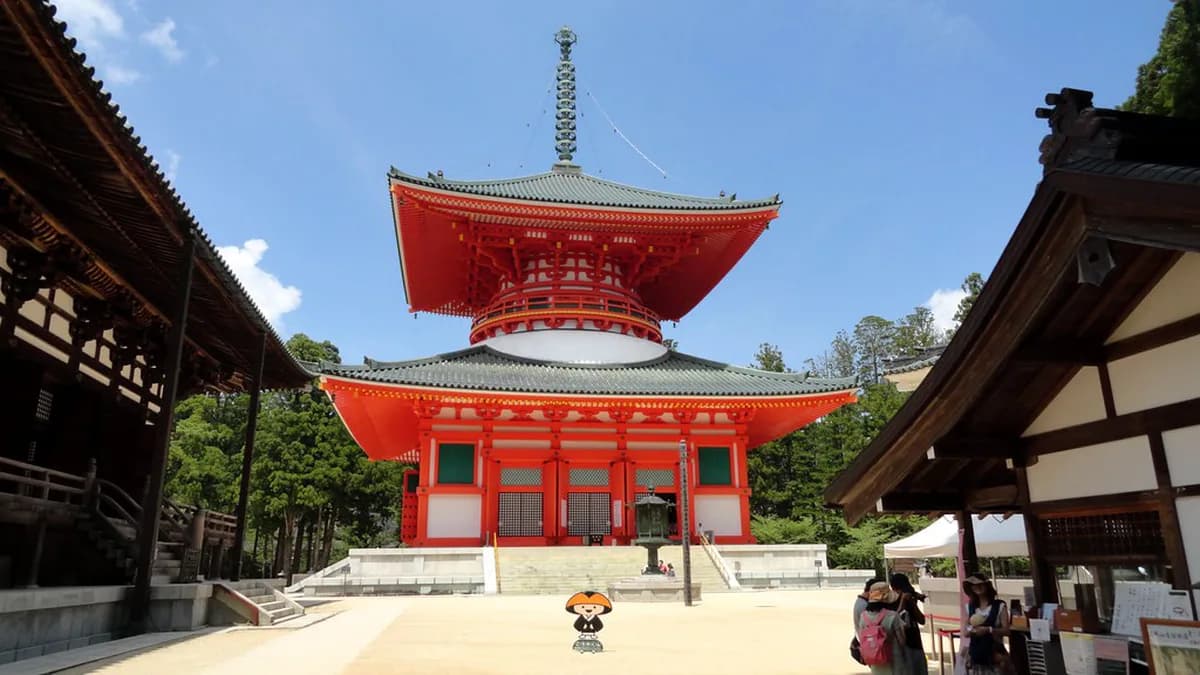
Danjo Garan serves as the spiritual center of Koyasan, a secluded mountain town founded by Kobo Daishi. This sacred complex represents the first area developed for Shingon Buddhist training over 1,200 years ago. Visitors often find the atmosphere here more tranquil than the bustling streets of nearby Osaka.
Walking through the vermilion gates feels like stepping into a living classroom of ancient philosophy. The site features iconic structures like the Konpon Daito pagoda and the massive Kondo Hall. This danjo garan visitor guide will help you navigate the rich history and practical logistics of this UNESCO World Heritage site.
Planning your time correctly ensures you witness the unique rituals and stunning architecture without feeling rushed. From finding lucky pine needles to understanding the 3D Mandala, every corner holds a deeper meaning. Let this guide lead you through the most essential experiences in the heart of Koyasan.
Understanding Danjo Garan: The Heart of Koyasan
Kobo Daishi chose this high mountain plateau as the perfect location for a monastic retreat in 816. He envisioned Danjo Garan as a central training ground where monks could practice the secret teachings of Shingon Buddhism. The layout follows strict geometric patterns intended to mirror the spiritual universe.
Today, the site remains one of the most important attractions in Koyasan for pilgrims and tourists alike. Most of the buildings have been reconstructed over centuries due to fires, yet they maintain their original 9th-century spirit. You will notice a distinct lack of commercial noise, allowing for a focused and reflective visit.
The complex is not just a museum but a functioning space for religious ceremonies and daily prayers. Respectful visitors are welcome to observe the exterior of many halls at any time of day. Understanding the dual nature of the site as both a historical landmark and a living temple enhances your experience.
How to Get to Danjo Garan from Osaka
Reaching this mountain sanctuary requires a scenic journey starting at Namba Station in Osaka. You should board the Nankai Koya Line, which takes approximately 90 minutes on a Limited Express train. The tracks wind through dense forests and steep valleys as you approach the base of the mountain.
At Gokurakubashi Station, travelers transfer to a steep cable car for a five-minute ascent. Once you arrive at Koyasan Station, a dedicated bus system provides easy access to the temple district. You can use the KKday Nankai All Line Pass to simplify your ticketing and save on individual fares.
Walking from the town center to the Garan takes about 15 to 20 minutes through pleasant, flat streets. Alternatively, take the bus to the "Kondo-mae" stop for immediate access to the main entrance. Most visitors find the journey itself to be a highlight of the trip because of the changing mountain scenery.
- Nankai World Heritage Ticket Analysis
- Type: Discount transit pass
- Best for: Day trippers from Osaka
- Where: Nankai Namba Station
- Cost: Approx. 3,000 to 3,500 yen
Key Highlights: Konpon Daito and the Kondo Hall
The Konpon Daito is a massive 48-meter-tall pagoda that dominates the skyline with its bright vermilion paint. Inside, it houses a stunning "3D Mandala" composed of five golden Buddha statues and sixteen painted pillars. This visual representation helps practitioners visualize the complex teachings of the Vajra World.
Nearby sits the Kondo Hall, which serves as the main lecture hall for the entire Koyasan community. It hosts major ceremonies throughout the year and contains an image of Yakushi Nyorai, the Buddha of Medicine. The current structure dates to 1932 but follows the grand proportions of its predecessors.
Entering these buildings requires a small fee, but the intricate artwork inside is worth the investment. Many visitors spend at least 30 minutes admiring the detailed murals and the quiet, incense-filled interior. Be sure to remove your shoes before stepping onto the wooden platforms inside the halls.
- The 3D Mandala Experience
- Type: Spiritual art installation
- Best for: Art and history lovers
- Where: Inside Konpon Daito
- Cost: 500 yen entry fee
The Legend of the Sankosho Pine Tree
Located between the Kondo and the pagoda, the Sankosho Pine is a tree tied to the very founding of Koyasan. Legend says Kobo Daishi threw a three-pronged ritual tool, called a sankosho, from China toward Japan. He later found that same tool caught in the branches of this specific pine tree.
Visitors often gather around the protective fence to search the ground for rare three-pronged pine needles. Finding one is considered a sign of good luck and a blessing from the founder himself. Normal pine needles have two prongs, so the three-pronged variety is quite a special find.
You can keep any needles you find as a free, natural souvenir of your spiritual journey. This ritual is a favorite for families and solo travelers looking for a personal connection to the site. It adds a playful and interactive element to an otherwise formal temple visit.
Practical Visitor Info: Fees, Hours, and Etiquette
The grounds of Danjo Garan are open 24 hours a day and are free to enter for walking. However, the interiors of the Konpon Daito and Kondo Hall have specific operating hours, usually from 8:30 AM to 5:00 PM. Check the official Wakayama tourism site for any seasonal closures or holiday changes.
Admission for each main hall currently costs 500 yen per person for adults. You can purchase a combined ticket at the central information hub if you plan to visit multiple sites like Kongobu-ji temple. This bundle often saves a few hundred yen and simplifies your entry process.
Photography is strictly prohibited inside the buildings to protect the sacred statues and delicate artwork. Please maintain a quiet voice and turn off your cell phone ringtone while exploring the complex. Wearing modest clothing that covers your shoulders and knees is recommended as a sign of respect.
Best Time to Visit for Seasonal Scenery
Autumn is widely considered the most spectacular time to visit Danjo Garan due to the vibrant maple trees. The peak foliage usually occurs from late October to mid-November, turning the grounds into a sea of red and gold. The vermilion pagoda looks particularly striking against the backdrop of changing leaves.
Winter offers a completely different atmosphere as heavy snow often blankets the temple roofs and stone lanterns. The silence of the mountain becomes even more profound during the colder months of January and February. Travelers should wear warm layers and sturdy shoes, as the paths can become slippery with ice.
Spring brings delicate cherry blossoms, though they bloom later here than in Osaka due to the higher elevation. Visiting in May allows you to enjoy lush greenery and pleasant temperatures for walking between the different halls. Each season provides a unique photographic perspective on the ancient architecture.
- Photography Guide Tips
- Type: Visual planning guide
- Best for: Content creators
- Where: Pagoda west side
- Cost: Free outside access
Combining Your Visit: Kongobuji and Okunoin
A visit to Danjo Garan is best paired with a walk to Kongobu-ji, the headquarters of Shingon Buddhism. This temple features the largest rock garden in Japan and stunning sliding door paintings. It is located just a five-minute walk from the Garan entrance along a scenic path.
After exploring the central district, you can take a short bus ride to the entrance of Okunoin cemetery. This massive necropolis leads to the mausoleum of Kobo Daishi and is a must-see for its ancient cedars. Most visitors find that half a day is sufficient for the Garan and Kongobu-ji combined.
If you have a full day, start at the Daimon Gate and walk toward the Garan. This route follows the traditional pilgrim path and provides a grand sense of arrival. Planning your route in a linear fashion saves time and energy on the mountain.
Experience Koyasan: Staying in a Temple (Shukubo)
To truly absorb the energy of Danjo Garan, consider booking an overnight stay in a local temple. These shukubo accommodations offer a unique look into monastic life while providing comfortable guest rooms. You can find various options through the KKday Koyasan Accommodation listings.
Guests are typically served shojin ryori, which is a traditional Buddhist vegan cuisine focused on seasonal vegetables. In the morning, you can participate in the fire ceremony or sutra chanting alongside the resident monks. This immersive experience often becomes the most memorable part of a trip to Japan.
Many temples are located within walking distance of the Garan, allowing for a peaceful evening stroll. The complex is beautifully illuminated at night, offering a different perspective than the daytime crowds. Booking several months in advance is recommended, especially during the peak autumn and spring seasons.
Frequently Asked Questions
What is the significance of Danjo Garan in Koyasan?
Danjo Garan is the central training ground for Shingon Buddhism, founded by Kobo Daishi in the 9th century. It represents the physical manifestation of the Buddhist universe through its specific architectural layout. Most major religious ceremonies and rituals in Koyasan still take place within this sacred complex today.
How much does it cost to enter the Konpon Daito?
Entry to the interior of the Konpon Daito pagoda costs 500 yen for adults. The grounds surrounding the building are free to explore 24 hours a day. You can also purchase a combined ticket for several Koyasan attractions to save on total admission fees.
How do I get to Danjo Garan from Namba Station?
Take the Nankai Koya Line from Namba Station to Gokurakubashi, then transfer to the Koyasan Cable Car. From the top station, take a bus to the Kondo-mae stop. The total journey takes about two hours and offers beautiful views of the Wakayama mountain range.
Can you find three-pronged pine needles at Danjo Garan?
Yes, visitors can find rare three-pronged pine needles at the Sankosho Pine tree located near the Kondo Hall. These needles are considered lucky charms and are free for visitors to keep. Searching for them is a popular tradition that honors the legend of Kobo Daishi's ritual tool.
Danjo Garan remains a cornerstone of Japanese spiritual history and a highlight of any visit to Wakayama. Whether you are searching for lucky pine needles or admiring the 3D Mandala, the site offers deep cultural rewards. Its blend of stunning architecture and quiet mountain air creates a truly unique travel experience.
By following this guide, you can navigate the transit from Osaka and the local etiquette with total confidence. Remember to plan for seasonal weather and consider a temple stay for a deeper connection to the area. Your journey into the heart of Shingon Buddhism starts at the vermilion gates of this ancient sanctuary.
Take your time to explore the smaller halls and hidden corners of the complex beyond the main pagoda. Every structure tells a story of devotion that has survived for over a millennium. Enjoy the peace and perspective that only a place like Danjo Garan can provide to the modern traveler.
To verify current details, consult the Danjo Garan official site and Danjo Garan on Wikipedia.
Browse every attraction in our Koyasan attractions hub.
For more Koyasan planning, see things to do in Koyasan, our Koyasan itinerary, and our Danjo Garan guide.