
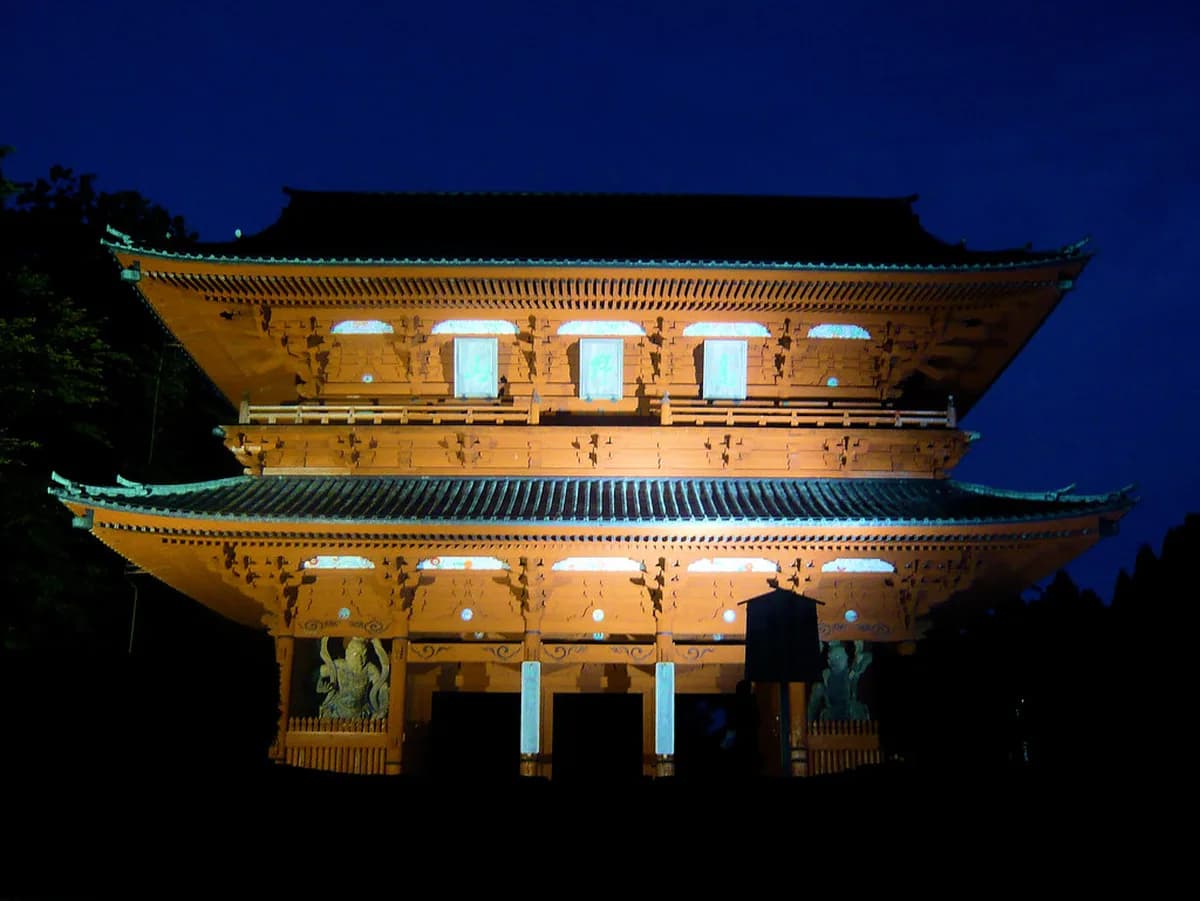
Standing as the massive crimson portal to Mount Koya, the Daimon Gate represents the traditional boundary between the secular and sacred worlds. This towering structure serves as the first major landmark for pilgrims arriving via the ancient mountain trails. Our daimon gate visitor guide provides the essential details you need to appreciate this 25-meter tall masterpiece. Whether you are arriving by bus or finishing a long hike, this guide ensures you don't miss the gate's hidden details.
Most visitors focus on the central temples, yet starting your journey at this historic entrance adds deep spiritual context to your trip. The site is designated as part of a UNESCO World Heritage Centre area for its cultural value. Planning a visit here requires understanding the local bus schedules and the best times for photography. Let's explore how to make the most of your time at this iconic landmark in Koyasan.
Must-See Features of the Daimon Gate
The current iteration of the gate dates back to 1705 and showcases impressive Edo-period craftsmanship. Its massive two-story structure is painted in a vibrant vermillion that contrasts beautifully against the surrounding cedar forest. Look closely at the intricate woodwork under the eaves to see the structural complexity required to support such a heavy roof. Visitors often spend about 20 minutes here admiring the sheer scale of the timber beams.
On either side of the entrance, you will find the fierce Nio guardian statues that protect the sacred grounds. These statues were carved by the famous artists Uncho and Koyu during the 18th century. One statue has its mouth open to represent the first sound of the Sanskrit alphabet, while the other is closed for the last. Capturing a clear photo can be tricky because of the protective wire mesh covering the alcoves.
To get the best shot of the guardians, place your camera lens directly against the mesh to minimize reflections. Using a wide-angle lens helps capture the full height of the gate from the roadside. Morning light typically illuminates the front of the gate, making the red paint pop against the blue sky. Avoid using a flash, as it will bounce off the metal wiring and obscure the statue's features.
- Architectural Highlights of the Great Gate
- Height: 25.1 meters
- Style: Two-story R楼-style
- Statues: Agyo and Ungyo Nio
- Entry: Free for all
History and Cultural Significance of the Entrance
For over a millennium, this spot has served as the official gateway for those entering the monastic complex. Kobo Daishi, the founder of Shingon Buddhism, originally envisioned a grand entrance to separate the mountain's holy interior. Early pilgrims would stop here to offer prayers before continuing to the main temples. The gate has survived numerous fires over the centuries, with the current version being the most resilient.
The location of the gate was strategically chosen to face the west, looking toward the Shikoku region. This orientation connects Mount Koya to the birthplace of Kobo Daishi. You can learn more about these historical connections at the Koyasan Reihokan Museum nearby. Understanding this history enriches the experience of walking through the portal for the first time.
As you pass through the gate, notice how the atmosphere changes from the rugged mountain road to the quiet town. This transition is a key part of the spiritual journey for many Buddhist practitioners. The gate remains a symbol of the endurance of the Shingon faith in Japan. It serves as a constant reminder of the mountain's long history as a center for meditation.
Outdoor Spots and Views: The Best Sunset in Koyasan
While many tourists leave before dark, staying for the sunset at Daimon is a highlight of any trip. The gate's elevated position offers a clear view over the valleys toward the Kii Channel. On clear days, you can see the distant mountains of Awaji Island and the coast of Shikoku. The sky often turns a deep purple and orange, framing the gate in a dramatic silhouette.
During the autumn months, the setting sun aligns perfectly with the road leading up to the gate. This creates a golden hour effect that is perfect for professional-grade landscape photography. Plan to arrive at least 30 minutes before the official sunset time to secure a good spot. The temperature drops quickly once the sun goes down, so bring an extra layer of clothing.
In the winter, the snow-covered roof of the gate creates a serene and quiet atmosphere. The contrast between the white snow and the red wood is particularly striking during the blue hour. Most bus services continue running until shortly after sunset, allowing for an easy return to your lodging. Check the local weather forecast to ensure you have clear visibility for the coastal views.
- Seasonal Sunset Timing for Photography
- Spring: 18:00 - 18:30
- Summer: 18:45 - 19:15
- Autumn: 17:00 - 17:30
- Winter: 16:45 - 17:15
Budget-Friendly Tips for Visiting the Gate
One of the best aspects of visiting the Daimon Gate is that it is entirely free. Unlike some of the inner temples, there is no ticket booth or entrance fee required here. The site is open 24 hours a day, making it accessible for early morning or late night visits. This flexibility allows budget travelers to enjoy a world-class site without spending a yen.
To save on transportation, consider walking from the central Senjunbashi intersection to the gate. The walk takes approximately 15 to 20 minutes and follows a relatively flat, paved sidewalk. Walking allows you to see smaller shrines and local shops that you would miss on the bus. If you prefer the bus, use a day pass to keep your individual trip costs down.
There are several benches located near the gate where you can enjoy a packed lunch with a view. Many local bakeries in town sell affordable snacks that are perfect for a quick break. Always remember to take your trash back with you to keep the sacred grounds clean. Visiting during the shoulder seasons can also help you find lower rates on nearby accommodations.
How to Plan a Smooth Visit to Daimon and Danjo Garan
Most visitors combine a trip to the gate with a visit to the Danjo Garan temple complex. The two sites are connected by a pleasant 10-minute walk through a quiet residential area. Starting at the gate and walking toward the center provides a natural flow to your sightseeing. This route follows the traditional path that monks have taken for centuries.
The closest bus stop is 'Daimon-mae', which is served by the regular Koyasan loop buses. Buses typically run every 20 to 30 minutes throughout the day, depending on the season. If you are arriving from Koyasan Station, you will likely need to transfer at the Senjunbashi stop. Keep a copy of the bus timetable handy to avoid long waits in the cold.
If you have limited time, prioritize the gate in the late afternoon before heading to your temple stay. This allows you to see the gate in daylight and stay for the beginning of the sunset. Most temple dinners are served around 17:30 or 18:00, so plan your return trip accordingly. A quick visit to the gate usually takes 30 to 45 minutes in total.
Navigating Koyasan with the World Heritage Ticket
The Nankai Railway World Heritage Ticket is the most cost-effective way to reach the mountain. This pass includes a round-trip train journey from Osaka and unlimited bus travel within the town. It also provides discount coupons for entry into major sites like the Kongobu-ji temple. Purchasing this ticket can save you over 1,000 yen compared to buying individual fares.
Travelers can choose between a traditional paper ticket or a modern digital version on their smartphone. The digital ticket is convenient but requires a stable internet connection for validation at the gates. Paper tickets must be purchased at major Nankai stations like Namba or Shin-Imamiya before you board. Both versions offer the same basic benefits and coverage for the Nankai Koya Line.
Note that the ticket is valid for two consecutive days, making it perfect for an overnight stay. If you plan to hike the Choishi Michi trail, the bus portion of the ticket is still very useful for getting around town. Always show your ticket to the bus driver when exiting to ensure your fare is covered. For more details on navigating the area, check our guide to Okunoin and its surroundings.
- Comparing World Heritage Ticket Options
- Paper Ticket: Available at Namba Station
- Digital Ticket: Purchase via Nankai app
- Validity: 2 consecutive days
- Perks: 20% off select temple entries
Frequently Asked Questions
Is the Daimon Gate free to visit?
Yes, the Daimon Gate is completely free to visit and does not require any tickets. It is an outdoor structure located on a public road, making it accessible 24 hours a day. This makes it an ideal stop for budget-conscious travelers exploring Koyasan at any time.
How do I get from Koyasan Station to the Daimon Gate?
Take the bus from Koyasan Station toward the town center and transfer at the Senjunbashi stop. From there, take a bus bound for Daimon and get off at the 'Daimon-mae' stop. The total journey usually takes about 20 to 25 minutes including the transfer time.
What is the best time of day to photograph the Daimon Gate?
The best time for photography is during the late afternoon or at sunset. Because the gate faces west, the setting sun provides dramatic lighting and beautiful colors in the sky. Early morning is also good for capturing the gate without the crowds of day-trippers.
Can you walk from Daimon Gate to Okunoin?
Yes, you can walk the entire length of the town from the gate to the Okunoin entrance. The walk is approximately 3 kilometers long and takes about 45 to 60 minutes at a steady pace. It is a great way to see the various temples and shops along the main road.
Visiting the Daimon Gate is an essential part of the Mount Koya experience that connects you to centuries of history. Its massive presence and fierce guardians provide a powerful introduction to the spiritual atmosphere of the mountain. By following this daimon gate visitor guide, you can time your visit for the best views and save money on transport. Make sure to include this landmark in your itinerary for a complete understanding of this sacred site.
Whether you are a photographer seeking the perfect sunset or a hiker finishing a pilgrimage, the gate offers something unique. The combination of architectural beauty and scenic vistas makes it one of the most memorable spots in Wakayama. Take your time to appreciate the craftsmanship and the quiet energy of this historic portal. We hope your journey through the great gate is the start of an unforgettable spiritual adventure.
To verify current details, consult the Daimon Gate official site and Daimon Gate on Wikipedia.
Browse every attraction in our Koyasan attractions hub.
For more Koyasan planning, see things to do in Koyasan, our Koyasan itinerary, and the best season to visit.