8-Step Koyasan Itinerary: The Ultimate 2-Day Temple Stay Guide
Plan the perfect koyasan itinerary with our 2-day guide. Includes temple stay reviews, transport tips from Osaka, and must-see spots like Okunoin.
On this page
Mount Koya, or Koyasan, offers a rare window into the heart of Shingon Buddhism and Japanese spiritual history. This 2-day koyasan itinerary is designed so first-timers balance the long travel time with deep immersion in the sacred mountain town. Whether you are a solo pilgrim or a curious traveler, this guide covers the logistics of getting there, what to do, and what to truly expect from a night inside a Buddhist temple. It was refreshed for 2026 to reflect the latest transport options and temple protocols.
Most visitors arrive from Osaka, seeking the quietude of a traditional temple stay known as shukubo. Arriving by noon is essential to experience the atmospheric evening rituals without feeling rushed. This plan focuses on the most iconic sites — Okunoin cemetery, Danjo Garan complex, and Kongobuji — while leaving space for the quiet contemplation this UNESCO World Heritage site demands.
At a Glance: 2-Day Koyasan Itinerary
This quick summary provides a high-level view of your spiritual journey through the mountains. Each day is designed to minimize backtracking between the town center and the outlying sacred areas. Follow this sequence to catch the morning ceremonies on your second day without an early scramble.
- Day 1: Arrival and the Sacred Forest (Spirituality and Shadows)
- Morning: Travel from Osaka Namba to Koyasan via the Nankai Koya Line.
- Afternoon: Walk the full 2-kilometre approach through Okunoin Cemetery to the Kobo Daishi Mausoleum.
- Evening: Shojin ryori dinner at your temple, followed by the atmospheric cemetery night walk.
- Day 2: Rituals, Temples, and the Great Pagoda (Art and Architecture)
- Morning: Morning prayer at 07:00, fire ceremony at 07:30, temple breakfast at 08:00.
- Midday: Kongobuji Temple rock garden, then the Danjo Garan complex and Daimon Gate entrance.
- Afternoon: Optional Women Pilgrims Course hike, then return to Osaka by 17:00–18:00.
| Day | Morning | Afternoon | Evening |
|---|---|---|---|
| Day 1 | Travel from Osaka Namba via Nankai Koya Line | Walk Okunoin Cemetery (2 km, 45 min) | Shojin ryori dinner at temple (17:30); optional night cemetery walk |
| Day 2 | Morning prayer (07:00), fire ceremony (07:30), breakfast (08:00) | Kongobuji Temple + rock garden; Danjo Garan complex; Daimon Gate | Women Pilgrims Course or return to Osaka (17:00–18:00 buses) |
Getting to Koyasan: The Nankai Koya Line Journey
Koyasan sits deep in the mountains of Wakayama Prefecture, and reaching it requires three separate legs: train, cable car, and bus. The journey starts at Namba Station in Osaka, where you board the Nankai Koya Line. The fastest option is the Limited Express Koya, which reaches Gokurakubashi Station in about 80 minutes. The regular express with a transfer at Hashimoto Station takes roughly 105 minutes but is cheaper and perfectly comfortable.
Note that the Japan Rail Pass is not valid on the Nankai Electric Railway, so you will need a separate ticket or the Koyasan World Heritage Ticket. At Gokurakubashi, board the cable car for a steep 5-minute climb to Koyasan Station at the top. From there, a local bus runs every 20–30 minutes into the town center and out to Okunoin. A one-way train and cable car ticket from Namba costs around 1,400 yen (regular express) or 2,200 yen (limited express).
For 2026, Nankai Railway also operates the Tenku luxury sightseeing train on certain weekends between Hashimoto and Gokurakubashi. Seats must be reserved by phone or at a Nankai ticket office at least 10 days in advance — walk-up booking is not available. The standard Limited Express, by contrast, can usually be purchased on the day of travel at Namba Station, though buying 30 minutes before departure secures a reserved seat.
The Koyasan World Heritage Ticket: Is It Worth It?
For most 2-day visitors, the Koyasan World Heritage Ticket is the smartest way to manage transport costs. The standard version covering the regular express costs 3,080 yen; the limited express version costs 3,630 yen. Both versions include a round-trip Namba–Koyasan ticket (train and cable car), unlimited bus travel within the mountain town, and 20% discount coupons for major temples including Kongobuji and Danjo Garan.
To put that in context: a single one-way trip from Namba by regular express to Okunoin already costs over 1,800 yen (1,390 yen train and cable car, plus 420 yen for the bus to Okunoin). The pass pays for itself on day one alone if you use the local buses even twice. You can buy it at Nankai ticket windows in Namba, Shin-Imamiya, and Tengachaya stations. Always verify the current price on the Nankai Railway website before departure, as rates are subject to revision.
If you prefer flexibility, an IC card (Suica or Pasmo) works on the regular express, cable car, and local buses within Koyasan, but you will pay the limited express supplement separately in cash. Whichever option you choose, keep your ticket accessible throughout the trip — bus drivers check passes at every stop.
Day 1: Okunoin Cemetery and the Evening Walk
Okunoin is Japan's largest cemetery, with over 200,000 tombstones lining a 2-kilometre moss-covered approach to the Kobo Daishi Mausoleum. Kobo Daishi — the monk Kukai who founded Shingon Buddhism in the 9th century — is believed to rest here in eternal meditation, awaiting the arrival of the Future Buddha. Emperors, samurai, and ordinary pilgrims have sought burial nearby for a thousand years, making this one of the most spiritually charged sites in all of Japan.
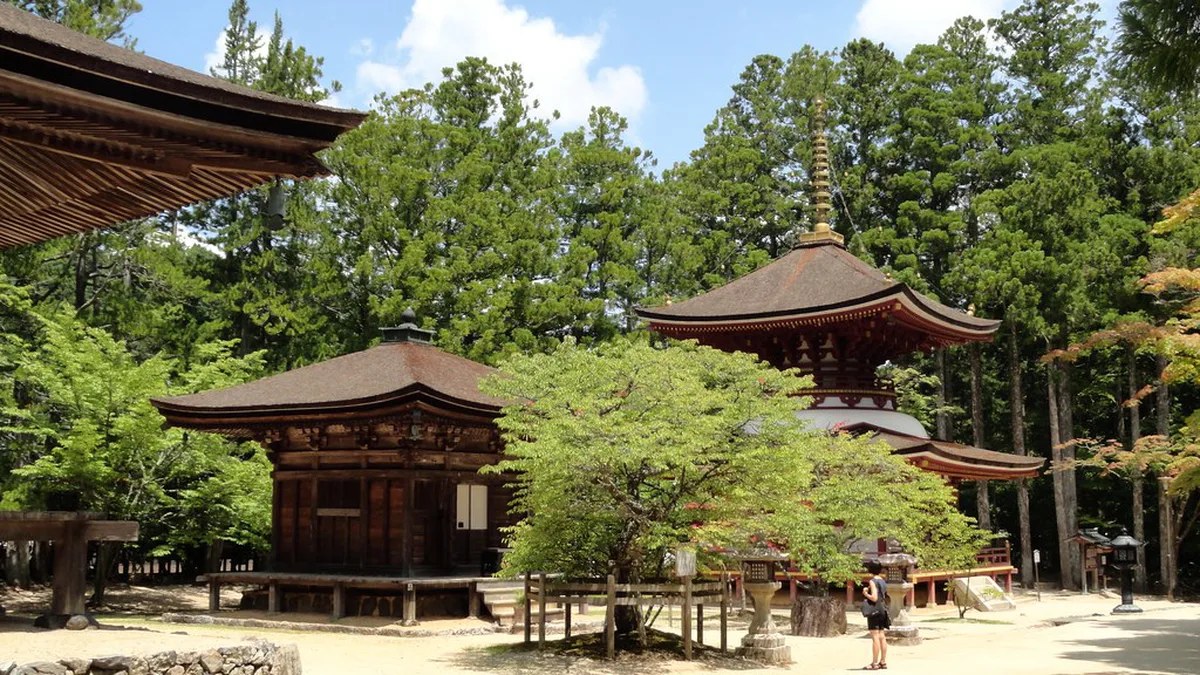
Enter from the Ichi-no-hashi Bridge at the eastern end for the full atmospheric approach through ancient cedar trees. The walk to Torodo Hall (Hall of Lamps), where thousands of lanterns burn perpetually, takes about 45 minutes at a slow, contemplative pace. Beyond the Gobyobashi Bridge leading to the mausoleum, photography, eating, and drinking are strictly prohibited — put your camera away before you cross. Plan to visit Okunoin twice: once in the afternoon to read the tombstone inscriptions in daylight, and again after dinner when the lantern-lit path becomes genuinely otherworldly.
If an evening solo walk through the cemetery sounds daunting, Ekoin Temple runs a guided night cemetery walk for its guests, typically departing around 20:00. The guide explains the stories behind notable graves — including those of major Japanese corporations who have erected monuments here — and the context makes the experience far richer. Dinner at most temples is served strictly at 17:30, so plan your afternoon walk to be back in time.
The last bus from Okunoin back to the town center and your temple runs around 18:00 in winter and 19:00 in summer. Check the local bus schedule at your shukubo reception when you arrive. If you miss the evening bus, a taxi from Okunoin costs around 1,200–1,500 yen.
Staying in a Shukubo: Temple Stay Experience and Shojin Ryori
There are over 50 shukubo (temple lodgings) in Koyasan, ranging from budget-style shared facilities to four-star ryokan with private bathrooms and garden views. Ekoin Temple is the most internationally accessible, with English-speaking monks, daily fire ceremonies, and a location directly in front of Okunoin. Shojoshin-in offers a quieter, more traditional atmosphere closer to Kongobuji. Both fill up 3–4 months in advance during spring cherry blossom and autumn foliage seasons, so book early.
The meals are a central part of the shukubo experience. Shojin ryori, the traditional Buddhist monk's cuisine, is entirely plant-based — no meat, fish, or pungent vegetables like garlic or onion. Dishes rely on tofu, mountain vegetables, sesame, and pickles, presented with the same care as high-end kaiseki. Dinner arrives in your room at around 17:30, delivered on lacquered trays by a monk. Breakfast follows morning prayers at approximately 08:00 and is similarly elaborate. Eating these meals slowly, in a tatami room with shoji screens filtering the morning light, is one of the most distinctly Japanese experiences on offer anywhere in the country.
The schedule of activities varies by temple but Ekoin follows a reliable pattern: a 40-minute meditation session at 16:30 (arrive by check-in at 13:00 to participate), morning chanting prayer at 07:00 for about 25 minutes, and the Goma fire ritual at 07:30. The fire ritual at Bishamondo Shrine — said to have been built by Kobo Daishi himself — involves a monk feeding wooden sticks into a sacred flame to burn away worldly desires. Even visitors with no background in Buddhism find it deeply affecting.
Sutra Copying and Ajikan Meditation at Your Temple
Many shukubo offer two hands-on practices beyond the meals and morning prayers. Both suit the quiet hours between Okunoin and dinner. Ask about them when you book, because spaces and fees vary by temple. Some require a reservation in advance.
Shakyo: copying a sutra by hand
Shakyo means copying a Buddhist sutra with a brush or pen, usually the short Heart Sutra. You trace the characters on a printed sheet, or write them over a faint outline, at a low table in a tatami room. No calligraphy skill is needed. The aim is steady, focused attention, not a polished result.
- Time: allow 45–90 minutes, depending on the temple and the length of the text.
- Cost: often around 1,000–2,000 yen, or included in some stay plans. Confirm when you reserve.
- Keepsake: many temples let you take the sheet home. Some offer to dedicate it at the temple's main hall.
Ajikan: Shingon's signature meditation
Ajikan is the meditation tradition of Shingon Buddhism, the school founded here by Kobo Daishi. You sit upright and contemplate the Sanskrit letter "A" inside a glowing moon disc, which stands for the original, unborn nature of all things. A monk usually guides the session and explains the posture and breathing first. It is a different experience from the zazen taught in Zen temples.
The late-afternoon meditation session at Ekoin, described above, fits neatly before the 17:30 dinner. If you want ajikan specifically, ask whether your temple teaches it or offers a general sitting. Sessions run about 30–40 minutes, and no experience is required. Wear loose clothing, since you sit on the floor or on a cushion.
For a fuller comparison of what different lodgings include, see our guide to the Koyasan temple stay.
What to Pack for a Koyasan Temple Stay
Temple buildings in Koyasan are not fully heated in the Western sense. Corridors between your room, the prayer hall, and the bathrooms are open to the mountain air, which drops sharply after sunset — even in May and September. Bring warm base layers you can sleep in, a light fleece or down layer to wrap around your shoulders during morning ceremonies, and thick socks for the cold tatami and stone floors. Slippers are provided for indoors, but they are thin and uninsulated.
Footwear that slips on and off easily matters more here than almost anywhere else in Japan. You will remove your shoes dozens of times — entering the prayer hall, moving between temple buildings, and sitting for meals. Dedicated slip-on shoes or sandals save significant friction. Most shukubo provide yukata robes and basic toiletries, but bring your own shampoo and conditioner if you have preferences, as amenities are minimal at budget-tier temples. A small torch or phone flashlight is useful for the evening Okunoin walk if you venture out alone.
One practical detail that surprises many visitors: most shukubo do not have luggage storage on checkout day. If you need to explore the mountain after your 10:00 checkout, ask at the front desk — some temples hold bags informally, and the tourist information office near Senjuinbashi bus stop also stores luggage for a small fee.
The cable car from the base of Koyasan runs until 19:45 in winter and 20:15 in summer. If you are returning to Osaka on day two, catch an afternoon bus by 15:00 to ensure you have time to reach Koyasan Station before the final cable car departs. The last limited express train from Gokurakubashi to Namba leaves around 19:00.
Day 2: Danjo Garan, Kongobuji, and the Daimon Gate
After the morning fire ceremony and breakfast, head to Kongobuji Temple, the headquarters of Shingon Buddhism worldwide. Entry costs 1,000 yen (800 yen with the World Heritage Ticket discount). Inside, the temple is famous for its fusuma sliding doors painted by master artists from the 16th and 17th centuries, and for the room where the warlord Toyotomi Hidetsugu was forced to commit ritual suicide in 1595. Photography is not permitted inside. Behind the main building, the Banryutei Rock Garden — the largest rock garden in Japan at 2,340 square metres — offers a place to sit and process everything the mountain has shown you. Allow at least an hour here.
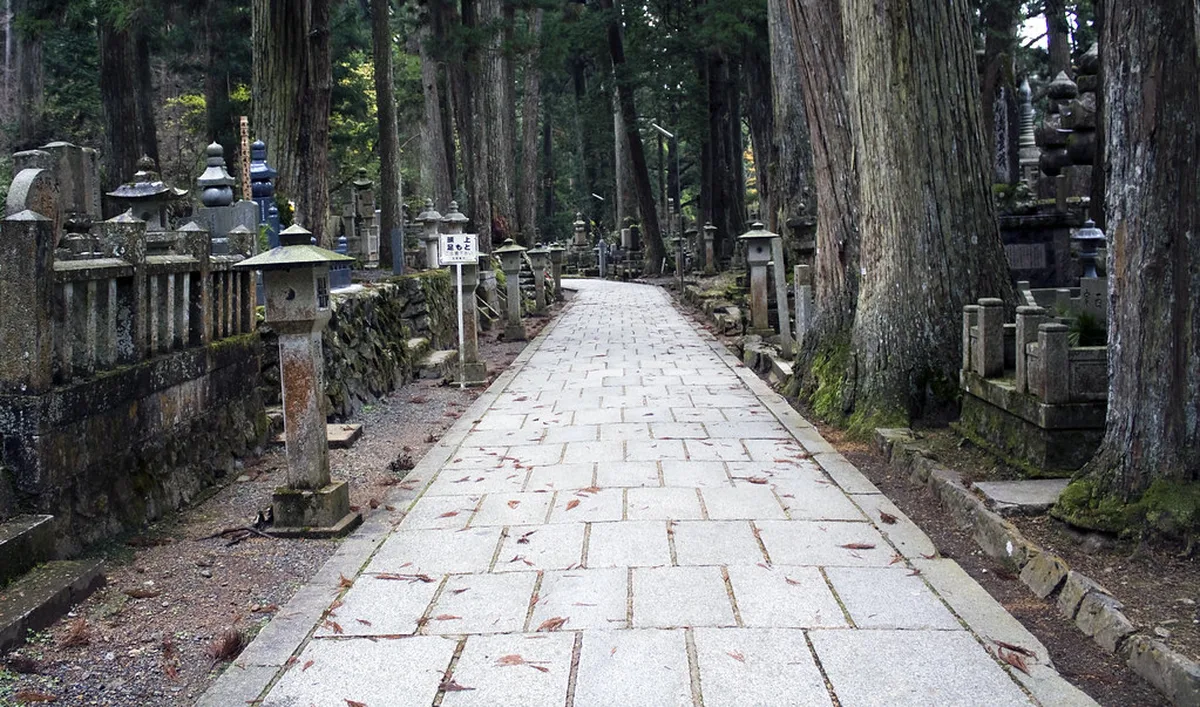
A 5-minute walk brings you to the Danjo Garan complex, the spiritual heart of Koyasan and the first site where Kobo Daishi established a temple. According to legend, he threw his vajra ritual implement from China toward Japan and it landed in a pine tree on this very spot. The complex contains 19 buildings; the most spectacular are the Konpon Daito Pagoda (45 metres tall, rebuilt 1937) and the Kondo Hall. Inside the Konpon Daito, a rare three-dimensional mandala features a central Cosmic Buddha surrounded by statues and painted pillars — admission is 500 yen, reduced with the World Heritage Ticket.
From Danjo Garan, walk west 10 minutes to the Daimon Gate, Koyasan's traditional 25-metre-tall entrance, rebuilt in 1705 and flanked by two fierce guardian deities. Most major temples and the Garan complex are open daily 08:30–17:00. After the gate, you have a choice: catch the bus back to your luggage and head to Koyasan Station, or tackle the Women Pilgrims Course before departure.
The Women Pilgrims Course and Koyasan vs. Kumano Kodo
The Women Pilgrims Course encircles Koyasan along a 7-kilometre forest trail. Before 1872, women were barred from entering the sacred mountain, so female devotees built their own ring of halls — Nyonindo — around its perimeter. The most scenic section runs from Daimon Gate through dense cedar and torii gates to Nyonindo Hall, a 2-kilometre walk taking about one hour with comfortable stops. It is a genuinely beautiful finish to the trip and easy to complete before the 14:00–15:00 window when buses back to the station become more frequent.
For travelers deciding between Koyasan and the Kumano Kodo pilgrimage routes in the same Wakayama region, the two serve different purposes. Koyasan is compact and town-centered — you can see its key sites in a focused overnight without great physical effort. Kumano Kodo demands 1–3 days of actual trail hiking through remote mountain forests, with accommodation spread along the route and logistics that require more advance planning. Many visitors combine both: finish Koyasan on day two and take the 4-hour express bus south toward Tanabe City, the gateway to the Kumano Kodo network. If that appeals, check the official Kumano Kodo route guide for route details and seasonal trail conditions.
In 2026, some sections of the traditional Choishi Michi pilgrimage trail (the 24-kilometre stone-pillar route from Jido-ryu Station to Koyasan) remain subject to detours following storm damage. Check the Koyasan Tourism Association website for current trail status before committing to this route, particularly in early spring and after heavy autumn rain.
Essential Tips for Planning Your Koyasan Trip
Book your shukubo as the very first step — popular temples like Ekoin and Shojoshin-in fill 3–4 months out during peak seasons. Most temples accept reservations through their official sites or via major Japanese booking platforms. If you want the Tenku luxury sightseeing train for the scenic mountain leg between Hashimoto and Gokurakubashi, reserve it at a Nankai ticket office at least 10 days ahead; it runs on select weekends and fills quickly. The standard day trip from Osaka to Koyasan skips all the best parts — staying overnight is genuinely non-negotiable for the full experience.
One day is technically enough to see the major sites, but one night is the minimum to experience what makes Koyasan different from every other temple town in Japan. Arriving from Kyoto adds roughly 90 minutes each way compared to Osaka; if you are based in Kyoto, the round trip is possible but leaves barely 4 hours on the mountain — start before 07:00 or reconsider the logistics. The mountain gets cold: even summer evenings drop to single digits at elevation. Pack accordingly, confirm your temple's dinner and breakfast times on the day of arrival, and silence your phone before entering any prayer hall.
Frequently Asked Questions
What is the best temple to stay at in Koyasan?
Ekoin Temple is highly recommended for its English-speaking monks and accessible rituals like the fire ceremony. It offers a great balance of traditional atmosphere and modern comfort for first-timers. Other excellent options include Shojoshin-in for its history and location near Okunoin.
How do I get from Osaka to Koyasan?
Take the Nankai Koya Line from Namba Station to Gokurakubashi, then transfer to the cable car. The journey takes about 2 to 2.5 hours depending on the train type. Using the Limited Express Koya is the fastest and most comfortable method for this route.
Is Koyasan worth a day trip from Kyoto?
While possible, a day trip from Kyoto takes nearly 4 hours each way, leaving little time for exploration. Staying overnight is much better to experience the morning prayers and evening atmosphere. If you must go for a day, start your journey before 7:00 AM.
A well-planned koyasan itinerary transforms a simple sightseeing trip into a profound cultural experience. By staying overnight, you gain access to rituals and quiet moments that day-trippers simply miss. I hope this guide helps you find the same peace and wonder that I discovered in these misty cedar forests. Safe travels as you climb toward the sacred peaks of Wakayama.
Free: The Mount Kōya Essentials guide
Top things to do, where to stay, a perfect day plan, getting around, and the best time to go — a Mount Kōya mini-guide you can take offline.
You might also like

Continue reading
More guides you'll find useful