Koyasan Day Trip: The Ultimate 1-Day Itinerary from Osaka
Plan the perfect Koyasan day trip with our detailed itinerary. Includes Nankai Pass tips, transport guides from Osaka, and must-see spiritual sites like Okunoin.
On this page
A Koyasan day trip from Osaka is one of the most rewarding single-day journeys in Japan. In roughly two hours you travel from the neon-lit streets of Namba to a misty plateau at 800 metres, where more than 100 Buddhist temples have stood since the ninth century. This guide gives you a timestamped itinerary, honest transport costs in yen, and the exact last-bus timings that catch most day trippers off guard.
Mount Koya is the world headquarters of Shingon Buddhism, founded by the monk Kobo Daishi (Kukai) around 816 CE. The plateau is surrounded by eight mountain peaks that form the shape of a lotus blossom — a sacred symbol in Buddhism that also explains why the town's temples, gates, and pilgrimage paths are arranged the way they are. Even a single day here feels unlike anywhere else in Japan.
Why Visit Koyasan?
Koyasan is a UNESCO World Heritage Site and the spiritual heart of Shingon Buddhism. Over 200,000 tombstones line the cedar-shaded paths of Okunoin cemetery, making it Japan's largest cemetery and one of its most atmospheric walks. The combination of ancient graveyards, vermilion pagodas, and incense-thick temple halls creates an atmosphere that no other day trip from Osaka matches.
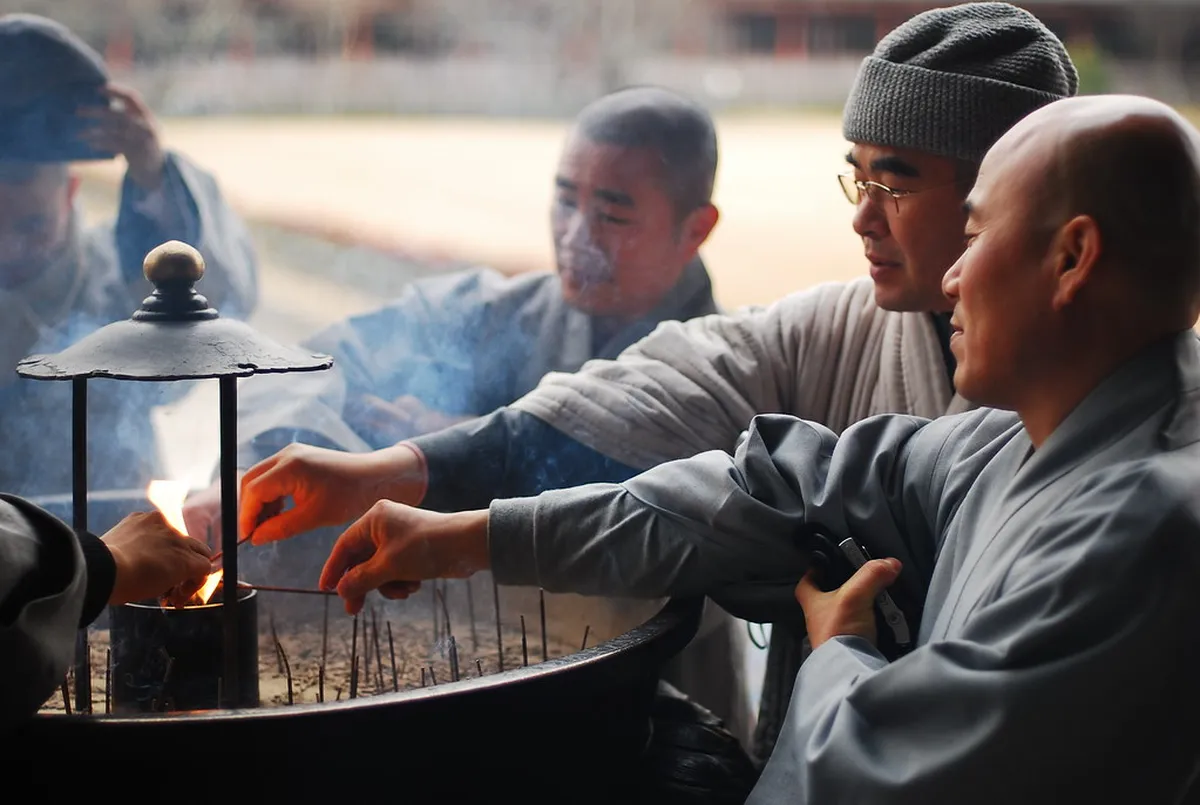
The town itself sits on a plateau entirely ringed by forest. Because Koyasan cannot sprawl outward, its historic character has been preserved almost perfectly. Unlike many famous Japanese heritage sites, the main temples here are active religious centres — monks still chant morning sutras, lanterns burn continuously in the Torodo Hall, and the presence of real spiritual practice gives every visit a gravity that is hard to describe.
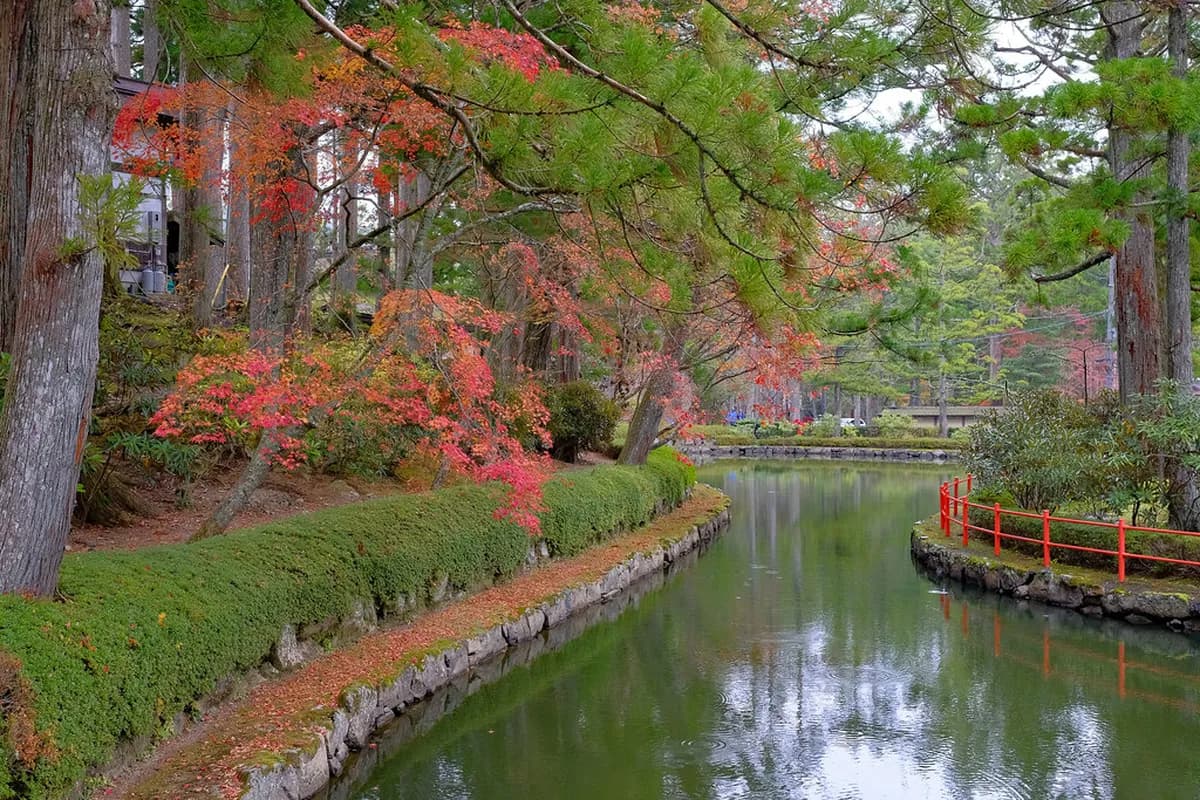
Autumn foliage (mid-October to mid-November) turns the cedar canopy above Okunoin into shades of red and gold, making it arguably the best season to visit. That said, the mystical atmosphere of foggy mornings in spring and summer is equally compelling, and crowds are thinner outside the autumn peak.
Getting to Koyasan from Osaka: Transport and the Nankai Koya Line
The standard route starts at Namba Station in central Osaka. Take the Nankai Koya Line to Gokurakubashi Station, then board the Koyasan Cable Car for a five-minute ascent to Koyasan Station. From there, local buses connect you to every major site in the village. The entire journey from Namba takes around 90 minutes on a Limited Express or around two hours on a standard express.
The Limited Express Koya (特急こうや) is the fastest and most comfortable option. Trains depart Namba roughly every 30–60 minutes from around 06:30. A standard express (no reservation required) is cheaper but adds 20–30 minutes and requires a change at Hashimoto Station. Either way, the final stretch from Hashimoto to Gokurakubashi is single-track and climbs steeply through cedar-covered valleys — one of the most scenic short rail rides in western Japan.
Driving is technically possible but the mountain roads are narrow and winding, and parking near major temples is limited. Most visitors — including locals — rely on the train and cable car combination. Check the Nankai Railway Official Timetables for the latest Limited Express schedule before you leave your hotel.
The Nankai Koyasan World Heritage Pass: Is It Worth It?
The Nankai Koyasan World Heritage Pass covers round-trip rail on the Nankai Koya Line (Namba to Gokurakubashi), the Koyasan Cable Car, and unlimited local bus rides within the village. In 2026 the pass costs around ¥3,400 for adults (2-day validity). Buying each segment separately — return train ~¥1,860, cable car ~¥390 return, plus multiple bus rides at ¥280–¥370 each — typically reaches ¥3,600–¥4,200 for a typical day trip. The pass wins in almost every scenario.
There is one catch: the pass does not cover the Limited Express Koya surcharge (tokkyuken), which costs an additional ¥780 each way. You pay that separately at the Nankai ticket counter or vending machine. Even with the surcharge, the total is still usually cheaper than individual tickets plus it guarantees you a reserved seat — worth it during autumn leaf season when trains fill up.
You can buy the pass at the Nankai ticket offices in Namba or Shin-Imamiya stations or online in advance via the World Heritage Ticket Info page. It also includes discount coupons for temple admissions at Kongobuji and the Reihokan Museum, which saves another ¥200–¥300 per site. For a standard one-day visit, the pass is the right choice.
An Ideal Day Trip to Koyasan: Step-by-Step Itinerary
The schedule below is built around a 08:00 departure from Namba, which gives you roughly seven hours on the mountain before you need to catch the last reliable bus back. Start early — every additional hour in the morning translates directly into more time at the sites.
| Time | Activity | Note |
|---|---|---|
| 08:00 | Depart Namba Station | Limited Express Koya (or 07:48 standard express via Hashimoto) |
| 09:30–09:40 | Arrive Gokurakubashi, cable car to Koyasan Station | ~09:45 arrival |
| 09:50–11:00 | Okunoin Cemetery walk | 2-km path to Torodo Hall (60–90 minutes) |
| 11:30–12:30 | Lunch (Shojin Ryori) | See dining section below; arrive before 12:30 to avoid queue |
| 12:30–13:30 | Kongobuji Temple | Rock garden + gold-leaf paintings (45 minutes minimum) |
| 13:30–15:00 | Danjo Garan complex complex | Konpon Daito pagoda (¥500 entry, open 08:30–17:00); Fudo-do Hall free |
| 15:00–15:45 | Reihokan Museum (optional) | 7-min walk; skip if running short on time |
| 16:30 | Bus back to Koyasan Station | Critical: do not miss this last reliable bus |
| 17:00 | Cable car down the mountain | Last cable car ~17:50 (check current timetable) |
| 18:30–19:00 | Arrive Namba Station | Return Limited Express |
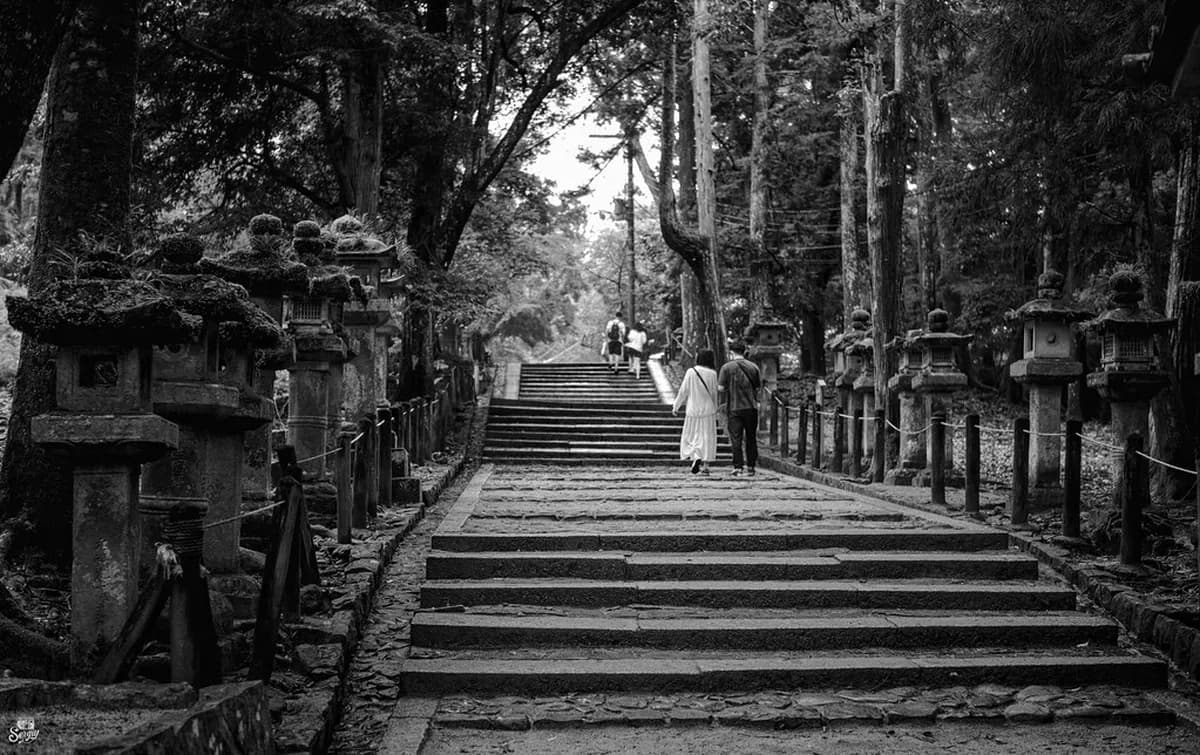
If you skip the Reihokan Museum you gain about 45 minutes, which you can put toward lingering longer in the side alleys of Okunoin — the most rewarding use of extra time. The main path through the cemetery is well-signed; the narrow stone-paved side alleys to the left of the central route are less visited and noticeably more atmospheric.
Getting Around Koya Village: Buses, Walking and Luggage
Once the cable car drops you at Koyasan Station, the village is spread along a single main road of about four kilometres. Most day trippers use a mix of buses and walking, and planning that mix saves 30 to 40 minutes.
- Buses: The Nankai Rinkan buses wait outside the cable car station and run along the main road, timed to meet the cable car. Individual rides cost roughly ¥280–¥370, which is why the World Heritage Pass is usually the cheaper choice.
- Walking: The central stretch between Kongobuji and the Danjo Garan complex is flat and takes about 10 to 15 minutes on foot. Walk it, and save the bus for the longer hops.
- Okunoin entrance: You can walk the full two-kilometre path from the Ichinohashi entrance, or take a bus to the stop nearer the far end and walk it in either direction. If you are short on time, walk it one way and take the bus back.
Leave the heavy bag behind
The village has stairs, gravel paths and long walks between sites. Pack light, and use a coin locker at your Namba hotel or station rather than carrying a suitcase up the mountain. Check locker availability at Koyasan Station on the day, because they fill up in peak autumn weekends.
For the Danjo Garan stop in particular, see our Danjo Garan guide for a walking order that avoids doubling back.
Must-See Sites: Okunoin Cemetery and Danjo Garan
The Okunoin Cemetery is the spiritual centrepiece of any visit to Mount Koya. More than 200,000 tombstones line the two-kilometre path through ancient cedar trees, many of which are several hundred years old. The path ends at Torodo Hall, where over 10,000 lanterns have burned continuously for more than 900 years, including two donated by the Emperor and the Empress. Photography is forbidden inside Torodo Hall — the rule is strictly observed.
The tombs belong to historical figures, feudal lords, and even modern corporations (including several major Japanese companies that have placed memorial stones here to pray for deceased employees). Walking the side alleys off the main path reveals the most intimate section of the cemetery, where moss-covered stones lean against each other and deer sometimes appear between the graves.
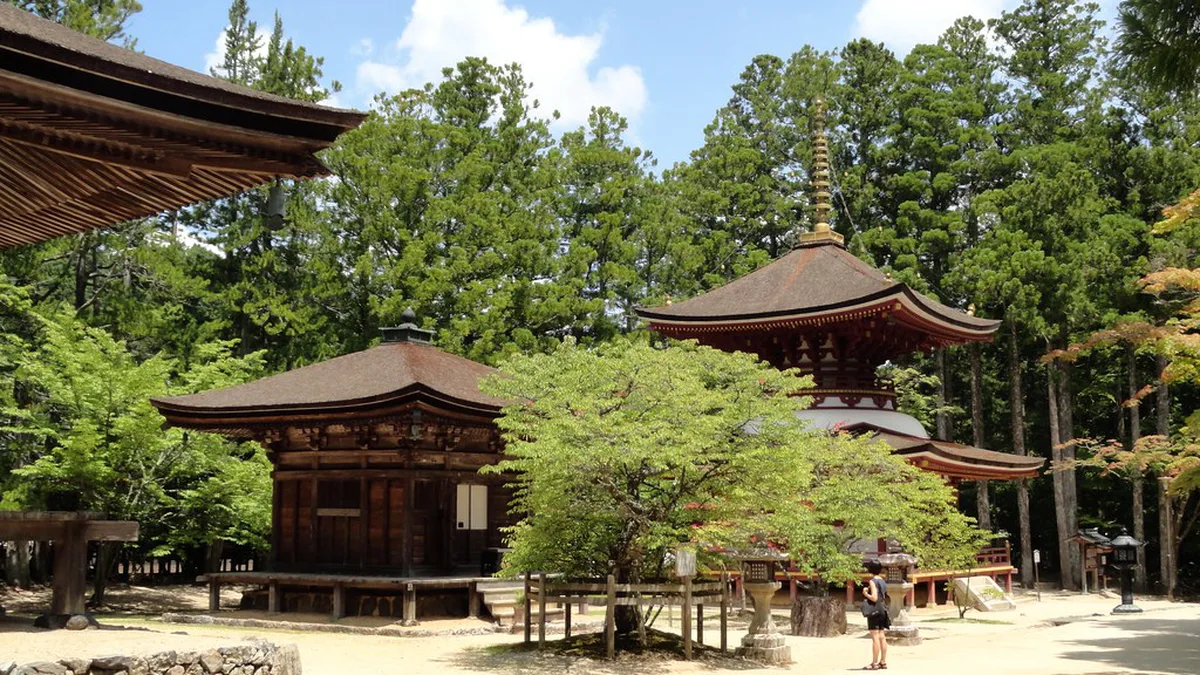
Danjo Garan is the original monastic complex that Kobo Daishi founded on the plateau in the early ninth century. The massive Konpon Daito pagoda — painted in vivid vermilion and standing 48 metres tall — is the most recognisable structure in Koyasan and visible from across the village. The complex includes more than 20 individual structures; allow at least 45 minutes to walk through them properly.
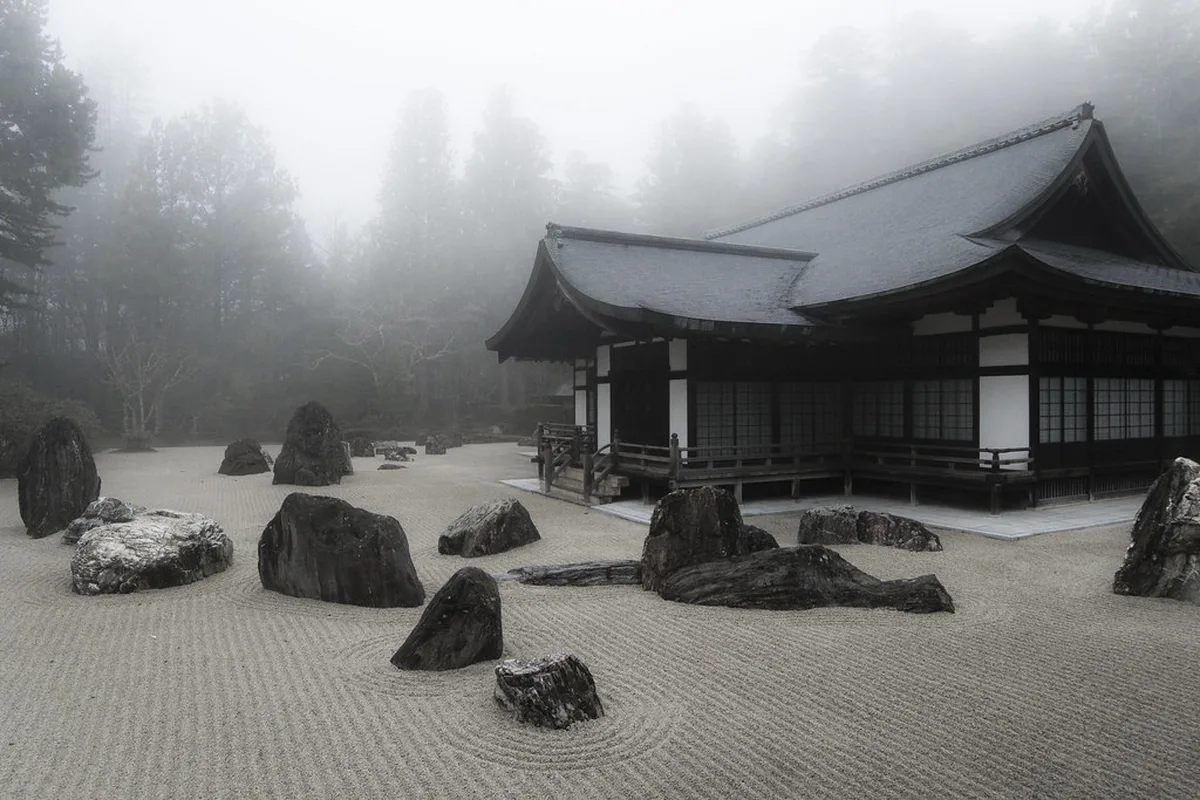
Kongobuji Temple is the administrative head of the entire Koyasan Shingon sect. First built in 1593 by the warlord Toyotomi Hideyoshi, it houses Japan's largest rock garden, Banryutei, which depicts two dragons emerging from a sea of clouds using 2,340 pieces of granite. The sliding-door rooms are covered in gold-leaf paintings by artists of the Kano school — among the finest examples of Momoyama-period religious art in Japan.
The narrow side alleys off Okunoin's main path are far less crowded than the central route. Moss-covered tombstones and centuries-old cedar trees create the most atmospheric experience — allow 30 extra minutes to explore them if you have time.
Shojin Ryori Lunch for Day Trippers: Where to Eat in Koya Village
Shojin ryori is the traditional Buddhist vegetarian cuisine of Koyasan — no meat, no fish, no pungent vegetables (onion, garlic, leek are excluded by Buddhist dietary rules). Day trippers can eat it without booking a temple stay, but most restaurants only serve lunch sets between 11:00 and 14:00. Arrive before 12:30 to avoid the heaviest midday queue.
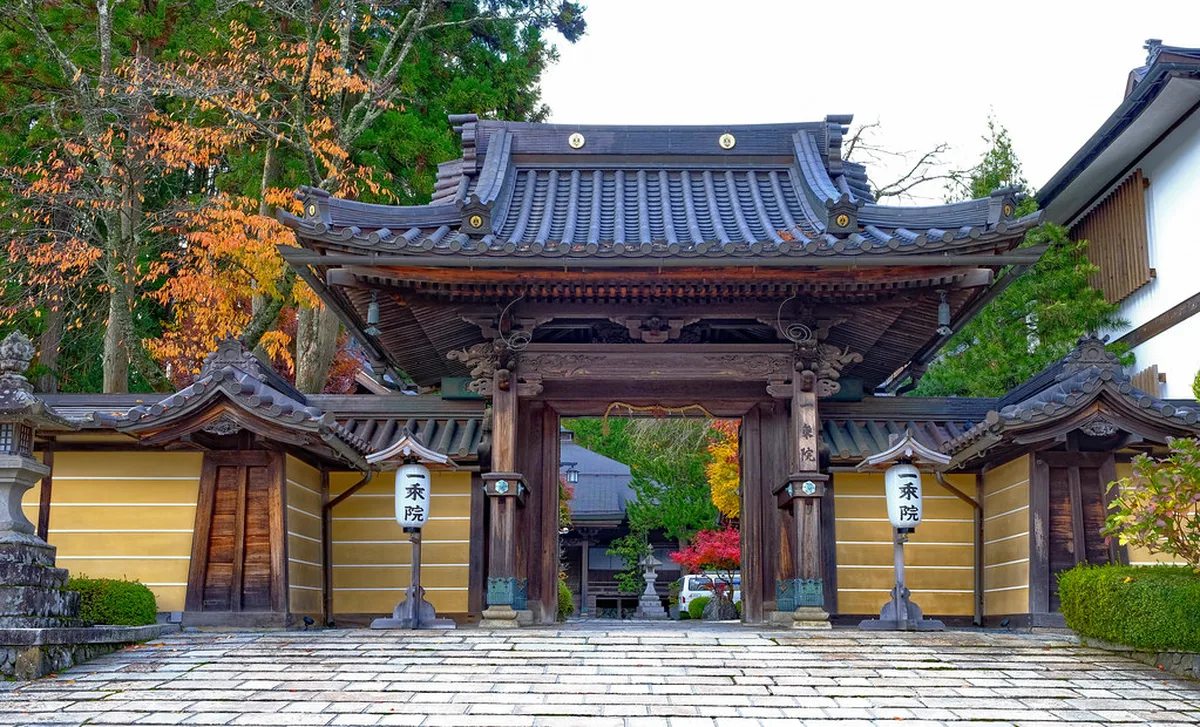
Chuo Shokudo is the most accessible option for day trippers: it sits three minutes' walk from Kongobuji Temple, opens at 11:00, and serves a tofu and vegetarian set for around ¥1,500–¥2,000. No reservation needed. The menu is unpretentious and the portions are generous by shojin ryori standards — a good first introduction to the cuisine.
Tempu Terrace is a step up in formality and presentation, with a multi-course lunch set using locally sourced ingredients for around ¥4,300. It is about six minutes by bus from Kongobuji. The signature drinks — including a mountain pepper cola — are worth ordering alongside the meal. Reservations are recommended for weekend visits. A third option, Henjoko-in (a temple that also serves as a shukubo), accepts lunch guests who are not staying overnight but requires a reservation at least two days in advance and charges ¥3,500–¥5,000 per person for a full ceremonial-style meal.
The Last Bus Back: Timing You Cannot Afford to Miss
The most common mistake on a Koyasan day trip is misjudging the return schedule. The local buses that connect the Okunoin area to Koyasan Station — and therefore to the cable car — run less frequently in the late afternoon and stop well before nightfall. The last bus from the Okunoin-mae stop toward the station typically departs around 17:00–17:30 (schedules vary slightly by season — confirm on-site at the bus stop or at the Tourist Information Centre near the Reihokan Museum). Missing it leaves you with a 4-km walk or a taxi costing ¥2,000–¥3,000.
The Koyasan Cable Car runs until around 17:40 (last upward cable car; last downward around 17:50 — check current timetables at Koyasan Station). After the cable car stops, there is no practical alternative to get down the mountain other than taxis, which are scarce and expensive. Plan your final site visit to end by 16:30 at the latest, giving you 30 minutes to reach the bus stop and buffer for a late-running bus.
The Limited Express Koya trains back to Namba run roughly every 60–90 minutes in the evening. If you miss your intended train at Gokurakubashi, the next one is usually around 18:30 or 19:00. Checking the return timetable before you leave Osaka removes any uncertainty about whether you will make it back in time for dinner.
The last bus from Okunoin-mae toward Koyasan Station departs around 17:00–17:30 (varies by season). Missing it forces a 4-km walk or a ¥2,000–¥3,000 taxi ride. The cable car stops around 17:50. Plan to leave your final temple by 16:30 to guarantee a seat on the last bus.
Temple Etiquette and What to Pack for Koyasan
Koyasan is a working religious site, and a few habits make the visit smoother for you and respectful to the monks and worshippers around you.
- Okunoin: Bow briefly at the Ichinohashi bridge when you enter. Do not eat, smoke or play music on the cemetery path, and keep voices low. Do not touch or lean on gravestones.
- Temple halls: Take your shoes off at Kongobuji and other interiors. Wear socks without holes, as you will walk on cold wooden floors.
- Photography: It is banned inside Torodo Hall, and many other interiors have the same rule. Look for signs before you raise your camera.
- Cash: Small restaurants, souvenir shops and some temple entrances may not accept cards. Bring at least ¥5,000 in cash.
Weather and clothing
At around 800 metres, Koyasan is noticeably cooler than Osaka, often by several degrees, and mist or rain can arrive quickly. Bring a light jacket even in summer, and comfortable shoes with grip, since the Okunoin path is uneven and gets slippery when wet. In winter, add proper layers and check our Koyasan in winter guide before you go.
If you are still choosing dates, our best time to visit Koyasan guide compares the seasons in more detail.
Day Trip vs. Overnight Stay: What You Actually Miss
A day trip covers the four essential sites — Okunoin, Danjo Garan, Kongobuji, and a shojin ryori lunch — comfortably. What it cannot give you is the atmosphere of the mountain after the last day-trip bus departs around 17:00. The town empties in minutes, the cedar canopy goes quiet, and the lanterns of Torodo Hall take on an entirely different quality in darkness. This is the Koyasan that overnight guests get, and it is genuinely different from the daytime version.
Staying in a shukubo (temple lodging) unlocks the morning fire ceremony (Goma) at around 06:00 and sutra chanting sessions that day trippers cannot join. Most shukubo also offer Okunoin night tours led by monks — these are extraordinary experiences but fill up weeks in advance, especially in autumn. If you have the flexibility, one night is genuinely worth it.
For first-time visitors on a tight Japan itinerary, a day trip is the right call. You see Koyasan's most important sites and leave with a clear picture of whether you want to return for a longer stay. Most travellers who do a day trip first end up wanting to come back — which is perhaps the best endorsement the mountain offers.
Frequently Asked Questions
Is a day trip to Koyasan enough?
A day trip covers the main highlights like Okunoin and Danjo Garan. However, you will miss the morning monk prayers. It is sufficient for a general overview of the area's spiritual sites.
How do I get from Osaka to Koyasan?
Take the Nankai Koya Line from Namba Station to Gokurakubashi. Then, ride the cable car up the mountain. The entire journey takes about two hours with a Limited Express train.
Is the Nankai Koyasan World Heritage Pass worth it?
Yes, the pass saves money on round-trip transit and local buses. It also includes discount vouchers for temple admissions. Most day trippers find it very cost-effective and convenient.
A Koyasan day trip is one of the few journeys in Japan where two hours of travel genuinely transports you into a different world. Start early, use the Nankai World Heritage Pass, and keep the last bus timing in mind — those three steps are the difference between a rushed visit and a day that stays with you. Whether you come for the spiritual weight of Okunoin or the quiet drama of Danjo Garan's crimson pagoda, Mount Koya delivers something that Osaka's famous food and nightlife simply cannot replicate.
Check the Koyasan Reihokan Museum Official Site for current exhibition details before your visit, and confirm cable car and bus schedules at the Tourist Information Centre on arrival. Safe travels.
See our Koyasan attractions guide for the broader overview.
Free: The Mount Kōya Essentials guide
Top things to do, where to stay, a perfect day plan, getting around, and the best time to go — a Mount Kōya mini-guide you can take offline.
You might also like

Continue reading
More guides you'll find useful