

What to Eat in Koyasan: 7 Foods to Try (2026 Guide)
What to eat in Koyasan: 7 must-try dishes, from shojin ryori and goma-dofu to koya-dofu, with 2026 prices, hours, and lunch spots.
On this page
Last updated July 2026, this guide covers what to eat in Koyasan, from temple-cooked shojin ryori to sesame tofu near Daimon Gate. Mount Koya's Buddhist dietary rules exclude meat, fish, garlic, and onion from the temple table. Day-trippers and overnight shukubo guests follow different eating logistics, covered separately below.
7 Foods to Eat in Koyasan
Mount Koya's food culture runs on strict Buddhist rules, so most menus revolve around tofu, grains, and seasonal vegetables rather than meat or fish. The seven dishes below cover temple cuisine, the mountain's signature tofu styles, and the handful of secular lunch options in town.
- Shojin Ryori (Temple Buddhist Cuisine)
- Shojin ryori follows three rules: Goshoku (five colors), Gomi (five flavors), and Goho (five cooking methods).
- It excludes meat, fish, dairy, garlic, and onion, relying on grains, tofu, and seasonal vegetables instead.
- For the full rundown of ingredients and etiquette, see the shojin ryori guide.
- Goma-Dofu (Sesame Tofu)
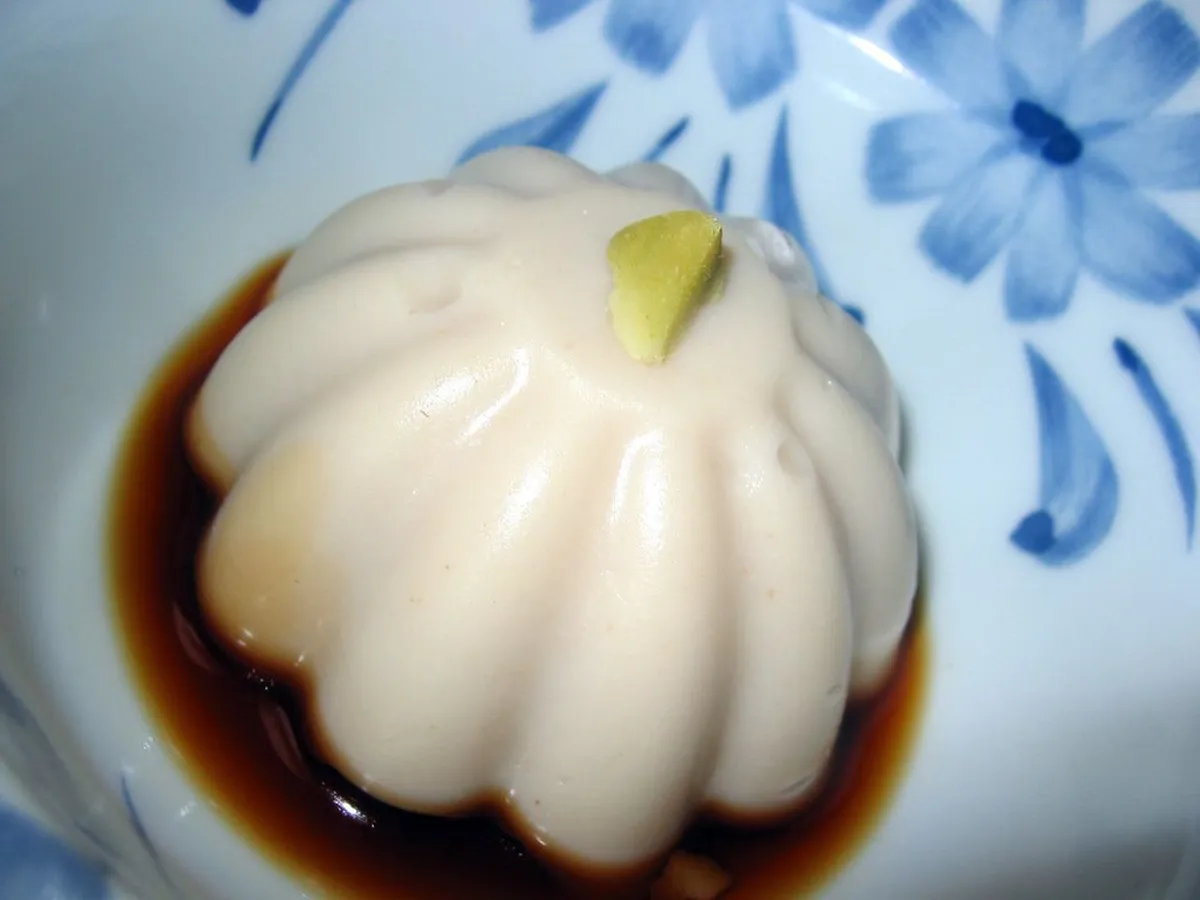
- Goma-dofu isn't soy tofu at all; it sets from ground sesame and kuzu starch instead of soybeans.
- Kadohama Gomatofu Daimon Gate has made it in-house since 1927, a four-minute walk from Daimon Gate.
- Its goma-dofu and goma-dofu baumkuchen also travel well, listed among Koyasan Food Souvenirs: What to Buy and Where to Find Them worth packing.
- Koya-Dofu (Freeze-Dried Tofu)
- Koya-dofu is freeze-dried tofu, a preservation method with roots in Koyasan's monastic kitchens.
- It shows up in miso soup and simmered dishes, soaking up broth in a way fresh tofu doesn't.
- The koya-dofu and goma-dofu guide breaks down how both tofu styles are made.
- Udon and Soba Noodles
- Some temple lodgings point overnight guests toward a nearby udon shop for a simple pre-check-in lunch.
- Bowls arrive with small side dishes, a practical choice when dinner is still hours away.
- Kurumi-Mochi (Walnut Mochi) and Roasted Soybean Snacks
- Shops along Koyasan's main street sell fresh kurumi-mochi, plain mochi dusted with roasted soybean flour.
- It's a walking snack between stops, useful when pairing food with the sights in the Koyasan attractions guide.
- Tonkatsu Curry and Oyako-Don at Nankai Shokudo
- Nankai Shokudo sits near the traffic light at Koyasan's main crossroads, with plastic food models in the window.
- Tonkatsu curry and oyako-don, chicken and egg over rice, are the standout orders for a fast lunch.
- Gratin at Gratin Cafe (Kudoyama Gateway Town)
- Gratin Cafe sits in Kudoyama, the gateway town at the base of the mountain, not on Koyasan itself.
- The menu is entirely oven-baked gratin dishes, a warm stop for anyone routing through Kudoyama before the climb up.
- Roadwork has shifted its address before, so confirm the current location on the cafe's official site.
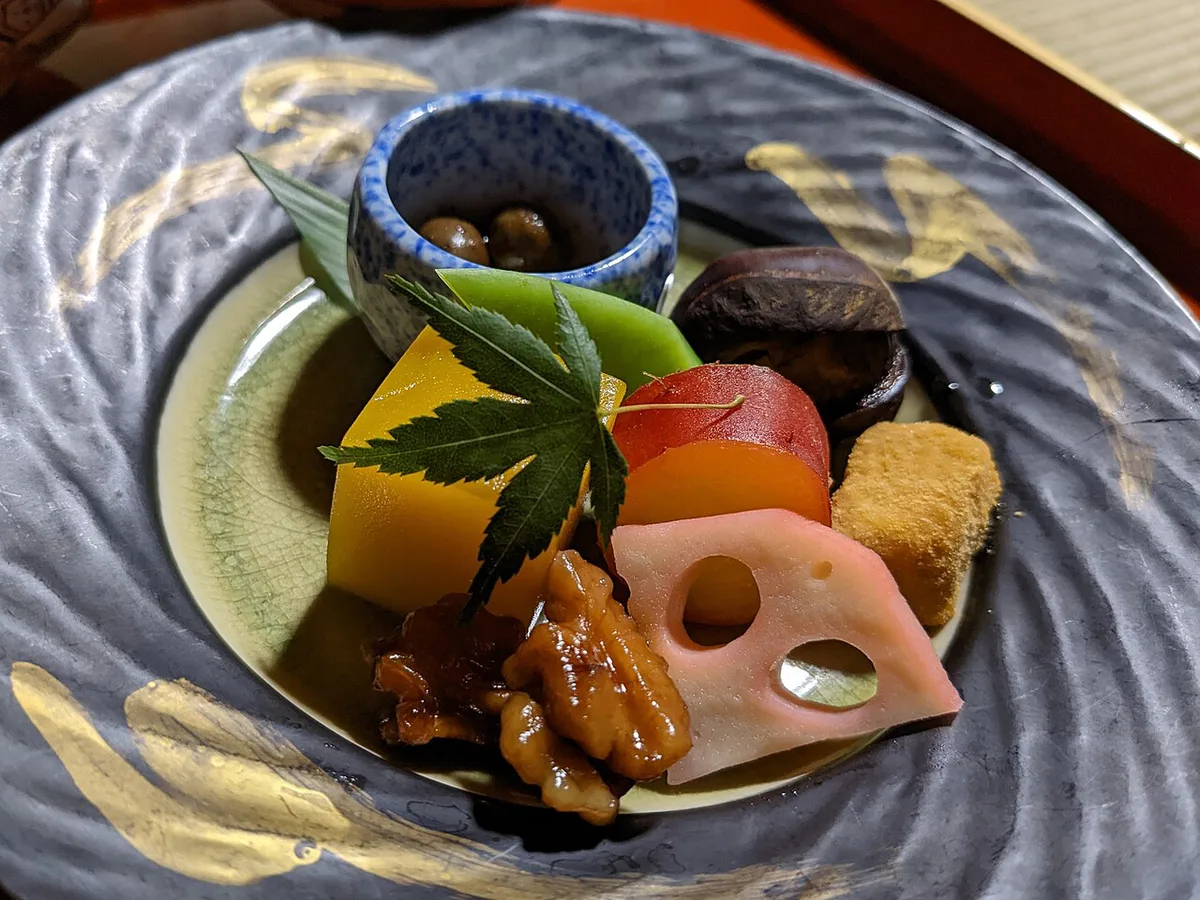
How to Experience Shojin Ryori: Temple Dinner vs. Day-Trip Lunch
Shojin ryori reaches most travelers one of two ways. Overnight shukubo guests receive it as included dinner and breakfast, cooked to the temple's own recipes. Most temples ask guests to arrive by 17:00, since dinner is typically served around 18:00. Arriving late risks missing the meal entirely. Day-trippers without a room booking can still eat shojin ryori at Ekoin, where lunch runs 11:00 to 13:00 by reservation only. Overnight bookings usually run through the Koyasan Shukubo Association or directly by email. The full booking process is covered in the Koyasan temple stay guide.
Overnight guests arriving after 17:00 miss the included 18:00 dinner service entirely. Meanwhile, day-trippers must eat well before most lunch spots close by 13:30 to 14:00, creating comparable scheduling pressure for both visitor types.
- Matsu (Deluxe)
- ¥7,800 for a three-course meal with about 12 dishes.
- This is the top tier of Ekoin's reservation-only lunch.
- Take (Standard)
- ¥5,800 for a two-course meal with about 10 dishes.
- Ume (Simple)
- ¥3,800 for a two-course meal with about 9 dishes, the lightest of the three.
- Gluten-Free
- ¥5,800 for a shojin ryori menu adapted to remove wheat-based seasonings.
- Request it when booking, since standard courses lean on soy sauce.
Best Lunch Spots and Cafes in Koyasan
Beyond temple dining, Koyasan's main street holds a handful of cafes and diners worth building a day trip around. Each keeps different hours and a different price point, so match the stop to how much time is available between temple visits. A longer roundup of options lives in the 8 Best Restaurants in Koyasan: Shojin Ryori, Soba, and Cafes (2026) guide.
- Sabo Miyazaki
- Daily-changing lunch sets include fried chicken, ginger pork, or stewed hamburger steak.
- Maneki-neko figurines and traditional decor fill the dining room.
- Temple Cafe Seikeiin
- Lunch runs 10:30am to 2:00pm, with last order at 1:30pm.
- Cafe service continues afterward until 5:00pm, and it's closed on Wednesdays.
- The converted temple building overlooks a garden and has three parking spaces on site.
- Kadohama Gomatofu Daimon Gate
- A four-minute walk from Daimon Gate, open since 1927 for goma-dofu and shojin ryori kaiseki.
- Winter adds a soy milk hot pot to the regular menu.
- Nankai Shokudo
- Located at Koyasan's main crossroads, recognizable by the plastic food displays in its window.
- Tonkatsu curry and oyako-don are the fastest, most filling options for a midday stop.
Dietary Restrictions and Allergy Logistics
Buddhist dietary rules make Koyasan easier than most of Japan for some restrictions and harder for others. Shojin ryori already excludes meat, fish, eggs, and dairy, so vegan and vegetarian travelers rarely need to ask twice. Wheat and soy are the trickier categories, since both run through the seasonings that hold the cuisine together. The vegan and vegetarian food guide covers menu-specific planning for longer stays.
- Vegan and Vegetarian
- Shojin ryori is naturally vegan by Buddhist rule, with no meat, fish, eggs, or dairy on the menu.
- No special request is usually needed at temple meals or at Ekoin's lunch service.
- Wheat / Gluten
- Ekoin offers a dedicated gluten-free shojin ryori menu at ¥5,800, adapted from its standard courses.
- Request it when booking, since regular soy sauce is wheat-based and used throughout the meal.
- Soy
- Soy is the harder restriction, since miso, tofu, and soy sauce run through nearly every course.
- Ekoin's official policy states that a soy allergy leaves guests with a very simple, limited diet.
- Contact temples at least a week ahead, since most kitchens have no separate allergy-safe prep area.
Temple Lunch vs. Town Cafe: Which Fits Your Visit
Cost, timing, and atmosphere differ sharply between a reserved temple lunch and a walk-in stop on the main street. Use this comparison to match the option to how the day is planned.
Ekoin's temple lunch costs ¥3,800 minimum and requires advance booking for timed seatings. Town cafes welcome walk-ins with much lower price points, making them ideal for last-minute changes to your schedule.
| Factor | Temple Lunch (Ekoin) | Town Cafe or Diner |
|---|---|---|
| Cost | ¥3,800 – ¥7,800 | From about ¥1,500 |
| Reservation | Required, ideally a week ahead | Usually walk-in |
| Time window | 11:00 – 13:00 only | Open into the afternoon, most closing by 14:00–15:00 |
| Vibe | Quiet, multi-course Buddhist banquet | Casual, faster local fare |
Practical Planning: Timing, Cost, and Getting to Koyasan
Kitchen hours are the biggest planning constraint in Koyasan. Most lunch spots close by 14:00 or 15:00, and dinner service is reserved for overnight shukubo guests. Cost runs from about ¥1,500 at a casual cafe up to ¥7,800 for Ekoin's deluxe temple lunch. Getting to Koyasan starts with the Nankai Railway from Osaka's Namba Station to Gokurakubashi, a ride of about 90 minutes. A five-minute cable car then climbs to Koyasan Station, followed by a short bus ride into town. Route-specific timing from Osaka is covered in the Koyasan from Osaka guide. A Kyoto-based route is covered separately in the Koyasan from Kyoto guide. Day-trippers timing meals around sightseeing can cross-check the Where to Eat in Koyasan on a Day Trip (2026 Guide). For a full day plan, see the Koyasan day trip guide. For a longer stay, the 8-Step Koyasan Itinerary: The Ultimate 2-Day Temple Stay Guide maps meals against temple visits.
- Nankai Railway + Cable Car
- About 90 minutes from Osaka's Namba Station to Gokurakubashi, then a five-minute cable car up to Koyasan Station.
- A short bus ride covers the final stretch into town.
- Koyasan World Heritage Ticket
- Bundles round-trip rail, the cable car, and unlimited on-mountain buses.
- Adds discounted admission to selected attractions, valid for two consecutive days.
- Confirm current pricing and inclusions before travel.
Mistakes to Avoid When Eating in Koyasan
A few planning mistakes repeat often enough to call out directly. Each one is avoidable with a bit of advance timing.
- Arriving After Kitchens Close
- Many lunch spots stop serving by 13:30 to 14:00, earlier than most city dining hours.
- Expecting Standard Japanese Menus
- Sushi and ramen are rare on the mountain.
- Shojin ryori, tofu dishes, and simple diners dominate instead.
- Skipping the Lunch Reservation
- Ekoin's temple lunch is reservation-only, so a walk-in visit often means no seat at all.
- Missing the 17:00 Check-In Cutoff
- Overnight guests arriving after 17:00 risk missing the 18:00 shojin ryori dinner entirely.
- Overlooking Soy in Allergy Requests
- A gluten-free request doesn't remove soy.
- Miso, tofu, and soy sauce still run through nearly every dish.
Konnyaku and Seasonal Mountain Vegetables
Shojin ryori extends beyond tofu through konnyaku and sansai, or edible mountain vegetables. Konnyaku is made from konjac yam and has a firm, springy texture. It often appears simmered in seasoned broth or served with a miso-based sauce.
Seasonal vegetables provide much of the variety in temple meals. Spring dishes may include bamboo shoots, warabi fiddleheads, or zenmai ferns. Mushrooms and root vegetables become more prominent during cooler months. Preparation methods include simmering, steaming, frying as tempura, and dressing vegetables with sesame.
Ekoin’s multi-course lunches are a practical place to sample several preparations together. Temple Cafe Seikeiin may suit visitors who cannot commit to a reservation-only banquet. Exact ingredients change with harvests, so ask what seasonal vegetables are included that day. Travelers with allergies should also confirm broths and sauces, since soy sauce, miso, and sesame are common.
For trip-planning details, see Shōjin ryōri.
Explore food in other cities
Frequently Asked Questions
What is shojin ryori?
Shojin ryori is Buddhist temple cuisine built on five colors, five flavors, and five cooking methods. It excludes meat, fish, dairy, garlic, and onion, relying on grains, tofu, and seasonal vegetables instead.
Can vegans and vegetarians eat well in Koyasan?
Shojin ryori is naturally vegan, since Buddhist dietary rules already exclude meat, fish, eggs, and dairy. The vegan and vegetarian food guide covers menu specifics for longer stays.
Do you need to book Ekoin's temple lunch in advance?
Yes, lunch at Ekoin is reservation-only, served 11:00 to 13:00. Three set tiers are priced at ¥3,800, ¥5,800, and ¥7,800.
What is goma-dofu made from?
Goma-dofu isn't soy tofu; it sets from ground sesame and kuzu starch instead. The koya-dofu and goma-dofu guide explains the process in more detail.
How much time should I plan for lunch on a Koyasan day trip?
Plan to eat before 13:30 or 14:00, since most kitchens close by mid-afternoon. Dinner service is reserved for overnight shukubo guests. The Where to Eat in Koyasan on a Day Trip (2026 Guide) maps meal timing against a sightseeing route.
Is Koyasan food safe for people with soy allergies?
Soy is the hardest restriction to accommodate, since miso, tofu, and soy sauce appear in nearly every dish. Ekoin's official policy recommends contacting temples at least a week ahead. Guests with severe allergies may be safer bringing their own food.
Explore Koyasan Food & Dining
Beyond the temple dinner: a full guide to eating well on Mt. Koya, from shojin ryori and sesame tofu to day-trip lunches and edible souvenirs.
Where and What to Eat
- Koyasan attractions hub: tickets, hours & maps
- 8 Best Restaurants in Koyasan
- Where to Eat in Koyasan on a Day Trip
- Shojin Ryori Guide
Local Specialties & Ingredients
Souvenirs & Takeaways
Plan Your Visit
Free: The Mount Kōya Essentials guide
Top things to do, where to stay, a perfect day plan, getting around, and the best time to go — a Mount Kōya mini-guide you can take offline.
You might also like


Continue reading
More guides you'll find useful


