

Vegan and Vegetarian Food in Koyasan: Shojin Ryori, Restaurants, and Hours (2026)
Plan vegan and vegetarian food in Koyasan: shojin ryori basics, top restaurants, and 2026 hours, reservations, and costs for your visit.
On this page
Last updated July 2026. Vegan and vegetarian food in Koyasan is easier to find than almost anywhere else in Japan, because Shingon Buddhist temples have served meat-free shojin ryori for centuries. Monks follow religious rules against meat, fish, garlic, and onion, so outside the temples a handful of independent cafes fill the gaps with limited weekly hours.
Why Koyasan Is One of Japan's Easiest Places for Vegan and Vegetarian Food
Kūkai, a monk later known as Kōbō-Daishi, founded the Shingon school of Buddhism after two years of study in China. His journey there was Japan's sixteenth official diplomatic mission to the mainland, and he returned home after receiving teachings from Master Huiguo. Emperor Saga granted him the land at Koyasan in the early 9th century, and Kōbō-Daishi built his new school's headquarters there. According to a well-known legend, Kōbō-Daishi threw a ceremonial tool called a sankosho toward Japan while still in China. He later found it caught in a tree at what is now the Danjo Garan. Shingon Buddhism has placed a strong emphasis on compassion toward animals ever since. That shows up directly on the plate: temple kitchens across the mountain avoid meat and fish as a matter of doctrine, not as a special request. Landmarks tied to that history, including the Danjo Garan temple complex and Ekoin Temple's morning prayer hall, sit within walking distance of most restaurants covered in this guide. Ekoin also runs English-language tours of the graveyard route near Oku-no-in. Every dining option on the mountain gets fuller coverage in the Koyasan food guide.
Shojin Ryori: The Buddhist Rules Behind Koyasan's Menus
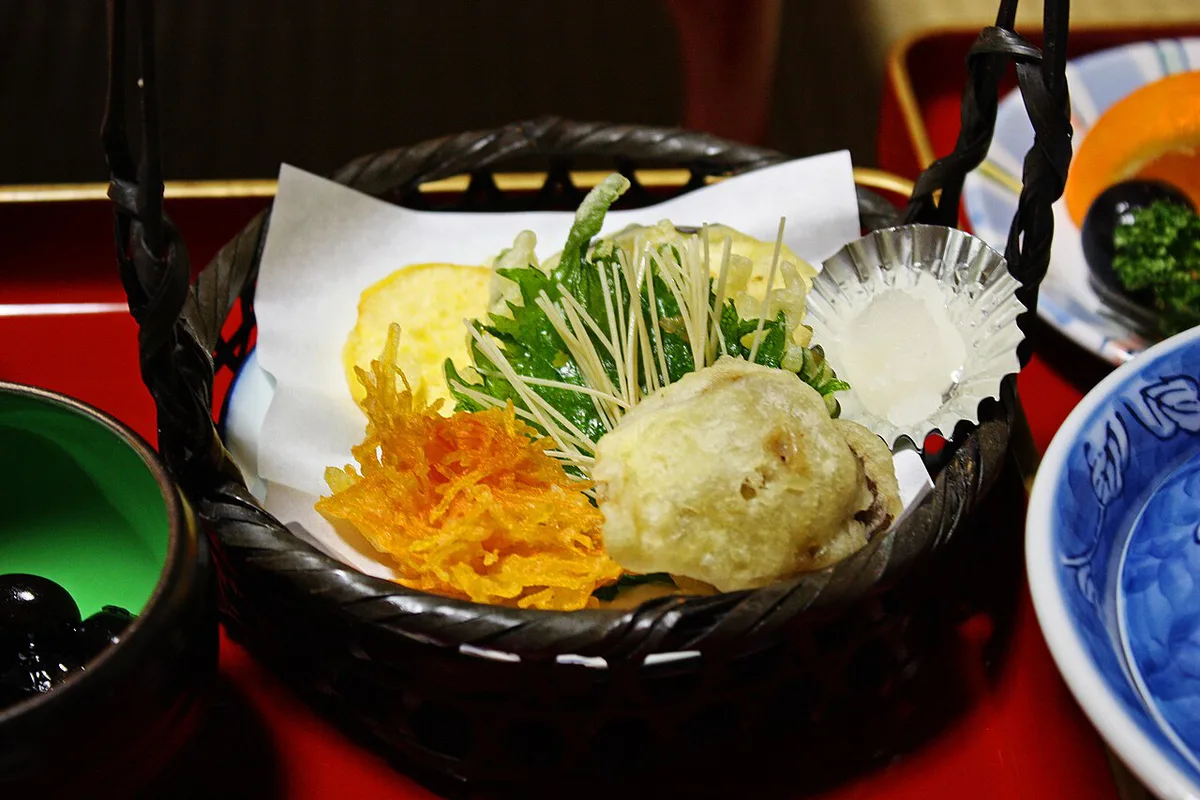
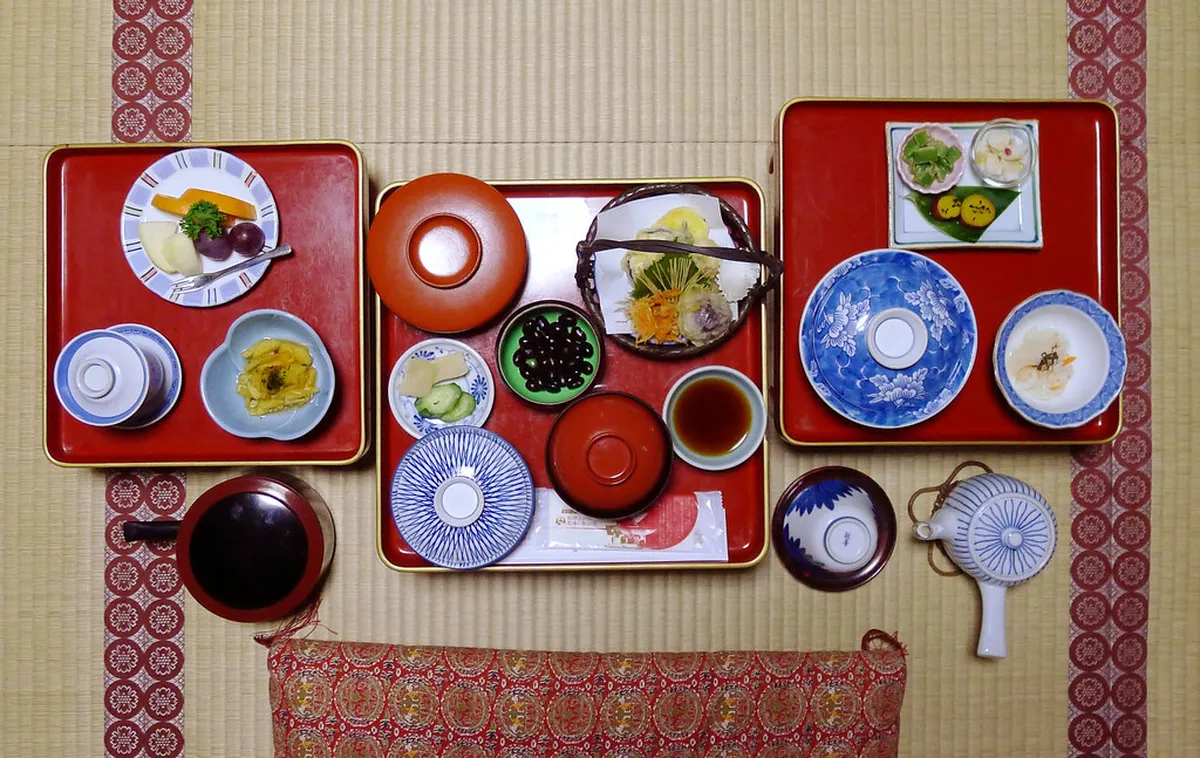
Shojin ryori is built entirely from vegetables, legumes, and grains, prepared under Buddhist precepts that rule out meat, fish, garlic, and onion. Temple cooks follow what's often called the Rule of Fives. Five cooking methods apply: boiling, baking, steaming, frying, and serving raw. Color follows a fixed set too, with red, yellow, green, white, and black expected on the tray. Flavor cycles through five notes across a meal: sweet, sour, spicy, bitter, and salty. Preparing the meal is treated as a form of practice, with each step approached deliberately rather than rushed. Balance matters more than restriction. A shojin ryori course is built as a complete meal, not a workaround for a limited diet. Ingredient choices and the philosophy behind each course get a fuller treatment in the shojin ryori guide.
Presentation and Seasonal Menus
Shojin ryori is served in specific vessels called utsuwa, and the vessel itself is treated as part of the meal. At Nishimuroin, courses arrive in Wajima lacquerware, celadon, and hand-painted porcelain, chosen to reflect a Buddhist teaching that form and emptiness are one and the same. Menus also shift with the seasons, since temple kitchens build each course around whatever is freshest at the time. Expect more root vegetables and mushrooms in autumn, and more wild greens in spring, though exact dishes vary by kitchen and week. Presentation and seasonality both matter here, so a shojin ryori meal reads less like a restricted diet and more like a seasonal tasting course built entirely from plants.
High-End Shojin Ryori: Hanabishi and Nishimuroin
Two restaurants anchor the high end of shojin ryori on the mountain: Hanabishi and Nishimuroin. Both let day visitors eat a full-course Buddhist vegetarian meal without booking an overnight temple stay. Reserve ahead for either restaurant, since seating is limited and neither operates as walk-in-friendly as the village's cafes. Options across every price point appear in the Koyasan restaurant guide.
- Hanabishi: known for an all-vegan multi-course set built on the same five-method, five-color rules as temple kitchens.
- Nishimuroin: serves its lunch course in two seatings, starting at 11:00 and 13:00, with reservations recommended given limited seating.
Casual and Vegan-Friendly Cafes in the Village
A short walk from the main street covers most of the casual options. Bon On Shya International Cafe is the village's main sit-down vegan-friendly cafe, with an international menu and vegan cakes. It closes on Mondays and Tuesdays, so plan meals around those two days. Tempu Terrace offers a more contemporary space with vegan-friendly set meals. Chuoshokudo Sanbo is a vegan Japanese restaurant without its own website. Its Google listing also shows Monday closures, so call ahead or check current hours before counting on it. Koya Cafe adds a Taiwanese-style vegetarian menu, a less common style to find on the mountain. Confirm its current hours locally, since they change and are not widely published online. Most of these cafes sit within a few minutes' walk of each other in the village center, making it easy to check a second option if the first is closed.
Reservations, Cost, and Hours: Planning Your Meals
Two very different dining styles exist on the mountain, and the right choice depends on time and budget. A comparison of the trade-offs appears in the table below.
| Dining Style | Examples | Reservation | Typical Hours | Cost Tier |
|---|---|---|---|---|
| Temple-style shojin ryori | Hanabishi, Nishimuroin | Recommended to required | Lunch only, e.g. 11:00 and 13:00 seatings at Nishimuroin | Highest, multi-course |
| Casual vegan-friendly cafe | Bon On Shya, Tempu Terrace | Recommended, not always required | Limited weekly hours; Bon On Shya closed Mon-Tue | Mid-range |
| Independent, no-website spot | Chuoshokudo Sanbo, Koya Cafe | Walk-in, hours vary | Check current status locally | Lowest, informal |
- Temple-style courses cost more than a cafe lunch, since they include more dishes, seasonal ingredients, and the vessels described above.
- If a firm price matters most, contact each restaurant directly or check current listings, since fixed yen figures are not published widely enough to stay accurate for long.
- Booking directly by phone is often more reliable than an online form for smaller places, since not every restaurant maintains its own website.
- Day-trippers with only a few hours on the mountain should build lunch around whichever option fits their schedule first; a dedicated day trip food guide covers exact timing for a single-day visit.
Eating During a Temple Stay (Shukubo)
Most temple lodgings, known as shukubo, include a shojin ryori dinner and breakfast as part of the room rate. That makes an overnight stay the most reliable way to eat well on days when village restaurants are closed, including Mondays and Tuesdays. Meals typically arrive in a private room or shared dining hall, prepared in the same five-color, five-flavor style described above. Modern shukubo rooms often include amenities like flat-screen televisions and wireless internet, even though the meals themselves stay traditional. Lodging options, room types, and how a stay pairs with morning prayers are covered in the Koyasan temple stay guide. To check availability and book directly, the Koyasan Shukubo Association lists member temples and their current offerings.
Goma-Dofu and Koya-Dofu: Koyasan's Signature Ingredients
Two ingredients define Koyasan's version of shojin ryori: goma-dofu and koya-dofu. Goma-dofu, or sesame tofu, is handmade at temples such as Nishimuroin and served both on its own and as an ingredient in other dishes. Its texture sits between a custard and a firm tofu, with a stronger sesame flavor than the milder soy tofu found elsewhere in Japan. Koya-dofu is freeze-dried tofu, and local accounts tie its origin to the mountain's freezing winter temperatures. Both ingredients travel well, and dried versions of each are sold as souvenirs in shops around the village. Full history and texture notes for both ingredients live in the koya-dofu and goma-dofu guide. Where to buy the best versions to take home is covered in the Koyasan food souvenirs guide.
Getting to Koyasan and Getting Around
Most visitors reach Koyasan via the Nankai Railway from Namba or Shin-Imamiya Station in Osaka, often changing trains at Hashimoto Station. The full journey to Gokurakubashi Station takes roughly two and a half to three hours. From there, the Nankai Koyasan Cable, a funicular, covers the steep final climb in about five minutes. Buses then carry passengers from the cable car terminus into the village center, since walking that stretch is not permitted for safety reasons. Hikers wanting an overland approach can also follow the historic Choishi Michi Trail, a route of roughly 14.6 miles marked by stone lanterns that takes about seven hours on foot. The two-day Koyasan World Heritage Ticket bundles train travel from Osaka with unlimited local bus rides and a 20 percent discount at most temples and museums. That bus coverage matters for a food-focused day, since several restaurants sit a stop apart from each other. A step-by-step guide covers getting to Koyasan from Osaka. A separate guide covers the trip from Kyoto. Koyasan sits at roughly 2,600 feet (800 meters) in a valley ringed by eight peaks, so it stays cooler than Osaka or Kyoto in every season. Summer days generally reach 68-86°F (20-30°C), while winter regularly drops below freezing. Pack a layer even for a summer visit. Plan for a heavier lunch too, since the altitude and cooler temperatures burn more energy than a flat-city walk. Those spending only a few hours on the mountain should read the Koyasan day trip guide before building a meal plan around train and bus timings. Travelers staying longer can slot restaurant reservations into the broader 8-Step Koyasan Itinerary: The Ultimate 2-Day Temple Stay Guide.
Mistakes to Avoid When Eating Vegan or Vegetarian in Koyasan
A few planning mistakes come up often enough to flag directly.
The five minutes of the cable-car climb, following the Nankai journey, makes Nishimuroin's 13:00 seating easy to miss if day-trippers don't account for the total mountain access time.
- Arriving too late for lunch: Nishimuroin's second seating starts at 13:00, and Hanabishi runs on a similar lunch-only schedule. A late arrival can mean missing a hot meal until dinner.
- Assuming vegetarian means vegan: many Japanese menus use fish-based dashi stock in dishes labeled vegetarian. Confirm any dish is vegan specifically outside the temples.
- Skipping a dinner plan: most non-temple restaurants close by early evening, often by 5 or 6 PM. Shukubo guests get dinner as part of the room rate, but everyone else needs a plan before dark, since the village has little food for sale once restaurants close.
- Not carrying backup snacks: village dining is thin even on a normal day, and Bon On Shya is closed on Mondays and Tuesdays. Pack something portable for those two days especially, and check whether a small local shop is open before relying on it.
- Expecting the same dishes twice: menus shift with the season, so a dish enjoyed on one visit may not appear again on a return trip months later.
How to Plan Dinner When Koyasan Closes Early
Koyasan has no dependable late-night dining district. Day visitors should treat lunch as their main meal, especially when returning after Oku-no-in or Danjo Garan.
Buy an evening meal before boarding the mountain section of the journey. Nankai Namba Station offers the widest choice. Hashimoto Station is a useful final backup before continuing toward Gokurakubashi.
- Choose packaged rice balls, bread, fruit, nuts, or clearly labeled plant-based meals.
- Check labels for fish-based dashi, bonito, gelatin, egg, and dairy.
- Carry enough food for the return journey because station choices become limited farther up the route.
Do not assume a shukubo will serve dinner to walk-in visitors. Temple meals are normally prepared for registered guests and require advance notice. Confirm the meal schedule when booking because arrivals after service may not be accommodated.
If staying outside a temple, ask the property whether outside food is permitted. Village shops near central stops such as Senjuinbashi can be useful, but their closing times vary. Purchase supplies before an afternoon visit to Oku-no-in rather than searching after dark.
For trip-planning details, see Wikivoyage: Koyasan.
Frequently Asked Questions
Is shojin ryori always vegan, or just vegetarian?
Traditional shojin ryori is usually vegan by default, since Buddhist precepts also rule out fish-based dashi stock. Animal byproducts are not part of the historical recipe set either. Standards can still vary slightly by kitchen, so confirm with staff if a strict vegan requirement applies.
What happens if you visit Koyasan on a Monday?
Bon On Shya International Cafe closes on Mondays and Tuesdays, and Chuoshokudo Sanbo also tends to close on Mondays. Book a shukubo dinner in advance for that night, or eat a full breakfast in Osaka or Kyoto and bring packaged food for the day.
Do you need an overnight temple stay to eat shojin ryori?
No. Hanabishi and Nishimuroin both serve shojin ryori lunch courses to day visitors without requiring a shukubo booking. Reserve ahead regardless, since seating at both restaurants is limited.
How does koya-dofu differ from regular tofu?
Koya-dofu is freeze-dried, which gives it a firmer, spongier texture than fresh tofu and lets it absorb broth differently in cooked dishes. It travels well, which is why dried blocks are sold as souvenirs around the village.
How much extra time should a day trip allow for meals?
Journeys from Osaka on the Nankai Railway generally take two and a half to three hours before the cable car and bus connections into the village. Lunch service at temple-style restaurants often ends by early-to-mid afternoon, so plan to arrive at Koyasan Station well before midday if a sit-down lunch matters.
What should vegans eat for dinner if not staying at a temple?
Village dining thins out after early evening for anyone not booked into a shukubo. A small local shop can help if it happens to be open, but the more reliable options are booking a temple stay for dinner or carrying packaged food from Osaka or Kyoto.
Free: The Mount Kōya Essentials guide
Top things to do, where to stay, a perfect day plan, getting around, and the best time to go — a Mount Kōya mini-guide you can take offline.
You might also like


Continue reading
More guides you'll find useful


