
8 Essential Stops for a 1-Day Trip From Osaka To Hiroshima And Miyajima
Master your day trip from Osaka to Hiroshima and Miyajima with this timed itinerary. Includes Shinkansen tips, the speedboat shortcut, and must-see peace memorials.
On this page
I built this Hiroshima and Miyajima 1-day itinerary after pacing the route myself in 2026, stopwatch in hand. It is designed for first-timers who want to see both UNESCO sites in one tight, efficient push from Osaka. Starting before 07:00 is the only realistic way to clear the morning ferry queues and still be inside the Peace Memorial Museum by mid-afternoon.
The plan below pairs ferry, shrine, and Shinkansen times so the day flows in one direction with no backtracking. You will spend roughly four hours on Miyajima, four hours in central Hiroshima, and three hours on trains. Read the practical planning section before you book any ticket — the choice between Nozomi and Sakura, and between the Aqua Net speedboat and the train-and-ferry combo, decides whether the day feels efficient or rushed.
If you are tempted to drive, first compare the Osaka–Hiroshima car and train totals, including expressway tolls, fuel, parking and the time needed to collect and return a rental.
1-Day Hiroshima and Miyajima at a Glance
The eight stops below are sequenced for tide, light, and crowd flow rather than geography. Miyajima goes first because the Itsukushima torii draws thick coach groups after 11:00, and the Peace Memorial Museum is most contemplative once the school groups have cycled through by 14:00. Dinner is okonomiyaki near Hiroshima Station, which puts you within a five-minute walk of the return platform.
- 06:00 Shin-Osaka — board Sakura or Nozomi Shinkansen toward Hiroshima.
- 07:30 Hiroshima Station — drop bags in coin lockers, transfer to the JR San-yo Line.
- 08:15 Miyajimaguchi — JR West ferry to Miyajima Island.
- 08:40 Itsukushima Shrine and the floating torii.
- 10:30 Omotesando Shopping Street and Senjokaku Hall.
- 13:00 Hiroshima Peace Memorial Park and Museum.
- 15:30 Atomic Bomb Dome and Orizuru Tower.
- 18:00 Hiroshima-style okonomiyaki, then 19:30 Shinkansen back to Shin-Osaka.
Essential Logistics: Getting from Osaka to Hiroshima
The fastest way to get to Hiroshima from Osaka is the Nozomi Shinkansen on the Sanyo line, which covers Shin-Osaka to Hiroshima Station in roughly 90 minutes. Aim for a departure between 06:00 and 07:00; trains after 07:30 fill with day-tour groups bound for the same itinerary, and the Miyajimaguchi ferry queue lengthens accordingly. A one-way unreserved ticket runs about 10,420 yen.
JR Pass holders cannot ride Nozomi without a paid supplement, so default to Sakura or Hikari, which add roughly 10–20 minutes but stay covered by the pass. Both run frequently in the morning. Reserved seats are smart on Sakura because it has fewer non-reserved cars; on Nozomi, unreserved cars 1–3 are usually fine before 07:00.
Drop hand luggage in coin lockers at Hiroshima Station the moment you arrive. Lockers cost 400–700 yen and accept Suica or Icoca tap payment; the largest are clustered near the Shinkansen south exit. Avoid storing bags at Miyajimaguchi — the lockers there are smaller, often full by 09:00, and you do not want to detour back through the ferry terminal at the end of the day.
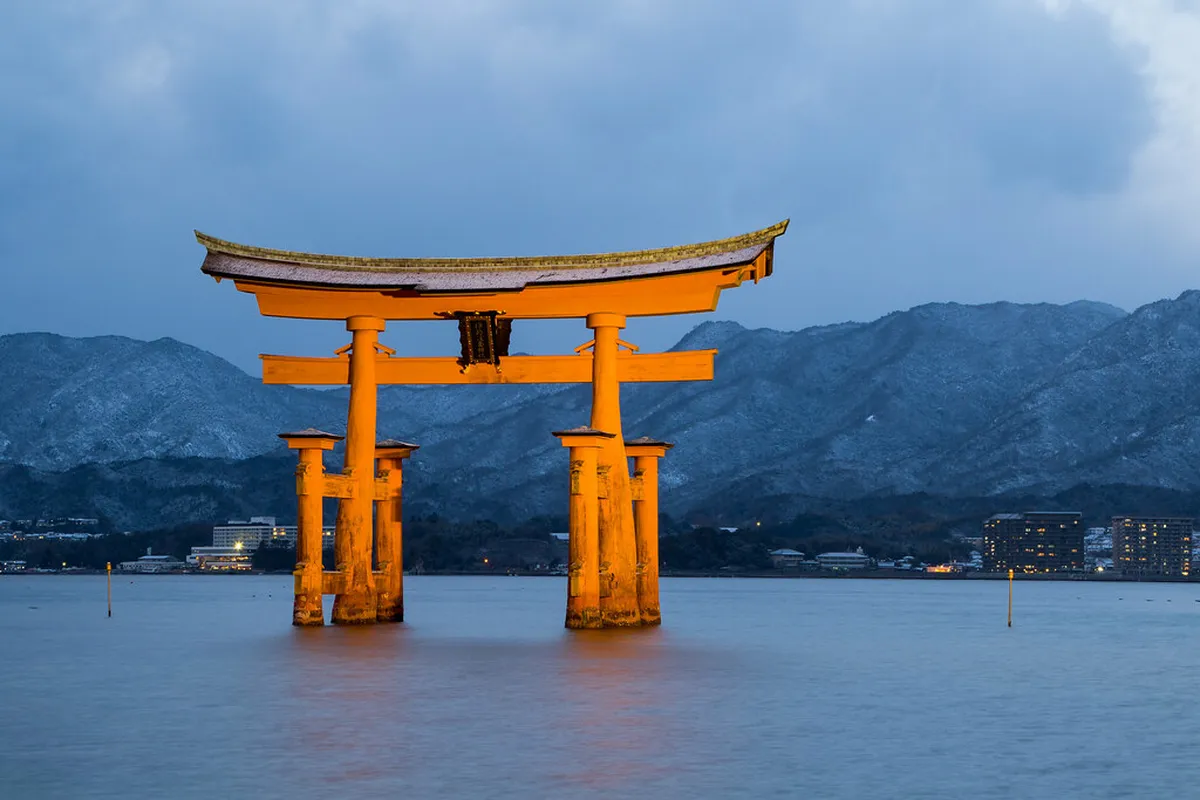
Check the Itsukushima tide table the night before you travel, not on the day. The torii looks "floating" roughly 90 minutes either side of peak high tide. Back-solve your Shin-Osaka departure from the published high-tide time.
Morning: Miyajima Island and the Floating Torii Gate
From Hiroshima Station, transfer to the JR San-yo Line and ride 25 minutes to Miyajimaguchi. The JR West Miyajima Ferry leaves the adjacent pier every 15 minutes; the crossing takes 10 minutes and is covered by the JR Pass. Stand on the right side of the upper deck — the captain detours close to the torii on the 09:10 and 10:10 sailings only, weather permitting.
You must check the Itsukushima Shrine tide times the night before you travel, not on the day. High tide lifts the torii so it appears to float; low tide drains the bay and lets you walk the seabed to the base. Either view is striking, but they look entirely different in photos, and the published tide table tells you which one you are getting that morning. Aim to be on the island within 90 minutes of peak high tide for the classic floating shot.
Itsukushima Shrine itself charges 300 yen and opens at 06:30, well before the day-trip ferries arrive. Walking the vermilion corridors before 09:00 is the closest you will come to having the shrine to yourself. The local sika deer wander the approach freely; do not feed them — eating paper maps is one of their hobbies.
Midday: Omotesando Street and Senjokaku Hall
Omotesando Shopping Street runs inland from the ferry pier and most stalls open by 10:00. This is the place to try grilled oysters from a charcoal counter (around 500 yen for two), Hiroshima lemon soft serve, and momiji manju — maple-leaf-shaped cakes filled with red bean, custard, or chocolate. If you're stretching your trip, browsing where to eat in Hiroshima and local food options will help you find the best meals beyond the festival stalls. Note that several smaller shops remain cash-only despite IC card signage at the entrance.
From the south end of Omotesando, climb the short flight of steps to Senjokaku Hall, the unfinished pavilion Toyotomi Hideyoshi commissioned in 1587. Entry is 100 yen, shoes off, and the open-sided wooden hall pairs with the five-story pagoda next door. Most day-trippers skip Senjokaku entirely, which is exactly why the breeze and the view across the rooftops are worth twenty minutes.
Catch the 12:30 ferry back to Miyajimaguchi, or — if you want the differentiator move — board the Aqua Net high-speed boat at Miyajima Pier 3 and skip the train transfer entirely. The 45-minute Aqua Net ride lands you directly at Motoyasu Pier inside Peace Memorial Park, costs 2,500 yen, and is not covered by the JR Pass. For a tight day trip, the saved 30 minutes is the single biggest efficiency unlock available.
| Stop | Approx time | Cost |
|---|---|---|
| Itsukushima Shrine (Miyajima) | 08:40–10:30 | ¥300 entry |
| Omotesando Street + Senjokaku Hall | 10:30–12:30 | ¥100 (Senjokaku); food extra |
| Peace Memorial Park & Museum | 13:00–15:30 | ¥200 museum + ¥400 audio guide |
| A-Bomb Dome + Orizuru Tower | 15:30–17:30 | ¥2,200 Orizuru (optional) |
| Okonomiyaki dinner near Hiroshima Station | 18:00–19:00 | ¥1,000–¥1,500 |
Afternoon: Hiroshima Peace Memorial Park and Museum
The Peace Memorial Museum opens at 08:30, but the most reflective window is 13:00 to 15:00, after school groups have cycled through. Adult admission is 200 yen; audio guides cost an additional 400 yen and are worth it for the Main Building's first-person testimony rooms. Allow 90 minutes minimum, two hours if you are reading every panel.
Walk from the museum north through Peace Memorial Park, stopping at the Cenotaph for the A-Bomb Victims, the Flame of Peace, and the Children's Peace Monument festooned with origami cranes from schools worldwide. The Pond of Peace and Korean Atomic Victims Memorial often go unvisited but are part of the same emotional throughline. Keep voices low — the entire park is treated as a memorial, not a public garden.
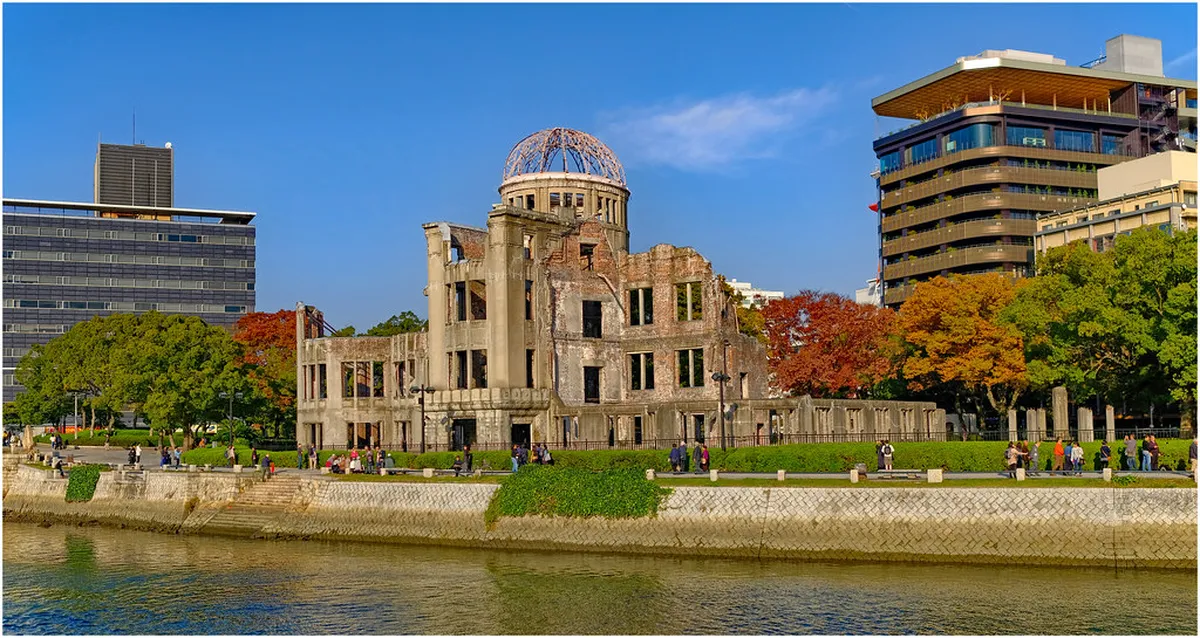
From the park's north end, cross Motoyasu Bridge to reach the Atomic Bomb Dome from the river side. The angle from the bridge — modern Hiroshima rising behind the skeletal dome — is the photograph nearly every documentary uses, and the late-afternoon sun lights it head-on between 15:30 and 16:30 in spring.
Late Afternoon: Atomic Bomb Dome and Orizuru Tower
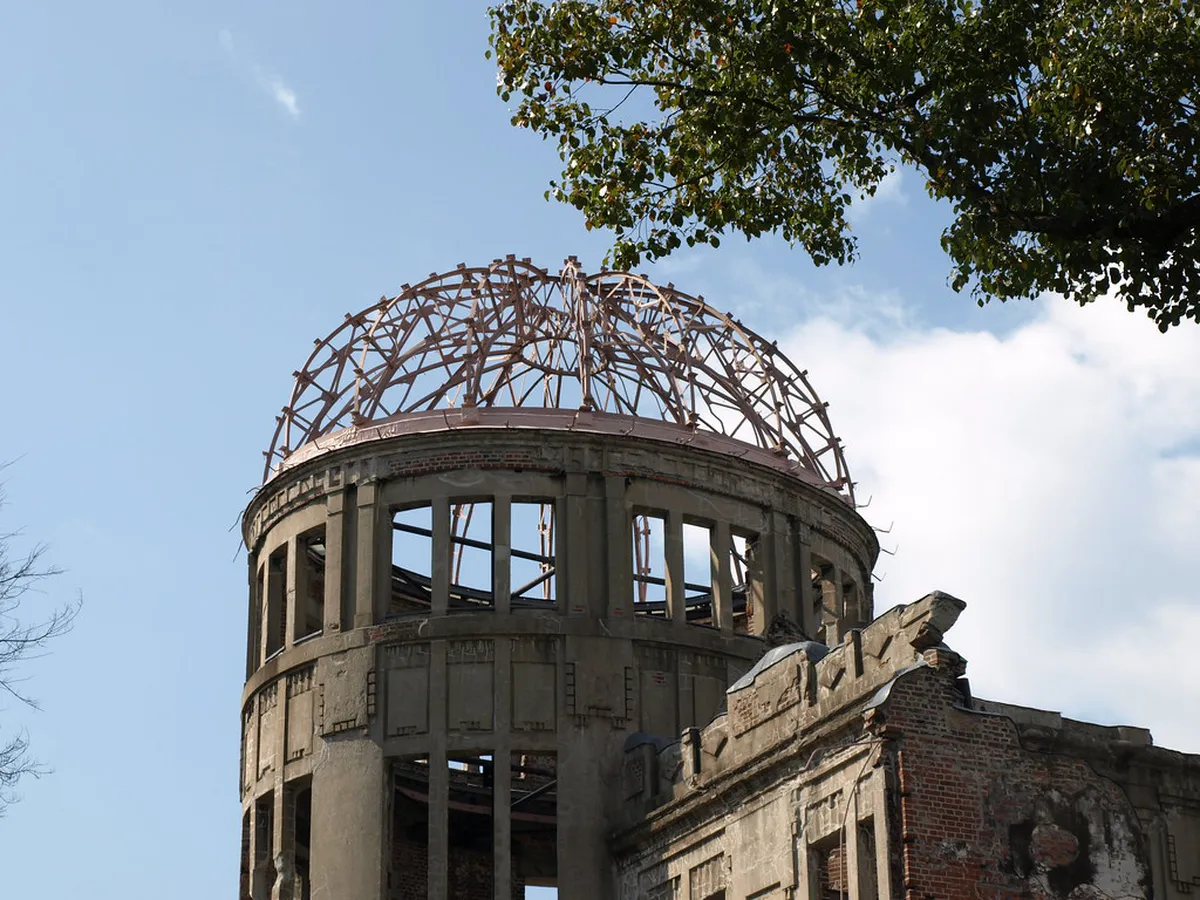
The Atomic Bomb Dome (Genbaku Dome) sits 160 metres from the hypocentre and is preserved exactly as it stood after 6 August 1945. You cannot enter the structure — viewing is from the perimeter path — but a slow loop around the building takes 15 minutes and rewards a careful look at the warped iron beams on the river-facing side.
Orizuru Tower stands directly across the road from the dome and offers Hiroshima's only rooftop observatory at the hypocentre. Tickets are 2,200 yen for adults; the timber-clad rooftop deck has open sides, a fold-your-own paper crane installation, and a clear sightline back over the dome and Peace Park. A glass slide spirals down the building if you would rather descend that way than by lift.
If you would rather end on traditional history than modern views, swap Orizuru for Hiroshima Castle, a 25-minute walk north. The reconstructed donjon costs 370 yen, closes at 18:00 in summer and 17:00 in winter, and the surrounding moat lights up beautifully at dusk. Choose Orizuru for sunset photography and convenience; choose the castle if you have already seen the dome from every angle and want a different mood.
Evening: Hiroshima-Style Okonomiyaki and Return to Osaka
You cannot leave without trying Hiroshima-style okonomiyaki. Unlike the Osaka version — where cabbage, batter, and toppings are mixed in a bowl before frying — the Hiroshima style is built in distinct layers on a teppan: thin crepe, mountain of cabbage, bean sprouts, pork belly, yakisoba or udon noodles, an egg, and a finish of Otafuku sauce and seaweed flakes. The result is taller, lighter, and noodle-led.
Okonomimura is the famous four-floor building near Parco where 25 stalls share the same teppan-counter format; expect 15 minutes wait at peak times and a bill of 1,000–1,500 yen. For a quieter alternative, walk five minutes to Nagata-ya next to Peace Park, where the queue moves faster and the chefs explain each step in basic English.
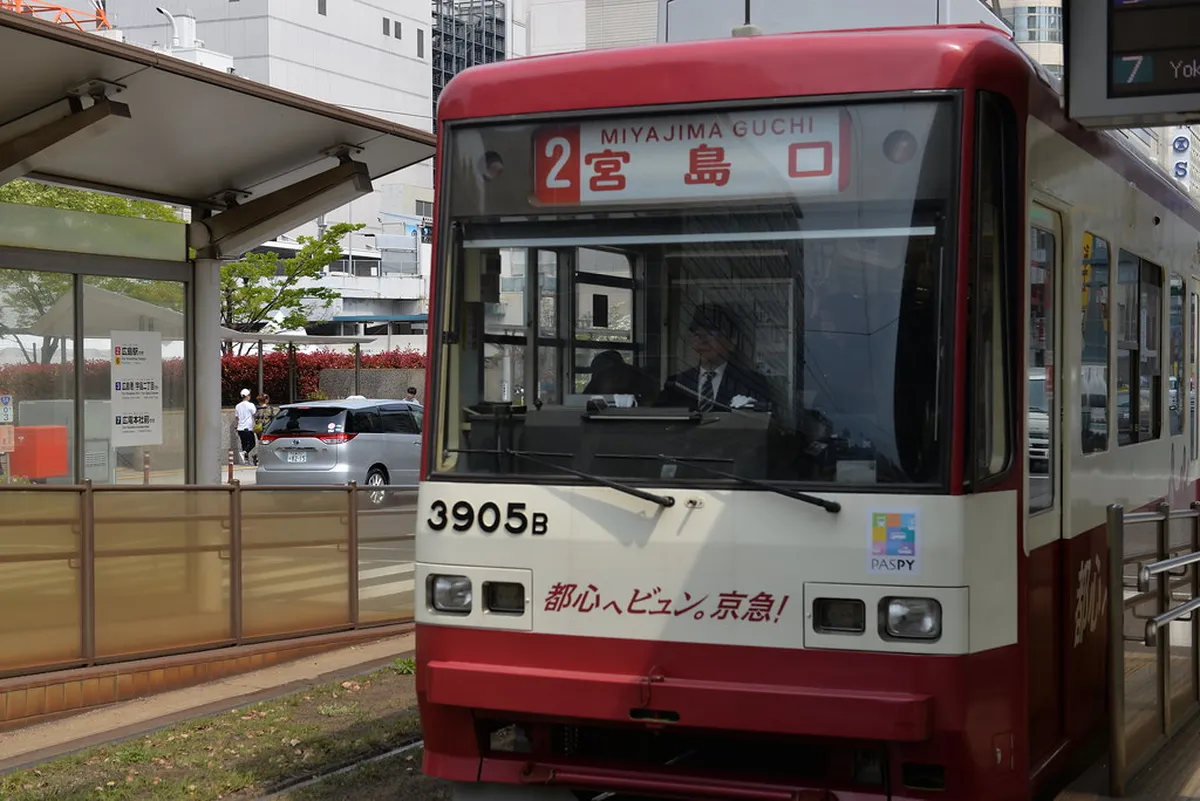
For the return leg, take Hiroden tram line 2 or a 10-minute taxi back to Hiroshima Station and grab an unreserved Sakura or Nozomi seat. If you have extra time before your train, travel tips, etiquette, and what to pack for Hiroshima can guide last-minute souvenir shopping at the station. Departures run every 15 minutes until 21:30; the unreserved car keeps your dinner timing flexible, which matters if okonomiyaki takes longer than expected. You will be back at Shin-Osaka by 21:30 if you board the 19:30 train.
JR Pass holders cannot ride the Nozomi without a paid supplement — use Sakura or Hikari instead. Reserve seats on Sakura in advance as it has fewer non-reserved cars than Nozomi or Hikari.
Reading the Tide Table: The Arrival Window Most Guides Skip
Every itinerary tells you to check the tide. None of them show you how to back-solve a train time from it. Itsukushima publishes monthly tide tables in 24-hour format on the official shrine site; the value you want is the time of manchio (high tide), not low tide. For the floating shot, the gate looks "in water" roughly 90 minutes either side of peak high tide — outside that window the bay drains visibly and the photo loses its drama.
Subtract 60 minutes from peak high tide to get your target arrival on the island, then subtract another 35 minutes for the Miyajimaguchi ferry plus walk, and another 25 minutes for the JR San-yo Line from Hiroshima Station, and another 90 minutes for the Shinkansen from Shin-Osaka. That gives you a Shin-Osaka boarding time roughly three and a half hours before peak tide. If high tide falls before 07:00 or after 17:00, accept that you are getting the low-tide walk-up shot and plan an earlier afternoon to compensate.
Spring and autumn tides on Miyajima swing more dramatically than summer ones, and the cherry-blossom and momiji photo windows are the worst time to wing it. Disabled visitors should also note that the wheelchair-accessible back ramp inside Itsukushima Shrine closes when seawater laps the corridor, which is roughly 30 minutes before peak high tide — arrive earlier than able-bodied visitors, not later.
Practical Planning: Making Your Day Trip Work
Total cost for one adult lands at roughly 22,000–25,000 yen: 20,840 yen on the round-trip Shinkansen, 200 yen for the museum, 300 yen for Itsukushima Shrine, 100 yen for Senjokaku, 1,200 yen for okonomiyaki, plus optional add-ons (2,200 yen for Orizuru, or 2,500 yen one-way for Aqua Net). A 7-day JR Pass at 50,000 yen only pays back if you are also using the Shinkansen on three other days — for a single round trip, individual tickets are cheaper. Add the rest of your trip to the JR Pass break-even calculator to test whether those additional rides change the result.
Reserve the Peace Memorial Museum entry slot online up to a month ahead during cherry-blossom season (late March to early April) and the August 6th memorial week, when same-day queues run 60+ minutes. The rest of the year, walk-up entry is fine. Orizuru Tower also takes online reservations and offers a sunset slot that locks in the best dome view.
Pack light. The day involves at least 15,000 steps, two ferry transfers, and three train transitions. A small daypack with a water bottle, hand towel, IC card topped to 3,000 yen, and 2,000 yen in coins (for cash-only Miyajima stalls and the Senjokaku entry) is enough. Skip the suitcase or large camera bag — Miyajima's Omotesando is narrow and packed by midday.
Is a Day Trip to Hiroshima and Miyajima Worth It?
For most travellers on a one-week Japan trip with limited days outside Tokyo and Kyoto, yes — the Shinkansen makes both UNESCO sites reachable in a 13-hour push, and the emotional weight of Peace Park combined with the visual payoff of the floating torii is hard to match anywhere else in the country. Reading other accounts on CityUnscripted and InsideKyoto confirms the pace is brisk but workable.
The trade-offs are real. You will not hike Mount Misen, you will not see Hiroshima Castle's interior, and you will not have time for the Shukkei-en Garden. If you can spare one overnight in Hiroshima or on Miyajima itself, do it — the island after the day-trippers leave is genuinely magical. But if your schedule is fixed at one day, this itinerary delivers the highlights without skipping the parts that matter.
The combined visual contrast — sacred torii in the morning, the dome's twisted iron at sunset — is what most visitors remember years later. Twenty-five thousand yen and one long day is a fair price for that.
Add an Extra Day: Day-Trip Add-Ons
If you stretch the trip to two days, the obvious add-on is an Iwakuni day trip to see the five-arched Kintaikyo Bridge, 50 minutes south of Hiroshima by JR San-yo Line. The surrounding park is exceptional during cherry-blossom and momiji season, and Iwakuni Castle on the hill above gives you a clear view across the Seto Inland Sea.
Onomichi suits travellers who prefer coastal towns and slow walking — the Temple Way, Cat Alley, and the start of the Shimanami Kaido cycle path all sit within a compact riverside grid. For the wider regional context, see our Miyajima Island visitor guide, which covers Mount Misen and the overnight options the day-trip itinerary necessarily skips.
See our complete Hiroshima attractions guide for the wider city overview.
Frequently Asked Questions
Is it possible to see both Hiroshima and Miyajima in one day from Osaka?
Yes, it is entirely possible with a 7:00 AM start. You will spend about 90 minutes on the Shinkansen each way. This allows four hours for Miyajima and four hours for Hiroshima city.
What is the best way to get from Hiroshima Peace Park to Miyajima?
The Aqua Net speedboat is the fastest direct connection between the two. It takes 45 minutes and costs 2,200 yen for a one-way trip. This saves you from transferring between trains and ferries.
Does the JR Pass cover the ferry to Miyajima?
The JR Pass covers the JR West Miyajima Ferry specifically. You must ensure you board the correct boat at the pier. Other private ferry companies will require a separate ticket purchase.
A day trip from Osaka to Hiroshima and Miyajima rewards careful sequencing more than long hours. Lock the high-tide window first, the Shinkansen second, and the Aqua Net decision third — every other piece falls into place from there. Book the museum slot a week ahead, pack light, and trust the early start: by 21:30 you will be back at Shin-Osaka with both UNESCO sites in your camera roll.
More Osaka Travel Guides
Keep planning your trip with these Osaka guides:
Free: The Hiroshima Essentials guide
Top things to do, where to stay, a perfect day plan, getting around, and the best time to go — a Hiroshima mini-guide you can take offline.
You might also like


Continue reading
More guides you'll find useful


