8 Essential Tips & Stops for a Kintaikyo Bridge Iwakuni Day Trip
Plan the perfect Kintaikyo Bridge Iwakuni day trip from Hiroshima. Includes transport costs, castle ropeway tips, and the best time for a free bridge crossing.
On this page
Kintaikyo Bridge sits roughly 40 km south of Hiroshima in Yamaguchi Prefecture, where five wooden arches span the Nishiki River with no nails in the original 1673 design. Most travelers reach it in under an hour by direct bus or local train, making it one of the most realistic half- or full-day trips out of the city.
This guide covers transport trade-offs, the combo ticket math, the volunteer English guides waiting at the bridge, the white snakes nobody warns you about, and the seasonal iris and cherry gardens tucked behind Kikko Park. Many travelers pair this excursion with a look at top Hiroshima city attractions earlier in their stay.
Transport Comparison: Getting from Hiroshima to Iwakuni
The single biggest decision is bus versus train. The direct highway bus leaves from the Hiroshima Bus Center on the third floor of the SOGO department store, near the A-Bomb Dome and Peace Memorial Park, and stops directly in front of the bridge. The fare is roughly ¥950 one-way and the ride takes about 50 minutes. This is the simplest option for first-time visitors, especially those staying near the Peace Park.
The train is cheaper but adds a transfer. From Hiroshima Station, take the JR Sanyo Line to Iwakuni Station (about ¥770), then switch to the two-stop Gantoku Line to Kawanishi Station — total fare lands around ¥860 once the Gantoku transfer is added. From Kawanishi it is a 1 km, 15–20 minute walk to the bridge. A common mistake is staying on at Iwakuni Station expecting to walk; the bridge is actually closer to Kawanishi, the next stop down.
| Route | Fare (one way) | Time | Notes |
|---|---|---|---|
| Direct highway bus (SOGO Bus Center) | ¥950 | ~50 min | Drops at bridge; easiest option |
| JR Sanyo + Gantoku Line → Kawanishi | ~¥860 | 60–70 min + 1 km walk | JR Pass covers Sanyo; small Gantoku surcharge |
| Private car (Route 2 / Sanyo Expressway) | ¥900–1,000 toll | ~60 min | Paid parking ¥300 below bridge |
- Direct highway bus from SOGO Bus Center: ¥950, ~50 minutes, drops you in front of the bridge. Easiest for newcomers and travelers with luggage.
- JR Sanyo Line + Gantoku Line to Kawanishi Station: ~¥860 with transfer, 60–70 minutes plus a 1 km walk. Cheapest if you already hold a JR Pass (covers the Sanyo Line; Gantoku transfer is a small surcharge).
- Private car or rental via Route 2 (free) or Sanyo Expressway (¥900–1,000 toll): 60 minutes door-to-door. ¥300 paid parking sits below the bridge, with free lots a few hundred meters upstream.
JR Pass holders should note the Sanyo Line is fully covered, but you still pay a small fare for the Gantoku stretch into Kawanishi. If you want the cleanest arrival, the bus wins. For details on the local bus schedule check the Iwakuni City Official Tourism site before leaving.
The Iconic Kintaikyo Bridge: History and Crossing Tips
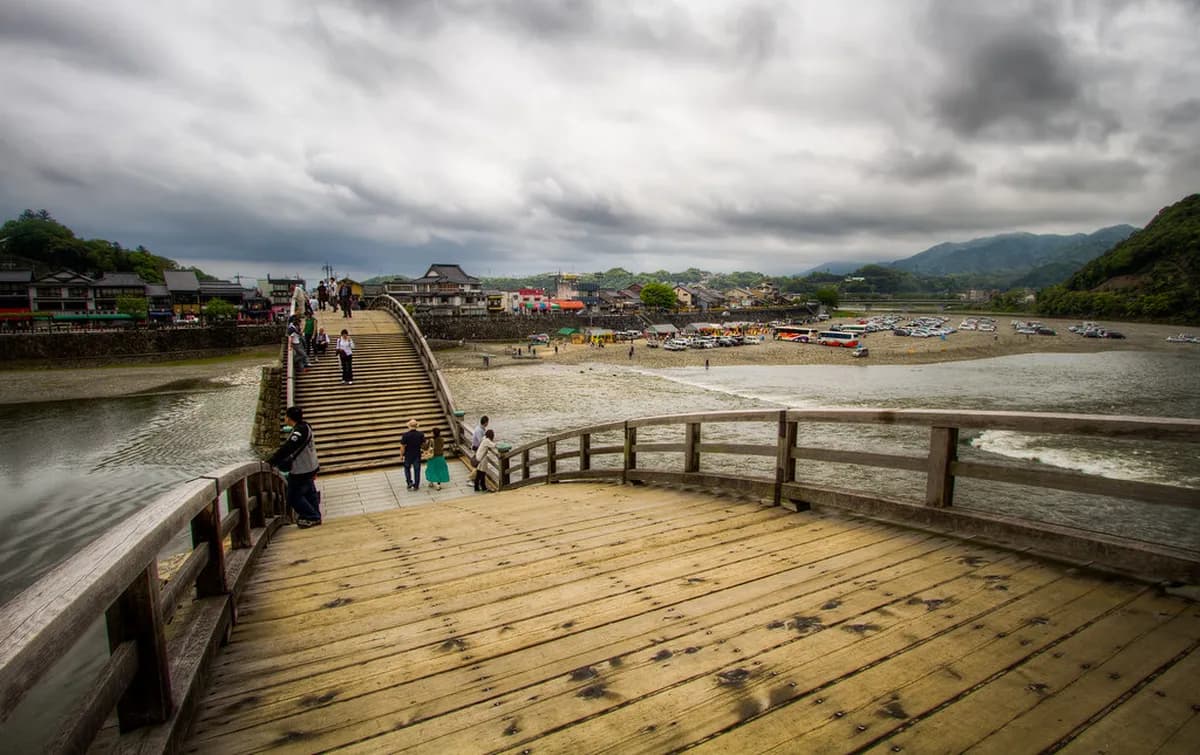
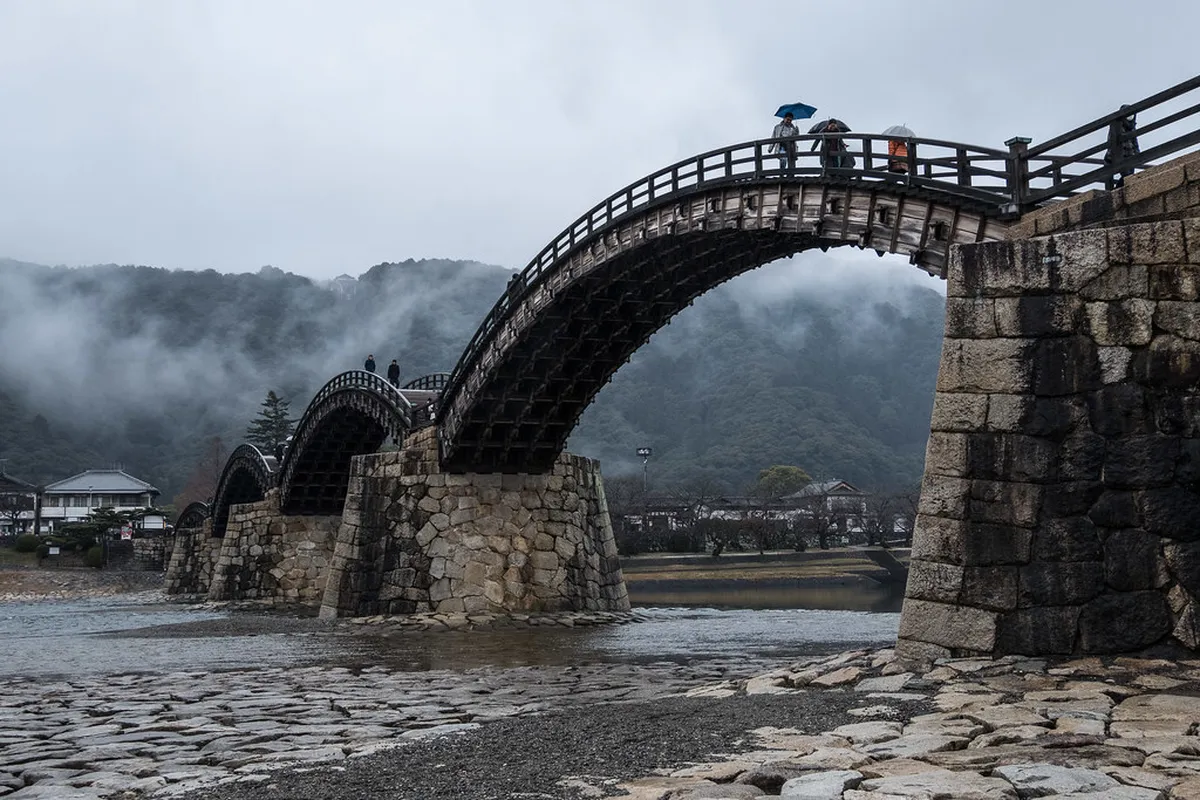
The original Kintaikyo was completed in 1673 by the Kikkawa clan, who ruled Iwakuni domain under the Tokugawa Shogunate. It is 211 yards (193 m) long, rests on four stone piers, and was famously built without nails — the load is held by interlocking wooden joints alone. Walking each of the five arches in succession is the actual experience: you climb and descend each hump, with brief platforms between to admire the river.
Buy the ¥1,140 combo ticket at the bridge entrance rather than paying separately — it covers the bridge crossing, ropeway, and castle in one paper ticket, saving you time at three separate queues. The numbers are the same; the combo just streamlines the process.
The crossing toll is ¥310 round-trip for adults and ¥160 for children, collected at staffed booths at both ends. The toll is only enforced between 8:00 and 17:00. Outside those hours the bridge stays physically open and free — a sunrise crossing in summer (the booths open before 6 AM is common in peak season practice but the toll only kicks in at 8) gives you the bridge essentially to yourself, and the low side-light is ideal for photographing the arches without the harsh midday glare.
Look for the volunteer English guides who wait near the ticket booth on the park side. They are unpaid local retirees who provide 30–60 minute tours covering the bridge, the Kikkawa family history, and the samurai district — a service quietly mentioned by only one of the top SERP guides. If you visit during the cherry blossom season, the riverbanks frame the arches with pink in late March to early April.
The 20-Year Rebuild Cycle: What to Look For on the Arches
After heavy summer rain, the Nishiki River rises quickly and the bridge can close for 24–48 hours. If you are travelling in late August or September, build a rain-day alternative into your itinerary in case crossings are suspended on your chosen day.
Almost every guide describes Kintaikyo as a 17th-century bridge, which is misleading. The bridge follows a rotating 20-year reconstruction schedule: each of the five wooden arches is dismantled and rebuilt in sequence, so on any given visit at least one arch is materially newer than the others. The most recent full-cycle rebuild ran from 2001 to 2004, and the current rolling renewal continues into the late 2020s. Wood ages quickly to silver-grey, so you can usually pick out the youngest arch by eye — paler hinoki cypress timber with sharper joinery edges.
This matters for two practical reasons. First, the bridge is occasionally partially closed during arch swaps, with single-arch detours; double-check the official site within a week of your visit. Second, after major typhoons (most famously the 1950 Kijiya typhoon, which destroyed the entire span), the bridge can close for high water — the Nishiki River is fast-rising and a heavy summer rain can shut crossings for 24–48 hours. If you are travelling in late August or September, build a rain-day alternative into your Hiroshima itinerary in case the bridge is impassable on your chosen day.
Exploring Kikko Park and Samurai Heritage Sites
Cross the bridge and you step into Kikko Park, the former samurai quarter of the Kikkawa clan. The grounds are flat, generously shaded, and free to enter. The Mekata Residence — a preserved mid-Edo samurai house with thatched roof and inner gardens — sits a short walk north of the ropeway and is one of the few places in western Japan where you can see middle-rank samurai housing in situ.
The park rewards seasonal timing. The two iris gardens behind the historic district peak in mid-June, with one bed planted directly in shallow water and traversed by wooden boardwalks. Hydrangeas overlap the iris bloom by about a week. The cherry-tree allée along the main park entrance hits full bloom typically March 28 to April 5, with paper lanterns strung up after dark for hanami picnics. In late November the maples around the Kikko Shrine and the small carp pond turn deep red.
Other low-key stops worth the detour: the Kikkawa Historical Museum (free English signage, closed Mondays), the statue of Sasaki Kojiro — the swordsman who reputedly invented the tsubame-gaeshi technique watching swallows skim the river — and a small Shinto shrine where most local visitors pause to pray.
Ascending to Iwakuni Castle via the Ropeway
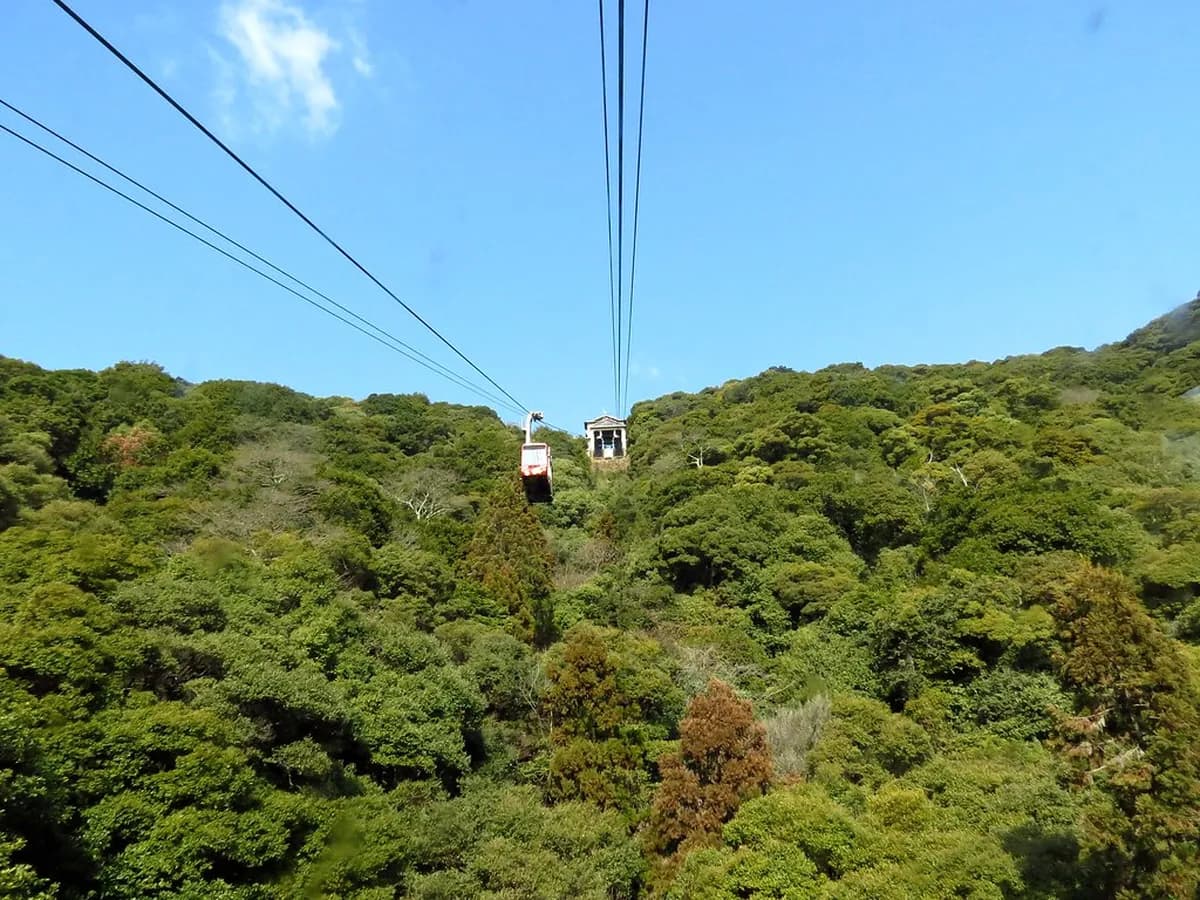
Iwakuni Castle sits on Mount Shiroyama, 200 m above the river. The ropeway runs every 15 minutes and takes three minutes top-to-bottom; round-trip is ¥560 (¥320 one-way). From the upper station a short forest path — about 5–7 minutes, gentle but with stairs — leads to the keep. Fitter travelers can hike the mountain in roughly 40 minutes via a marked trail starting near the Buddhist temple uphill from Kawanishi Station.
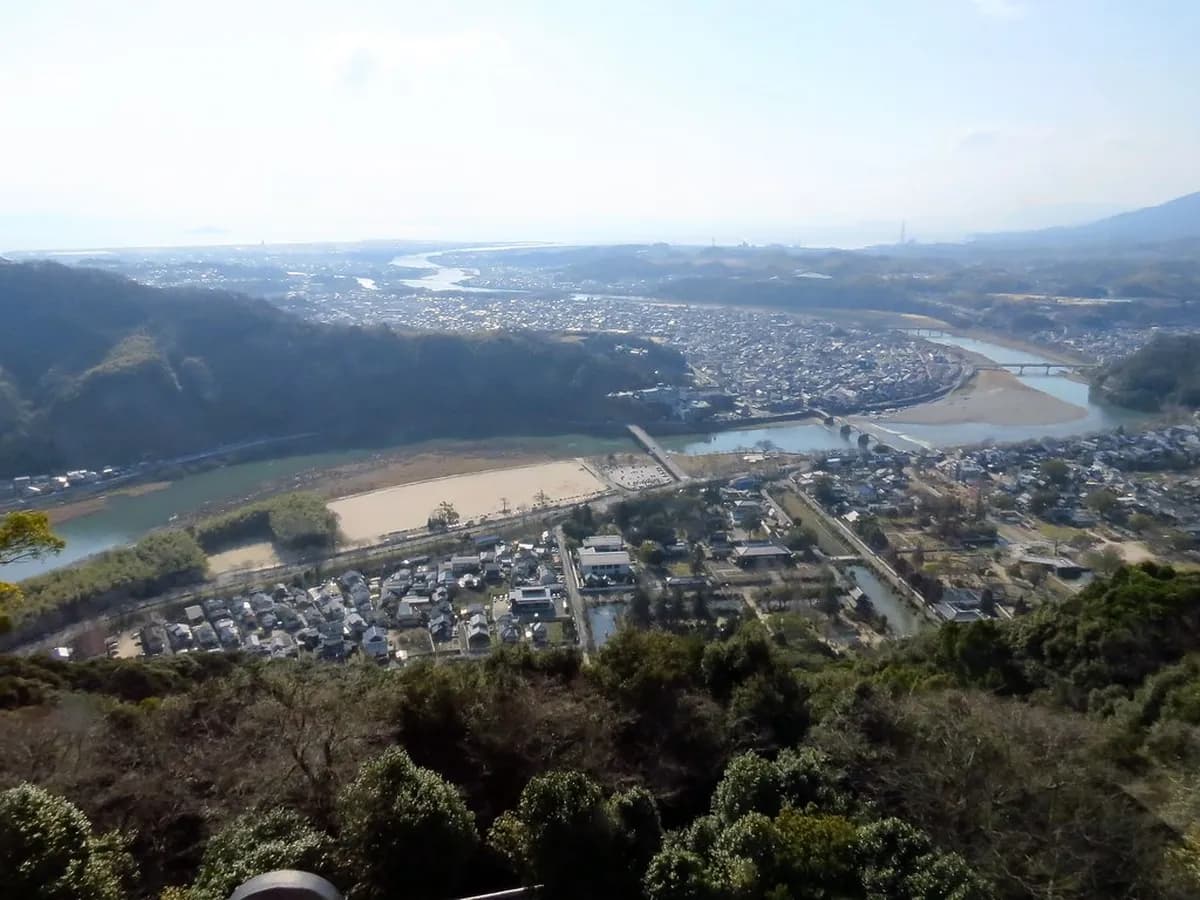
The castle visible today was rebuilt in 1962 and intentionally relocated slightly to give a better view from the river — the original 1608 stone foundations sit a few hundred meters away and are worth a quick look. Inside, the museum covers swords, armor, maps, and a photo gallery of Japanese castles. The top-floor observation deck offers a clear view down to the bridge and out to the Seto Inland Sea, with the airfield of Marine Corps Air Station Iwakuni visible to the south.
If you plan to do everything in one visit, buy the combo ticket at the bridge entrance rather than paying separately. The numbers are worth knowing: bridge ¥310 + ropeway ¥560 + castle ¥270 = ¥1,140 separately, versus ¥1,140 for the combo set — same headline price but the combo is sold as one paper ticket, saving you queuing time at three booths. Check the rates on the Kintaikyo Bridge Official Site before you go, as they sometimes adjust seasonally. The hike-up route also dovetails into a broader Hiroshima outdoor itinerary if you want more vertical in your day.
Unique Local Experiences: White Snakes and Cormorant Fishing
The Iwakuni white snakes are a genuinely unusual local feature. They are albino Japanese rat snakes — harmless, six feet long when fully grown, with red eyes and creamy-white scales — and they are designated a national natural monument. The dedicated White Snake Museum sits beside the ropeway in Kikko Park; entry is around ¥200 and viewing tanks are climate-controlled. A second viewing site exists at Imazu Tenjinyama Shrine for travelers with extra time. Local belief treats the snakes as messengers of Benzaiten, the goddess of fortune.
Cormorant fishing (ukai) on the Nishiki River runs nightly from June 1 to August 31, weather and water level permitting. Fishermen in traditional dress launch wooden boats with bow-mounted torches and tethered cormorants that dive for ayu, small sweetfish drawn to the firelight. You can watch from the riverbank for free or book a seat on a spectator barge that anchors mid-river — barge tickets typically run ¥3,500–4,000 and sell out fastest on summer weekends. The spectacle lasts roughly 40–90 minutes depending on conditions.
Dining in Iwakuni: Local Specialties to Try
Iwakuni-zushi is the local sushi style and the must-try dish. Unlike standard nigiri, it is pressed sushi: a large rectangular wooden mold is filled with vinegared rice in alternating layers with cooked sweetfish, shredded omelette, lotus root, and shiitake, then sliced into squares. Most restaurants on the park side of the bridge offer a lunch set for around ¥1,500–2,000 that includes miso soup and pickles. The flavor is markedly different from the savory Hiroshima-style okonomiyaki you might have had in town.
The soft-serve ice cream cluster directly across from the bridge is the other regional curiosity. Several stalls offer 20–30 flavors each, with the most famous shop advertising over 100 rotating options including local renkon (lotus root), wasabi, soy sauce, and sake. Renkon itself is an Iwakuni delicacy — the city is one of three major Japanese producers — and shows up in tempura, vinegared salads, and even crackers. For a sit-down option with river views, the second-floor Bashi-no-Eki shop above the bus terminal has tea, cake, and local sake by the glass.
Sample 1-Day Iwakuni Itinerary from Hiroshima
This pacing assumes a 9:00 departure from Hiroshima and a return by 17:30. It works whether you choose the bus or the train via Kawanishi.
- 08:30 — Arrive at Hiroshima Bus Center (3F, SOGO). Buy a one-way ticket to Kintaikyo, ¥950.
- 09:00 — Bus departs. Use the ride to look up the volunteer guide schedule on your phone.
- 09:50 — Arrive at the bridge. Buy the ¥1,140 combo ticket immediately (covers bridge, ropeway, castle).
- 10:00–11:00 — Cross the bridge slowly, take photos from the riverbed below, then locate a volunteer guide on the park side for a 30-minute walk through the samurai district.
- 11:00–12:00 — Visit Mekata Residence and the iris/peony gardens (in season) inside Kikko Park.
- 12:00–13:00 — Lunch: Iwakuni-zushi set at one of the park-side restaurants.
- 13:00–13:15 — Ropeway up to Mount Shiroyama (use combo ticket).
- 13:15–14:30 — Iwakuni Castle museum, observation deck, then walk back down to the ropeway.
- 14:30–15:30 — White Snake Museum and free Kikkawa Historical Museum (closed Mondays).
- 15:30–16:00 — Soft-serve ice cream stalls; pick a flavor that you would not order anywhere else.
- 16:15 — Catch the return bus to Hiroshima (last direct bus typically around 17:30; verify on the day).
If you started at Kawanishi by train instead, add 20 minutes at each end for the walk and budget the ¥860 fare. The day still fits comfortably into a wider Hiroshima itinerary.
Practical Tips for a Smooth Day Trip
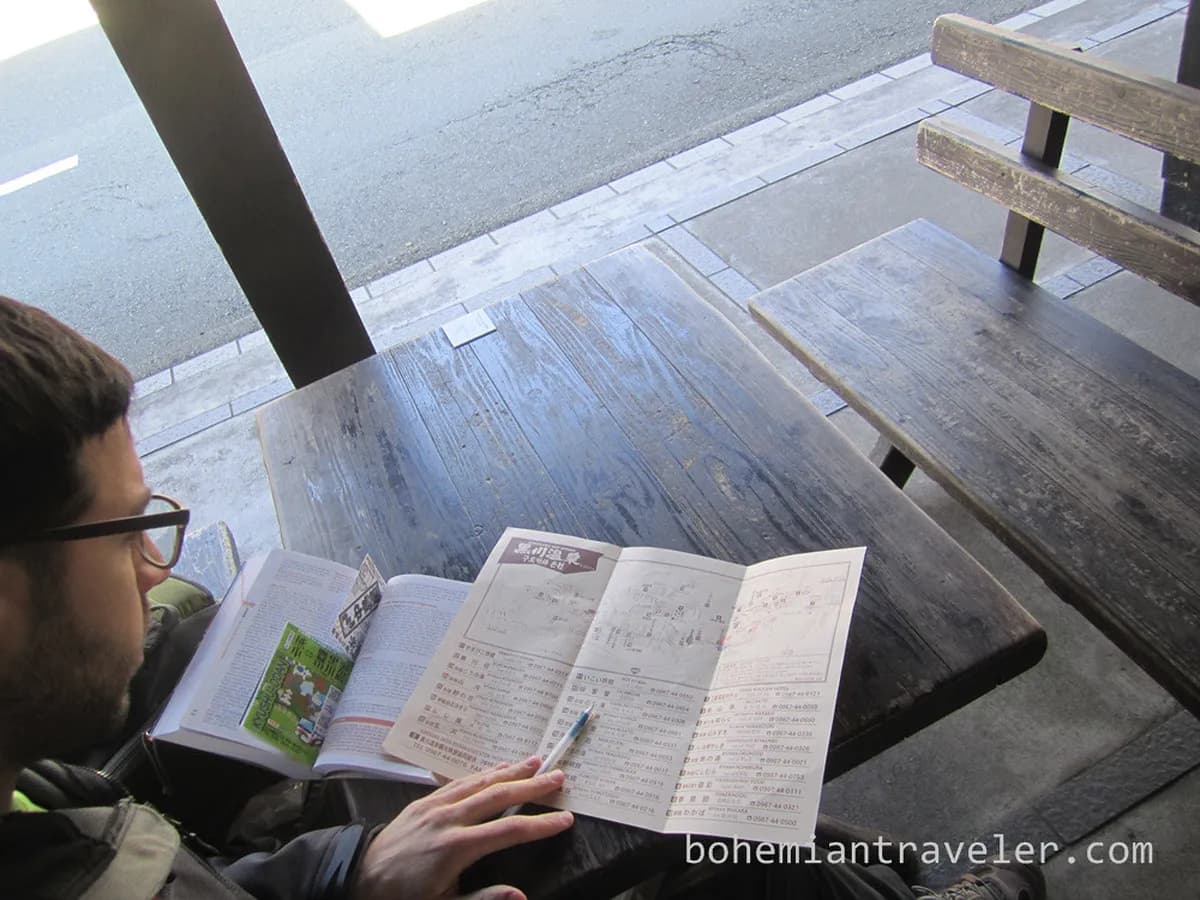
Buy the combo ticket once at the bridge entrance — it removes three separate queues and gives you a small printed map. Wear shoes you can climb arches in: the bridge humps are surprisingly steep, with shallow wooden cleats acting as steps, and slick after rain. Most of Kikko Park is paved and pram-accessible, but the path from the upper ropeway station to the castle includes 60–80 stone steps with no alternate route — travelers with mobility issues should plan to enjoy the view from the upper ropeway terrace and skip the keep.
Carry cash. The combo booths and ropeway accept IC cards (Suica, ICOCA, PASPY) and most major credit cards, but the ice cream stalls, smaller souvenir shops, and the Iwakuni-zushi specialty restaurants are still cash-preferred. ATMs that accept foreign cards are limited near the bridge — withdraw at a 7-Eleven or Japan Post in central Hiroshima before you leave.
Two date-sensitive notes for 2026. First, if you are around in early May, the Marine Corps Air Station Iwakuni hosts Friendship Day with free public access, aerial demonstrations, and historic aircraft displays — bring photo ID, expect 250,000+ attendees, and assume the bridge area itself will be quieter that morning as crowds shift to the base. Second, the iris gardens reach peak around June 10–20 and the cherry blossom path along the park entrance peaks late March to early April. Pair this trip with our balanced Hiroshima travel plan if you want a contrast day after the Peace Memorial.
For related Hiroshima deep-dives, see our Saijo sake town day trip, Kure and Yamato Museum day trip guides.
Frequently Asked Questions
How do I get to Kintaikyo Bridge from Hiroshima?
The easiest way is taking a direct highway bus from the Hiroshima Bus Center for ¥950. Alternatively, take the JR Sanyo Line to Iwakuni Station and transfer to a local bus. This journey typically takes about 50 to 70 minutes depending on your chosen method. You can find more details in our guide to Hiroshima attractions.
Is Iwakuni worth a day trip from Hiroshima?
Yes, Iwakuni is highly recommended for its unique wooden bridge and samurai history. It offers a quieter atmosphere compared to the busy streets of central Hiroshima. Most visitors find that four to six hours is plenty of time to see the main sites.
How much does it cost to cross the Kintaikyo Bridge?
A round-trip ticket for an adult costs ¥310 during standard daytime hours. You can also buy a combo ticket for ¥1,140 which includes the bridge, ropeway, and castle. Crossing is often free if you arrive before 8:00 AM or after 5:00 PM.
Can you see the white snakes in Iwakuni?
You can see these rare creatures at the White Snake Museum located near Kikko Park. The museum is open daily and charges a small entry fee of ¥200 for adults. These snakes are unique to the Iwakuni area and are protected as national treasures.
A day trip to Iwakuni, part of the broader Setouchi region route, rewards travelers who want something quieter than central Hiroshima while still keeping logistics simple. The bus takes under an hour, the combo ticket prices three of the four headline sights into one paper, and the volunteer English guides are an underused asset that adds real depth to the visit.
Time your trip with iris season in mid-June, cherry blossoms in late March, or the cormorant fishing season from June through August for the strongest experience. Check the bridge's reconstruction schedule and the typhoon forecast before you commit, and you will get a near-flawless excursion through one of the most distinctive corners of Yamaguchi Prefecture.
Free: The Hiroshima Essentials guide
Top things to do, where to stay, a perfect day plan, getting around, and the best time to go — a Hiroshima mini-guide you can take offline.
You might also like

Continue reading
More guides you'll find useful