11 Best Onsen Towns for Fall Foliage in Hiroshima and Chugoku
Discover the best onsen towns in Hiroshima and Chugoku for fall foliage. Plan your trip with peak timing, packing tips, and local weather guides.
On this page
Pairing a Chugoku onsen with peak maple foliage is one of the most rewarding shoulder-season trips in Japan, and 2026 forecasts already point to a slightly later peak than usual. The five prefectures that make up Chugoku — Hiroshima, Okayama, Tottori, Shimane, and Yamaguchi — span coastal islands, river valleys, and inland highlands, which is why colors arrive on different dates within a 200 km radius. This guide ranks the eleven best onsen towns by foliage timing, ease of access from Hiroshima Station and Shin-Osaka, and the kind of scenery you actually want to soak in.
Most travelers should aim for the window between November 15 and December 5, but the right town for you depends on whether you want sea views, mountain valleys, radium-rich waters, or quiet historic streets. I have rated each town on peak timing, JR access, and one local detail that does not show up in standard guides — including a luggage-forwarding tip at the end that makes a multi-onsen route practical even with a single suitcase.
Chugoku Region Overview: The Five Prefectures
Chugoku sits at the western end of Honshu, bordered by the Seto Inland Sea to the south and the Sea of Japan to the north. Hiroshima and Yamaguchi face the Inland Sea and ride the JR Sanyo Shinkansen spine, while Tottori and Shimane occupy the cooler northern coast and rely on slower JR Sanin lines or the Sakai Line out of Yonago Airport. Okayama bridges both sides via its Tsuyama Line and Hakubi Line connections.
This north-south split matters for foliage planning: the Sanin coast and inland Tottori peak in mid-November, while the Sanyo (Inland Sea) side holds color into early December. Combining one cooler-side onsen with one warmer-side onsen gives you a roughly two-week window to chase peak conditions, which is why most ryokan packages quietly recommend a north-south rather than east-west itinerary.
Miyajima Onsen (Hiroshima)
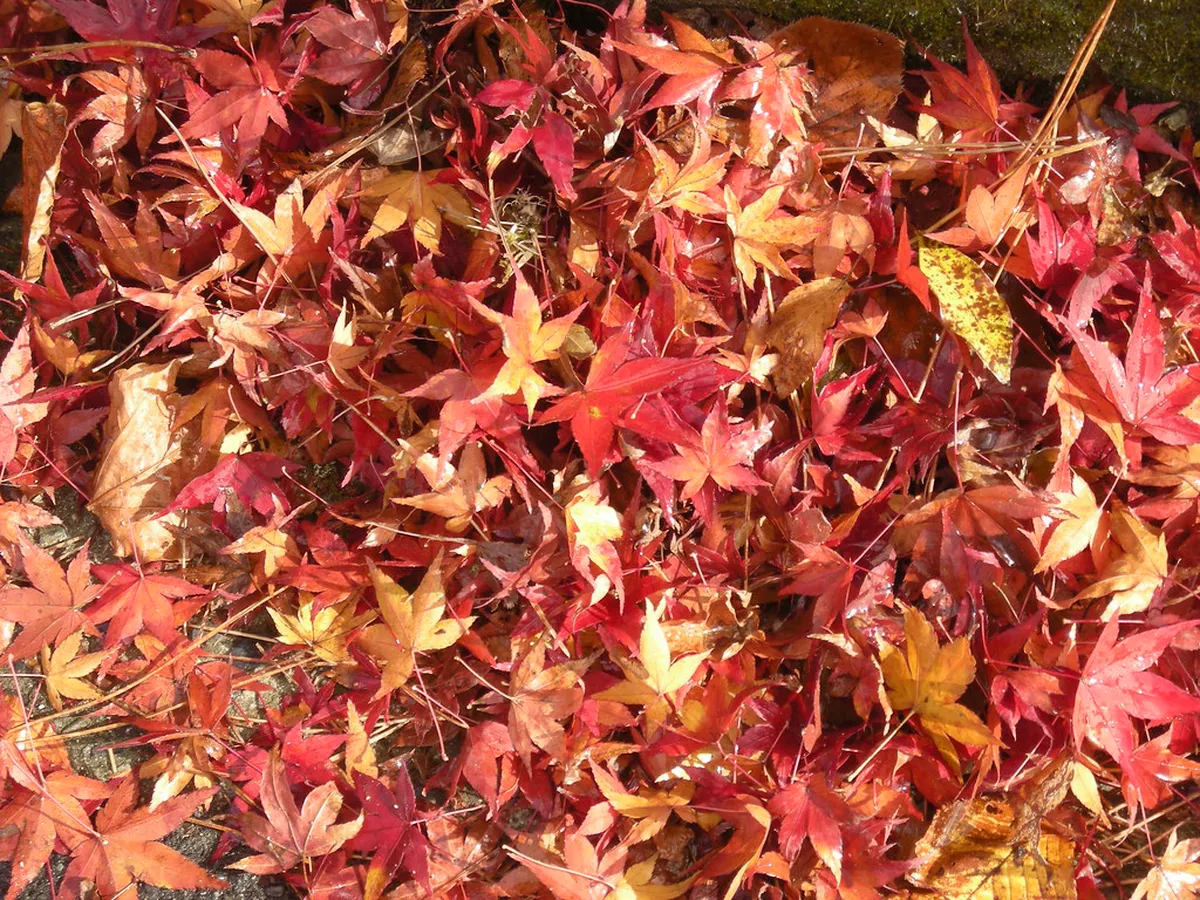
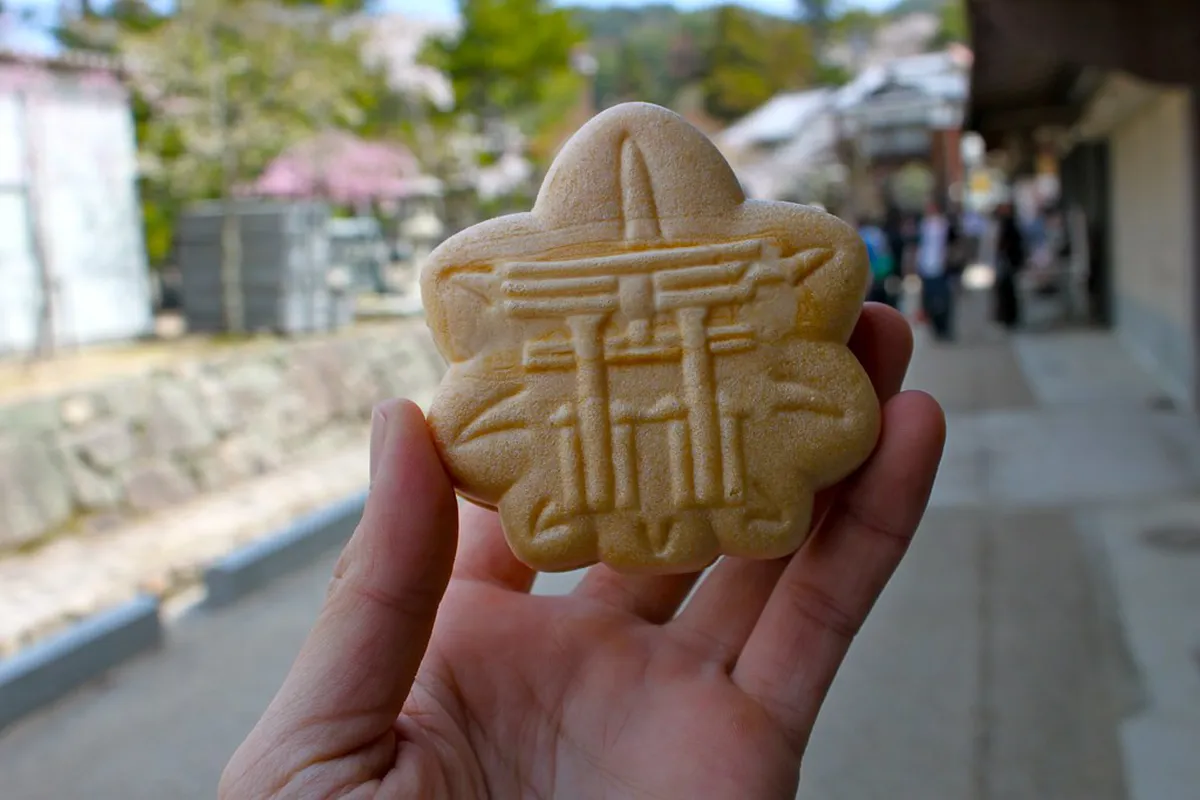
Miyajima Onsen wraps around the same island as the floating torii of Itsukushima Shrine, and Momijidani Park behind the shrine holds more than 700 maples that peak between November 15 and 25.
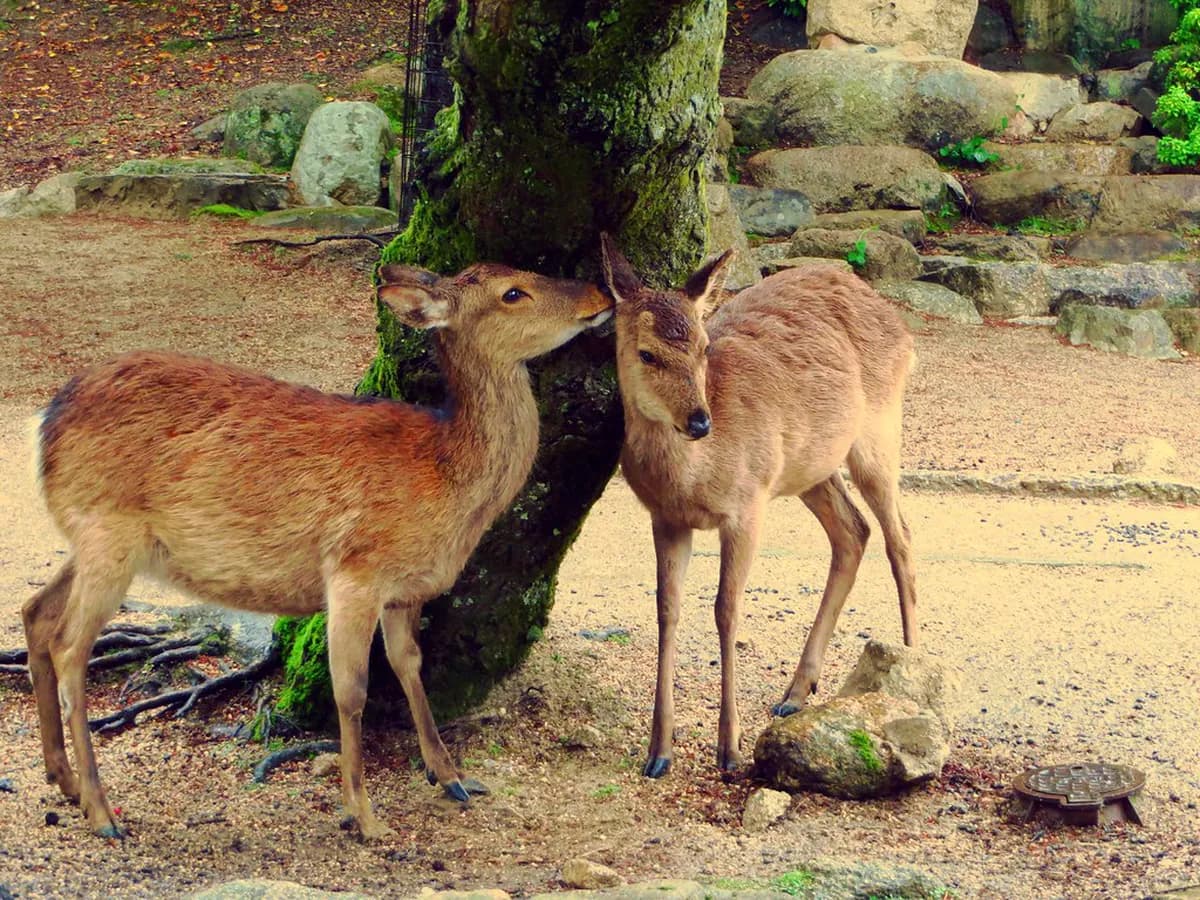
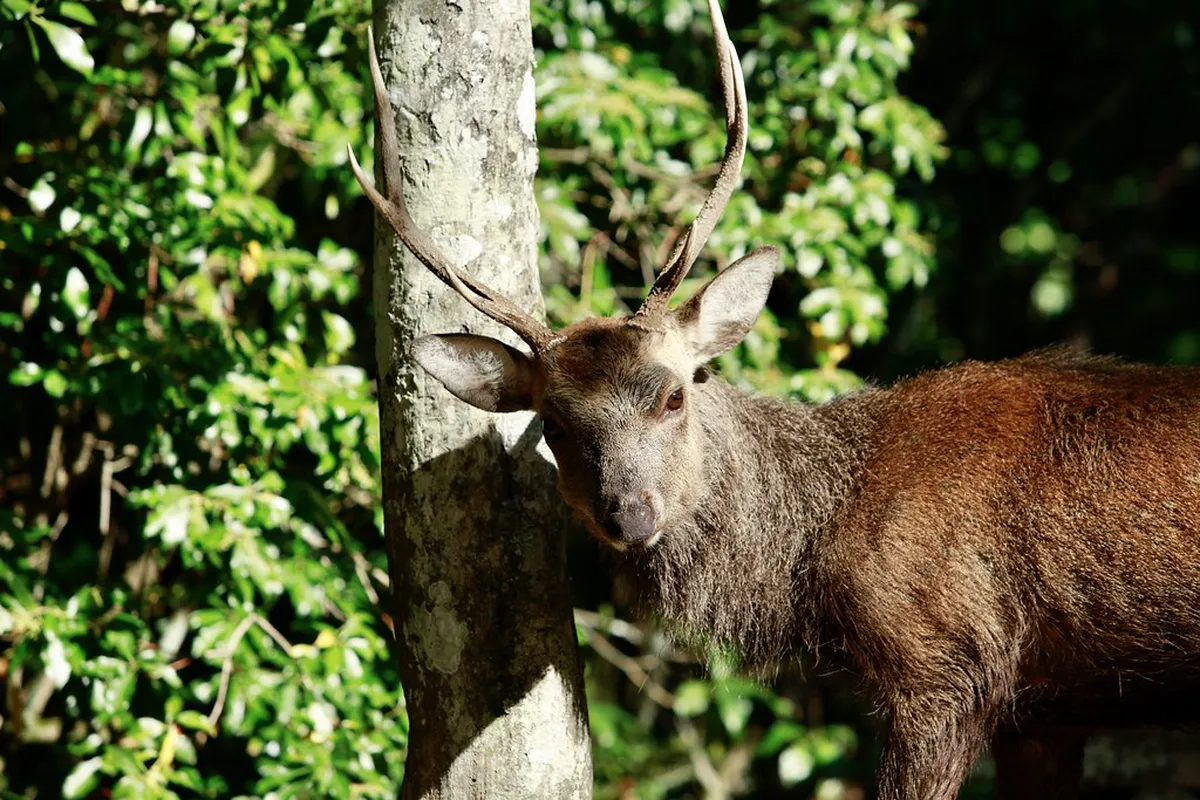
The ryokan baths face inland forest rather than the sea, so book a property near the park entrance if you want to walk to the leaves before the day-tripper ferries arrive. Travel from Hiroshima Station is 25 minutes by JR Sanyo Main Line to Miyajimaguchi, then a 10-minute ferry. Read our complete Miyajima guide for the best walking routes through Momijidani.A crowd-avoidance tip locals use: take the very first ferry of the day (around 06:25 from Miyajimaguchi) and walk straight to Momijidani before the 09:00 tour buses unload. By 11:00 the path is shoulder-to-shoulder. The other quiet window is the last hour before the park closes, when the late afternoon light turns the maples almost translucent and the deer calm down.
Tomonoura Onsen (Hiroshima)
Tomonoura is a preserved Edo-era port on the Seto Inland Sea about 90 minutes east of Hiroshima Station via Fukuyama. The onsen ryokans sit on a small bluff above the harbor, and the orange tile roofs of Iroha-maru waterfront shrines pop against the deep blue sea when the surrounding hillsides turn gold in late November. This is the town to choose if you want coastal scenery rather than dense maple tunnels.
From Hiroshima Station take the JR Sanyo Shinkansen to Fukuyama (about 25 minutes), then a 30-minute Tomotetsu bus directly to Tomonoura Port. The town itself is walkable in half a day, which makes it an easy add-on to a Kurashiki or Onomichi stop rather than a destination requiring a full day of its own.
Kurashiki Onsen (Okayama)
Kurashiki is best known for the Bikan historical canal district lined with white-walled storehouses, and a small cluster of onsen ryokans sits within walking distance. Foliage here peaks late — typically November 25 to December 5 — because Okayama's lower elevation and Inland Sea climate delays the color change by a full week compared with inland Tottori. Pair the canal walks with a day trip up to Tsuyama Castle's Kakuzan Park, where about 1,000 maples surround the castle stone walls.
Access is faster than most travelers expect: Shin-Osaka to Okayama is 45 minutes on the Sanyo Shinkansen, then 15 minutes on the JR Sanyo Line to Kurashiki Station. The trams that locals mention go to Shiroshita for Korakuen Garden in Okayama City rather than Kurashiki itself.
Yunogo Onsen (Okayama)
Yunogo is a quiet inland river-valley onsen in the Mimasaka highlands, at its best from mid-November when the surrounding mountains turn red while the village ginkgos hold yellow. Crowds here are a fraction of Miyajima or Kurashiki, and several ryokans offer rooms with private open-air baths overlooking the Yoshino River. This is the pick for travelers who want a working onsen town rather than a tourist set-piece.
Reach Yunogo via Okayama (45 minutes on the Sanyo Shinkansen from Shin-Osaka), then about 90 minutes on the JR Tsuyama Line to Yoshinaga Station and a short taxi ride. A car cuts the journey roughly in half if you are driving the region.
Misasa Onsen (Tottori)
Misasa, deep in inland Tottori, is one of only a handful of onsen worldwide whose mineral content is rich in radon — locals and ryokan literature still call it radium springs — which is why the town has a long-standing reputation as a healing destination. Foliage in the surrounding Mitokusan range peaks in mid-November, and the trail up to Sanbutsu-ji Nageiredo (a national treasure cliffside temple) is the single most photographed maple walk in the region.
Access is slower than the Sanyo side: from Tottori Sakyu Conan Airport take the bus 45 minutes to Kurayoshi, then a further 35-minute bus to the Mitokusan trailhead. Plan to overnight here at minimum — day-tripping wastes the hours of transit time. The Misasa River flows directly through the town and the riverside ashiyu (foot baths) are free and open through the night, which is a small detail that turns a normal evening walk into something memorable.
Kaike Onsen (Tottori)
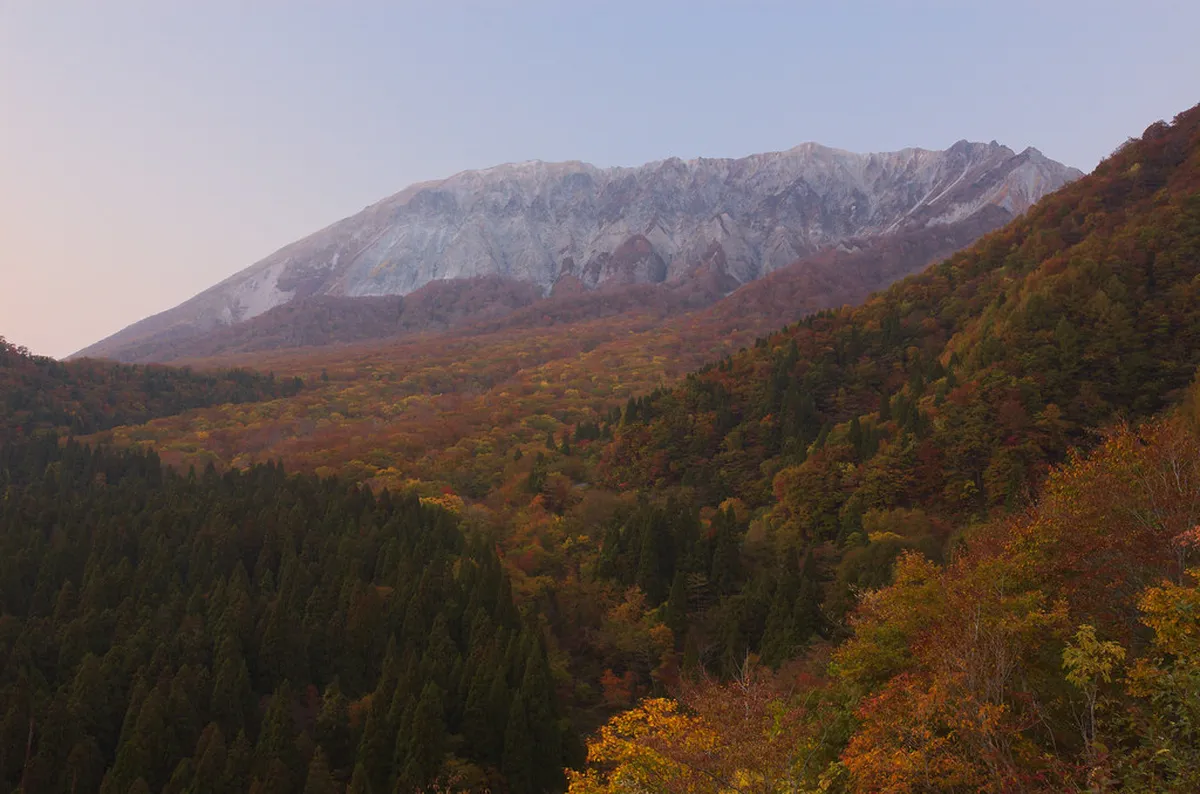
Kaike is an unusual choice on this list because its hot springs are saline — a rare salt-water onsen with mineral content closer to seawater than to the freshwater springs found across the rest of Chugoku. The trade-off is access: Kaike sits on the Sea of Japan coast about 25 minutes by JR Sakai Line from Yonago, which puts it furthest from the Sanyo Shinkansen of any town in this guide. Foliage timing is early to mid-November because the Mt. Daisen massif behind the town pulls cold air down to the coast earlier than elsewhere.
The reward for the longer journey is genuinely uncrowded scenery and direct evening views west across the bay toward Daisen, which keeps a snow cap from late autumn onward. Pair Kaike with Mt. Daisen's beech forests for the most dramatic single-day foliage viewing in the prefecture, and budget at least one extra travel day in the itinerary to absorb the slower train segments.
Izumo-Tamatsukuri Onsen (Shimane)
Tamatsukuri's claim is that it is one of Japan's three "beauty springs" — bihada-no-yu — meaning the alkaline water leaves skin notably softer after a soak. That reputation, paired with its proximity to Izumo Taisha (the country's most important Shinto shrine for matchmaking and good fortune), makes Tamatsukuri the strongest pick for a wellness or spiritually-themed trip rather than a pure foliage hunt. The town's maple corridor along the Tamayu River peaks mid- to late November.
From Yonago Kitaro Airport, the JR Sakai Line plus a quick connection on the Sanin Main Line gets you to Tamatsukuri Onsen Station in about 90 minutes total. From there, Izumo Taisha is a 35-minute Ichibata Bus ride. Many ryokans here run shuttle services to the shrine if you book directly rather than through aggregators.
Hagi, Nagatoyumoto, and Yuda Onsen (Yamaguchi)
Yamaguchi's three signature onsen each pair with a different foliage scene. Nagatoyumoto sits on a maple-lined river and is reached in about an hour by shared taxi from Shin-Yamaguchi Station — book the Otozure Maple Walk illuminations if you visit in mid- to late November. Hagi pairs old samurai streets with foliage at Tokoji Temple, while Yuda is the most urban of the three, an easy 20-minute connection from Shin-Yamaguchi to use as a flexible base for day trips to Tsuwano (a "little Kyoto" foliage town reached in just over an hour by JR Limited Express) and Akiyoshido.
For travelers coming from Kyushu rather than Osaka, Yamaguchi is the easiest Chugoku entry point: just 35 minutes on the Sanyo Shinkansen from Hakata to Shin-Yamaguchi. This often goes overlooked in itineraries that default to a Hiroshima entry.
Understanding Kōyō Migoro and Momijigari
Kōyō (紅葉) literally means "crimson leaves" and refers to autumn foliage broadly. Kōyō migoro (紅葉見頃) is the precise window — typically a 10 to 14-day stretch — when leaves are at peak color. The Japan Meteorological Corporation and tenki.jp publish weekly migoro forecasts from late September onward, and serious foliage travelers refresh those pages every Wednesday during the season. Read forecasts city by city rather than prefecture by prefecture, since elevation differences of even 300 meters shift the peak by a week.
Momijigari (紅葉狩り) translates as "maple hunting" and is the centuries-old practice of traveling specifically to view foliage, often paired with sake, regional food, and an overnight ryokan stay. Treat it as a structured activity rather than a casual stroll — most popular spots have suggested walking routes published by the local tourism board, and following them keeps you out of crowds during peak hours.
Best Time for Autumn Foliage in Chugoku
Chugoku peak timing follows a predictable elevation-and-coast pattern. High mountains (Mt. Daisen, Sanbutsu-ji, the Tsuyama uplands) peak late October to mid-November. Sanin coastal towns (Kaike, Tamatsukuri, Matsue) peak mid-November. Sanyo coastal and Inland Sea towns (Miyajima, Tomonoura, Kurashiki, Hagi, Nagatoyumoto, Yuda) peak from November 20 through December 5. Light "shigure" passing showers are common in late November and intensify color saturation rather than ruining viewing — pack a compact umbrella and proceed as planned.
| Onsen town | Prefecture | Foliage peak | Access from Hiroshima |
|---|---|---|---|
| Miyajima | Hiroshima | Nov 15–25 | 25 min JR + ferry |
| Tomonoura | Hiroshima | Late Nov | 25 min Shinkansen + 30 min bus |
| Kurashiki | Okayama | Nov 25–Dec 5 | 45 min Shinkansen + 15 min JR |
| Yunogo | Okayama | Mid-Nov | ~3.5 hrs (train + taxi) |
| Misasa | Tottori | Mid-Nov | ~4 hrs via Okayama |
| Kaike | Tottori | Early–mid Nov | ~4–5 hrs via Yonago |
| Tamatsukuri | Shimane | Mid–late Nov | ~4.5 hrs |
The JR Sanyo-Sanin Pass (7-day, ¥23,000 for foreign visitors in 2026) covers all of these routes plus Mt. Daisen buses and pays for itself if you visit three or more onsen towns on the same trip.
For peak November weekends, book ryokans 3 to 6 months in advance — the best rooms with private open-air baths in Miyajima, Misasa, and Tamatsukuri sell out by mid-August. Weekday stays during the same week often have last-minute availability at 15–25% lower rates.
For the most reliable forecast updates, cross-reference the JNTO English foliage tracker with Dive Hiroshima's regional page. Coastal spots like Hiroshima's gardens reach their prime in late November, and the Dive-Hiroshima.com forecast updates weekly through October and November.
Coastal vs. Mountain Onsen: Choosing Your Scenery
Coastal onsens (Kaike, Tomonoura, parts of Miyajima) frame foliage against open water, which gives you long sight lines, salt air, and dramatic sunsets but slightly less density of maples in the immediate viewshed. Mountain-valley onsens (Misasa, Yunogo, Nagatoyumoto) sit in narrow gorges where colors fill the entire field of vision and the cool nights bring out deeper reds and oranges sooner. Hybrid spots like Tamatsukuri and Hagi offer river-valley scenery a short distance from the coast, which is why they are the easiest "first foliage trip" picks.
- Best for sea views with foliage backdrop: Kaike, Tomonoura, Miyajima.
- Best for immersive mountain maple tunnels: Misasa, Yunogo, Nagatoyumoto.
- Best for river or canal scenery: Kurashiki, Tamatsukuri, Hagi.
- Best for radon or unusual mineral water: Misasa (radon), Kaike (saline), Tamatsukuri (alkaline beauty spring).
Access From Hiroshima Station and Shin-Osaka
The JR Sanyo Shinkansen is the spine of any Chugoku itinerary. From Shin-Osaka, all eleven towns are reachable in under four hours of travel time on a single ticket combination. From Hiroshima Station, Yamaguchi-side onsens are 30 minutes by Shinkansen and Tottori-side onsens require a connection through Okayama or a full reroute via Yonago Airport. The JR Sanyo-Sanin Pass (7-day, ¥23,000 for foreign visitors as of 2026) covers all of these routes plus Mt. Daisen buses and pays for itself if you visit three or more onsen towns.
- Shin-Osaka to Hiroshima Station: 1 hour 20 minutes by JR Sanyo Shinkansen.
- Shin-Osaka to Okayama (for Kurashiki, Yunogo, Tsuyama): 45 minutes.
- Shin-Osaka to Shin-Yamaguchi (for Yuda, Hagi, Nagatoyumoto): 1 hour 50 minutes.
- Hiroshima to Misasa or Kaike: 4 to 5 hours via Okayama or 3 hours via the Geibi Line plus a connection — flying into Yonago Kitaro Airport from Tokyo is faster.
Planning Your Chugoku Onsen Trip
For peak November weekends, book ryokans 3 to 6 months in advance — the best rooms with private open-air baths in Miyajima, Misasa, and Tamatsukuri sell out by mid-August in 2026. Weekday stays during the same week often have last-minute availability and rates 15 to 25 percent below weekend pricing. If you can flex your dates, target Tuesday-to-Thursday nights and watch foliage forecasts release on Mondays.
Use Japan's takkyubin (luggage-forwarding) services to send your suitcase between onsen towns rather than dragging it on local trains and buses. Yamato Transport and Sagawa pick up at any major ryokan front desk by 10:00 and deliver to the next ryokan by the following afternoon for ¥2,000 to ¥3,000 per bag. This single trick is what makes a four-onsen multi-prefecture itinerary feasible — without it, the Tottori and Shimane segments turn punishing because of the small Sanin trains. Confirm at check-in whether your ryokan accepts forwarded luggage and ask for the kuroneko or hikyaku slip; they are filled out in English at most properties on this list.
Local autumn food pairings deserve as much itinerary planning as the foliage itself. Tottori's matsuba crab season opens November 6 and ryokans in Misasa and Kaike include it in kaiseki dinners through January — pay extra for the snow-crab grade if it is offered. Hiroshima's oyster season is hitting early peak by late November (Miyajima's Anaba street has dozens of grilled oyster stalls open during foliage season), and Okayama's Mimasaka beef sukiyaki is a regional specialty in Yunogo ryokans. For pre-trip reading, check the Selected-Ryokan.com regional guide, which updates property-level foliage timing every two weeks during the season.
Frequently Asked Questions
What is the best time to see fall foliage in Hiroshima?
The peak time is usually from mid-November to early December. Coastal areas like Miyajima reach their best colors around November 20. Mountainous regions in northern Hiroshima peak about one week earlier.
Which onsen town is best for maple leaves?
Miyajima Onsen is famous for its dense maple forests in Momijidani Park. The red leaves create a stunning contrast with the blue Seto Inland Sea. It is the most popular spot for autumn photography.
Chugoku rewards travelers who plan around its north-south climate split rather than treating it as a single destination. Combine one Sanin-side onsen — Misasa for radon waters, Kaike for saline coast, or Tamatsukuri for the beauty-spring shrine pairing — with one Sanyo-side stop at Miyajima, Kurashiki, or one of the Yamaguchi trio, and you can chase peak color for nearly two weeks across a single trip. Book early, forward your luggage, and time your foliage forecasts mid-week.
Free: The Hiroshima Essentials guide
Top things to do, where to stay, a perfect day plan, getting around, and the best time to go — a Hiroshima mini-guide you can take offline.
You might also like


Continue reading
More guides you'll find useful