Miyajima Island Complete Visitor Guide: Everything to Know
Plan your perfect trip with our Miyajima Island complete visitor guide. Includes transport hacks, tide timing for the floating torii gate, and hiking trails.
On this page
Miyajima sits in the Seto Inland Sea about 30 minutes from central Hiroshima, and it remains one of the most rewarding day-or-overnight stops anywhere in western Japan. The island is officially Itsukushima, but everyone calls it Miyajima, meaning "shrine island" — a UNESCO World Heritage Site whose vermilion torii gate is one of the Three Views of Japan. Tokyo, Kyoto, and Osaka travelers regularly include it in multi-city itineraries.
This Miyajima Island complete visitor guide covers transport from Hiroshima and the major cities, tide timing for the floating torii gate, all three Mount Misen hiking trails, Daisho-in Temple, photography vantage points, food specifics, ryokans, and the 2026 visitor tax. The advice is built for travelers who want both the scenic high-tide and the walk-out low-tide experiences in a single visit.
Where is Miyajima and How to Get There
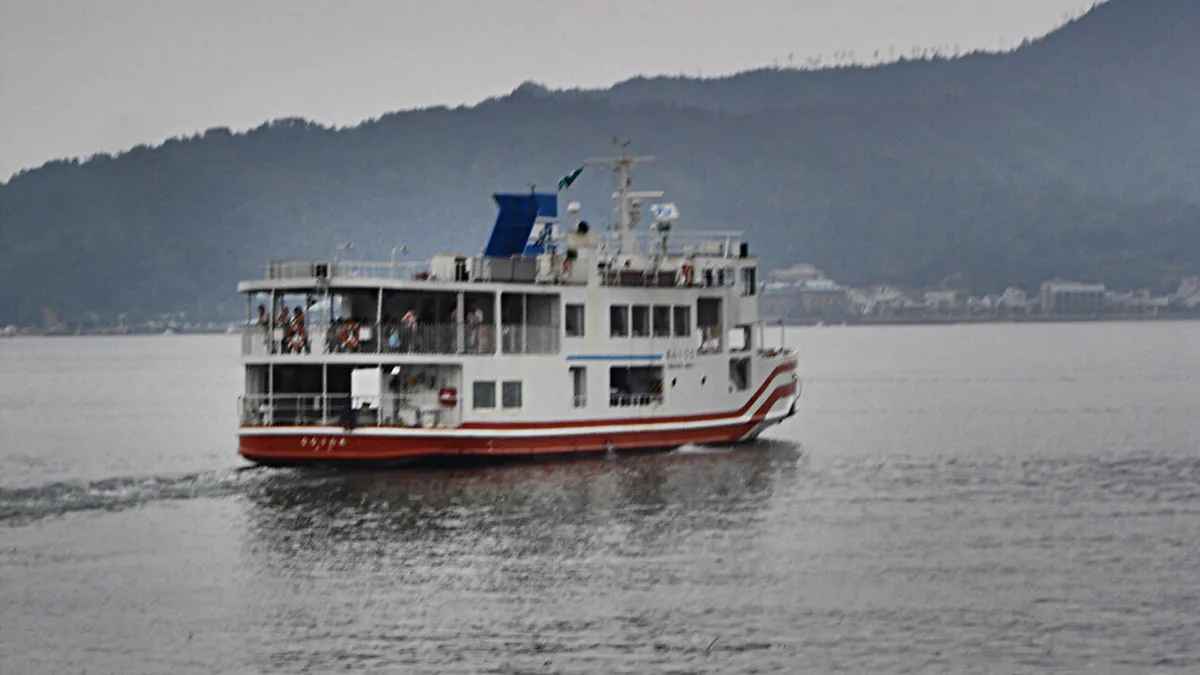
The standard route is a short JR Sanyo Line ride from Hiroshima Station to Miyajimaguchi (about 25 minutes, 420 yen, free with a JR Pass), followed by a 10-minute ferry to the island. Pin the Miyajima-guchi Ferry Port (Google Maps) before you go — the walkway from the station to the pier is signposted but takes about 5 minutes.
Two ferry companies operate the Miyajimaguchi crossing: JR West Miyajima Ferry and Matsudai. Both charge 200 yen one-way and run every 15 minutes from 06:25 to roughly 22:00. JR Pass holders should board the JR ferry — it is fully covered by the pass and on outbound trips it detours closer to the torii gate for a better view.
If you are coming straight from a downtown Hiroshima hotel, a faster but pricier alternative is the World Heritage Sea Route from Peace Memorial Park (45 minutes, 2,200 yen one-way). It saves the train+tram step and adds a scenic skyline approach, but it is not covered by the JR Pass and runs roughly every 30 minutes.
- JR Sanyo Line + JR Ferry from Hiroshima Station — about 35 minutes door-to-door, 620 yen total, free with JR Pass.
- Hiroden Streetcar Line 2 + ferry from central Hiroshima — slower at 70 minutes and 470 yen, but useful if your hotel is near the tram line.
- World Heritage Sea Route from Peace Memorial Park — 45 minutes, 2,200 yen, no JR Pass coverage but the easiest end-to-end option after a Peace Park morning.
| Route | Duration | Cost | JR Pass |
|---|---|---|---|
| JR Sanyo Line + JR Ferry (Hiroshima Stn) | ~35 min | 620 yen | Free |
| Hiroden Streetcar Line 2 + Ferry | ~70 min | 470 yen | No |
| World Heritage Sea Route (Peace Park) | ~45 min | 2,200 yen | No |
Getting to Miyajima from Tokyo, Kyoto, and Osaka
Every long-distance route funnels through Hiroshima Station, so plan in two legs: shinkansen first, then JR ferry. From Tokyo, the Nozomi covers Hiroshima in about 4 hours for roughly 19,000 yen reserved; the slower Hikari is JR Pass eligible and adds about 30 minutes. From Shin-Osaka the Sanyo Shinkansen takes 1 hour 25 minutes and around 10,750 yen. From Kyoto add 15 minutes and about 1,000 yen.
Travelers using a 7-day JR Pass should avoid Nozomi services (not covered) and ride Hikari or Sakura instead. If you are pricing a single Hiroshima-and-Miyajima leg without the pass, the round-trip shinkansen alone often costs more than a 7-day pass — run the math before buying point-to-point.
Coming from Fukuoka or Hakata, the Sanyo Shinkansen reaches Hiroshima in about 1 hour 5 minutes for around 9,500 yen. Day-tripping from Osaka is realistic if you leave by 07:30 and accept a late return; from Tokyo or Kyoto, plan an overnight in Hiroshima or on Miyajima itself.
Miyajima's Top Attraction: Itsukushima Shrine and the Great Torii Gate
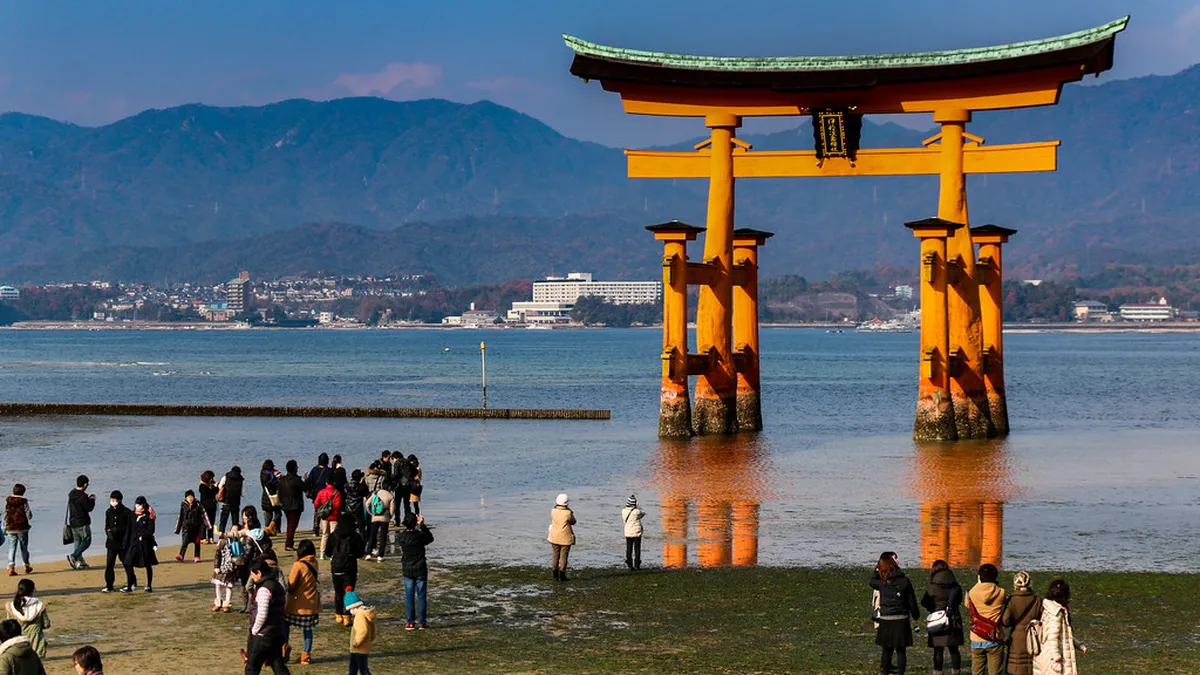
Itsukushima Shrine was founded in the 6th century and rebuilt in its current form by Taira no Kiyomori in 1168. The wooden corridors, prayer halls, and the only over-water Noh stage in Japan are connected by boardwalks set on stilts. Entry is 300 yen, or 500 yen with the Treasure Hall combo. The shrine itself closes at sunset, but the exterior and torii gate stay illuminated for several hours after.
The Great Torii Gate stands 16.6 meters tall and weighs roughly 60 tonnes — the eighth iteration since the original 1168 structure. The 2019–2022 restoration is complete and the gate is fully visible again in 2026. At high tide it appears to float; at low tide visitors walk out across the seabed and can touch the camphor pillars. Always check the Itsukushima Shrine Tide Tables (Official) before locking in your day.
For deeper logistics on tide windows, photography rules near the shrine, and which entrance gate has the shortest queues, see our companion piece on how to visit Itsukushima Shrine.
Reading the Tide Tables: How to Time Both Experiences
The official tide tables list two highs and two lows per day in centimeters. The practical rule: the gate looks fully "floating" at roughly 250 cm or higher, and the seabed is walkable at roughly 100 cm or lower. Anything in between gives you mud, exposed barnacles, and tourists slipping in flat-soled shoes.
The JR ferry takes a deliberate detour close to the torii gate on outbound trips. Sit on the right-hand side from Miyajimaguchi for the best view — the gate comes into frame around the 7-minute mark.
The "complete" Miyajima experience is built around catching one of each on the same day. Check the table the night before — if the highs and lows are roughly six hours apart, time your arrival so high tide falls in your first 90 minutes (best photos before the crowds peak), then hike Mount Misen or visit Daisho-in during the slack, and return for low-tide walk-out as the water recedes. Days where both extremes fall outside daylight hours are common in winter; pivot to overnight if your dates land that way.
Wear shoes you do not mind getting muddy if you walk to the gate. The seabed has small crabs, oyster shell fragments, and shallow puddles even at the lowest tide. Rinse stations near the shrine exit are basic — bring a cloth.
Hiking Mount Misen: Trails, Ropeway, and Views
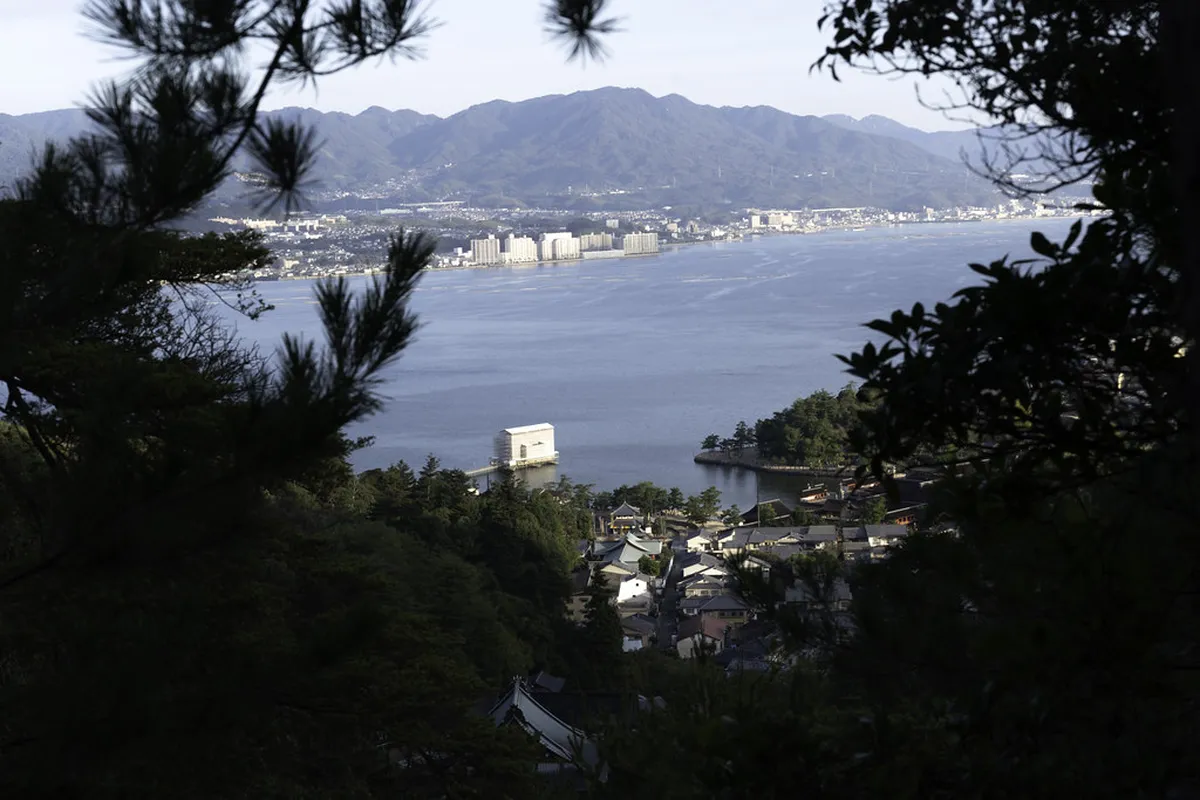
Mount Misen rises 535 meters above the Seto Inland Sea and is the spiritual heart of the island. Three trails climb to the summit, all converging near Misen Hondo and the Reikado Hall, where the "Eternal Flame" supposedly lit by Kobo Daishi in the 9th century has burned for over 1,200 years — the same flame later used to light the Hiroshima Peace Memorial.
If you want to skip the climb, the Miyajima Ropeway runs from Momijidani to Kayatani, then on to Shishi-iwa Observatory. Round-trip tickets are 2,000 yen for adults, one-way 1,100 yen — confirm at the Miyajima Ropeway Official Site before going. From Shishi-iwa it is still a 30-minute walk to the actual summit, much of it stone steps. Pair the ropeway up with a hike down for the best balance.
- Momijidani Trail — 2.5 km, about 1.5 hours up. The shortest and steepest, following a stream through maple forest. Best for autumn foliage.
- Daisho-in Trail — 3 km, about 1.5 to 2 hours up. The most scenic, lined with stone Buddha statues and offering bay views toward the torii gate.
- Omoto Trail — about 3 km, 2 hours up. The least trafficked, rocky and steep, with old-growth cedar. Choose this for solitude.
For trail maps, summit-area landmarks, and ropeway timetables, see our standalone breakdown on visiting Mount Misen.
Daisho-in Temple and Spiritual Sites
Daisho-in is a 1,200-year-old Shingon Buddhist temple about 5 minutes uphill from Itsukushima Shrine. It is often skipped by day-trippers and that is exactly why it is worth visiting — the grounds are quieter, the views over the bay are excellent, and the variety of statuary is unmatched on the island. Entry is free.
Spin the metal prayer wheels lining the staircase as you climb; each rotation is said to confer the same merit as reciting the inscribed sutra. Higher up, the 500 rakan statues each wear hand-knitted hats and individual facial expressions, and the Henjokutsu cave houses 88 Buddhist icons representing the Shikoku 88-Temple Pilgrimage in miniature. Maniden Hall holds taiko drum prayers most afternoons.
Behind Itsukushima Shrine, the bright orange Five-Story Pagoda and the sparse, atmospheric Senjokaku Pavilion ("Hall of a Thousand Tatami") sit on a small rise. Senjokaku was commissioned by Toyotomi Hideyoshi in 1587 and never finished — its missing ceiling and unpainted beams give it an unusual, half-built feel. Entry to Senjokaku is 100 yen and takes 10 minutes; the pagoda is exterior-only.
Nature Walks and Seasonal Highlights
Miyajima rewards return visits because each season reshapes the island. Use this rough bloom and foliage calendar to time your trip: cherry blossoms in late March to early April, fresh green and lush forest in June through August, peak maple foliage in mid-to-late November, and quiet cold air with occasional dustings of snow in January and February.
Momijidani Park, at the foot of Mount Misen, is the best spot for autumn leaves — the maples were planted during the Edo period specifically for this view. In April the cherry blossoms behind Itsukushima Shrine create the postcard frame everyone tries to replicate. The island is a top choice for autumn colors in Hiroshima, and accommodation books out months ahead for both seasons.
Two festivals worth planning around: Kangensai in mid-July, where boats carry shrine deities across the water with traditional gagaku music, and the Oyster Festival in early February, when stalls along Omotesando grill the local catch in volume. Both pull large crowds, so book lodging and ferry returns early.
Things to Do: Shopping, Street Food, and Deer
Omotesando Shopping Arcade runs from the ferry terminal toward Itsukushima Shrine and is where most of the island's eating and souvenir shopping happens. The two specialties to try are Hiroshima-style grilled oysters (around 400 to 600 yen each from stalls like Yakigaki no Hayashi) and anago-meshi — conger eel over rice, a Miyajima-original dish that long predates the more famous Tokyo unagi-don. Ueno Anagomeshi near Miyajimaguchi is the original; expect a 30 to 60 minute queue at peak lunch.
The queue trick: most restaurants on the arcade fill up by 12:00. Eat oysters as a stand-up snack at 11:00, hike or visit Daisho-in through the lunch rush, then sit down for a proper anago-meshi at 14:30 when tables clear. Momiji manju (maple-leaf cakes filled with bean paste, custard, or chocolate) are sold everywhere — try them deep-fried on a stick at Momiji-do for the best version. Use our budget guide to Miyajima oysters for stall-by-stall pricing.
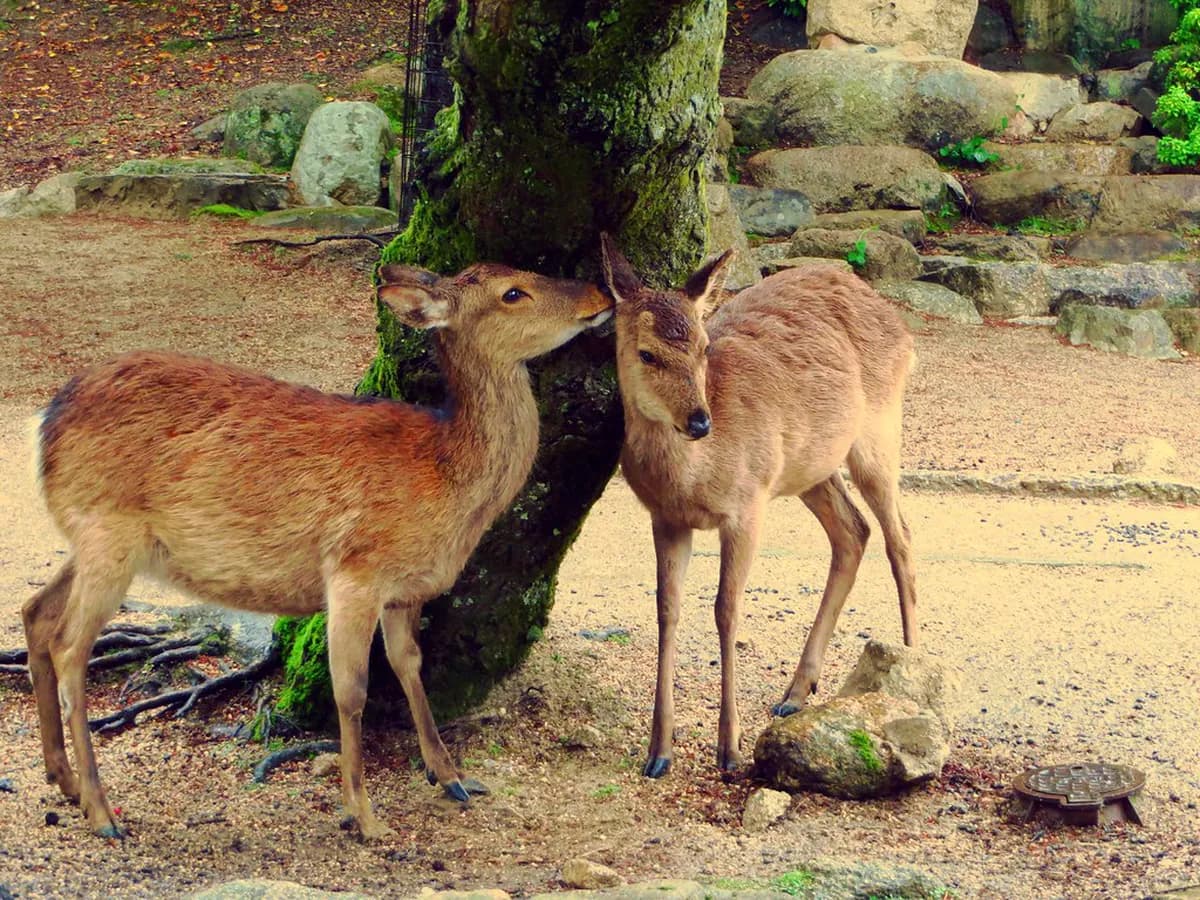
The deer roam freely and are descendants of a population once considered messengers of the kami. Important context: feeding has been officially banned since 2008, and authorities stopped supplemental feeding shortly after — so the deer you meet today are genuinely foraging. They will absolutely try to eat paper maps, ferry tickets, and the corners of paper shopping bags. Keep documents zipped away, do not pet them, and never block their path.
Drone use is prohibited across the shrine area and most of the central island. Professional photography inside the shrine also stops during Shinto wedding ceremonies, which take place most weekends — expect a 20–40 minute closure of the inner corridors on Saturday and Sunday mornings.
Photography and Special Events on the Island
The classic torii frame is from the seawall directly in front of the shrine entrance, but it is also where every tour group plants itself. Better vantage points: the small stone bridge at the north end of the shrine for a side-on shot with the pagoda in frame, the elevated terrace at Hokoku Shrine for a downhill view, and the breakwater west of the ferry terminal for a long-lens compression shot with Mount Misen behind.
For night photography, the torii is illuminated from sunset until 23:00. Bring a tripod — handheld at ISO 6400 looks fine on a phone but blurry on anything serious. The crowds drop off after the last day-tripper ferry around 18:00, so plan to either stay overnight or catch a late return on the World Heritage Sea Route.
The shrine accepts professional photography requests and hosts traditional Shinto weddings most weekends. If you arrive early on a Saturday or Sunday, expect a 20 to 40 minute window where the inner corridors are closed for ceremonies. Drone use is prohibited across the shrine area and most of the central island; check rules at the tourist information desk by the ferry terminal.
Staying Overnight on Miyajima: Best Areas and Ryokans
Most visitors leave on the late afternoon ferry, which is exactly why staying overnight is worth it. After 17:30 the torii gate, shrine, and pagoda are all illuminated, the deer settle, and the streets quiet down to a different island entirely. Sunrise from the seawall the next morning, before the first day-trip ferry arrives around 07:00, is one of the best free experiences in Japan.
Top-end ryokans cluster near the shrine: Iwaso (founded 1854, in Momijidani Park) and Kurayado Iroha both offer kaiseki dinners featuring local oysters and anago. Mid-range options include Miyajima Grand Hotel Arimoto and Sakuraya. For backpacker pricing, look toward Miyajimaguchi on the mainland — rooms there are roughly half the price and the first ferry of the morning gets you on-island before the day crowds.
Book three to six months ahead for cherry blossom season (late March to early April) and autumn foliage (mid-to-late November). Our Hiroshima and Miyajima 2-day itinerary map covers a recommended overnight split and how to time the second-day return to catch a different tide level.
Essential Visitor Tips: Tides, Crowds, and Costs
The 100-yen Miyajima Visitor Tax applies to all overnight and day visitors arriving by ferry, regardless of age (children under 6 exempt). It is charged automatically when you buy your ferry ticket, or pre-paid via IC card at the gate — you do not need to handle a separate transaction. The tax funds island maintenance and visitor infrastructure.
For the best torii gate view from the JR ferry, sit on the right-hand side outbound from Miyajimaguchi (the boat takes a deliberate detour close to the gate around the 7-minute mark). Going back, sit on the left for the same view in reverse. Aim to arrive on the island before 09:00 to clear the shrine and main photography spots before tour groups land at 10:30.
Budget total: a same-day round trip from Hiroshima costs about 1,340 yen (train + ferry + tax), the shrine entry is 300 yen, and a satisfying lunch runs 1,500 to 2,500 yen. Allow 7,000 to 9,000 yen per person all-in for a comfortable day trip including the ropeway. Our Miyajima day trip guide has a full hour-by-hour template you can adapt.
Use our Hiroshima attractions guide to round out your plan.
Frequently Asked Questions
How do I get to Miyajima from Hiroshima?
Take the JR Sanyo Line from Hiroshima Station to Miyajimaguchi Station. From there, walk to the ferry terminal and board a boat for the 10-minute ride. You can find more details in our 15 best things to do in Hiroshima 2026 guide.
Is Miyajima Island worth a day trip or an overnight stay?
A day trip is sufficient to see the main shrine and shops. However, staying overnight lets you enjoy the quiet evening atmosphere and see the illuminated gate without crowds. Both options offer a fantastic experience depending on your schedule.
Can I use the JR Pass for the Miyajima ferry?
Yes, the JR Pass covers the JR Miyajima Ferry service completely. Make sure to choose the JR-branded ferry rather than the private Matsudai ferry. This allows you to travel for free between the mainland and the island.
What is the best time to see the floating torii gate?
High tide is the best time to see the gate appearing to float on the water. Check official tide tables to find the exact peak times for your visit date. Seeing it at both high and low tide provides the full experience.
Are the deer on Miyajima friendly?
The deer are generally calm but can be very persistent if they smell food. Avoid feeding them and keep your paper belongings like maps inside your bag. They are wild animals and should be treated with respect and caution.
Miyajima rewards travelers who plan around the tide chart, arrive before 09:00, and refuse to leave on the day-trip ferry. The combination of UNESCO heritage, a working Shinto and Shingon Buddhist landscape, accessible hiking on Mount Misen, and a food street with two genuine regional specialties means even a packed day still leaves things uncovered.
Use this guide to lock in your transport from Hiroshima or further afield, time the high and low tide windows, and decide whether to stay over for the illuminated evening. Done well, a Miyajima visit in 2026 stays with you longer than almost anything else in western Japan.
Free: The Hiroshima Essentials guide
Top things to do, where to stay, a perfect day plan, getting around, and the best time to go — a Hiroshima mini-guide you can take offline.
You might also like


Continue reading
More guides you'll find useful