6 Best Miyajima Traditional Crafts and Shamoji Rice Scoop Workshop Experiences
Discover the best Miyajima traditional crafts and shamoji rice scoop workshops. Compare the Traditional Crafts Center and Handmade Workshop for carving and branding.
On this page
Miyajima is famous for its floating torii gate and bowing deer, but the island also has a 200-year woodworking heritage that almost no day-tripper builds into their plan. Inside two small buildings near the ferry terminal, visitors can carve, brand, or photo-print their own shamoji (rice scoop) for between ¥400 and ¥2,200. This guide compares the six most popular hands-on experiences across the Miyajima Traditional Crafts Center and the Miyajima Handmade Workshop, with the real 2026 prices, durations, reservation rules, and which option is actually food-safe when you get home.
The 200-Year Heritage of Miyajima Zaiku Woodworking
Miyajima's woodcraft story begins around 1800 with a Buddhist monk named Seishin, who lived at Komyo-in Temple on the island. Seishin dreamt of the goddess Benzaiten holding a lute-shaped paddle and decided the islanders should not rely solely on shrine donations. He taught them to carve paddles from local wood, and the design caught on as both a practical tool and a lucky charm: the saying goes that you can scoop up good fortune along with your rice. A monument to Seishin still stands on Mt. Misen, and a 7.7-metre, 2.5-tonne shamoji is displayed along the Omotesando shopping street as a tribute to the trade.
Over time, the craft formalised into a tradition called Miyajima Zaiku, which the Miyajima-Crafts Cooperative Association defines as three distinct techniques. Shakushi is the rice-scoop making that started with Seishin. Rokuro Zaiku is wood turning on a lathe to produce bowls and confectionery dishes. Miyajima-bori is a relief carving style that lets the natural wood grain show through deer, maple-leaf, and torii motifs. Artisans typically work in cherry, zelkova, mulberry, and Japanese chestnut, all sourced near Hatsukaichi City.
The lineage is taken seriously: when Hiroshima hosted the G7 Summit in 2023, Hatsukaichi City gifted attending leaders rokuro-zaiku confectionery bowls turned by local masters. That recognition is part of why a 60-minute workshop here costs less than a museum cafe lunch but carries the weight of a recognised national craft.
Miyajima Traditional Crafts Center: Carving and Waffle Making
The Miyajima Traditional Crafts Center is the deeper, quieter venue and the one most tourists miss. From the ferry terminal, almost everyone heads right toward the great torii gate; the Crafts Center sits to the left, directly across from pier three, in a modest three-storey building with only a small signboard. The detour adds about three minutes of walking and almost no crowd. Confirm the spot via Google Maps before you go; if you cross the main shopping street you have already walked past it.
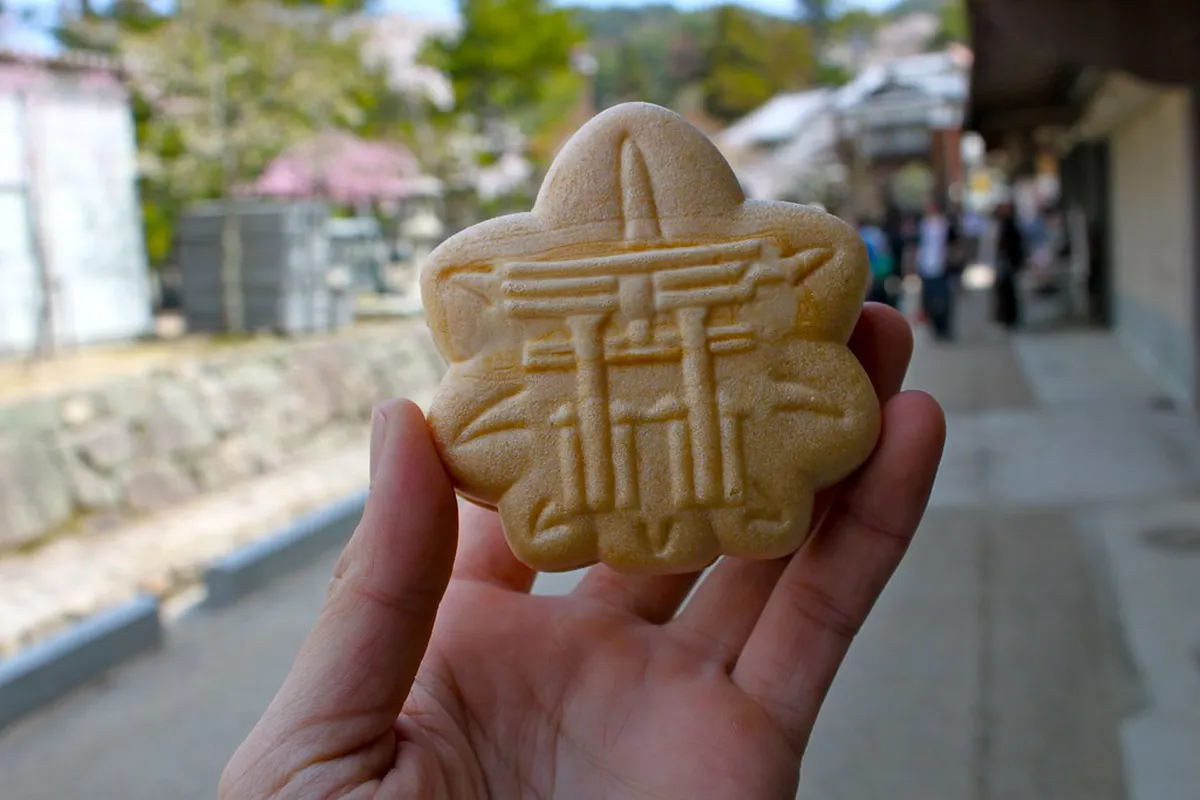
Three hands-on experiences run here: shakushi rice-scoop branding, momiji-manju waffle making, and Miyajima-bori carving on a lacquered tray. The shakushi session uses pre-sanded paddles and heated branding irons (deer, maple leaf, Grand Torii) and costs ¥550 for roughly 45 minutes. The momiji-manju session walks you through mixing batter and using a waffle iron with a choice of around 20 fillings, including the traditional azuki bean jam plus chocolate, lemon, peach, and cream cheese. The Miyajima-bori experience is a 60-minute carved tray with traditional gansai watercolour finishing, priced at ¥2,200 and supervised one-on-one by a craftsman.
| Experience | Price | Duration | Reservation |
|---|---|---|---|
| Shakushi branding (Crafts Center) | ¥550 | ~45 min | Required |
| Momiji-manju waffle making | ~¥600 | ~45 min | Required |
| Miyajima-bori carved tray | ¥2,200 | 60 min | Required |
| Utsushie photo printing (Handmade Workshop) | ¥800–¥3,200 | ~20 min | Walk-in OK |
| Yakiin wood branding (Handmade Workshop) | from ¥550 | 7–15 min | Walk-in OK |
Reservations are required and walk-ins are politely refused; teachers are not always on-site between bookings, so calling ahead is non-negotiable. Bookings can be made up to a year out via the Miyajima Handicraft Workshop Official Website or by phone (+81-829-44-1758). Hours are 8:30 to 17:00, closed Mondays and over the New Year holiday. Payment for the experience itself is cash only, so withdraw yen at Miyajima-guchi station before you board the ferry — the island has very few ATMs that accept foreign cards.
The Miyajima Traditional Crafts Center is closed on Mondays and over New Year. Walk-ins are refused — teachers are only on-site for confirmed bookings. Call or book online before you travel, especially during cherry blossom (late March–April) and autumn foliage (November) when slots fill weeks in advance.
- Shakushi rice-scoop branding: ¥550 per scoop, about 45 minutes, child-friendly, food-safe result.
- Momiji-manju making: roughly ¥600 per person, around 45 minutes, choose from about 20 fillings, eat your own waffle.
- Miyajima-bori carved tray: ¥2,200 per person, 60 minutes, includes carbon stencil, gansai paints, and a foldable display stand.
Miyajima Handmade Workshop: Photo Printing and Branding
The Miyajima Handmade Workshop (Miyajima Tezukuri Koubou) sits about five minutes from the ferry pier, right at the entrance of the Omotesando shopping arcade. It is the modern, walk-in-friendly counterpart to the Crafts Center and the better choice when you have under thirty minutes to spare. The shop is at 566-1 Miyajima-cho, Hatsukaichi, and you cannot miss it: it is on the obvious tourist path toward Itsukushima Shrine.
The signature activity is utsushie, a photo-printing process that transfers a picture from your smartphone or camera onto a wooden shamoji, keychain, or strap. Shamoji come in three sizes — small (around 210 mm) for roughly ¥800, medium (around 360 mm) for about ¥1,700, and large (around 430 mm) for ¥2,200 — plus an oversized biwa-shaped shamoji (410 by 203 mm) at ¥3,200. Customisation add-ons are mostly ¥50 to ¥300 each: extra illustrated motifs (torii, deer, cherry blossom) at ¥50, additional photo ¥300, back-of-paddle text ¥200, and a UV-protective spray (¥50–¥100) that is genuinely worth it if you plan to display the piece in sunlight.
The faster option is yakiin, wood-branding with heated metal stamps. You pick from classic Miyajima motifs (torii, maple leaf, deer, cherry blossom, the "Miyajima" character stamp) and press each one for about four seconds. The whole experience runs 7 to 15 minutes from ¥550, making it the most popular family activity on the island. The workshop also runs a Heian-period costume dress-up — full noble robes against the historic shopping street — and offers a small discount on the wood-carving experience if you book the day before, which is the easiest money-saver most visitors miss.
- Utsushie photo printing: ¥800–¥3,200 depending on size, about 20 minutes, decorative use, smartphone photos accepted.
- Yakiin wood branding: from ¥550 per shamoji, 7–15 minutes, child-friendly and food-safe.
- Heian costume experience: from ¥1,000, around 30 minutes, includes a photo opportunity in full noble dress.
The Technical Art of Miyajima-bori Wood Carving
Miyajima-bori is a 150-year-old relief style traced to a 19th-century master named Hagii Shosai, whose pupils began carving the great torii gate, deer, and maple-leaf scenes that became the island's signature. A Miyajima craftsman won a national prize at an 1877 Tokyo industrial exhibition, and the style has been a recognised Japanese craft ever since. What sets it apart is the deliberate preservation of the wood grain — chisels lift the design out of the surface rather than masking it under paint.
In a workshop session, the instructor lays out tools before you arrive: a small stencil, carbon paper, a lacquered round tray about 15 cm across, four to six chisels of different sizes, gansai watercolours, and a hairdryer. You trace the stencil onto the tray, carve along every line carefully (most beginners get a double maple-leaf design that takes 30 to 40 minutes), and paint with a dabbing technique that lets colour seep into the cracks while the lacquer wipes clean elsewhere. The instructor then dries the watercolour with the hairdryer so the painted crevices set without smearing the rest.
One quibble worth knowing in advance: the design is fixed — usually the maple-leaf — so you trade creative control for guaranteed quality. There is one small space reserved for your initials, but cursive letters are deceptively hard to carve, so a simple two-letter monogram in print form works best. The finished tray comes with a foldable display stand at no extra cost, and side by side with souvenir-shop pieces selling for ¥1,500–¥2,000, the workshop tray at ¥2,200 is one of the better values in the top things to do in Hiroshima.
Essential Logistics: Pricing, Reservations, and Locations
Both venues run between roughly 8:30 and 17:00, with the Crafts Center closed Mondays and during New Year. The last carving slot at the Crafts Center starts an hour before closing because instructors need time to clean up gansai paint and chisels. The Handmade Workshop accepts walk-ins for utsushie and yakiin throughout the day, but its in-house Miyajima-bori carving lessons require a day-ahead booking to unlock the small discount and guarantee a teacher is on-site.
Cash is the rule for the actual experience fees at the Crafts Center; the Handmade Workshop's retail counter accepts IC cards and major credit cards for souvenir purchases but the workshop fee itself is safer paid in yen. Pricing scales sensibly with effort: branding from ¥550, photo printing ¥800–¥3,200, Miyajima-bori carving ¥2,200. There are no separate entrance fees and no hidden surcharges for materials — the price you see covers tools, instruction, and the finished item.
Group sizes vary. The Crafts Center officially handles up to 40 participants but in practice has been known to accommodate solo travellers if a teacher is reachable; the Handmade Workshop is comfortable for 1 to 6 people and gets cramped above that. Allow 90 minutes total at the Crafts Center to include greeting, instruction, and the actual carving; allow 30 minutes at the Handmade Workshop for branding or photo printing. Rolling these into a half-day plan with the floating torii at high tide is straightforward — see the tide-time guide to align the workshop slot with low water at the gate.
- Traditional Crafts Center: 1165-9 Miyajima-cho, Hatsukaichi-shi, +81-829-44-1758, left of ferry terminal opposite pier 3, 8:30–17:00 closed Mondays.
- Handmade Workshop: 566-1 Miyajima-cho, Omotesando shopping street entrance, 5-minute walk from the ferry, walk-ins welcome.
- Cash on hand: budget ¥1,000 for branding, ¥3,000 for utsushie, ¥3,000 for carving.
Rainy Day and Tide Timing Strategy
Most Miyajima guides treat the workshops as a niche cultural curiosity, but they are also the single best indoor activity on the island when weather or tides do not cooperate. The Otorii is photogenic only at certain water levels, and rain on the open shrine boardwalk is genuinely miserable. Both workshops are fully indoor, climate-controlled, and largely empty during weather that pushes other visitors back to the ferry — a 60-minute carving session inside is a far better use of a wet morning than queuing for a soaked photo of the gate.
The smartest itinerary builds the workshop around the tide. Aim for the floating-torii window first, walk back to either venue for a 45 to 90 minute craft session, then return to the shrine if you have time for a second round of photographs as the light shifts. Travellers with kids should put the yakiin branding immediately after lunch — the seven-minute format covers the post-meal restless window without burning sightseeing time. Solo travellers chasing the full Miyajima-bori experience should reserve the first morning slot when the workshop is freshest and the instructor is least likely to be juggling group schedules.
Comparison Guide: Which Miyajima Workshop is Right for You?
If you have under 15 minutes between ferries and want a souvenir to use at home, head to the Handmade Workshop and pick yakiin branding for ¥550. The result is functional, food-safe, and ready immediately. If you have an hour and want a piece that will sit on a shelf, the same workshop's utsushie is the best photo-keepsake on the island — but remember the printed shamoji is decorative; the ink is not designed for repeated cooking heat or dishwasher cycles.
Photo-printed utsushie shamoji are strictly decorative — the ink fades on hot rice within months. For a food-safe result you can actually use in the kitchen, choose yakiin wood branding or the Miyajima-bori carved option instead.
If you want to feel like you have apprenticed with a master for a morning, take the Crafts Center's Miyajima-bori tray at ¥2,200. You will leave with a lacquered tray that looks indistinguishable from souvenir-shop work, plus a folding display stand, and a one-on-one lesson with an artisan typically trained 10+ years. Families with kids 5 to 10 should plan a split: yakiin first to give the children a quick win, then a parent slipping next door for the carving while the rest browse the Omotesando shops.
For the food-safe question: branded and carved shamoji from either venue are functional and fine in everyday kitchen use; just hand-wash and dry them rather than running them through a dishwasher. Photo-printed utsushie scoops should stay decorative — the print fades on hot rice within months. Momiji-manju waffles are eaten on the spot, so the only thing to take home is the recipe in your head and possibly a mould from the Crafts Center shop.
Whichever you pick, you are leaving with something the island actually invented, made under the supervision of a recognised craft tradition. That is a sharper souvenir story than the mass-produced versions sold ten metres away on Omotesando, and at ¥550 to ¥2,200, it is also one of the cheapest entry points into a Japanese traditional craft anywhere in the country.
Frequently Asked Questions
Can I use photos from my smartphone for the shamoji workshop?
Yes, the Miyajima Handmade Workshop allows you to upload photos directly from your phone for the Utsushie printing process. This takes about 20 minutes and creates a beautiful decorative souvenir. Note that these printed scoops are best used for display rather than actual cooking.
How long does a Miyajima rice scoop workshop take?
The duration depends on the activity you choose. Wood branding takes only 7 minutes, while photo printing takes about 20 minutes. Technical carving sessions at the Crafts Center require a full hour to complete properly. Plan your shrine visit around these times.
Is a reservation required for the Miyajima Traditional Crafts Center?
Reservations are highly recommended for the momiji-manju making and larger carving groups. Individual travelers can often walk in for carving if the instructors are not busy. It is always safer to book ahead during the peak cherry blossom and autumn seasons.
Can the finished shamoji actually be used for cooking?
Carved and branded shamoji are fully functional and safe for daily kitchen use. However, photo-printed scoops (Utsushie) are strictly decorative because the printing process is not designed for high heat or moisture. Always ask your instructor if you are unsure about the scoop's durability.
Miyajima's traditional crafts offer a tangible link to the island's spiritual and artistic past. Whether you choose a quick ¥550 branding session or a 60-minute Miyajima-bori carving, you are supporting artisans inside a recognised national craft and walking out with a piece you cannot buy mass-produced anywhere else. Match the workshop to your weather, tide window, and travel companions, and you will have the most memorable hour of your Miyajima day.
Free: The Hiroshima Essentials guide
Top things to do, where to stay, a perfect day plan, getting around, and the best time to go — a Hiroshima mini-guide you can take offline.
You might also like


Continue reading
More guides you'll find useful