7 Traditional Hiroshima Arts and Crafts to Discover (2026 Guide)
Discover 7 traditional Hiroshima crafts in 2026: Kumano brushes, Miyajima shamoji, sumi ink, Bingo gasuri, Bizen pottery, Mizushima glass, and washi — with hands-on workshop bookings, costs, addresses, and transit times.
On this page
Hiroshima Prefecture has quietly preserved seven of Japan's most distinctive traditional crafts, ranging from the Kumano calligraphy brushes that supply 80% of the country's professional artists to the wooden shamoji rice scoops first carved on Miyajima two centuries ago. Each craft carries Traditional Craft (Dento Kogeihin) certification from Japan's Ministry of Economy, Trade and Industry, which protects authentic methods and apprentice lineage.
This 2026 guide covers what each craft is, where it came from, who still makes it, where to buy finished pieces, and where you can sit down at a bench and try it yourself. Hands-on sessions run ¥2,000–¥5,000 for 60–90 minutes, with reservations recommended at least 7 days in advance during cherry blossom and autumn-leaf seasons. Between workshop sessions, where to eat in Hiroshima and local food options will fuel your craft exploration day.
Use this article alongside the Hiroshima attractions pillar to plan a half-day or full-day craft circuit. If you want to extend your craft exploration overnight, where to stay in Hiroshima near craft centers like Kumano or Onomichi will minimize transit time. For the deeper Miyajima shamoji workshop scene, see our Miyajima traditional crafts and shamoji rice scoop workshops guide.
What Are Hiroshima's Seven Traditional Crafts?
Hiroshima Prefecture is officially recognized for seven traditional crafts: Kumano calligraphy brushes (fude), Miyajima shamoji rice scoops, Hiroshima sumi ink sticks, Bingo gasuri indigo-dyed textile, Bizen-style pottery from the eastern border region, Mizushima hand-blown glass, and Hiroshima washi paper. Together they cover writing, dining, textiles, ceramics, glasswork, and paper — a near-complete picture of pre-modern Japanese artisanship in one prefecture.
The crafts cluster geographically in three pockets. Kumano village and central Hiroshima City hold the writing crafts (brushes, ink). Miyajima and the Seto Inland Sea coast hold the wood and glass crafts. Fukuyama and Onomichi on the eastern border hold the textile and pottery traditions. You can see all seven within a 90 km radius of Hiroshima Station, and most workshops offer hands-on sessions from ¥2,000 (paper postcards) up to ¥5,000 (advanced brush-making or pottery wheel).
How the Atomic Bombing Reshaped Hiroshima's Craft Lineages
Most guides to Hiroshima crafts skip the 1945 break in the timeline, but it explains why the surviving traditions look the way they do today. The August 1945 atomic bombing destroyed central Hiroshima's brush, ink, and washi workshops, and killed an estimated 60% of the city's registered artisans. Kumano village, sheltered behind a low ridge 10 km southeast of the hypocenter, survived almost untouched and absorbed displaced brush-makers from the city. That's the historical reason a single village now produces 80% of Japan's professional brushes — wartime concentration that never re-dispersed.
Miyajima Island also escaped the blast, and the Itsukushima Shrine carpenters who normally repaired the shrine quietly switched to shamoji production during the 1945–48 rationing years to feed displaced families. Several workshops you visit today trace their lineage to that 1945 pivot, including two of the four named studios in our Miyajima shamoji workshops guide. The Hiroshima Prefecture Traditional Crafts Centre in Naka-ku displays a small but excellent permanent exhibit on the post-1945 revival, with annotated photos of master artisans rebuilding kilns and looms in the rubble.
| Craft | Workshop Cost (2026) | Duration | Venue / Location |
|---|---|---|---|
| Kumano Calligraphy Brushes | ¥2,500–¥3,500 | 90 min | Fude no Sato Kobo, Kumano |
| Miyajima Shamoji | ¥2,000–¥4,500 | 60 min | Miyajima Traditional Industry Hall |
| Hiroshima Sumi Ink | ¥3,000–¥4,500 | 75 min | Hiroshima Sumi Studio, Naka-ku |
| Bingo Gasuri Textile | ¥3,200–¥5,000 | 90–120 min | Bingo Gasuri Center, Fukuyama |
| Bizen-style Pottery | ¥3,800–¥12,000 | 90 min–2 days | Onomichi Pottery Studio |
| Mizushima Glass | ¥2,200–¥3,500 | 45 min | Hiroshima Glass Village, Asakita-ku |
| Hiroshima Washi Paper | ¥1,200–¥2,000 | 60 min | Akiota Washi Studio, Akiota-cho |
1. Kumano Calligraphy Brushes (Kumano Fude)
Kumano village, perched in the hills 30 minutes southeast of Hiroshima Station, has produced calligraphy and makeup brushes since 1846 and now supplies more than 80% of all brushes used by Japanese professional calligraphers. Master craftsmen still tie each brush by hand using badger, deer, and goat hair sourced from designated regional suppliers. The village holds the Dento Kogeihin certification under the name Kumano Fude and recognises 17 living "Traditional Craftsman" titleholders as of 2026.
Hands-on sessions run at Fude no Sato Kobo (筆の里工房), the official craft museum: ¥2,500 per person for a 90-minute brush-tying class, ¥3,500 for cosmetic brush-making. Address: 5-17-1 Nakamizo, Kumano-cho, Aki-gun, Hiroshima 731-4214. Hours 09:30–17:00 daily except Monday. Reserve via the museum's official Japanese website at least 5 days ahead.
To reach Kumano, take JR Sanyo Line from Hiroshima Station to Kaita-ichi (12 min, ¥200) then Geihaku Bus #5 to Fude no Sato (18 min, ¥420). To buy finished brushes, head to the Hakuhodo flagship in central Hiroshima (Kamiya-cho district) — the same Kumano-made cosmetic brushes used by Hollywood makeup artists, priced ¥3,000 for everyday brushes up to ¥40,000 for studio-grade calligraphy fude.
Fude no Sato Kobo in Kumano offers three workshop tracks under one roof — calligraphy brush-tying (¥2,500), cosmetic brush-making (¥3,500), and a museum with live master demos. It is the single highest-density craft experience reachable from Hiroshima Station in under 35 minutes.
2. Miyajima Shamoji Rice Scoops
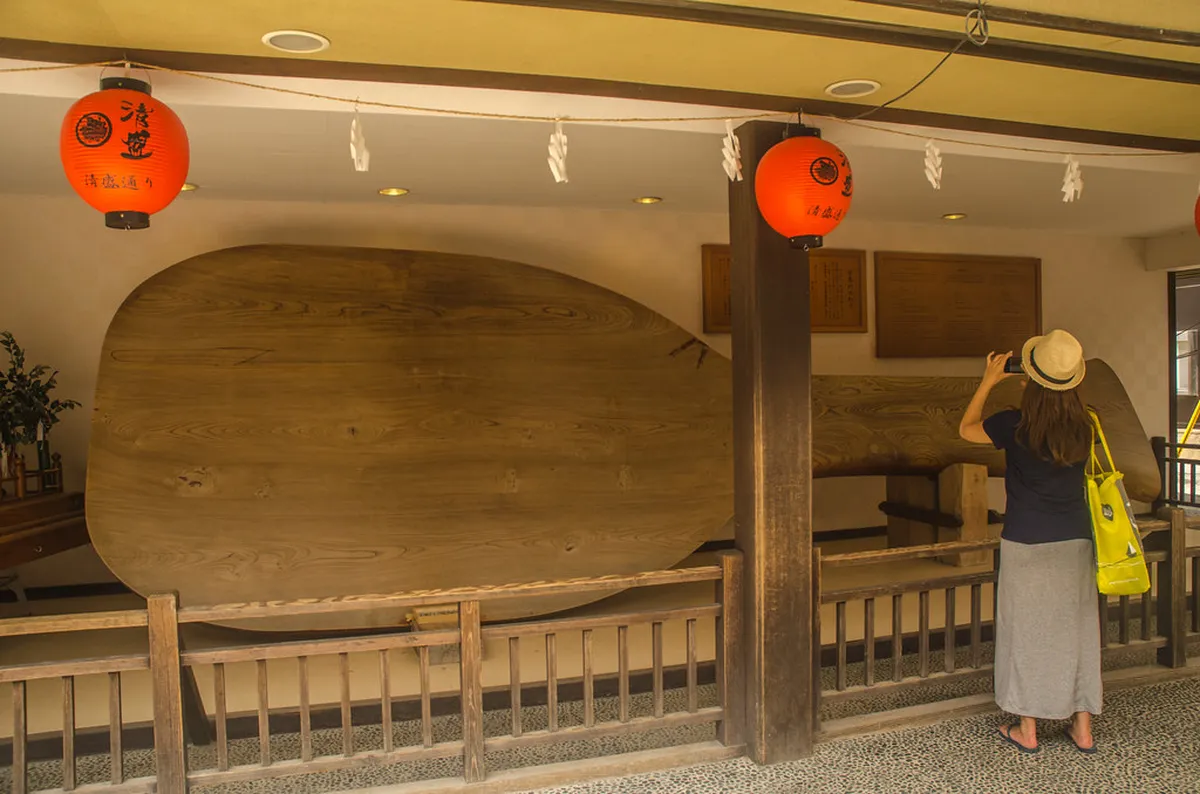
The wooden shamoji (rice scoop) was invented on Miyajima Island in 1800 by a Buddhist monk named Seishin, who carved the first one from a cherry tree branch shaped like the Buddhist biwa lute. The craft became inseparable from Itsukushima Shrine pilgrimages, and Miyajima still produces around 70% of all premium handmade shamoji sold in Japan. The craft uses cherry, zelkova, and sandalwood, sanded down with Itsukushima volcanic stone for a distinctive matte finish.
The shamoji has a darker history that explains its popularity as a souvenir: during the Russo-Japanese War (1904–05), soldiers heading to the front bought Miyajima shamoji because the verb meshi-toru (to scoop rice) is a homophone for "to seize victory." Wives and mothers gifted thousands of them to departing troops, and the association turned the rice scoop into a national good-luck charm. The same homophone is why baseball fans at Hiroshima Carp games still bang shamoji together — they're symbolically scooping up wins.
Workshops at the Miyajima Traditional Industry Hall (Miyajima Dentosangyo Kaikan) cost ¥2,000 for a 60-minute carve-and-brand session, ¥4,500 for advanced lacquer finish. Address: 1165-9 Miyajima-cho, Hatsukaichi, 5 minutes' walk from the ferry terminal. Open 08:30–17:00 daily. Transit from Hiroshima Station: JR Sanyo Line to Miyajimaguchi (28 min, ¥420) then JR ferry (10 min, ¥200 + ¥100 visitor levy in 2026). To buy, the Sugawara shamoji shop on Omotesando Shotengai sells master-carved pieces from ¥800 (pocket size) to ¥18,000 (signed lacquer).
3. Hiroshima Sumi Ink Sticks
Hiroshima sumi ink (sumi means soot-and-glue ink stick) has been produced in the Numata district near Asakita-ku since the early Edo period. Artisans burn pine resin and rapeseed oil in clay lamps, collect the soot, and bind it with deer-hide glue and natural fragrance — a single stick takes 30 days to dry properly. Hiroshima sumi is prized for a slightly bluish-black tone caused by the local pine resin, distinct from the warmer browns of Nara sumi.
Hiroshima Sumi Studio (広島墨工房) in Naka-ku runs ink-stick molding workshops for ¥3,000 (75 minutes, take-home stick wrapped in washi included), or ¥4,500 with a calligraphy-with-fresh-ink session afterwards. Address 4-10-22 Funairi, Naka-ku, Hiroshima 730-0843. Hours 10:00–17:00 Tuesday–Sunday. Capacity is just 6 per session — reserve 7 days ahead.
Take Hiroden Streetcar Line 1 from Hiroshima Station to Funairi-Honmachi (15 min, ¥220), then walk 4 minutes. Finished ink sticks for collectors are sold at the Hiroshima Calligraphy Supply Co-op next to the Prefectural Art Museum, with student-grade sticks from ¥800 and 30-year-aged collector sticks reaching ¥25,000.
4. Bingo Gasuri Indigo Textile
Bingo gasuri is the indigo-dyed cotton kasuri textile produced in Fukuyama and Shinichi-cho since the early 1800s. It was historically one of Japan's three great kasuri traditions (with Kurume and Iyo) and is recognized by the Ministry of Economy as a Traditional Craft. The fabric features distinctive blurred-edge geometric patterns created by tying bundled threads with cotton strips before dyeing, then weaving them on hand looms — the deliberate misalignment is what gives kasuri its painterly look.
The Bingo Gasuri Center (備後絣工芸館) in Fukuyama runs hand-dyeing sessions for ¥3,200 (90 minutes) where you tie-dye a cotton handkerchief in natural indigo. Loom-weaving demos cost ¥5,000 for a 2-hour session. Address: 800 Shinichi-cho, Fukuyama, Hiroshima 729-3101. Hours 09:00–16:30 Wednesday–Sunday. Closed during Obon (Aug 13–16) and New Year week.
Transit from Hiroshima: Sanyo Shinkansen to Fukuyama (25 min, ¥4,170 unreserved), then JR Fukuen Line to Shinichi Station (35 min) plus a ¥1,200 taxi. Total ~1 hour 45 minutes. To buy finished gasuri, visit Tomonoura's Inoue Textile (a 35-minute bus ride from Fukuyama Station) — handkerchiefs from ¥2,500, half-width fabric for sewing at ¥6,000/m, ready-made jackets and noragi from ¥18,000.
5. Bizen-Style Pottery (Hiroshima Studios)
Bizen pottery technically originates in Okayama Prefecture, but several Hiroshima-side studios in eastern Fukuyama and Onomichi practice the unglazed wood-fired Bizen tradition recognized as a national Traditional Craft. The reddish-brown surfaces come from natural ash deposits during 10–14 day anagama kiln firings — no glaze is ever applied. The colour patterns are named: goma (sesame speckles), hidasuki (red straw lines), and sangiri (charcoal-blackened bands).
Onomichi Pottery Studio (尾道焼き陶芸教室) offers wheel-throwing sessions for ¥3,800 (90 minutes), including bisque-firing and shipping of your finished tea bowl 6–8 weeks later. Advanced anagama-firing experiences run ¥12,000 across two days. Address 9-33 Tsuchidocho, Onomichi, Hiroshima 722-0035. Hours 10:00–18:00 daily except Tuesday. Reserve 14 days ahead in cherry blossom season.
Transit: Sanyo Shinkansen Hiroshima → Shin-Onomichi (40 min, ¥4,800), then local bus #1 to Tsuchido-cho (12 min, ¥230). To buy serious Bizen pieces, head to the Onomichi Bizen Gallery on Hondori — guinomi sake cups from ¥4,000, chawan tea bowls from ¥18,000, and signed pieces by Living National Treasure-lineage potters from ¥80,000.
6. Mizushima Hand-Blown Glass
Mizushima glass developed in the early 20th century around the industrial port area on the Hiroshima/Okayama coastal border, but several boutique studios within Hiroshima City now practice traditional mouth-blown soda-glass techniques. Pieces feature thick-walled tumblers and faintly tinted vases inspired by Seto Inland Sea blues and greens. The signature Mizushima technique adds crushed waste glass from the surrounding shipyards back into the melt — a postwar recycling tradition that gives the finished pieces their characteristic uneven flecking.
Hiroshima Glass Village (広島ガラスの里) in Asakita-ku runs glass-blowing sessions for ¥3,500 (45 minutes — you blow your own tumbler under master supervision), or ¥2,200 for a sandblast-engraving workshop. Address: 10592 Iimo, Asakita-ku, Hiroshima 731-1144. Hours 09:30–17:00 daily except Wednesday. Reserve 5 days ahead — extremely popular with school groups in May and October.
Get there via Geihoku Bus from Hiroshima Bus Center to Iimo (50 min, ¥980); driving via Chugoku Expressway is faster (35 min). The on-site gallery shop sells finished tumblers from ¥1,800, vases from ¥6,000, and limited-edition Seto Inland Sea series stemware up to ¥22,000.
7. Hiroshima Washi Paper
Hiroshima washi (handmade Japanese paper) is produced in the mountainous Geihoku region around Akiota-cho using kozo mulberry bark harvested from local farms. Sheets are formed by hand using bamboo screens (su) suspended in cold mountain water — a process that only works between November and March when water temperatures drop below 10°C. The cold viscosity of the dispersed kozo fibres is what gives Hiroshima washi its translucent strength.
Akiota Washi Studio (安芸太田和紙工房) runs paper-making workshops for ¥2,000 (60 minutes, take-home A4 sheet pressed with seasonal flowers). Postcard-making for kids costs ¥1,200. Address: 218 Tsuzu, Akiota-cho, Yamagata-gun, Hiroshima 731-3621. Hours 10:00–16:00 Friday–Sunday only in summer; daily except Wednesday in winter. Reserve 10 days ahead.
Transit: JR Geibi Line from Hiroshima Station to Mitsumata Station (90 min, ¥1,690), then a 15-minute, ¥1,800 taxi. Driving is much faster (75 min via Route 191). For finished paper, the Akiota Washi co-op shop sells stationery sets from ¥1,500, hand-marbled letter paper from ¥800, and large display sheets used by Kyoto temples from ¥12,000.
Where to Buy Finished Hiroshima Crafts in One Stop
If you don't have time to circle the prefecture, three central Hiroshima locations carry finished pieces from all seven traditions. The Hiroshima Prefecture Traditional Crafts Centre (Hiroshima-ken Dento Kogei-hin Centre) on the second floor of the Hiroshima Orizuru Tower lobby stocks certified pieces from every craft listed in this article, all priced with maker provenance cards. Open 10:00–18:00 daily, no admission fee for the shop floor.
Sogo Department Store at Kamiya-cho runs a rotating Hiroshima Crafts corner on B1F with seasonal artisan visits — the late-October Bingo gasuri week is the best time to meet weavers in person. Fukuya Department Store (Hatchobori) also carries a smaller curated selection of Kumano brushes and Miyajima shamoji at the airport-style tax-free counter, useful if you're flying out of HIJ within 30 days.
For tax-free shopping over ¥5,500, bring your passport and ask for a "consumables" exemption form. Crafts under the ¥5,000 threshold (most postcards, small brushes, basic shamoji) are not eligible — but neither do they need declaring at customs on the way home.
Craft Festivals and Events to Time Your Visit Around
Three annual events let you see multiple crafts in one place without circling the prefecture. The Kumano Fude Festival (筆まつり) on 23 September draws 100,000+ visitors to Kumano village for live brush-making demos, a dramatic giant-brush calligraphy performance on a 7-metre paper sheet, and tasting stalls. Free entry; reserve hands-on sessions 30 days ahead because the regular workshop calendar fills instantly.
The Miyajima Shamoji Festival happens during the August Kangensai shrine festival week (dates rotate with the lunar calendar; check Itsukushima Shrine's official site). Carving competitions, antique-shamoji exhibitions, and discounted hands-on classes all run alongside the better-known Itsukushima boat ceremony. The Hiroshima Prefectural Craft Fair in mid-November rotates between Hiroshima City and Fukuyama and is the only event where all seven Traditional Craft associations exhibit together.
For exact 2026 dates, the Hiroshima Tourism Information desk inside JR Hiroshima Station's south exit prints a free annual craft-events leaflet in English; pick one up the moment you arrive.
Sample One-Day and Three-Day Craft Itineraries (2026 Costs)
The most efficient one-day craft itinerary pairs Kumano brushes (morning) with Miyajima shamoji (afternoon). Total transit cost from Hiroshima Station: ~¥2,000 round-trip including the ¥100 Miyajima visitor levy. Combined workshop fees: ¥4,500. Add a ¥1,500 lunch in Miyajima and the day comes in around ¥8,000 per person.
For a deeper craft week, sequence Day 1 Kumano + Miyajima, Day 2 Onomichi pottery + Fukuyama Bingo gasuri (Shinkansen-friendly), Day 3 Akiota washi + Hiroshima City sumi-ink studio. The weekly total — workshops, transit, and one ryokan night near Fukuyama — sits around ¥38,000–¥45,000 per person. Build the days around the Hiroshima attractions pillar for sightseeing in between workshops.
If you only have a half day, skip the ferry and head straight to Fude no Sato Kobo in Kumano — it's the single highest-density experience on the list, with a museum, master demos, and three workshop tracks all under one roof.
Studios with limited seating — Hiroshima Sumi Studio (6 seats), Akiota Washi Studio (8 seats), and Bingo Gasuri Center (10 seats) — fill up fastest. Book at least 7 days ahead in normal season and 14 days ahead during cherry blossom (late March–April) and autumn-leaf (mid-November) peak weeks.
Frequently Asked Questions
What are Hiroshima's traditional crafts?
Hiroshima Prefecture's seven nationally recognized traditional crafts are Kumano calligraphy brushes, Miyajima shamoji rice scoops, Hiroshima sumi ink sticks, Bingo gasuri indigo textile, Bizen-style pottery, Mizushima hand-blown glass, and Hiroshima washi paper. All seven hold Dento Kogeihin certification from Japan's Ministry of Economy, Trade and Industry, and most can be experienced in hands-on workshops within a 90 km radius of Hiroshima Station for ¥2,000–¥5,000.
How much does a Hiroshima craft workshop cost in 2026?
Typical hands-on craft workshops in Hiroshima cost ¥2,000–¥5,000 per person in 2026. Entry-level sessions (washi paper, shamoji carving) start at ¥2,000 for 60 minutes. Mid-tier sessions (Kumano brushes, sumi ink, glass blowing) run ¥2,500–¥3,500 for 75–90 minutes. Premium workshops (Bizen pottery wheel-throwing, advanced lacquer shamoji) reach ¥4,500–¥5,000. Multi-day anagama kiln experiences can cost ¥12,000.
How do I get to Kumano village from Hiroshima Station?
Take the JR Sanyo Line from Hiroshima Station to Kaita-ichi Station (12 minutes, ¥200), then board Geihaku Bus #5 toward Fude no Sato Kobo (18 minutes, ¥420). Total travel time is roughly 30 minutes one-way. A taxi from Hiroshima Station costs about ¥4,500 and takes 25 minutes via Route 31.
Can I book Hiroshima craft workshops in English?
Yes. Fude no Sato Kobo (Kumano brushes), Miyajima Traditional Industry Hall (shamoji), and Hiroshima Glass Village all accept English-language bookings via email or their official websites. The Onomichi Pottery Studio and Akiota Washi Studio offer English-speaking instructors with 10+ days advance notice. The Bingo gasuri and sumi ink studios usually require Japanese — book through Hiroshima Tourism Information desk for translation support.
Which Hiroshima craft is best for first-time visitors?
Miyajima shamoji carving is the most beginner-friendly choice. The workshop sits a 5-minute walk from the ferry terminal, costs only ¥2,000, takes 60 minutes, and pairs naturally with an Itsukushima Shrine visit. No previous skill is required — you sand, decorate, and brand a pre-cut blank using a hot iron stamp. The take-home shamoji is functional and durable, unlike pottery pieces that need 6–8 weeks of post-firing shipping.
When should I book Hiroshima craft workshops in advance?
Book at least 7 days ahead for most workshops in 2026, and 14 days ahead during cherry blossom season (late March–early April), Golden Week (April 29–May 6), and autumn-leaf season (mid-November). Studios with limited capacity — Hiroshima Sumi Studio (6 seats), Akiota Washi (8 seats), Bingo Gasuri Center (10 seats) — fill fastest. Walk-ins are usually only feasible at Miyajima Traditional Industry Hall and Hiroshima Glass Village outside peak weeks.
Hiroshima's seven traditional crafts give you a tangible way to engage with the prefecture beyond the Peace Memorial Park and Itsukushima Shrine. With most hands-on sessions priced under ¥5,000 and reachable within 90 minutes of Hiroshima Station, building a craft-focused day or week is straightforward in 2026. Pair this guide with the Hiroshima attractions pillar for sightseeing in between workshops, and the Miyajima shamoji workshops guide if the wooden rice-scoop tradition catches your interest most.
Free: The Hiroshima Essentials guide
Top things to do, where to stay, a perfect day plan, getting around, and the best time to go — a Hiroshima mini-guide you can take offline.
You might also like


Continue reading
More guides you'll find useful