9 Essential Tips for Visiting Mt Misen: Cable Car and Hiking Routes
Plan your trip to Mt Misen on Miyajima with our guide to the cable car and hiking routes. Compare the Momijidani, Daisho-in, and Omoto trails for the best experience.
On this page
Mount Misen rises 535 metres above the Seto Inland Sea as the highest peak on Miyajima Island near Hiroshima. The summit observatory delivers a 360-degree panorama of the inland sea archipelago, the floating torii gate below, and on clear days the Hiroshima city skyline. Planning a trip for visiting mt misen miyajima cable car and hiking routes means weighing four genuine options: the two-stage Miyajima Ropeway, the Momijidani trail, the Daisho-in trail, and the rugged Omoto trail. Each route changes how much time, sweat, and contemplation your day requires.
The mountain is also the spiritual heart of the island. Many travellers pair their climb with the famous floating torii gate visit; consulting a complete Miyajima guide helps you sequence both without rushing. Mt Misen has been continuously worshipped since the year 806, when the monk Kobo Daishi began 100 days of ascetic training here. Walking its slopes in 2026 still means moving through Buddhist halls, primeval forest protected by Setonaikai National Park, and a flame that never goes out.
Understand the Spiritual History of Mount Misen
Mount Misen has been a site of religious worship for over 1,200 years. Kobo Daishi (Kukai), the monk who founded Shingon Buddhism in Japan and the monastic complex at Koyasan, completed 100 days of ascetic practice here starting in 806. He named the peak Misen because its silhouette reminded him of Mount Shumisen, the cosmic centre of the world in Buddhist cosmology. The Misen Hondo hall on the upper slopes is the structure he built to house his training.
The summit area is dotted with smaller halls added over the following centuries: Sankido, Monjudo, Kannondo, and Dainichido, the last commissioned in 1599 by feudal lord Mori Terumoto, the same figure behind Hiroshima Castle. All belong to the Shingon sect. Surrounding them is a primeval old-growth forest officially designated a Natural Treasure of Japan, which is why hikers are asked not to step off marked paths or build informal stone cairns. Respecting these traditions deepens both the historical and ecological value of the climb.
Master the Miyajima Ropeway (Cable Car) Logistics
The Miyajima Ropeway is actually two ropeways linked by a transfer at Kayatani Station. The first leg uses 8-person circulating gondolas that depart roughly every minute and take 10 minutes to climb. The second leg uses 30-person carriers running every 15 minutes for a 4-minute ride to Shishiiwa Station at 430 metres. Total transit time is about 20 minutes if your transfer aligns; expect 30 to 40 minutes including queues during cherry blossom and autumn foliage weekends.
The lower station sits inside Momijidani Park, a 20 to 25 minute walk from the ferry terminal or 15 minutes from Itsukushima Shrine. A free shuttle runs from near the park entrance to the ropeway base every 20 minutes from around 9:50, but the bus is small and skips operation on the busiest crowd days. Riders enjoy aerial views of the maple canopy on the way up. Service can be suspended without warning during high winds, lightning, or heavy rain, so confirm operating status the morning of your visit.
- Round trip adult: 2,000 yen
- One way adult: 1,100 yen
- Round trip child (6 to 12): 1,000 yen
- One way child (6 to 12): 550 yen
- Combined ferry plus ropeway ticket via Matsudai Kisen Ferry: 2,100 yen adult (saves 400 yen)
- Operating hours: 09:00 to 16:00 uphill, last downhill around 16:30 to 17:30 by season
- Free shuttle: every 20 minutes from approximately 09:50
Choose the Momijidani Course for a Forested Ascent
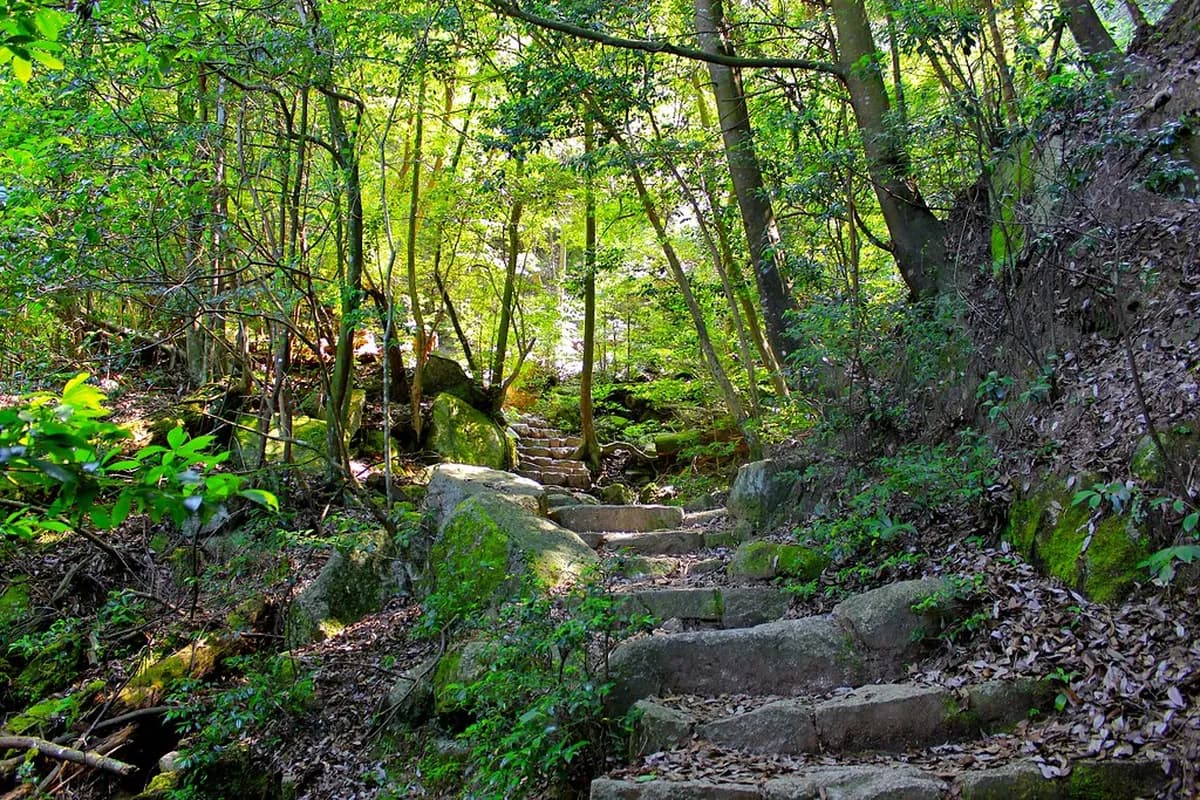
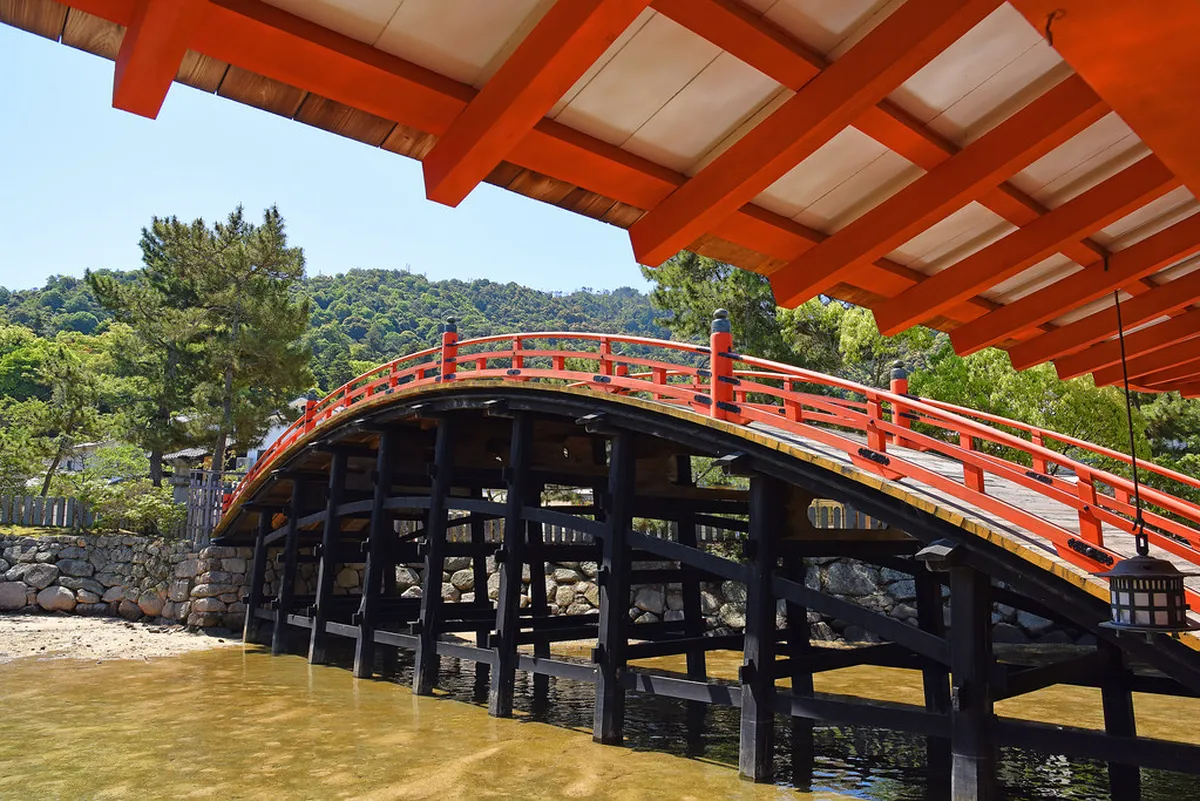
The Momijidani Course is the most popular hiking choice for those visiting mt misen miyajima cable car and hiking routes. The trail begins near the scenic red bridge in Momijidani Park, climbs through dense Japanese maple forest, and links up with the path coming down from the Shishiiwa ropeway station. Most hikers reach the summit area in about 90 minutes at a steady pace; expect 1 hour 30 minutes to 1 hour 45 minutes total to the very top observatory.
The path is well marked with a mix of compacted dirt and stone steps, gaining altitude steadily rather than in brutal pitches. Tree cover keeps the route shaded almost the entire way, which makes it the most comfortable option in summer when the sea-level temperature can exceed 32C. Reviewing other Hiroshima hiking trails can help you compare difficulty before committing to a route.
Opt for the Daisho-in Course for the Best Views
The Daisho-in Course is widely considered the most scenic route to the summit and starts to the left of the main gate of Daisho-in Temple, one of Miyajima's holiest sites. The trail climbs over 2,000 stone steps cut into the hillside, passing several clearings that frame the Itsukushima Shrine floating torii gate and the Seto Inland Sea below. Plan 1 hour 30 minutes to 2 hours of climbing.
About halfway up you reach the Niomon Gate, a vermillion structure that historically marked a hard cutoff: in the Edo era no one was permitted to climb past Niomon after 14:00, on the belief that long-nosed tengu goblins would inflict misfortune on latecomers. The folklore is gone but the timing logic still holds, since starting from Daisho-in much later than mid-afternoon leaves no buffer for an unhurried summit visit before the ropeway closes. The paved steps are easier to follow than dirt trails but punishing on knees, especially descending; trekking poles or a slow downhill cadence are wise.
Challenge Yourself on the Omoto Course
The Omoto Course is the rugged option for confident hikers who want solitude and old-growth scenery. It begins at Omoto Park on the western side of the island, away from the main tourist circuit, and climbs through a protected virgin forest with large weathered rock formations and steep, uneven sections. Expect at least 2 hours of active climbing to reach the summit area, with footing that demands real attention rather than autopilot.
You will see almost no one for long stretches, which is precisely the point. The trade-off is fewer panoramic viewpoints en route compared with Daisho-in, plus a longer overall day since the trailhead is further from the ferry. Pair this trail with Omoto Shrine and the quiet southwestern coast for a half-day that feels nothing like the crowded torii-gate plaza.
Route Decision Matrix: Pick the Right Way Up
| Route | Time (up) | Difficulty | Best For |
|---|---|---|---|
| Miyajima Ropeway | ~20 min (+ 30 min summit walk) | Easy | Families, limited mobility, tight schedule |
| Momijidani Course | ~90 min | Moderate | Average fitness; shaded forest; summer visits |
| Daisho-in Course | 90–120 min | Moderate–Challenging | Photographers; best coastal viewpoints; scenic route |
| Omoto Course | ~120 min | Most challenging | Confident hikers wanting solitude and old-growth forest |
The four ways to the summit each suit a different traveller. Use this decision matrix to match your pick to fitness, time on the island, and what you most want to see. Ferry transit from Hiroshima city to Miyajima itself takes about 35 to 50 minutes door to door, so factor that into the totals.
- Miyajima Ropeway plus 30-minute summit walk: about 50 to 70 minutes total each way, easy fitness, aerial views over the maple canopy and a near-effortless route to Shishiiwa Observatory. Best for families, limited mobility, or first-time visitors with a tight ferry schedule.
- Momijidani Course: 90 minutes uphill, moderate difficulty, shaded forest with maples and stone steps. Best for average fitness who want a hike but not a punishing one, and for hot summer days.
- Daisho-in Course: 90 to 120 minutes uphill, moderate to challenging, over 2,000 stone steps with the most coastal viewpoints and the historic Niomon Gate. Best for photographers and travellers happy to push their quads in exchange for the best scenery.
- Omoto Course: roughly 120 minutes uphill, the most challenging, virgin forest and rock formations with almost no crowds. Best for confident hikers who already have a full Miyajima day and want a quieter mountain.
If you have one full day on the island and average fitness, the highest-yield combination is ropeway up, Daisho-in down. You bank the aerial views and reach the temple cluster fresh, then descend through the most scenic trail and finish at Daisho-in Temple itself, which is worth an hour of its own. This sequence also matches your effort to the terrain since steps are easier to climb than to descend, particularly the long Daisho-in flight, although hikers with sensitive knees may prefer the reverse.
Discover the 7 Wonders and the Eternal Flame
The summit area of Mount Misen is dotted with structures that connect directly to Kobo Daishi's training. Reikado Hall, the Hall of the Spiritual Flame, houses a fire he is said to have lit during a Goma fire ritual around the year 806. That same flame was used in 1964 to light the Flame of Peace at the cenotaph in Hiroshima's Peace Memorial Park, where it will continue to burn until every nuclear weapon on earth is dismantled. Standing at Reikado and then descending later that day to the Peace Memorial creates one of the most powerful continuity threads any visit to Hiroshima offers; this is one of the best things to do in Hiroshima 2026 for travellers building a meaning-led itinerary.
Across from Reikado stands Misen Hondo, the main hall, with its statue of the bodhisattva Kokuzo flanked by Bishamonten and Acala. Slightly further up the path are Sankido, Monjudo, Kannondo, and Dainichido. Beyond the halls lies the cluster of mystical sites known as the Seven Wonders of Mt Misen: the Eternal Fire, the Holy Plum Tree by Misen Hondo, the Kanman-iwa Rock that fills with seawater at high tide despite sitting at 500 metres, the Sound of Wooden Clappers attributed to mountain tengu, the now-vanished Dewy Cherry Tree, the Ryuto-no-sugi cedar of mysterious lights, and the Great Mandara Rock carved by Kukai. The summit observatory itself sits a further 30-minute walk past the halls and offers the unobstructed Seto Inland Sea panorama.
The Last Ferry Trap Most Guides Skip
Ropeway service can be suspended without warning during high winds, lightning, or heavy rain. If the ropeway closes at 17:00 and weather suspends service early, you may need to hike down a dark forest trail with no lighting — bring a headtorch or ensure your phone is fully charged. Start your descent or final ropeway ride no later than 90 minutes before the posted last service.
Most articles warn you about the ropeway's last downhill departure, usually around 16:30 to 17:30 depending on season. What they rarely flag is the cascading deadline beyond it. After the ropeway you still need to walk back through Momijidani Park to the ferry terminal, board a ferry to Miyajimaguchi on the mainland, then catch the JR Sanyo Line or the Hiroden tram to central Hiroshima. The JR ferry typically runs until around 22:00 and the Matsudai Kisen ferry until roughly 20:30 in 2026, but the convenient JR train connection thins out sharply after about 21:30.
If the ropeway closes at 17:00 and weather suspends service early, you may be forced to hike down a dark forest trail with no lighting. Bring a small headtorch or rely on a phone with a charged battery, because phone reception inside the forest is patchy. The practical rule: start your descent or final ropeway ride no later than 90 minutes before the posted last service. This buffer covers a missed transfer, an unexpected closure, or a slower group member, and still leaves time for the 20-minute walk back to the ferry terminal without panic.
A second under-flagged risk is wildlife. Miyajima's wild deer roam the lower trails and the area around the ropeway base. They will absolutely investigate an open backpack or a paper map sticking out of a side pocket, and a few have learned to nip at clothing. Keep food sealed inside a closed bag, never feed them, and tuck paper tickets into a zipped pocket. Feeding is prohibited because it damages the deer's health and changes their behaviour around children, and signage at the ferry terminal makes the rule explicit.
Follow Proper Japanese Hiking Etiquette
The mountain sits inside Setonaikai National Park, so the standard Japanese leave-no-trace expectations apply with extra weight. Pack out every wrapper and tissue; there are almost no public bins on the trails by design. Stay on marked paths even when an informal shortcut is visible, because the surrounding forest is officially designated old-growth and any erosion is slow to repair. Greet other hikers with a quick konnichiwa as you pass; the convention is universal and unambiguous.
Refrain from building unofficial stone cairns or stacks along the trails. They look harmless but disturb the ecosystem of mosses and small invertebrates that depend on undisturbed rock surfaces, and they multiply quickly once one appears. The deer rule is also etiquette as much as conservation: do not feed them, do not pose with food in your hand for photos, and do not block the trail to take close-ups. If a deer approaches an open bag, simply close it and step away. Most encounters end peacefully when you remove the food signal.
Prepare with Practical Gear and Timing Advice
The highest-yield combination for one full day is ropeway up, Daisho-in trail down. You get the aerial views fresh, then descend through the most scenic trail and finish at Daisho-in Temple — worth an hour on its own. The round-trip ropeway fare is ¥2,000 for adults; a combined ferry plus ropeway ticket via Matsudai Kisen Ferry saves ¥400.
Sturdy walking shoes or proper hiking boots with grip are the single biggest comfort upgrade, particularly for the Daisho-in stone steps which become slippery after rain. Carry at least one litre of water per person, since vending machines exist only at the ropeway stations and not on the trails. A light rain shell handles the sudden Seto Inland Sea showers that can roll in without warning. In summer add electrolyte tablets and a hat; in winter add a fleece because the summit is consistently 5 to 8 degrees cooler than the ferry terminal.
Time your visit around the autumn maple peak in mid to late November or the spring cherry blossom around late March to early April for maximum colour, but expect significant queues at both ropeways during those weekends. A morning summit gives the cleanest light and the lowest haze; afternoons soften but can produce a hazy view of Hiroshima city. A Hiroshima and Miyajima 1 day itinerary typically slots Mt Misen into the morning so the afternoon stays free for Itsukushima Shrine at high tide. Download an offline map of the trails before leaving wifi range; mobile reception inside the forest is unreliable.
Book the Best Accommodations on Miyajima Island
Staying overnight on Miyajima is the single best logistical hack the day-tripping crowds miss. Most tourists clear out by 17:00, leaving the village quiet, the deer calm, and the illuminated torii gate practically yours. A morning ropeway ride before the day-trip ferries arrive means you might share the Shishiiwa Observatory with five people instead of fifty. Traditional ryokans serve seasonal Setouchi seafood kaiseki dinners and run their hot baths late into the evening, which is exactly what your legs need after 2,000 stone steps.
Search for HOTELS IN MIYAJIMA to find availability for your 2026 trip. Properties closer to the ferry terminal cut walking time the next morning, while those nearer the ropeway base trade convenience for quieter streets. Many ryokans offer luggage shuttle services from the ferry, which matters because the village's narrow lanes are not friendly to wheeled suitcases. Booking 2 to 3 months ahead is sensible for any weekend in cherry blossom or maple season, when island stock sells out first.
Frequently Asked Questions
How long does it take to hike Mt Misen?
The hike typically takes between 90 minutes and 2 hours depending on your chosen route. The Daisho-in course is the most scenic but involves many steps. If you are looking for more Hiroshima adventures, consider combining the hike with a kayak trip around the island.
Is the Miyajima Ropeway worth it?
Yes, the ropeway is worth the cost for the incredible views of the Seto Inland Sea. It saves significant time and energy for those who want to focus on the summit temples. Many visitors choose to take the ropeway up and hike down for a balanced experience.
Which Mt Misen hiking trail is the best for beginners?
The Momijidani Course is often recommended for beginners because it is well-shaded and clearly marked. While it is steep in sections, the forest scenery provides a pleasant environment. The Daisho-in trail is also good but requires more leg strength for the thousands of stone steps.
Can you see Hiroshima from the summit of Mt Misen?
On a clear day, you can see the Hiroshima city skyline and the mountains of the mainland. The 360-degree observatory provides a perfect vantage point for spotting local landmarks. It is one of the best spots in the region for panoramic photography.
Visiting Mt Misen rewards every level of effort, from a relaxed ropeway ride to a full Daisho-in stone-step ascent. Match your route to your fitness, build in a 90-minute buffer before the last ropeway downhill, and pair Reikado Hall's eternal flame with the Peace Memorial Park later in your trip for a meaningful continuity. Pack proper shoes, water, and an offline map, and the summit's 360-degree view across the Seto Inland Sea will close out one of Hiroshima's most memorable days.
Free: The Hiroshima Essentials guide
Top things to do, where to stay, a perfect day plan, getting around, and the best time to go — a Hiroshima mini-guide you can take offline.
You might also like


Continue reading
More guides you'll find useful