

Hiroshima and Miyajima 1 Day Itinerary: Hour-by-Hour 2026 Route
Hour-by-hour Hiroshima and Miyajima 1 day itinerary for 2026 — 8am arrival, 2:30pm tide-timed ferry, 7pm sunset. Full ¥8,000–¥12,000 cost breakdown and base-city advice.
On this page
A successful Hiroshima and Miyajima 1 day itinerary depends on three things: catching the 6:00–7:00 AM Shinkansen, timing the JR ferry against the tide table, and reaching the Mt. Misen ropeway before its last ascent at 4:30 PM. This guide gives you the exact hour-by-hour route used in 2026, including the 11:00 AM Peace Park entry slot, the 2:30 PM ferry departure, and the 7:00 PM sunset window over the floating torii. Most travelers base from Osaka or Kyoto rather than Tokyo — the math simply does not work from the capital.
You will spend roughly ¥8,000 to ¥12,000 per person for a one-day visit (excluding the Shinkansen, which a JR Pass covers). Below you'll find the full cost ledger, the tide-checking workflow that makes the difference between a magical photo and a muddy seabed, and a rainy-day backup that swaps Mt. Misen for Senkoji Temple's covered hall. For deeper cluster context, see our Hiroshima attractions overview, the broader Hiroshima 1-day itinerary from Osaka and Kyoto, and where to stay in Hiroshima for accommodation planning.
Can you do Hiroshima and Miyajima in one day?
Yes — you can comfortably visit both Hiroshima's Peace Memorial Park and Miyajima's Itsukushima Shrine in a single day if you depart Shin-Osaka by 7:00 AM, allocate three hours to the city (Atomic Bomb Dome, Peace Park, Museum), and reach the JR Miyajima ferry by 2:30 PM. A 9-hour on-the-ground window is enough for the four flagship sights — Peace Museum, Atomic Bomb Dome, Itsukushima Shrine, and Mt. Misen ropeway — provided you skip secondary stops like Hiroshima Castle or Shukkeien Garden.
Travelers attempting this from Tokyo lose roughly 8 hours to round-trip Shinkansen alone, leaving under 4 hours of sightseeing — too tight to be worthwhile. From Osaka the round-trip rail is 3 hours; from Kyoto, 3.5 hours. That leaves 9 to 10 hours on the ground, which is the minimum viable budget for both destinations without rushing the museum or skipping sunset at the floating torii.
From Shin-Osaka, the Sakura Shinkansen at 06:33 (train 547) puts you in Hiroshima by 08:00 — the earliest practical departure that still gives you 9.5 hours on the ground before the last realistic return train at 20:30.
Hour-by-hour timeline (the exact 2026 route)
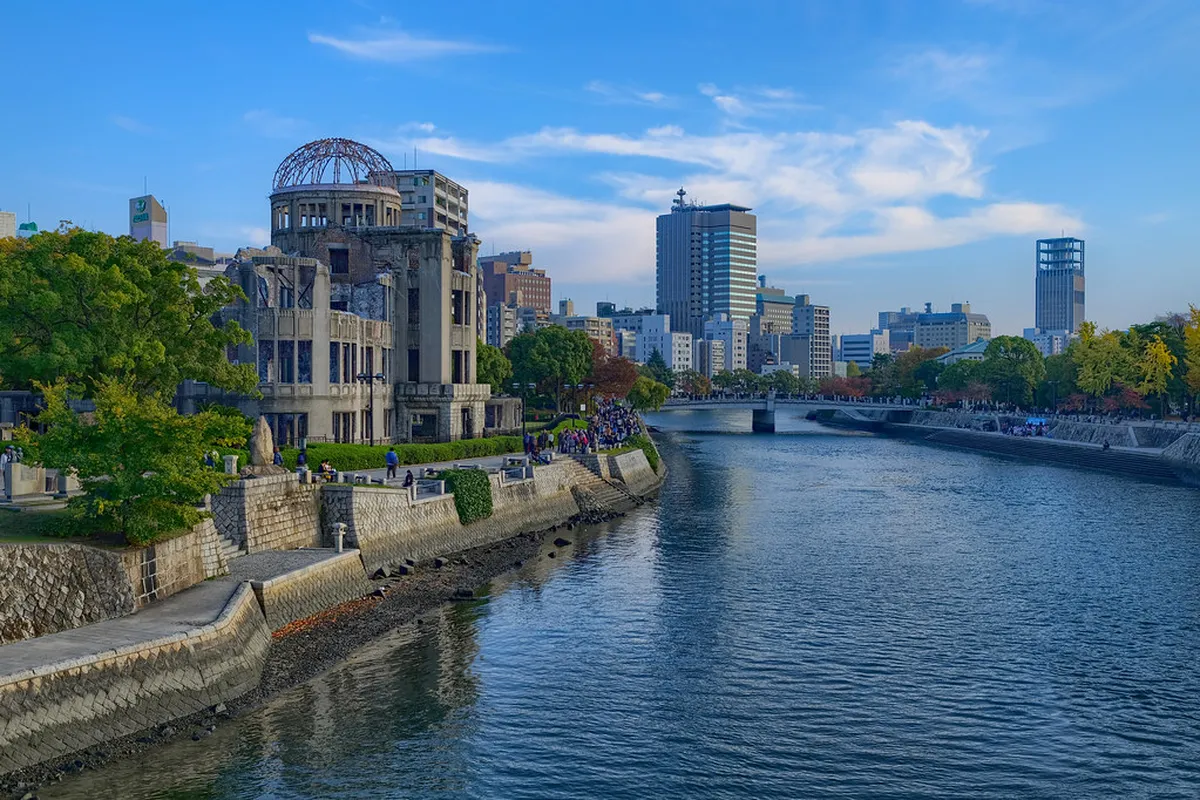
This timeline assumes a Shin-Osaka departure. From Kyoto, add 15 minutes to every step. From Tokyo, the route is not feasible as a same-day trip — see "Where to base from" below.
| Time | Activity | Notes |
|---|---|---|
| 06:30 | Board Sakura/Hikari at Shin-Osaka | Sakura 547 at 06:33 is the standard pick — JR Pass valid |
| 08:00 | Arrive Hiroshima Station | Use streetcar Line 2 or the Meipuru-pu loop bus from the north exit |
| 08:25 | Atomic Bomb Dome | 15–20 min — exterior viewing only, no entry |
| 08:50 | Peace Memorial Park monuments | 30 min — Cenotaph, Children's Peace Monument, Flame of Peace |
| 09:30 | Peace Memorial Museum (book 09:30 slot online) | 2 hours — pre-booked timed entry required in 2026 |
| 11:30 | Walk to Hondori arcade | 10 min — covered shopping street, restrooms, ATMs |
| 12:00 | Lunch: Hiroshima okonomiyaki | Nagata-ya or Okonomi-mura — see dinner section for spots also good at lunch |
| 13:15 | Streetcar Line 2 → Hiroden-Miyajimaguchi | ~75 min one-seat ride, ¥280 cash or ¥0 with JR Pass via JR San'yō Line alternative |
| 14:30 | JR Miyajima Ferry departure | 10-min crossing, JR Pass covers the JR ferry; Matsudai is paid |
| 14:45 | Arrive Miyajima pier | Greet the deer, photograph the torii from shore |
| 15:00 | Itsukushima Shrine entry | ¥300 — 45 min walk-through; check tide table before this step |
| 16:00 | Mt. Misen ropeway (last ascent ~16:30) | Round-trip ¥2,000 — confirm last-down time at the base station |
| 17:30 | Descend, walk to Omotesando | Try momiji manju and grilled oysters |
| 18:30 | Sunset shot at the torii (varies seasonally) | Aug sunset ~18:50; Dec ~17:05 — adjust the day around this |
| 19:00 | Return ferry → JR Miyajimaguchi | Ferries run until ~22:00 |
| 19:30 | JR San'yō Line back to Hiroshima Station | 27 min, JR Pass covered |
| 20:30 | Last Sakura/Hikari to Shin-Osaka | Sakura 572 at 20:30 is the realistic last call — confirm in HyperDia |
If sunset falls before 17:30 (mid-November through January), reverse the island order: ride the ropeway first, then the shrine at golden hour. Itsukushima's shrine deck is open until 18:00 in winter and 18:30 in summer — verify on the day of travel.
Total cost breakdown (2026 prices in JPY)
Expect to spend ¥8,000 to ¥12,000 per adult on this day trip in 2026, excluding the Shinkansen fare which a 7-day JR Pass (¥50,000 in 2026) covers. Without a JR Pass, add roughly ¥21,000 round-trip from Shin-Osaka to Hiroshima on Sakura/Hikari trains.
| Item | Budget (¥) | Mid-range (¥) | Notes |
|---|---|---|---|
| Shinkansen Shin-Osaka ↔ Hiroshima (no JR Pass) | 21,200 | 21,200 | One-way ¥10,600 reserved seat in 2026 |
| JR ferry Miyajimaguchi ↔ Miyajima | 0 (JR Pass) | 360 | ¥180 each way without pass |
| Local streetcar / bus in Hiroshima | 500 | 800 | Meipuru-pu loop is free with JR Pass |
| Peace Memorial Museum entry | 200 | 200 | Pre-book online in 2026 |
| Itsukushima Shrine entry | 300 | 300 | Cash-only at the gate |
| Mt. Misen ropeway round-trip | 2,000 | 2,000 | Card and cash both accepted at base |
| Lunch (okonomiyaki) | 1,200 | 1,800 | Single serving with drink |
| Snacks on Miyajima (oysters, manju) | 800 | 1,500 | 2 grilled oysters ~¥600 |
| Dinner (post-return) | 1,500 | 2,500 | Optional if you eat on Miyajima |
| Total with JR Pass already owned | ~¥6,500 | ~¥9,100 | Pure on-the-ground spend |
| Total without JR Pass | ~¥27,700 | ~¥30,300 | Single-day ticket math |
The JR Pass break-even for this single trip is one round-trip Osaka ↔ Hiroshima — you don't break even on one day alone, but if you also do Tokyo and Kyoto on the same pass, the math works in your favor by day three.
Itsukushima Shrine charges ¥300 cash only at the gate — ATMs on the island are limited. Withdraw cash before boarding the ferry at Miyajimaguchi convenience stores. Also note that the JR Miyajima Ferry (not the Matsudai ferry) is the one covered by JR Pass — boards from the right-hand queue at the pier.
Optimal ferry timing for the tide
Aim for Itsukushima Shrine during high tide for the "floating" torii illusion, and during low tide if you want to walk to the gate's base. The two states alternate roughly every six hours — check the official tide table the night before and pick the slot closest to your 3:00 PM arrival.
High tide above 250 cm fully submerges the gate's base and creates the postcard reflection. Low tide below 100 cm exposes the seabed and lets you walk right up to the pillars. Anything in between (100–250 cm) gives an awkward half-flooded look that disappoints most photographers. Hiroshima's tide range is wide — neap tides during half moons can sit at 150 cm all afternoon, while spring tides around new and full moons swing from 30 cm to 350 cm in six hours.
Practical rule: if your 2:30 PM ferry lines up with high tide (within 90 minutes either side), shoot the gate from the shrine corridor first, then descend later for the low-tide approach during sunset. If high tide falls in the morning, accept the low-tide afternoon and plan your shots from inside the shrine deck instead. Our dedicated Itsukushima floating torii tide times guide publishes monthly tide windows you can lock in before booking your Shinkansen.
Where to base from: Tokyo, Osaka, or Kyoto?
Base from Osaka for the easiest one-day visit. Shin-Osaka to Hiroshima is 90 minutes one-way on Sakura, leaving 9.5 hours of sightseeing. Kyoto is feasible but adds 30 minutes round-trip. Tokyo is not viable — round-trip Shinkansen consumes 8 hours, and you'd be left with under 4 hours on the ground.
- Osaka (Shin-Osaka): 1h 30m one-way, ¥10,600 reserved. Best base for time-on-ground and direct Sakura connections.
- Kyoto: 1h 40m one-way, ¥11,420 reserved. Slightly fewer direct trains than Shin-Osaka — most pass through Shin-Osaka anyway.
- Hiroshima itself: If your trip is anchored on western Japan, stay one night in Hiroshima — Granvia or Sheraton at the station offer step-out access to the 06:00 streetcar to Peace Park before crowds.
- Tokyo: 4h 00m one-way on Nozomi (which JR Pass does NOT cover — you must use Hikari, adding another 30 minutes). Skip and stay overnight in Hiroshima or Osaka instead.
For travelers based in Kansai who want a self-contained version of this trip, our Hiroshima 1-day itinerary from Osaka and Kyoto includes the alternate Kyoto-departure timeline with adjusted train numbers.
Hiroshima morning: Peace Park and the Atomic Bomb Dome
Step off the Shinkansen at 08:00 and head straight for the Meipuru-pu Orange Loop bus from the south exit (free with JR Pass). It drops you at the Atomic Bomb Dome stop in 12 minutes. The Dome — the skeletal remains of the Industrial Promotion Hall — was preserved exactly as it stood after the August 6, 1945 bombing and was inscribed as a UNESCO World Heritage Site in 1996.
Cross the Motoyasu Bridge into Peace Memorial Park. The Children's Peace Monument, dedicated to Sadako Sasaki, displays roughly 10 million paper cranes folded by schoolchildren worldwide each year. The Cenotaph for the A-bomb Victims frames the Dome through its arch — the most photographed alignment in the park.
Pre-book the Peace Memorial Museum's 09:30 timed-entry slot online (¥200 in 2026 — pricing held flat from 2024). The two-hour visit moves through the East Building's historical context first, then into the heavier Main Building. Allow 15 minutes after exiting to sit by the river before lunch — the museum is emotionally heavy, and rushing into okonomiyaki straight from the exhibit feels jarring.
Lunch: Hiroshima-style okonomiyaki at noon
Hiroshima okonomiyaki is layered, not mixed — cabbage, noodles, pork, and egg stacked in order on the griddle, unlike the Osaka batter version. Three solid lunch picks within 10 minutes of Peace Park:
- Nagata-ya — closest to Peace Park (3 min walk), single chef counter, ¥1,200 standard with soba. Vegetarian option available. Wait 15–25 min at noon.
- Okonomi-mura — three-floor okonomiyaki theme building with 24 stalls in the Shintenchi entertainment district, 12 min walk. Pick any open counter; quality is uniform.
- Hassei — locals' pick in Hatchobori, slightly fancier, ¥1,500–¥1,800. 15 min walk or one streetcar stop.
Order the standard "soba-iri" (with noodles) and add cheese or oyster as a topping for ¥200–¥400. Pay cash — many smaller shops still don't accept cards in 2026. For a deeper okonomiyaki primer with sauce ratios and the regional cabbage cut, see our guides on how to eat Hiroshima okonomiyaki at Okonomi-mura and how to eat Hiroshima-style okonomiyaki like a local.
Miyajima afternoon: ferry, shrine, and Mt. Misen
The 14:30 JR Miyajima ferry from Miyajimaguchi pier is the optimal afternoon departure — it lands you on the island by 14:45 with three full hours before sunset. JR Pass holders ride free; otherwise it is ¥180 each way.
From Hiroshima Station, the JR San'yō Line to Miyajimaguchi takes 27 minutes (JR Pass covered) and is faster than the streetcar (75 min). From the pier, the JR ferry runs every 15 minutes and is the only one of the two operators (JR vs. Matsudai) that the JR Pass covers. As of October 2023, Miyajima also charges a ¥100 visitor tax payable at the ferry terminal — it remains in place in 2026.
Itsukushima Shrine (¥300 entry, cash only) opens daily 06:30 to 18:00 in summer and 06:30 to 17:00 in winter. The walking corridor over the water takes 30–45 minutes including photo stops. From the shrine, walk 10 minutes to the Mt. Misen ropeway base — last ascent typically 16:30 in winter, 17:00 in summer (verify on signage). The round-trip is ¥2,000, ascent takes 20 minutes including a transfer between two cars, and the summit walk to the observatory adds another 30 minutes.
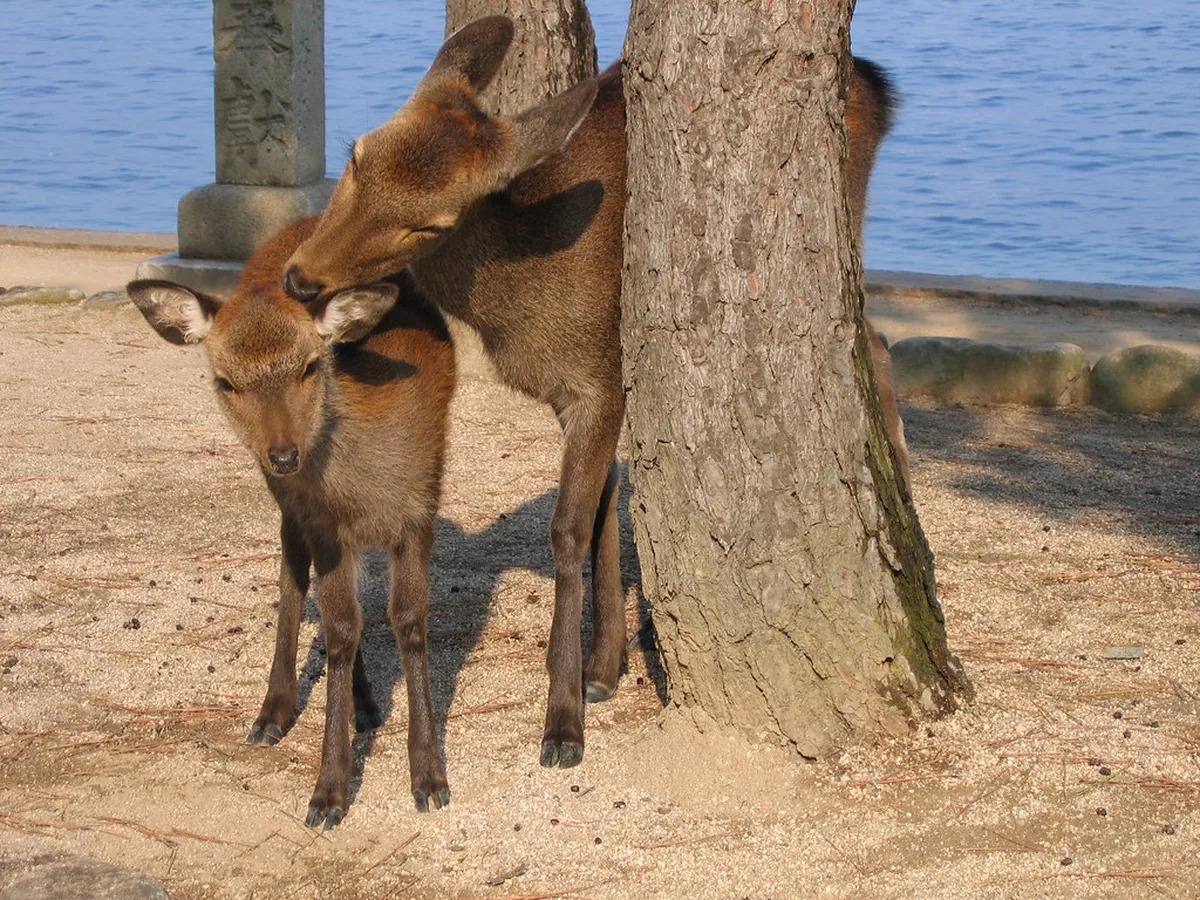
Wild deer roam the lower island freely — they are protected as sacred messengers and have been on the island since the shrine's founding in 593 CE. Keep paper maps zipped away; they will eat them. For the full island reference including secondary temples and the aquarium, see our Miyajima island complete visitor guide.
Getting around: streetcars, loop bus, and the JR alternative
Inside Hiroshima, the Hiroden streetcar covers every flagship sight at a flat ¥240 fare (¥250 from late 2026 after the planned January adjustment). For Miyajima, the JR San'yō Line is faster than the streetcar Line 2 by 48 minutes one-way — use rail if you hold a JR Pass and the streetcar only if you don't.
The Meipuru-pu sightseeing loop bus runs three colour-coded routes (Orange, Green, Lemon) from Hiroshima Station's north exit and is genuinely free with a JR Pass — show the pass to the driver as you board. Without a JR Pass, a single ride is ¥220 or a 1-day Meipuru-pu pass is ¥600. The Orange Loop hits the Atomic Bomb Dome in 12 minutes and continues to the Museum of Contemporary Art if you have a slow day; the Green Loop handles the castle and Shukkeien.
If you don't hold a JR Pass, the best-value urban combo is the Hiroshima Tourist Pass (¥1,000) — it bundles unlimited Hiroden streetcar, Hiroshima Bus, Hiroshima Electric Railway buses, and the Matsudai ferry to Miyajima for one day. It does not cover JR trains, so you'd take the slower 75-minute streetcar to Miyajimaguchi instead of the 27-minute JR ride. Math only works for non-JR-Pass holders making 4+ rides.
Coin lockers at Hiroshima Station's north exit handle most carry-ons (¥400 small, ¥600 medium, ¥800 large) and accept Suica/Pasmo/Icoca. The bank near the Shinkansen entrance has dozens of large lockers that rarely fill before 10:00. Drop your bag here — do not drag it onto the ferry, since Miyajima's Omotesando shopping street is narrow and the ropeway has no luggage racks.
Reverse-order variant: Miyajima first, Peace Park second
Most guides default to Hiroshima morning then Miyajima afternoon because the Peace Museum opens at 08:30 and the sunset torii shot favours late light. But three situations flip the script:
- High tide falls in the morning. If the tide table puts peak water at 09:00 and a 4-metre low at 15:00, ride the JR San'yō Line straight to Miyajimaguchi at 08:00, shoot the floating torii at 09:30, ropeway at 11:00, ferry back to Hiroshima at 13:30, and Peace Museum from 14:00 to 16:00. The museum is interior-lit and looks identical at any hour.
- Crowd avoidance. Miyajima's day-tripper wave from Hiroshima cruises arrives roughly 11:00–14:00. Beating that wave by reaching the island at 09:00 means you walk Itsukushima's deck nearly alone — a meaningful difference for photography.
- Winter sunset before 17:00. From mid-November through January, sunset is too early for a 14:30 ferry plan. Reverse the day so you exit the museum at 16:00 and head straight to the Shinkansen, accepting that you'll see the torii at midday rather than golden hour.
The trade-off is emotional pacing. The Peace Museum is dense and somber; many travelers prefer to end the day with Miyajima's lighter, more contemplative atmosphere rather than the reverse. If you reverse the order, build in a 30-minute buffer between the museum and the train so you don't carry the exhibit's weight straight into rush hour.
Rainy day and ropeway-closed backup plan
Mt. Misen's ropeway shuts down in winds above 25 m/s and during heavy rain — about 8–12 days a year, mostly in typhoon season (August–October) and around the late-winter front passages. If your day arrives wet, swap the ropeway for these covered alternatives without rebuilding the schedule:
- Daisho-in Temple — 5 min from the ferry pier, free entry, covered halls, the underground mantra cave illuminated by 88 paper lanterns, and a quiet rock garden. Buddhist origin temple of Mt. Misen worship and far less crowded than Itsukushima.
- Miyajima Public Aquarium — 10 min walk from the shrine, ¥1,420 entry, finless porpoises and Seto Inland Sea species. Indoor for 90 minutes; pairs well with a covered lunch at the on-site café.
- Senjokaku and Five-Story Pagoda — covered wooden hall on the hill behind the shrine. ¥100 entry, 30 minutes, panoramic island views from the open deck even in rain.
- Hiroshima Manga Library at Asa Park — if you abandon Miyajima entirely, this is a niche backup back on the mainland with English manga and quiet reading rooms.
If conditions force a full reroute, slot in Hiroshima Castle (rebuilt 1958, ¥370 entry) and Shukkeien Garden (¥260) — both indoor-friendly and reachable on the same Meipuru-pu loop bus. Hiroshima City Manga Library and the Mazda Museum (free, English tours, advance booking) round out a fully indoor backup day.
What to skip, common mistakes, and the deer rule
The single biggest mistake first-timers make is over-stuffing the morning. Hiroshima Castle, Shukkeien Garden, and the Mazda Museum are all worth a visit on a longer trip but they steal time from the museum's emotional landing or the Miyajima ferry slot. Skip them on a one-day plan and reserve them for a return.
Two other items routinely sabotage the schedule. The first is buying a Hiroshima Tourist Pass when you already hold a JR Pass — you've already paid for streetcars you can't ride, since the pass doesn't cover Hiroden. The second is queuing for okonomiyaki at Mitchan Honten near the Peace Park; the wait runs 60–90 minutes at noon and there's no reservation system. Nagata-ya, three minutes from the museum, is a stronger pick for a tight schedule.
Miyajima's deer are protected as sacred messengers — the species has lived alongside the shrine since its founding in 593 CE — and feeding them was formally banned in 2008 because tourist food was causing dental decay and aggressive behaviour. Keep paper tickets, maps, and ferry receipts inside a zipped pocket; deer have learned to extract them from open hands and side bags. If a deer eats your return ferry ticket, the JR ferry counter at the pier will reissue it for free with your JR Pass shown — Matsudai will charge you the ¥180 again. Avoid eye contact with rutting bucks in October, and never block a doe with a fawn.
Accessibility note for 2026: Itsukushima Shrine's main corridor is wheelchair-friendly with one short ramp at the eastern entry. Mt. Misen's ropeway has step-free boarding from the Momijidani station, but the summit observatory requires a 30-minute trail with stairs. The JR Miyajima ferry has a level boarding ramp; Matsudai uses a steeper gangway. Peace Memorial Museum's main route is fully accessible — request the priority elevator at the East Building entrance.
Best season to make the trip
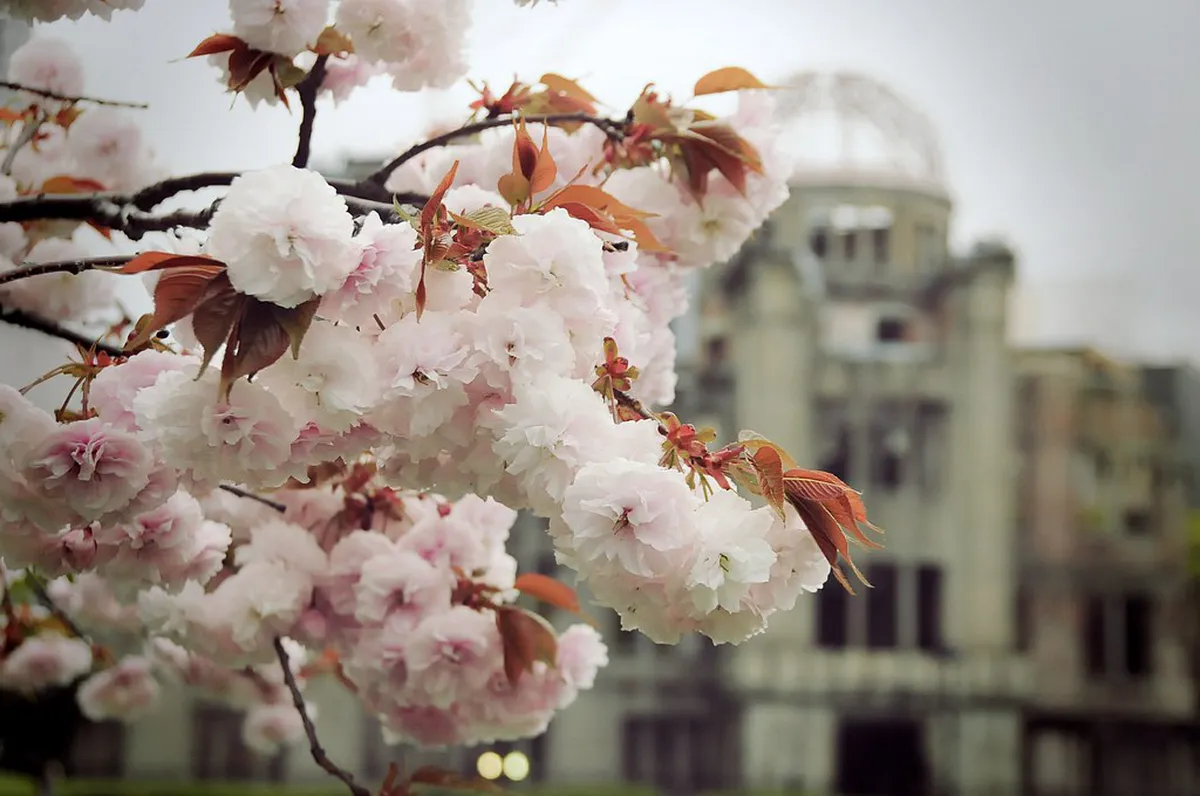
Late October to mid-November is the optimal window — Momiji-dani Park's maple leaves peak around November 10–20, the air is crisp for the Mt. Misen views, and daylight still extends to 17:00 for sunset shots. Cherry blossom season (March 25 – April 5) is a close second, though Itsukushima sees its largest crowds of the year during these two weeks.
Avoid August and the first half of September — afternoon temperatures hit 34°C with high humidity, and the climb to Mt. Misen's summit becomes a slog rather than a pleasure. Mid-January through February is uncrowded but cold (4–9°C) and many minor restaurants on Miyajima close by 16:00 in winter. Our best season to visit Hiroshima for autumn colors guide includes the day-by-day foliage tracker.
Evening: dinner on Miyajima or Hiroshima nightlife?
Most travelers eat oysters and momiji manju on Miyajima before the 19:00 ferry back, then head straight to the Shinkansen. If your last train allows, consider one of two evening additions:
- Hiroshima nightlife (Nagarekawa & Ekinishi) — 30 minutes of standing-bar hopping near the station. See our Hiroshima nightlife itinerary for the route.
- Himeji Castle stopover — Sakura/Hikari trains stop at Himeji 60 min from Hiroshima; the castle exterior is illuminated until 22:00. Adds ~90 min to your return but bags can stay in coin lockers at the station.
For travelers spending two days in the region instead, our Hiroshima 2-day itinerary spreads these sights across a more relaxed pace and adds Onomichi and the Shimanami Kaido cycling start point.
Frequently Asked Questions
Can you do Hiroshima and Miyajima in one day?
Yes — base from Osaka or Kyoto, depart by 7:00 AM, spend three hours in Hiroshima (Peace Park, Dome, Museum), catch the 2:30 PM JR Miyajima ferry, and return by 8:30 PM. From Tokyo it is not feasible — round-trip Shinkansen alone takes 8 hours.
How much does the Hiroshima and Miyajima day trip cost in 2026?
Budget ¥8,000 to ¥12,000 per adult excluding Shinkansen. Key items: Peace Museum ¥200, Itsukushima Shrine ¥300, Mt. Misen ropeway ¥2,000, lunch ¥1,200, snacks/dinner ¥2,000–¥4,000. Round-trip Shinkansen from Shin-Osaka adds ¥21,200 if you don't have a JR Pass.
Is the JR Pass valid for the Miyajima ferry?
Yes — but only the JR-branded ferry, not the Matsudai ferry departing from the same pier. Look for the JR Miyajima Ferry signage to the right as you exit Miyajimaguchi station. The ferry crossing takes 10 minutes and runs every 15 minutes from early morning until 22:00.
Can I skip Mt. Misen if I'm short on time?
Yes — many travelers do. Skipping the ropeway saves 90 minutes and ¥2,000, freeing time for a longer dinner on Omotesando Street or an earlier return ferry. If you skip Mt. Misen, replace it with Daisho-in Temple (5 min from pier, free) for a covered cultural alternative.
What's the best season for this 1-day trip?
Late October to mid-November (autumn colors at Momiji-dani Park) and late March to early April (cherry blossom around Itsukushima). Avoid August (heat and humidity peak at 34°C) and mid-January (many island shops close early at 16:00 in winter).
Do I need to book the Peace Memorial Museum in advance?
Yes — as of 2026, timed-entry online reservations are required. Walk-up tickets are not guaranteed during peak season (March–May, October–November). Book at least one week ahead via the official Peace Memorial Museum site for the 09:30 slot that fits this itinerary.
What if it rains and the ropeway closes?
Swap Mt. Misen for Daisho-in Temple, the Miyajima Public Aquarium (¥1,420), or Senjokaku Hall — all covered. If conditions are severe, return to the mainland and visit Hiroshima Castle (¥370) and Shukkeien Garden (¥260) instead. Don't push through windy ropeway closures — the cars stop at 25 m/s.
This Hiroshima and Miyajima 1 day itinerary works because every step is timed against three constraints: the Shinkansen, the tide, and the ropeway's last ascent. Lock in the 06:30 Sakura departure, pre-book the 09:30 museum slot, and verify the tide table the night before — those three actions make the difference between a polished day and a frustrated one. Save the Tokyo-base attempt for a future trip, eat the okonomiyaki at noon (not dinner), and aim your camera at the floating torii during the 18:30–19:00 sunset window. With ¥10,000 in your wallet and a JR Pass already in hand, you're ready to ship.
Free: The Hiroshima Essentials guide
Top things to do, where to stay, a perfect day plan, getting around, and the best time to go — a Hiroshima mini-guide you can take offline.
You might also like


Continue reading
More guides you'll find useful


