1-Day Saijo Sake Town Day Trip From Hiroshima Guide
Plan the perfect saijo sake town day trip from hiroshima. This guide covers brewery tastings, logistics, and food. Start your Japan adventure today!
On this page
A saijo sake town day trip from hiroshima drops you into seven heritage breweries clustered along a single 700-metre street. The ride from Hiroshima Station on the JR Sanyo Line takes about 38 minutes and runs roughly every 20 minutes. The town is officially Higashihiroshima, but everyone calls it Saijo after the brewing district itself. It is a working town, not a theme park, and that is exactly the appeal.
This guide is written for first-timers who want a clear plan, not a marketing brochure. You can slot it into a longer hiroshima itinerary after Peace Park or before Miyajima. Updated for 2026, it covers train platforms, tasting fees in yen, brewery comparisons, and what to do if you do not drink. The next Sake Matsuri lands on October 10 to 11, 2026 — book lodging early if you want to attend.
The first thing that hits you on Sakagura-dori is the smell of steaming koji rice when the wind shifts. Towering red-brick chimneys mark each brewery, originally built tall to vent the firing of rice-husk fuel. Most travellers spend six to eight hours here and are back in Hiroshima for okonomiyaki dinner. Arrive by 10:30 and you will have the storehouses almost to yourself before the tour buses appear around noon.
How to Plan a Smooth Saijo Day Trip (Logistics)
From Hiroshima Station, take the JR Sanyo Line local bound for Shiraichi, Itozaki, or Mihara. Locals depart from tracks 1 to 3 on the Sanyo Line platforms — confirm the destination on the overhead board because the same track also handles Kure Line trains. The fare is ¥590 one way, the ride is 38 to 45 minutes depending on stops, and IC cards (ICOCA, Suica, PASMO) tap through. A Japan Rail Pass covers the local but not the Shinkansen for this short hop, so do not bother with the bullet train.
At Saijo Station, exit through the south gate, walk down the stairs, and turn left at the police box about 50 metres ahead. From there a small English sign points toward Sakagura-dori — the breweries are five to seven minutes on foot. The tourist information centre sits roughly 200 metres into Sakagura-dori on the right side, marked clearly in English, and stocks a free brewery map with opening hours.
Aim to arrive between 10:00 and 10:30. Most brewery tasting rooms open at 10:00 and last orders cluster around 16:30, with shops closing at 17:00. Plan to be back at Saijo Station by 17:30 if you want to make a Hiroshima dinner reservation. Wear flat shoes — the side streets between breweries are paved but uneven, and a few stretches still use the original cobbled drainage gutters.
Must-See Saijo Sake Town Attractions
Sakagura-dori, or Sake Storehouse Road, is the spine of the district and runs roughly 700 metres east to west. The street is lined with namako-kabe walls — black tile set into white plaster in a distinctive diamond grid — that protected the original wooden storehouses from fire. Eight red-brick chimneys still stand above the rooftops, and seven are still operational. Entry to the street is free, and most breweries waive the entrance fee for their tasting rooms; you only pay per pour.
The white-walled Kamotsuru complex is the most photogenic stop, with a courtyard well, a free tasting bar at ¥100 per pour, and the gold-leaf Tokusei Gold Daiginjo that President Obama drank with Prime Minister Abe in 2014. Across the road, Hakubotan dates to 1675 and is the oldest brewery in town. Down a side alley, Kamoizumi runs a small museum of antique brewing tools that is free with a tasting purchase.
Beyond the storehouses, look for the Saijo Honjin Historical Museum, a former Edo-period inn for travelling daimyo just south of the station. The free Saijo Sake Tourism Information Centre also runs a coin-operated tasting machine — ¥100 buys a small pour from a rotating selection of all seven breweries, which is the cheapest sampler in town.
Aim to arrive at Saijo Station between 10:00 and 10:30 — most brewery tasting rooms open at 10:00 and last orders cluster around 16:30, with shops closing by 17:00.
Spotlight on Breweries: Kamotsuru, Fukubijin, and the Rest
Seven breweries are realistically visitable in a single day. Five sit on Sakagura-dori itself; the others are a 3- to 5-minute walk down marked side streets. Hours are roughly 10:00 to 17:00 daily, with a few closed Tuesdays — confirm at the information centre before you start.
- Kamotsuru Sake Brewing — flagship Tokusei Gold Daiginjo with edible gold leaf. Tastings ¥100 to ¥500 per pour, free brewery video in English, on-site shop and small museum.
- Fukubijin — soft, mellow style nicknamed "Lady Sake." Free tasting on weekends, paid pours weekdays at ¥100 to ¥300, beautiful courtyard with a public well.
- Kamoizumi — pioneer of the modern junmai revival, bolder umami profile. Tasting flights from ¥500, antique tool museum on site, sells local Bizen pottery.
- Hakubotan — founded 1675, smooth dry junmai. Free tasting Saturday and Sunday only; weekday tours by reservation.
- Saijotsuru — clean and dry style, English signage on the brewing process, free tasting.
- Kirei — small family operation, free tasting, no English materials but friendly staff.
- Sanyotsuru — closest to the station, pours from ¥100, reservations recommended for tours.
| Brewery | Style | Tasting Cost | Notes |
|---|---|---|---|
| Kamotsuru | Gold Daiginjo, fruity | ¥100–¥500/pour | Free brewery video in English; on-site shop |
| Fukubijin | Soft, mellow | Free weekends; ¥100–¥300 weekdays | Beautiful courtyard with public well |
| Kamoizumi | Bold, umami junmai | Flights from ¥500 | Antique tool museum; sells Bizen pottery |
| Hakubotan | Smooth dry junmai (est. 1675) | Free Sat–Sun only | Weekday tours by reservation |
| Saijotsuru | Clean and dry | Free | English signage on brewing process |
| Kirei | Small family operation | Free | No English materials; friendly staff |
| Sanyotsuru | Approachable | From ¥100 | Closest to station; tours by reservation |
Palate fatigue and cumulative ABV are real risks — drink chaser water (yawaragi-mizu) between pours using the free public wells at each brewery, and pace yourself to lightest styles first.
Pace yourself — even at four breweries with two pours each, that is roughly the equivalent of a full glass of wine in 20 minutes. Most tasting bars sell 100 ml bottles for ¥300 to ¥800 if you would rather take samples back to your hotel.
Sake Making: Understanding Types and Characteristics
Nihonshu — what English speakers call sake — is brewed from rice, water, koji mold, and yeast. The brewing season runs October to March, which is why a winter visit means you may smell live fermentation through the storehouse vents. Alcohol content sits around 15 to 17 percent, higher than wine, which matters when you are pouring a third sample before lunch.
The category that matters most for tasting is the polishing ratio, or seimaibuai. Junmai uses only rice, water, koji, and yeast with no minimum polish — expect rounder, savoury, rice-forward flavours. Ginjo polishes the rice down to 60 percent or less and skews fruity and aromatic. Daiginjo polishes to 50 percent or less and is the most refined, lightest, often with melon or pear notes. Honjozo adds a small amount of distilled alcohol for a crisper finish.
Two extra labels worth knowing: namazake is unpasteurised, served chilled, and lasts only weeks once opened — a rare treat in spring. Genshu is undiluted and runs 18 to 20 percent ABV, so order it as a small final pour, not a flight. Most Saijo tasting rooms list the type and seimaibuai in English on a chalkboard above the pour station.
Sake Etiquette and Tasting Tips
The unwritten rule across Sakagura-dori is to taste lightest to heaviest: start with daiginjo or ginjo, work toward junmai, and finish with anything aged or genshu. Hold the small ochoko cup with both hands when receiving a pour, take a small sip first, and keep your voice low — these are working storehouses with offices in the back. Tipping is not expected and can confuse staff.
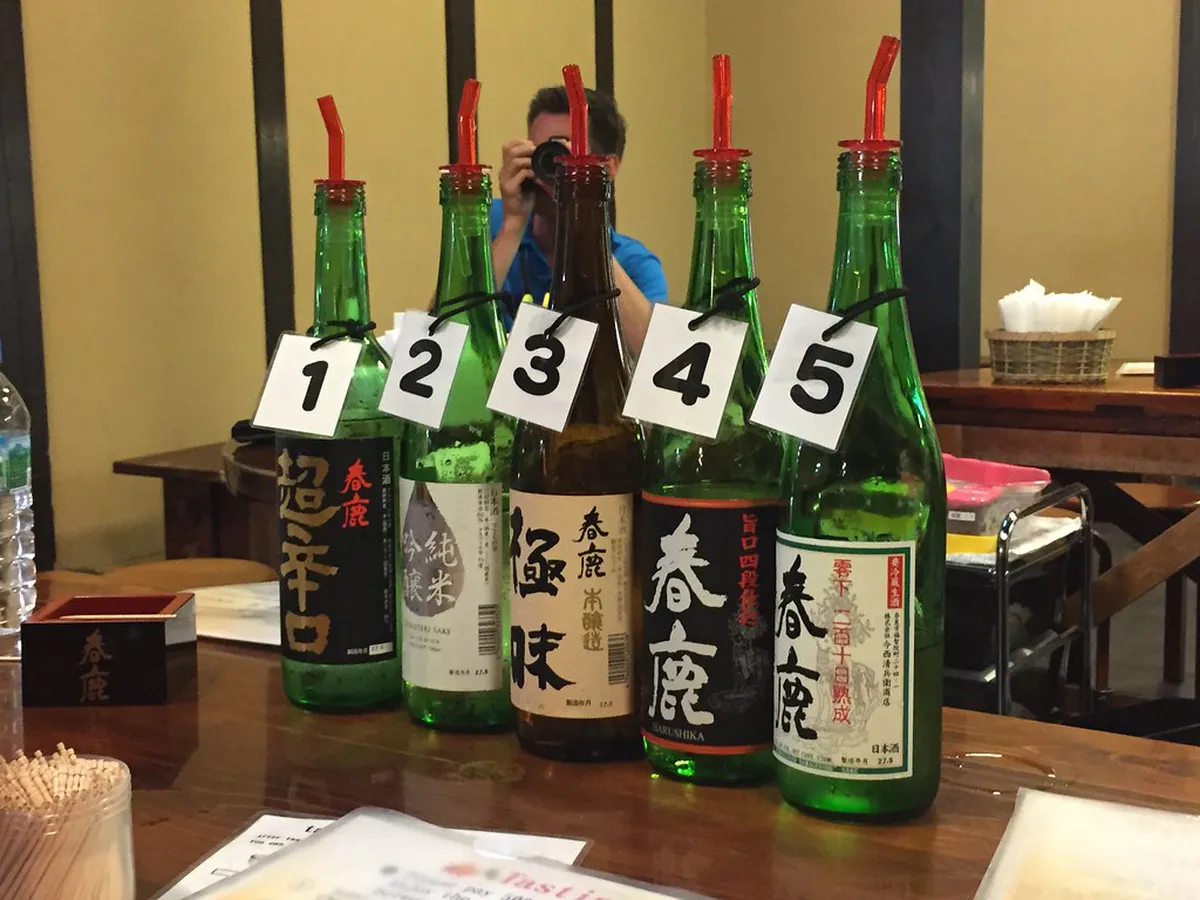
Order matters because palate fatigue is real, and so is the cumulative ABV. Locals drink chaser water — called yawaragi-mizu — between pours. Every brewery on Sakagura-dori has a free public well or tap fed by the same Ryusei-san aquifer that the breweries themselves use, and refilling a bottle is encouraged. Skipping the chaser is the single most common first-timer mistake; visitors from Tokyo especially underestimate this and it turns a fun afternoon into a 3 PM nap.
If you cannot read the kanji menu, point at what the person next to you is drinking, or ask for "osusume" (the recommendation). Spitting is acceptable in a flight tasting if you say "kiki-zake" first, which signals that you are evaluating rather than drinking. The Japan Sake and Shochu Brewers Association keeps a useful primer at japansake.or.jp if you want to read up before the trip.
The Water Factor: Tasting Shikomisui at Each Brewery
What sets Saijo apart from any other sake region is the water — specifically the soft, mineral-light spring water called shikomisui, drawn from wells beneath each brewery. Saijo sits on the Ryusei-san aquifer, and the same water that goes into the tank goes into the public spigot at the front of the brewery. Tasting it side by side with the finished sake is the closest you can get to reverse-engineering the recipe.
Bring an empty bottle. The five wells worth visiting are at Kamotsuru (sweet, rounded), Fukubijin (very soft, almost weightless), Kamoizumi (slightly mineral), Hakubotan (cleanest of the set), and Saijotsuru (faint mineral note). Locals walk Sakagura-dori with two-litre bottles to take it home for cooking rice. Travellers who do not drink alcohol can build an entire visit around this water tour and still leave with a meaningful sense of the place.
The free coin-tasting machine at the tourist information centre also lists the seimaibuai and water source for each pour, which makes a side-by-side comparison straightforward without committing to seven separate brewery visits.
Parks, Gardens, and Outdoor Spots in Saijo
If you need a quiet hour between tastings, Shikinomori Park sits about 15 minutes north of the station and offers cherry blossoms in early April and ginkgo colour in mid-November. The park is free, has clean public toilets, and is an easy place to eat the rice-flour mochi sweets sold along Sakagura-dori. Locals jog the paved loop at lunchtime.
Closer to the breweries, the small grounds of Goshajinja Shrine sit a three-minute walk south of Sakagura-dori and host the kick-off ceremony for the October Sake Matsuri. Even outside festival days, the wooded approach is a cool break from the storehouse-baked brick. The shrine sells sake-themed ema (wooden prayer plaques), which make a better souvenir than the mass-market gift shop options.
For a longer stretch, climb the marked path up Mt. Ryusei-san — the source of the brewing water itself. The round trip takes about 90 minutes, the trail is beginner-level, and the view from the lookout takes in the entire brewing district and its chimneys from above.
Family-Friendly and Budget-Friendly Options in Saijo
Saijo works for families even though the headline product is alcohol. Children are welcome inside the brewery shops and museums; only the tasting bars themselves restrict entry. Most breweries sell sake-flavoured ice cream, sake kasu (lees) cookies, and amazake, a sweet, low- or no-alcohol fermented rice drink that kids generally enjoy. Look for "ノンアルコール" (non-alcohol) on the label.
Budget-wise, the entire day can run under ¥3,000 per person if you plan it. The round-trip train is ¥1,180. Tasting fees average ¥100 to ¥300 per pour, the public wells and street walking are free, and a bowl of bishu-nabe lunch is ¥1,200 to ¥1,800. Skip taxis — everything is walkable from the station — and refill water at brewery wells instead of buying bottled water from the convenience store.
For a free activity that fills 30 minutes, pick up the brewery stamp rally sheet at the tourist information centre. Each brewery stamps the sheet, and a complete set earns a small souvenir like a sake-cup keychain. Kids treat it as a treasure hunt while adults taste.
Central Hiroshima and Okonomiyaki Pairings
The classic Saijo lunch is bishu-nabe, a hot pot simmered in sake instead of water with chicken, vegetables, and tofu — the alcohol cooks off and leaves a clean, slightly sweet broth. Yamatoya near Sakagura-dori serves a solid version for ¥1,500, and the queue moves quickly if you arrive before 12:30. A second option is sake-steamed oysters in winter, when Hiroshima oyster season overlaps with peak brewing.
For dinner back in Hiroshima, pair the day with the city's namesake okonomiyaki — the layered noodle, cabbage, and pork pancake that locals consider the only correct version. Okonomimura in Shintenchi stacks 24 stalls across three floors, all open until 22:00 or later. Read up on how to eat hiroshima style okonomiyaki like a local before you sit down so you do not eat off the spatula in front of a regular.
Hiroshima also has a quiet craft beer scene that pairs neatly with a sake-heavy afternoon. Beer Stand Shigeru and Raku Beer are five and seven minutes' walk from Okonomimura respectively, both pour local Hiroshima brews, and stay open until midnight. Switching from sake to beer at dinner is a common local move and helps recalibrate the palate.
Full Day Tour Options: Exploring Beyond the Breweries
If you only have one day in the region and want both Saijo and Hiroshima Peace Memorial Park, build a hybrid. Take the 8:30 Sanyo local from Hiroshima, spend 10:00 to 13:00 on three breweries plus a bishu-nabe lunch, and ride back by 14:30. That leaves the afternoon for a respectful 15:00 to 17:00 visit to the hiroshima peace memorial museum, where last entry is 16:30 in 2026.
For travellers with two days, prioritise breweries on day one and a miyajima day trip on day two; the floating torii is best at high tide, which the JR ferry timetable makes easy to plan. A three-day trip can add an onomichi day trip or Okunoshima (Rabbit Island), reachable from Tadanoumi Station 75 minutes east on the same Sanyo Line.
Guided 2.5- to 4-hour Saijo tours run roughly ¥6,000 to ¥12,000 per person and are useful only if you want a Japanese-speaking host who can pre-book the inside-brewery tours; otherwise self-guiding works fine and saves the fee.
When to Visit and the October Sake Matsuri
Spring and autumn are the easiest times to visit — daytime temperatures are 15 to 22 degrees, the chimneys frame against either cherry blossoms or autumn ginkgo, and walking the 700-metre street is comfortable. Winter (December to February) is the working brewing season, so the storehouses smell strongest and you may catch a fresh shinshu — newly pressed sake — that does not exist outside the cellar door.
The annual Sake Matsuri lands the second weekend of October. In 2026 it runs Saturday October 10 to Sunday October 11, draws around 250,000 visitors over two days, and turns the central Chuo Park into a paid tasting hall — ¥2,500 buys an official ochoko and unlimited pours from over 900 sake brands across Japan. Trains and hotels in Higashihiroshima fill three months out, so book by July if you plan to attend. The breweries themselves still operate during the festival but are extremely crowded; locals advise visiting Sakagura-dori on the Friday before the festival opens or the Monday after.
For the rest of the year, the town is quietly walkable and reservations are usually unnecessary except for formal in-brewery tours. Check the Hiroshima Prefecture official tourism site for current event listings before you finalise dates.
Is a Saijo Sake Town Day Trip From Hiroshima Worth It?
For anyone interested in food, fermentation, traditional architecture, or simply walking a working Japanese town that has not been retouched for tourism, Saijo is one of the best half-day trips in western Japan. The total cost is low, the logistics are simple, and the experience is genuinely educational — even teetotallers get the water tour, the namako-kabe storehouses, and bishu-nabe lunch. It pairs cleanly with the heavier emotional weight of Peace Park.
Skip it only if you have a single day in Hiroshima and Miyajima is your priority — the floating torii is unmatched. Otherwise, build Saijo into a two-day plan and you will leave with a clearer understanding of nihonshu than a tasting in Tokyo will ever give you. Use our 12 best things to do in hiroshima for first timers guide to slot it into a longer plan.
Use our Hiroshima attractions guide to round out your plan.
Frequently Asked Questions
How do I get from Hiroshima to Saijo Sake Town?
Take the JR Sanyo Line from Hiroshima Station to Saijo Station. The journey takes about 35 minutes and costs very little. Most breweries are a five-minute walk from the station exit. You can use a JR Pass or local IC card for this trip.
Are the sake tastings in Saijo free?
Some breweries offer free samples, but most charge a small fee. These fees usually range from $5 to $10 for a flight of several drinks. Paying these fees helps support the heritage breweries and their historic buildings. You often get a souvenir glass to keep.
What is the best time of year to visit Saijo?
The best times are spring and autumn for mild walking weather. October is famous for the large Sake Festival, but it is very crowded then. Visiting in the winter is also great because it is the peak brewing season. You might smell the fresh mash in the air.
Saijo is a hidden gem that offers a perfect blend of history and flavor. This day trip is easy to organize and provides lasting cultural memories. I hope this guide helps you enjoy every sip and sight in the town.
Remember to drink responsibly and enjoy the local hospitality of the brewers. Your visit helps preserve these historic buildings for many future generations to see. Enjoy your incredible journey through the heart of Japan's rice wine country.
Free: The Hiroshima Essentials guide
Top things to do, where to stay, a perfect day plan, getting around, and the best time to go — a Hiroshima mini-guide you can take offline.
You might also like

Continue reading
More guides you'll find useful