
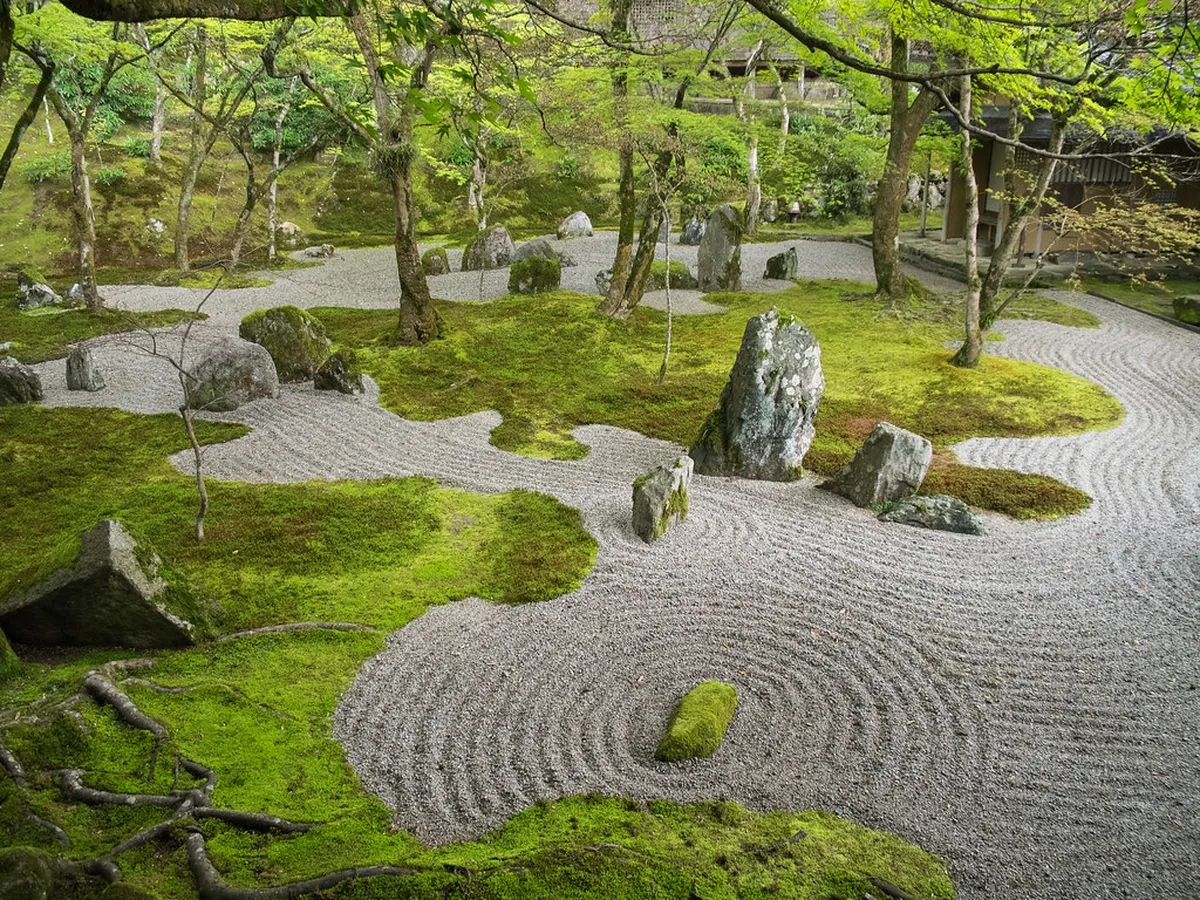
Komyozenji Temple
A serene little Zen temple minutes from Dazaifu Tenmangu, prized for its two gardens — a dry rock garden arranged to read the kanji for 'light' and a moss-and-maple back garden that blazes red in autumn.
Visitor guide →
Plan your visit with this complete guide to Dazaifu attractions: Dazaifu Tenmangu shrine, Komyozenji, Kanzeonji, the Kyushu National Museum, Omotesando food street, routes, transport, and 2026 ticket prices.
Dazaifu is a compact former capital just outside Fukuoka City, and it packs an outsized number of things to do into a walkable few square kilometers: a 1,100-year-old shrine that draws roughly 10 million visitors a year, two atmospheric temples, one of Japan's four national museums, and a food street built around a single sweet snack. Most visitors come for Dazaifu Tenmangu and never realize the rest of the cluster — a Zen rock garden, an 8th-century treasure hall, ancient government ruins, a Kengo Kuma-designed Starbucks — is all within a 15-minute walk. This guide covers every major Dazaifu attraction, how to sequence them into a single day trip from Fukuoka, and what each one actually costs in 2026.
Dazaifu Tenmangu is the reason most people come to Dazaifu at all, and it's the one attraction on this page that isn't optional. Founded in 905 CE over the grave of the scholar-poet Sugawara no Michizane, it's now the head shrine of some 12,000 Tenmangu shrines across Japan dedicated to Tenjin, the deity of learning — which is why the approach is lined with students buying wooden ema plaques ahead of exam season. The grounds center on a vermillion honden (main hall) reached across three arched bridges spanning a heart-shaped pond, and they're framed by roughly 6,000 plum trees, including the legendary "flying plum" (tobiume) said to have followed Michizane into exile from Kyoto. Entry to the shrine grounds is free; the treasure hall and plum-viewing garden charge separate small admission fees during peak bloom. Budget 45–60 minutes here before moving on to the temples and museum below — full opening hours, festival dates, and a photo-stop walkthrough are in our Dazaifu Tenmangu shrine visitor guide.
A serene little Zen temple minutes from Dazaifu Tenmangu, prized for its two gardens — a dry rock garden arranged to read the kanji for 'light' and a moss-and-maple back garden that blazes red in autumn.
Visitor guide →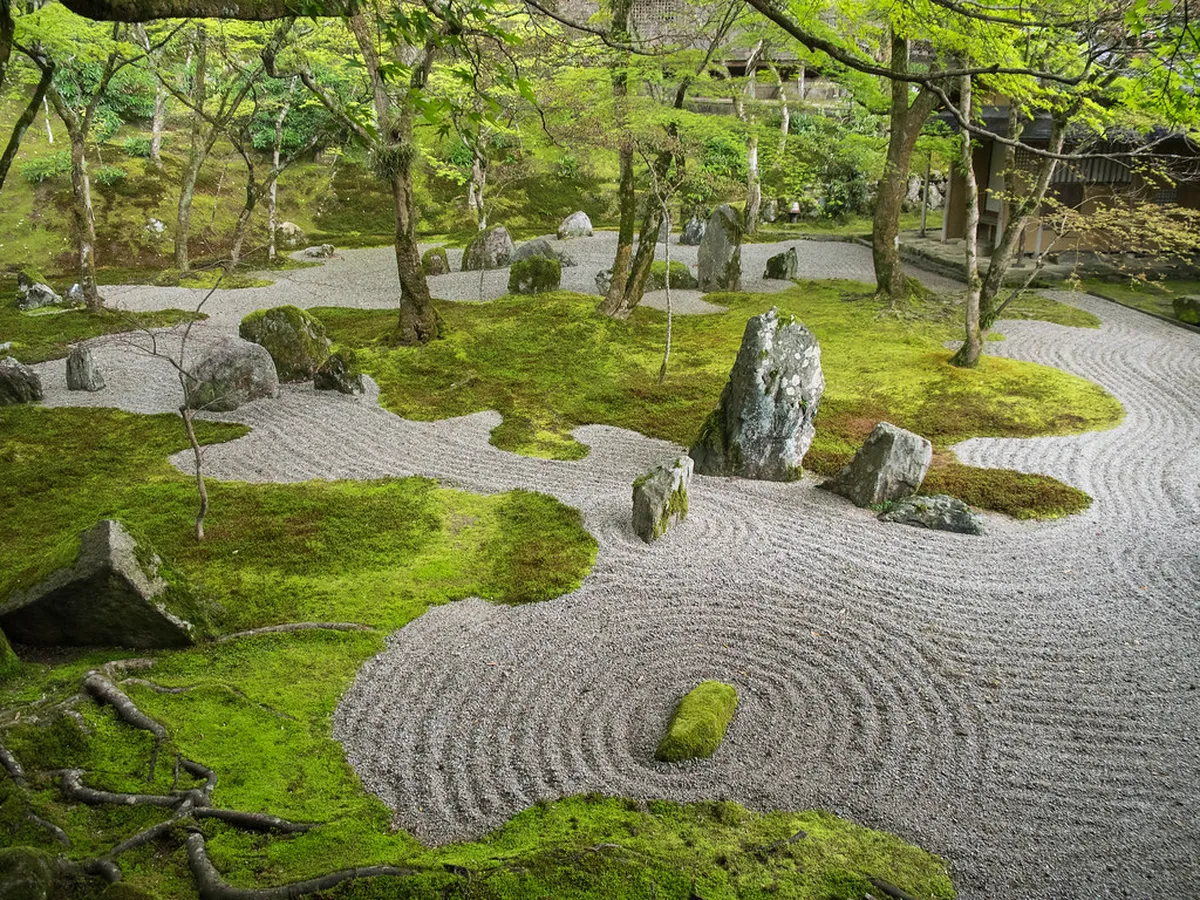
An atmospheric 8th-century temple, once the head temple of Kyushu — home to Japan's oldest cast bell and a treasure hall of towering Heian-era Buddhas, next to the grassy Tofuro ruins of the ancient regional capital.
Visitor guide →
One of Japan's four national museums — a dramatic glass-and-timber wave on the hill behind Dazaifu Tenmangu, tracing Japan's cultural exchange with Asia, reached by a fun tunnel of moving walkways from the shrine.
Visitor guide →The three attractions above reward more than a walk-by, so here's what to actually expect at each. Komyozenji is a small Zen temple a few minutes south of the shrine, built around two gardens rather than a large hall: a front rock garden whose fifteen stones are arranged to spell the kanji for "light" (光), and a rear garden of moss, maples, and stepping stones that turns a deep red in November. Admission runs roughly ¥200–500 depending on season, and the whole visit takes 20–30 minutes — it's easy to underrate on a map and one of the best-value stops in Dazaifu in person.
Kanzeonji sits a short walk east and is far older than its quiet grounds suggest — founded in the late 7th century as the head temple overseeing all of Kyushu's Buddhist institutions. Its bell tower holds Japan's oldest surviving cast bronze bell, a National Treasure, and its treasure hall (¥500 admission) houses a set of towering Heian- and Kamakura-era wooden Buddhist statues that rival what's on display in Kyoto or Nara, usually without the crowds. Immediately next door are the grassy, largely unmarked Tofuro ruins — the foundation stones of the Dazaifu government headquarters that once administered all of Kyushu and Japan's diplomatic contact with China and Korea. There isn't much to see structurally, but it's a good five-minute stop if you're already walking between Kanzeonji and Komyozenji.
The Kyushu National Museum is the newest and largest of the three, opened in 2005 as one of only four national museums in Japan. Its permanent Cultural Exchange Exhibition traces Japanese history through the lens of contact with the rest of Asia, from the Jomon period through the Meiji era, and the building itself — a curved glass-and-steel wave set into the hillside — is worth the visit on its own. Regular exhibition admission is ¥700; special exhibitions are priced separately. The easiest way in is via the covered moving-walkway tunnel that starts behind Dazaifu Tenmangu's main hall, which turns what would be a steep uphill walk into a flat five-minute ride.
The stretch between Nishitetsu Dazaifu Station and the shrine's torii gate is Dazaifu's Omotesando — roughly 80 shops selling souvenirs, crafts, and one dish nearly everyone stops for: umegae mochi, a grilled rice cake filled with sweet red bean paste and stamped with a plum-blossom pattern, sold hot off the griddle for a few hundred yen apiece. Dozens of stalls sell it; locals mostly agree on 2–3 that are worth the short queue, covered in our Omotesando shopping street guide.
Halfway down the street is the other reason photographers detour here: the Starbucks Dazaifu Omotesando, designed by architect Kengo Kuma. Roughly 2,000 crossed cedar timber laths form a lattice tunnel running the length of the store, deliberately echoing the wooden torii and shrine architecture around it — it opened in 2011 and is now one of the most-photographed Starbucks locations in Japan. Full design details and the best times to shoot it with fewer people in frame are in our Starbucks Dazaifu design guide.
Everything above fits comfortably into one day trip from Fukuoka if you sequence it to avoid backtracking. A route that works well: start at Nishitetsu Dazaifu Station and walk the Omotesando street toward the shrine, stopping for umegae mochi and the Starbucks on the way in (30–40 minutes). Spend 45–60 minutes at Dazaifu Tenmangu itself, then take the moving-walkway tunnel up to the Kyushu National Museum for 60–90 minutes depending on how much of the Cultural Exchange Exhibition you want to see. Coming back down, walk to Kanzeonji and the adjacent Tofuro ruins (30–40 minutes), then finish at Komyozenji (20–30 minutes) before heading back to the station. That's roughly 4–5 hours of sightseeing, which leaves room for lunch and the return train without feeling rushed.
Dazaifu is reached almost entirely by the private Nishitetsu rail network, not JR. From central Fukuoka, board a Nishitetsu Tenjin Omuta Line train at Nishitetsu Fukuoka (Tenjin) Station, change at Nishitetsu Futsukaichi Station, and continue two stops on the Nishitetsu Dazaifu Line to the Dazaifu terminus — the whole trip takes 25–35 minutes and costs a few hundred yen each way. Nishitetsu Dazaifu Station sits right at the foot of the Omotesando approach street, so you're walking toward the shrine the moment you exit the platform. If you're coming from Hakata Station or the airport, a direct Nishitetsu bus is also an option and avoids the transfer.
Dazaifu rewards visiting for its seasons as much as its sights. Late February into early March is peak plum blossom season around Dazaifu Tenmangu, when the shrine's roughly 6,000 ume trees bloom and the grounds are at their most photogenic — this is the single best window if your trip dates are flexible. Mid-to-late November brings autumn foliage to Komyozenji's rear garden and the grounds around Kanzeonji, and is a strong second choice with noticeably fewer crowds than plum season. Avoid the first three days of January if possible: Dazaifu Tenmangu is one of Kyushu's most popular Hatsumode (New Year's shrine visit) destinations and draws roughly two million visitors over that period alone.
Dazaifu is best known for Dazaifu Tenmangu, Japan's head shrine dedicated to the god of learning, and for having once been the administrative and diplomatic capital of Kyushu — a role reflected today in the Kyushu National Museum and the Tofuro ruins.
One day is enough to see all the major attractions — the shrine, Komyozenji, Kanzeonji, the Kyushu National Museum, and the Omotesando food street — comfortably as a day trip from Fukuoka.
Yes. It's a 25–35 minute train ride from central Fukuoka and combines a major shrine, two historic temples, a national museum, and a well-known food street in one compact, walkable area.
Regular exhibition admission is ¥700 for adults as of 2026; special exhibitions are ticketed separately and typically cost more.
Yes — it's the standard way to see it. Most visitors take a morning train from Nishitetsu Fukuoka (Tenjin) Station, spend 4–5 hours sightseeing, and are back in Fukuoka by early evening.
Komyozenji's rock and moss gardens, Kanzeonji's treasure hall and the adjacent Tofuro ruins, the Kyushu National Museum, and the Omotesando street's umegae mochi stalls and Kengo Kuma-designed Starbucks are all within easy walking distance of Dazaifu Tenmangu.
Take the Nishitetsu Tenjin Omuta Line from Nishitetsu Fukuoka (Tenjin) Station, change at Nishitetsu Futsukaichi, then ride the Nishitetsu Dazaifu Line two stops to the Dazaifu terminus. The full journey takes about 25–35 minutes.
Late February to early March for plum blossoms around Dazaifu Tenmangu, or mid-to-late November for autumn foliage at Komyozenji and Kanzeonji. Avoid the first few days of January due to New Year crowds.
For deeper coverage of specific Dazaifu attractions and logistics, see our related guides: