Dazaifu Tenmangu Shrine: Essential Tips, Attractions & Plums
Plan Dazaifu Tenmangu Shrine, 30 minutes from Fukuoka: 9 attractions, the 6,000 plum trees, seasonal festivals and transport tips.
On this page
Dazaifu Tenmangu Shrine is one of Japan's most visited Shinto sites, drawing roughly two million people each year to a quiet city just 30 minutes from Fukuoka. The shrine honors Sugawara Michizane, a ninth-century scholar-statesman who was deified after his death as Tenjin, the deity of learning. Every student preparing for university entrance exams, every tourist hoping for a glimpse of 6,000 plum trees in bloom, and every architecture fan tracking the Sou Fujimoto renovation passes through the same vermilion gates.
The grounds are free to enter and the walk from Dazaifu Station takes less than ten minutes along the Omotesando shopping street. This guide covers the shrine itself in depth — its sacred objects, ritual sequence, seasonal character, practical hours, and the cultural layer that most visitors skip when they only budget ninety minutes.
Must-See Attractions at Dazaifu Tenmangu Shrine
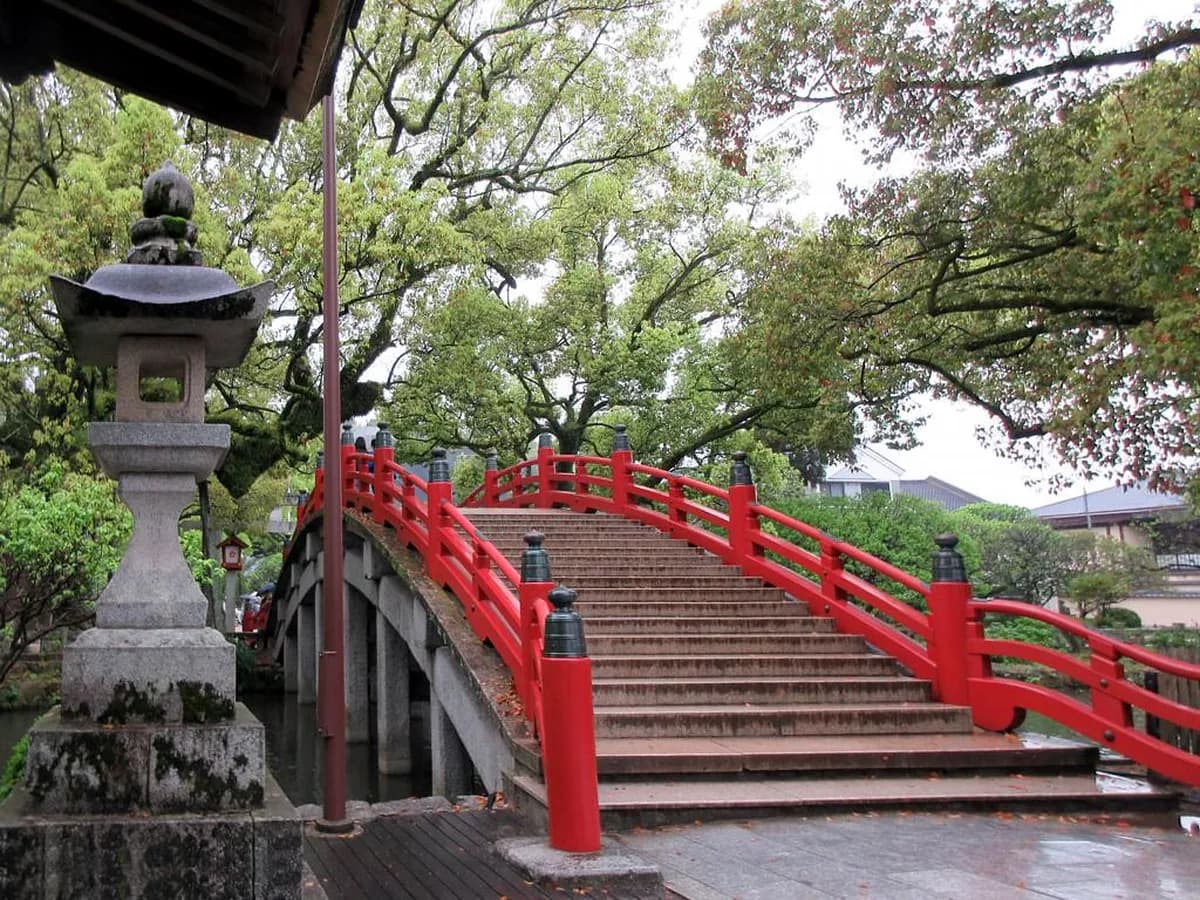
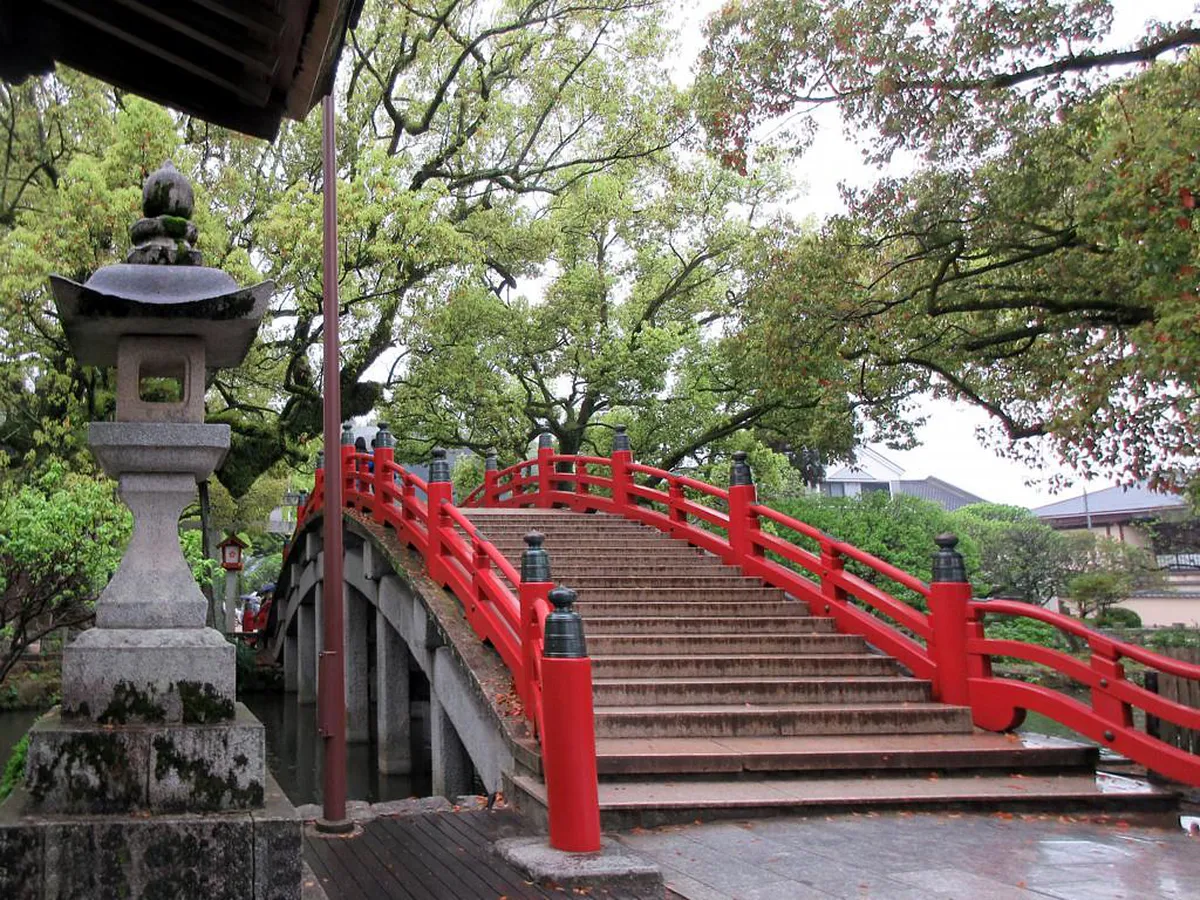
The approach to the shrine begins with three arched Taiko-bashi bridges spanning the Shinji Pond. Each bridge represents a segment of time — past, present, and future — and crossing all three is considered a purification act before entering the inner grounds. Slow down here. The pond holds koi and turtles, and early-morning light turns the water gold before the crowds arrive.
Just past the bridges, look for the temizuya water pavilion where visitors rinse their hands before approaching the main hall. Beside it stands a bronze kirin — a mythical creature with a dragon's head and a horse's body — that represents Michizane's wisdom and moral virtue. Most visitors walk straight past it, but the kirin is one of the most historically specific objects on the grounds.
The legendary Tobiume, or Flying Plum, grows just to the left of the main sanctuary. Legend holds that this tree uprooted itself in Kyoto and flew to Dazaifu overnight to follow Michizane into exile. It is always the first of the 6,000 plum trees on the grounds to bloom each February, and the spot around it fills with photographers the moment the first buds open.
Eleven bronze ox statues called shingyu are positioned throughout the complex. The oxen are sacred because when Michizane died, the oxen pulling his funeral cart sat down and refused to move. The spot where they stopped became the foundation of the shrine. Rubbing the head of the largest ox near the entrance is believed to transfer wisdom; rubbing the same area on your own body as you rub the statue is thought to relieve pain or illness there.
The Main Sanctuary and Prayer Ritual
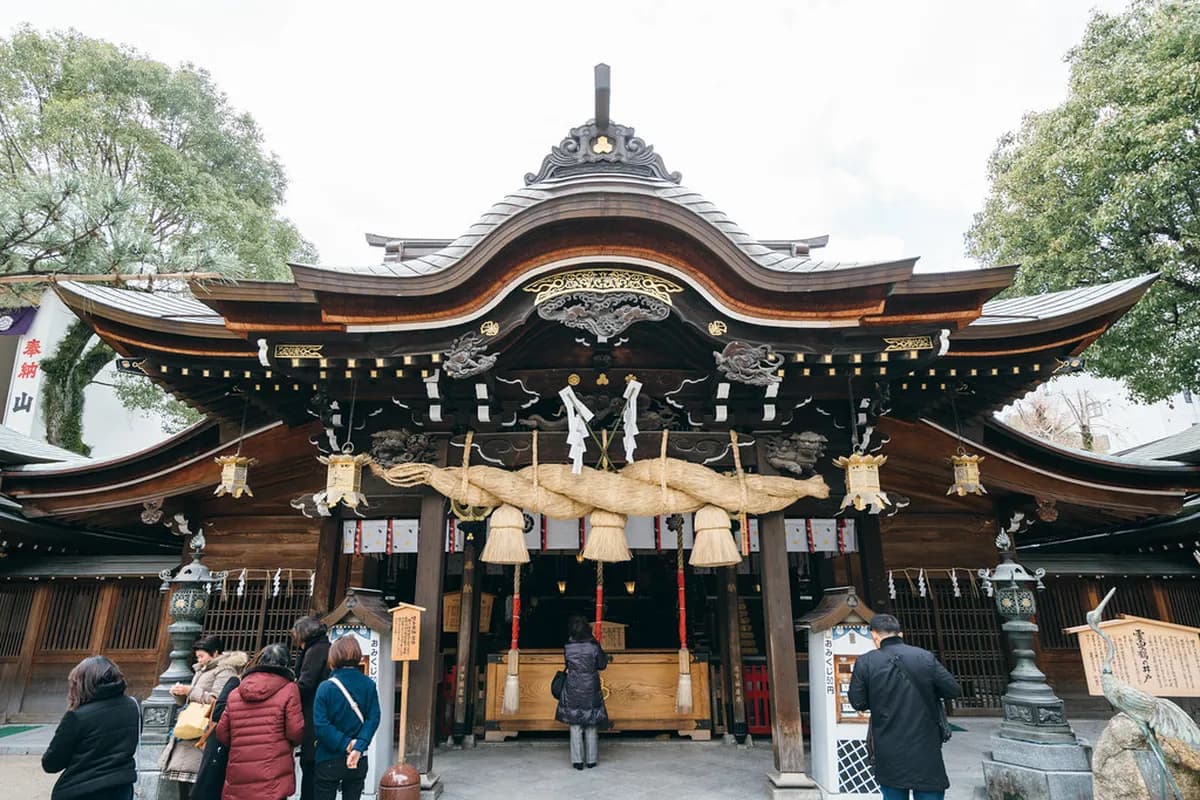
The honden, or main sanctuary, is the spiritual core of the site. It was built over the grave of Sugawara Michizane and has been rebuilt and repaired many times since the tenth century. The current structure dates largely from the Momoyama period and is designated an Important Cultural Property of Japan. For comprehensive information about shrine hours, admission fees, and current renovation timelines, visit the official shrine website.
In 2023 the shrine began its first major renovation in 124 years, erecting a temporary hall designed by architect Sou Fujimoto directly in front of the covered original. The temporary structure is the headline draw for 2026 visitors: Fujimoto planted a small living forest on the roof, with over 400 plant species including ferns, moss, and small trees cascading over a wooden lattice exterior. The renovation is scheduled to conclude in late 2026, after which the original Momoyama-era honden will be fully visible again for the first time in three years.
Whether you approach the temporary hall or the original, the prayer sequence is the same. Toss a 5 or 10 yen coin into the offertory box. Bow deeply twice. Clap your hands twice. Hold the bow while you offer your silent prayer or request. Bow once more before stepping back. Many visitors skip the clapping out of uncertainty — do not. The hand claps are how you announce your presence to the deity.
The correct prayer sequence at the main sanctuary is: toss a 5 or 10 yen coin → bow twice → clap twice → bow once more while praying. The hand claps are how you announce your presence to the deity — do not skip them.
Near the sanctuary you can purchase omamori amulets starting at around 500 yen. The most popular are the academic-success amulets (gokaku omamori), which students hang from their bags during exam season. You can also buy ema — small wooden plaques decorated on one side — to write your wish on and hang on the dedicated rack. Omikuji paper fortunes cost 100 to 200 yen; if you draw a bad fortune, tie it to the wire rack near the hall rather than take it home.
Museums, Art, and Culture in the Dazaifu District
The Kyushu National Museum sits a five-minute walk from the shrine via a curving escalator tunnel that passes under the hillside. The building's sweeping blue glass facade mirrors the surrounding cedar forest. Inside, the permanent collection traces Japan's cultural history through its exchanges with China, Korea, and Southeast Asia — a framing that distinguishes it from Tokyo's national museums. Allow at least 90 minutes and check the schedule for temporary exhibitions, which regularly draw internationally significant loans.
On the shrine grounds themselves, the Treasure House (Homotsuden) displays thousands of artifacts donated over twelve centuries: ancient swords, scrolls of Michizane's calligraphy, Heian-period court garments, and sacred offerings from samurai clans. It is quieter than the main path and gives context to why this site carries national importance beyond its role as a tourist destination.
On the Omotesando shopping street, the Starbucks designed by Kengo Kuma is worth a look even if you do not order. Over 2,000 interlocking cedar sticks form the entire interior structure, a technique that references traditional Japanese joinery. It is frequently cited as one of the most architecturally significant Starbucks locations worldwide and takes about five minutes to walk through.
Parks, Gardens, and Seasonal Outdoor Spots
The shrine's 6,000 plum trees are the reason many visitors choose February or early March as their window. The Tobiume blooms first, usually in mid-February, followed by waves of pink and white across the entire grounds. Check our seasonal bloom guide to time your visit precisely, since the peak window can shift by two weeks depending on winter temperatures.
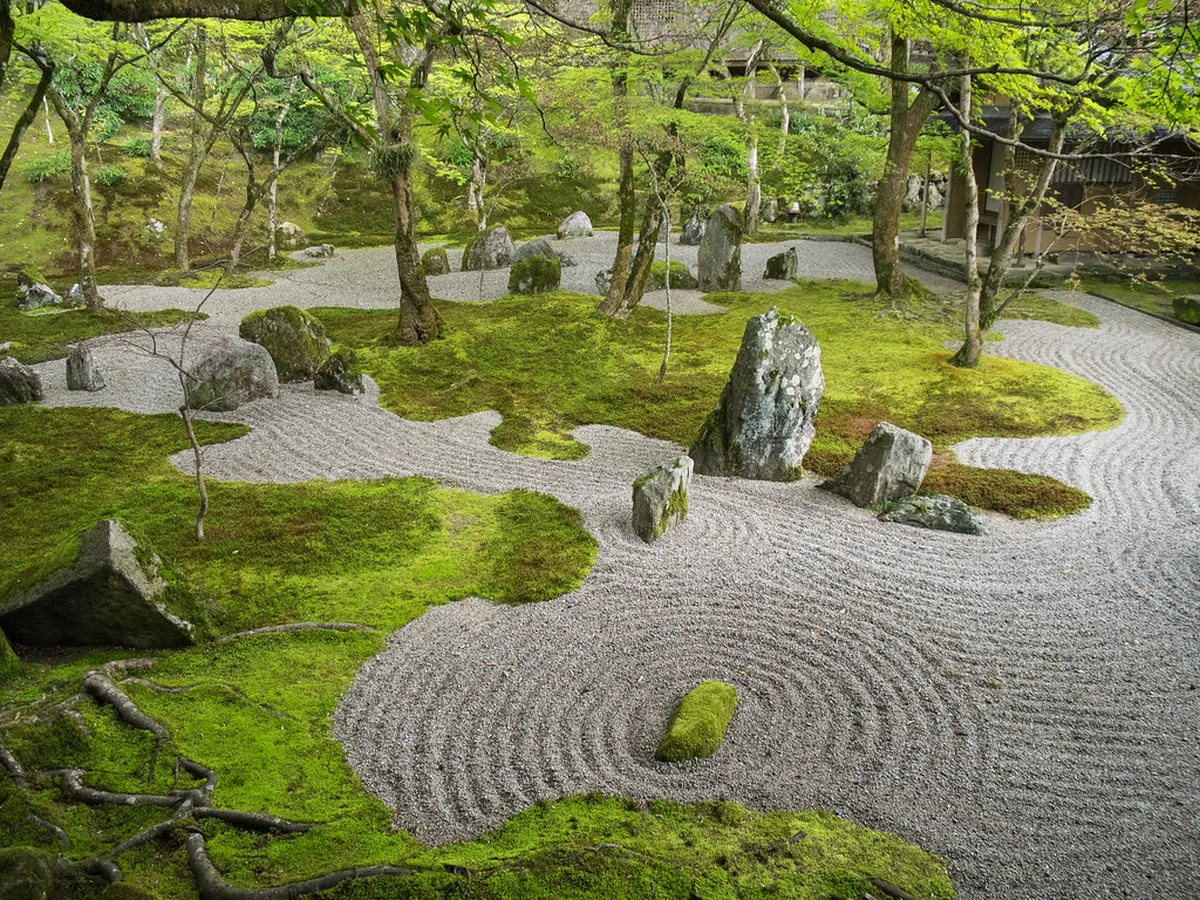
Komyozenji Temple sits just outside the main shrine entrance and offers a completely different pace. This Zen temple from the Kamakura period has a moss garden that uses green-covered stones and raked gravel to represent ocean and islands. It also hosts an ongoing art installation by British artist Ryan Gander titled "Really shiny stuff that doesn't mean anything" — a quietly surreal contrast to the ancient surroundings. Admission is 200 yen.
Behind the main grounds a forest path leads uphill to Tenkai Inari Shrine, a smaller subsidiary shrine approached through a short corridor of red torii gates. The walk takes about 15 minutes each way and passes through cedar woodland. Tenkai Inari is dedicated to business fortune and personal success; it is far less crowded than the main precinct and provides an elevated view of the surrounding hills and rooftops.
Family-Friendly and Budget-Friendly Visiting Tips
Entering the shrine grounds costs nothing, which makes Dazaifu one of the best-value half-days in Kyushu. Budget travelers can have a complete experience — bridges, ox statues, main hall, plum trees — for zero admission. The Kyushu National Museum charges 700 yen for adults and 350 yen for students; children under middle school age are free. Komyozenji Temple costs 200 yen.
Families with young children should look for the Dazaifu Yuenchi amusement park adjacent to the shrine grounds. The rides are gentle and vintage-style, suited to toddlers and primary-school children. It provides a useful break from a long day of historical sightseeing and sits close enough that parents can rotate between the park and the shrine without backtracking.
The Omotesando street leading to the shrine is lined with food stalls where most snacks cost under 300 yen. Umegae Mochi — a grilled rice cake filled with sweet red bean paste — is the flagship snack at around 130 to 180 yen per piece. Shops grill them in front of you and hand them over hot. Mentaiko onigiri at Fukutaro costs similarly, and the matcha gelato at Sawawa (recognizable by its bright green facade) is under 500 yen. A family of four can eat well along the street for under 2,500 yen total.
Read more about what to buy and eat along the approach at our Dazaifu Omotesando street guide.
How to Get to Dazaifu Tenmangu Shrine from Fukuoka
The fastest and most frequent route runs on the Nishitetsu Omuta Line from Nishitetsu Fukuoka Station in Tenjin. Express trains reach Futsukaichi Station in about 20 minutes, where you board a two-stop local branch line to Dazaifu Station. The entire journey takes roughly 30 minutes and costs 410 yen each way. Express trains run every 15 to 20 minutes throughout the day. If you happen to board a Limited Express, the transfer at Futsukaichi is signposted clearly and takes two minutes on the platform.
The direct Tabito bus departs from Hakata Bus Terminal, adjacent to Hakata Station, roughly every 30 to 40 minutes. It costs 610 yen each way and drops passengers at a stop a short walk from the Omotesando entrance. Journey time is about 40 minutes under normal traffic. This option suits travelers staying near Hakata or arriving with luggage from Fukuoka Airport (a five-minute subway ride away) who prefer to avoid a station transfer.
For most visitors the train from Tenjin is the better choice: it is cheaper, immune to road traffic, and connects to Fukuoka's main shopping and dining district for an easy evening return. The bus from Hakata makes sense if your hotel is on that side of the city and you want a single-vehicle, zero-transfer ride.
Dazaifu Tenmangu Seasonal Events and Festivals
The Onisube Fire Festival on January 7 is the shrine's most visually dramatic event. After dark, groups of men in colored robes fan enormous torches to drive evil spirits out of the grounds. A separate group physically dismantles a wooden structure amid smoke and flame. The ceremony draws large crowds; arrive by 18:00 to secure a position near the fire with a clear sightline.
In late February and early March, the Kanpasai Plum Festival celebrates the peak bloom with nightly illuminations until 21:00. The grounds are lit from below, turning the blossoms gold and pink against the dark sky. This is the busiest period of the year at Dazaifu; weekends see queues along the full length of the Omotesando. Arrive before 09:00 on weekdays for manageable crowds.
In early March the Kyokusui-no-en poetry festival takes place in the garden adjacent to the shrine. Participants wear full Heian court costume and compose waka poetry while shallow sake cups are floated past them on a winding stream — a tradition that recreates aristocratic garden parties from the ninth century. The combination of period dress and plum blossoms still in their final week of bloom makes it one of the most photographed events in Kyushu.
Autumn brings the Jinko-shiki Grand Festival, a ceremonial procession in which a portable shrine carrying Michizane's spirit is carried through the streets to traditional music. The festival typically falls in September and marks the anniversary of the deity's enshrinement. Cherry blossoms in late March to early April attract a second seasonal surge, though the plum blossom period remains the most celebrated.
Suggested Itineraries for Every Traveler
A two-hour express visit covers the essentials without rushing. Walk the Taiko-bashi bridges, locate the kirin statue, rub the largest ox, and spend ten minutes at the main sanctuary following the prayer sequence. Buy an omikuji fortune and pick up Umegae Mochi on your way back to the station. You will have seen the key sacred objects and tasted the signature food.
A half-day visit of four to five hours adds the Treasure House, Komyozenji Temple, and the forest hike to Tenkai Inari Shrine. Allow 30 minutes for the Treasure House, 20 minutes for the temple garden, and 45 minutes for the round-trip hike. End at Sawawa for matcha gelato before catching a late-afternoon train back to Fukuoka. This pace suits most first-time visitors.
A full day requires an early start. Arrive by 09:00 to walk the grounds before tour groups arrive. Spend the morning at the shrine and Komyozenji. After lunch at Sakadoya (tri-color plum soba on a tatami mat facing the garden), devote the afternoon to the Kyushu National Museum and then make the bus trip to Kamado Shrine at the foot of Mt. Homan.
Sub-temples and tea houses within the grounds typically close by 15:30–16:00, even when the main outer grounds remain open until later. If you want tea at Butsunichi-an or to visit the Treasure House, arrive before 14:00.
Where to Stay in Fukuoka for Easy Dazaifu Access
Tenjin is the most convenient base for visiting Dazaifu by train. The Nishitetsu Fukuoka Station entrance is a five-minute walk from most Tenjin hotels. After returning from the shrine you are already inside Fukuoka's main shopping and dining district, which makes evening plans straightforward. Explore regional accommodation and activity options on Japan National Tourism's travel guides for more inspiration. Tenjin suits travelers who prioritize flexibility over proximity to the Shinkansen.
Hakata Station is the better base if you are connecting to other Kyushu destinations by Shinkansen or planning multiple day trips by bus. The subway from Hakata to Tenjin takes four minutes, so the train route to Dazaifu remains accessible. For direct Tabito bus access, Hakata is the clear choice. We recommend the Nikko Hotel Fukuoka, which sits within a ten-minute walk of the Hakata Bus Terminal and offers a high-end stay without the premium pricing of airport-adjacent properties.
Frequently Asked Questions
Is the Dazaifu Tenmangu main hall currently under renovation?
Yes, the main hall is undergoing a major renovation until 2026. Visitors can currently view a unique temporary hall featuring a lush forest roof designed by Sou Fujimoto. This temporary structure provides a rare architectural experience for those visiting during the three-year project.
How do I get from Hakata Station to Dazaifu Tenmangu Shrine?
The easiest way is to take the direct Tabito bus from the Hakata Bus Terminal. The journey takes about 40 minutes and costs 610 yen. Alternatively, take the subway to Tenjin and transfer to the Nishitetsu line. Check our transport guide for more details.
What is the best time to see plum blossoms at Dazaifu Tenmangu?
The best time is usually from mid-February to early March. Over 6,000 plum trees bloom in various shades of pink and white. The Flying Plum tree is typically the first to bloom each season. Timing your visit for this window offers the most iconic scenery.
What should I eat at the Dazaifu Tenmangu shopping street?
You must try Umegae Mochi, a grilled rice cake filled with sweet red bean paste. Many shops also offer mentaiko onigiri and various matcha-flavored sweets. These treats are affordable and represent the local flavors of the Fukuoka region. Freshly grilled mochi is the most popular choice.
How much time is needed for a Dazaifu day trip?
Most visitors find that 4 to 6 hours is sufficient for a complete visit. This allows time for the shrine, the shopping street, and the Kyushu National Museum. If you plan to hike to Tenkai Inari, allow for an extra hour. A full day ensures a more relaxed pace. Explore more at our travel blog for planning.
Dazaifu Tenmangu Shrine rewards visitors who slow down. The bronze kirin beside the temizuya, the correct prayer sequence at the honden, the eleven ox statues, the Tobiume flowering ahead of every other plum tree — these details are easy to walk past but give the place its meaning. Whether you have two hours or a full day, the shrine itself is the reason to come. Everything else in Dazaifu — the museums, the gardens, the Kengo Kuma coffee shop — exists in its orbit.
Free: The Fukuoka Essentials guide
Top things to do, where to stay, a perfect day plan, getting around, and the best time to go — a Fukuoka mini-guide you can take offline.
You might also like

Continue reading
More guides you'll find useful