Fukuoka to Yufuin: 8 Essential Travel Tips and Transport Options
Discover the best ways to travel from Fukuoka to Yufuin. Compare the Yufuin no Mori train, highway buses, and driving routes with expert tips on booking.
On this page
Getting from Fukuoka to Yufuin takes under two and a half hours by the best routes, but the options vary enough that choosing the wrong one can cost you a wasted morning or a missed reservation. Most travelers depart from Hakata Station, the main JR hub in Fukuoka, though the highway bus is also accessible directly from Fukuoka Airport. If you are planning a The Perfect 2-Day Yufuin Itinerary: 10 Essential Stops, locking in your transport first is the smartest move — popular train seats sell out a month in advance.
This guide covers every realistic route for 2026: the iconic Yufuin no Mori limited express, the highway bus from Hakata and the airport, driving via the Oita Expressway, and the slower local rail options for pass holders on a budget. It also covers the details competitors skip — the luggage delivery service at Yufuin Station, the booking trick for JR Pass holders, and which alternative train to take if the Yufuin no Mori is sold out.
Transport Overview: Fukuoka to Yufuin
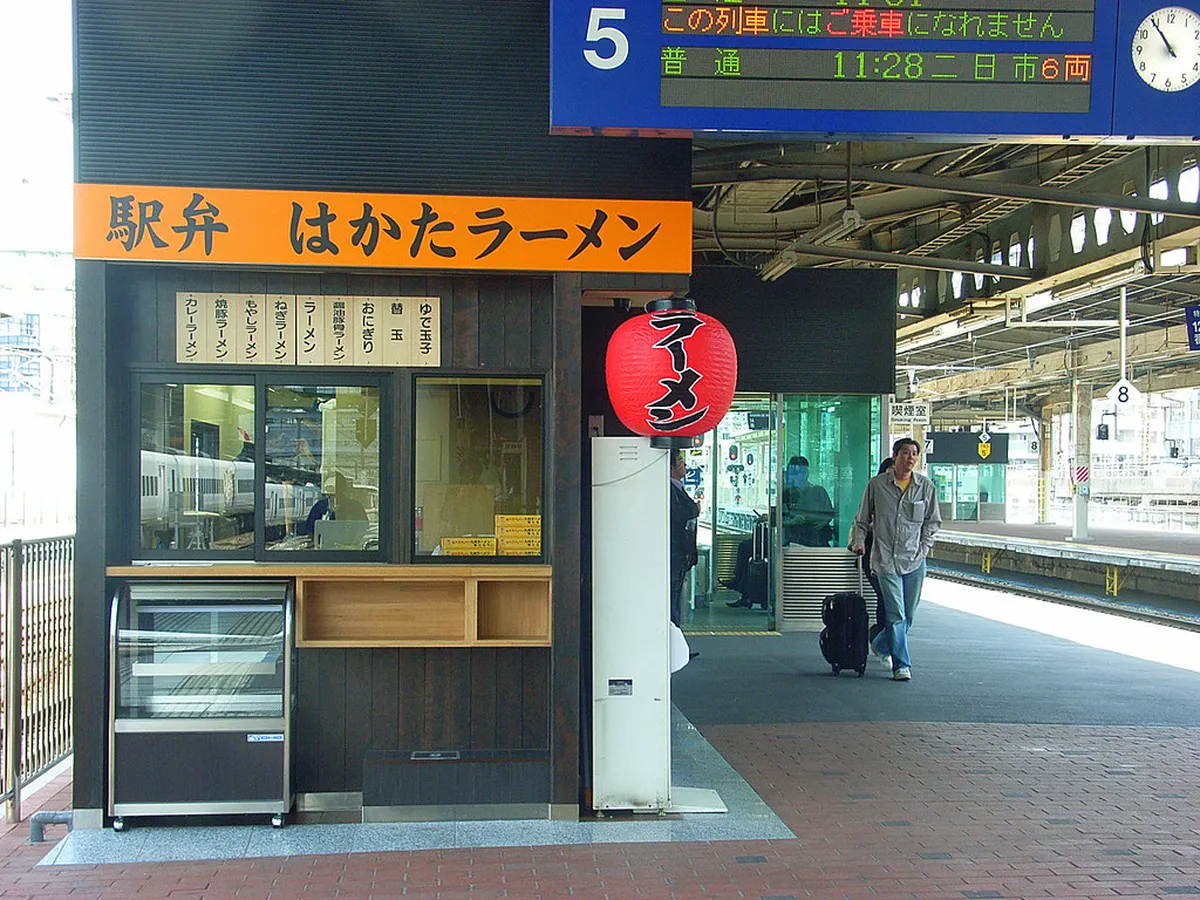
Four main options connect Fukuoka to Yufuin, each with a different balance of cost, scenery, and flexibility. The Yufuin no Mori limited express is the most popular and most scenic, but it leaves Hakata at most three times a day and sells out weeks in advance. The Yufuin-go highway bus is cheaper, runs 14 times a day, and picks up directly at Fukuoka Airport's international terminal — making it the more practical choice for most itineraries.
Driving gives you the most freedom, especially if you want to stop at rural viewpoints or visit Yufuin with family and heavy bags. Local JR trains via Kurume cost ¥3,300 in fare alone — about the same as the bus — and involve transfers and a much longer journey — only worth it if you already hold a JR pass and have a flexible schedule.
| Option | Mode | Duration | Cost (one-way) | Book ahead? |
|---|---|---|---|---|
| Yufuin no Mori (from Hakata 9:17, 10:11, 14:38) | JR limited express, all seats reserved | About 2 h 12 min – 2 h 21 min | ¥6,130 (fare ¥3,300 + reserved limited express fee ¥2,830, regular season) | Yes — seats go on sale at 10:00 one month before |
| Yufu (from Hakata 7:43, 12:14, 18:30) | JR limited express | About 2 h 20 min | ¥5,630 with a reserved seat (fare ¥3,300 + ¥2,330, regular season) | Yes — same one-month window |
| Highway bus "Yufuin-go" (Nishitetsu, Hita Bus, Kamenoi Bus) | Bus, 14 round trips a day | About 2 h 10 min from Hakata Bus Terminal; 1 h 50 min from Fukuoka Airport International Terminal | ¥3,250 (Web early-booking fare ¥2,880 on some buses) | Required — all seats reserved; booking opens 8:00 on the same date one month before |
| Rental car (Oita Expressway) | Car | Varies with traffic | Rental fee + expressway tolls (check with your rental company) | Reserve the car |
| Local JR trains via Kurume | Train (transfers) | Much longer than the limited express | ¥3,300 fare | No |
Verified against JR Kyushu Yufuin no Mori, the JR Kyushu Hakata timetable, the JR Kyushu fare guidebook, JR-KYUSHU Train Reservation and Nishitetsu Yufuin-go. Train times are for the timetable from March 14, 2026; on some dates only the 9:17 and 14:38 Yufuin no Mori run. Rental car costs and local-train times were not verified.
JR Kyushu Rail Pass holders should note that the Yufuin no Mori is covered by the pass; reserving at a JR Kyushu ticket office or seat-reservation machine in Kyushu is free within the pass limit, but advance reservations through JR KYUSHU RAIL PASS Online Booking cost ¥1,500 for Design & Story trains such as the Yufuin no Mori (¥1,000 for the Yufu). The highway bus is not covered by any JR pass and must be paid separately. For those comparing the JR Kyushu Rail Pass against the All-Japan Pass, the Kyushu-only version is usually the better value if your trip is limited to the island.
The Yufuin no Mori Limited Express Experience
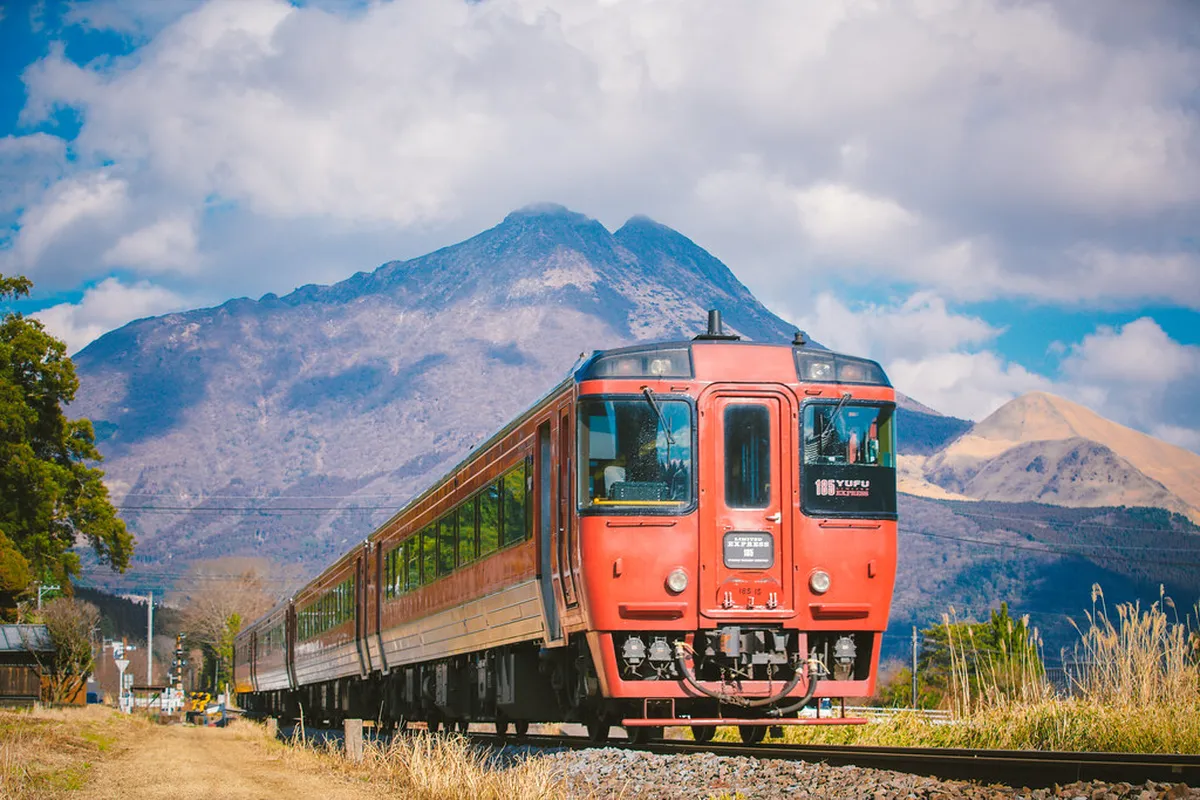
The Yufuin no Mori is not just a train — it is one of JR Kyushu's most distinctive tourist products. The interior is lined with polished dark wood paneling, the seats are wide and face large panoramic windows, and a lounge car at the front is open to all ticket holders. The journey passes through cedar forests, river valleys, and terraced farmland before the twin peaks of Mount Yufu come into view as you approach Yufuin. It is the kind of ride that justifies the price on its own.
Trains depart Hakata at 09:17, 10:11 and 14:38, reaching Yufuin at 11:31, 12:32 and 16:50 (timetable from March 14, 2026; on some dates only the 09:17 and 14:38 run — check the JR Kyushu Official Site operation calendar). Seats go on sale at 10:00 one month before the departure date. On weekends and during autumn foliage season (mid-October to mid-November), they sell out within hours of the window opening. Setting a calendar reminder is not optional — it is how you actually get a seat.
To book, visit the JR Kyushu online reservation system or visit any JR ticket counter in Japan. If you hold a JR Kyushu Rail Pass, seat reservations are free at JR ticket offices in Kyushu, while advance online reservations cost ¥1,500 for this train. You can request a seat in Car 1 (the lounge-adjacent forward car) or Car 5 (the rear panoramic car) for the best views — both are worth specifying when the seat map loads.
One detail almost every guide skips: you can pre-order a bento box through the JR Kyushu online service, but orders must be placed at least two days before departure. The most popular option is a local mushroom rice bento for around ¥1,500. Onboard supply is limited and often sells out before the train leaves Hakata, so pre-ordering is the reliable move. Snacks and drinks are also sold in the lounge car throughout the journey.
The Yufu Limited Express: What to Take When the Mori Is Sold Out
If the Yufuin no Mori is fully booked — which happens regularly on autumn weekends — there is a practical alternative that almost no travel guide explains: the Yufu limited express. The Yufu runs on the same JR Kyushu line between Hakata and Yufuin, costs ¥5,630 one-way with a reserved seat (¥500 less than the Mori, which adds a Design & Story surcharge; both are covered by JR passes), and takes about 2 hours 20 minutes. The key difference is that the Yufu is a standard JR express with conventional reclining seats and no lounge car. It is comfortable but not scenic in the same way.
The Yufu adds three more departures from Hakata (07:43, 12:14 and 18:30), but JR Kyushu currently warns that both the Yufuin no Mori and the Yufu are fully booked day after day, so book it as early as the Mori. JR Kyushu suggests the route via Kokura and Oita as an alternative when both are full. The Yufu is a genuine limited express with reserved seating, not a slow local service.
Unreserved JR Kyushu local trains also connect Fukuoka to Yufuin via transfers, but the journey takes far longer than the limited express and is only practical for pass holders who have a full day to spare. Most travelers should treat the Yufu as the fallback, not the slow local trains.
Direct Highway Bus from Hakata and Fukuoka Airport
The Nishitetsu Highway Bus "Yufuin-go" (run jointly by Nishitetsu, Hita Bus and Kamenoi Bus) is the most flexible way to reach Yufuin and the best option if you are flying into Fukuoka. Buses depart from the Hakata Bus Terminal (a separate building from Hakata Station — walk north from the main JR exit, cross the road, and look for the multi-story terminal on your left) and from the Fukuoka Airport International Terminal. The journey costs ¥3,250 (~$21) one-way and takes about 2 hours 10 minutes from Hakata; there are 14 buses a day, and the last one leaves Hakata Bus Terminal at 16:48 (timetable revised April 1, 2025).
All seats are reserved and a reservation is required; bookings open at 8:00 on the same date one month before travel. Booking early matters most during peak seasons — autumn, Golden Week, and cherry blossom season in late March. The Nishitetsu portal accepts international credit cards and sends a QR code by email. You can also pay cash at the terminal on the day, but popular morning departures fill up fast. Seats are assigned, so early bookings get the better window positions.
If you are arriving at Oita Airport instead of Fukuoka, the Oita Kotsu airport bus runs directly to Yufuin in around 55 minutes for ¥2,000 (~$14). Oita Airport has fewer international connections than Fukuoka, but if your routing puts you there, this bus is the simplest and cheapest transfer in the region. The bus stops directly at the Yufuin Bus Terminal, a short walk from Yufuin Station and most ryokans in Yufuin.
Driving from Fukuoka: Rental Car Tips and Routes
Driving gives you the freedom to stop at places no bus or train visits — the Yabakei gorge, roadside michi-no-eki rest stops selling local produce, or rural viewpoints with Mount Yufu framed against rice paddies. The fastest route follows the Oita Expressway from central Fukuoka or Hakata, covering the roughly 130 km in about 100 minutes in clear conditions. Expressway tolls total approximately ¥3,500 (~$23) each way, so factor that into the cost comparison.
Request an ETC card from the rental agency when you pick up the car — it lets you pass through toll gates without stopping for cash and is accepted at every expressway gate in Kyushu. Rental cars are available near Hakata Station (Ekimae area) and at both Fukuoka Airport terminals for around ¥8,000 (~$53) per day for a compact car. During winter months (December to February), confirm that your rental includes snow tires, as the mountain roads approaching Yufuin can ice over overnight.
Parking in Yufuin near Yunotsubo Street can be tight during busy weekends. Most ryokans offer free guest parking — confirm when booking. Public lots near the station charge around ¥500 per few hours. If you plan to explore Beppu on the same trip, the drive between Yufuin and Beppu takes only 40 minutes via Route 210, making a rental car the most practical option for an onsen-hopping loop through Oita Prefecture.
Expressway tolls add around ¥3,500 (~$23) each way on top of the daily rental fee. Request an ETC card from the agency at pick-up so toll gates pass automatically without fumbling for cash.
Alternative Rail Routes via Oita or Kurume
If you are approaching Yufuin from Beppu or Oita City rather than Fukuoka, the JR Kyushu Hohi Line connects Oita Station to Yufuin in around 60–90 minutes depending on whether you take an express or local service. The fare from Oita runs between ¥2,300 and ¥3,400. The Beppu-to-Yufuin journey is even simpler: Kamenoi Bus route 36 departs from Beppu Station West Exit and arrives in Yufuin in under 55 minutes for ¥1,100 (~$7) — cheaper and faster than any train on that leg.
From Fukuoka, the indirect local rail route follows the Kagoshima Main Line to Kurume, then the Kyudai Main Line to Yufuin. The total journey involves at least one transfer and takes far longer than the limited express. The fare is ¥3,300 (~$22), about the same as the highway bus, and it is entirely covered by the JR Kyushu Rail Pass and the wider All-Japan JR Pass. For a traveler with a flexible schedule and a valid pass already in hand, it is a reasonable choice. For anyone with a fixed check-in time at a ryokan, the unpredictability of local train connections makes it a poor primary plan.
Must-Visit Attractions in Yufuin Onsen Town
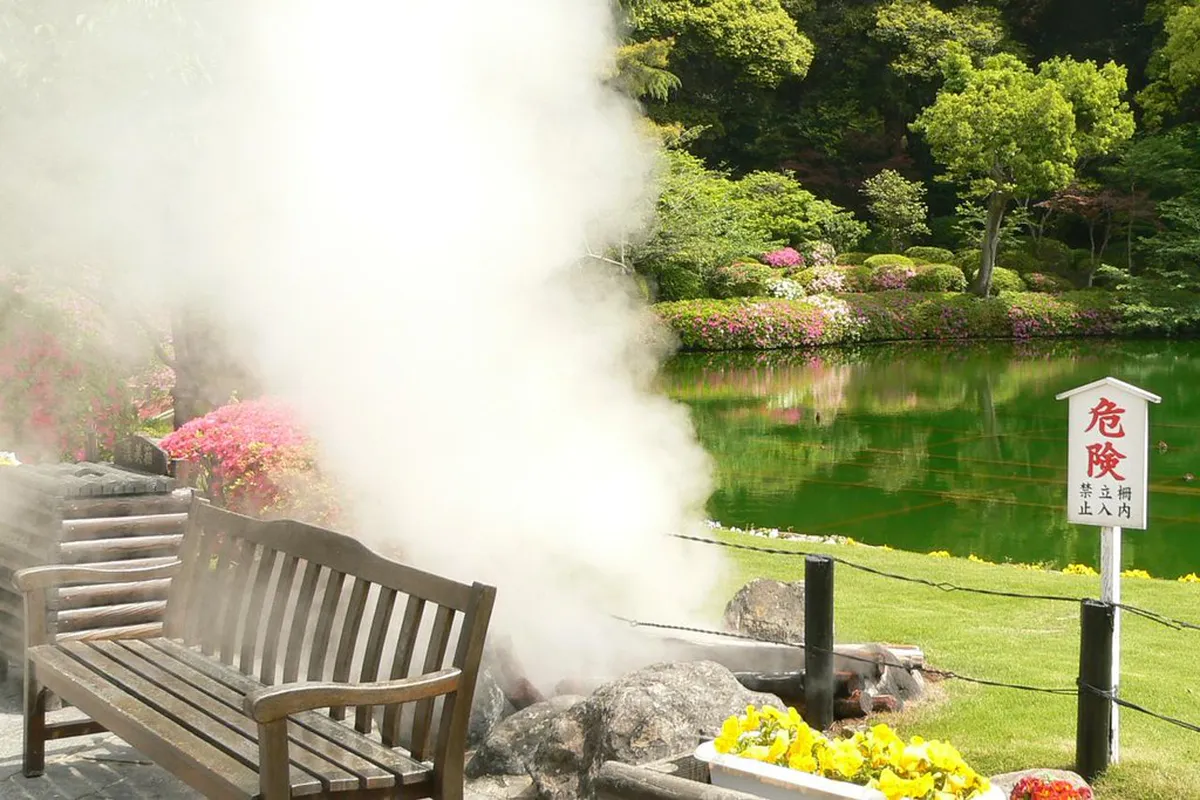
Once you arrive at Yufuin Station, the town's main attractions are all walkable within 20 minutes. Yunotsubo Street (湯の坪街道) is the central spine — about 1.2 km of boutique shops, food stalls, and cafes that leads directly to Lake Kinrin at its far end. Try the Yufuin Food Guide: 10 Best Places to Eat for what to eat along the way. The Donguri no Mori Ghibli merchandise shop sits near the top of the street and is genuinely one of the best-stocked in Japan outside of Tokyo.
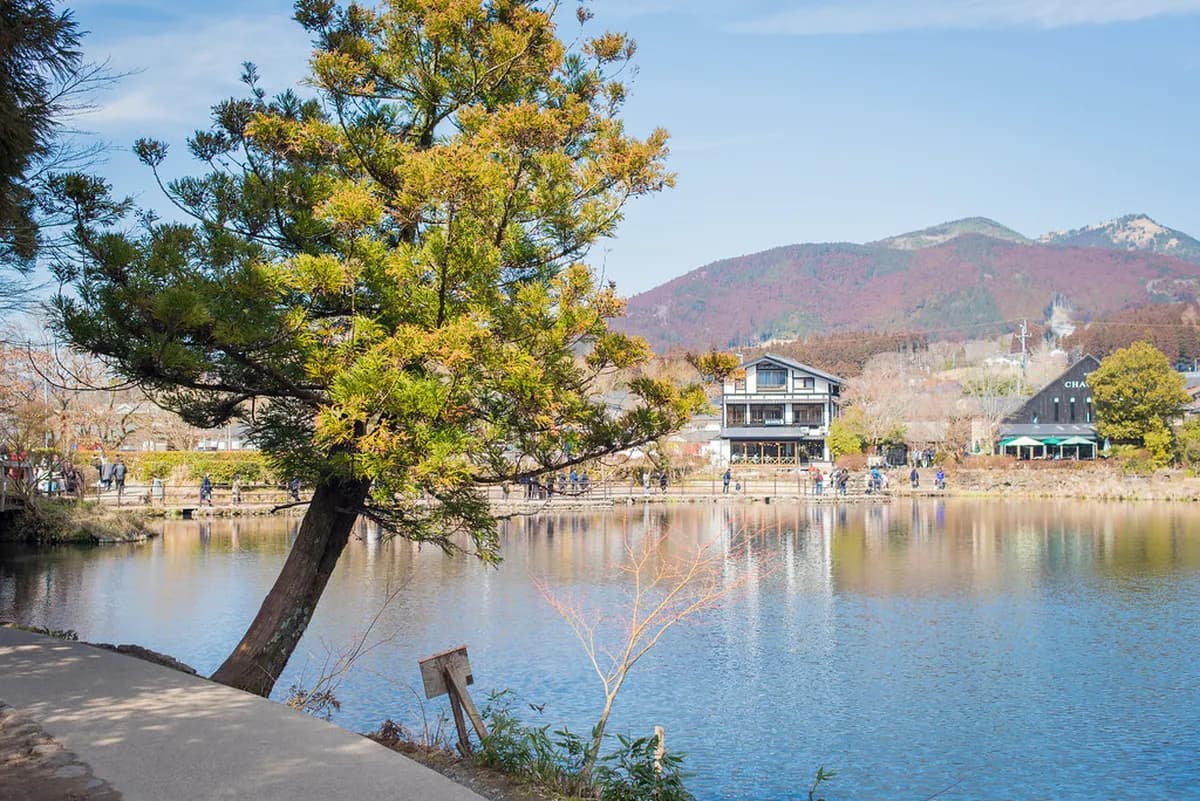
Lake Kinrin (金鱗湖) is Yufuin's signature sight. The lake sits at 580 metres above sea level and is fed by hot spring water from the surrounding hillside, which creates a low mist over the surface on cool mornings. A walking path circles the lake in about 20 minutes and passes Tenso Shrine, a small torii gate at the water's edge, and several benches with unobstructed views of Mount Yufu. Arrive before 09:00 on a clear morning to see the mist at its thickest.
Yufuin Floral Village is a 10-minute walk north of Yunotsubo Street — a small English Cotswolds-style complex with an owl forest, cat cafe, and an additional Ghibli shop. It is more touristy than Lake Kinrin but worth 30 minutes if you have the time. The free footbath (ashiyu) directly in front of Yufuin Station lets you soak tired feet immediately on arrival — it is open daily and costs nothing, which makes it one of the most genuinely useful amenities at any rural Japanese train station.
Before leaving Fukuoka, a detour to Nanzoin Temple (南蔵院) in Sasaguri is worth the 20-minute train ride from Hakata. The temple houses the world's largest bronze reclining Buddha at 41 metres long and 11 metres tall. Hakata Station has coin lockers in multiple sizes (from ¥300 to ¥700 per day) where you can store your main bags before the temple visit, then collect them on your way back for the Yufuin journey.
Where to Stay: Top Ryokan with Private Onsen
Yufuin has more private-onsen ryokans per square kilometre than almost anywhere else in Japan. The town deliberately developed this model in the 1980s to distinguish itself from the more industrial onsen scene in Beppu, and the result is that even mid-range ryokans here typically include private open-air baths (rotenburo) attached to individual rooms. Most rates include dinner (kaiseki, a multi-course seasonal meal) and breakfast, making the per-night cost look higher than it is relative to booking separately.
Budget-conscious travelers should look at Ryokan Yuri (2968-10 Yufuincho Kawakami), a family-run guesthouse close to the station with clean tatami rooms and mountain views from the dining area. It is unpretentious and warm — a genuine family operation rather than a hotel with a traditional aesthetic applied on top. Ryokan Yawaragi-no-Sato Yadoya (2717-5 Yufuincho Kawakami) sits mid-range, within walking distance of both Yunotsubo Street and Lake Kinrin, and offers both Western-style and tatami rooms with private onsen access.
For a higher-end stay, Ikkoten (302-7 Yufuincho Kawakami) provides private villa rooms with individual open-air baths set in forested grounds — expect to pay well above average but receive full kaiseki dining in a private room. It sits a long way from the town centre, which suits guests who want complete quiet but frustrates those hoping to walk Yunotsubo Street after dinner. Whichever ryokan you choose, book at least two months ahead for autumn and Golden Week visits — Yufuin's accommodation fills faster than its trains.
Essential Planning Tips for Your Yufuin Trip
The single most useful service at Yufuin Station for visitors arriving by train or bus is the "Hands-Free" luggage delivery (takuhaibin). For around ¥600 (~$4) per bag, your luggage is collected at the station and delivered directly to your ryokan within a few hours. This means you can walk Yunotsubo Street and visit Lake Kinrin immediately on arrival without dragging a rolling suitcase over the gravel paths. Most ryokans accept deliveries from 14:00 onward, which aligns well with standard check-in times. Ask at the tourist information counter just inside the station exit — staff speak enough English to complete the paperwork.
Timing your visit matters more in Yufuin than in many Japanese destinations. Late October to mid-November is the most popular period for autumn foliage, with the mountain slopes above town turning deep red and gold. It is also when accommodation and transport are at their most crowded and expensive. Spring (late March to early April) is quieter and still beautiful. Avoid the typhoon season (July to October) if you are sensitive to rain — Yufuin sits in a basin that channels heavy rainfall from the surrounding mountains.
Carry some cash. Most ryokans accept credit cards for the main room charge, but small shops on Yunotsubo Street, the station footbath area vendors, and the Nanzoin Temple taxi drivers are cash-only. A ¥10,000 note changed at any convenience store ATM (7-Eleven, Lawson, and FamilyMart all accept foreign cards) covers most incidental spending for a two-day visit. The Hakata Station lockers mentioned above are also a smart pre-departure move if you plan to visit Nanzoin before catching your train — sizes go from small (¥300) to large enough for a full-size backpack (¥700), and payment is by IC card or coin.
- What to pack for Yufuin
- A small towel for the station footbath and any public onsen — most ryokans provide towels for their own facilities.
- Comfortable walking shoes with grip for the gravel paths around Lake Kinrin.
- A light jacket even in summer — Yufuin sits at altitude and evenings drop noticeably below the Fukuoka coastal temperature.
- Your physical JR pass if you have one, and a screenshot of your seat reservation QR code as a backup.
- Yen cash for small shops and taxis — aim for at least ¥5,000 in smaller bills.
Frequently Asked Questions
Is the Yufuin no Mori train worth the extra cost?
The Yufuin no Mori train is absolutely worth the extra cost for the panoramic windows and exclusive snacks. You get a much more relaxing experience compared to the standard highway bus or local trains. Most travelers find the forest views and onboard bento boxes make the journey a highlight of their Kyushu trip.
How far in advance should I book the bus from Fukuoka to Yufuin?
You should book your bus ticket at least two weeks in advance during peak travel seasons. Popular times like autumn or cherry blossom season see tickets sell out very quickly. Use the online portal to secure your seat and avoid waiting at the busy terminal for the next available bus.
Can I use a JR Pass on the Yufuin no Mori?
Yes, you can use a JR Pass on the Yufuin no Mori train without paying the full fare. However, you must pay a small reservation fee if you book your seat through the online system. Check our How To Get To Yufuin Travel Guide guide for more details on pass usage.
Traveling from Fukuoka to Yufuin in 2026 is well within reach for any itinerary. The Yufuin no Mori is the headline option, but the highway bus, the Yufu limited express, and even a rental car roadtrip each have their place depending on your timing and flexibility. Book your transport and ryokan together as early as possible — the two are linked, and getting one without the other locked in leaves your trip exposed during peak season.
Enjoy the mountain air, the gravel paths around Lake Kinrin, and the steam rising off the hot springs as you arrive. Yufuin rewards the planning you put in before you get there.
Free: The Fukuoka Essentials guide
Top things to do, where to stay, a perfect day plan, getting around, and the best time to go — a Fukuoka mini-guide you can take offline.
You might also like


Continue reading
More guides you'll find useful