How To Get To Yufuin Travel Guide
Plan how to get to yufuin with top picks, neighborhood context, timing tips, and practical booking advice for a smoother trip.
On this page
Yufuin is a charming hot spring town nestled beneath the twin peaks of Mount Yufu in Oita Prefecture, Kyushu. Its quiet lanes, ryokan-lined streets, and morning mist over Lake Kinrin make it one of Japan's most beloved countryside escapes.
Getting there is half the experience. Whether you are arriving from Fukuoka, Beppu, or Oita Airport, there are well-connected train, bus, and car options to choose from. This guide breaks down every major route with real prices and journey times so you can plan without guessing.
From Hakata to Yufuin Onsen
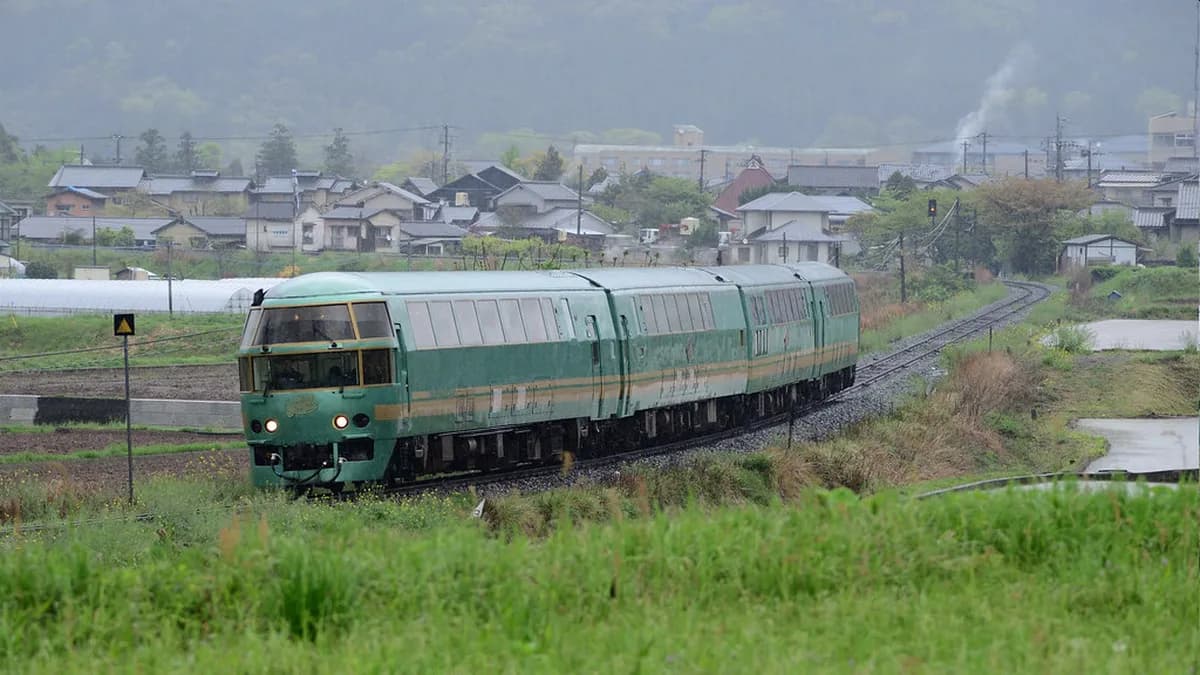
Hakata Station in Fukuoka is the most common starting point for visitors arriving by international flight or Shinkansen from other Japanese cities. The signature option is the Yufuin no Mori Limited Express, a sleek dark-green train with wooden interiors and panoramic windows designed specifically for this scenic run. The journey takes about 2 hours 15 minutes and costs around ¥4,130 for the base fare plus a limited express surcharge (covered by the JR Kyushu Rail Pass).
There is one critical detail almost no guide mentions: the Yufuin no Mori only runs three times per day from Hakata, and it has no unreserved seating. During Golden Week (late April to early May), autumn foliage season (October to November), and summer weekends, seats sell out four to six weeks in advance. If you find it fully booked, reserve a seat anyway and add yourself to the waiting list at the JR ticket counter — cancellations do open up. You can also book through the official JR Kyushu online reservation system with a credit card.
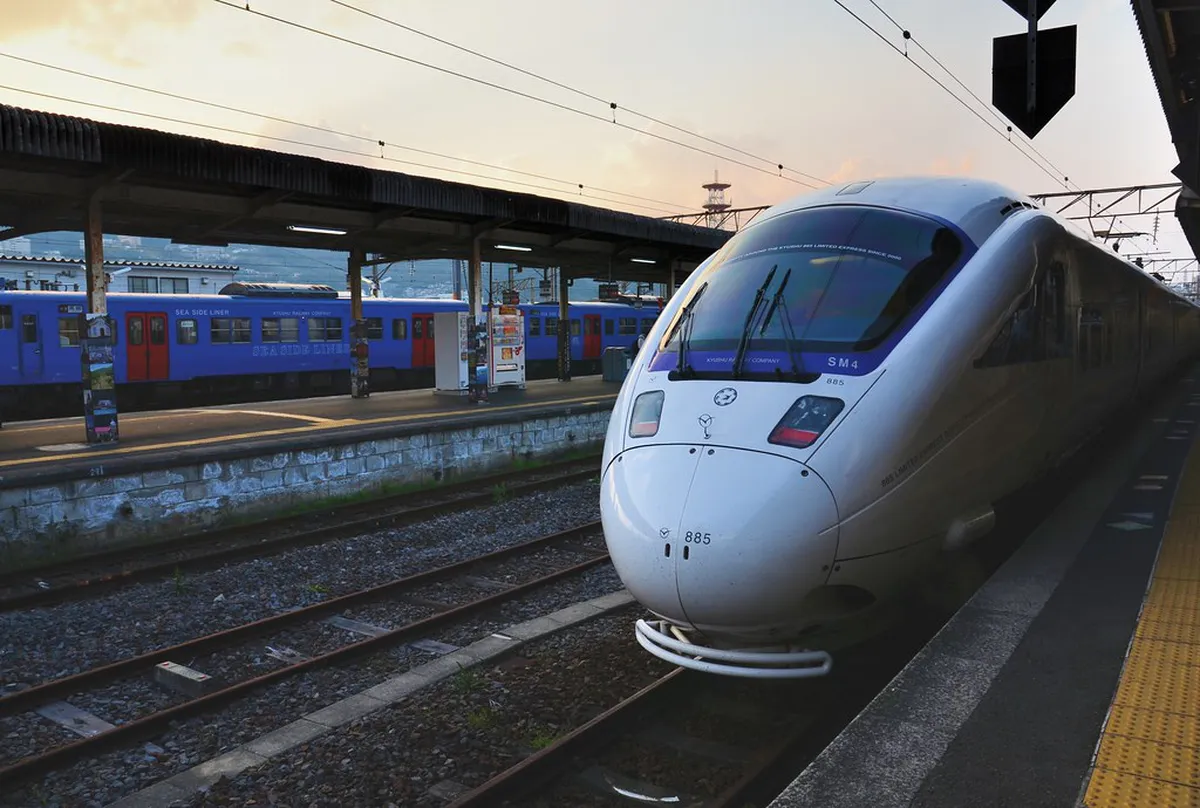
If all Yufuin no Mori seats are gone, the highway bus from Hakata Bus Terminal (next to Hakata Station) is a solid fallback. It runs roughly every hour, costs about ¥3,250 one way, and takes 2 hours 40 minutes. It drops you close to Yufuin Station. You can also book a curated day trip via Beppu Onsen and Yufuin Spa Town One Day Private Trip from Fukuoka if you want both towns covered in a single day without the ticketing hassle.
The nationwide JR Pass and the JR Kyushu Rail Pass both cover the Yufuin no Mori fare. A seat reservation is still required — make it at any JR ticket office or online the moment your pass is confirmed. The JR Sanyo-San'in-Northern Kyushu Area Pass also covers this route.
From Beppu and Oita to Yufuin
Beppu is only about 25 km from Yufuin, making the two towns natural companions on a Kyushu itinerary. The quickest option is Bus 36, which departs from Beppu Station and arrives at Yufuin in under 55 minutes for just ¥1,100. This is both cheaper and faster than going by train, which requires a change at Oita Station and takes 60 to 90 minutes depending on whether you catch a local or express service (fare approximately ¥2,300 to ¥3,400).
Traveling from Oita city itself follows the same train route via the Kyudai Main Line. Local trains run regularly and cost around ¥1,140 for the roughly 70-minute ride. The scenery along this stretch — narrow river valleys, cedar forests, and small farming villages — is genuinely beautiful even on a local train. If your budget is tight, this is the most affordable rail option to Yufuin from anywhere in the region.
The Beppu-to-Yufuin bus is also popular among travelers doing a loop: arrive in Beppu by Shinkansen from Osaka or Hiroshima, spend a morning in the hells, then take Bus 36 to Yufuin for an overnight ryokan stay. Follow our The Perfect 2-Day Yufuin Itinerary: 10 Essential Stops for how to structure that kind of multi-day trip.
From Oita Airport to Yufuin
Oita Airport is overlooked by most guides because it receives fewer international flights than Fukuoka. But if you are flying domestically from Tokyo (Haneda or羽田), Osaka (Itami), or Nagoya, landing at Oita is actually the fastest way to reach Yufuin. A limousine bus from Oita Airport runs directly to Yufuin Station in about 55 minutes and costs ¥1,500. Buses depart several times daily and are timed to meet incoming flights.
This compares very favorably with the Fukuoka Airport route, which adds at least 30 minutes of city transit before you even board the Yufuin no Mori. If your airline offers competitive fares into Oita — JAL and ANA both operate regular Haneda-to-Oita services — it is worth comparing the total door-to-door travel time before defaulting to Fukuoka.
Travelers renting a car will find Oita Airport equally convenient as a pickup point. The expressway from the airport to Yufuin takes under 50 minutes in normal traffic. You can compare rental options through DiscoverCars, which aggregates Japanese rental companies including Toyota Rent-a-Car and Nippon Rentacar.
Driving to Yufuin
A road trip through Kyushu is one of the most rewarding ways to travel this island. Driving from Fukuoka takes about 1 hour 30 minutes via the Oita Expressway, and the final approach through the Yufuin Basin — with Mount Yufu framed directly ahead — is genuinely cinematic. You will pass rice paddies, onsen steam rising from roadside fields, and small farm stands selling local vegetables.
Parking in the town center is manageable outside peak season. There is a large municipal car park near the station that costs around ¥300 per hour. On holiday weekends in autumn, the approach roads can back up significantly, and the town operates traffic controls — arriving before 09:00 or after 15:00 on those days saves considerable time. Petrol stations are available along the expressway and at the edge of town.
What to Do First When You Arrive
Most visitors arrive at Yufuin Station, a low wooden building designed by architect Arata Isozaki that already feels like the town is welcoming you. Before heading into the streets, stop at the footbath on Platform 1. It costs ¥160, takes about five minutes, and is genuinely soothing after a long train ride. Coin lockers are available inside the station building (¥300 to ¥500) so you can explore hands-free before checking into your ryokan.
The main tourist artery is Yunotsubo Kaido, a pedestrian street that runs about 1.2 km from the station toward Lake Kinrin. Along the way you will find the official Studio Ghibli merchandise shop (Donguri no Mori), B-Speak's famous roll cake, handmade craft shops, local snack stalls, and the entrance to the Yufuin Floral Village. The entire walk to the lake and back takes about two hours at a relaxed pace.
One thing all five top SERP competitors miss: if you booked the Yufuin no Mori, you can pre-order a bento box for the train through the official JR Kyushu reservation system. The ekiben (station bento) served on board features Oita-sourced ingredients and is far better than anything you will find in a convenience store before boarding. Reserve it when you book your seat — it sells out almost as fast as the seat reservations.
The Yufuin no Mori bento reservation closes 48 hours before departure. If you miss the window, pick up an ekiben at Hakata Station's platform shops before boarding — they stock decent Kyushu-themed options until around 11:00.
Things to Do in Yufuin
Once you are settled, follow a well-planned The Perfect 2-Day Yufuin Itinerary: 10 Essential Stops to make the most of your time. The town is compact enough to cover on foot, but the highlights cluster into two main areas: the Yunotsubo shopping street and the quieter lakeside paths beyond it.
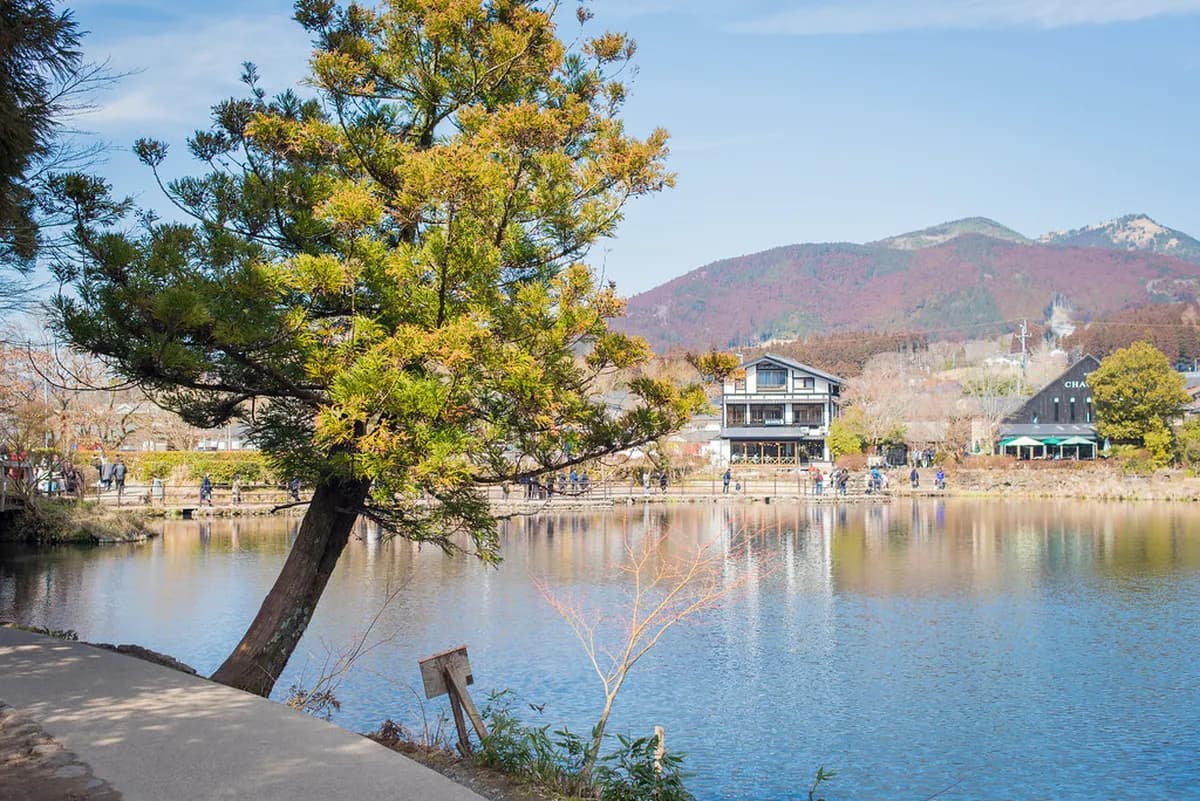
Lake Kinrin (金鱗湖) is the visual centerpiece of Yufuin. Warm spring water feeds the lake from below, creating a low mist over the surface on cool mornings — typically between 06:00 and 09:00. Getting up early to see it is genuinely worth the effort. The lake is free to visit, surrounded by small shrines, and home to koi and cormorants. Arriving before the tour buses is easy if you are already staying in town.
The Yufuin Floral Village is a Cotswolds-inspired open-air theme park with an owl forest, a cat cafe, and multiple small shops including a second Ghibli merchandise outlet. Entry to the village itself is free; individual attractions charge separately. It draws large crowds by mid-morning, so aim to visit before 10:00. Street food highlights on Yunotsubo include giant karaage, honey soft-serve ice cream, and Yufuin Kinsho Croquettes — a local specialty that often has a short queue outside the shop.
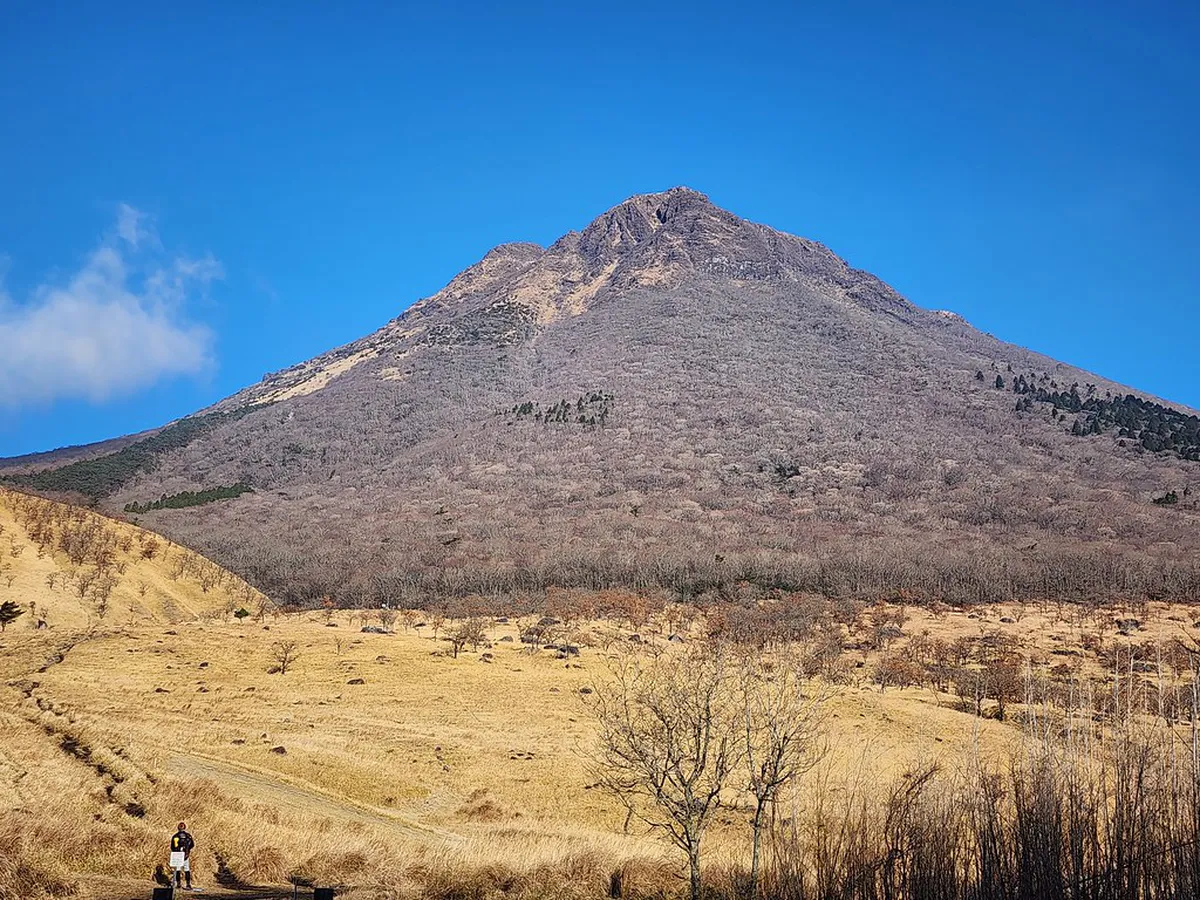
For museums, the Yufuin Stained Glass Museum (open from 09:00, around ¥1,000 entry) is the most architecturally interesting. The Comico Art Museum and the Yufuin Showa Museum (a collection of Showa-era pop culture memorabilia) are both within a short walk of the station. Hikers can attempt the trail to the summit of Mount Yufu — allow about 3 hours return from the trailhead and bring water.
Where to Stay: Ryokan and Onsen Options
Staying overnight in a ryokan transforms Yufuin from a day trip into a proper retreat. The town's hot springs have the second-highest water flow of any onsen in Japan, and many ryokans pipe this water directly into private in-room baths. Booking a 10 Best Tips and Ryokan for Yufuin with Private Onsen is worth the premium for couples and families who want complete privacy.
Mid-range options within walking distance of Yunotsubo Street include Yufuin Lamp no Yado (cozy atmosphere, close to Floral Village) and Ryoso Yufuin Yamadaya (traditional style, Mount Yufu views, peaceful private springs). Both are popular in 2026 and worth booking two to three months ahead for autumn visits.
If you are staying at a ryokan with a public communal onsen, observe standard etiquette: shower before entering the bath, remove all swimwear (communal baths are used unclothed), tie long hair up, and do not submerge towels in the water. Many ryokans also prohibit guests with visible tattoos from entering communal baths — if this applies to you, request a private bath room when booking rather than discovering the policy on arrival.
Best Time to Visit and Seasonal Tips
Spring (March to May) and autumn (September to November) are peak seasons. Autumn foliage in October and early November turns the hillsides surrounding Mount Yufu a deep amber and red — this is when Yufuin is at its most photographed, and when transport and accommodation pressure is highest. Book everything at least two months ahead for October visits.
Summer (July to October) falls within typhoon season. Heavy rain and strong winds are possible, though Yufuin's location in an inland basin makes it slightly more sheltered than coastal Kyushu towns. If you visit in summer, pack a compact umbrella and note that the trail to Mount Yufu summit should be avoided during or immediately after typhoon warnings. Winter visits (December to February) offer empty streets, visible steam rising from roadside springs, and the occasional snow-dusted view of Mount Yufu — a genuinely magical atmosphere with far fewer crowds.
Check the Yufuin Station Travel Guide: Transport, Trains, and Tips for up-to-date locker availability and tourist information office hours. The tourist office at the station is helpful for last-minute onsen day-pass recommendations if your ryokan does not include a public bath.
Frequently Asked Questions
What is the fastest way to get to Yufuin from Fukuoka?
The highway bus is often the fastest and most direct option, taking about 2 hours. While the scenic train is more famous, the bus runs more frequently and is less likely to be sold out. Both options depart regularly from the Hakata Station area and Fukuoka Airport.
Can I use a JR Pass for the Yufuin no Mori train?
Yes, the JR Kyushu Rail Pass and the nationwide JR Pass cover the Yufuin no Mori. However, you must make a seat reservation in advance because this train does not have non-reserved seating. You can book these seats at any JR ticket office or online through the official portal.
Is it easy to drive to Yufuin?
Driving is a great option if you want to explore the surrounding Oita countryside at your own pace. The roads are well-maintained, and the highway offers beautiful views of the volcanic landscape. Be aware that parking in the town center can be limited during busy holiday weekends.
Getting to Yufuin in 2026 is straightforward once you match your starting point to the right transport option. Hakata travelers should prioritize the Yufuin no Mori and book seats as early as possible. Beppu visitors are best served by Bus 36. Those flying into Oita Airport have the fastest total journey via the direct limousine bus. See our Yufuin Onsen guide to plan the rest of your trip.
Whichever route you choose, the destination rewards the effort. The combination of accessible transport, a walkable town center, and some of Kyushu's finest onsen ryokans makes Yufuin a straightforward trip to plan and a genuinely memorable place to arrive.
Free: The Fukuoka Essentials guide
Top things to do, where to stay, a perfect day plan, getting around, and the best time to go — a Fukuoka mini-guide you can take offline.
You might also like

Continue reading
More guides you'll find useful