Public Onsen in Yufuin: The Ultimate Day-Use Guide
Discover the best public onsens in Yufuin for day visitors. Includes entry fees, tattoo-friendly options, etiquette tips, and how to get there from Fukuoka.
On this page
Yufuin is a charming hot spring town in the heart of Oita Prefecture, nestled beneath the twin peaks of Mt. Yufu on Kyushu island.
Unlike the raucous thermal resort of nearby Beppu, Yufuin deliberately keeps things quiet — fewer neon signs, more ryokan gardens, and some of the most accessible public bathing in Japan.
This guide covers the best public onsen in Yufuin for day visitors in 2026: entry fees, tattoo-friendly baths, etiquette, luggage storage for day-trippers, and exactly how to get here from Fukuoka.
Understanding Public Onsen (Day-Use) in Yufuin
A public onsen in Yufuin lets visitors enjoy the thermal waters without booking an overnight stay at a ryokan. Most high-end inns open their baths to outside guests during a midday window, typically running from 11:00 to 15:00 on weekdays. Outside those hours, the facilities are reserved for overnight guests only.
There are two categories to know. Konyoku (mixed-gender) baths like Shitannoyu operate as true public facilities open to anyone who walks in. Ryokan day-use baths at places like Musuoen or Saigaku-kan are higher-end and sometimes require a phone reservation, especially on weekends. Always confirm by calling ahead before making the trip — some baths close one day a week for cleaning without notice.
Yufuin's water is a sodium-bicarbonate type, renowned for leaving skin soft after a single soak. The town sits on a geothermal zone that has been used since the Heian period, and the hot springs here register the second-highest flow volume of any onsen district in Japan.
Day-use hours at most Yufuin public baths run from 11:00 to 15:00. Weekends fill up fast — arrive by 11:00 to avoid queues. Call ahead to confirm the specific facility hasn't closed for maintenance that day.
Top Recommended Public Onsens for Day Visitors
Choosing the right bath depends on your priorities — panoramic views, budget, or tattoo acceptance. According to Oita's official tourism guide, here are the three facilities that consistently rank at the top for day visitors.
Yama-no-Hotel Musouen charges 1,000 JPY and offers one of the most dramatic open-air baths in all of Kyushu. The rotenburo (outdoor pool) sits on a hillside with an unobstructed view across Yufuin valley to Mt. Yufu. Day-use hours run from 10:00 to 15:00. The scale of the pool is impressive — it accommodates dozens of bathers comfortably — and gender-separated sections mean it suits all travellers.
Shitannoyu costs just 200 JPY, making it the best-value bath in town. It is a konyoku (mixed-gender) facility located a short walk from Lake Kinrin, and it is one of the few baths in Yufuin that explicitly welcomes guests with tattoos. The building is rustic and unpretentious — wooden boards, a stone pool, and a small changing room. Bring your own towel as none are available here.
Saigaku-kan sits at 800 JPY and draws visitors who want a cleaner, more curated environment. This ryokan's guest baths have natural light filtering through forest greenery and a calm atmosphere that feels nothing like the busier facilities near Yunotsubo Street. Day-use runs from 11:00 to 15:00.
| Bath | Entry Fee | Day-Use Hours | Tattoo Friendly |
|---|---|---|---|
| Musouen (Yama-no-Hotel) | 1,000 JPY | 10:00–15:00 | No |
| Shitannoyu | 200 JPY | Open access | Yes |
| Saigaku-kan | 800 JPY | 11:00–15:00 | No |
If you have visible tattoos, Shitannoyu is your safest choice without phoning ahead. Some larger facilities like Musouen have been known to admit guests with tattoos covered by waterproof patches, but this is at staff discretion and is not guaranteed. Always ask at reception before paying your entry fee.
Day-Tripper Logistics: Luggage, Lockers, and Free Footbaths
One problem that catches most day visitors off guard is what to do with their bags. Coin lockers at Yufuin Station exist in two banks near the main exit — there are around 30 medium lockers and a smaller number of large ones. They cost 300–500 JPY depending on size and fill up quickly, often by 10:00 on busy weekends and Golden Week. The solution is to arrive on an early train and load your bags before walking anywhere else.
Ryokans generally will not store luggage for day visitors who are not paying guests. If you miss the station lockers, the tourist information desk beside the station exit sometimes coordinates bag drop with a nearby shop, but this is informal and not guaranteed. For 2026 travel, the safest approach is to target the first Yufuin-no-Mori departure from Hakata (arriving around 09:30) and go straight to the lockers.
Once you are bag-free, look for the free public footbath (ashiyu) outside the station plaza. It is open year-round, has benches, and is a good way to sample the Yufuin water with zero commitment before choosing a paid bath. There is a second footbath near the Yunotsubo Street entrance that many visitors walk straight past. Both are genuinely hot — the water temperature runs around 42°C.
For the best experience at the lakeside baths, plan to arrive at Shitannoyu or the Kinrin-ko area before 09:30. The famous thermal mist that drifts across Lake Kinrin at dawn dissipates quickly once the air warms — usually by 08:30 in summer and by 09:30 in winter. Early arrivals also avoid the tour group crowds that start arriving from Fukuoka and Beppu after 11:00.
Essential Yufuin Onsen Etiquette and Packing List
Following proper onsen etiquette ensures a respectful experience for every bather. The rules are consistent across all public baths in Yufuin, whether budget or luxury.
- Shower thoroughly at the provided washing stations before entering the communal pool. Soap and shampoo are available at most ryokan day-use baths, but not at basic public facilities like Shitannoyu — bring your own.
- Keep your hair tied up so it does not touch the water. A hair tie is easy to forget; pack one.
- Your small modesty towel (tenugui) must never enter the bath water. Fold it on your head or leave it at the edge of the pool.
- Swimwear is not worn in traditional onsen — bathing is done without clothing.
- Bring a large drying towel from your accommodation. Most paid facilities offer towel rental for 100–200 JPY, but it is cheaper to carry your own.
- Do not drink alcohol before soaking. The combination of heat and alcohol causes rapid dehydration and can result in fainting.
- Guests with tattoos are not admitted at most Yufuin facilities. Shitannoyu is the main exception. At others, small tattoos covered with waterproof patches may be accepted at staff discretion.
Swimwear is not permitted in traditional onsen — you bathe without clothing. Wash at the shower stations first, and keep your small modesty towel out of the water at all times. Tattoos are generally not permitted; Shitannoyu near Lake Kinrin is the primary tattoo-friendly exception in Yufuin.
How to Travel to Yufuin from Fukuoka or Beppu
From Fukuoka (Hakata Station), the most scenic option is the Yufuin-no-Mori limited express train. The journey takes 2 hours 15 minutes and the wooden-panelled carriages with panoramic windows feel like an attraction in themselves. The train runs only three times a day from Hakata, so seats sell out weeks in advance — especially on weekends and during autumn foliage season. Book at the JR Kyushu ticket office or online as soon as your dates are fixed. A JR Kyushu Rail Pass covers the fare; you still need to reserve a seat separately.
The highway express bus from Hakata Bus Terminal is the more practical choice for last-minute travellers. It costs 2,900–3,250 JPY, runs frequently throughout the day, and drops you directly at Yufuin Station in about 2 hours 40 minutes. No reservation is usually needed outside of Golden Week and Obon.
From Beppu, Bus 36 is the fastest connection — 55 minutes and only 1,100 JPY, making it the cheapest transport option to reach Yufuin from anywhere in Oita Prefecture. If you are doing a loop through Kyushu, the Beppu-to-Yufuin leg works well as a morning transfer before the day-use baths open.
- Yufuin-no-Mori train from Hakata: 2 h 15 min, ~7,000 JPY, book in advance. Three departures per day.
- Highway bus from Hakata: 2 h 40 min, 2,900–3,250 JPY, no booking required most days.
- Bus 36 from Beppu: 55 min, 1,100 JPY, most frequent and cheapest option from Oita.
Which Area of Yufuin to Stay In
The area within a 10-minute walk of Yufuin Station is the most practical base for day-use onsen visitors. Coin lockers, the tourist information centre, the free footbath, and the start of Yunotsubo Street are all immediately accessible. Ryokans near the station tend to be mid-range in price and suit travellers who want an easy start the next morning before crowds arrive.
The Lake Kinrin area, about a 20-minute walk from the station, is quieter and better suited to those who want to catch the early-morning mist without rushing. Ryokans in this zone are often smaller, more traditional, and set back from the main shopping street — ideal for a genuine retreat atmosphere. The trade-off is that you are further from bus stops and the train.
Day-trippers who are not staying overnight often find the station-adjacent zone the most efficient choice. You can store bags in the lockers, walk the full Yunotsubo Street route to the lake, visit Shitannoyu on the way, and be back at the station for a late-afternoon return bus or train — all within six to seven hours.
Top Things to Do in Yufuin Beyond the Hot Springs
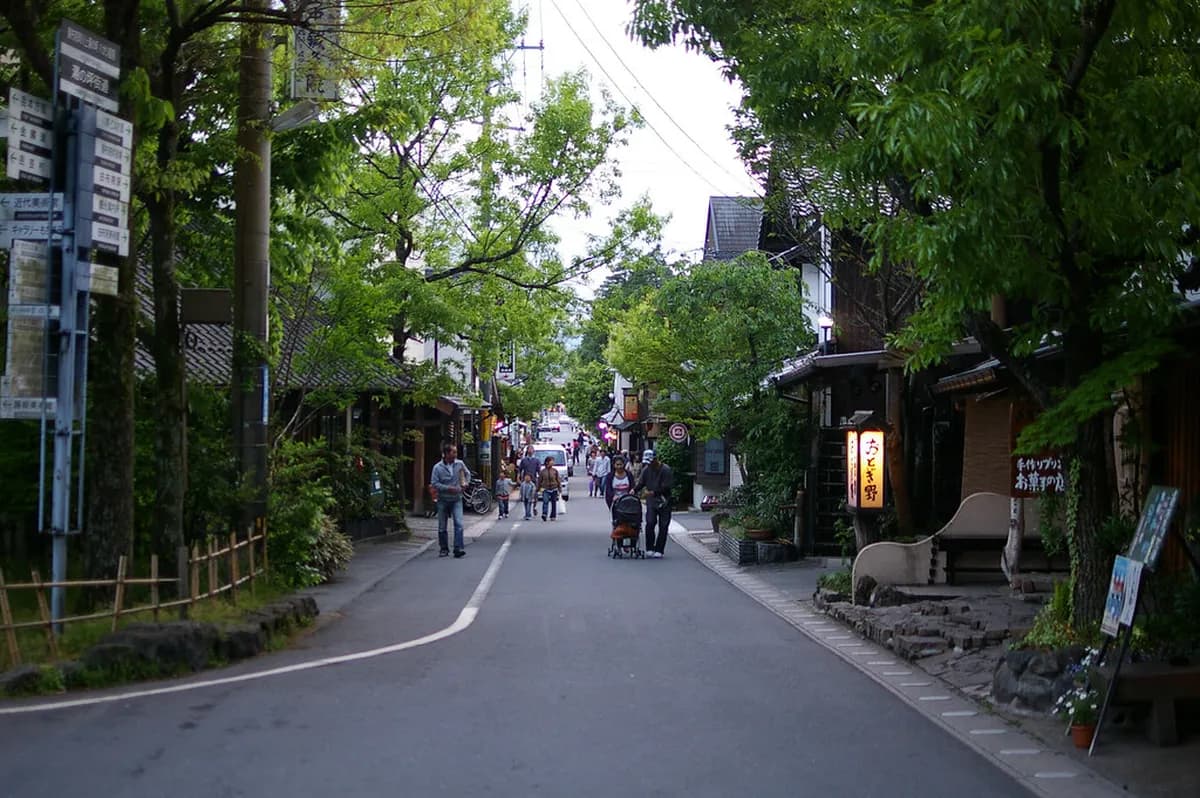
Yunotsubo Street is the main artery of Yufuin's tourism scene. This 1.2 km pedestrian lane runs from just outside the station all the way to Lake Kinrin, lined with cafes, craft shops, snack stalls, and a popular Ghibli merchandise store called Donguri no Mori. The street is most pleasant before 11:00 when tour groups have not yet arrived from Fukuoka.
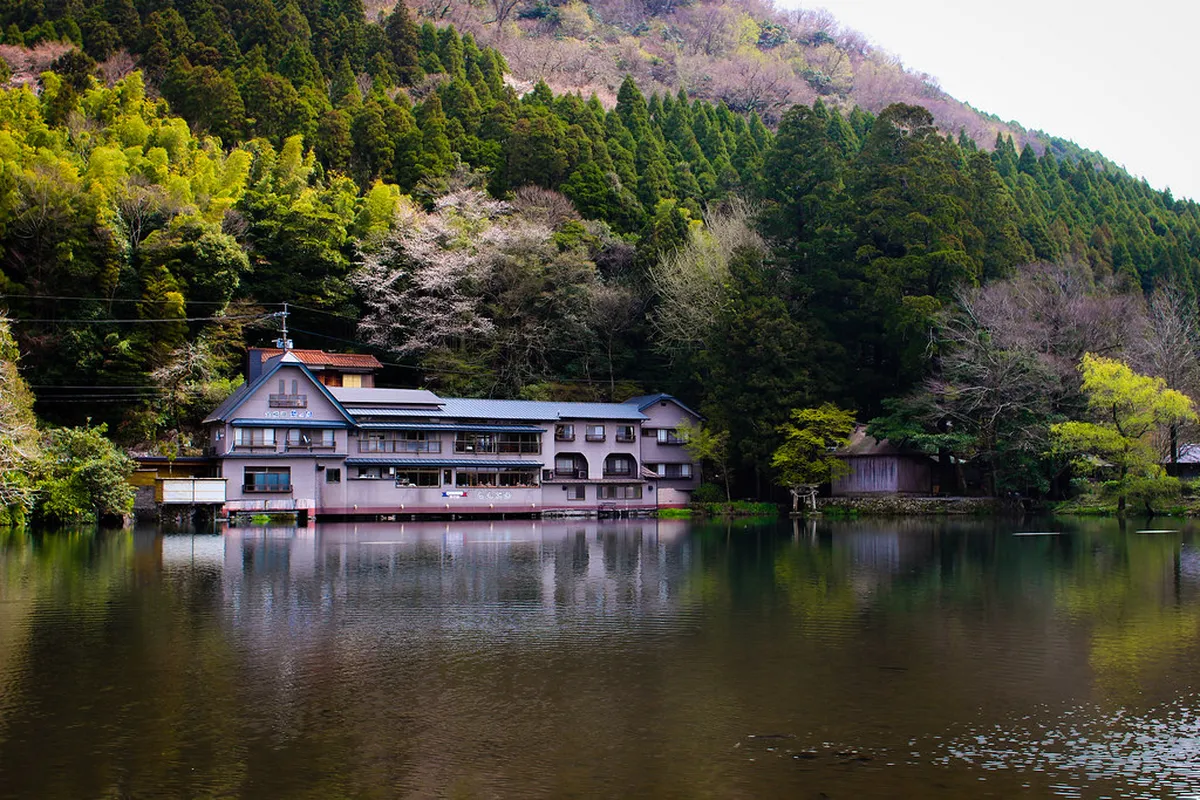
Lake Kinrin itself is a short walk from the far end of Yunotsubo Street. The lake is fed by hot spring water from below, which creates the famous thermal mist that hovers over the surface on cool mornings. A torii gate on the shoreline and the surrounding greenery make it a natural photography spot. Walk the full perimeter — it takes about 20 minutes — and continue along the canal path behind the lake for views of rice paddies and traditional farmhouses that most visitors skip.
Art lovers should visit the Yufuin Stained Glass Museum for its European-style exhibits, or the Yufuin Showa Museum for a nostalgic look at mid-century Japanese daily life. Mt. Yufu hiking is worth considering if you have a full day — the summit takes 4 to 5 hours return and rewards with panoramic views across Oita Prefecture, but start before 09:00 to avoid afternoon cloud cover.
- Yunotsubo Street: best before 11:00; watch for B-Speak cakes (pre-order the P-roll if you want it for pickup) and the Studio Ghibli shop near the entrance.
- Lake Kinrin: best before 09:00 for mist; the canal walk behind the lake adds 30 minutes and is largely tourist-free.
- Yufuin Floral Village: a Cotswold-inspired mini theme park with an owl forest, cat cafe, and multiple small shops — better suited for families and slower-paced visitors.
- Free horse-drawn carriage rides operate along Yunotsubo Street (seasonal); check the tourist information board at the station for current schedules.
Best Places to Eat in Yufuin Near the Onsens
The B-Speak bakery near the Yunotsubo Street entrance is Yufuin's most famous food stop. Its P-roll — a lightly sweetened Swiss-style roll cake filled with fresh cream — sells out by early afternoon on most days. Pre-ordering online for same-day pickup is the reliable approach; walk-in availability is unpredictable. A large roll costs around 1,500 JPY.
For a proper meal, Yufu Mabushi Shin serves Oita-style clay pot rice (mabushi) that locals recommend ahead of anything else in town. The dish involves layers of rice and local protein served in a small iron pot — you eat it three ways: plain, with condiments, and finally as ochazuke (with green tea poured over). Expect a 30-minute queue at peak lunch hours. The Yufuin Kinsho Croquettes stall on the main walking path offers a quick, inexpensive alternative — the gold medal croquettes (around 200 JPY each) are legitimately good.
Restaurants along Yunotsubo Street and the adjacent lanes serve Oita beef bowls, kabosu udon (a local citrus-flavoured broth dish), and teishoku set lunches. Most close by 18:00, so plan your meals around the onsen schedule rather than the other way around. If you are curious about the local adventurous option: several yakiniku restaurants in town serve Oita horsemeat alongside regular cuts — it tastes closer to beef than it sounds, and is worth trying if you are open to it.
Frequently Asked Questions
Can you visit Yufuin onsens without staying overnight?
Yes, many ryokans offer day-use bathing for a small fee between 500 and 1,200 JPY. These facilities typically open their doors from 11:00 AM to 3:00 PM for visitors on a The Perfect 2-Day Yufuin Itinerary: 10 Essential Stops. Always bring your own towel to save on rental costs.
Which public onsens in Yufuin allow tattoos?
Shitannoyu is a famous rustic bath that allows guests with tattoos. Some larger facilities like Musuoen may allow small tattoos if they are covered with waterproof patches. It is best to check with the front desk before paying your entry fee.
How much does a day-use onsen in Yufuin cost?
The price for a single entry usually ranges from 200 JPY for basic local baths to 1,000 JPY for luxury facilities. Most mid-range ryokans charge around 700 JPY for access to their outdoor pools. Budget extra if you need to rent towels or lockers.
What is the best way to get to Yufuin from Fukuoka?
The fastest way is the direct highway bus from Hakata Station, which takes about two hours. For a more scenic experience, book the Yufuin-no-Mori train. Travelers coming from Fukuoka to Yufuin: 8 Essential Travel Tips and Transport Options should book tickets at least two weeks in advance.
Is one day enough for Yufuin?
One day is enough to see the main street, the lake, and enjoy one public bath. However, staying overnight allows you to experience the town after the day-trip crowds leave. You can also see the beautiful morning mist on Lake Kinrin if you stay.
Visiting a public onsen in Yufuin is a highlight of any trip to Oita Prefecture. Combine this with our Yufuin Onsen guide for a fuller itinerary. For related Yufuin deep-dives, see our The Perfect 2-Day Yufuin Itinerary: 10 Essential Stops and Yufuin Floral Village: 10 Best Things to Do and See guides.
Whether you choose a panoramic hillside view at Musouen or the budget-friendly, tattoo-welcoming waters of Shitannoyu, the thermal springs here are genuinely restorative.
Plan your transport early, arrive before the day-trip crowds, and sort your luggage at the station lockers first — the rest of the day will take care of itself.
Enjoy your soak in one of Japan's most beautiful mountain towns in 2026.
Free guide: Japan's Hidden Gems
12 under-the-radar places beyond Tokyo & Kyoto — with the best season to visit each and a local tip you won't find in the guidebooks.
You might also like


Continue reading
More guides you'll find useful