Beppu to Yufuin: 6 Essential Guide Sections for Travelers
Plan the perfect trip from Beppu to Yufuin. Compare the Yufuin no Mori train vs. local buses, find the best onsen, and discover must-eat street food.
On this page
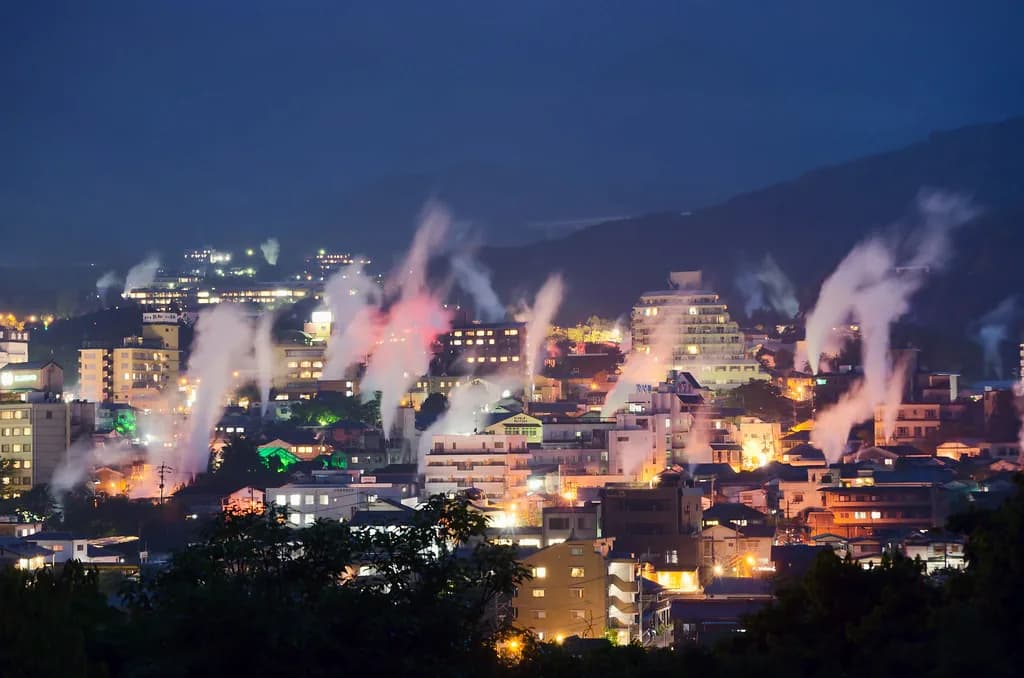
The route between Beppu and Yufuin is one of the most rewarding short journeys in all of Kyushu. Both towns sit inside Oita Prefecture, separated by roughly 35 kilometres of mountain road, yet they feel worlds apart in character. Beppu is loud, steamy, and volcanic. Yufuin is quiet, misty, and refined.
This guide covers every transport option, the key sights in each town, and the small practical details — luggage forwarding, bento reservations, footbaths — that make the difference between a stressful day trip and a seamless one. Prices and timetables reflect 2026 conditions. If you want a deeper look at the destination itself, the full The Perfect 2-Day Yufuin Itinerary: 10 Essential Stops covers multi-day planning in detail.
Oita Prefecture holds more registered onsen sources than any other prefecture in Japan. That density means the Beppu-to-Yufuin corridor is not just a transport corridor — it is an experience in itself. Learn How To Get To Yufuin Travel Guide from Fukuoka or other hubs if you are arriving from further afield.
Transport Comparison: Bus vs. Train from Beppu to Yufuin
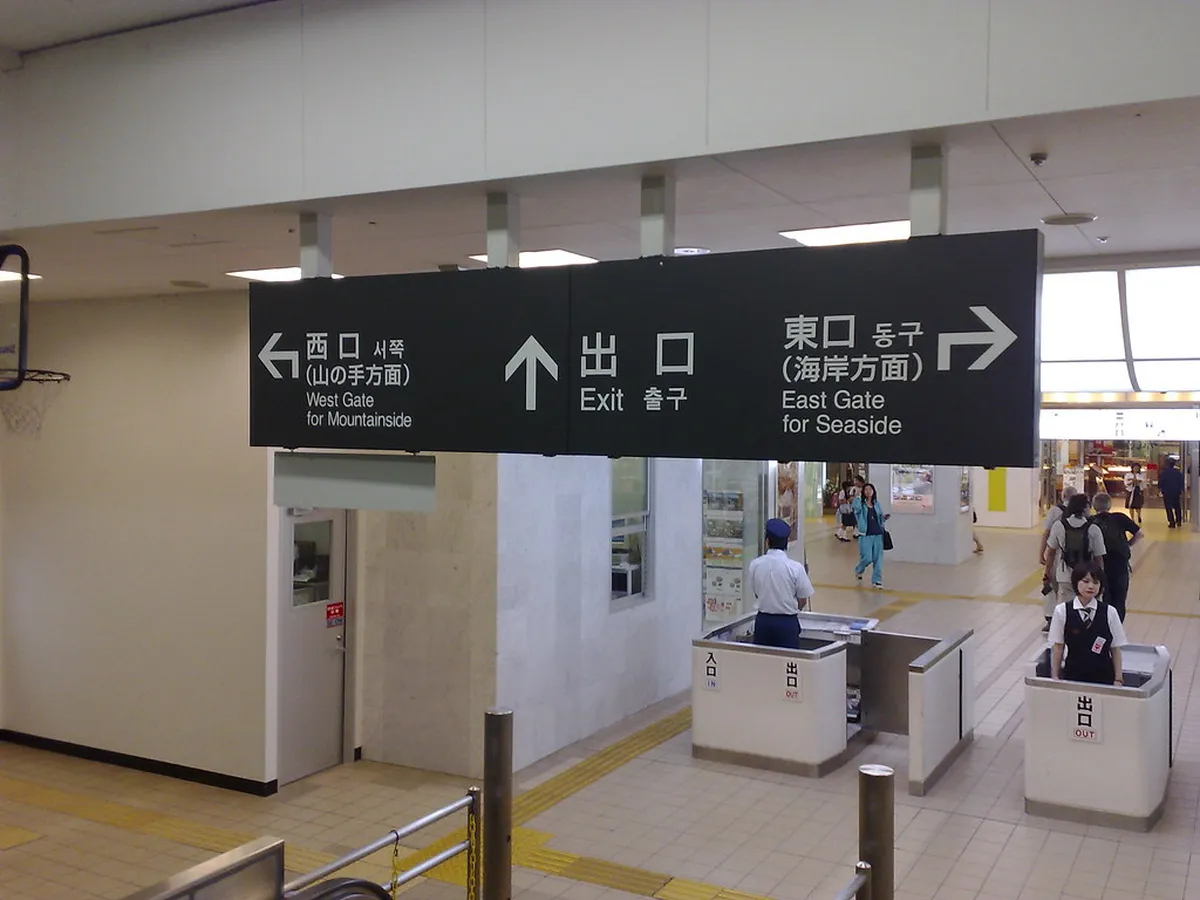
Bus 36 is the most practical choice for most travelers. It departs from Beppu Station (north exit, bay 6) roughly every hour and arrives at Yufuin Station in about 50 minutes. The fare is ¥1,100 (approximately ¥1,200 in 2026 after the consumption tax adjustment), making it the cheapest direct option on the route. The mountain road offers good views, and the bus is rarely crowded on weekdays.
The local train requires a change at Oita Station. From Beppu to Oita takes around 20 minutes on the Nippo Main Line, then the Kyudai Main Line runs directly to Yufuin. Total journey time is 75–90 minutes depending on connections. Fares range from ¥2,300 for a local service to ¥3,400 for the express. If you hold a JR Kyushu Rail Pass, both legs are covered at no additional cost.
Rental car is the fastest option at around 40 minutes via the Oita Expressway. Driving gives you access to roadside onsen and mountain pull-offs that buses skip entirely. Parking in central Yufuin is limited and costs around ¥500–¥600 per hour at public lots near the station. Arrive before 10:00 to find a space without circling.
Parking in Yufuin is difficult and expensive during peak season. Most public lots charge around ¥500 per hour — budget extra time to find a space if driving.
| Mode | Duration | Cost (2026) | Notes |
|---|---|---|---|
| Bus 36 (direct) | ~50 min | ~¥1,100 | Cheapest; hourly departures |
| Local train via Oita | 75–90 min | ¥2,300–¥3,400 / free with JR Pass | Requires transfer at Oita Station |
| Yufuin no Mori (luxury express) | ~80 min | ~¥4,130 reserved seat surcharge | Must book in advance; sells out |
| Rental car | ~40 min | Car hire + ~¥500/hr parking | Most flexible; access to remote spots |
The Yufuin no Mori luxury train sells out up to 30 days in advance. Book your seats online as soon as the reservation window opens to secure a window seat.
The Yufuin no Mori: How to Book the Iconic Resort Train
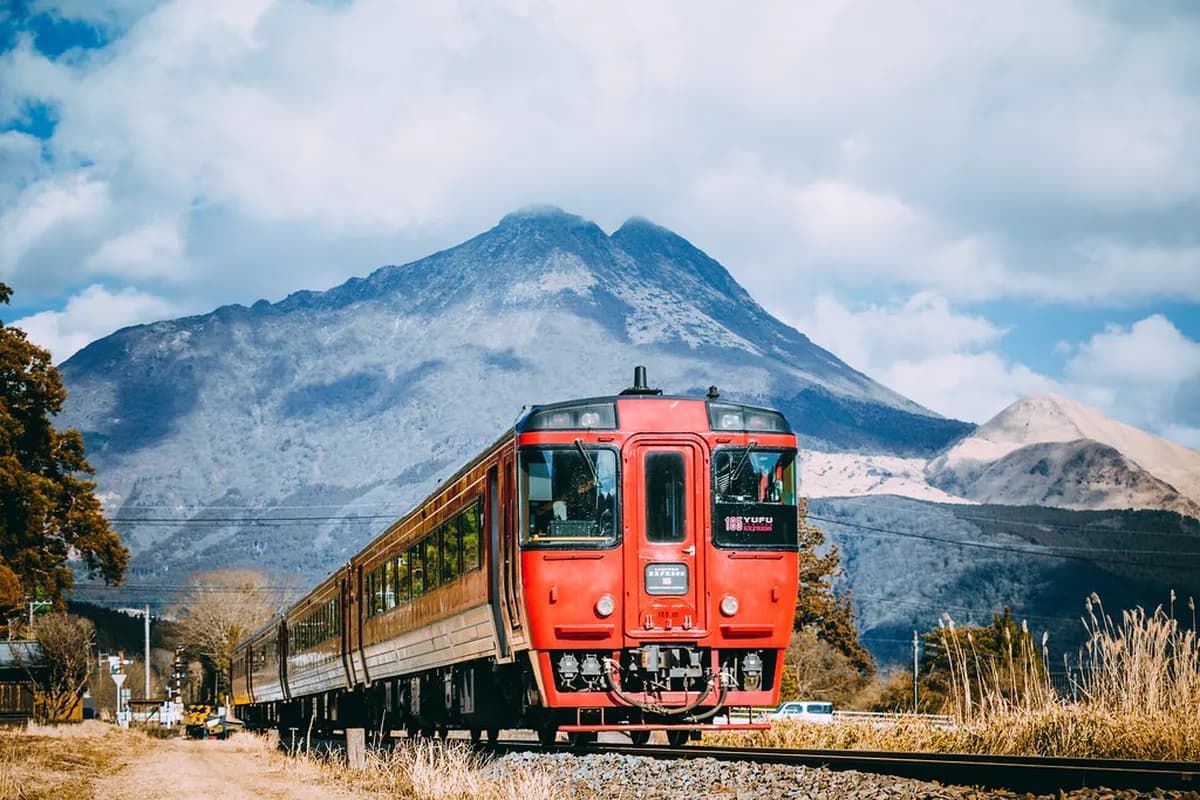
The Yufuin no Mori is a JR Kyushu limited express that runs between Hakata (Fukuoka) and Yufuin, stopping at Beppu on some services. The interior features warm wood panelling, high-backed green seats, and panoramic windows that frame the Oita highlands beautifully. There are two train generations on the route — the older Type 71 and the newer Type 72, which has a lounge car. Both are worth riding.
From Beppu, you board at Beppu Station and the journey to Yufuin takes approximately 80 minutes. The base fare from Beppu to Yufuin is around ¥2,300, with a limited-express surcharge of roughly ¥1,830 on top. JR Pass holders pay only the surcharge. Reservations open one month in advance at JR Kyushu ticket offices, the JR Kyushu online booking system, or through major travel agents. Seats sell out quickly on weekends and during Golden Week, Obon, and autumn foliage season — book the moment the window opens.
One detail most guides overlook: the Yufuin no Mori operates a dedicated bento box service. Specific bento sets — including a popular Yufuin Forest Bento with chicken, pickles, and local rice — must be pre-ordered at Beppu Station or the departure station at least one hour before the train departs. You cannot order onboard. The bento is collected from a dedicated station counter when you board. If you want this experience, factor in an extra 15 minutes at the station before departure.
Check the JR Kyushu Yufuin no Mori Official page for the current timetable and to confirm which services stop at Beppu, since not every run does.
Beppu Highlights: The Seven Hells and Steam Cuisine
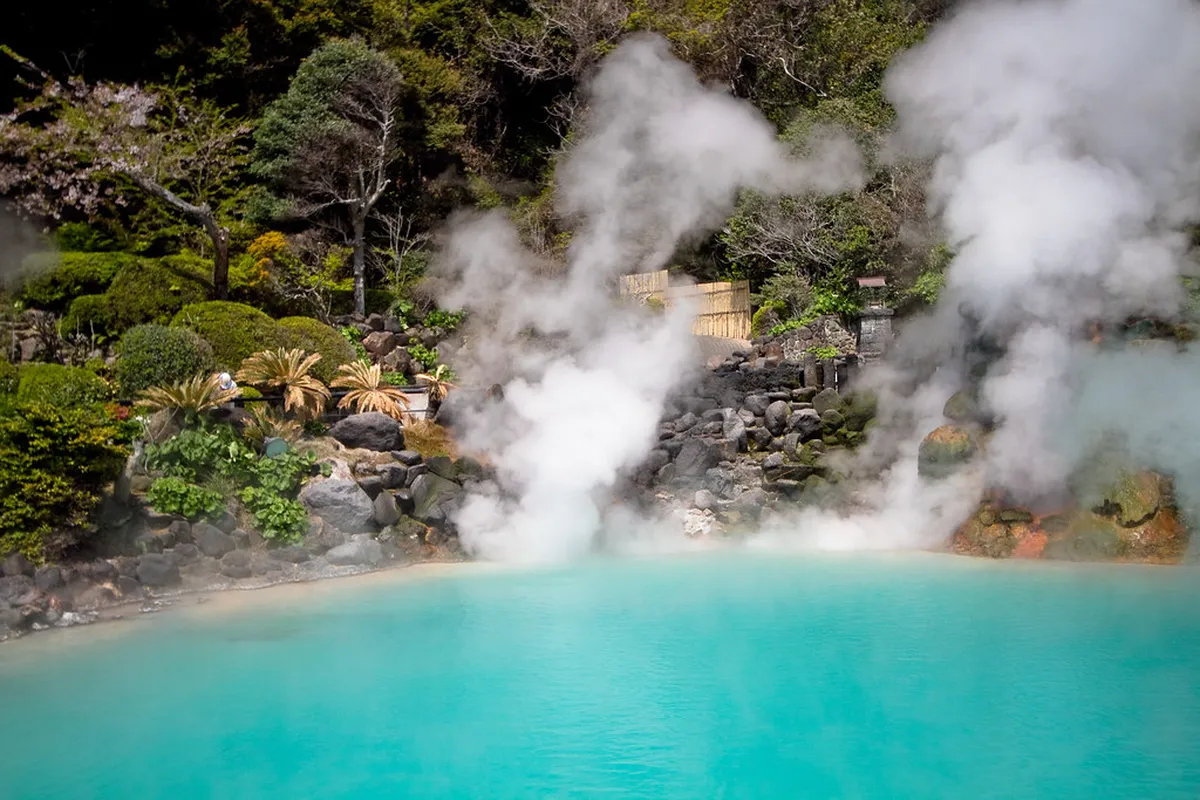
The Beppu Jigoku Tour covers seven distinct geothermal pools in the Kannawa district, about 15 minutes by bus from Beppu Station. Each pool has a different composition and colour: the cobalt-blue Umi Jigoku (Sea Hell), the blood-red Chinoike Jigoku (Blood Pond Hell), and the grey Oniyama Jigoku (Devil Mountain Hell) where crocodiles are kept using geothermal heat. A combined ticket covering all seven hells costs ¥2,200 for adults in 2026 and is the best value. The pools are open daily 08:00–17:00.
Plan two hours for the full circuit. The hells are clustered into two groups — five in the Kannawa area and two (including the Blood Pond) about 2 km away in Shibaseki. Taxis or the local bus (route 16 or 26) connect the two groups. Walking between all seven without transport is possible but adds 30–40 minutes.
Steam cuisine — jigoku-mushi — is a Kannawa signature. Vegetables, eggs, seafood, and even puddings are cooked in wooden steamers placed over natural geothermal vents. The Jigoku-mushi Kobo Kannawa steam cooking workshop lets visitors cook their own ingredients for around ¥500–¥800 per person depending on the tray contents. Arrive by 11:00 to secure a session without a long wait. The Kannawa district also connects to Beppu's wider network of eight onsen areas (Beppu Hatto), each with different water chemistry — if you have an extra morning, onsen hopping across Myoban (known for its yunohana bath-salt huts) and Kankaiji (sea-view baths at 150 m elevation) rounds out the visit.
Yufuin Essentials: Yunotsubo Street and Lake Kinrin
Yunotsubo Street (湯の坪街道) runs 1.2 km from Yufuin Station straight to Lake Kinrin. It is the commercial heart of the town and completely walkable. Shops and stalls open from around 10:00 and most close by 17:00–17:30, so the early afternoon window is the productive time for browsing. The Donguri no Mori Ghibli merchandise shop sits at the station end of the street and draws large crowds — visit early or late in the day to browse without queuing.
Street food on Yunotsubo is dense and varied. The Yufuin Kinsho Croquette (湯布院金賞コロッケ) — a crispy fried beef croquette — is the most famous single item. Milch pudding from the Milch dairy shop is thick, lightly sweet, and sold chilled in small jars. Purindora (a dorayaki filled with pudding instead of red bean paste) from Yufuin Hanakoji Kikiya is another local specialty worth seeking out. Budget ¥1,500–¥2,500 for a full street-food pass through the strip.
Lake Kinrin (金鱗湖) sits at the far end of Yunotsubo Street, a short walk past Yufuin Floral Village. The lake is fed partly by hot spring water, which keeps the surface temperature warm enough to produce a low morning mist even in summer. The mist is most dramatic in autumn and winter before 09:00. A torii gate stands in the water near Tenso Shrine on the eastern bank — this is the iconic photograph most visitors come for. The full circuit of the lake on flat paths takes about 20 minutes. After completing the loop, take the small canal path back toward the main street for a quieter view of rice paddies and cranes. Visit Lake Kinrin early or late to avoid the peak midday crowds.
Yufuin Floral Village (湯布院フローラルビレッジ) is a compact Cotswolds-themed garden complex between the street and the lake. It contains an owl forest, a cat cafe, multiple craft shops, and a second Ghibli store. Admission to the grounds is free; individual attractions inside charge separately. Entry to the owl forest costs around ¥500. Allow 30–45 minutes here.
Where to Eat Lunch in Yufuin Beyond Street Snacks
Yunotsubo Street is built for snacking, but a day trip still needs one proper meal. Sit-down lunch spots fill from about 11:30, and many close their kitchens by mid-afternoon, so plan to eat between 11:45 and 13:30 or expect a wait.
Yufuin's two most distinctive sit-down meals are:
- Bungo beef: Oita's local wagyu. It is usually served as a grilled or steamed set lunch, and is a better-value way to try it than an evening steakhouse meal. See the Bungo beef and Yufu mabushi guide for specific restaurants and what to order.
- Soba and teishoku sets: Cheaper, quicker and often quieter than the main strip. The budget lunch and soba guide lists options that keep a set meal at a moderate price.
A sensible split for the timetable in this guide: skip the croquette stalls until after lunch, eat a set meal first, then use the street-food budget of ¥1,500–¥2,500 for dessert items such as pudding and purindora. If you arrive on the 09:00 bus, you can also eat early and avoid the queues.
Many smaller restaurants do not take reservations for walk-ins and a few are closed one weekday, so check the shop's own notice before you detour to it. Keep a backup near the station in case a favourite has a long line.
The "Car-Free" Itinerary: A Seamless Day Trip Plan
A one-day circuit starting in Beppu works best with an early departure. Leave your hotel by 08:00 and take Bus 36 or the Yufuin no Mori to maximize time in Yufuin during peak shop hours. If you are on a budget, Bus 36 at 08:10 from Beppu Station puts you in Yufuin by 09:00 with the full morning ahead.
- 08:00–10:30: Beppu Jigoku Tour in Kannawa. Start with Umi Jigoku and work through the cluster.
- 10:30–11:00: Bus from Kannawa to Beppu Station (route 26, ~15 min). Collect luggage if stored; use coin lockers if continuing same-day.
- 11:00–11:50: Bus 36 to Yufuin Station.
- 12:00–13:30: Yunotsubo Street food circuit. Lunch at one of the sit-down restaurants on or just off the main strip.
- 13:30–15:00: Yufuin Floral Village and Lake Kinrin walk.
- 15:00–16:00: Free time — browse the Yunotsubo craft shops or visit the Comico Art Museum (book timed entry in advance).
- 16:00–16:50: Return Bus 36 to Beppu, or connecting bus/train toward Fukuoka.
Travelers heading onward to Fukuoka or Kumamoto the same evening should take the 16:38 or 17:10 Yufuin no Mori from Yufuin Station — these services connect through to Hakata without requiring a change. Check the JR Kyushu timetable, as the last Yufuin no Mori departs around 17:00 depending on the season.
Yufuin Station itself is worth pausing at before you leave. The wooden terminal building was designed by internationally acclaimed architect Arata Isozaki and features an open atrium inspired by a chapel. On Platform 1, there is a small footbath (ashiyu) where you can soak your feet while waiting for your train. A towel token is purchased at the station concourse for around ¥200 and doubles as a small souvenir. It is one of the most pleasant station waits in all of Japan and no competitor guide tells you to budget five minutes for it.
Soaking in Yufuin: Day-Use Onsen for Short Visits
Beppu supplies the steam and spectacle, but Yufuin is where most visitors want a proper soak. The town's water is gentler and less sulphurous than Kannawa's, and the baths are small and quiet. A one-day schedule can fit one bath if you plan it deliberately.
- Public baths: The cheapest option, usually costing only a few hundred yen. They have basic facilities and a local feel. Bring your own small towel, or buy one at the entrance. See the best public onsen baths in Yufuin for locations and etiquette.
- Ryokan day-use (higaeri): Many inns sell bath-only access to non-guests in the afternoon, typically at roughly ¥1,000–¥2,000 with towels included. Hours vary by property and can shut without notice when the inn has a private function, so confirm in advance.
- Footbaths: Free or near-free and the easiest fit for a tight schedule. They suit a 15-minute rest after the Lake Kinrin loop.
Tattoos remain a barrier at some baths. Ask first, or choose a private (kashikiri) bath, which is booked by the hour and usually costs more than a shared bath.
The easiest slot in the itinerary above is the free block from 15:00 to 16:00, which is just enough for a short soak before heading back to the station. If you want a longer, unhurried bath, staying the night changes the trip completely. The best ryokan in Yufuin guide covers inns with private baths.
Practical Tips: Luggage Forwarding and Seasonal Timing
Beppu Station offers both coin lockers (from ¥300 for small lockers) and a same-day luggage delivery service. The delivery service sends your bags directly from the station to your accommodation in Beppu City, freeing you to explore the Hells without dragging a suitcase. Confirm with your hotel in advance that they accept same-day deliveries — not all properties support the service. The drop-off deadline at Beppu Station is typically around 12:00 for same-afternoon delivery.
Yufuin Station has coin lockers on the concourse in three sizes: small (¥300), medium (¥500), and large (¥700). These fill quickly on weekends and during public holidays. If you plan to arrive after 10:00 on a Saturday or Sunday in peak season, leave non-essential bags at Beppu before boarding the bus. A hands-free luggage forwarding service (takuhaibin) is also available at the station — staff can ship bags to your next hotel overnight for around ¥1,000–¥2,000 depending on size and destination.
Seasonal timing matters significantly for this route. Spring (late March to early April) brings cherry blossoms around Lake Kinrin and the Yufuin riverside — beautiful but very crowded. Autumn foliage (late October to mid-November) is the busiest period of the year; accommodation near Yufuin books out three to four months ahead. Summer (July–August) is hot and humid but the mountain elevation of Yufuin keeps temperatures a few degrees cooler than coastal Beppu. Winter (December–February) offers the famous morning mist on the lake and the fewest crowds, with some ryokans offering discounted rates. Check the Visit Oita Official Tourism portal for seasonal event calendars before you book.
Rainy days are common in Oita year-round. The Comico Art Museum (temporary and permanent contemporary art; ¥1,500 adults, book timed entry online one week ahead) and the Yufuin Stained Glass Museum make excellent wet-weather alternatives to outdoor walking. Both are within 15 minutes' walk of Yufuin Station. The Yufuin Onsen Travel Guide baths themselves are perfectly enjoyable in rain, and many ryokans open their day-use baths to non-guests from mid-morning for ¥500–¥1,500.
Frequently Asked Questions
How long is the bus ride from Beppu to Yufuin?
The direct bus ride takes approximately 50 minutes. Bus 36 is the most common route for this mountain journey. It offers frequent departures throughout the day for travelers.
Is the Yufuin no Mori train worth the extra cost?
Yes, the scenic views and unique interior make it a memorable experience. It costs about $30 but provides a luxury atmosphere. You should book your tickets at least a month early.
Can I visit both Beppu and Yufuin in one day?
You can see the main highlights of both towns in a single day. Start early in Beppu and finish your evening at Lake Kinrin. This requires using the fast bus to save time.
Traveling from Beppu to Yufuin is a highlight of any trip to Kyushu. Whether you choose the luxury Yufuin no Mori or the fast and affordable Bus 36, the journey through the Oita highlands is worth it in either direction. Forward your luggage, pre-order your bento, and leave enough time at Yufuin Station for the footbath before you head home.
Remember to book Yufuin no Mori seats as soon as the one-month window opens and check seasonal conditions before you travel. The combination of thermal steam, mountain air, and quiet lakeside streets makes Oita one of the most rewarding corners of Japan to explore in 2026.
Free: The Beppu Essentials guide
Top things to do, where to stay, a perfect day plan, getting around, and the best time to go — a Beppu mini-guide you can take offline.
You might also like


Continue reading
More guides you'll find useful