8 Best Day Trips from Beppu: 3-Day Itinerary & Guide
Explore the best day trips from Beppu with our 3-day itinerary. Visit Yufuin, the Seven Hells, and Hita using expert transport tips and local advice.
On this page
Beppu is one of the best-positioned cities in Kyushu for day trips. The bullet train corridor, regional bus network, and rural expressways fan out in every direction from the city. Within 90 minutes you can reach dramatic volcanic caldera, ancient Buddhist stone carvings, wild monkeys, and a perfectly preserved Edo-era merchant town. This guide covers the eight destinations that consistently appear on every serious Beppu traveler's radar in 2026, plus the practical transport details for each one.
Most destinations here are reachable by public transport. A rental car unlocks a few harder-to-reach spots — particularly the Kunisaki Peninsula and the African Safari park. The getting around Beppu explains the Kamenoi bus pass and JR regional tickets in full. Start with that before booking anything.
Yufuin: The Classic Half-Day Trip
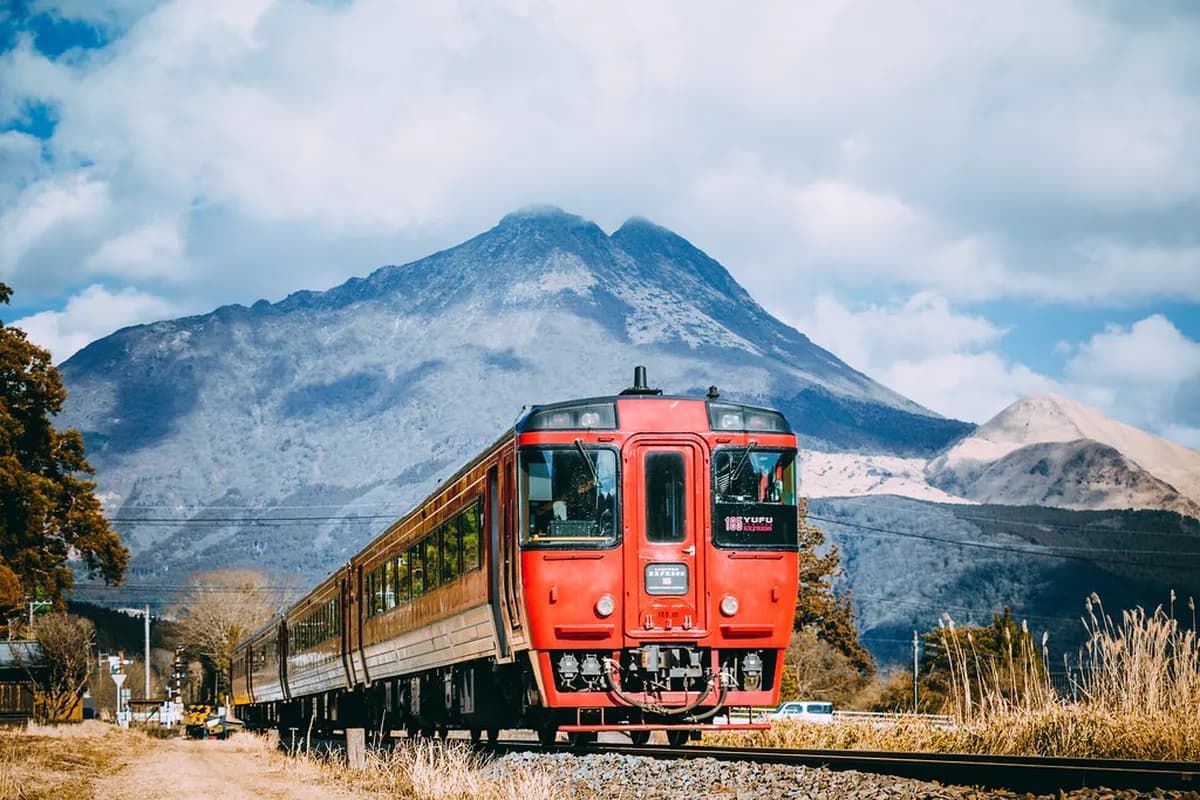
Yufuin is the most popular day trip from Beppu and the easiest to execute. The two towns sit just 38 km apart, connected by the Yufurin no Mori scenic train (departs Oita Station 09:24, arrives Yufuin 10:49) and by direct Kamenoi bus from Beppu Station in about 55 minutes. Buses run every 30–40 minutes from stand 3 and cost 900 JPY one-way. Most travelers spend four to five hours here before returning for a late afternoon soak.
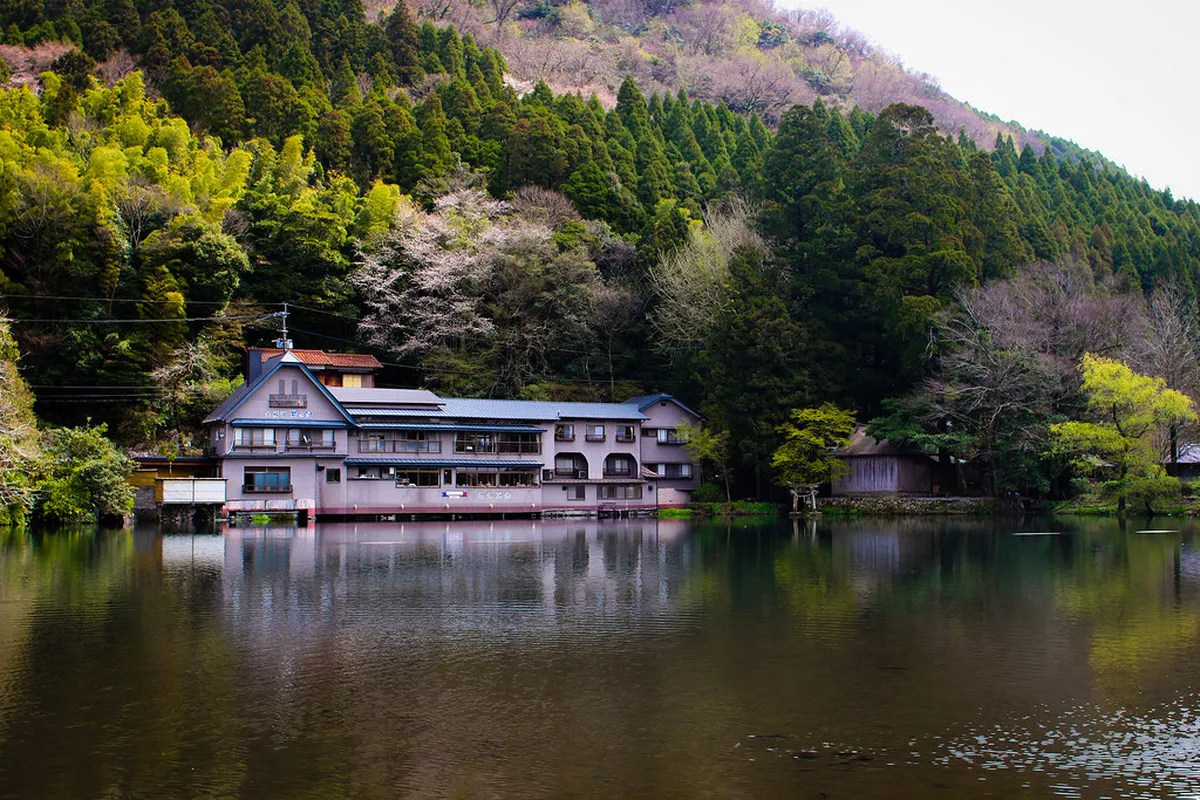
The core loop in Yufuin takes two to three hours on foot. Start at Lake Kinrin, where steam rises from the thermal vents feeding the water, then walk the Yufuin Floral Village shopping lane (Yunotsubo Kaido) north toward the lake. Stop at Tamanoyu, a traditional ryokan open for day-use bathing (500 JPY, closes 15:00). The village feels boutique and calm compared to the steam-industrial energy of Beppu, which makes the contrast worthwhile on its own. See our full Beppu compared with Yufuin to decide whether one or both deserve overnight stays.
Time needed: 4–5 hours. Best transport: Kamenoi bus or Yufurin no Mori scenic train (book the train 30 days ahead via JR Kyushu app — seats sell out on weekends). Return last bus departs Yufuin at 18:20.
The Yufurin no Mori scenic train is extremely popular on weekends — book 30 days in advance via the JR Kyushu app to guarantee a seat. Buses are more flexible but take 55 minutes versus 85 minutes by train.
Usuki Stone Buddhas: Japan's Finest Rock-Cut Carvings
The Usuki Sekibutsu (stone Buddhas) are designated National Treasures and rank among the most important Buddhist sculptures in Japan. There are 61 figures in four clusters, carved into a cliff of soft volcanic tuff during the late Heian and Kamakura periods (roughly 900–1300 CE). The carving detail on the largest figure — the Daibutsu in Cluster 1, standing 1.9 m tall — is extraordinary up close. Admission is 530 JPY for adults.
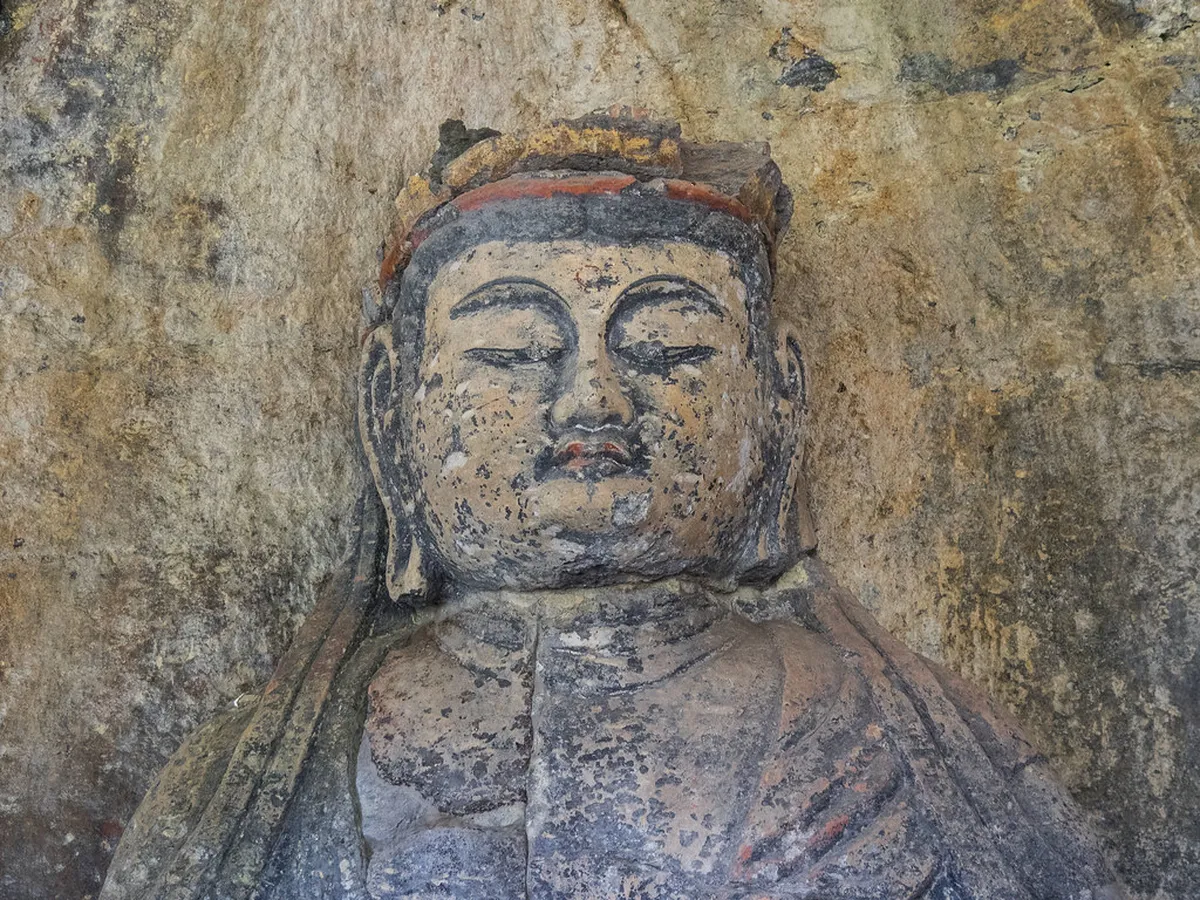
Getting there by public transport takes patience but is doable. Take the JR Nippo Honsen limited express from Beppu Station to Usuki Station (about 40 minutes, 1,490 JPY one-way). From the station, a taxi to the stone Buddhas takes 10 minutes and costs roughly 1,200 JPY. Alternatively, a community bus (Usuki Municipal Bus) runs Tuesday to Sunday and costs 200 JPY, but check the timetable carefully — it runs only three or four times per day.
After the stone Buddhas, spend an hour walking through Nioza, Usuki's samurai and merchant quarter. The preserved whitewashed storehouses and stone alleys feel genuinely unhurried, especially on weekday mornings. Time needed: 5–6 hours total. Return limited express trains run roughly hourly until 20:00.
Takasakiyama Monkey Park: Wild Macaques at Close Range
Takasakiyama is home to more than 1,400 wild Japanese macaques (Macaca fuscata) living in free-roaming troops on a forested hillside just south of Beppu. A ranger rings a bell at set feeding times and the entire troop descends from the trees simultaneously — it is one of the most dramatic wildlife moments in Kyushu and takes most visitors completely by surprise. Admission is 530 JPY for adults.
Getting there is straightforward. The Kamenoi bus route 7 from Beppu Station reaches Takasakiyama-guchi in about 25 minutes (300 JPY). From the bus stop, a short monorail (300 JPY) carries you to the observation area — the steep slope means the monorail is the standard approach. Feeding times are posted daily at 09:30, 11:30, and 14:00 (times subject to seasonal adjustment). Arrive 15 minutes before a feeding for the best position.
Takasakiyama pairs efficiently with Usuki in a single day. Both lie south of Beppu on the JR Nippo Honsen line. Visit Takasakiyama in the morning (it opens at 08:30), then take the bus back to Beppu Station for the 11:00 limited express to Usuki for the afternoon stone Buddha visit. The two-stop loop returns you to Beppu by 18:00 without any backtracking — no competitor guide points this out, but the timetabling works cleanly. Time needed: 2.5 hours standalone, or combine with Usuki for a full day.
Monkey feeding times are 09:30, 11:30, and 14:00 daily. Arrive 15 minutes early for the best viewing position when the entire troop descends from the trees — it is one of the most dramatic wildlife moments in Kyushu.
Hita: Oita's Edo-Era Merchant Town
Hita is the most underrated day trip from Beppu. The city served as an administrative center under the Tokugawa shogunate, which gave it the resources to build a merchant district so well preserved that locals still call it "little Kyoto." The Mameda-machi district runs for about 700 meters and is lined with original machiya townhouses, sake breweries, and craft shops selling the region's lacquerware (Hita Temari traditional crafts).
Getting there requires either a rental car or a JR limited express. The Yufu limited express from Beppu Station runs to Hita in about 75 minutes (2,480 JPY one-way). Alternatively, the expressway bus from Beppu takes about 80 minutes (1,600 JPY). Hita is compact enough to cover on foot — the Mameda-machi walk, a short detour to Koman Onsen, and lunch at one of the riverside restaurants along the Mikuma River can all fit into four hours before the return train.
From June through September, Hita hosts Kori Ayu fishing — trained cormorant fishermen work the river by firelight after dark. Day trippers miss this entirely since the last train back leaves before the boats go out. If you want to see the cormorant fishing, plan to stay overnight in Hita and return to Beppu the next morning. Time needed: 4–5 hours. Car recommended if you plan to continue west to Mt Aso.
Mount Aso: Active Caldera and Grassland Views
Mount Aso is the largest active volcanic caldera in Japan and one of the most dramatic landscapes in all of Kyushu. The main observation point at Kusasenri-ga-hama — a flat volcanic meadow inside the outer caldera — offers unobstructed views of the steaming crater (Naka-dake) against an open sky. Access to the crater rim itself is conditional on volcanic activity levels; check the Japan Meteorological Agency alert level before you travel, since the rim road closes at alert level 2 or above.
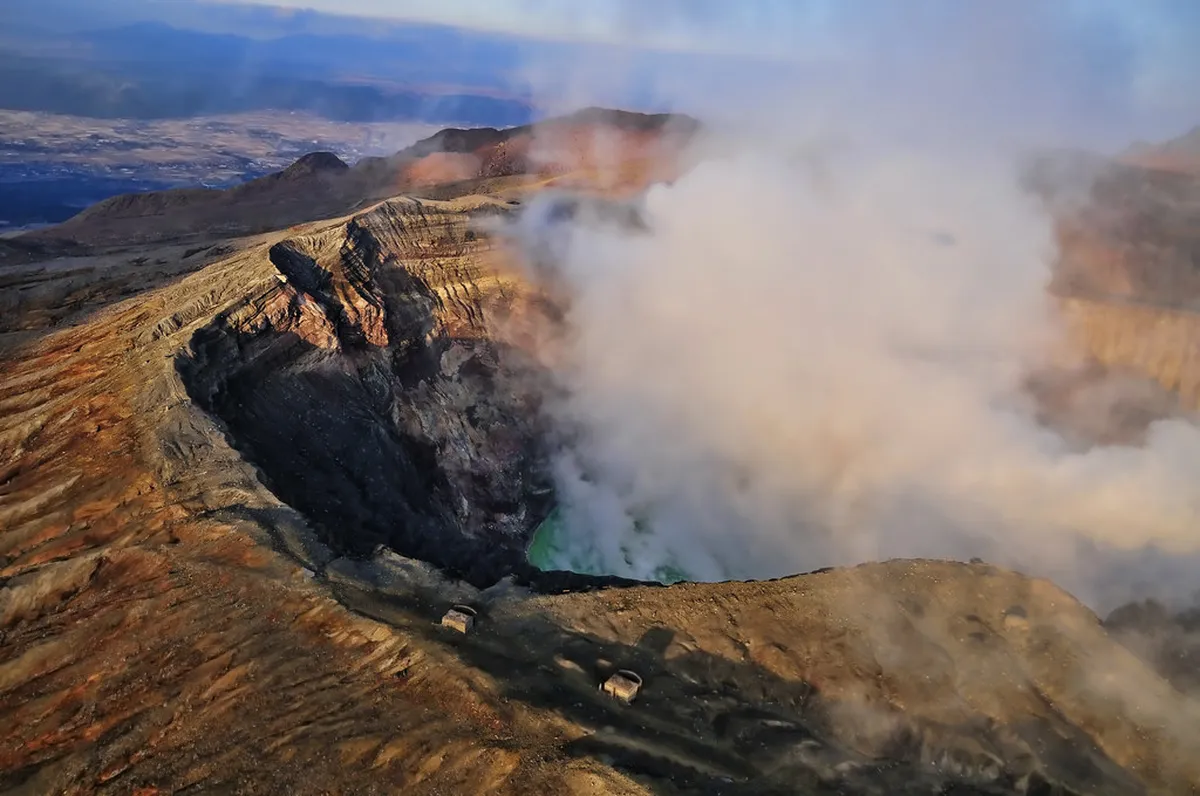
Getting to Aso from Beppu without a car is slow. The best public transport option is the JR Hohi Line from Beppu to Aso Station (about 2.5 hours, with a transfer at Oita, roughly 3,020 JPY). From Aso Station, a local bus runs to the Kusasenri area (about 40 minutes). The journey is long but the Hohi Line itself is a scenic mountain railway and part of the appeal. A rental car from Beppu cuts the total journey to under 90 minutes and opens up the Aso-Kuju National Park grasslands in between.
Budget a full day for Mt Aso. The standard loop covers the Kusasenri meadow, Nakadake crater viewing (conditions permitting), and the Aso Volcano Museum (700 JPY). Add the Daikanbo viewpoint on the northern caldera rim for an aerial perspective of the entire crater basin. The area is recognized as part of the Aso UNESCO Global Geopark, which documents the volcanic geology across the broader region. Time needed: full day (10–12 hours by public transport, 8 hours by car). This is the longest trip in this guide — plan it on a day you are not arriving or departing Beppu.
Kunisaki Peninsula: Remote Temples and Stone Demons
The Kunisaki Peninsula juts north of Beppu into the Seto Inland Sea and contains one of the strangest religious landscapes in Japan. For over a thousand years, ascetic monks blended Buddhism with Shinto practices here, carving stone demons (oni) into cliffsides and building temples in near-impossible locations. The route known as the Rokugo Manzan pilgrimage connects dozens of these sites across forested ridges. Most Western travelers have never heard of it.
A rental car is the only practical way to explore Kunisaki properly. The peninsula has minimal public bus coverage and the key sites are spread across mountain valleys 20–40 minutes from each other by road. From Beppu, the drive to the peninsula's first major stop — Futago-ji temple, with its pair of carved Nio guardians flanking a cedar-lined staircase — takes about 50 minutes via Route 10 north. Allow three to four hours to connect Futago-ji, Kumano Magaibutsu (the largest paired rock-carved Buddhist relief in Japan, about 6 m tall), and Fuki-ji, a national treasure wooden hall dating to the late Heian period.
The circular route back to Beppu via the eastern coast of the peninsula adds less than 30 minutes of driving and passes through Kitsuki, a small castle town with a well-preserved samurai quarter. Combining Kunisaki with Kitsuki makes for a rich full-day itinerary entirely off the standard tourist trail. Time needed: full day (rental car essential). Book the car from Beppu Station car rental outlets; Toyota Rent a Car and Nippon Rent-A-Car both have branches within 5 minutes' walk.
African Safari Wildlife Park
Beppu Kaihin Safari — known locally as the African Safari — is a drive-through wildlife park in Usa City, about 40 km north of Beppu. Lions, elephants, Bengal tigers, and giraffes roam enclosures large enough that the animals move freely around the vehicles. The Jungle Bus tour (reservation required, 1,800 JPY on top of entry) takes about 50 minutes and gets you inside enclosures you cannot enter by private car.
Without a car, the access is awkward. A Kamenoi bus connects Beppu Station to the safari park (about 60 minutes), but the schedule is thin — check the Oita Kotsu bus timetable for the specific departure times before committing to this trip. Entry is 2,600 JPY for adults; the Jungle Bus is extra. The park opens at 09:30 daily. It works best as a morning activity before driving south to Usa Jingu shrine (10 minutes by car), one of the most important Hachiman shrines in Japan and a dramatic site in its own right.
Time needed: 3–4 hours for the park alone. Best transport: rental car, which also allows you to add Usa Jingu shrine on the return leg. With children, this trip and Takasakiyama Monkey Park make a natural two-stop wildlife day.
How to Plan Your Day Trips: Logistics and Passes
The most important logistical decision is whether to rent a car for any given day. The JR Kyushu 3-Day Pass (Northern Kyushu area, 10,000 JPY) covers Yufuin via the Yufurin no Mori train, the Usuki/Takasakiyama route, and the Hita Yufu limited express. If you are doing Mt Aso by train, the All-Kyushu pass (18,000 JPY for 3 days) covers the Hohi Line. For Kunisaki and the African Safari, neither pass helps — rent a car for those days.
Beppu Station is the transit hub for everything. All JR limited express trains and most long-distance buses depart from here. The Kamenoi bus terminal, which handles local routes to Takasakiyama and the city's thermal districts, sits directly opposite the station's west exit. Study the the full Beppu itinerary framework before you finalize which trips to take on which days — the geographic logic matters (south-day for Usuki+Takasakiyama, west-day for Hita, north-day for Kunisaki+Safari, west-far-day for Aso).
Popular Kyushu attractions can sell out during Golden Week (late April to early May), Obon (mid-August), and the autumn foliage season (late October to mid-November). Book the Yufurin no Mori train and the African Safari Jungle Bus at least two weeks ahead during these periods. For more on what Beppu itself offers between day trips, see our top things to do in Beppu overview covering the Hells, sand baths, and onsen districts.
Quick Reference: Distance, Time, and Transport
Here is how each destination stacks up in practical terms from Beppu Station.
| Destination | Travel time | How to get there |
|---|---|---|
| Yufuin | 55 min by bus / 85 min by train | Kamenoi bus (900 JPY) or Yufurin no Mori scenic train |
| Takasakiyama Monkey Park | 25 min | Kamenoi bus route 7 (300 JPY) + monorail (300 JPY) |
| Usuki Stone Buddhas | 40 min + 10 min taxi | JR Nippo Honsen limited express (1,490 JPY) + taxi |
| Hita | 75 min | JR Yufu limited express (2,480 JPY) or expressway bus (1,600 JPY) |
| African Safari | 60 min | Kamenoi bus (thin schedule) or rental car recommended |
| Kunisaki Peninsula | 50 min to first stop | Rental car essential (Route 10 north) |
| Mount Aso | 2.5 hr by train / 90 min by car | JR Hohi Line with transfer or rental car |
- Yufuin: 38 km, 55 min by bus (900 JPY) or 85 min by scenic train — half-day or full day, no car needed.
- Takasakiyama Monkey Park: 10 km, 25 min by Kamenoi bus route 7 (300 JPY) — 2.5 hours, easy morning add-on.
- Usuki Stone Buddhas: 42 km, 40 min by JR limited express (1,490 JPY) + taxi — 5–6 hours, combine with Takasakiyama.
- Hita: 65 km, 75 min by JR limited express (2,480 JPY) — 4–5 hours, best on a clear day.
- African Safari: 40 km north, 60 min by Kamenoi bus — 3–4 hours, car strongly recommended.
- Kunisaki Peninsula: 50 km, rental car only (50 min to Futago-ji) — full day, car essential.
- Mount Aso: 90 km west, 2.5 hr by JR or 90 min by car — full day, check volcanic alert level first.
The most time-efficient three-day sequence for first-timers is: Day 1 Yufuin, Day 2 Takasakiyama + Usuki, Day 3 Kunisaki Peninsula by rental car. This covers the greatest geographic and experiential variety without long transit deadtime.
Frequently Asked Questions
How many days should I spend in Beppu?
Three days is the ideal length for most first-time visitors. This allows one day for the local Hells and two days for regional day trips. You will have enough time to relax in the hot springs without feeling rushed.
Is the Seven Hells Pass worth the cost?
The pass is worth it if you plan to visit five or more Hells. It costs 2,200 JPY, while individual entry is 450 JPY per site. Buy the pass at any of the Hell entrances to save money.
Can I visit Yufuin and the Hells in one day?
It is possible but very tiring to do both in a single day. You would spend most of your time on buses rather than enjoying the sights. We recommend dedicating a full day to each destination for a better experience.
Beppu is more than just a hot spring town. It is a gateway to some of the most varied landscapes in Kyushu — volcanic calderas, ancient Buddhist carvings, free-roaming macaques, and Edo-era merchant streets, all within a two-hour radius. Plan your day trips around the transport logic, check volcanic alert levels before heading to Aso, and book the Yufurin no Mori train early. The steam will be waiting when you return each evening. For guidance on how much time to spend in the city itself, see our how long to spend in Beppu planning guide.
Free: The Beppu Essentials guide
Top things to do, where to stay, a perfect day plan, getting around, and the best time to go — a Beppu mini-guide you can take offline.
You might also like

Continue reading
More guides you'll find useful