Ibusuki Day Trip From Kagoshima: 10 Essential Stops & Guide
Plan the perfect Ibusuki day trip from Kagoshima. Includes Ibusuki-no-Tamatebako train tips, sand bath guides, Mt. Kaimon views, and a full 1-day itinerary.
On this page
An Ibusuki day trip from Kagoshima packs volcanic sand baths, a caldera lake, and a dramatically cone-shaped volcano into a single manageable day. The route south along the Satsuma Peninsula is one of the most rewarding one-day excursions in Kyushu, and the logistics are straightforward once you know the train timetable. This guide covers every stop, every fare, and every bus connection you need for 2026.
The two biggest mistakes first-timers make are missing the Tamatebako sightseeing train and underestimating how spread out the attractions are once you arrive. Plan around the 09:56 departure from Kagoshima-Chuo and book your sand-bath slot in advance. If you are building a longer southern trip, pair this with a broader Kagoshima Itinerary for First-Timers to add Sakurajima and Sengan-en.
How to Get from Kagoshima to Ibusuki
The JR Ibusuki Makurazaki Line connects Kagoshima-Chuo Station to Ibusuki Station in about 85 minutes on a local train. The ordinary fare is ¥960 each way. Trains run roughly every hour and are covered by the JR Pass, making them a perfectly solid option if you are budget-conscious or missed the sightseeing service.
The better choice for most visitors is the Ibusuki-no-Tamatebako limited express. It covers the same route in about 50 minutes and costs ¥1,400 (base fare) plus a ¥530 reserved-seat surcharge — total ¥1,930 each way. The JR Pass covers the ¥1,400 base fare but does NOT cover the ¥530 seat reservation. Pay that at the ticket counter or a green machine at Kagoshima-Chuo. The train runs just twice daily in each direction from Kagoshima-Chuo: departures at approximately 09:56 and 13:56 in 2026. Missing the first train means a four-hour wait for the next, which compresses your day significantly — set an alarm.
The ¥530 Tamatebako seat-reservation surcharge is NOT covered by any JR Pass version. Secure your reserved seat at the green ticket machine or staffed counter the evening before travel. The train has no official unreserved car and runs at capacity during peak season (Golden Week, Obon, autumn foliage), so a last-minute supplement ticket may not be available.
Driving is a genuine alternative and saves roughly two hours of waiting time across the day. Rental cars are available at Kagoshima-Chuo and parking at all major Ibusuki attractions is free. The drive takes around 60 minutes via Route 226 along the coast. Drivers get the flexibility to loop Lake Ikeda, Cape Nagasakibana, and Nishi-Oyama in any order.
Getting Around Ibusuki: Bus vs. Car
Once you step off the train at Ibusuki Station, the attractions do not cluster within walking distance. Saraku Sand Bath Hall is a 10-minute walk from the station, but Lake Ikeda and Cape Nagasakibana are both 20-plus minutes away by bus. The Ibusuki 1-Day Bus Pass covers unlimited rides on the Ibusuki city bus network for ¥1,100 and is sold at the station tourist information window. For up-to-date bus schedules and attractions, consult the official Ibusuki tourism site. It pays for itself after two or three rides.
Key stops on the bus network: Ibusuki Station → Jungle Bath Bus Stop (sand bath area) → Lake Ikeda → Cape Nagasakibana → Flower Park Kagoshima. Buses run infrequently, often every 30–60 minutes, so photograph the timetable at each stop. Missing a bus by five minutes near Cape Nagasakibana can cost you 45 minutes of standing time in the sun.
If you are a group of two or more, a rental car often works out cheaper than the bus pass per person and adds significant scheduling flexibility. Note that Nishi-Oyama Station (Japan's southernmost JR station) is not served by the main bus loop — it is more conveniently reached by train or car than by bus.
| Transport Option | Kagoshima-Chuo to Ibusuki | Duration | Fare (One Way) | Best For |
|---|---|---|---|---|
| Tamatebako Limited Express | 09:56, 13:56 | ~50 min | ¥1,930 (¥1,400 + ¥530 surcharge) | Scenic route, themed experience, time-conscious travelers |
| Local Rapid Train (JR Pass covered) | Hourly | ~85 min | ¥960 (JR Pass covered) | Budget travelers, flexibility on timing |
| Rental Car (solo/per person) | Direct via Route 226 | ~60 min | ¥3,000–¥5,000/day (for 1–2 people) | Groups of 2+, custom itinerary, visiting Nishi-Oyama |
| Ibusuki 1-Day Bus Pass | From Ibusuki Station onward | Variable (20–45 min per stop) | ¥1,100 | Station-to-attractions, island-hopping approach |
Ibusuki-no-Tamatebako: The Sightseeing Train Experience
The Tamatebako is named after the legendary treasure box from the Urashima Taro folk tale — fitting given that the train itself seems to age you pleasantly from the moment you step inside. The design by architect Eiji Mitooka features two contrasting carriages: one white, one black, inspired by the smoke-and-mist theme of the tale. Wide panoramic windows run the length of each carriage, and the southern coast views open up properly around Sakanoue Station.
Reservations open a month in advance through JR Kyushu or the Ekinet reservation service. Seats along the window side facing the ocean (the left side heading south, right side returning north) sell fastest. Window-seat tickets for weekend departures in spring and autumn can disappear within hours of opening. If you cannot get a Tamatebako reservation, the local rapid train is a perfectly functional backup — the views are similar, just without the themed interior and café car.
The 50-minute ride includes a small bar service offering Kagoshima shochu cocktails and local snacks. It is one of the better ways to start the day before arriving at the sand baths. For full venue details on the sand-bath experience, see the Ibusuki sand bath attraction page with current entry prices and practical visitor tips.
Saraku Sand Bath Hall: Essential Steam Spa Tips
Saraku is the most visited of Ibusuki's sand-bath facilities, sitting right on the beach with a clean changing room, locker storage, and a communal onsen. Entry is ¥1,500 in 2026, which includes a yukata (the cotton robe you wear under the sand) and a small towel. Opening hours are 08:30–21:00 daily, though the outdoor sand area closes during heavy rain and strong wind. Check conditions before you visit during typhoon season (July–September).
The process is straightforward: change into the yukata, hand your bag to the attendant, walk to the beach trench, and lie down. Staff cover you efficiently with shovels and position your yukata to keep grit out. The volcanic steam heats the sand to roughly 50–55°C at depth. Most people stay for 10–15 minutes; anything over 20 minutes is genuinely uncomfortable and staff will gently advise you to get up. After the sand, you shower off the grit, then move to the indoor onsen to soak.
Arrive at Saraku between 08:30 and 11:30 to secure a bed with minimal crowding. Tour groups typically cluster between 11:30 and 15:00, so an early morning sand bath paired with lunch afterward gives you the best experience. The facility operates until 21:00 but the outdoor sand area occasionally closes during typhoon season (July–September) or heavy rain — check conditions before heading down.
Bring a small waterproof bag for your phone if you want a photo of the burial (a friend or a friendly stranger is needed). The facility provides all essentials but not shampoo or conditioner — bring your own if that matters. Saraku has the busiest sand beds in Ibusuki; if you want a less crowded experience, the municipal Jungle Bath Sunamushi about 500m north along the beach is cheaper (around ¥1,300) and usually less packed midweek. The 12 Best Kagoshima Onsen: Sand Baths & Volcano Views culture is deeply embedded in the region and the sand bath is its most theatrical expression.
Lake Ikeda: Japan's Largest Caldera Lake
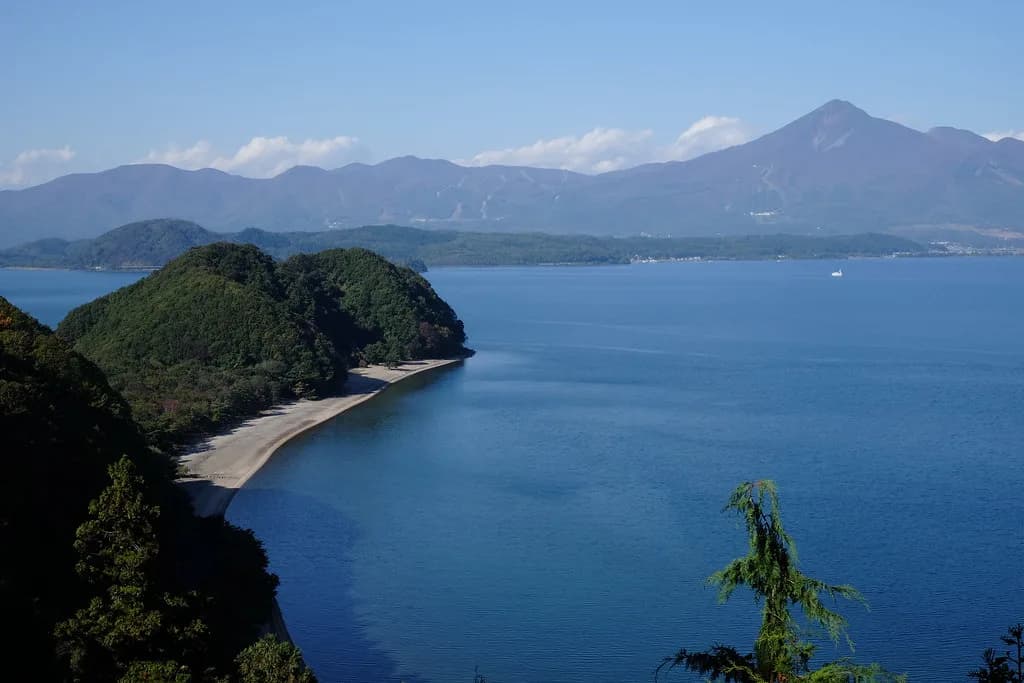
Ikeda-ko sits about 15 km west of Ibusuki Station and covers 11 square kilometres of glassy water inside an ancient volcanic caldera. It is the largest lake in Kyushu and one of the most photogenic on the entire island. The view across the lake toward Mount Kaimon — its near-perfect cone reflected in calm morning water — is one of the genuinely memorable images of southern Kagoshima.
The lake has a resident legend: Issie, a reported long-necked creature similar in myth to the Loch Ness Monster. A small roadside statue of Issie stands near the main parking area, and the gift shop stocks appropriately kitsch merchandise. More reliably, the lake is home to enormous freshwater eels and large snapping turtles visible near the observation platform. Entry to the lakeside viewing area is free; allow 30–40 minutes here.
The Route 226 lakeside road connects the observation point to Cape Nagasakibana in about 10 minutes by car or 25 minutes by bus. If you are on the bus pass, the Lake Ikeda stop is on the main Ibusuki City Bus loop and is a natural pairing with the cape for the afternoon leg of your day.
Cape Nagasakibana and Mount Kaimon Views
Cape Nagasakibana is the southernmost tip of the Satsuma Peninsula, jutting into the East China Sea where the Pacific current meets coastal rock. The small Ryugu-jo Shrine here marks the legendary spot where the fisherman Urashima Taro was supposedly taken to the sea god's palace — the same folk tale that names the Tamatebako train. The red torii gate against the blue ocean is one of the most-photographed coastal scenes in Kyushu.
From the cape you get an unobstructed view of Mount Kaimon rising 922 metres above the water. Kaimon-dake is called the Satsuma Fuji because of its almost textbook stratovolcano silhouette. You see the mountain from many points during the day, but the cape gives you the best combined land-and-sea framing. Allow 30–45 minutes to walk the headland path and photograph the shrine. Admission is free.
Serious hikers can tackle Mount Kaimon itself — the summit trail is approximately 4–5 hours return from the Kaimon-dake Trailhead, which is reachable from Kaimon Station on the Ibusuki Makurazaki Line. This works better as its own dedicated day rather than squeezed into the standard Ibusuki day trip. On the main day-trip circuit, stay at the cape and save the climb for a return visit.
Nishi-Oyama Station and the Yellow Mailbox
Nishi-Oyama is the southernmost operational JR station in Japan. The station itself is an unmanned single-platform stop surrounded by rice paddies, with Mount Kaimon framed perfectly behind it. The yellow postbox on the platform — painted the colour of warm sunlight — has become a pilgrimage point for Japan rail enthusiasts. Postcards sent from here are stamped with a special Nishi-Oyama Station seal, making them a genuinely unusual souvenir.
Getting here from Ibusuki Station takes about 20 minutes on the local Ibusuki Makurazaki Line. Trains stop approximately every 30–60 minutes, so check the timetable before committing. The best strategy is to chain this stop with Kaimon Station (one stop further north) for your return journey toward Kagoshima, rather than backtracking. The late afternoon light on the paddy fields and the mountain makes this one of the better photography stops on the circuit.
Many visitors combine Nishi-Oyama with a stop at the nearby Ikedako roadside station for local produce and soft-serve ice cream made from Kagoshima milk. It is a short taxi ride or a 15-minute walk from the station and a natural pause before the final northbound train back to the city.
The Tamatebako Seat Reservation: What the JR Pass Does Not Cover
The JR Pass is frequently listed as covering the Tamatebako, which is technically correct for the base fare. What most guides fail to flag is that the ¥530 reserved-seat surcharge is separate and is not included in any version of the JR Pass. You pay this at the green ticket machine or staffed counter at Kagoshima-Chuo, ideally the evening before travel. IC cards (Suica, Nimoca, Hayakaken) do not work for this booking — cash or credit card only at the machine.
The practical consequence: if you assume the JR Pass handles everything and arrive at the gate without a seat ticket, staff will issue you a supplement ticket on the spot — but only if there are unreserved standing spaces available. The Tamatebako has no official unreserved car. During Golden Week (late April–early May), Obon (mid-August), and autumn foliage weekends (October–November), the train runs at capacity and a last-minute supplement may not be possible. Book the seat as soon as your Japan itinerary is confirmed.
One more detail: the Tamatebako runs on a seasonal schedule and occasionally does not operate on certain maintenance days in January and February. Check the 10 Essential Kagoshima Travel Tips: A Complete Guide for current schedule notes, or verify on the JR Kyushu official timetable before you finalize your trip dates.
What to Eat in Ibusuki: Nagashi Somen and Local Kurobuta
Tosenkyo is the most theatrical lunch option in the region. The restaurant channels ice-cold spring water through bamboo chutes and you catch somen noodles as they flow past your seat with chopsticks. The main set costs around ¥1,600–¥1,800 and comes with pickles, dipping sauce, and grilled trout or sweetfish on the side. It is a 20-minute bus ride from Ibusuki Station and well worth fitting into the midday gap between the morning sand bath and the afternoon coastal circuit.
For Kagoshima food purists, kurobuta black pork is the local flagship ingredient. Several restaurants near Ibusuki Station serve kurobuta tonkatsu for around ¥1,500–¥2,000. The pork from Kagoshima's Berkshire-descended breed is visibly marbled and noticeably sweeter than standard tonkatsu. A few lunch spots on the Ibusuki Station street also carry kakuni (soy-braised pork belly) bowls at more affordable prices.
Budget travelers should note that the Ikedako roadside station sells onigiri, local citrus, and soft-serve for under ¥500 total — a practical pit-stop if you are pushing through on the 1-day bus pass without a sit-down meal. Cash is essential at most Ibusuki eateries and food stalls; card acceptance is limited outside the large hotels.
Is an Ibusuki Day Trip From Kagoshima Worth It?
The answer is yes for almost any traveler spending two or more nights in Kagoshima. The sand bath alone earns the journey for most people — it is a genuinely rare experience that exists nowhere else in Japan at scale. The combination of volcanic geography, Urashima folk legend, and Japan's southernmost train station makes for a day with more texture than the average beach excursion.
Total costs are manageable: ¥1,930 × 2 for the Tamatebako (or ¥960 × 2 local), ¥1,100 bus pass, ¥1,500 sand bath, and ¥1,800 lunch puts the day at roughly ¥8,700 per person on the sightseeing train. Local train users can do the same day for around ¥6,600. Ibusuki is also one of the most popular 10 Best Day Trips From Kagoshima: The Ultimate Guide for families, as the sand baths have no age minimum and children find the burial process amusing rather than scary.
Best timing in 2026 is late March through May and October through November, when temperatures are moderate and the mountain views are clearest. Summer is hot and muggy but the baths remain open. Winter (December–February) is pleasant and uncrowded, though the Tamatebako schedule is reduced and some outdoor facilities operate shorter hours. Check the forecast before going — the sand baths close when the beach becomes unsafe in strong wind or heavy rain.
Overnight Extension: Ibusuki as a Base
If one day feels rushed, Ibusuki repays an overnight stay. The large resort-style hotels along the beachfront all offer private sunamushi facilities and multi-course kaiseki dinners featuring kurobuta and local seafood. These properties book out two to three months ahead for spring and autumn weekends — the same advance-booking logic as the Tamatebako train applies. For onsen stays, the 10 Best Kagoshima Onsen Ryokan and Travel Tips options in Ibusuki range from luxury beachfront resorts to modest family-run inns, most in the ¥12,000–¥25,000 per person per night range with two meals included.
An overnight also unlocks Healthy Land (Tamatebako Onsen), an outdoor infinity pool facing the Pacific that looks directly at Mount Kaimon. Entry is ¥520. It opens at 10:00 and closes at 19:30 (last entry 19:00), but the hour before sunset offers the best light on the mountain. This is worth the trip in its own right and does not fit comfortably into a single-day schedule.
Those staying overnight can also tackle the Mount Kaimon summit trail properly — an early 06:00 start from the trailhead, summit by 09:30, back by noon, and on a southbound local train toward Cape Nagasakibana for the afternoon. The Healthy Land Tamatebako Onsen then makes a fitting finale before dinner back at the hotel.
Pair this with our broader Kagoshima attractions guide for the full city overview.
Frequently Asked Questions
How do I get from Kagoshima to Ibusuki?
The fastest way is the JR Ibusuki-no-Tamatebako train. It takes 50 minutes from Kagoshima-Chuo Station. Local trains are cheaper but take nearly 90 minutes.
Is the Ibusuki sand bath worth it?
Yes, it is a unique volcanic experience. The heat helps with circulation and muscle pain. It costs around ¥1,500 and takes about 30 minutes total.
Can I use the JR Pass for the Ibusuki-no-Tamatebako train?
Yes, the JR Pass covers the full fare. However, you must reserve a seat in advance at a ticket office. These trains often sell out during weekends.
An Ibusuki day trip from Kagoshima is a highlight of any southern Japan journey. Book the Tamatebako seat the moment your dates are confirmed, grab the 1-day bus pass on arrival, and hit Saraku early before tour groups arrive. The combination of the sand bath, Lake Ikeda, and Cape Nagasakibana with Mount Kaimon as a constant backdrop makes for one of the most varied one-day excursions in Kyushu. Safe travels on the Satsuma Peninsula.
Free: The Kagoshima Essentials guide
Top things to do, where to stay, a perfect day plan, getting around, and the best time to go — a Kagoshima mini-guide you can take offline.
You might also like
Continue reading
More guides you'll find useful