
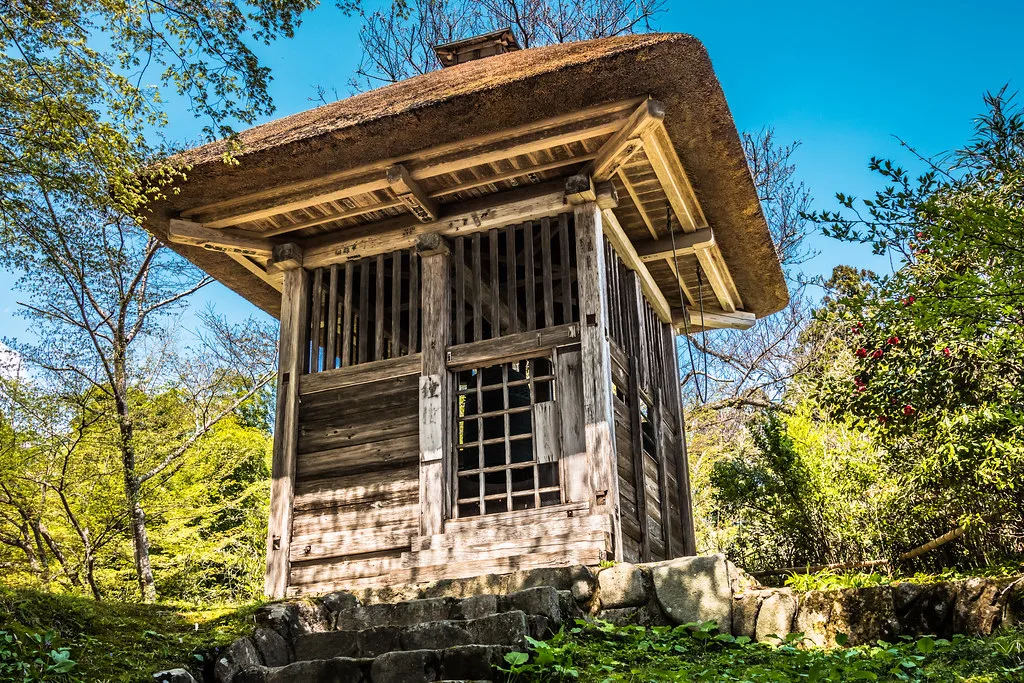
Chuson-ji Temple
Hiraizumi's grandest temple, crowned by the dazzling gold-leaf Konjikido — the Northern Fujiwara's surviving masterpiece.
Visitor guide →
The best things to do in Hiraizumi — Japan's UNESCO World Heritage temple town in Iwate. Chuson-ji's gold-leaf Konjikido, Motsu-ji's Pure Land garden, Takkoku-no-Iwaya cliff temple and Geibikei Gorge, with 2026 tickets, hours and how to get around.
Hiraizumi is a small town in Iwate Prefecture with an outsized place in Japanese history. For roughly a century during the Heian period, it was the seat of the Northern Fujiwara clan and one of the largest cities in Japan — a northern capital built to rival Kyoto, funded by the gold mines of the Tohoku frontier. The Fujiwara poured that wealth into temples and gardens designed as earthly visions of the Buddhist Pure Land, the paradise believers hoped to reach after death. The dynasty fell in 1189, but enough of that golden age survived that in 2011 UNESCO inscribed Hiraizumi on the World Heritage List as "Temples, Gardens and Archaeological Sites Representing the Buddhist Pure Land."
That heritage is what makes Hiraizumi one of the most rewarding day trips in northern Japan. The headline sights — Chuson-ji's gold-leaf Konjikido and Motsu-ji's mirror-still Pure Land garden — sit within a couple of kilometres of the station, while ruined gardens and a dramatic cliff temple round out the picture and the nearby Geibikei Gorge adds a boat ride through limestone cliffs. We've narrowed the field to the 5 attractions that consistently reward the time and ticket price in 2026. Each card below links to a full visitor guide with verified opening hours, current pricing and practical tips. Bookmark this page as your starting point.
Hiraizumi's grandest temple, crowned by the dazzling gold-leaf Konjikido — the Northern Fujiwara's surviving masterpiece.
Visitor guide →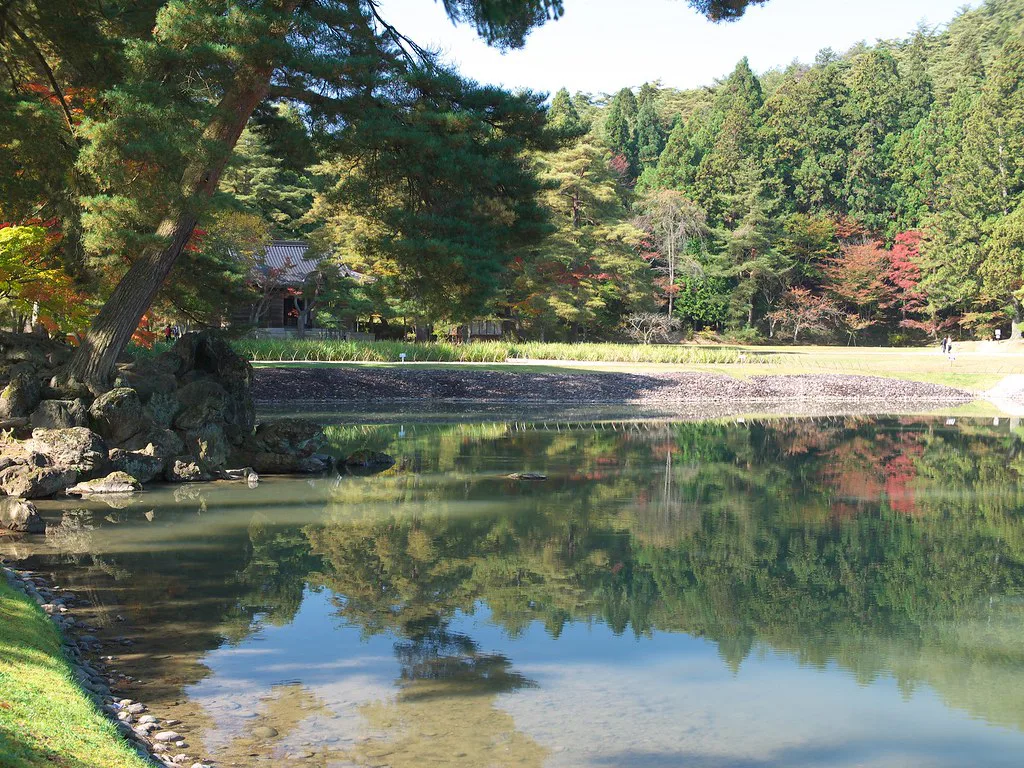
Home to Japan's best-preserved Pure Land garden — a serene pond-and-island landscape recreating Buddhist paradise.
Visitor guide →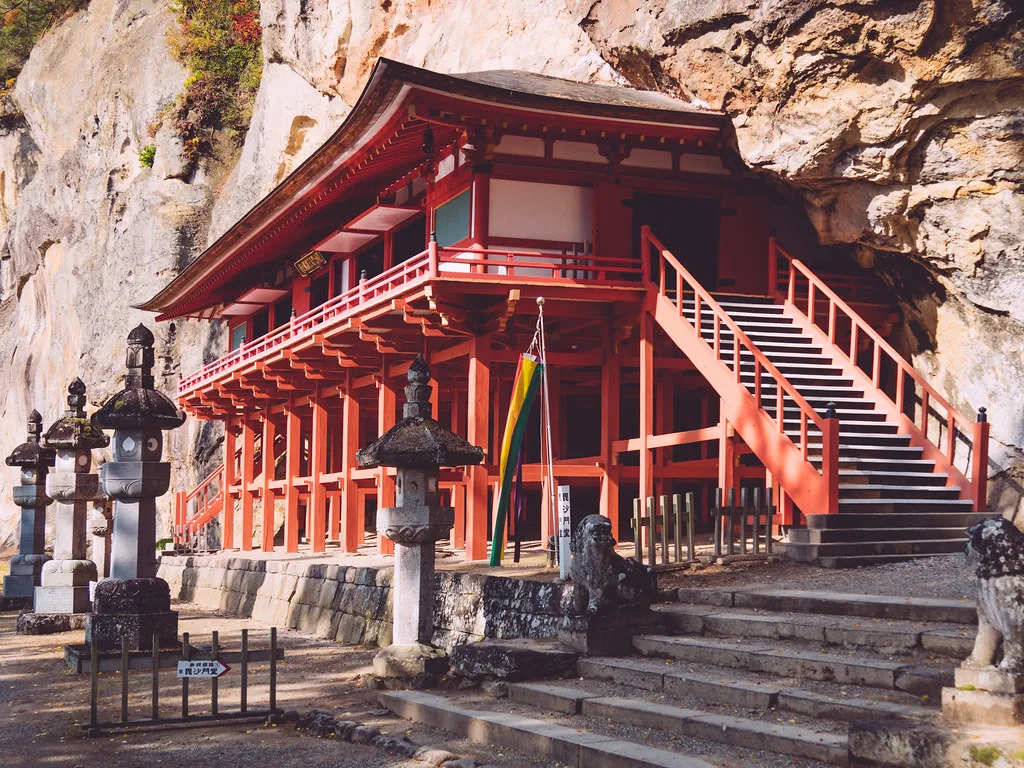
A striking vermilion Bishamondo hall set into a cliff face, founded to honour a 9th-century victory; west of central Hiraizumi.
Visitor guide →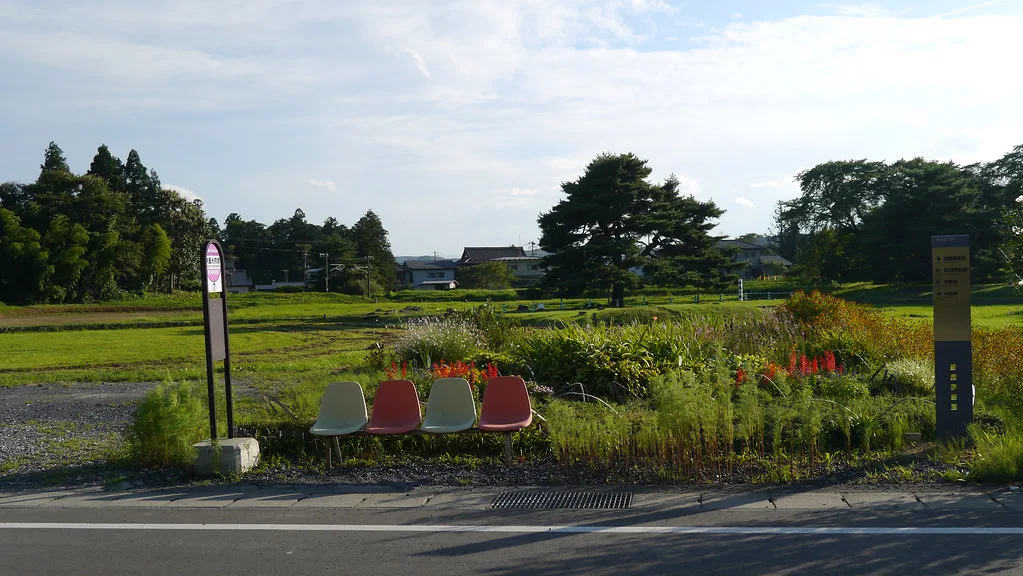
A tranquil Pure Land garden ruin next to Motsu-ji — pond and lawns marking a lost 12th-century temple, part of Hiraizumi's UNESCO listing.
Visitor guide →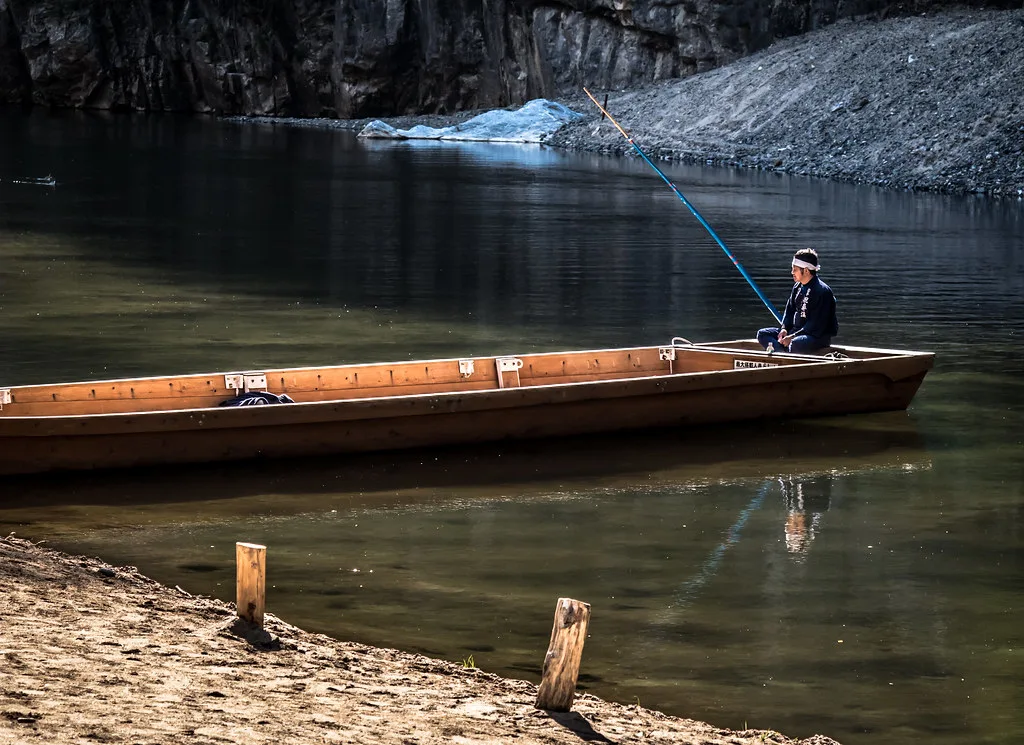
A serene gorge near Hiraizumi where a boatman poles you between towering limestone cliffs, finishing with the famous Geibi oiwake song.
Visitor guide →Hiraizumi's sights fall into a few clear groups, which helps when you're deciding what to prioritise for a half day versus a full day.
Chuson-ji is the headline. Founded in the 9th century and expanded under the Fujiwara, the hilltop temple complex is best known for the Konjikido — the "Golden Hall," a small wooden building sheathed entirely in gold leaf and lacquer, sheltering 21 gilded Buddhist statues and the mummified remains of three generations of Fujiwara lords. Now protected inside a modern concrete shelter, it is one of only a handful of structures to survive from Hiraizumi's golden age, and it remains the single most important sight in town.
Two sites preserve the Pure Land garden ideal — a landscape laid out as a vision of Buddhist paradise. Motsu-ji has Japan's best-preserved Heian-period garden, centred on the Oizumi-ga-ike pond with its carefully placed islands, stones and a rare surviving "yarimizu" winding stream. The temple buildings burned long ago, but the garden survives almost intact. Next door, the Kanjizaio-in garden ruins mark a lost 12th-century temple; the pond and lawns remain as a quiet, free-to-enter archaeological garden that is part of the UNESCO listing.
Takkoku-no-Iwaya sits west of the main district, a vermilion Bishamondo hall built into the base of a cliff. Founded to honour a 9th-century military victory and dedicated to Bishamonten, the Buddhist god of war, it is the most dramatic single structure in the area and a rewarding detour for visitors with a half day to spare.
Geibikei Gorge lies a short train ride away near Ichinoseki. Here a boatman poles a flat-bottomed boat upstream between towering limestone cliffs on a roughly 90-minute round trip, finishing with the famous Geibi-oiwake folk song echoing off the rock. It pairs naturally with Hiraizumi's temples for a fuller day out and is the one attraction here that isn't about Pure Land Buddhism.
Most of Hiraizumi's headline sights charge modest admission, but you can build a meaningful visit around the free options too.
A full day taking in Chuson-ji, Motsu-ji and Geibikei runs to roughly ¥3,500 in admissions before transport. Confirm exact, current pricing on each linked visitor guide before you travel.
Hiraizumi was inscribed as a UNESCO World Heritage Site in 2011, the first cultural listing in the Tohoku region. What earned the inscription was not any single building but a complete idea made into landscape — the attempt to recreate the Buddhist Pure Land, a paradise of the after-life, here on earth. The Northern Fujiwara, ruling from Hiraizumi through the 12th century, used the region's gold wealth to lay out temples and gardens according to this Pure Land cosmology, with ponds, islands and halls aligned to symbolise paradise.
The World Heritage listing covers five inscribed components: Chuson-ji, Motsu-ji, the Kanjizaio-in garden ruins, the Muryoko-in ruins (a vanished temple modelled on Kyoto's Byodo-in), and Mount Kinkeisan, the small conical hill the Fujiwara treated as sacred. Chuson-ji and Motsu-ji are the two you can fully experience as temples today; the others survive as archaeological gardens and sites. Takkoku-no-Iwaya and Geibikei Gorge, while close by and well worth visiting, are not part of the inscribed property.
Hiraizumi's temple core is compact enough to see in half a day to a full day. With a half day you can reasonably cover Chuson-ji and Motsu-ji, the two essential sights, by walking or the loop bus. A full day lets you add the Kanjizaio-in ruins and Takkoku-no-Iwaya at an unhurried pace.
Adding Geibikei Gorge turns it into a fuller day — budget roughly two to three extra hours once you factor in the train to Ichinoseki, the connection toward the gorge and the 90-minute boat ride. Many visitors do Hiraizumi and Geibikei together in one long day from Sendai or Morioka; an overnight in the area lets you slow down and see the temples in early-morning light before the tour buses arrive.
Hiraizumi is small and the main sights are close to the station. Chuson-ji is about 1.5 km away and Motsu-ji only around 700 m, both walkable, though the climb up to Chuson-ji's Golden Hall is a steady uphill.
The easiest way to link the temples is the Runrun loop bus, which circles between Hiraizumi Station, Motsu-ji, Chuson-ji and Takkoku-no-Iwaya at regular intervals through the day. Rental bikes are available near the station and are a pleasant option in fair weather given the flat, short distances between the central sights.
For Geibikei Gorge, take the JR line from Hiraizumi to Ichinoseki and connect onward toward the gorge (seasonal direct buses also run between Hiraizumi Station and Geibikei in the warmer months). Hiraizumi itself sits on the JR Tohoku Main Line and Shinkansen corridor: it's roughly 40 minutes from Morioka and about 35 minutes from Sendai by the fastest connections, which is what makes it such a practical day trip from either city.
Hiraizumi rewards visits in every season, but a few windows stand out. Late April brings cherry blossoms to the temple grounds, lovely against the dark cedars of Chuson-ji. Late June is peak season for Motsu-ji's celebrated iris garden, when the Pure Land pond is fringed with blooming flags. Autumn — roughly late October into November — sets the hillside maples ablaze and is arguably the most photogenic time of all.
If you can time it, the Fujiwara festivals in early May and early November fill the town with Heian-period costume processions and historical pageantry that bring the Fujiwara era vividly to life. Winter is quiet and atmospheric but cold, with shorter temple hours, so check current opening times on each visitor guide before you go.
Hiraizumi is famous as a UNESCO World Heritage Site (inscribed 2011) preserving the temples and Pure Land gardens of the Northern Fujiwara clan, who ruled this part of northern Japan in the 12th century. Its single most famous sight is the Konjikido, the gold-leaf "Golden Hall" at Chuson-ji.
Half a day covers the two essential temples, Chuson-ji and Motsu-ji. A full day lets you add the Kanjizaio-in ruins and Takkoku-no-Iwaya at a relaxed pace, and tacking on Geibikei Gorge makes a long but very doable single day from Sendai or Morioka.
Hiraizumi sits on the JR Tohoku Main Line and Shinkansen corridor — about 40 minutes from Morioka and roughly 35 minutes from Sendai by the fastest connections. From Hiraizumi Station the Runrun loop bus links the main temples.
Yes — for anyone interested in Japanese history, Buddhism or gardens, Hiraizumi is one of the most rewarding stops in the Tohoku region. The gold-leaf Konjikido and Motsu-ji's Pure Land garden are unique survivors of Japan's Heian-period golden age, and the town is compact and easy to see in a day.
Chuson-ji (Konjikido and treasure house) costs ¥1,000, Motsu-ji is ¥700, and Takkoku-no-Iwaya is about ¥500. The Kanjizaio-in garden ruins are free. The Geibikei Gorge boat ride costs around ¥1,800.
They are two different gorges near Ichinoseki with similar-sounding names. Geibikei is the one with the boat ride between tall limestone cliffs, and it's the one paired with Hiraizumi in this guide. Genbikei is a separate, shallower rocky gorge you walk alongside — easy to confuse, so double-check which one your route is heading to.
Once you've chosen your attractions, these in-depth guides help you turn this hub into a full itinerary: