

Yamashita Park sits at the heart of Yokohama's waterfront and offers one of the most accessible free escapes in the entire Kanto region. The 750-meter promenade stretches along the harbor, delivering open views of the Port of Yokohama alongside rose gardens, historic monuments, and a full-size ocean liner you can walk aboard. Most visitors spend two to three hours here before moving on to Chinatown or the Red Brick Warehouse next door.
This Yamashita Park visitor guide covers everything you need for a well-planned 2026 trip: the park's history, the best monuments to find, how to tour the Hikawa Maru, rose-garden bloom windows, family logistics, and how to get here by train or water bus. The park grounds are free and open around the clock — no reservation required.
History and Significance of Yamashita Park (山下公園)
The park's origins are inseparable from the Great Kanto Earthquake of 1923. The disaster left Yokohama in ruins, and city planners made a pragmatic decision: use the enormous volume of rubble and debris to reclaim land along the harbor edge. That reclaimed strip became Japan's first public seaside park, which officially opened in 1930 and has remained free to enter ever since.
Walking the stone paths today, you are literally standing on the city's recovery. The layout borrowed from Western waterfront parks of the era — wide promenades, open lawns, and international monuments — and set a template for urban design that still feels modern. You can read the official management history on the Official Yokohama City Park Information page.
The park's international character reflects Yokohama's role as Japan's primary foreign-trade port from the mid-19th century onward. Monuments donated by sister cities and foreign communities line the promenade, making the park a kind of open-air record of the city's diplomatic history. That dual identity — disaster memorial and celebration of global exchange — gives Yamashita Park a depth that most seaside parks lack.
The Akai Kutsu sightseeing loop bus stops directly at Yamashita Park. A ¥600 day pass covers unlimited rides and is the most convenient way to link the park with Chinatown, the Marine Tower, and the Red Brick Warehouse on the same day.
Top Monuments and Landmarks to Explore
The most photographed spot is the statue of the Girl with Red Shoes, positioned near the eastern end of the promenade. The statue depicts Kimi, a real child from Shizuoka whose story became the basis of a beloved Japanese nursery rhyme. It is small, easy to miss if you are moving quickly, and always surrounded by visitors stopping to read the plaque.
Toward the center of the park stands the Guardian of Water fountain, a gift from San Diego — Yokohama's oldest American sister city. The circular basin and bronze figure provide a natural gathering point and one of the better spots for harbor photography when the light is right. Just west of it, look for the Indian Water Tower, a mosaic-tiled structure donated by the local Indian community to honor those who helped during the 1923 earthquake recovery. Its decorative tiles and archway contrast sharply with the otherwise restrained park design.
Running north along the promenade takes you past a series of smaller memorials and garden beds. Each landmark is labeled in Japanese and English, so the self-guided walk is straightforward even without a tour guide. Allow at least 40 minutes if you plan to read every plaque.
Hikawa Maru: Exploring Yokohama's Floating Museum
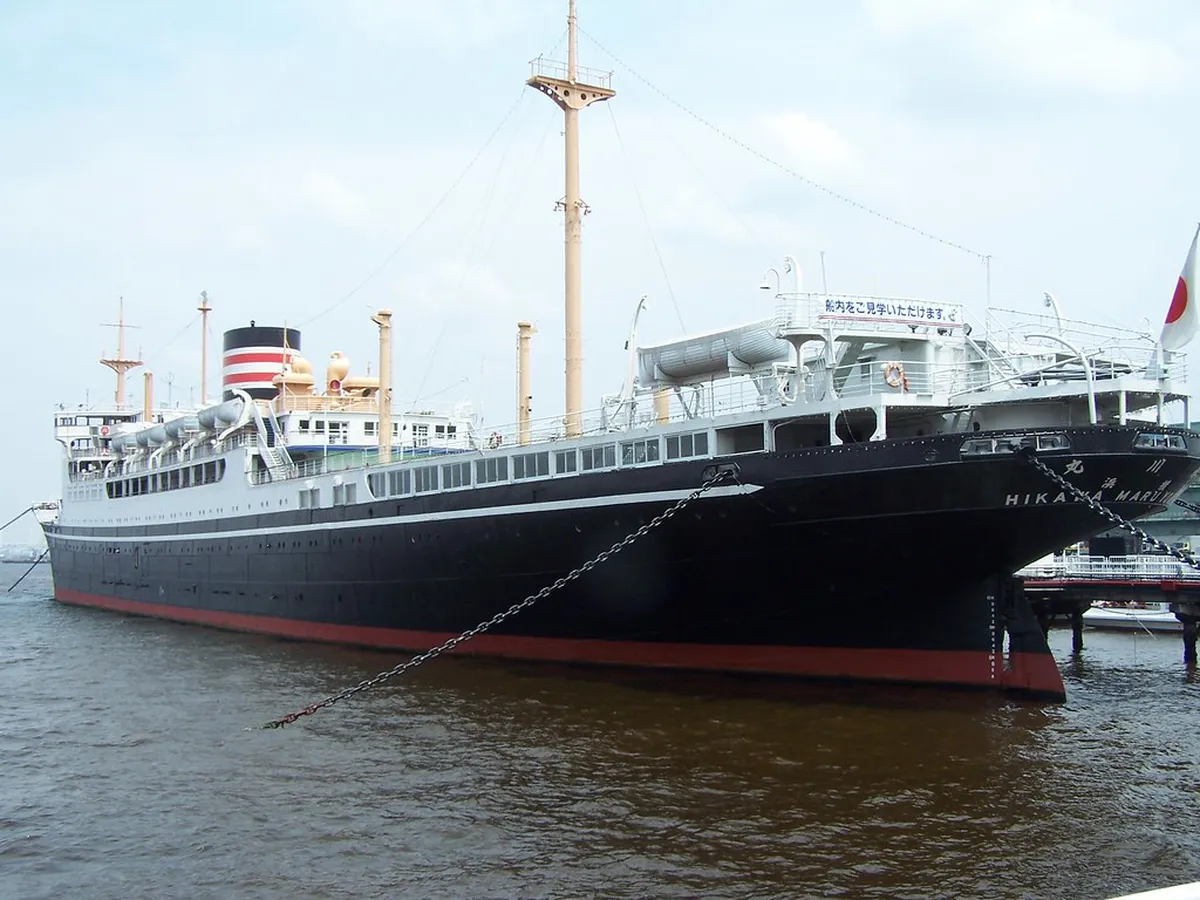
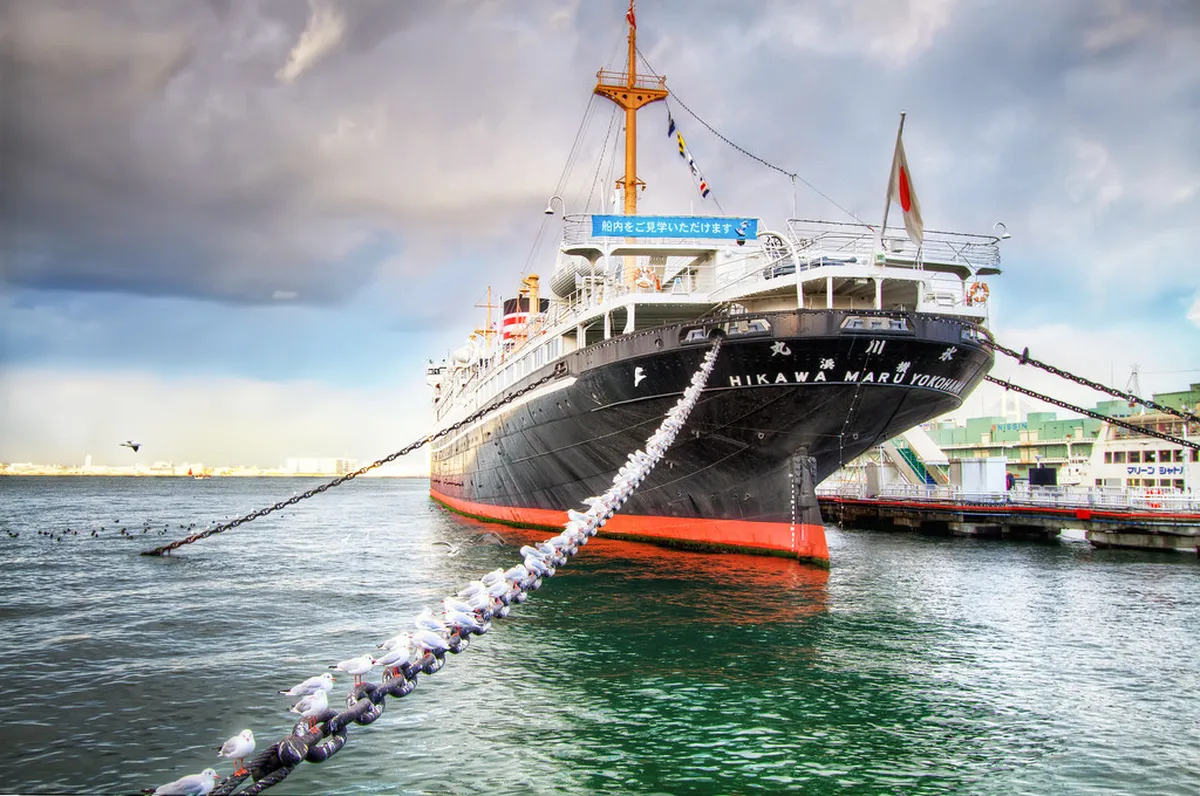
The Hikawa Maru is a 1930 ocean liner permanently docked at the park's northern end, operating as the only surviving pre-war Japanese passenger ship still afloat. NYK Line built the vessel to service the Japan–Seattle route, and it completed more than 250 Pacific crossings before the war. During World War II the ship was requisitioned as a hospital vessel, a chapter in its history that most visitors walk past without knowing — the exhibit panels on the lower decks document this period in detail.
Admission is approximately ¥300 for adults, with reduced rates for seniors and children. Check the NYK Hikawamaru Official Site for current prices and the 10:00–17:00 opening window before visiting. Once on board, the most striking spaces are the first-class smoking room with its original Art Deco furniture and the engine room, where the scale of the diesel machinery is genuinely impressive. The captain's bridge at the top gives you a panorama back over the entire park and the Yokohama skyline.
Budget at least an hour inside the ship. The narrative flows from the passenger decks down to the working machinery, and the combination of restored interiors and factual panels about Pacific passenger travel in the 1930s makes this one of the better free-to-cheap maritime museums in Japan. Families with older children tend to spend the most time in the engine room.
Seasonal Beauty: The Rose Garden and Bay Views
| Transport Option | Route / Stop | Journey Time | Fare |
|---|---|---|---|
| Minatomirai Line | Motomachi-Chukagai Stn, Exit 4 | <5 min walk | Train fare |
| Sea Bass water bus | Yokohama Stn → Yamashita Park pier (via MM21) | ~20 min | Higher than train |
| Akai Kutsu loop bus | Sakuragicho → Yamashita Park stop | Varies | ¥220/ride or ¥600 day pass |
The rose garden sits near the eastern entrance and contains over 160 varieties — roughly 1,900 individual plants — maintained by the city parks department. Two bloom windows per year make the garden worthwhile: the spring flowering peaks in mid-May, and the autumn flowering peaks in mid-October. Spring is the larger and more fragrant of the two. Outside these windows the garden is still attractive, but the dense color and scent that make it photogenic are absent.
The promenade beyond the garden faces directly onto the harbor, so views of the Yokohama Bay Bridge are unobstructed from most benches. At sunset the bridge catches warm light, and once dark both the bridge and the nearby Yokohama Landmark Tower illuminate the skyline. Arriving around 16:30 in summer lets you see the park in daylight, catch sunset from the waterfront, and then walk the illuminated promenade before dinner.
The harbor itself is active with container vessels and ferries throughout the day. Watching large ships maneuver into the port from a park bench — for free — is one of those experiences that does not appear in most guidebooks but consistently surprises first-time visitors. Bring a zoom lens if photography is part of your plan.
Family-Friendly Tips for Visiting with Kids
The entire 750-meter promenade is flat and paved, making stroller and wheelchair navigation straightforward throughout. A Rest House near the center provides accessible restrooms and coin lockers, which is useful if you are planning a full day in the waterfront area. The wide paths mean the park handles weekend crowds without bottlenecks — there is almost always space to move even during popular bloom periods.
There are no food vendors inside the park. The most practical option for a picnic is the Lawson convenience store at the park's western entrance, where you can pick up bento boxes and drinks before finding a quieter lawn section further from the Hikawa Maru pier. The lawn areas behind the fountain see far less foot traffic than the main promenade and are good for an uninterrupted rest.
Families arriving from Minato Mirai have a scenic alternative: walk the Kishamichi Promenade along the waterfront, passing through the Red Brick Warehouse area and arriving at Yamashita Park from the northwest. The walk takes about 20 minutes and keeps children near the water the entire time. It is a better use of time than another train segment when the weather is clear.
Logistics: How to Get There and Best Times to Visit
The fastest route from central Yokohama or Tokyo is the Minatomirai Line to Motomachi-Chukagai Station. Use Exit 4 — the walk to the eastern end of the park near the rose garden takes under five minutes. From Shinjuku or Shibuya, the journey is roughly 45–50 minutes using the direct Tokyu Toyoko Line service, which connects to the Minatomirai Line at Yokohama Station without a platform change.
A slower but more memorable option is the Sea Bass water bus, which docks directly at the park pier. The boat connects Yokohama Station's East Exit pier to Yamashita Park in about 20 minutes, stopping at the Minato Mirai 21 pier en route. Find current schedules and fares on the Yokohama Sea Bass Timetable & Routes website. Fares are higher than the train, but the harbor approach to the park is one of the better introductions to the Yokohama waterfront.
A third option worth knowing is the Akai Kutsu sightseeing loop bus, a retro-style red bus that runs a circuit through Yokohama's main tourist districts and stops directly at Yamashita Park. One-ride fare is ¥220, and a day pass for ¥600 covers unlimited rides — useful if you plan to visit Chinatown, the Marine Tower, and the Red Brick Warehouse on the same day. For first-time visitors traveling with children, the Akai Kutsu is often the most convenient link between sights.
Weekday mornings before 10:00 offer the fewest crowds. On weekends, early afternoon sees the most visitors. The park never closes, so night visits are always an option — the illuminated Hikawa Maru and Bay Bridge views are reliable even on overcast evenings.
There are no food vendors inside the park. The nearest option is the Lawson convenience store at the western entrance — stock up on bento boxes and drinks before heading deeper into the grounds.
Nearby Attractions: Extending Your Yokohama Itinerary
The park's location makes it a natural hub for a full-day Yokohama itinerary. A five-minute walk southwest leads directly into Yokohama Chinatown, the largest in Japan. The street-food stalls near the Zeniarai Benzaiten shrine gate are worth seeking out — steamed buns sold to eat while walking are the standard local approach to a quick lunch before or after the park.
Walking north from the park along the waterfront takes you to Osanbashi Pier, a futuristic cruise terminal with a large wooden roof deck open to the public. The deck has no railing at the harbor edge, giving an unusually unobstructed view of the bay and a good angle back toward Yamashita Park. It is a five-minute walk and completely free, making it an easy add-on for photographers.
Continuing further north brings you to the Red Brick Warehouse, which hosts seasonal markets and a permanent collection of craft shops and restaurants. The walk between Yamashita Park and the Red Brick Warehouse along the water is one of the most pleasant urban strolls in the Yokohama waterfront district. Budget roughly 90 minutes to cover both at a relaxed pace.
Frequently Asked Questions
Is Yamashita Park free to enter?
Yes, entry to the public park grounds is completely free for all visitors throughout the year. You can enjoy the promenade, the rose garden, and the various monuments without paying any admission fee. However, there is a small charge if you wish to enter the Hikawa Maru museum ship.
How much does it cost to visit the Hikawa Maru?
Admission for adults is typically 300 yen, while seniors and children usually receive a discounted rate for entry. This fee grants you access to all the historical decks, the engine room, and the museum exhibits. It is one of the most affordable ways to experience maritime history in Yokohama.
What is the best time of year to see the roses at Yamashita Park?
The best times to see the roses in full bloom are during the months of May and October. During these peak periods, the garden is filled with vibrant colors and sweet fragrances from over 160 varieties. The spring bloom is generally more extensive, but the autumn display offers a beautiful seasonal atmosphere.
Is Yamashita Park worth visiting at night?
Visiting at night is highly recommended for the spectacular views of the illuminated Yokohama Bay Bridge and the city skyline. Many of the park's monuments and the Hikawa Maru are also lit up, creating a safe and romantic environment. You can even see the Yokohama Air Cabin glowing in the distance.
Yamashita Park earns its place on every Yokohama itinerary not through spectacle but through the density of worthwhile things within a short walk: a genuine maritime museum for ¥300, a rose garden that peaks twice a year, monuments with real stories behind them, and one of the most open harbor views in the city — all free and accessible around the clock in 2026.
The practical calculus is straightforward: arrive via the Sea Bass water bus for the scenic approach, spend an hour on the Hikawa Maru, walk the promenade to the rose garden, and then cut into Chinatown for lunch. The Akai Kutsu loop bus makes it easy to continue to the Red Brick Warehouse or Marine Tower without backtracking. Few cities offer this concentration of distinct experiences within a single flat, walkable waterfront strip.
For more Yokohama planning, see our Yokohama itinerary, things to do in Yokohama, and best time to visit Yokohama.