Hakodate packs an unusually varied set of attractions into one compact, tram-served port at the southern tip of Hokkaido. What makes the mix special is how different each headline sight is from the last: the Mt Hakodate night view — rated among Japan's top three — glitters over an hourglass-shaped peninsula; the Hakodate Morning Market (Asaichi) serves ultra-fresh Hokkaido seafood and a catch-your-own squid game steps from the boats; Goryokaku, Japan's first Western-style star fort, blazes with around 1,600 cherry trees each spring; the Motomachi slopes climb past Russian Orthodox churches and former foreign consulates to postcard bay views; and the bayfront Kanemori Red Brick Warehouse turns restored Meiji-era brick into a shopping-and-dining complex. You can pair the whole set in two unhurried days.
Hakodate is also one half of the classic Hokkaido duo — most visitors arrive by Shinkansen from Tokyo or pair it with Sapporo three hours north by limited express. This hub page narrows the field to the five sights that reliably reward the time and ticket price, then surrounds them with the practical planning the official tourism pages skip: which attractions are free versus paid, how the tram day pass saves money, ready-made 1 and 2-day itineraries, and the best season to visit. Each card below links to a full visitor guide with verified 2026 hours, current pricing and the tips that don't make it into the brochures. Use this page as your starting point and bookmark it for your trip.
Planning a wider trip? See our Japan travel guide, the things to do in Hakodate guide, and getting around Japan.
Top 5 attractions in Hakodate

Mount Hakodate Ropeway
The Mount Hakodate Ropeway whisks visitors 334 meters to the summit observation deck in about three minutes, delivering the famous sweeping night view over Hakodate's hourglass-shaped peninsula. It is the fastest and most popular way to reach one of Japan's top three night vistas.
Visitor guide →
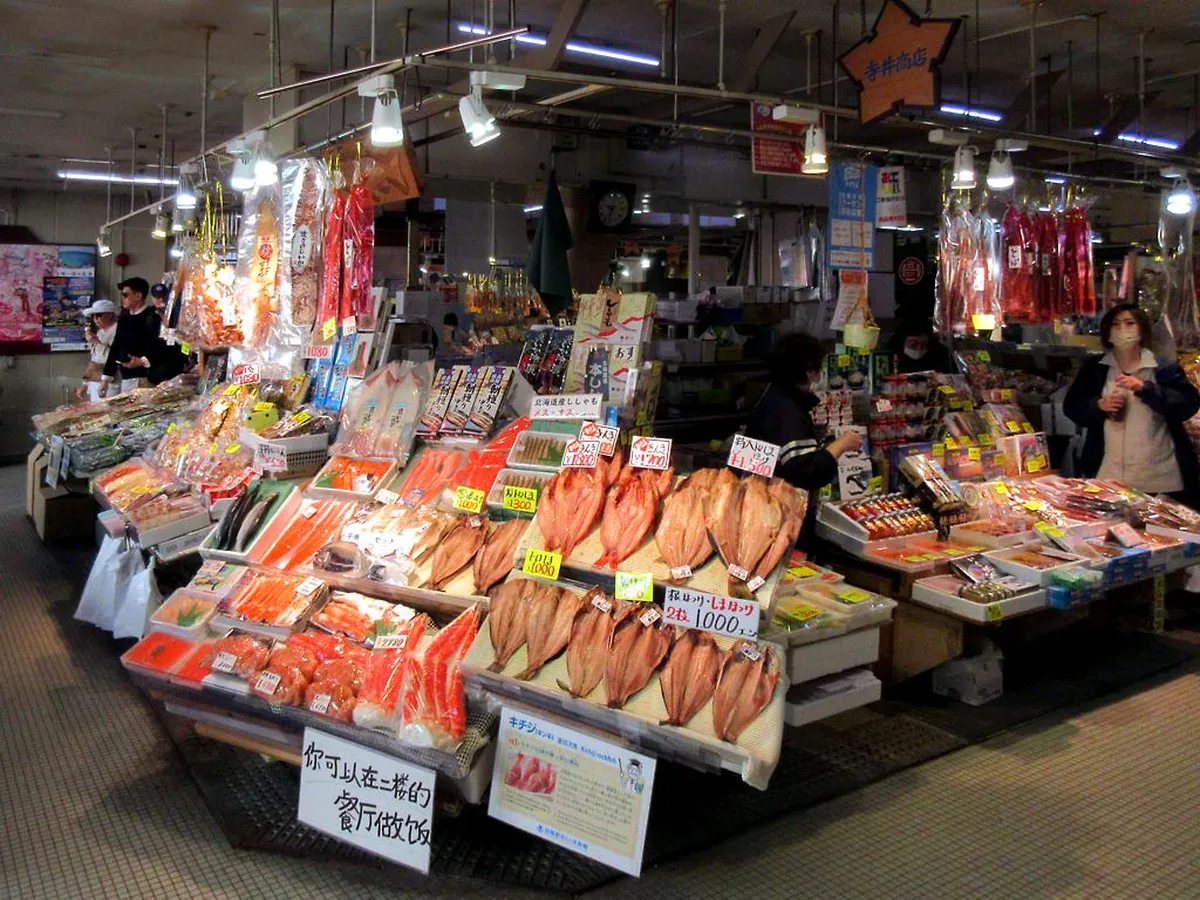
Hakodate Morning Market
One of Japan's most famous morning markets, Hakodate Asaichi draws early-rising visitors for ultra-fresh Hokkaido seafood — most famously a catch-your-own squid fishing game and steaming bowls of kaisendon eaten just steps from the boats.
Visitor guide →

Goryokaku
Japan's first Western-style five-pointed star fort, Goryokaku was the stage for the climactic 1869 Battle of Hakodate that ended the Boshin War. Now a beloved public park, its star outline blazes with around 1,600 cherry trees in late April–early May, best viewed from the 107m Goryokaku Tower.
Visitor guide →

Motomachi
Hakodate's most atmospheric neighborhood, where Western-influenced slopes climb past the Russian Orthodox, Catholic, and Episcopal churches, the Old Public Hall, and former foreign consulates. The iconic Hachiman-zaka slope frames a postcard view straight down to the bay.
Visitor guide →

Kanemori Red Brick Warehouse
Set in restored Meiji-era brick warehouses rebuilt in 1909, this bayfront complex of four buildings packs boutiques, souvenir shops, cafes, the Hakodate Beer Hall, and event spaces under one historic roof. In winter the adjacent bay hosts the Hakodate Christmas Fantasy, where a giant illuminated tree floats on the water.
Visitor guide →
Hakodate attractions by area
Hakodate's sights cluster into four compact areas, each a few tram stops from the next. Grouping your day by area — rather than zig-zagging across the city — is the single biggest time-saver here.
- Mt Hakodate & Motomachi (southwest): The historic foreign quarter and the ropeway base sit side by side. Spend an afternoon wandering Motomachi's church-lined slopes, then ride the Mt Hakodate Ropeway up for the famous night view at blue hour. Walk the Hachiman-zaka slope for the classic straight-down-to-the-bay photo.
- Bay Area (waterfront): The restored Kanemori Red Brick Warehouse anchors a walkable stretch of cafes, boutiques and the Hakodate Beer Hall, all along the harbour between Motomachi and the station.
- Goryokaku (northeast): Japan's first Western-style fort, now a moated star-shaped park, with the 107m Goryokaku Tower for the bird's-eye view of its perfect five-point outline. It is a 15-minute tram ride from the station.
- Station & market (central): The Hakodate Morning Market sits right beside JR Hakodate Station, making it the natural first stop of the day before the seafood sells out.
Hakodate attractions by category
Prefer to plan around what you love rather than where it sits? Here is how the city's draws break down by type.
- Viewpoints: The Mt Hakodate summit observation deck is the headline act — one of Japan's three great night views. By day, Goryokaku Tower gives the only angle from which the fort reads as a clean star, and the Old Public Hall terrace in Motomachi frames the harbour.
- Historic sites: Goryokaku (stage of the 1869 Battle of Hakodate that ended the Boshin War) and the Western-influenced Motomachi district — Russian Orthodox, Catholic and Episcopal churches, former consulates and the Old Public Hall — are the city's history core.
- Markets & food: The Asaichi morning market is the must-do for kaisendon (seafood rice bowls), sea urchin, crab and the catch-your-own squid game. Hakodate is also famous for its salt-based ramen.
- Shopping & bayfront: The Kanemori Red Brick Warehouse complex bundles souvenir shops, glassware, sweets, cafes and the beer hall into four historic buildings on the water.
Free vs paid attractions in Hakodate
A good chunk of Hakodate's appeal costs nothing. Browsing and walking are free; only the two summit/tower views and a few interiors charge admission.
Free to enjoy: wandering the Asaichi morning market (you only pay if you eat or play the squid game), strolling Motomachi's slopes and photographing the churches from outside, the entire Goryokaku park grounds (the star fort itself is a free public park), and walking into and around the Kanemori Red Brick Warehouse complex (entry is free — you pay only for what you buy or eat). The bayfront promenade and the Hachiman-zaka viewpoint are free too.
Worth paying for: the Mt Hakodate Ropeway at about ¥1,800 round-trip for adults (¥1,200 one-way; children ¥900 round-trip) — the fastest way to the night view, three minutes each way; and Goryokaku Tower at roughly ¥1,200 for adults for the elevated star-shaped panorama. Both are optional in the sense that the park and the mountain base are free — but the paid views are what most visitors remember. The Old Public Hall of Hakodate Ward charges a small interior-entry fee in Motomachi.
Suggested Hakodate itineraries
Most travellers spend one or two days here. One day covers the highlights; two days lets the city breathe and adds spring or winter seasonal extras.
One-day Hakodate itinerary: Start early at the Asaichi morning market for a fresh kaisendon breakfast beside the station. Tram out to Goryokaku mid-morning, walk the moat and ride Goryokaku Tower for the star-fort view. Back in the centre, spend the afternoon in Motomachi, working downhill past the churches to the Kanemori Red Brick Warehouse for coffee and souvenirs. Time it so you reach the Mt Hakodate Ropeway base just before sunset — go up at blue hour for both the daytime panorama and the famous night view. Buy a tram day pass and this hops together cheaply.
Two-day Hakodate itinerary: Day one as above but unhurried — linger over a Motomachi lunch and a Bay Area cafe. Day two, go deeper: a slow morning at Goryokaku (cherry blossoms in late April–early May, or the autumn colours), the Old Public Hall interior in Motomachi, Hakodate salt ramen for lunch, and a relaxed evening at the Kanemori warehouses or the Yunokawa hot-spring district on the eastern tram line. With a second night you can return to the summit if the first evening clouded over — Hakodate's night view is famously weather-dependent.
Getting around Hakodate's attractions
Hakodate is built for trams. Two lines — Line 2 and Line 5 — run from Yunokawa in the east through the station and Bay Area to the Motomachi/ropeway end, and between them they reach almost every attraction on this page: the station and morning market, Jujigai (the stop for Motomachi and the ropeway base, a 10-minute walk), the Bay Area, and Goryokaku-koen-mae for the fort.
A single tram ride costs about ¥210–260, paid when you get off. The Tram One-Day Pass (¥800 adults, ¥400 children) pays for itself from your third ride — and a typical sightseeing day uses four or five — so most visitors should buy one. Passes are sold on board, at the station tourist counter and online. From the Jujigai tram stop it is a short walk to the ropeway's Sanroku base station; from there the gondola does the climb. Within each area — Motomachi's slopes, the Bay Area promenade, the Goryokaku moat — everything is walkable on foot once the tram drops you nearby.
Best time to visit Hakodate
Hakodate is a four-season destination, and the right month depends on what you want to see.
- Spring (late April–early May): The headline season. Goryokaku's roughly 1,600 cherry trees bloom around April 28–May 5 — later than mainland Japan — turning the star fort pink, with the tower and trees illuminated at night during the festival. Book accommodation early.
- Summer (June–August): Mild and clear, peak season for Hakodate's famous squid (ika) at the morning market, plus long evenings for the night view. The Hakodate Port Festival lights up the bay in early August.
- Autumn (September–November): The clearest air of the year, which means the sharpest night views from the summit, plus foliage around Goryokaku and nearby Onuma Park.
- Winter (December–February): Snow-dusted Motomachi slopes and the Hakodate Christmas Fantasy — a giant illuminated tree floating in the bay beside the Kanemori warehouses through December. Cold, but magical, and the night view over fresh snow is spectacular.
How to save money on Hakodate attractions
Hakodate rewards budget travellers who lean on its free sights and its transport pass.
- Buy the Tram One-Day Pass (¥800). Four or five tram hops between the market, Goryokaku, Motomachi and the ropeway base would otherwise cost well over ¥1,000 in single fares — the pass is the easiest saving here.
- Lean on the free viewpoints. The Hachiman-zaka slope, the Old Public Hall terrace and the Bay Area promenade all give postcard views for nothing — you only need to pay for the summit and the tower if you want the elevated panoramas.
- Browse the morning market for free. Wandering the Asaichi stalls and watching the squid game costs nothing; you only spend if you sit down to eat. A modest kaisendon is cheaper here than a restaurant dinner elsewhere.
- Walk within each area. Once the tram drops you near Motomachi, Goryokaku or the Bay Area, everything inside that zone is on foot — no extra fares.
- Pick one paid view. If the budget is tight, the Mt Hakodate night view is the one to keep; Goryokaku's star shape is still impressive from the free park below.
Frequently asked questions about Hakodate attractions
How many days do you need in Hakodate?
Two days is the sweet spot — enough to cover the morning market, Goryokaku, Motomachi, the Bay Area and the Mt Hakodate night view without rushing, and to allow a second evening at the summit if the first clouds over. One full day works for a highlights-only visit, while travellers focused on Hokkaido can justify three days to add Onuma Park, Yunokawa hot springs and day trips.
What is the number one must-see attraction in Hakodate?
The Mt Hakodate night view, reached by the ropeway, is the city's signature sight and rated among the top three night views in Japan. Aim to arrive at blue hour — the hour just after sunset — for the best effect. If you only do one paid attraction in Hakodate, make it this.
Are Hakodate's attractions free?
Many are. Browsing the Asaichi morning market, strolling Motomachi's slopes, walking through the Goryokaku star-fort park and entering the Kanemori Red Brick Warehouse complex are all free. The main paid attractions are the Mt Hakodate Ropeway (about ¥1,800 round-trip) and Goryokaku Tower (about ¥1,200).
Do you need to book Hakodate attractions in advance?
No advance booking is required for any of the five sights here — the ropeway, Goryokaku Tower, the market, Motomachi and the warehouses all sell tickets or admit visitors on the spot. The ropeway can queue at sunset in peak season, so arrive 30–40 minutes before blue hour, and book accommodation early if you visit during the late-April cherry-blossom window.
Can you see Hakodate's main attractions in one day?
Yes. A well-planned single day covers the morning market, Goryokaku, Motomachi, the Bay Area and the Mt Hakodate night view, especially with a tram day pass to move between them efficiently. Start at the market early and finish at the summit at dusk.
What is the best time to visit Hakodate?
Late April to early May brings Goryokaku's late-blooming cherry blossoms; autumn (September–November) gives the clearest air and sharpest night views; summer is peak season for squid and long evenings; and December delivers snow and the Hakodate Christmas Fantasy illumination by the bay.
How do you get between Hakodate's attractions?
By tram. Lines 2 and 5 link the station, market, Bay Area, Motomachi/ropeway base (Jujigai stop) and Goryokaku. A Tram One-Day Pass costs ¥800 for adults and pays off from the third ride — most sightseeing days use four or five hops.
Is Hakodate worth visiting?
Yes — Hakodate offers a rare mix of a top-three night view, fresh Hokkaido seafood, a star-shaped historic fort and an atmospheric Western quarter, all within a compact, tram-friendly city. It pairs naturally with Sapporo for a two-stop Hokkaido trip and is reachable by Shinkansen from Tokyo.
Plan your Hakodate trip
Ready to build the full trip around these attractions? Our Hakodate attractions blog guide goes deeper on each sight, the Hakodate itinerary lays out detailed day-by-day plans, and day trips from Hakodate covers Onuma Park, the Trappist Monastery and other escapes nearby. Pair them with the individual visitor guides above for the most complete picture.



