The Perfect 2-Day Hakodate Itinerary Travel Guide
Plan your hakodate itinerary with top picks, neighborhood context, timing tips, and practical booking advice for a smoother trip to Hokkaido.
On this page
Hakodate sits at the southern tip of Hokkaido and serves as the natural gateway to Japan's northern wilderness. It was one of the first Japanese ports opened to foreign trade in 1859, which left behind a remarkable mix of Western architecture, star-shaped fortresses, and one of the country's most celebrated seafood markets. Whether you are arriving via the Hokkaido Shinkansen from Tokyo (approximately 3.5 hours) or landing at Hakodate Airport, two full days is the right amount of time to cover the city's highlights without rushing.
This 2026 itinerary groups attractions by location to minimize backtracking. Day 1 focuses on the port, historic slopes, and mountain night view. Day 2 moves inland to Goryokaku, the Tropical Botanical Garden, and Yunokawa Onsen. Check the what to eat in Hakodate alongside this plan for the best seafood spots and local dishes at each stop.
Hakodate Morning Market (Asaichi)
The Hakodate Morning Market is the single must-do on any itinerary and the best place to start Day 1. Established just after World War 2, it now covers several city blocks immediately next to Hakodate Station and holds more than 250 stalls and restaurants. It opens at 05:00 in summer and 06:00 in winter, so arriving by 07:00 to 08:00 lets you browse before tour groups arrive around 09:30.
Hakodate has long been nicknamed "Squid City" and the market reflects this fully. Look for ikameshi (squid stuffed with rice), shiokara (squid pickled in salt), and the squid-fishing tanks where you can catch live squid for a small fee and have it prepared as sashimi on the spot. The more filling option is the Donburi Yokocho Ichiba, an indoor arcade lined with around 20 small restaurants all serving fresh seafood rice bowls. King crab, sea urchin, and salmon roe bowls typically run ¥1,500 to ¥3,000.
If you want a guided introduction to the stalls, the Hakodate Morning Market Tour with Tasting Options sells out in advance during summer months. A guide helps you navigate the difference between the tourist-facing outer stalls (higher prices) and the inner market lanes where locals shop. Budget 1.5 to 2 hours here before heading to Motomachi.
Buy a one-day tram pass (¥600) if you plan three or more tram trips — it pays for itself and works across all lines serving Motomachi, Goryokaku, and Yunokawa. The pass is sold at Hakodate Station and most convenience stores.
Arrive at Mount Hakodate's ropeway base about 30 minutes before sunset to catch both the golden hour and the full night view on a single ticket. If clouds settle on the peak, wait 20–30 minutes at the summit café — the view often clears unexpectedly on clear nights.
Motomachi District and its Churches
After the market, walk or take the tram about 10 minutes south to the Motomachi district on the slopes below Mount Hakodate. This is where foreign merchants and diplomats settled after the port opened in 1859, and the architecture still reflects that era. Western-style consulate buildings, Russian Orthodox churches, and red-brick lanes sit side by side in a way you won't find anywhere else in Japan.
Three churches are worth seeing on foot: the Hakodate Orthodox Church (distinctive green dome, free to view exterior), the Motomachi Roman Catholic Church, and the Hakodate Anglican Church. None require advance tickets and the walking loop covers all three in about 40 minutes. The slope streets also have small bakeries and cafes for a mid-morning coffee break — AnRoom.Cafe near the top of the main slope is a reliable stop.
Also in the Motomachi area is the Hakodate City Museum of Northern Peoples, which focuses on the Ainu and other indigenous cultures of Hokkaido. The exhibits cover traditional clothing, tools, and daily life adapted to cold climates. The museum is compact — plan 45 to 60 minutes — and admission costs ¥300. It is especially useful context before visiting Goryokaku on Day 2, where the historical exhibits there pick up the 19th century story.
| Day | Morning | Afternoon | Evening |
|---|---|---|---|
| Day 1 | Hakodate Morning Market (07:00–09:00) | Motomachi & churches (10:00–12:30); Kanemori Red Brick Warehouses (14:00–16:30) | Mount Hakodate ropeway & night view (17:00–21:00) |
| Day 2 | Goryokaku Tower (09:00–11:00) | Tropical Botanical Garden (13:00–14:00); Yunokawa Onsen area (14:30–17:00) | Free footbath or day-use onsen; evening leisure |
Kanemori Red Brick Warehouses
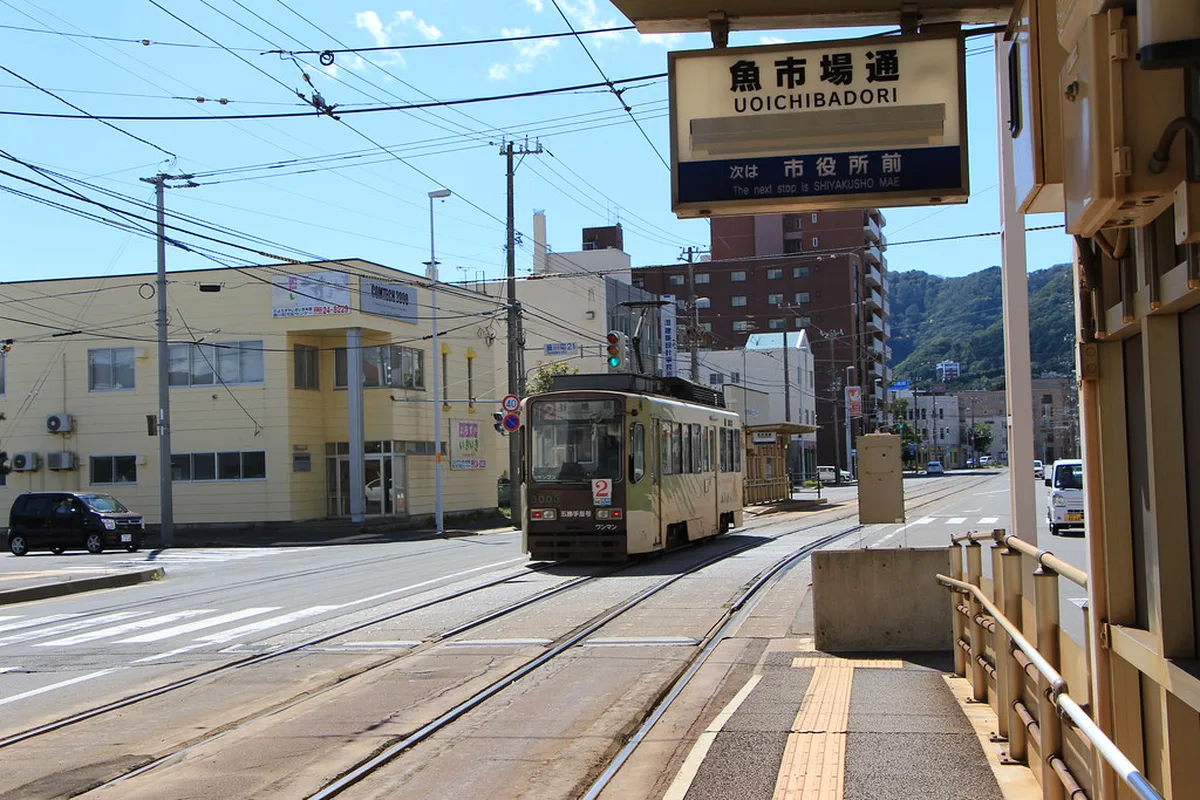
From Motomachi, the Kanemori Red Brick Warehouses are a 10-minute walk along the waterfront. Built in 1909 during Hakodate's trading peak, the warehouses have been converted into a shopping and dining complex along Hakodate Bay. The brick architecture and harbor views make this one of the most photographed spots in the city, especially after dark when the buildings are lit up.
Inside you'll find souvenir shops selling locally made glass decorations, music boxes, and leather goods alongside a popular beer hall (Bay Brewing Hakodate). The atmosphere is relaxed and commercial, but not generic — most of the goods sold here are Hokkaido-specific. The area is open until 19:00 for most shops, so plan your shopping visit for late afternoon Day 1 before heading to Mount Hakodate for the evening.
Lucky Pierrot, Hakodate's legendary local burger chain, has a branch near the Red Brick Warehouses worth noting here. Founded in 1987, it operates 17 restaurants in Hakodate only — you cannot find it anywhere else in Japan. Each location has a completely different interior theme (space, cowboy western, art deco, religious iconography). The signature item is the Chinese Chicken Burger: fried chicken in sweet sauce between two buns. Expect a queue of 10 to 20 minutes, but the meal costs under ¥700 and the experience is genuinely unique to this city.
Mount Hakodate: Panoramic Views and the Night View
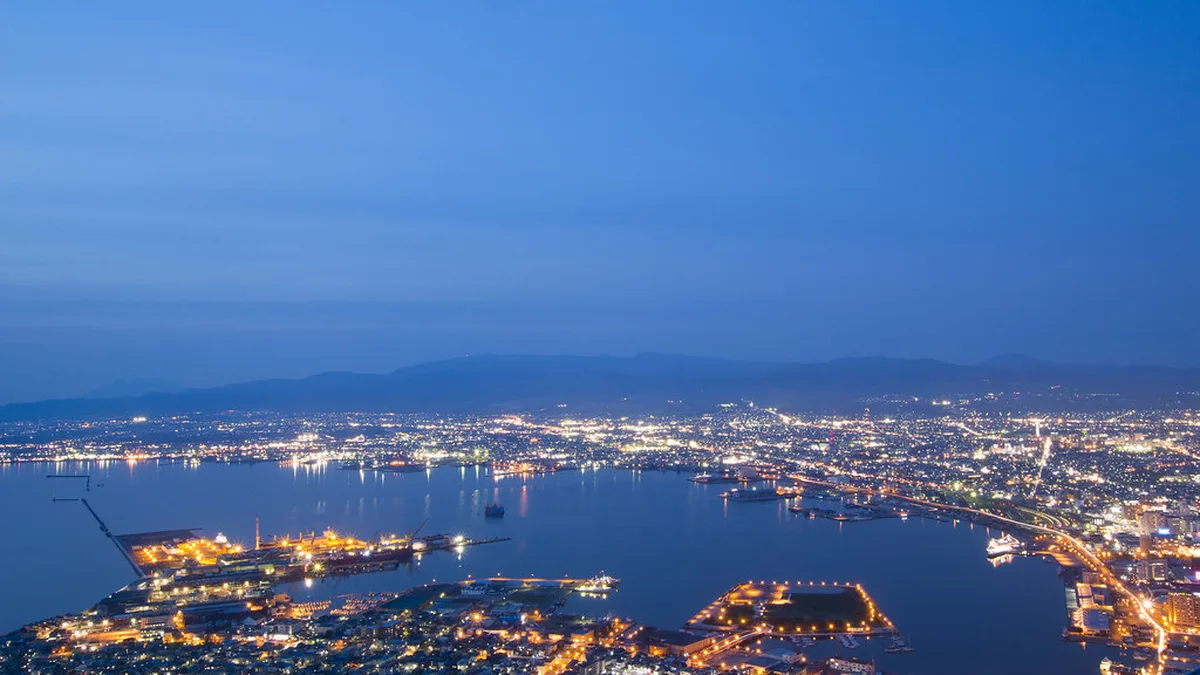
Mount Hakodate stands 334 metres at the southern end of the peninsula and offers what is regularly listed among Japan's three best night views. The daytime panorama shows Hakodate Bay and the Tsugaru Strait on opposite sides of the narrow peninsula. At night, the city lights trace that same shape in gold and white below you — on a clear night it looks like a luminous fish spine.
The ropeway runs from the base station in Motomachi to the summit in 3 minutes and costs ¥1,500 round trip. Last car up is 22:00 in peak season (April to October) and 21:00 in winter. Buses and taxis also serve the summit road. The most important variable is weather: if clouds are sitting on the peak when you arrive, wait at the observation deck café for up to 30 minutes — the summit often clears unexpectedly. A two-night stay in Hakodate gives you two attempts to catch a clear night, which is a genuine reason not to book just one night here.
Time your arrival at the base station for about 30 minutes before sunset to catch both the golden hour and the full night view without paying twice. The walk from Kanemori Red Brick Warehouses to the ropeway base takes about 15 minutes on foot up the Motomachi slope, making this a natural end to the Day 1 loop.
Goryokaku Park and Tower
Day 2 begins at Goryokaku, the star-shaped French-style fortress built in the 1860s during the final years of the samurai era. The five-pointed design was intended to distribute cannon fire more evenly than a square fort — a European military concept imported directly. The fort's moat and earthworks are intact, and the park inside is one of the best cherry blossom spots in Hokkaido in late April to early May.
The star shape is only clearly visible from above, which is why the Goryokaku Tower exists. The tower observation deck (¥1,000 admission, open 09:00 to 18:00) gives a 360-degree view of the fortress below and the city beyond. The ground-level exhibits inside the tower cover the Battle of Hakodate in 1869, when the fortress was the last holdout of samurai forces opposing the Meiji imperial army. The displays include detailed miniature dioramas and period weaponry.
Getting to Goryokaku from Hakodate Station takes about 20 to 25 minutes by tram (line 2 to Goryokaku-Koen-Mae stop, ¥250). A one-day tram pass costs ¥600 and pays off if you make three or more tram trips in the day, which is easy to do on this itinerary. Plan 1.5 to 2 hours at Goryokaku before continuing south to Yunokawa.
Hakodate Tropical Botanical Garden and Yunokawa Onsen
The Hakodate Tropical Botanical Garden sits inside the Yunokawa Onsen district, about 30 minutes east of Goryokaku by tram. The garden houses around 3,000 tropical and subtropical plants across 300 species inside year-round heated greenhouses, which is a genuinely strange contrast to the cold Hokkaido air outside. The main attraction from December through May is the Japanese macaque (snow monkey) colony that soaks in the natural hot springs within the garden grounds — you can buy food to feed them.
Entry to the botanical garden costs ¥300 for adults and the outdoor area has a footbath, a small playground for children, and open picnic lawns in summer. Plan about 1 hour here. The garden is also a practical intro to the wider Yunokawa Onsen district before you decide whether to stay for a longer soak.
Yunokawa Onsen itself is Hokkaido's oldest established hot spring resort, with a history of over 350 years. The waters are rich in chloride, which is said to aid fatigue and circulation. Several hotels offer day-use bathing from around ¥1,000 to ¥1,500 if you are not staying overnight. A free public footbath sits directly beside the Yunokawa tram stop and is a low-effort end to the day. For accommodation, Hakodate Uminokaze (check availability) is a boutique ryokan with Tsugaru Strait views and a well-regarded onsen facility — book 4 to 6 weeks in advance for weekends.
Where to Stay in Hakodate for First-Timers
Choosing the right base shapes how smoothly this 2-day Hakodate itinerary flows. The strongest recommendation for first-timers is to stay near Hakodate Station. From there you can walk to the Morning Market in under 5 minutes and reach the tram stops that serve Motomachi, Goryokaku, and Yunokawa. The top Hakodate hotels in this zone include business hotels like Toyoko Inn Hakodate-Ekimae and mid-range options near the bay.
The Motomachi district offers a more atmospheric alternative for couples or slow travelers who want to be inside the historic area. You are closer to the church walks and ropeway base, but public transport connections are slightly less frequent, and you will do more uphill walking than in the station area. Views of the harbor from Motomachi guesthouses at night can be excellent.
The Yunokawa Onsen area works well for travelers prioritizing relaxation or those arriving via Hakodate Airport (10 minutes by bus or taxi, check the bus schedule here). Traditional ryokan stays in Yunokawa typically include dinner and breakfast, which simplifies your evening meal planning. The tradeoff is a longer tram ride into the city center each morning — budget 30 minutes each way.
Add an Extra Day: Onuma Quasi-National Park
If you have a third day, best Hakodate day trips are straightforward. The most rewarding is Onuma Quasi-National Park, 30 minutes north by Limited Express train (¥1,200 reserved seat; local trains take about 50 minutes and cost less). The park centers on three interconnected lakes — Onuma, Konuma, and Junsai — with walking paths and small bridges threading through forested islands, all framed by the volcanic cone of Mt. Komagatake.
In winter (roughly December to March), the lakes freeze and the park offers horse-drawn sleigh rides, ice fishing for smelt, and snowmobile-led sled tours. In autumn, the foliage around the lake edges turns vivid red and orange. Summer is the quietest season for crowds. A rental bicycle from the station area lets you loop the larger lake in about 90 minutes. A small town adjacent to the lakes has several cafes and lunch restaurants. A half-day is sufficient; a full day allows for both a boat cruise and a leisurely lunch.
Frequently Asked Questions
Which hakodate itinerary options fit first-time visitors?
A 2-day plan covering the Morning Market, Motomachi, and Goryokaku is best. This covers all major landmarks and local food highlights efficiently. First-timers should prioritize the tram-accessible areas for ease of navigation.
How much time should you plan for a Hakodate itinerary?
Plan for at least two full days to see the main sights. This allows for flexibility if the Mount Hakodate weather is poor. You can add a third day for a trip to Onuma Park.
Is Hakodate worth including on a short Japan itinerary?
Yes, Hakodate is worth it for the unique seafood and historic architecture. It is easily accessible from Tokyo via the Shinkansen in about four hours. The compact size makes it perfect for a quick 48-hour stop.
Hakodate is a charming city that rewards those who take the time to explore its diverse neighborhoods. From the morning market's energy to the quiet slopes of Motomachi, there is something for every traveler. I hope this itinerary helps you plan a seamless and memorable visit to this Hokkaido gem.
Remember to check the weather forecasts for the mountain view and enjoy the local flavors. Safe travels as you discover the gateway to Japan's northern wilderness.
Combine this with our main Hakodate attractions guide for a fuller itinerary.
The Seikan Tunnel links Hakodate with Aomori in about an hour, an easy add-on to a Tohoku trip.
Free: The Hakodate Essentials guide
Top things to do, where to stay, a perfect day plan, getting around, and the best time to go — a Hakodate mini-guide you can take offline.
You might also like


Continue reading
More guides you'll find useful