
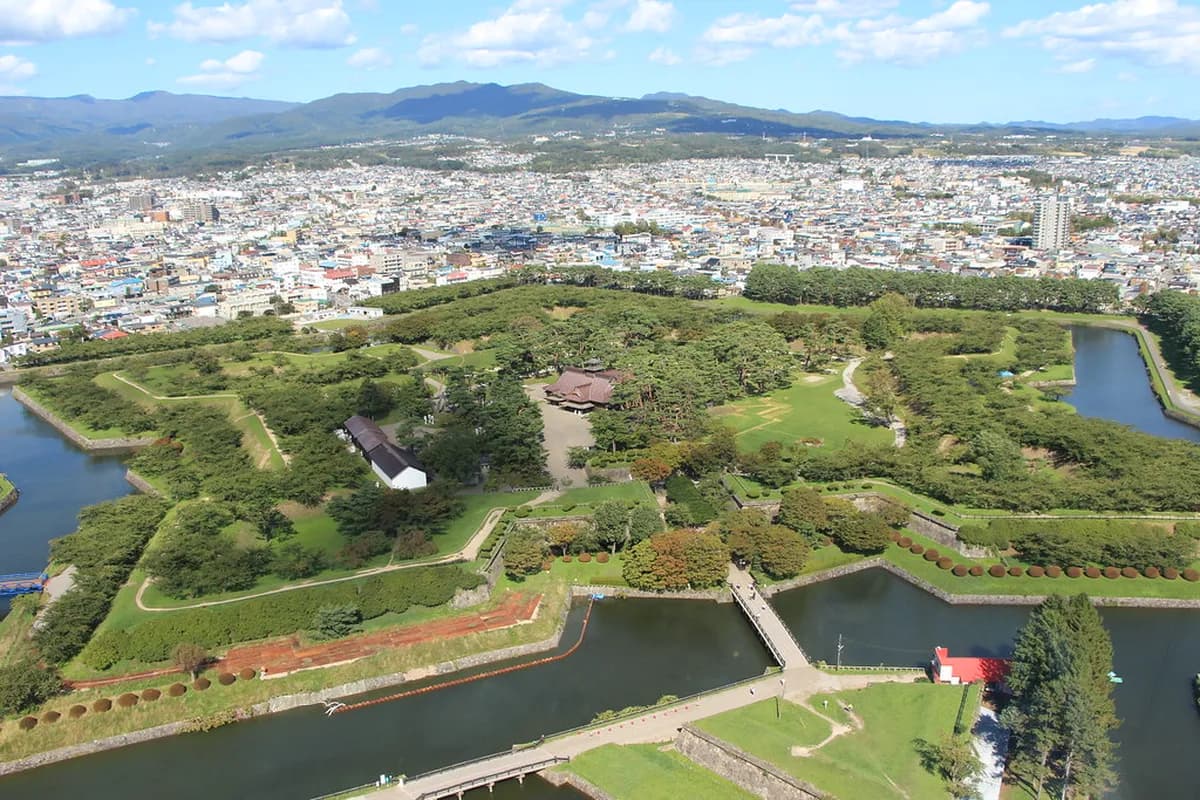
Exploring the star-shaped ramparts of Hakodate offers a unique glimpse into Japan's transition toward modernity. This comprehensive goryokaku visitor guide covers everything from historical battles to the best spots for seasonal photography. Visitors often find that the fortress serves as the cultural heart of the city during every season. Whether you are a history buff or a nature lover, this site provides a memorable experience for everyone.
History of Goryokaku Fort
Completed in 1866, this fortress was designed by Takeda Ayasaburo based on French citadel models. The star shape allowed for more gun emplacements and reduced the number of blind spots during an attack. It served as the main stronghold for the Republic of Ezo during the final stages of the Boshin War. Today, the site stands as a peaceful public park and a National Special Historic Site.
Walking through the main gates allows you to visualize the intense military history of the late 19th century. The massive stone walls were built using traditional Japanese techniques adapted for Western defensive needs. Many visitors spend about an hour exploring the interior paths to see the reconstructed buildings. Entry to the park itself is free, making it an accessible stop for any budget traveler.
Understanding the local context helps you appreciate the resilience of the people in Hakodate. The fortress witnessed the end of the samurai era and the birth of a new imperial government. Educational plaques throughout the grounds provide detailed maps of the former troop movements. These historical insights transform a simple walk into a deep dive into Japanese heritage.
Nearby Recommended Spots
Standing right next to the park, Goryokaku Tower provides the only way to see the full star shape. The observation deck offers a 360-degree view of the surrounding mountains and the Tsugaru Strait. Tickets for adults cost approximately 1,000 yen, and the facility includes several souvenir shops. Check the official Fort Goryokaku tower site for updated seasonal hours.
If you feel hungry after your walk, the surrounding neighborhood is famous for its local salt ramen. Many small eateries are located within a five-minute walk of the main park entrance. You might also consider visiting the Hakodate Morning Market for fresh seafood before heading to the fort. Combining these spots allows for a full day of sightseeing without excessive travel time.
For those interested in further exploration, the Motomachi district is a short tram ride away. This area features historic Western-style buildings and beautiful views of the harbor. The contrast between the fortress and the residential hills provides a great overview of the city's layout. Most travelers find that using the city tram is the most efficient way to navigate between these landmarks.
- Goryokaku Tower Observation Deck
- Cost: 1,000 Yen
- Best for: Aerial photography
- Time: 45 minutes
- Location: Park entrance
- Hakodate City Museum Annex
- Cost: 100 Yen
- Best for: War artifacts
- Time: 30 minutes
- Location: Inside park
Top Things to See at Goryokaku
The Hakodate Magistrate's Office is the centerpiece of the park and was meticulously reconstructed in 2010. It showcases traditional Japanese carpentry and served as the administrative hub for the northern frontier. Visitors must pay a small entrance fee of 500 yen to enter the building's interior. Inside, you can view tatami rooms and historical exhibits detailing the office's daily functions.
Renting a rowboat in the moat offers a different perspective of the massive stone walls. This activity is particularly popular during the spring and summer months when the water is calm. Rental stations are located near the south entrance and charge by the half-hour. It is a relaxing way to escape the crowds that often gather on the main walking paths.
Don't miss the chance to walk across the Ichino-hashi and Nino-hashi bridges leading into the fort. These bridges provide excellent framing for photos of the surrounding cherry trees and water. The path along the top of the ramparts allows you to look down into the inner courtyard. Expect to spend at least two hours if you plan to walk the entire perimeter of the star.
What Is Goryokaku in Hokkaido?
This site is famous for being Japan's first Western-style star fortress, known as a Vauban-style citadel. The design was revolutionary for Japan, which had previously relied on high-walled mountain castles. Its location in Hakodate made it a strategic point for defending the northern borders. The fort represents a pivotal moment when Japan began adopting global engineering standards.
Unlike traditional castles, the fort lacks a central keep, focusing instead on horizontal defense. The wide moats and angled bastions were designed to deflect cannon fire effectively. Most of the original buildings were destroyed during the war, leaving only the Magistrate's Office today. This architectural shift marked the end of feudal warfare and the start of modern military tactics.
Travelers often visit to see how the star shape changes appearance throughout the four seasons. In winter, the moats freeze and are illuminated by thousands of lights during the 'Hoshi-no-Yume' event. Spring turns the entire area pink, while autumn brings deep reds and oranges to the maple trees. Each visit offers a distinct atmosphere depending on the month you choose to arrive.
Cherry Blossom Season at Goryokaku Park
With over 1,600 cherry trees, this park is one of the top hanami spots in all of Hokkaido. The blossoms typically peak in late April or early May, which is later than in Tokyo or Kyoto. Locals often gather for Jingisukan (grilled mutton) parties under the blooming trees. If you plan to visit during this time, arrive before 9:00 AM to secure a good viewing spot.
The view from the tower during peak bloom looks like a giant pink star on the ground. Evening illuminations transform the park into a magical landscape after the sun sets. Be prepared for large crowds and longer wait times for the elevator at Goryokaku Tower. Checking the local blossom forecast helps you time your trip for the best possible experience.
Walking through the 'tunnel' of cherry trees along the moat is a highlight for many visitors. The petals often fall into the water, creating a stunning pink carpet on the surface of the moat. Photographers should bring a wide-angle lens to capture the scale of the blooming trees. Temperatures in Hakodate can still be chilly in May, so wear layers for your outdoor walk.
A Star-Shaped Fortress Steeped in History
The Battle of Hakodate in 1869 was the final conflict between the Shogunate and Imperial forces. Rebel leader Enomoto Takeaki hoped to establish an independent republic on the island of Hokkaido. The fort served as the last stand for those who remained loyal to the old Shogunate system. The eventual surrender here marked the definitive start of the Meiji Restoration era.
Remnants of the original stone foundations are still visible along the outer edges of the park. Historical markers point out where key batteries were placed to defend against the Imperial navy. You can find the exact address at 44-2 Goryokakucho, Hakodate, Hokkaido 040-0001, Japan for your navigation. Visiting the site provides a somber reminder of the lives lost during Japan's civil war.
Many artifacts from the battle are housed in the nearby museum for public viewing. Seeing the old cannons and uniforms helps bring the stories of the 19th century to life. The site is now a symbol of peace and a favorite recreation spot for Hakodate residents. It remains a must-see destination for anyone looking to understand the roots of modern Japan.
Frequently Asked Questions
How do I get to Goryokaku from Hakodate Station?
Take the city tram from Hakodate Ekimae to the Goryokaku-Koen-Mae stop, which takes about 15 minutes. From there, it is a flat 10-minute walk to the park entrance. Alternatively, several local buses run directly to the tower from the station. For more transit tips, see our Hakodate guide.
Is Goryokaku Park free to enter?
Yes, entry to the main park grounds and the star-shaped fortress is completely free for all visitors. However, there are fees if you wish to enter the reconstructed Magistrate's Office or go up Goryokaku Tower. These paid attractions are highly recommended for the full experience. Most people spend about two hours exploring the free areas.
What is the best time of year to visit Goryokaku?
The most popular times are late April for cherry blossoms and winter for the star illumination. Autumn provides stunning fall foliage, usually peaking in late October. Summer is pleasant for walking but can be quite humid. Each season offers a completely different visual perspective of the star-shaped layout.
Goryokaku is more than just a park; it is a living monument to Japan's complex history. From its military origins to its current status as a blossom paradise, it captures the spirit of Hakodate. Make sure to include a visit to the tower to truly appreciate the unique star-shaped design. Your trip to Hokkaido will be much richer after experiencing this iconic landmark firsthand.
For official details, visit the Goryokaku on Wikipedia.
Browse every attraction in our Hakodate attractions hub.
For more Hakodate planning, see things to do in Hakodate, our 2-day Hakodate itinerary, and our full Goryokaku guide.


