Goryokaku Fort & Tower: The Ultimate Hakodate Travel Guide
Plan your visit to Goryokaku in Hakodate. Our guide covers the star-shaped fort, Goryokaku Tower views, Boshin War history, and the best time for cherry blossoms.
On this page
Goryokaku stands as a striking symbol of Japan's transition from feudal rule to a modern nation. This massive star-shaped fortress in Hakodate captivates visitors with its unique geometry and deep historical roots. Whether you come for the pink cherry blossoms or the snow-covered walls, the site offers a rare glimpse into 19th-century military engineering.
Walking through the park allows you to explore reconstructed government offices and peaceful walking paths. Rising high above the grounds, the nearby tower provides a perfect bird's-eye view of the five-pointed star. This guide covers the history, the tower experience, seasonal highlights, and everything you need to plan a visit in 2026.
What is Goryokaku? Japan's First Star-Shaped Fortress
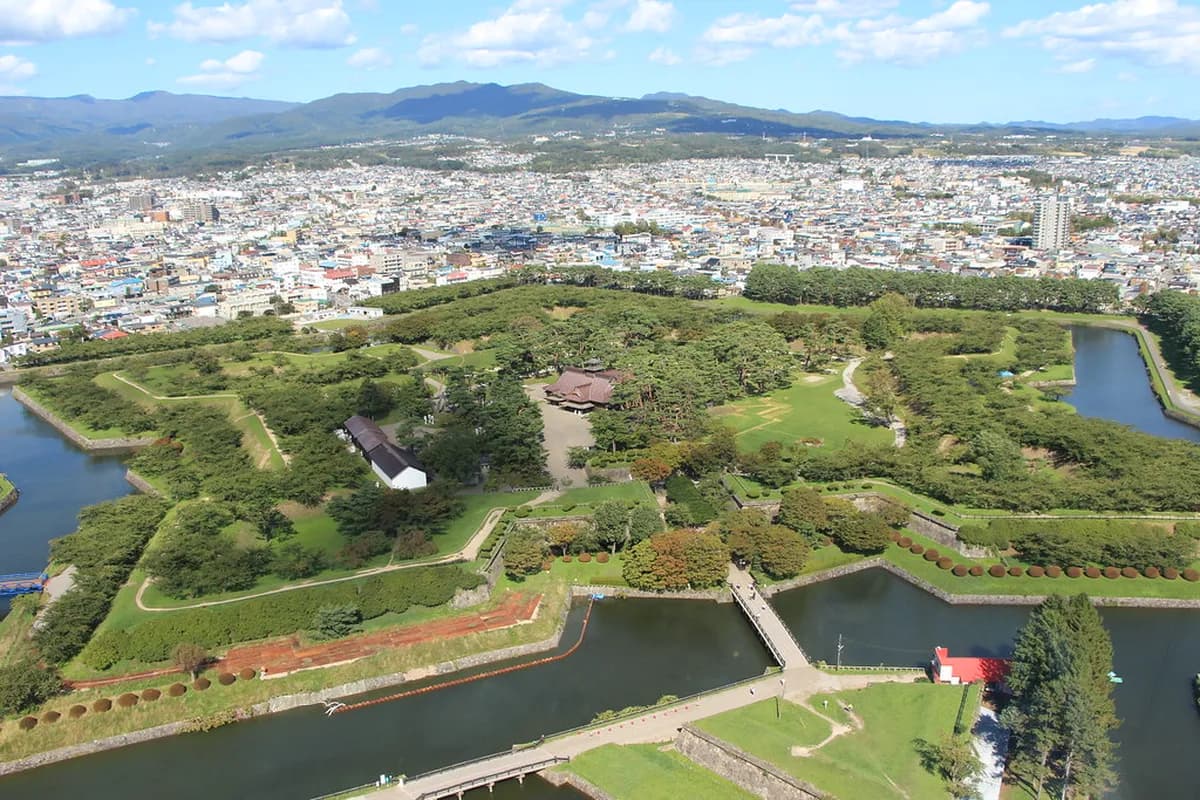
Goryokaku is a massive citadel located in the heart of Hakodate, Hokkaido. It was the first fortress in Japan built using Western-style Vauban architecture during the final years of the Edo Period. The star-shaped design was not chosen for aesthetics — it was a precise military calculation. A five-pointed outline allows defenders to cover every section of the outer wall without creating blind spots, which made it far more effective against modern artillery than a conventional circular castle.
Architect Ayasaburo Takeda designed the fort after studying Dutch military engineering. Thick earthen ramparts, wide water moats, and a low overall profile were all deliberate choices to absorb cannon fire and deny attackers a clear sightline. The geometry also allowed cannons placed at each point of the star to provide overlapping fields of fire across the walls on either side. This was cutting-edge defensive theory for the 1860s, imported directly from European military doctrine.
Today the defensive moats are filled with water and surrounded by over 1,600 cherry trees. The fortress has transformed from a site of war into a peaceful public park, but the original earthen walls still rise several meters above the moat — tangible evidence of the engineering ambition that went into building it. It remains one of the primary highlights for anyone planning a 2-day Hakodate itinerary during their Hokkaido trip.
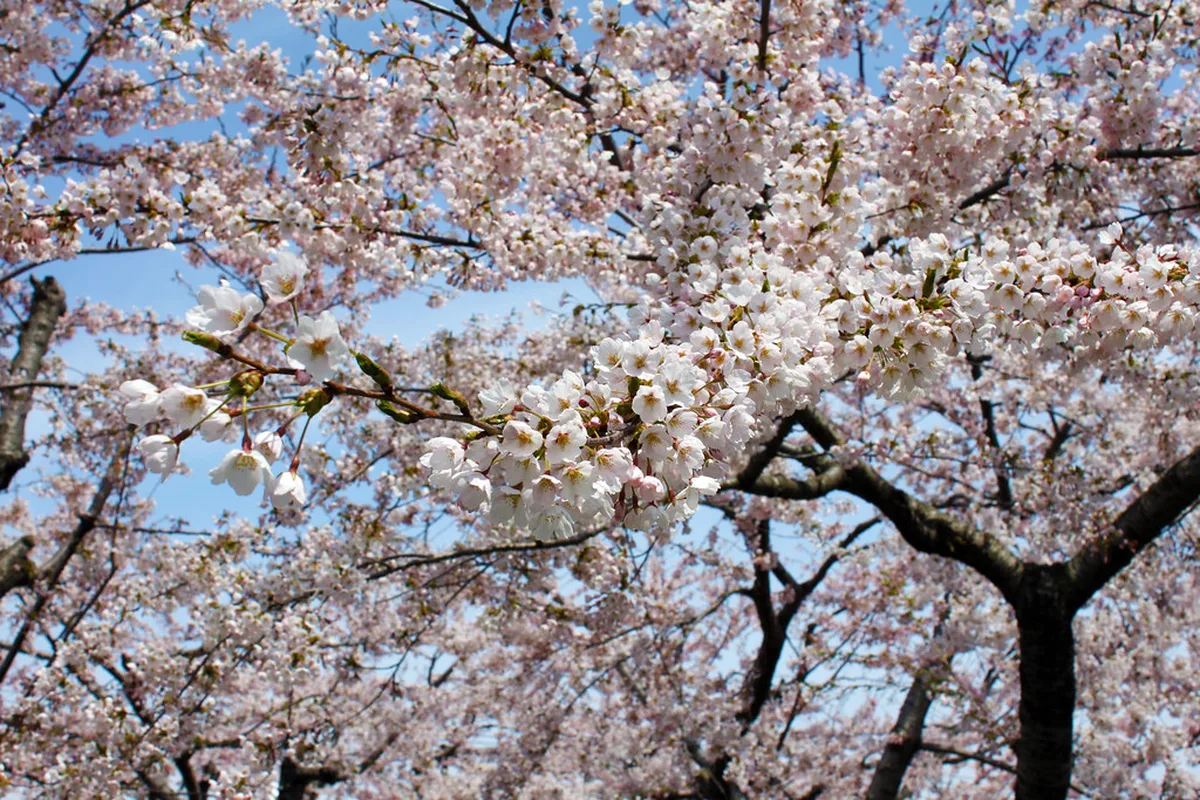
Cherry blossom season at Goryokaku peaks in late April to early May. Plan your visit around these dates to see over 1,600 trees in full bloom framing the star-shaped moat — a uniquely stunning photography opportunity available nowhere else in Japan.
History of Goryokaku: From the Boshin War to Modern Park
Construction began in 1853 after US Commodore Perry's fleet arrived in Japan and forced the Tokugawa Shogunate to open Hakodate Port to international trade. The Shogunate needed a modern military base to maintain governance over this newly exposed port city, and so commissioned the star-shaped fort to replace an older magistrate's building at the foot of Mount Hakodate. The fort was completed in 1864 and stood as Japan's most sophisticated defensive structure at the time.
It became most famous, however, as the final battlefield of the Boshin War. In 1869 a group of Shogunate loyalists — including the legendary vice-commander of the Shinsengumi, Toshizo Hijikata — fled north after the fall of Edo and established a breakaway republic on Hokkaido. They used Goryokaku as their stronghold. The Battle of Hakodate that followed was Japan's last large-scale samurai battle. After months of fighting, Imperial forces overwhelmed the defenders and the fort surrendered, marking the definitive end of feudalism and opening the way for the Meiji Restoration.
After the war, the fortress lost its military role and was opened to the public in 1914. The national government designated it a Special Historic Site in 1952 to protect its layout and earthen walls. Many of the original timber buildings were destroyed during the battle, but a major archaeological investigation launched in 1985 eventually led to the full reconstruction of the Hakodate Magistrate's Office, completed in 2010. Historians regard this site as essential for understanding not just Hakodate, but the entire arc of Japan's modernization.
Top Things to See at Goryokaku Fort and Park
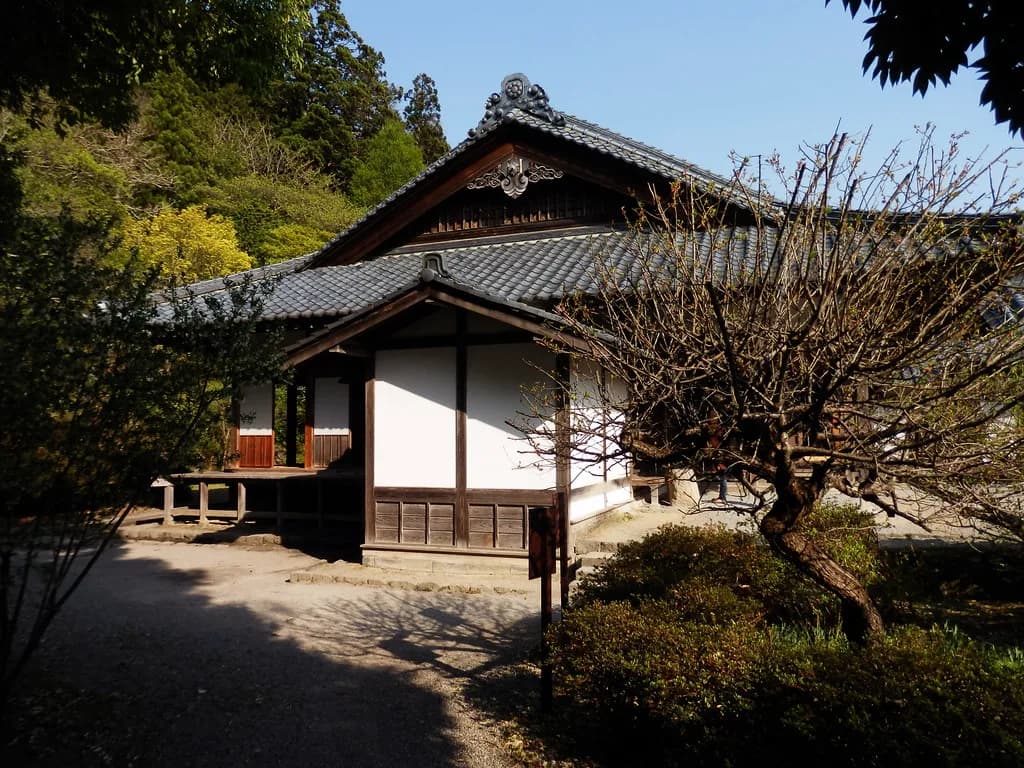
The centerpiece of the inner park is the reconstructed Hakodate Magistrate's Office. This is not a rough approximation — the city of Hakodate spent four years (2006–2010) rebuilding it to exact 1860s specifications. Architects used old photographs, written documents, and excavation findings from the 1985 archaeological survey to recreate every detail of the original structure. Inside you can walk through tatami rooms and administrative chambers that show how the Shogunate governed its northernmost territory, and exhibits explain life and bureaucracy during the Bakumatsu period.
Walking along the top of the stone ramparts gives you a ground-level appreciation of the defensive geometry. The walls slant outward at a deliberate angle to prevent scaling, and standing on them you can trace the moat as it follows the five-pointed outline below. In summer the moat is open for rowboat rentals, which is a relaxed way to see the star shape from water level. A less well-known detail: during winter the moat freezes solid, and in the Edo era there was an entire commercial trade built around harvesting this ice, which was sold throughout Hokkaido as "Goryokaku Ice."
Outside the main park entrance, a bronze statue of Toshizo Hijikata stands in front of the tower. Hijikata is among the most romanticized figures in Japanese history — vice-commander of the Shinsengumi, the elite samurai police force — and he died defending this fort. The statue draws a steady stream of visitors who know his story from novels, films, and manga. If you are looking for free Hakodate attractions, the park grounds and the exterior statue are open without any entry fee; only the Magistrate's Office interior (500 JPY) and the tower require paid admission.
Goryokaku Tower: The Best Panoramic Views of Hakodate
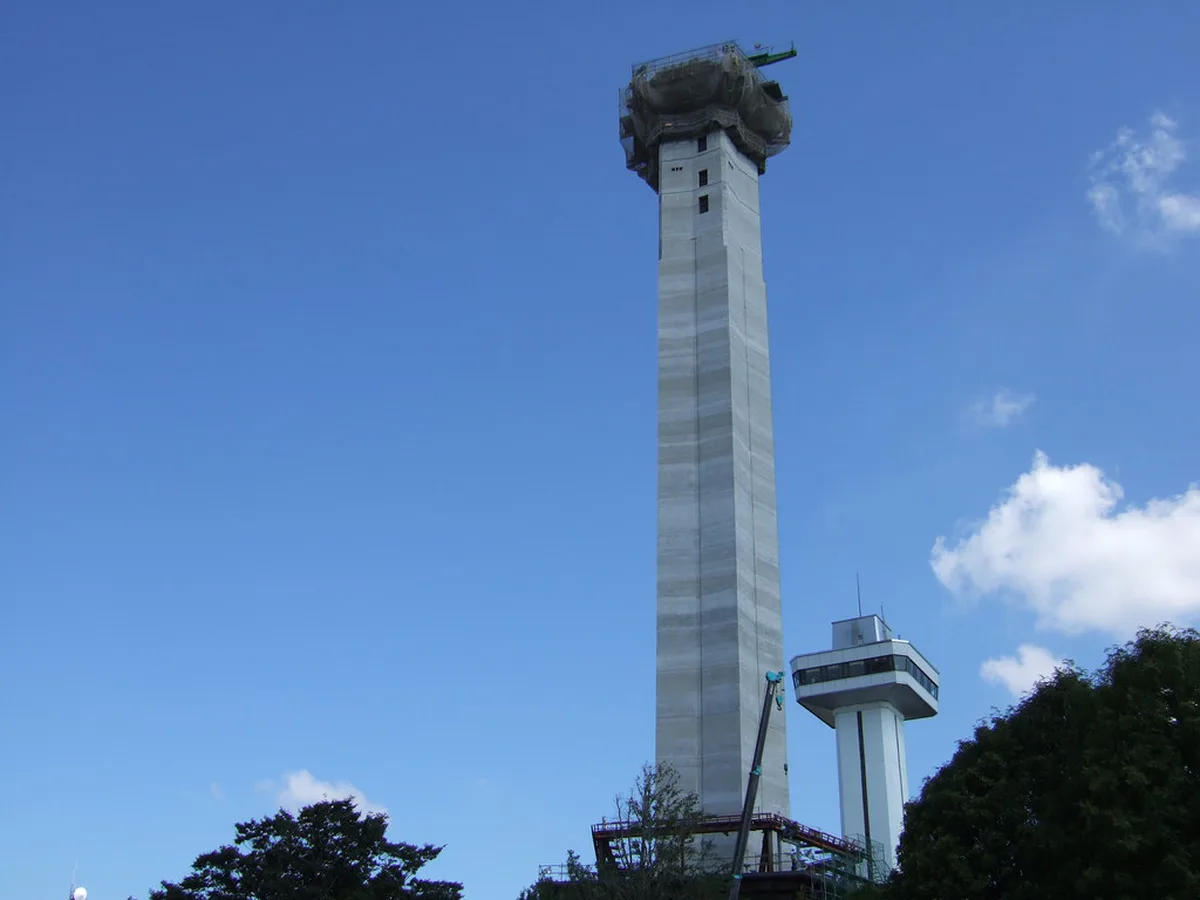
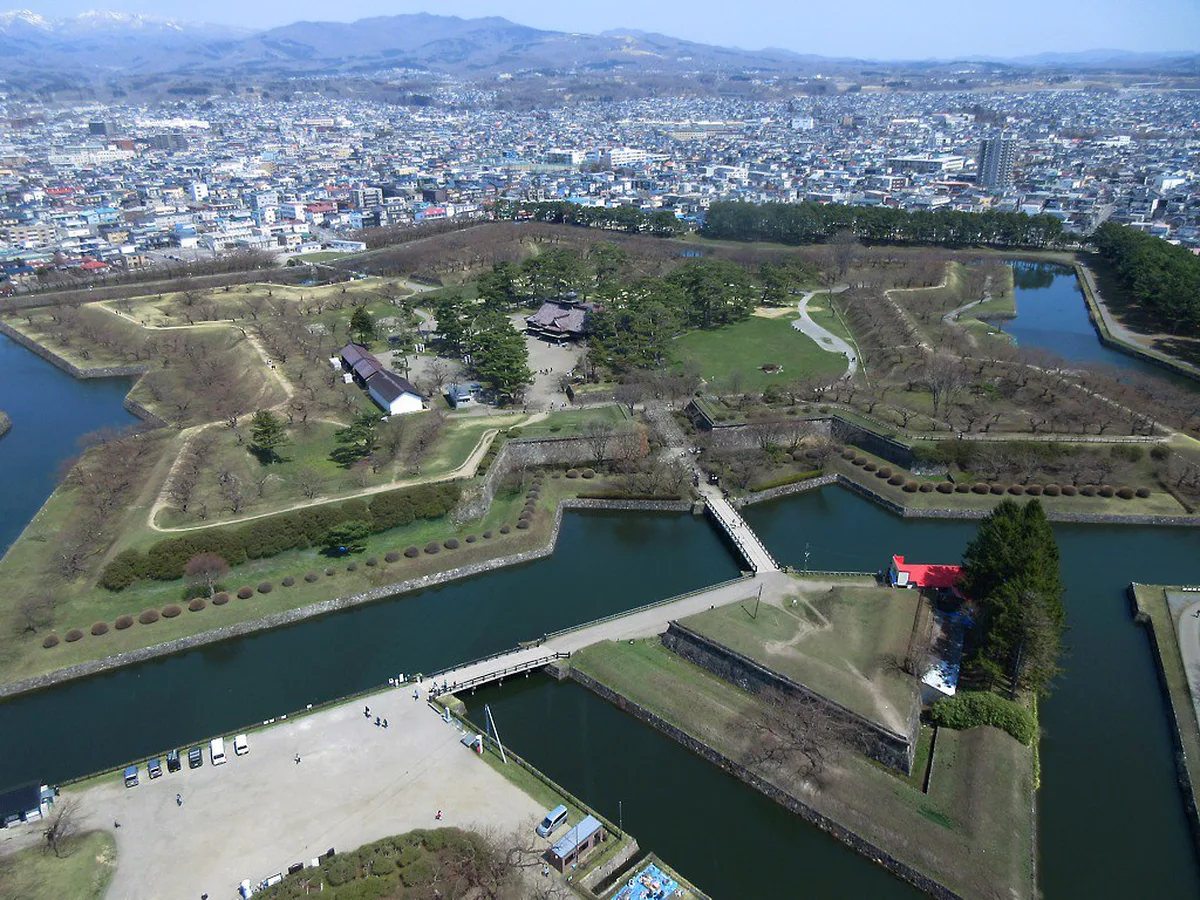
To truly appreciate the star shape of Goryokaku, you must see it from above. The Goryokaku Tower stands at 107 meters and offers an unobstructed 360-degree view of the city. From the observation deck, the five-pointed fortress looks like a precise geometric cutout pressed into the landscape, with the water-filled moat tracing every edge. On clear days you can also see the distant peaks beyond the city and the Tsugaru Strait stretching toward Honshu.
| Category | Details |
|---|---|
| Tower Height | 107 meters |
| Adult Admission | 1,200 JPY |
| Child Admission (6-15) | 600 JPY |
| Opening Time | 9:00 AM |
| Closing Time | 6:00 PM – 7:00 PM (seasonal) |
Inside the tower, the observation level holds a compact but detailed history gallery. Miniature figure displays reconstruct scenes from the construction of the fort and key moments in the Battle of Hakodate, with explanatory placards in both Japanese and English. These dioramas are where most visitors get their clearest understanding of the Boshin War sequence — who the key figures were, how the siege unfolded, and why this site mattered. It is genuinely useful for anyone visiting without prior knowledge of the period. Admission to the observation deck is 1,200 JPY for adults; check the Goryokaku Tower Official Site for seasonal hours and online ticket options.
The tower features a glass-bottom floor section at 90 meters for those who enjoy a bit of a thrill. The ground floor holds a large souvenir shop stocking regional snacks, artwork by local Hakodate artists, and fort-themed goods like keychains and posters. There is also a soft-serve ice cream stall. Most visitors spend 45 to 60 minutes in the tower, though history enthusiasts often linger longer at the diorama displays.
Tower admission is required to see the full five-pointed star from the 107-meter observation deck — this is the only vantage point that reveals Goryokaku's unique geometry. The glass-bottom floor at 90 meters provides a thrill for those who enjoy heights. Budget 60 minutes for the tower alone, longer if you want to study the detailed historical dioramas inside.
Best Time to Visit: Seasonal Highlights and Cherry Blossoms
Spring is the most popular season. Over 1,600 cherry trees bloom simultaneously in late April or early May — slightly later than Tokyo or Kyoto due to Hokkaido's cooler climate. The view from the tower during peak bloom is particularly striking: pink fills every edge of the five-pointed star. Locals gather under the trees for Hanami celebrations with food and drink.
A Hokkaido-specific tradition during cherry blossom season is the Genghis Khan lamb barbecue held inside the park grounds. Visitors can rent portable grills and buy seasoned lamb packages to cook right beside the moat. The smell of charcoal and grilled meat fills the park on weekends, and long rows of blue tarps mark out picnic groups along the walking paths. This communal cooking is one of the few occasions when open-flame cooking is permitted inside the park, and it is a distinctly Hokkaido experience that sets Goryokaku's hanami apart from cherry blossom events elsewhere in Japan.
Winter offers an equally compelling visit, with the annual "Goryo Hoshi-no-Yume" (Star of Goryokaku Dream) illumination. During this event, the inner moat banks and walls are lined with thousands of lights that trace the star shape after dark. Viewing the glowing five-pointed outline against fresh snow is one of the most photographed winter scenes in Hokkaido. The illumination typically runs from late November through late March — check local event listings for exact 2026 dates. If you are visiting winter in Hakodate, this evening display is a must.
Autumn brings vibrant red and yellow foliage with smaller crowds than spring. Summer is pleasant and green, and the moat rowboat rentals operate through the warmer months. Each season offers a genuinely different version of the site, which is why many visitors include Goryokaku on multiple Hakodate trips.
Practical Information: Access, Hours, and Admission Fees
Getting to Goryokaku from Hakodate Station is simple using the city tram. Take any tram toward Yunokawa and exit at the Goryokaku-koen-mae stop — the ride takes about 15 minutes and costs a few hundred yen. From the tram stop it is a flat, straightforward 10-minute walk to the tower and park entrance; the white tower is visible above the rooftops as a navigation aid the whole way. Buses from the station also run frequently and stop closer to the tower entrance if you prefer a shorter walk.
If you are driving, note that the tower itself has no parking lot. Use one of several paid lots along the perimeter roads around the park. Consult Google Maps: Hakodate Bus/Tram Access for real-time schedules and parking locations. No vehicles are permitted inside the fort walls; walking is the only way to explore the interior paths.
The park grounds are open from 5:00 AM to 7:00 PM daily, free of charge. The Goryokaku Tower opens at 9:00 AM and closes between 18:00 and 19:00 depending on the season — check the official site for current hours before your visit. Tower admission is 1,200 JPY for adults. The reconstructed Hakodate Magistrate's Office charges 500 JPY separately; see the Hakodate Magistrate's Office Official Site for holiday closures and special exhibition dates. Budget roughly two to three hours for the full site: park walk, Magistrate's Office, and the tower.
Nearby Attractions and Gourmet Spots in Hakodate
After exploring the fort, the most natural next stop is the port area. The Hakodate Morning Market is best visited early in the day when the catch is freshest. Vendors in the Donburi Alley section serve kaisen-don seafood rice bowls with sea urchin, salmon roe, and fresh squid — the market is one of the better reasons Hakodate has a reputation as Hokkaido's top seafood city.
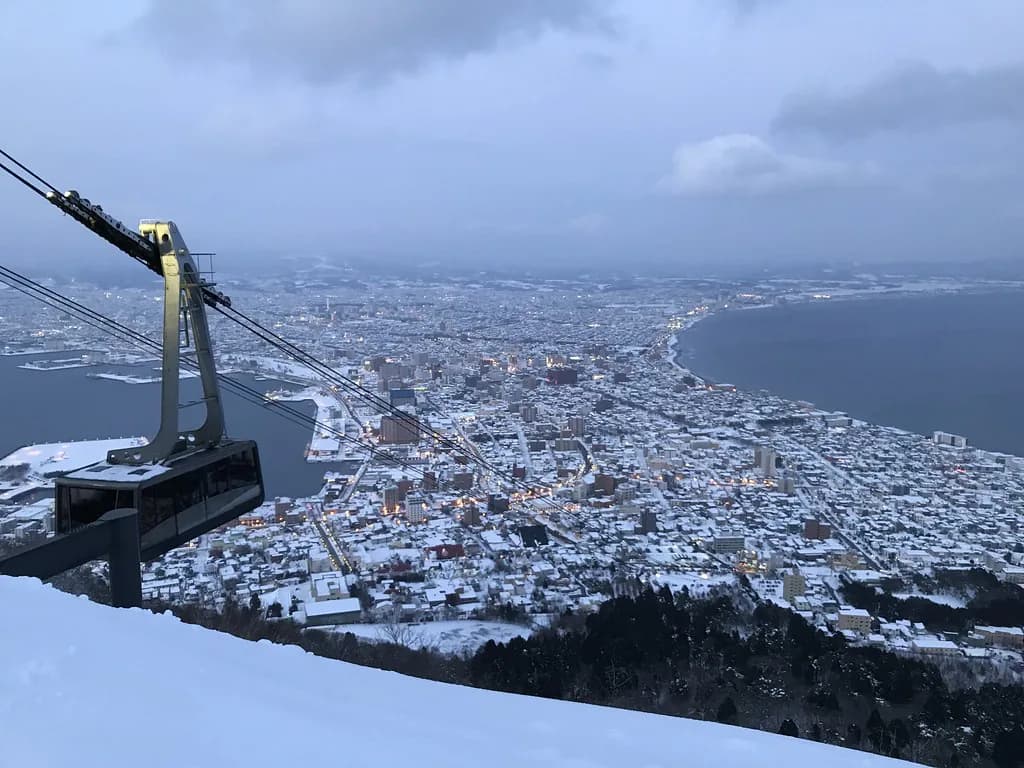
The ropeway up Mount Hakodate is a short tram or taxi ride from Goryokaku. The the Mount Hakodate night view is ranked among Japan's top three night panoramas — the hourglass silhouette created by the two bays on either side of the peninsula is best seen at dusk as city lights come on. Plan the Goryokaku visit for the afternoon and the ropeway for the same evening to combine both efficiently.
For a quick meal near the fort, Lucky Pierrot is the obvious local choice. This quirky Hakodate-only burger chain is found nowhere else in Japan and is famous for its Chinese Chicken Burger. The interiors are famously over-decorated with eclectic themes, and it is exactly the kind of local institution that chain-free food travelers enjoy. It sits within easy walking distance of the tower entrance and makes for a good, inexpensive lunch before heading onward.
Frequently Asked Questions
What is the best time to see cherry blossoms at Goryokaku?
The best time is typically from late April to early May. This window varies slightly each year based on the weather, so check local bloom forecasts. You can see over 1,600 trees in full bloom during this peak Hokkaido travel season.
Is Goryokaku Tower worth the admission fee?
Yes, the tower is highly recommended because it is the only way to see the full star shape of the fort. The observation deck also provides historical dioramas that explain the Battle of Hakodate. It offers the best photography opportunities in the entire city.
How do I get to Goryokaku from Hakodate Station?
The easiest way is to take the city tram to the Goryokaku-koen-mae stop. The ride takes about 15 minutes and costs a few hundred yen. From the stop, a 10-minute walk leads you directly to the tower and park entrance.
What happened at the Battle of Hakodate?
This was the final battle of the Boshin War in 1869 between Shogunate rebels and Imperial forces. The rebels surrendered at Goryokaku, marking the end of samurai rule in Japan. It paved the way for the Meiji Restoration and modern government.
Goryokaku is much more than just a beautiful park; it is a living monument to Japan's history. From the strategic star-shaped walls to the panoramic tower views, there is something for every traveler to enjoy. Make sure to plan your visit around the seasonal highlights to get the most out of the experience.
Whether you are a history buff or a nature lover, this fortress will leave a lasting impression. Don't forget to try the local Genghis Khan BBQ if you visit during the spring blossom season. Hakodate remains one of the most charming cities in Japan, and Goryokaku is undoubtedly its brightest star.
Free: The Hakodate Essentials guide
Top things to do, where to stay, a perfect day plan, getting around, and the best time to go — a Hakodate mini-guide you can take offline.
You might also like

Continue reading
More guides you'll find useful