
Aizu Bukeyashiki Nisshinkan Travel Guide: History & Visitor Tips
Discover Aizu Bukeyashiki Nisshinkan, a historic samurai school. Learn about its legacy, what to see, interactive experiences, and plan your visit with practical tips.
On this page
Aizuwakamatsu preserves two of the most immersive samurai history sites in all of Tohoku: the Aizu Bukeyashiki and Aizu Hanko the Nisshinkan. These are distinct attractions roughly 10 minutes apart by car, and together they tell the full story of Aizu's warrior class — from the private world inside a chief retainer's mansion to the rigorous school that shaped the next generation of samurai. Understanding both, and what separates them, is the key to getting the most from your time in this city in 2026.
This guide covers the history of each site, what you can see and do, the practical details you need to plan your visit, and the broader Aizu story that gives both places their emotional weight.
Aizu Bukeyashiki: Inside a Chief Retainer's Mansion
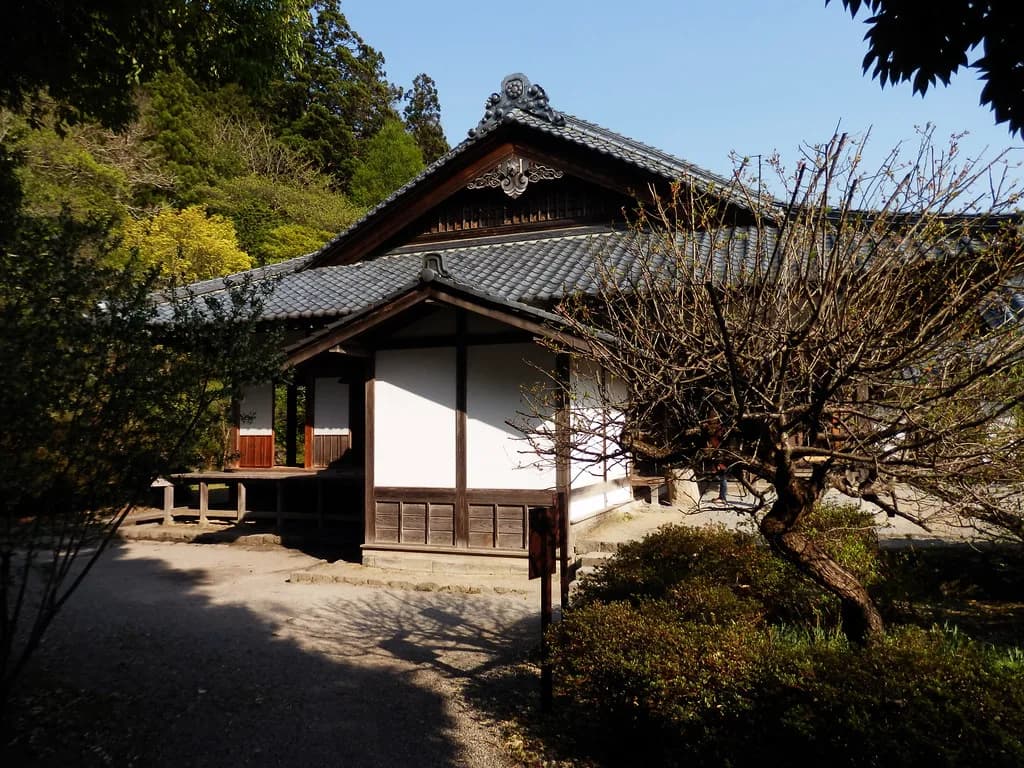
Aizu Bukeyashiki is a reconstructed samurai residence complex centered on the mansion of Saigo Tanomo, the Aizu Domain's chief retainer during the turbulent final years of the Edo period. The original mansion was destroyed in the Boshin War of 1868. The current reconstruction spans approximately 38 rooms and faithfully recreates the scale and atmosphere of the original estate. Admission is ¥1,000 for adults in 2026.
Walking through the rooms gives a concrete sense of how high-ranking samurai families actually lived — the layout of reception rooms for formal audiences, the private quarters where family slept, the kitchen, and the storage areas. Interpretive displays explain the daily rituals, etiquette, and household management that governed samurai domestic life. The site also features a small garden, a watermill, and a souvenir shop selling Aizu crafts.
Photography tip: The interior rooms of Bukeyashiki photograph beautifully in the soft light of mid-morning (09:30–11:30). The alcove displays and wooden architectural details are easiest to capture without flash before tourist crowds arrive. Bring a translation app — approximately 40% of the interpretive panels are Japanese-only, particularly the household management and ritual sections.
Saigo Tanomo's story adds particular depth to a visit. He advocated for peaceful surrender during the Boshin War to spare lives, a position that put him at odds with much of the Aizu leadership. His family's fate in that conflict — his wife and daughters chose to die rather than be captured — is one of the most intensely personal tragedies of the war. The residence panels narrate this story without dramatization, and it stays with you. The Aizu Bukeyashiki entity page has additional detail on the site's layout and what to photograph.
Aizu Hanko Nisshinkan: A Glimpse into Samurai Education
Aizu Hanko Nisshinkan served as the highest educational institution in the Aizu Domain. Established in 1803, it trained the sons of samurai in both military arts and academic subjects. The school aimed to instill strong moral character and unwavering loyalty — values that later defined the Aizu samurai identity in the fires of the Boshin War. Admission is ¥1,800 for adults (as of 2026), higher than Bukeyashiki because of the broader complex and interactive activities on offer.
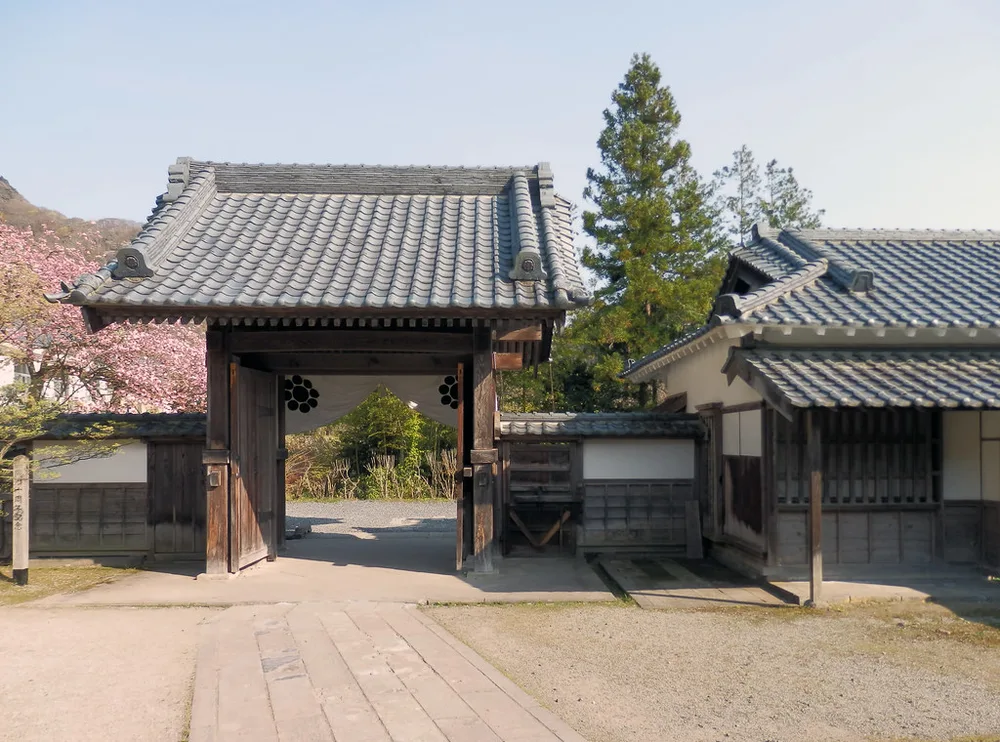
The reconstructed complex lets visitors walk through classrooms, dormitories, archery ranges, and a fencing hall (dojo). The scale is impressive — Nisshinkan was the largest domain school in Japan at the time of its founding. The attention to historical accuracy in the reconstruction is evident in everything from roof construction to the placement of stone paths between buildings.
A detail most visitors miss: the Byakkotai (White Tiger Corps) originated here. The young samurai who became some of the Boshin War's most famous figures trained at Nisshinkan before they were mobilized. Knowing this as you walk the grounds changes the atmosphere of the place. See the Nisshinkan attraction page for the full historical timeline.
The Aizu Domain: Historical Context for Both Sites
The Aizu Domain occupied what is now western Fukushima Prefecture during the Edo period. It was administered by the Matsudaira clan under a special charter from the Tokugawa Shogunate — a charter that made loyalty to the Shogunate a hereditary duty, not merely a political choice. This unusually explicit obligation to the old order is why Aizu fought so hard during the Boshin War of 1868, when the Meiji forces moved to dismantle Tokugawa rule.
Nisshinkan's curriculum reflected this dual mission of scholar and soldier. Students studied Confucian classics, calligraphy, history, and astronomy alongside swordsmanship, archery, and horsemanship. The school began accepting students as young as six or seven. By the time a student reached his mid-teens, he was expected to demonstrate competence across all disciplines. This is a curriculum more demanding than most modern secondary schools, compressed into shorter years with higher stakes.
The Boshin War ended Nisshinkan's original function. The school burned during the siege of Aizuwakamatsu. The reconstruction you visit today was built in 1987 on a different site, about 2 km from the original location near the Tsuruga Castle. Bukeyashiki, similarly, is a post-war reconstruction — the original mansion site was also lost in 1868. Both sites are honest about their reconstructed status, which distinguishes them from Japan's more romantically marketed heritage attractions.
The Aizu forces that fought in the Boshin War included the Byakkotai samurai commemorated at Iimoriyama, whose tragic last stand has become one of the most visited sites in Aizuwakamatsu. Understanding Nisshinkan and Bukeyashiki provides the essential backdrop for making that visit meaningful rather than just scenic.
Highlights and Interactive Experiences at Nisshinkan
Nisshinkan distinguishes itself from a typical history museum by offering hands-on activities that are genuinely connected to what was practiced here, not imported as tourist entertainment.
Traditional archery (Kyudo): The archery range (shajokan) is the most popular activity. An instructor demonstrates correct posture and technique before you shoot. Sessions typically run 30–40 minutes and cost around ¥1,000–¥1,500. This is the same style of archery samurai students practiced — slow, ceremonial, and focused on form over speed. Even if you miss the target entirely, the physical experience of learning the release is genuinely instructive. Walk-in slots are usually available on weekdays; weekends can fill by mid-morning during peak season (late April to early November).
Akabeko painting: The Akabeko is a red papier-mâché cow, one of Aizu's most recognizable folk crafts, associated historically with protection against smallpox. Painting your own takes 45–90 minutes and costs approximately ¥1,000–¥1,800 depending on the size of the figure. It is consistently the more family-friendly of the two activities. Walk-in is the norm here.
Zazen (seated meditation): Less promoted but available, zazen sessions introduce visitors to the contemplative practice that Nisshinkan incorporated into samurai education as a discipline of mental focus. Confirm availability at the main reception on the day of your visit.
Activity booking and accessibility: Archery fill-ups by 11:00 AM on weekends; arrive early or call ahead at +81 242 28 2525 to reserve a slot. Akabeko painting has no time limit for walk-ins and suits all ages. Samurai armor try-on is popular with children — budget 20 minutes if bringing young visitors. All activities include instruction in English through demonstration, though signage inside buildings is predominantly Japanese.
Samurai armor try-on: Replica armor is available for photographs. Cost is typically ¥500–¥1,000. Allow 15–20 minutes for fitting and photography.
A practical note on English: a meaningful portion of the exhibit text inside the buildings is in Japanese only. The Airial Travel reviews of Nisshinkan in 2026 consistently flag this. Download a translation app before your visit and take photographs of panels to translate at your leisure. The interactive activities require no language skill and the instructors communicate well through demonstration.
The Astronomy Platform: What Most Visitors Skip
Inside the Nisshinkan grounds stands an elevated observation platform called the Tenmonkaku — the astronomy hall. Samurai students studied celestial navigation here as part of their curriculum, which also included mathematics and geography. Today it functions as a panoramic viewpoint over the Aizuwakamatsu basin, with the mountains of Fukushima visible on clear days.
Most first-time visitors make a beeline for archery and Akabeko painting and never find the Tenmonkaku. It is signposted from the main compound path, but the signage is in Japanese. Ask at the main reception for directions. The platform takes about 10 minutes to reach from the main courtyard and adds nothing to your admission cost. On a clear morning the views are genuinely striking — Bandai-san and the surrounding volcanic mountains frame the city in a way that no other easily accessible viewpoint in Aizuwakamatsu replicates.
The fact that Edo-period samurai boys were taught astronomy alongside swordsmanship is itself worth a moment of reflection. The Aizu approach to education — holistic, demanding, connecting heaven and earth — is one of the things that made Nisshinkan exceptional among Japan's domain schools. Standing on the platform, the curriculum suddenly feels less abstract.
Women, the Shinsengumi, and the Human Dimension of Aizu's War
Aizu's samurai history is often told through the lens of male warriors — and Nisshinkan, as a school for the sons of samurai families, is predominantly that story. But the Boshin War pulled women into violent roles that their education at home had not prepared them for. Nakano Takeko led the Joshigun, a unit of female fighters armed with naginata (pole weapons), during the Battle of Aizuwakamatsu in 1868. She died in combat and was buried separately at Hokaiji Temple in nearby Inawashiro at her own request, so that her body would not be captured. A memorial at the temple grounds honors her.
Inside Aizu Bukeyashiki, the panels about the Saigo family include the story of the women of the household who chose death over capture. This is not sanitized — the site presents it as the tragedy it was, shaped by a code that demanded loyalty unto death but that had never been designed for the specific horror of a lost war fought inside a family home.
The Shinsengumi connection to Aizu is also meaningful. This special police force of the late Tokugawa government was stationed in Aizuwakamatsu during the Boshin War and fought alongside Aizu forces. Hajime Saito, one of the Shinsengumi's most effective captains, spent his later life in the city and is buried at Amida Temple in central Aizuwakamatsu — a 10-minute taxi ride from either Nisshinkan or Bukeyashiki. For visitors who arrived in Aizu through an interest in the Shinsengumi (popularized by the anime and manga series Rurouni Kenshin and Hakuouki), visiting Amida Temple completes a circuit that the two main samurai history sites begin.
Planning Your Visit: Practical Information
Aizu Hanko Nisshinkan is at Takatsukayama-10, Kawahigashimachi Minamikoya, Aizuwakamatsu, Fukushima 969-3441. Hours are 09:00–16:00 (last entry 16:00). Admission is approximately ¥1,800 for adults; verify current pricing at nisshinkan.jp before visiting. The site is about a 10–15 minute taxi ride from Aizuwakamatsu Station; taxis are readily available at the station. Local buses serve the area but schedules are infrequent — a taxi or rental car is far more practical for combining this with other sites. Parking is available on-site for those driving.
Aizu Bukeyashiki is located at 1 Higashiyama, Kawahigashimachi, Aizuwakamatsu, near the Higashiyama Onsen area. Admission is ¥1,000 for adults. Hours are broadly similar to Nisshinkan (check the Aizuwakamatsu Official Website for current times and any seasonal closures). It is roughly 10 minutes from Nisshinkan by car, making it easy to visit both in the same half-day.
Allow 2 hours minimum for Nisshinkan if you plan to do one activity, and 3 hours if you do two. Bukeyashiki takes about 60–90 minutes. Together, the two sites plus transit time fills a comfortable morning or afternoon. Visiting on a weekday morning is consistently cited as the least crowded time. Japanese school groups visit frequently on weekday afternoons in spring and autumn — the interactive areas get busy. Avoid arriving after 14:00 on a weekday during peak season if you want a relaxed archery session.
A combined ticket covering multiple Aizuwakamatsu sites (including Tsuruga Castle) is sometimes available through the city's tourism office. Ask at Aizuwakamatsu Station's tourist information counter when you arrive — the savings can be meaningful if you are staying more than one day.
| Criteria | Aizu Bukeyashiki | Aizu Hanko Nisshinkan |
|---|---|---|
| Admission | ¥1,000 (adults) | ¥1,800 (adults) |
| Hours | 09:00–16:00 (last entry 16:00) | 09:00–16:00 (last entry 16:00) |
| Primary Highlight | Reconstructed samurai residence (38 rooms); domestic life of a chief retainer | Elite samurai school complex; education, martial training, interactive activities |
| Interactive Activities | Photography and garden strolls | Kyudo archery (¥1,000–¥1,500), Akabeko painting (¥1,000–¥1,800), armor try-on (¥500–¥1,000) |
| Time Needed | 60–90 minutes | 120–180 minutes (with activities) |
| Access from Station | 10 minutes by taxi; near Higashiyama Onsen | 10–15 minutes by taxi from Aizuwakamatsu Station |
| Best For | Understanding samurai family life and the Boshin War's human cost | Hands-on learning and samurai education curriculum |
Beyond These Sites: Aizuwakamatsu's Broader Samurai Circuit
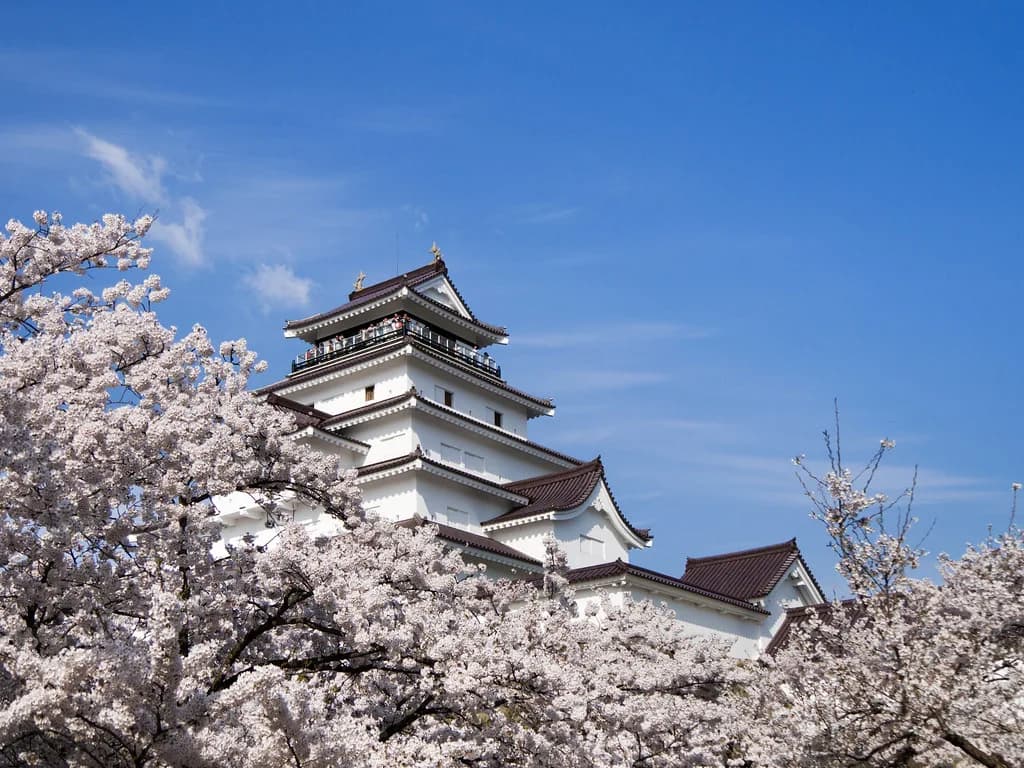
Aizuwakamatsu rewards a full day of exploration. The natural companion to Nisshinkan and Bukeyashiki is Tsurugajo Castle, the reconstructed castle at the heart of the city that served as the final battleground of the Boshin War. The castle's inner museum holds weapons, armor, and personal belongings from that conflict, providing a direct material link to everything you read about at the two samurai sites. The castle grounds are also beautiful in cherry blossom season (late April) and autumn foliage (mid-October to early November).
the Iimoriyama hill, where the Byakkotai made their last stand, is a 15-minute taxi ride from the castle and takes about an hour to explore. The hill has a narrow escalator (charged separately) if climbing the stone steps is difficult. The view from the top — overlooking the city and the castle — is the same view the young samurai saw as they made their tragic decision in 1868.
For a complete contrast and an easy day trip from Aizuwakamatsu, Ouchi-juku is a preserved Edo-era post town about 40 minutes by car. Its thatched-roof inns and mountain setting are among the most photographed landscapes in the Tohoku region. Combining Ouchi-juku with a morning at Nisshinkan and Bukeyashiki makes for an extremely full but rewarding day if you have your own vehicle.
Frequently Asked Questions About Nisshinkan
Frequently Asked Questions
Which Aizu Bukeyashiki Nisshinkan options fit first-time visitors?
First-time visitors should prioritize exploring the main school buildings and the meticulously reconstructed grounds. Engage with the interactive exhibits to understand samurai life. Consider trying an activity like Akabeko painting or archery for a memorable hands-on experience, which deepens your connection to the culture.
How much time should you plan for Aizu Bukeyashiki Nisshinkan?
Plan to spend approximately 2 to 3 hours at Aizu Hanko Nisshinkan for a thorough visit. This allows ample time to explore all the buildings, read the informational displays, and participate in one or two interactive experiences. Add extra time if you wish to enjoy a meal at the on-site restaurant.
What should travelers avoid when planning Aizu Bukeyashiki Nisshinkan?
Avoid visiting without checking the official website for current operating hours and any special closures. Do not assume all interactive experiences are walk-in; some may require advance booking, especially during peak tourist seasons. Also, avoid rushing your visit to truly appreciate the historical significance.
Is Aizu Bukeyashiki Nisshinkan worth including on a short itinerary?
Yes, Aizu Bukeyashiki Nisshinkan is definitely worth including, even on a short Aizuwakamatsu itinerary ideas. It provides a concise yet profound insight into samurai education and the Aizu spirit. You can easily combine it with a visit to Tsuruga Castle or Iimoriyama in a single day, maximizing your historical exploration.
What is the history of the Aizu Domain and Nisshinkan?
The Aizu Domain was a powerful feudal domain known for its unwavering loyalty to the Tokugawa Shogunate. Nisshinkan, established in 1803, was its elite samurai school, training future leaders in martial arts and academics. Both played crucial roles in the Boshin War, symbolizing the domain's fierce dedication and tragic end.
Aizu Bukeyashiki and Aizu Hanko Nisshinkan are two sites that together give you something rare in Japanese heritage tourism: a genuinely human portrait of the samurai world, not just its aesthetics. One shows you how a senior samurai family lived and died. The other shows you how the next generation was trained to live the same values. The Boshin War ended both institutions, and both have been rebuilt — honestly, without pretending to be originals. That honesty is part of what makes them worth the trip.
Whether you spend half a day or a full day here, arrive knowing the history and you will leave having felt it. Combine these sites with Iimoriyama and Tsuruga Castle for the complete Aizu circuit, and Aizuwakamatsu will be one of the most historically resonant stops of any Japan itinerary in 2026.
For the full overview, see our complete Aizuwakamatsu travel guide.
Free guide: Japan's Hidden Gems
12 under-the-radar places beyond Tokyo & Kyoto — with the best season to visit each and a local tip you won't find in the guidebooks.
You might also like

Continue reading
More guides you'll find useful

