Aizuwakamatsu Itinerary: Your Ultimate 3-Day Samurai City Guide
Plan your Aizuwakamatsu itinerary with our detailed 3-day guide. Discover samurai history, sake breweries, local delicacies, and practical tips for an unforgettable trip.
On this page
Aizuwakamatsu sits in the western basin of Fukushima Prefecture, far enough from the Tohoku Shinkansen corridor that most visitors skip it entirely. That is precisely the point. The city preserves a coherent samurai-era identity — the castle, the warrior residences, the breweries, the post town — in a way that more tourist-heavy destinations cannot. A well-structured Aizuwakamatsu itinerary rewards you with the depth that a Tokyo-Kyoto loop simply does not have room for.
The city became famous as the last stronghold of samurai loyal to the Tokugawa shogunate during the 1868 Boshin War. The Byakkotai — a unit of teenage warriors — died on a hillside here, an event that still shapes the city's identity. Beyond that history, Aizuwakamatsu is home to some of Tohoku's finest sake, a thatched-roof post town, and a Buddhist temple with one of the strangest interiors in Japan. This guide covers all of it, updated for 2026.
Why Visit Aizu Wakamatsu? Fukushima's Best-Kept Secret
Aizuwakamatsu is one of the few mid-size Japanese cities where the historical narrative is still legible in the landscape. The castle was rebuilt in the 1960s but the surrounding park, the samurai quarter, and the hillside burial sites form an unbroken story. You can follow the Boshin War from the castle keep to the Iimoriyama in a single afternoon and actually understand what happened.
| Day | Focus | Key Stops |
|---|---|---|
| Day 1 | Samurai history & heritage sites | Tsuruga Castle, Iimoriyama, Sazaedo Temple, Mitsutaya (miso dengaku) |
| Day 2 | Sake trail & samurai residences | Kitakata ramen, Aizu Miyaizumi Sake Brewery, Suehiro Sake Brewery, Sake Bar Kanmasu |
| Day 3 | Post-town village or lake | Ouchijuku (negi soba, thatched-roof village) OR Lake Inawashiro (scenic route to Nikko/Sendai) |
The sake culture here is unusually concentrated. The Aizu basin's cold winters, pure mountain water, and centuries of brewing tradition have produced a regional style — slightly dry, rice-forward — that you will find poured at shops, bars, and breweries within a few minutes' walk of each other. A day devoted to sake-hopping in Aizuwakamatsu covers more ground than most visitors expect.
The city also functions as a useful Tohoku base. Nikko is roughly three hours south. Sendai is reachable via the Tohoku Shinkansen with a transfer at Koriyama. If you are building a longer Japan itinerary, slotting two or three nights in Aizuwakamatsu between those destinations makes geographical sense and avoids backtracking.
Getting to Aizu Wakamatsu and Navigating the City
From Tokyo, take the Tohoku Shinkansen to Koriyama Station (around 1 hour 20 minutes), then transfer to the JR Ban'etsu West Line for Aizuwakamatsu Station (about 1 hour 10 minutes). The full journey is 2 hours 30 minutes to 3 hours depending on the shinkansen service. The Japan Rail Pass covers both legs. From Sendai, the route is the same — shinkansen south to Koriyama, then the Ban'etsu West Line west. An express bus from Koriyama also runs directly to the Tsuruga Castle for about ¥1,200 one way.
Within the city, the Aizu Loop Bus is your primary tool. There are two routes: the Haikara-san (blue line, counter-clockwise) and the Akabe (red line, clockwise). Both circle the city and stop at every major attraction. Buy the one-day pass (¥600) at the bus information centre directly in front of JR Aizuwakamatsu Station — Bus Stop 4 is where you board. Individual rides cost ¥210 if you skip the pass, but with three or more rides in a day the pass pays for itself. The cute mascot painted on each bus matches its line colour, so identification is easy even without Japanese reading ability.
The city centre around Tsuruga Castle is walkable in good weather, but Iimoriyama, Bukeyashiki, and Suehiro Sake Brewery are spread out enough that buses save meaningful time. For the Kitakata ramen excursion, the JR Ban'etsu West Line runs from Aizuwakamatsu Station to Kitakata Station in about 20 minutes (¥330 one way). For Ouchijuku, take the Aizu Railway to Yunokami Onsen Station, then a taxi or infrequent bus for the final 10 km. Check the getting to Aizuwakamatsu by train guide for current timetables.
Aizuwakamatsu Itinerary Day 1: Castle, Samurai History, and Iimoriyama
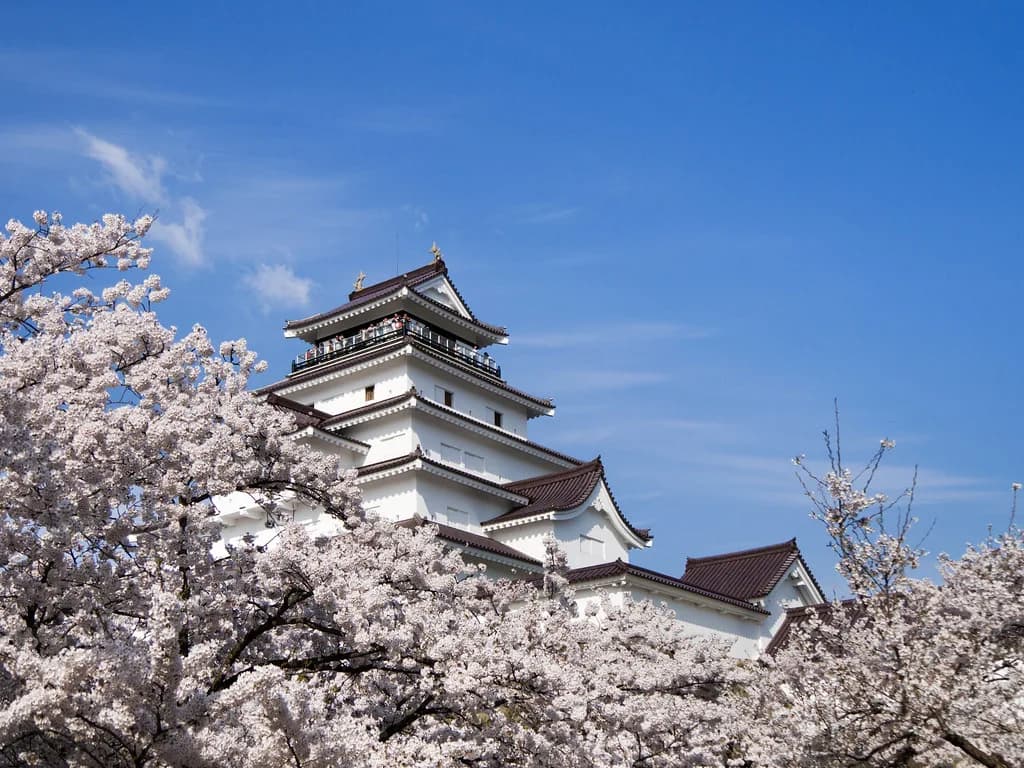
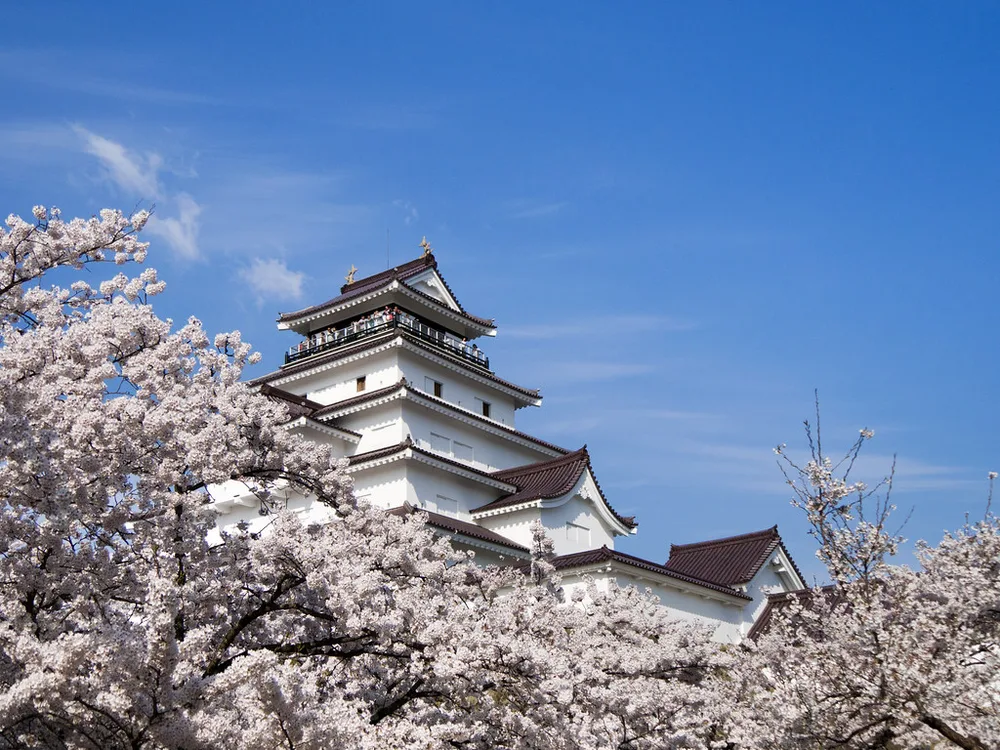
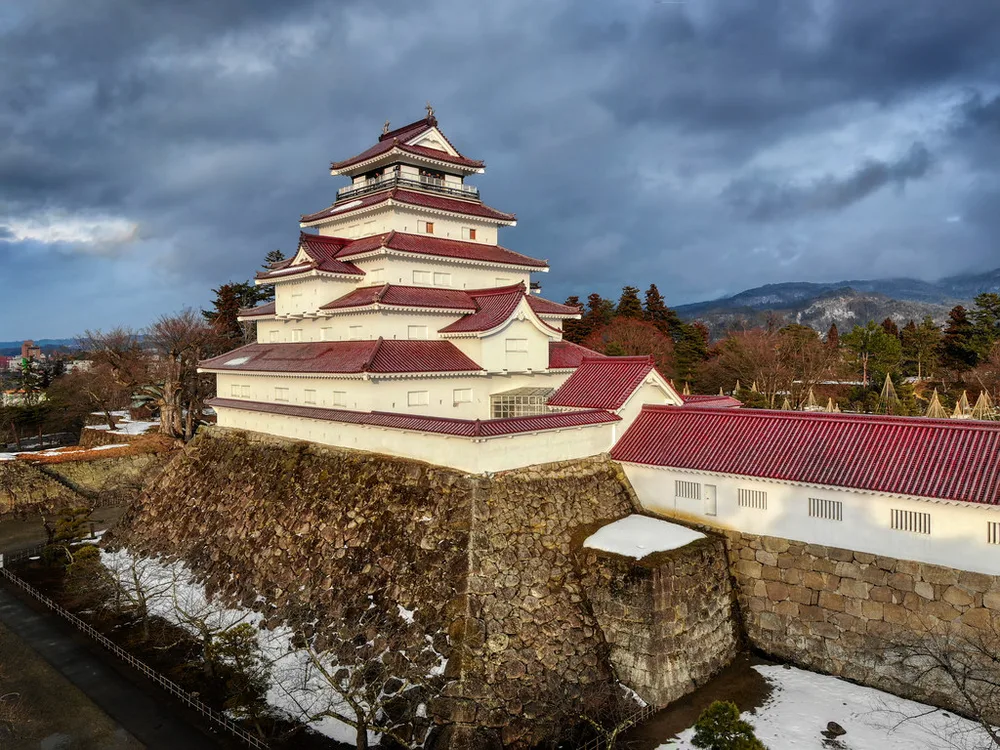
Start at Tsuruga Castle by 09:00. The grounds open early and the inner keep museum opens at 08:30. Tsuruga Castle is one of the few castles in Japan with a red-tiled roof — a deliberate aesthetic choice by the Aizu clan. The original castle was demolished after the Meiji Restoration, and the current ferro-concrete reconstruction dates from 1965. The interior holds a well-organised museum covering Aizu clan history, the Boshin War, and samurai culture. Allow 60 to 90 minutes inside. Budget ¥520 for combined entry to the keep and the adjacent Rinkaku Tea House, where a matcha and wagashi (sweet) set costs an additional ¥600. The castle park is one of the top cherry-blossom spots in Tohoku during late April.
From Tsuruga Castle, take the Akabe bus (red line) to Iimoriyama Shita stop — about five minutes from the station, and the castle stop is between them. Iimoriyama (Mount Imori) is the site where nineteen Byakkotai soldiers, aged 16 to 17, took their own lives in September 1868 after misreading smoke as a sign that the castle had fallen. The monuments and tombs are accessible via a stone staircase or a paid escalator (¥250). The hilltop view over the city is sobering. Allow 45 minutes.
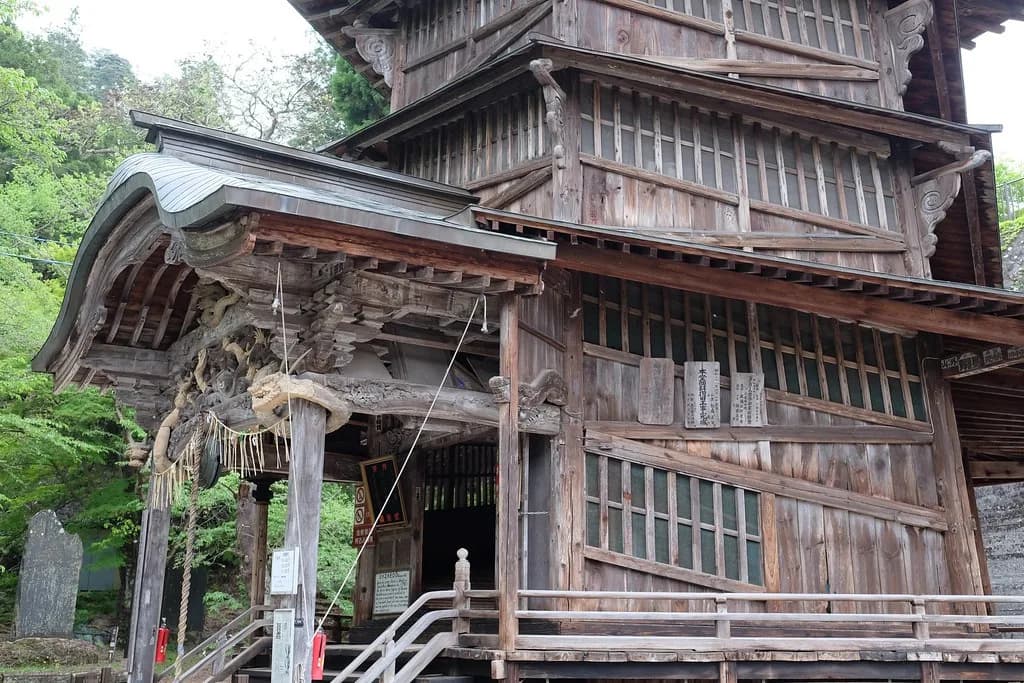
Immediately adjacent is the Sazaedo Temple, built in 1796 and one of the most architecturally unusual structures in Japan. From the outside it resembles a six-sided pagoda. Inside, it operates as a double helix: visitors ascend on one spiral and descend on a completely separate path, meaning you never cross another visitor going the opposite direction. This was designed to allow pilgrims to symbolically complete the 33-temple Saigoku Kannon pilgrimage in a single building. Entrance is ¥400. If snow is falling, the interior is particularly atmospheric. Reach it with the same bus stop as Iimoriyama. See the the Byakkotai story guide for the full site breakdown.
After Iimoriyama, take the Akabe bus to the Otanomachi stop (about stop A31 on the red line, roughly three minutes' walk to the destination) for late afternoon miso dengaku at Mitsutaya. This miso specialty shop was founded at the end of the Edo period, around 1835. The Miso Dengaku Set (¥1,850 inclusive of tax) includes six skewered and charcoal-grilled items: mochi, fried tofu, konjac, taro potato, Shingorou (half-mashed rice cake), and smoked herring. Each is coated in a different in-house miso — Sansho miso on the tofu, Egoma miso on the Shingorou, sweet miso on the mochi. Mitsutaya is at 1-1-25 Omachi, Aizuwakamatsu. It opens 10:30 to 16:30, closed Wednesdays. This counts as a late lunch or afternoon snack.
For dinner, the central Omachi district has a good cluster of izakayas. Stroll down Noguchi Hideyo Seishun Street nearby — a retro shopping and café street named after the world-famous bacteriologist who grew up in Aizu. The buildings are well-preserved Meiji-era storefronts, and the street works as an evening walk between dinner options. See the Things to Do in Aizuwakamatsu guide for more site-level detail.
Aizuwakamatsu Itinerary Day 2: Sake, Ramen, and Bukeyashiki
Start Day 2 with a morning trip to Kitakata for ramen. Take the JR Ban'etsu West Line from Aizuwakamatsu Station (08:30 or 09:00 departure recommended — check the timetable as frequency is limited). In Kitakata, Kitakata Ramen Specialty Shop Kirin (喜鈴) on Shiromae Store is a few steps from the Kitademaru Oodori bus stop, accessible on both the red and blue loop bus lines. Kirin specialises in soup bases made from three types of soy sauce produced in collaboration with the century-old Hoshi Jozo soy sauce brewery in Kitakata. The signature Golden Shoyu Ramen (特製喜多方肉中華そば, ¥1,200) is made from chicken bones, pork bones, kelp, and three types of dried sardine and mackerel, finished with a blend of dark and light Kitakata soy sauce. The result is golden-coloured, light but deeply umami-flavoured. Opening hours: weekdays 11:00–15:00, weekends 11:00–17:00. Return to Aizuwakamatsu by local train.
The afternoon is devoted to the sake trail. Your first stop is Aizu Miyaizumi Sake Brewery (会津宮泉銘醸), located at 8-7 Higashisakaemachi — directly opposite the Kirin ramen shop's Aizuwakamatsu-side branch. Miyaizumi has been brewing for 400 years and allows visitors to taste and purchase directly. Hours: 09:00–16:30. Look for the assemblage-method bottle — a blend of junmai, junmai kimoto, and junmai ginjo — which has a purchase limit and rarely makes it online. If you see it, buy it.
Walk or take a short bus ride to Suehiro Sake Brewery (末廣酒造) at 12-38 Nisshinmachi. Suehiro is one of the largest and most visited breweries in Tohoku. Free brewery tours run daily from 10:00 to 16:00 and take approximately 30 minutes. Register early — last session registration closes around 15:30. The brewery also has a café with sake-infused desserts, open until around 16:00. Hours: 09:30–16:30. Both Miyaizumi and Suehiro are covered in the Aizu sake guide guide.
In the early evening, stop at Sake Bar Kanmasu (デジタル田園酒場 かんます) in the Omachi district, inside Hotel Osaka-ya at 1-2-54 Omachi. Kanmasu stocks sake from 24 Aizu-region breweries at the Nomasse dispenser: ¥1,000 for a flight of six cups. It is the most efficient way to compare the regional style across multiple producers under one roof, and the kitchen serves Aizu-produce dishes to pair. End the evening at Aizu Shurakukan Watanabe Shouta Shoten, a large sake retail shop nearby carrying a wide selection of local bottles — useful for picking up a nightcap or omiyage (souvenir). Finish with a walk along Noguchi Hideyo Seishun Street if you did not do it on Day 1.
For the afternoon sightseeing alternative, swap the Kitakata trip to the morning of Day 1 and use Day 2's afternoon for Aizu Bukeyashiki (Samurai Residence Museum). Bukeyashiki is at the Aizu Bukeyashiki-mae bus stop on the loop bus. The complex reconstructs the residence of the Aizu clan's chief retainer, with dozens of rooms, a tea room, an archery range, and mannequins posed in period scenes. Entry is around ¥850. Visit details are in the Aizu samurai residence & school guide.
Aizuwakamatsu Itinerary Day 3: Ouchijuku Post Town and Departure
Ouchijuku is a former post town on the historic trade route linking Aizu and Nikko. It sits about 35 minutes by Aizu Railway from Aizuwakamatsu Station to Yunokami Onsen Station, then another 20 minutes by taxi or infrequent bus to the village itself. The main street is lined with thatched-roof farmhouses — the same heavy-snow design found in Shirakawago — now operating as restaurants, shops, and small inns (minshuku). Unlike Shirakawago, Ouchijuku receives far fewer visitors and keeps a quieter atmosphere on weekdays. Allow three to four hours including travel. A full day-trip guide is at the Ouchi-juku post town.
The local must-eat is negi soba: buckwheat noodles served in broth with a full length of Welsh onion (negi) as the only eating utensil. You snap off pieces of onion with your teeth as you eat. Several shops on the main street serve it for around ¥1,000–¥1,200. Also look for irori-grilled masu (cherry trout with a pink glaze) and the region's miso-based snacks. Most stalls and restaurants open by 09:00 and some close by 15:00, so arrive before noon.
If Ouchijuku does not fit your schedule, use Day 3 for Lake Inawashiro — roughly 30 minutes east of Aizuwakamatsu by local train on the JR Banetsu West Line. The lake is one of Japan's largest, sits at 514 m elevation, and reflects Mount Bandai on clear days. The Kitayama Wetlands (Ozegahara) connection further east makes it a viable half-day nature extension. Return to Aizuwakamatsu by late afternoon and depart from there in the evening, or catch the morning shinkansen from Koriyama onward to Nikko or Sendai.
Ouchijuku requires a full morning-to-early-afternoon commitment: The Aizu Railway to Yunokami Onsen (35 min) plus taxi/bus to the village (20 min) means you cannot arrive before 10:00. Most restaurants close by 15:00, so depart Aizuwakamatsu by 08:30 and aim to eat by 12:00. If a third day is tight, swap Ouchijuku with the Lake Inawashiro half-day instead — it requires no extra transfer and is gentler on a compressed schedule.
The 16:30 Rule: Planning Your Day Around Aizuwakamatsu's Early Closings
One detail that trips up first-time visitors: nearly every attraction and sake brewery in Aizuwakamatsu closes at or before 16:30. Tsuruga Castle closes at 17:00 (last entry 16:30). Sazaedo Temple closes at 16:30. Mitsutaya closes at 16:30, and is shut Wednesdays. Suehiro Sake Brewery stops tours at 16:00. Aizu Miyaizumi closes at 16:30. If you arrive at any of these after 16:00, you will be turned away.
The 16:30 closing rule is non-negotiable: Plan your sightseeing to end by 15:30 to avoid arriving at any major site after 16:00. This means your productive window is roughly 08:30–16:00 (about 7.5 hours of genuine visiting time). Front-load Iimoriyama and Bukeyashiki to the morning; save the Omachi district, sake bars, and dinner for evening.
The practical consequence is that your productive sightseeing window runs from 08:30 to 16:00 — about seven and a half hours. Front-load the outlying sites (Iimoriyama, Bukeyashiki) to the morning and leave the more central or flexible stops (sake bar, Noguchi Seishun Street, dinner) for the evening. For the Ouchijuku day trip, an 08:30 departure from Aizuwakamatsu Station is strongly recommended so you arrive by 10:00 and have time to eat and walk the village before the return bus schedule tightens.
This early-closing pattern also means the city's evening character is dining- and bar-focused rather than sightseeing-focused. The Omachi district around the central shopping street and Noguchi Hideyo Seishun Street becomes the natural after-17:00 zone. Sake bars like Kanmasu keep later hours. Plan your days with this split in mind: hard sightseeing before 16:00, eating and drinking after.
Where to Stay in Aizuwakamatsu
Aizuwakamatsu Washington Hotel is the most practical choice for most itineraries. It sits about two streets from JR Aizuwakamatsu Station, which keeps you close to both the loop bus network and the Ban'etsu West Line for Kitakata. The hotel is a standard Japanese business hotel — large twin rooms, well-maintained, nothing flashy — but the breakfast buffet includes local produces, fresh Aizu milk, and regional dishes alongside the usual spread. Window seats on the upper floors overlook the direction of the castle, which is a minor pleasure on a clear morning.
For a more immersive stay, consider a ryokan at Ashinomaki Onsen, located about 45 minutes west by Aizu Railway. Ashinomaki has over a millennium of onsen history and sits along the Okawa River gorge. Many ryokan include elaborate multi-course kaiseki dinners and outdoor baths with gorge views. The trade-off is an extra transit leg each day to reach the city's sights. If you have three nights, spending one or two at an Ashinomaki ryokan and moving to the Washington Hotel for the last night before departure is a workable split.
Budget travellers will find business hotels and guesthouses clustered around the station. Rates run from ¥5,000 to ¥9,000 per night depending on season. Spring cherry-blossom season (late April) and the Aizu Autumn Festival (late September) are peak periods — book at least three weeks ahead for those windows. The city is quiet enough outside those periods that last-minute bookings are usually viable.
Best Time to Visit Aizuwakamatsu
Late April is the prime window for cherry blossoms at Tsuruga Castle — the moat and park fill with thousands of Yoshino cherry trees. The Aizu Festival in late September (usually the third weekend) features a historical parade with locals in samurai armour, which is the city at its most theatrical. Both periods are popular, so accommodation fills quickly.
Autumn foliage (late October to mid-November) turns the Ouchijuku valley and the mountain roads vivid red and gold. Winter (December to March) brings heavy snow — Aizuwakamatsu sits in a basin that accumulates significantly. Tsuruga Castle under snow is photographically exceptional. Ashinomaki Onsen is particularly appealing in winter. Summer (June to August) is green and warm, and the city is quieter. The Sazaedo double-helix interior is cool even in midsummer, making it a welcome respite on hot days.
Essential Tips for Your Aizuwakamatsu Trip
Cash is essential. Many sake breweries, smaller restaurants, and the Mitsutaya dengaku shop are cash only. Post office ATMs (inside or adjacent to convenience stores) accept foreign cards reliably. The major convenience store chains — 7-Eleven, FamilyMart — have ATMs that work with most international cards. Withdraw before you reach outlying sites.
English signage is present at the main tourist sites (Tsuruga Castle, Iimoriyama, Sazaedo, Bukeyashiki) but patchy at smaller shops and breweries. Carrying a translation app and a printout of the addresses in Japanese characters will save time at taxi stands and smaller establishments. The Aizu Loop Bus stop guide is available in English at the bus information centre in front of the station.
Wear comfortable shoes. The Iimoriyama stone staircase is steep and can be slippery in rain or snow. The escalator (¥250) is a reasonable alternative. For Ouchijuku, the village is unpaved gravel, and heels or dress shoes will struggle in wet conditions. Dress in layers if visiting spring or autumn — the Aizuwakamatsu basin is noticeably cooler than Tokyo or coastal Tohoku. In winter, waterproof boots and a proper coat are not optional.
If you are combining Aizuwakamatsu with a Tohoku multi-city trip, the logical sequence from Tokyo is: Nikko (1–2 nights) → Aizuwakamatsu (2–3 nights, travel via local train from Tochigi through Koriyama or via Koriyama directly) → Sendai (1–2 nights) → back to Tokyo on the Tohoku Shinkansen. This loop avoids backtracking and keeps each leg under three hours.
Frequently Asked Questions
Which aizuwakamatsu itinerary options fit first-time visitors?
First-time visitors should focus on a 2-3 day itinerary covering Tsuruga Castle, Iimoriyama, and a sake brewery. Adding a day trip to Ouchijuku is also highly recommended. This balance offers a great introduction to the region's samurai history and culture.
How much time should you plan for aizuwakamatsu itinerary?
Plan at least 2 full days for Aizuwakamatsu to see the main sights without rushing. A 3-day itinerary, including a side trip to Ouchijuku, provides a more comprehensive experience. This allows for deeper cultural immersion and relaxation.
Is aizuwakamatsu itinerary worth including on a short itinerary?
Yes, Aizuwakamatsu is definitely worth including, even on a short Japan itinerary. Its compact size and unique historical focus make it an excellent addition. You can experience its samurai spirit and local charm in just one or two focused days.
Aizuwakamatsu rewards visitors who arrive with a plan. The 16:30 closing times, the spread-out sites, and the sake trail all require sequencing. But the city itself is low-stress — small, walkable in the centre, and genuinely uncrowded compared to Kyoto or Kamakura. Two days gets you the core (castle, Iimoriyama, Sazaedo, sake, miso dengaku). Three days adds Ouchijuku or Lake Inawashiro and turns a visit into a proper trip.
The samurai history here is not a reconstruction for tourists. The Byakkotai tombs, the castle, and the Bukeyashiki feel connected to actual events rather than set-dressed for visitors. That is the thing worth coming for, and it is what makes Aizuwakamatsu one of the most distinctive destinations in Tohoku for 2026.
For trip-planning details, see Aizuwakamatsu on Wikipedia and the official Fukushima travel guide.
With more time in Tohoku, extend the trip to Nikko or Sendai.
Free guide: Japan's Hidden Gems
12 under-the-radar places beyond Tokyo & Kyoto — with the best season to visit each and a local tip you won't find in the guidebooks.
You might also like


Continue reading
More guides you'll find useful