
Tsuruga Castle Aizuwakamatsu: Ultimate Travel Guide & Tips
Explore Tsuruga Castle in Aizuwakamatsu, Fukushima. Discover its samurai history, top things to see, best seasons to visit, and practical tips for your trip.
On this page
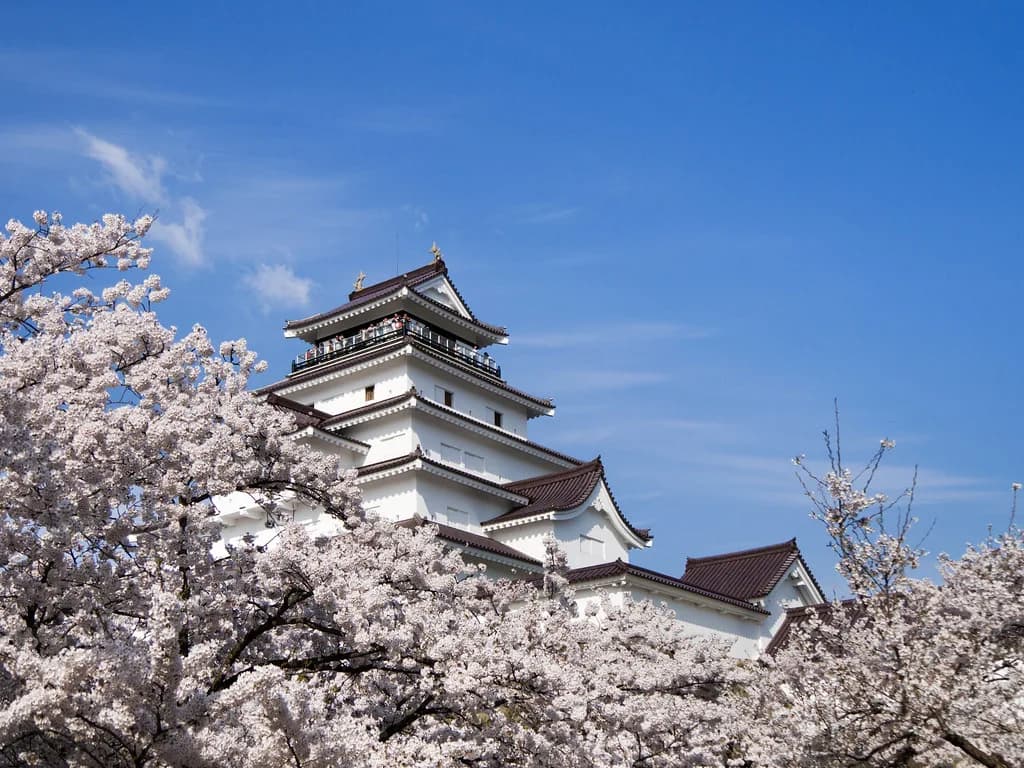
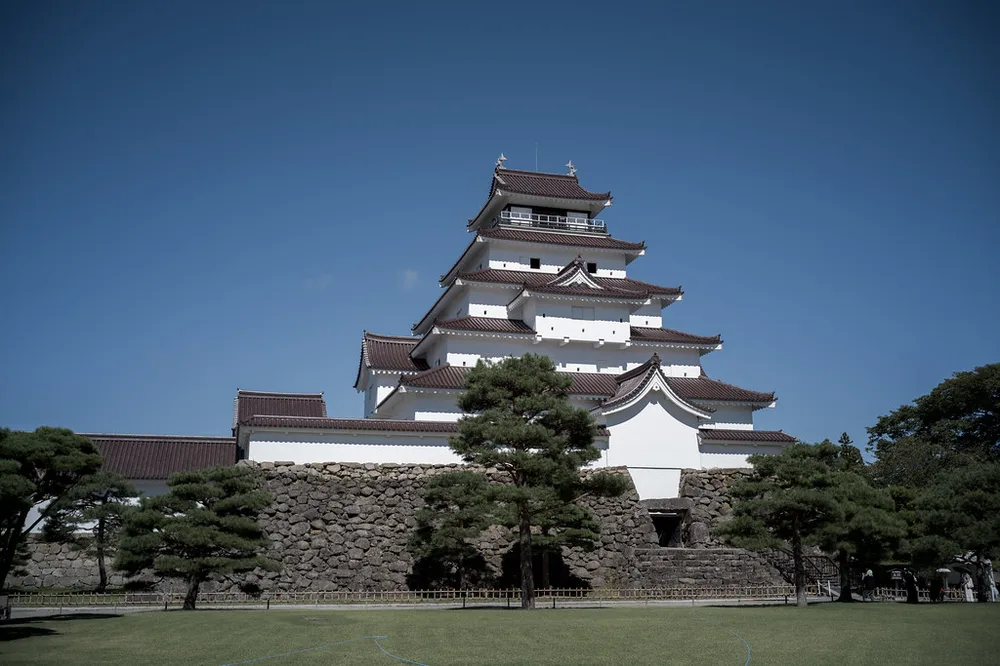
the Tsuruga Castle in Aizuwakamatsu stands as one of the most striking fortresses in all of Tohoku. Its white walls and distinctively red-tiled roof make it unlike any other surviving castle keep in Japan — and that uniqueness is earned, not just aesthetic. The castle is a National Historic Site, one of Japan's Top 100 Castles, and the stage for one of the most dramatic last stands of the samurai era.
Known officially as Aizu-Wakamatsu Castle (Tsurugajo), it anchors a city where feudal history is not just remembered but actively celebrated. Whether you come for the spring cherry blossoms, the Boshin War exhibits, or a bowl of wappa-meshi after a long walk around the grounds, the experience is layered in a way that single-attraction day trips rarely are.
This guide covers the castle's full history, what to see inside and on the grounds, how to get there, the best season for your travel style, what else to do in Aizuwakamatsu, and the practical details — admission, hours, parking — you need to plan without guesswork.
The Enduring History of Tsuruga Castle
The castle's origins trace back to 1384, when Ashina Naomori built a fortification here known as Higashi-Kurokawa-yakata. The Ashina clan, who had controlled the Aizu region since the Kamakura period, ruled from this site until Date Masamune crushed them at the Battle of Suriagehara in 1589. Within a year, Toyotomi Hideyoshi reassigned Aizu to Gamo Ujisato, who renamed the castle Tsuruga-jo (Castle of the Crane) and constructed a seven-story keep — the beginning of the fortress recognizable today.
Successive lords reshaped the structure further. During the Kato clan's tenure in the early 17th century, the keep was rebuilt into the present five-tier form, and additional defensive wings — Nishidemaru to the west and Kitademaru to the north — were added to strengthen the perimeter. The most consequential chapter, however, was the arrival of Hoshina Masayuki in 1643. Half-brother to the third Tokugawa shogun, Masayuki bound the Aizu domain in absolute loyalty to the Tokugawa — a pledge that defined the castle's final, tragic chapter.
The Boshin War of 1868 pitted the new Meiji imperial government against domains loyal to the old shogunate. Aizu was among the most defiant. Imperial forces besieged Tsuruga Castle for approximately one month, bombarding it with artillery while the defending samurai — including the young men of the Byakkotai (White Tiger Corps) — held out inside. The castle endured that bombardment without falling, earning its reputation as an "impregnable fortress," but the domain ultimately surrendered. In 1874 the Meiji government ordered the keep demolished.
The spirit of the place proved harder to erase than the stones. Local campaigning led to a faithful reconstruction in 1965, restoring the five-tier keep to its historic silhouette. In 2011, the red roof tiles were replaced with a historically accurate version after research confirmed the original color — making the 2026 castle you visit today closer to the 17th-century original than the 1965 reconstruction was. That detail alone is worth knowing before you arrive.
Top Things to See and Do at Tsuruga Castle
The main keep is the obvious starting point. Five stories tall, it houses the Wakamatsu Castle Keep Local History Museum across its interior floors. The exhibits trace Aizu's samurai culture from the domain's earliest rulers through the Boshin War, with samurai armor, swords, and detailed materials on the Byakkotai displayed across multiple levels. Photography is restricted in parts of the museum — check with staff on arrival before pointing a camera at exhibit cases. From the top observation deck, the view extends over Aizuwakamatsu city to the Aizu Basin and, on clear days, toward Mount Bandai.
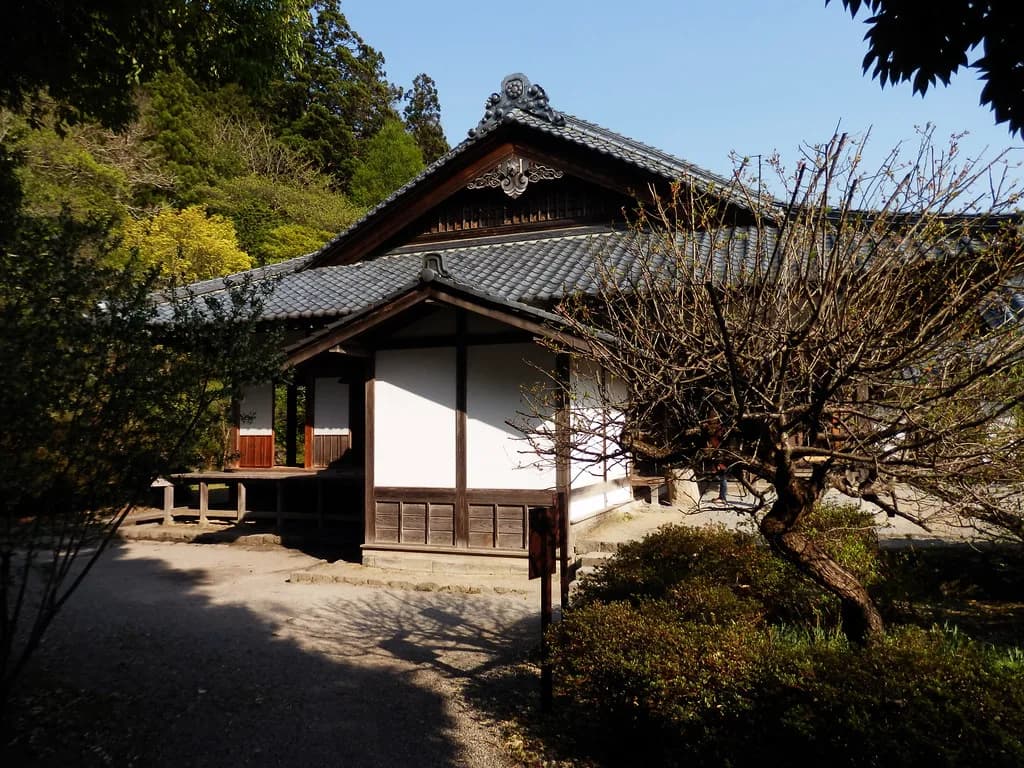
The Rinkaku Teahouse, inside the Honmaru (main bailey), is the second must-see. What most visitors don't realize is that the structure is attributed to Sen no Shoan — son of Sen no Rikyu, the tea master who codified the Japanese tea ceremony. That lineage gives the teahouse genuine historical weight beyond its garden setting. The building survived the Boshin War by being relocated, and it was restored on the castle grounds in the 20th century. Sitting inside with a bowl of matcha while looking out over the castle walls is one of the quieter, more reflective moments Aizuwakamatsu offers.
The best photography spot on the castle grounds is from the outer moat at ground level during early morning hours (before 8:00 AM). In winter, arriving just after snowfall captures the dramatic red-tiled roof against white grounds — a sight that draws photographers to Aizuwakamatsu specifically for winter castle shoots.
The castle grounds reward slow exploration beyond the two headline attractions. The moats and stone walls change character with every season, and specific features carry their own stories. The Kanetsukido bell tower near the Nishidemaru is one example: according to local accounts, its bell rang continuously throughout the month-long Boshin War siege, providing a signal of defiance to the defenders inside. The bell still stands. Walk the perimeter along the outer moat, look for the remnants of the Ninomaru and Sannomaru enclosures, and cross the corridor bridge on the Honmaru's east side — it frames the keep dramatically against the stone walls and water below. The museum shop inside the keep stocks local specialties and traditional Aizu crafts if you want to pick up souvenirs before leaving the grounds.
For photography, the castle's red roof against blue sky is the classic shot, but the most underrated angle is from the outer moat at ground level. During cherry blossom season the reflections on the water rival the view from inside. In winter, try arriving just after snowfall for the red-on-white contrast that photographers specifically come to Aizuwakamatsu to capture.
Planning Your Visit: Access, Hours & Tickets
From Tokyo, the standard route is the Tohoku Shinkansen to Koriyama Station (approximately 80 minutes), then the JR Ban'etsu West Line to Aizuwakamatsu Station (approximately 65 minutes). Total journey time is roughly three hours. If you are coming from Niigata, the Ban'etsu West Line also runs east toward Aizuwakamatsu, with journey time around 90 minutes. Coming by car, the castle is about 15 minutes from the Aizuwakamatsu Interchange on the Ban'etsu Expressway via Route 118.
From Aizuwakamatsu Station, the most convenient option is the city's loop buses: the Haikara-san (cream and brown vintage-style) and the Akabe (red). Both stop at Tsurugajo Iriguchi (Castle Entrance), from which it is a 5-minute walk to the Honmaru. Buses run throughout the day and also connect to other major sites like the Iimoriyama and the Aizu Bukeyashiki — a one-day loop bus pass makes sense if you plan to visit multiple spots. By taxi it is about 10 minutes from the station. Drivers on the Haikara-san route are experienced with tourist visitors and the bus itself stops at English-signposted landmarks.
If you are driving, three paid parking areas serve the castle: Nishidemaru Parking (west side), South Gate Parking, and East Gate (Sannomaru) Parking. Standard rates are ¥200 for the first hour, then ¥100 per additional 30 minutes. During cherry blossom season the lots fill quickly by mid-morning — arriving before 09:00 or parking at a slightly distant lot and walking through the park is the practical workaround.
| Ticket Type | Adult Price | Student / Child | Best For |
|---|---|---|---|
| Keep Only | ¥410 | ¥150 | Short visit, museum focus |
| Keep + Rinkaku Teahouse | ¥520 | — | Full cultural experience, recommended |
The castle keep is open 08:30–17:00, with last entry at 16:30. The surrounding park is freely accessible and many visitors use it for early-morning walks before the keep opens. Keep-only admission is ¥410 for adults and ¥150 for elementary and junior high school students. The combined ticket covering both the keep and Rinkaku Teahouse is ¥520 for adults. Check the official Samurai City Aizuwakamatsu website for any schedule changes around national holidays or seasonal events.
The combo ticket (¥520 for keep + Rinkaku Teahouse) is worth buying if you plan to visit both attractions — it saves ¥200 compared to buying separate tickets (¥410 + ¥210). The teahouse visit typically takes 20–30 minutes and gives context to the castle's refined aesthetic beyond its military history.
Best Time to Visit Tsuruga Castle (Seasonal Highlights)
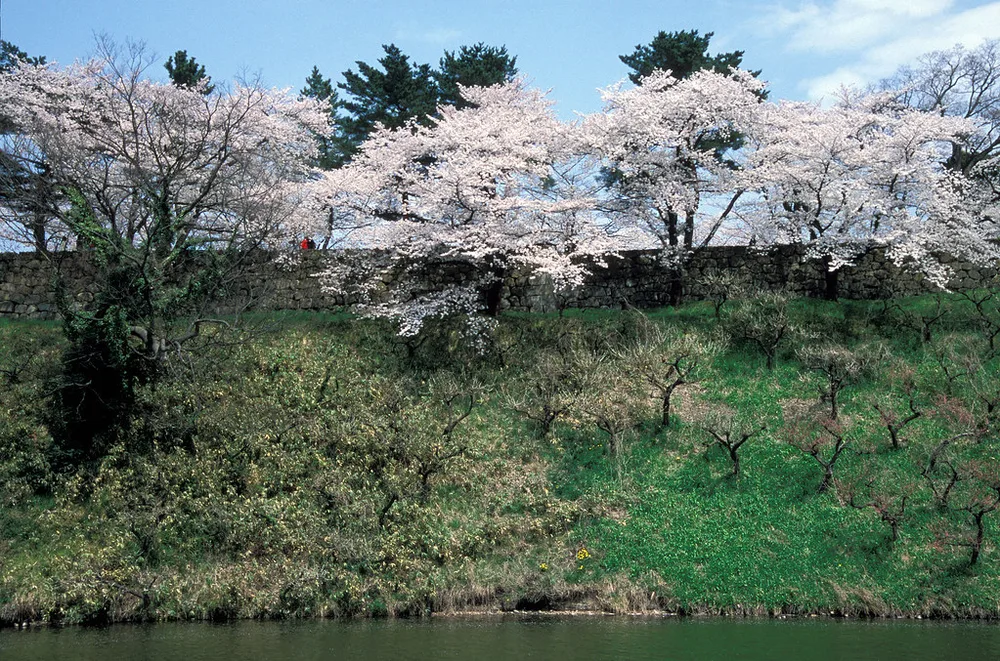
Spring is the most visited season, and for good reason. Tsuruga Castle Park holds around 1,000 cherry trees — predominantly Somei Yoshino — and has been designated one of Japan's Top 100 Cherry Blossom Spots. Full bloom typically runs from mid to late April. The castle organizes illuminated night viewing during this period, with the castle lit against the darkened sky and cherry blossoms glowing pink around the moat. Double-flowered yaezakura cherries, which bloom about two weeks after Somei Yoshino, extend the season into the Golden Week holiday period. Crowds are significant at peak bloom; plan to arrive early on weekdays to avoid the worst of it.
Summer brings the Aizu Matsuri, a major annual festival in which Aizuwakamatsu's samurai heritage is celebrated through processions, performances, and historical reenactments around the castle grounds. The festival usually runs across several days in September (check the current year's dates before booking). The lush green moat reflections also make summer an underrated photography window. Heat and humidity are real factors — the castle grounds offer shaded walks, but the keep's interior can warm up during peak afternoon hours.
Autumn foliage season, typically late October through mid-November, pairs the castle's red roof tiles with vivid seasonal color in a way that photographers plan trips around. The mild temperatures and shorter visitor numbers (compared to spring) make it arguably the most comfortable time to linger on the grounds. Winter is for those who want the castle largely to themselves. Snow on the red tiles against white grounds is the defining winter image. Seasonal projection mapping events and light installations have been held on the castle in recent winters — worth confirming via the official site whether one coincides with your visit in 2026.
Exploring Beyond the Castle: Aizuwakamatsu City Attractions
Iimoriyama hill is the most important site to add to your Aizuwakamatsu day. This is where nineteen members of the Byakkotai — teenage samurai from the Aizu domain — climbed the hill during the Boshin War siege, saw smoke rising over the city, believed the castle had fallen, and took their own lives in a final act of loyalty. One survived. The hilltop memorial and the Sazaedo spiral tower (a remarkable three-dimensional double-helix wooden structure dating to 1796) sit together on the same grounds, and the walk up is short. The Byakkotai and Iimoriyama story gives emotional context to everything you see in the castle museum.
The Aizu Bukeyashiki (Samurai Residence) complex is a 20-minute loop bus ride from the castle. It reconstructs the home and administrative buildings of the Saigo family, one of the domain's chief retainers, across more than 30 rooms. The scale — including a rice-husking area, a dye room, a family well, and private quarters — conveys what high-ranking samurai household life actually involved beyond the battlefield. The Aizu Bukeyashiki and Nisshinkan are worth combining into the same half-day loop.
Aizuwakamatsu is one of Japan's recognized sake-brewing cities. The local water profile and rice varieties produce clean, slightly dry nihonshu that contrasts with the richer styles of some other regions. Several breweries on the outskirts of the city accept walk-in visitors, particularly in the cooler months when brewing is active. Kitakata, 30 minutes north by local train, is the destination for ramen — specifically the fat curly noodles and light soy-based broth that define "Kitakata style," one of Japan's three most referenced regional ramen variants. Going there for lunch before or after your castle visit is a common and well-justified addition to the day.
For traditional crafts, Aizu-nuri lacquerware and the red papier-mache Akabeko cow figurine are the two souvenir categories most associated with the region. The Akabeko, a folk toy with a nodding head, has been made in Aizu for over 400 years and is widely sold in shops around the castle park. Lacquerware workshops offering hands-on decoration sessions can be booked through the city's tourism office for visitors who want something more participatory than browsing a shop shelf.
Practical Tips for Your Tsuruga Castle Trip
Allow 1.5–2 hours for the keep and grounds at a relaxed pace. The keep interior involves steep, narrow stairs across five floors — sensible footwear matters more here than at most castles. Store heavy luggage at a coin locker at Aizuwakamatsu Station before boarding the loop bus; carrying a large bag through the keep is both inconvenient and inconsiderate on the narrow stairways.
Photography inside the keep museum has restrictions in some exhibit areas. Always confirm with staff before shooting near display cases. Outside, the castle grounds are entirely open for photography and the reflections on the outer moat water are particularly strong in the early morning when the light is low and the crowds have not yet arrived. For the red-tile roof against blue sky, a clear afternoon in autumn or winter gives the cleanest conditions.
When visiting the Rinkaku Teahouse, remove your shoes before entering — this is standard etiquette at traditional tea spaces and applies here even within the castle precinct. Speak quietly inside the keep museum as a general rule; the space functions as a cultural institution, not a theme park. English signage and brochures are available throughout the keep, so navigation inside is not a barrier for non-Japanese speakers.
Aizuwakamatsu has ryokan and western-style hotels in several price bands. The Higashiyama Onsen district, a short bus or taxi ride east of the castle, is the most atmospheric accommodation option — traditional wooden inn buildings, riverside settings, and access to hot spring baths after a day of walking. If you are using a two-day Aizuwakamatsu itinerary, Higashiyama makes a natural base. Booking in advance for cherry blossom season is essential; rooms sell out weeks ahead during peak April dates.
Frequently Asked Questions About Tsuruga Castle
Frequently Asked Questions
How much does it cost to enter Tsuruga Castle?
Entry to the main Tsuruga Castle keep and museum costs 520 yen for adults. If you wish to visit the Rinkaku Teahouse, there is an additional charge of 210 yen. Combined tickets are available for a slight discount. Children and students usually receive reduced admission rates.
What are the opening hours for Tsuruga Castle?
Tsuruga Castle's main keep and museum are typically open from 8:30 AM to 5:00 PM. The last entry is usually 30 minutes before closing time. The surrounding castle park and grounds generally remain accessible for longer hours. Always confirm the latest schedule on the official website before your visit.
Is Tsuruga Castle worth visiting?
Absolutely, Tsuruga Castle is definitely worth visiting for its rich history and stunning architecture. It offers a deep dive into samurai culture and provides beautiful seasonal scenery. The castle museum is informative, and the views from the keep are exceptional. It is a key highlight of Things to Do in Aizuwakamatsu.
How do I get to Tsuruga Castle from Tokyo?
From Tokyo, take the Tohoku Shinkansen to Koriyama Station, then transfer to the Ban'etsu West Line for Aizuwakamatsu Station. The journey takes about three hours. From Aizuwakamatsu Station, you can take a local loop bus (Haikara-san or Akabe) directly to the castle. Taxis are also readily available.
What is the best season to visit Tsuruga Castle?
The best season depends on your preferences. Spring (late April) is popular for cherry blossoms, while autumn (late October to mid-November) offers vibrant fall foliage. Winter presents a beautiful snow-covered landscape with fewer crowds. Each season provides a unique and memorable experience at the castle.
Tsuruga Castle in Aizuwakamatsu earns its reputation not just through architecture but through the density of history compressed into its grounds. The red-tiled keep, the Boshin War siege, the Sen no Shoan teahouse, the Kanetsukido bell that rang through a month of bombardment — each layer adds to a place that rewards attention more than speed.
Plan at least half a day for the castle itself and another half for Iimoriyama, the samurai residence, and lunch. Add an overnight at Higashiyama Onsen and the trip becomes one of the more complete samurai-era experiences available in Tohoku in 2026. The city is accessible, the attractions are clustered, and the crowds — outside cherry blossom peak — are manageable.
For the factual entity overview — GPS coordinates, full access table, and opening hour calendar — see the Aizu sake guide cluster and the Aizuwakamatsu itinerary guide for context on how to sequence your visit.
For trip-planning details, see Tsuruga Castle on Wikipedia.
Free guide: Japan's Hidden Gems
12 under-the-radar places beyond Tokyo & Kyoto — with the best season to visit each and a local tip you won't find in the guidebooks.
You might also like


Continue reading
More guides you'll find useful

