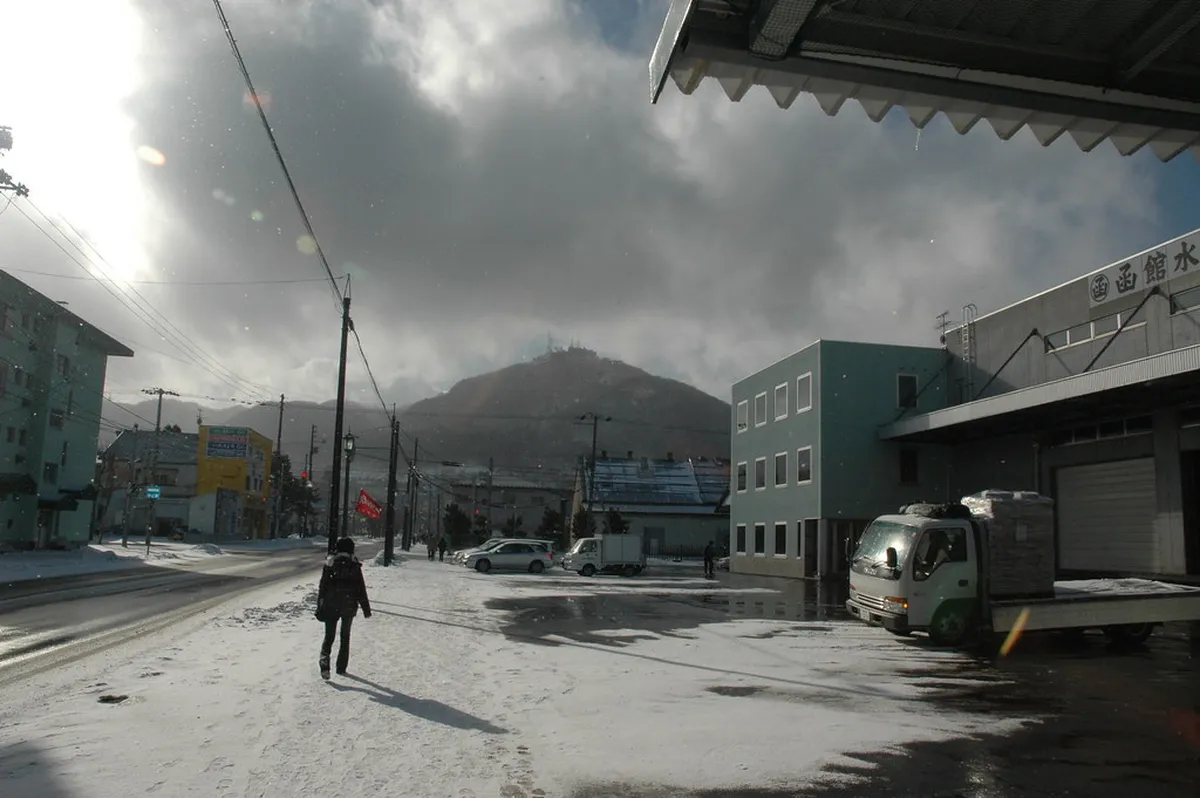
8 Essential Tips for the Mount Hakodate Night View
Plan your visit to Mount Hakodate's "million dollar view" with our guide on sunset timing, ropeway prices, transport options, and summit dining.
On this page
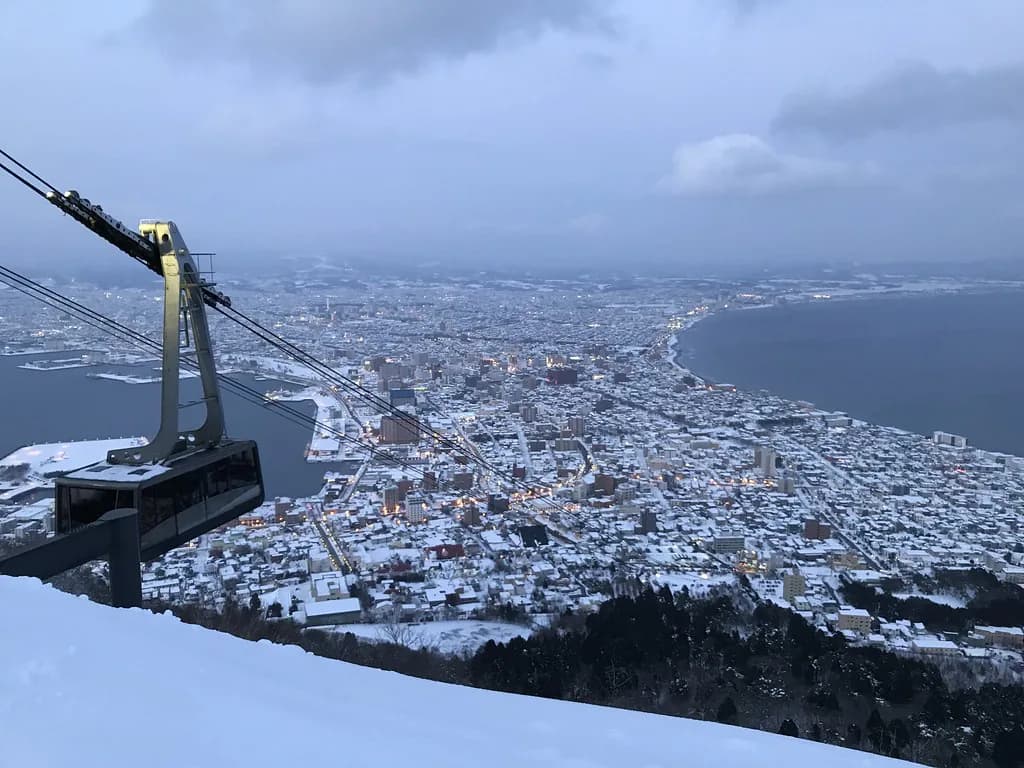
The mount hakodate night view is widely celebrated as one of the most beautiful urban landscapes in the world. This iconic vista features a unique hourglass shape created by the city lights squeezed between Hakodate Bay and the Tsugaru Strait. Travelers often call it the "million dollar view" because of its shimmering intensity and breathtaking scale. Planning your ascent carefully ensures you capture the perfect lighting without getting lost in the evening rush.
Visiting this 334-meter summit is a highlight of any 2-day Hakodate itinerary for both domestic and international tourists. The mountain provides a panoramic perspective that changes dramatically as the sun dips below the horizon. You will find that the atmosphere at the top is electric yet surprisingly romantic for couples. Our guide covers everything from ropeway logistics to the best spots for dodging the heavy summit crowds.
Why Mount Hakodate is a Top Three Night View in Japan
Mount Hakodate holds a prestigious spot in the Nihon Sandai Yakei, which refers to the three major night views of Japan. It shares this high honor with Mount Inasa in Nagasaki and Mount Rokko in Kobe. The Michelin Green Guide Japan has also awarded the view a maximum three-star rating. This recognition highlights the mountain as a world-class destination that warrants a dedicated trip.
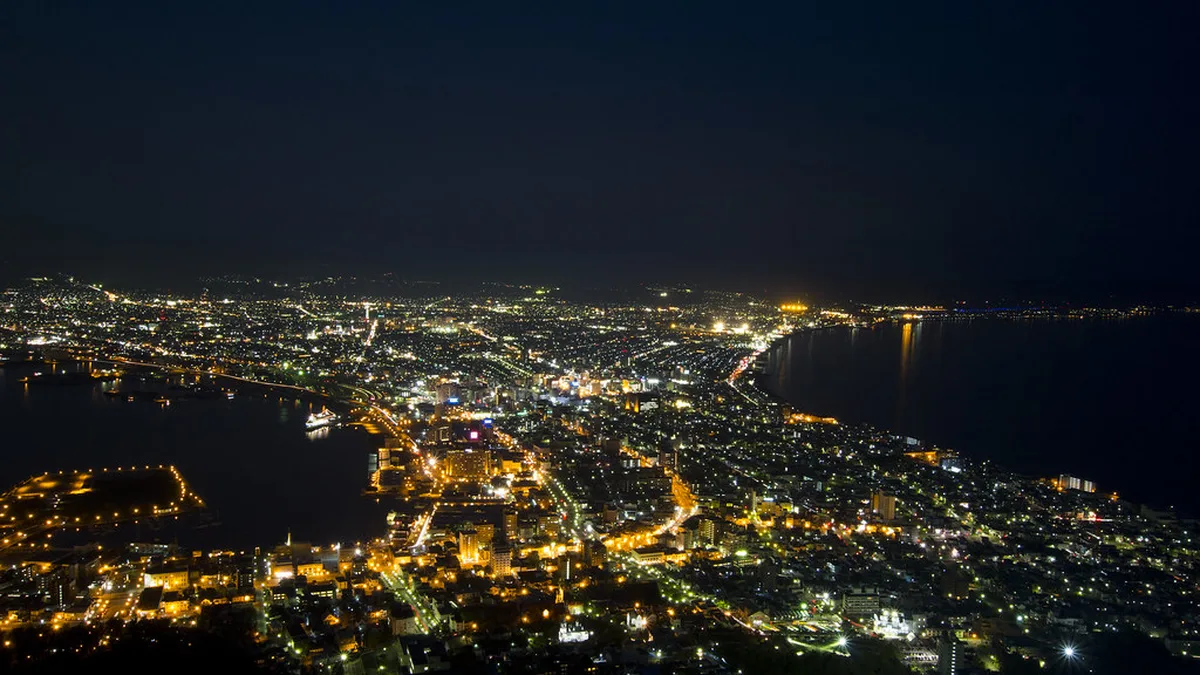
The geography of the area creates a visual symmetry that is rare in coastal cities. As you look down from the observatory, the narrow neck of the peninsula creates a stunning contrast against the dark waters on both sides. Bright city lights illuminate the streets in a way that emphasizes the historic grid of the Motomachi district and the harbor. This specific layout makes the scene instantly recognizable and incredibly photogenic from every angle.
The mountain address is 19-7 Motomachi, Hakodate-shi, Hokkaido 040-0054, and the ropeway base station phone is 0138-23-3105. On exceptionally clear nights you can see across the Tsugaru Strait all the way to the lights of Aomori Prefecture on Honshu. That cross-strait visibility, combined with the two-bay framing, is what sets Hakodate apart from its sister night-view destinations.
Best Time to Visit for the "Million Dollar View"
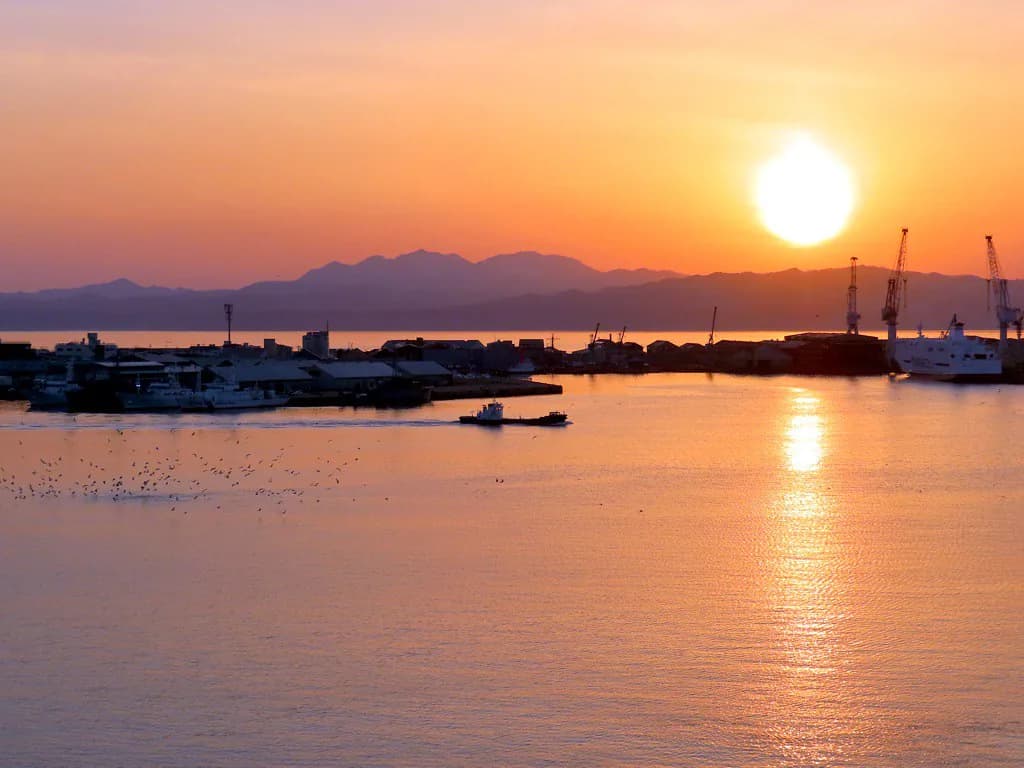
Timing is the most critical factor for enjoying the mount hakodate night view to its fullest potential. Most experts recommend arriving at the summit roughly 30 minutes before the official sunset time. This window lets you witness the "Blue Hour," where the sky turns a deep indigo while city lights begin to flicker on below. The blend of natural twilight and artificial glow produces far better photos than the pitch-black sky of late night. Hokkaido travel guides emphasize this timing strategy for optimal photo conditions.
Sunset times vary significantly throughout the year in Hokkaido, so checking a local forecast before you go is essential. During the winter, the sun can set as early as 16:00, while summer sunsets often linger until 19:00. You should also consider the Hakodate's monthly weather to prepare for potential fog or cloud cover. Clear nights offer the best visibility, but a light sea mist can sometimes add a mystical quality to the city lights below.
- January: sunset approximately 16:30 — arrive by 16:00
- April: sunset approximately 18:15 — arrive by 17:45
- July: sunset approximately 19:10 — arrive by 18:40
- October: sunset approximately 17:00 — arrive by 16:30
- December: sunset approximately 16:00 — arrive by 15:30
The observatory is most crowded in the 30 minutes immediately after sunset when tour buses deliver large groups simultaneously. Arriving 45 to 60 minutes before sunset lets you claim a front-rail spot on the roof deck before that wave hits. Staying until 20:30 or 21:00 rewards patient visitors with a quieter platform and an equally stunning fully-lit cityscape.
Check the Mt. Hakodate Ropeway official site for the late-autumn maintenance schedule — the ropeway closes for several weeks each year, typically in late November or early December. Confirm your visit dates in advance to avoid disappointment.
Strong winds at 334 meters can halt ropeway operations without warning. On gusty evenings, build at least 30 extra minutes into your schedule as a buffer. The No. 1 bus continues to run independently of ropeway conditions, so always keep the bus schedule in mind as a reliable fallback from the moment you arrive.
How to Get to the Mount Hakodate Observatory
Most visitors begin their journey at Hakodate Station before heading toward the base of the mountain. The most popular route involves taking the Hakodate City Tram to the Jujigai stop (stop D/Y 20). From there, it is a steady 7-to-10 minute uphill walk through the charming streets of the Motomachi district to the ropeway base station. You will pass several historic Western-style buildings that look beautiful when illuminated in the early evening.
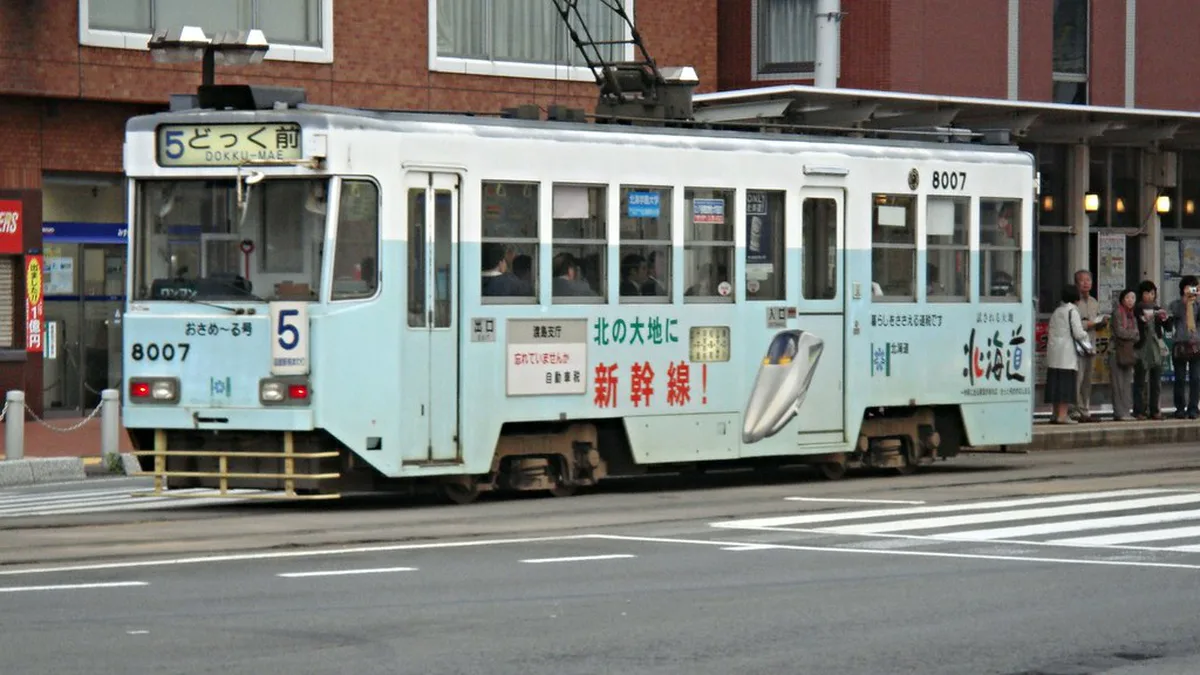
From Hakodate-Ekimae tram stop, board a Route 2 or Route 5 tram bound for Yachigashira or Hakodate-Dokkumae. The ride takes roughly 5 minutes and costs around 230 JPY. Check the Hakodate attractions guide maps at the station for current tram bay numbers and departure times, as minor schedule changes occur each season.
If you prefer to skip the walk entirely, a Mt. Hakodate Ropeway Shuttle runs from Hakodate Station directly to the gondola base station. It operates daily from 1 April to 31 October, with the first departure at 17:55. Bus No. 1 from stand No. 4 at Hakodate Station also reaches the summit observatory in about 30 minutes. The direct summit bus runs mostly in the evenings from mid-April through the end of October, so confirm times at the tourist information desk inside the station before you leave.
Ropeway vs. Bus vs. Taxi: Transport Comparison
Choosing the right transport depends on your budget and how much you value the aerial experience. The Mt. Hakodate Ropeway operates from 10:00 to 21:50 between 25 April and 15 October, and from 10:00 to 20:50 between 16 October and 24 April. Gondolas depart every 15 minutes and the ride takes only 3 minutes. Adult fares are 1,200 JPY one-way or 1,800 JPY round trip; children pay 600 JPY one-way or 900 JPY round trip. Large windows mean that even passengers standing toward the center still catch the expanding city view.
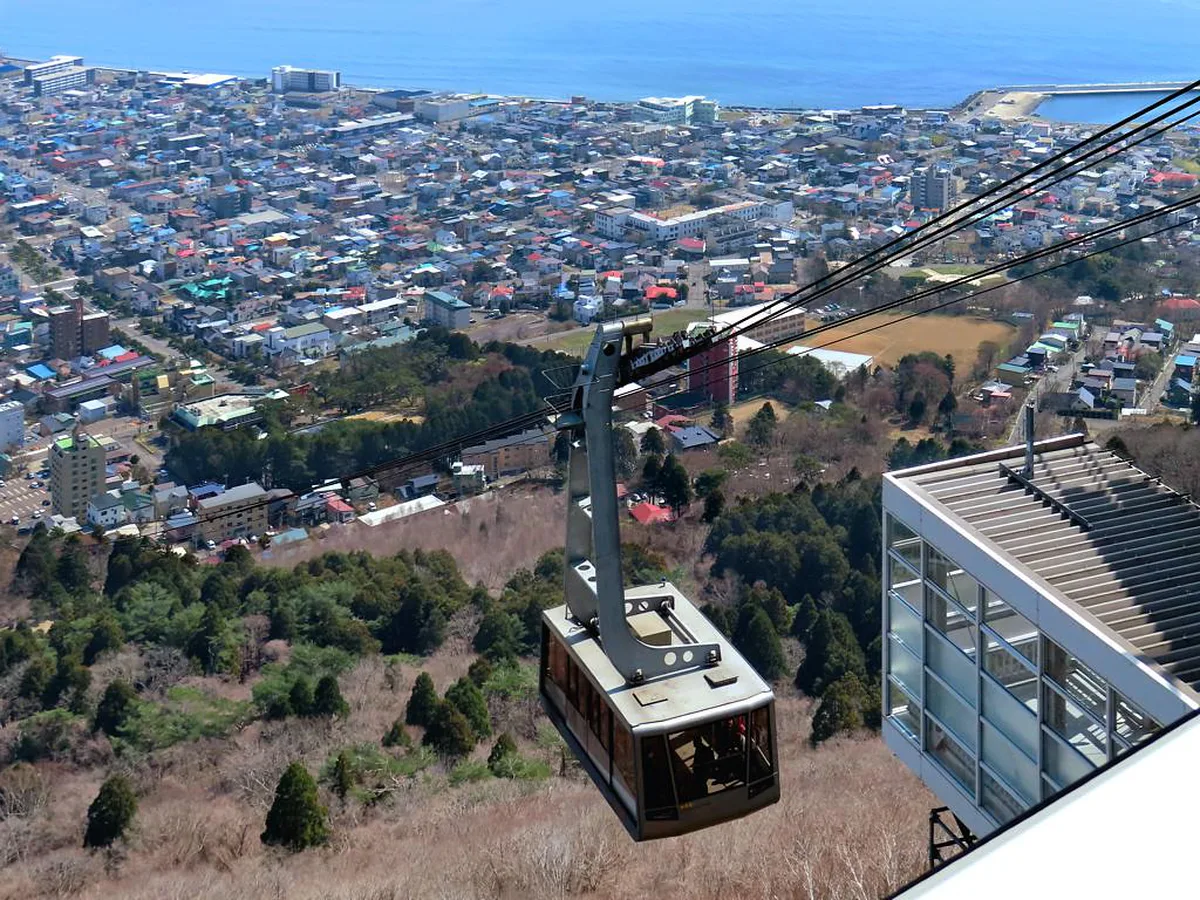
The direct summit bus (No. 1, stand No. 4, Hakodate Station) costs roughly 500 JPY one-way and takes about 30 minutes. Coach services run by Hakodate Bus and Hokuto Kotsu also depart from Yunokawa Onsen and Hakodate Station, operating late afternoons and evenings from April through September or October. These coaches require advance reservations, so contact the Hakodate Tourist Information Center or your accommodation to book. The bus is the best fallback option if the ropeway suspends service due to high winds.
Taxis are convenient for groups of three or four but carry an important caveat: there are almost no taxis waiting at the summit. A return fare that includes 30 minutes of waiting time at the top runs from 8,000 JPY to 16,000 JPY depending on the operator. Note also that private cars — including rental cars — are banned on the mountain road between 17:00 and 22:00 during the busy season. This restriction supports the bus schedule and keeps traffic manageable during the peak after-sunset window.
Hiking to the summit via the Tsutsujiyama course takes about one hour from the Hakodate Information Center near the ropeway base station. Wear proper footwear and a windproof jacket; insects are active in summer. Route 675, the alternative road walk, is closed to both vehicles and pedestrians from early November to mid-April, so plan accordingly if visiting in winter.
| Season | Operating Hours | Adult One-Way | Adult Round Trip | Child One-Way | Child Round Trip |
|---|---|---|---|---|---|
| 25 April – 15 October | 10:00–21:50 | 1,200 JPY | 1,800 JPY | 600 JPY | 900 JPY |
| 16 October – 24 April | 10:00–20:50 | 1,200 JPY | 1,800 JPY | 600 JPY | 900 JPY |
What to See and Do at the Summit
The Mount Hakodate Observatory is a multi-level facility designed to maximize viewing opportunities for large crowds. The roof deck is the most popular spot, offering an unobstructed 360-degree view of the Hokkaido coastline. On clear nights, you can see all the way across the Tsugaru Strait to the lights of Aomori Prefecture. Lower indoor levels provide large glass windows for those who want to enjoy the scenery without the biting wind.
Aside from the main deck, there are smaller monuments and plaques explaining the local geography. Photographers should note that designated tripod zones fill up very quickly during the Blue Hour, so set up your equipment before the post-sunset crowd surge. If you have time, explore the different levels to find a quieter corner away from the main tour group clusters. The sheer variety of angles ensures that you can find a unique perspective on both the bay side and the strait side of the peninsula.
A small event hall and a duty-free shopping counter are also located within the observatory building. The tax-free shopping option is particularly useful for international visitors picking up high-value souvenirs. Summit parking is available — 39 spaces for free at the top and 86 paid spaces at the lower ropeway base — though the private car ban between 17:00 and 22:00 limits who can use the summit lot during peak hours.
Dining and Shopping at the Mountaintop Observatory
Restaurant Genova is the premier dining venue at the summit, situated on the 2nd floor of the mountaintop observatory with direct views of the city lights. It serves a mix of Japanese and Western cuisine, featuring fresh seafood sourced from the local markets. Reservations are highly recommended if you want a window seat during the sunset rush. Dining here allows you to watch the city transform while enjoying a comfortable, climate-controlled environment above the wind.
Tea Lounge Legato on the 3rd floor provides coffee and snacks in a more casual setting and accommodates a variety of party sizes. The summit gift shop is worth a visit for exclusive items you won't find in downtown Hakodate, including specialty sweets, postcards, and mountain-themed crafts. The lounge phone is (0138) 27-3127 if you want to check seating availability before ascending. Many visitors plan at least 30 minutes specifically for the indoor facilities to warm up between trips to the outdoor deck.
Practical Tips for Avoiding Crowds and Cold
The temperature at the 334-meter summit is consistently lower than at the base of the mountain, often by 5°C or more. High winds are common, making the real-feel temperature quite chilly even during the summer months. Wearing multiple layers and a windproof outer jacket will make your time on the outdoor decks much more pleasant. If you are visiting winter in Hakodate, heavy thermal wear, gloves, and a hat are absolutely mandatory — the exposed roof deck can feel well below freezing on a clear January night.
Crowds peak exactly 30 minutes after sunset when tour buses arrive in large numbers. To avoid the worst of the crush, arrive 45 minutes before sunset rather than after, and stake out a position on the rail before the tour groups disembark. The view is just as spectacular from 20:30 onward, and the atmosphere becomes much more peaceful once groups begin to depart. Always check the Mt. Hakodate Ropeway site for the late-autumn maintenance schedule: the ropeway closes for several weeks each year, typically in late November or early December.
If the Ropeway Stops: Wind Suspension and Backup Plans
Strong winds at 334 meters can halt ropeway operations without warning, both uphill and downhill. This is one of the most common — and least-discussed — surprises for first-time visitors. If you are already at the summit when the gondola suspends, you are not stranded: the No. 1 bus continues to run independently of ropeway conditions and departs from the summit stop back toward Hakodate Station. Keep the bus schedule in mind as a fallback from the moment you arrive.
On particularly gusty evenings, the ropeway base staff will announce an estimated restart time or direct passengers to the bus stop. Build at least 30 extra minutes into your schedule during autumn and winter, when wind speeds are highest. If you are descending by bus, the ride back takes about 30 minutes and drops you at stand No. 4 near Hakodate Station — the same stop where the uphill service departs. Knowing this loop in advance removes the anxiety of watching a stalled gondola from the summit deck.
The Tsutsujiyama hiking course is a third emergency descent option, but it is not suitable in darkness or wet conditions without appropriate footwear. Route 675 is closed to pedestrians from early November to mid-April, so do not count on it as a winter escape route. The bus remains the reliable backup in every season and should be your first call, not the trail.
Nearby Attractions in the Motomachi District
The area surrounding the ropeway base is rich with history and architectural beauty. Before your ascent, take a walk down Hachiman-zaka Slope, which is famous for its straight view down to the harbor. This street is frequently used in movies and commercials because of its picturesque European-style framing. It serves as a perfect introduction to the international heritage of this historic port city, documented in detail on Hakodate's official tourism guide.
You can also explore the Old Public Hall of Hakodate Council or the various Russian Orthodox churches nearby. Many of these buildings are beautifully lit at night, creating a magical atmosphere for a post-mountain stroll. The district is quiet and safe, making it ideal for a slow walk back toward the tram station after descending from the summit. Combining these free Hakodate attractions with your mountain visit creates a full evening of sightseeing with no extra transit cost.
Frequently Asked Questions
Is the Mount Hakodate night view worth it?
Yes, the view is widely considered one of the best in the world due to its unique geography. The sight of city lights framed by two bodies of water is truly spectacular. It remains a top highlight for anyone visiting Hokkaido. For more planning tips, check our Hakodate stay guide.
What is the best time to see the Hakodate night view?
The best time is during the Blue Hour, which occurs about 30 minutes after sunset. This timing provides enough light to see the surrounding ocean while the city lights are fully bright. Arriving early ensures you secure a good spot on the observation deck before the crowds peak.
How do I get from Hakodate Station to the Ropeway?
Take the city tram to the Jujigai stop and walk uphill for about 7 to 10 minutes. Alternatively, catch a direct bus from the Hakodate Station bus terminal during evening hours. Both options are affordable and easy to navigate for first-time visitors to the city.
Can you drive to the top of Mount Hakodate at night?
Private cars are restricted on the mountain road between 17:00 and 22:00 during the busy season. This ban includes rental cars but usually allows for public buses and authorized taxis. Always check for seasonal road closures if you are visiting during the snowy winter months.
The mount hakodate night view is a bucket-list experience that lives up to its massive reputation. By timing your visit for the Blue Hour, dressing for the wind, and knowing the bus as a backup if the ropeway stops, you ensure a comfortable and stress-free trip. Whether you ride the gondola or take the No. 1 bus from stand No. 4, the shimmering lights of the city will leave a lasting impression. Be sure to explore the nearby Motomachi district to round out your evening in this historic port town.
Free: The Hakodate Essentials guide
Top things to do, where to stay, a perfect day plan, getting around, and the best time to go — a Hakodate mini-guide you can take offline.
You might also like
Continue reading
More guides you'll find useful