Beppu 2 Day Itinerary: The Ultimate Onsen & Adventure Guide
Plan the perfect beppu 2 day itinerary. Includes a guide to the 7 Hells, Yufuin day trips, hell-steamed cuisine, and essential Kamenoi bus pass tips.
On this page
Beppu is Japan's onsen capital on Kyushu, pouring out more geothermal water than anywhere else in the country. Two full days gives you enough time to complete the 7 Hells circuit, eat a hell-steamed lunch in Kannawa, soak in a genuine public bath, and still fit in a morning on Mt Tsurumi or a half-day in Yufuin. This guide runs day by day with specific times, bus numbers, and costs so you can follow it without guessing.
The itinerary below is structured for first-time visitors arriving at Beppu Station. Day 1 focuses on the Hells and the Kannawa onsen district. Day 2 covers the ropeway, the Beppu Beach sand bath, and gives you a clear choice between a Yufuin day trip and staying local. Budget roughly ¥15,000–20,000 for two full days excluding accommodation.
Beppu 2 Day Itinerary: At a Glance
Use this summary to orient yourself before diving into the hour-by-hour plan. Each day has a primary focus and a fallback option if you want to swap something out.
| Day | Morning | Afternoon | Evening |
|---|---|---|---|
| Day 1 | Arrive at Beppu Station by 09:00. Take Kamenoi Bus 5 or 7 to Kannawa. Start 7 Hells circuit (Umi Jigoku, Oniishibozu, Shiraike, Kamado). | Continue with remaining Hells (Oniyama, Chinoike, Tatsumaki). Return to Kannawa for hell-steamed lunch at Jigoku Mushi Kobo (¥510). Wander back lanes, incense shops. | Head to Takegawara Onsen (¥100) for classic public bath in Meiji-era building. OR try Hyotan Onsen in Kannawa (¥1,000 with sand bath, open until 01:00). |
| Day 2 | Leave hotel by 08:30. Take Kamenoi Bus to Beppu Ropeway. Ascend Mt Tsurumi (09:00–11:00, ¥1,800). Summit walk 30–40 minutes. | Descend by 10:30. Travel to Beppu Beach Sand Bath (Shoningahama). 10–15 minute burial in heated black sand (¥1,500). Showering and indoor bath included. | OPTION A: Bus 36 to Yufuin half-day (50 min, ¥900 one way). Walk Yufuin-no-Mori Dori, craft shops, matcha cafes. Last bus back ~20:00. OPTION B: Myoban Onsen afternoon (Bus 26, 15 min). Visit yunohana huts, Myoban Yunosato (¥700). |
- Day 1 — Hells and Kannawa: 7 Hells circuit (Jigoku Meguri), hell-steamed lunch at Kannawa Steam Cooking Center, afternoon neighborhood walk in Kannawa, evening public bath at Takegawara or Hyotan Onsen.
- Day 2 — Heights and Sand: Beppu Ropeway to Mt Tsurumi summit (09:00–11:00), Beppu Beach Sand Bath at Shoningahama (11:30–13:00), then either the Yufuin half-day or a quiet afternoon at Myoban Onsen.
- Transport: Kamenoi Bus 2-day pass (¥1,500) covers both days. Buy at the station bus stop or the Kamenoi Bus office inside the station building.
- Combined Hells ticket: ¥2,200 for all 7 Hells. Buy at the first Hell you visit.
- Sand bath fee: ¥1,500 at Shoningahama (swimwear required, yukata provided).
Getting to Beppu and Getting Around
The Sonic Limited Express from Hakata (Fukuoka) reaches Beppu Station in about 2 hours. Tickets cost ¥5,500 one way and run roughly every hour. From Oita Airport, an airport bus takes 40 minutes to Beppu Station (¥1,550). If you are coming from Nagasaki or Kumamoto, the route goes via Kokura with a transfer to the Sonic.
Inside the city, the Kamenoi Bus network reaches every sight on this itinerary. A 2-day pass costs ¥1,500 and is the smartest purchase you will make. Individual fares run ¥200–400 per trip, so the pass pays for itself after three or four rides. Buses to Kannawa are numbers 5, 7, and 9, departing from stop 3 in front of Beppu Station. The ride takes 15–20 minutes.
Buy the Kamenoi Bus 2-day pass (¥1,500) immediately upon arrival at Beppu Station. You can purchase it at the station bus stop or the Kamenoi Bus office inside the station building, and it covers every journey in this itinerary.
Taxis are available outside the station if you want to move faster with luggage. A ride from the station to Kannawa costs around ¥1,500. Some visitors rent e-bikes from the station for ¥1,000 per day — a good option if the weather is clear, though the hill up to Kannawa is steep. Check the getting around Beppu for full route details and pass purchasing options.
Where to Stay: Beppu Station vs. Kannawa
Staying near the station is the most convenient choice for arrivals and departures. The area has budget hotels from ¥6,000 per night, convenience stores open 24 hours, and quick bus access to all main sights. The drawback is noise and proximity to the entertainment strip along Kitahama — families may prefer to stay further north.
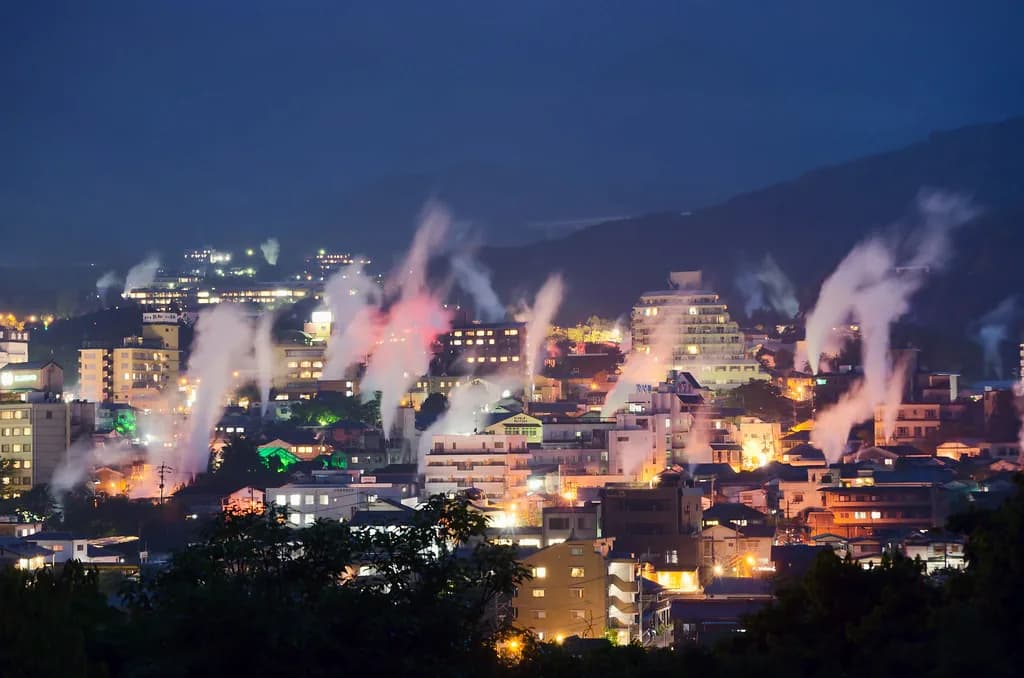
Kannawa district offers a completely different feel. You wake up to steam drifting between rooftops and can walk to three of the Hells before breakfast. Ryokans here typically charge ¥15,000–30,000 per person including dinner and breakfast, with private outdoor onsen baths. Booking two to three months ahead is essential on weekends. If a Kannawa ryokan is full, look at the Myoban district, which is quieter still and covered later in this guide.
Whichever area you choose, use the 'Hands-Free Sightseeing' baggage delivery service at Beppu Station. For around ¥600 per bag, your luggage goes directly to your hotel while you start sightseeing immediately after arrival. Read the where to stay guide for hotel recommendations in each district with exact prices for 2026.
Day 1: The 7 Hells Circuit and Kannawa
Start at Beppu Station and take Kamenoi Bus 5 or 7 to Kannawa (bus stop: Umi Jigoku Mae). Arrive by 09:00 to beat tour groups. The combined ticket for all 7 Hells costs ¥2,200 at the gate — buy it here and use it for all sites. Each Hell takes 15–25 minutes to walk around, so plan on four hours total for all seven. For up-to-date schedules and site details, check the official Beppu Hells Association site.
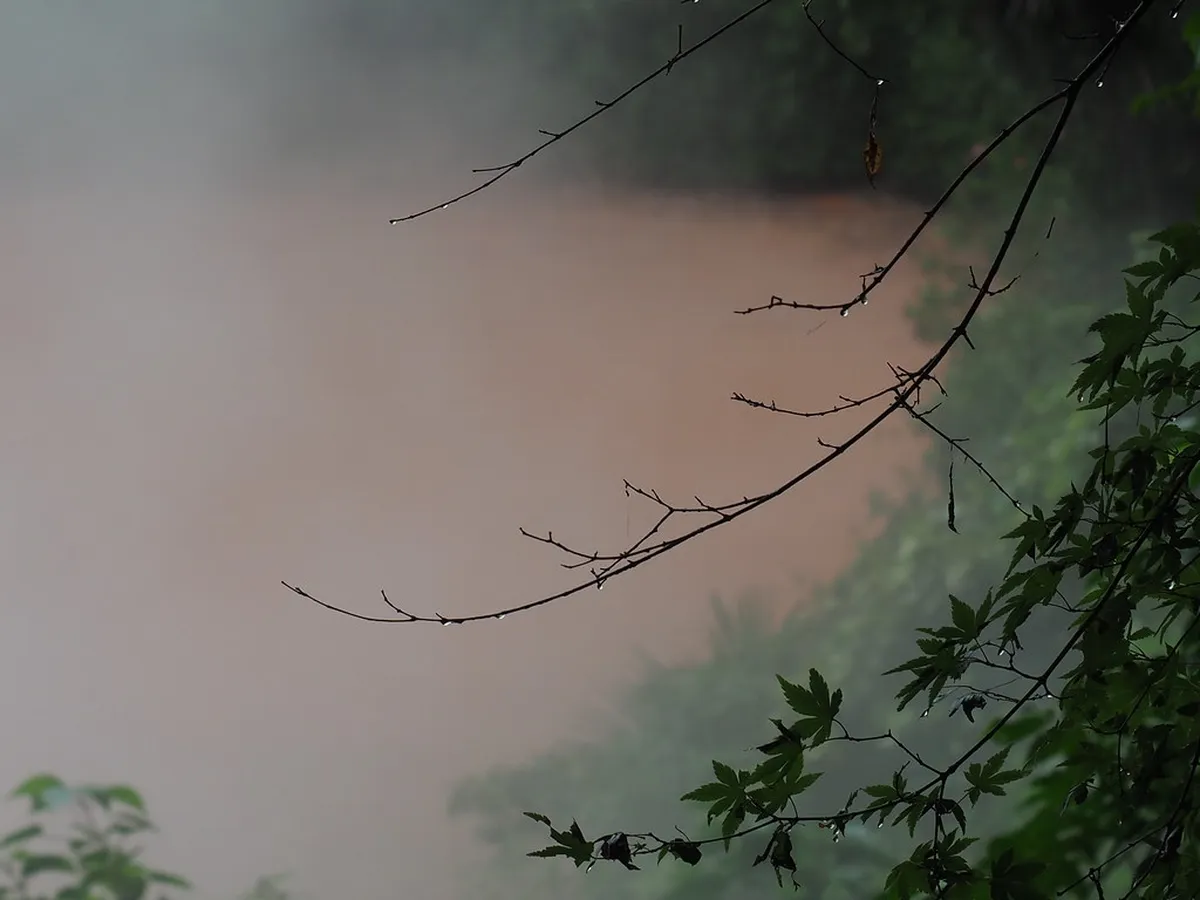
The five Kannawa Hells are walkable from each other in under ten minutes. Start with Umi Jigoku (Sea Hell) for its dramatic cobalt-blue pool, then loop through Oniishibozu Jigoku (monk-head mud bubbles), Shiraike Jigoku (milk-white water), Kamado Jigoku (cooking-demon theme with five pools at different temperatures), and Oniyama Jigoku (crocodile farm). The last two Hells — Chinoike Jigoku and Tatsumaki Jigoku — are 2 km away in the Shibaseki area. Take Bus 16 or 16A from Kannawa Onsen bus stop (¥220, 5 minutes). Chinoike is the blood-red pond, Tatsumaki is a geyser that erupts every 30–40 minutes. Time your arrival to catch the eruption.
For lunch, return to Kannawa and eat at the Jigoku Mushi Kobo Kannawa steam cooking workshop (open 10:00–21:00, closed Wednesdays). You pay ¥510 for 30 minutes in a steam box, then buy raw ingredients from the shop next door — eggs, sweet potato, corn, and shellfish are all priced under ¥300. The cooking is done entirely by geothermal steam at around 100°C. It is hands-on, inexpensive, and entirely local. The hell-steamed pudding sold at the Okamotoya stall nearby is a must for dessert.
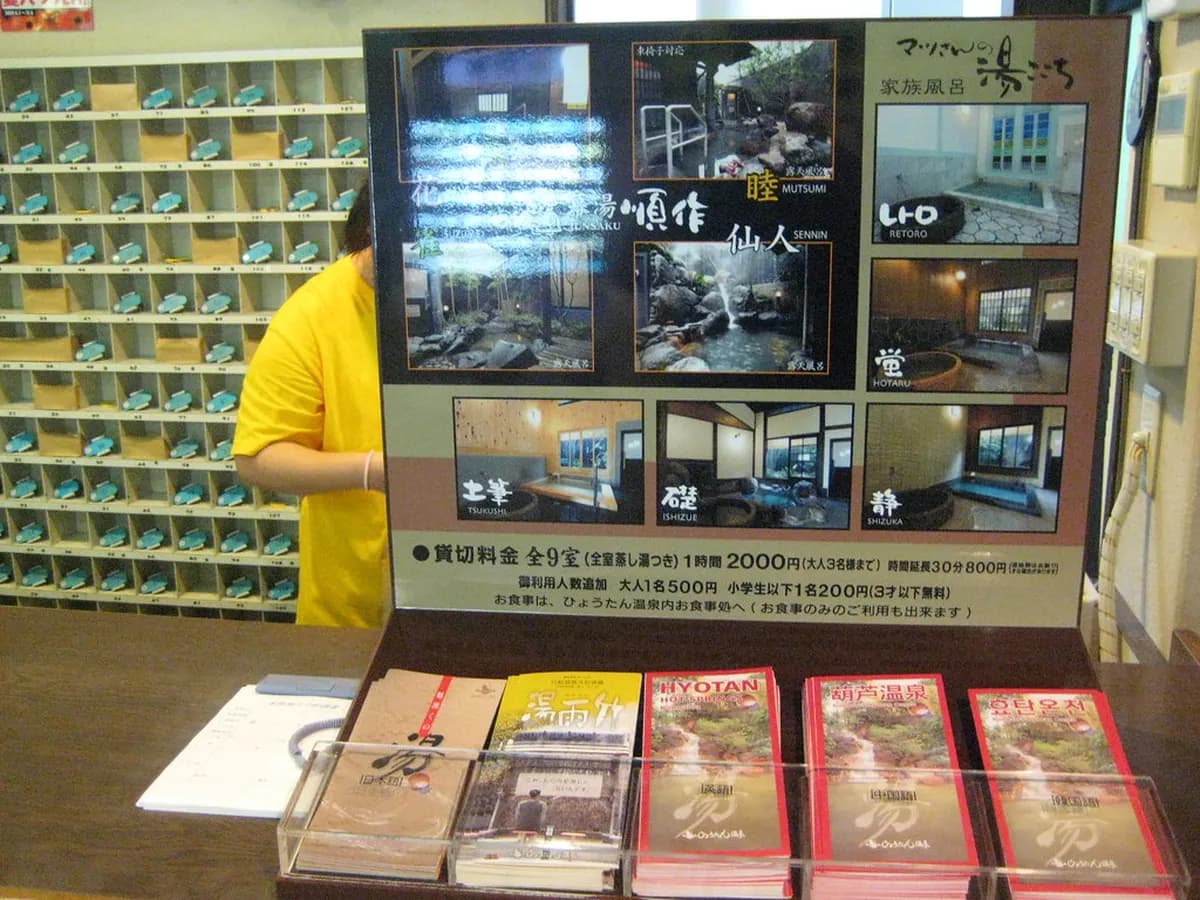
Spend the afternoon wandering Kannawa's back lanes. The district has old wooden bath houses, incense shops, and small foot-bath spots you can use for free. By 17:00 head to Takegawara Onsen near Beppu Station (entry ¥100, open 06:30–22:30) for a classic public bath in a Meiji-era wooden building. If you want a sand bath experience on Day 1, Hyotan Onsen in Kannawa (¥1,000, includes sand bath) is the most convenient option and stays open until 01:00. For a full account of the Hells route with photos and alternate starting points, see the visiting the Beppu Hells guide.
Wash thoroughly at the shower station before entering any public bath. Towels stay outside the bath, and the small modesty towel you bring stays in your hands or on your head—never in the water. Limit your first soak to 10–15 minutes to avoid dehydration.
Day 2: Mt Tsurumi, Sand Bath, and the Yufuin Decision
Leave your hotel by 08:30. Take the Kamenoi Bus Wide Pass route (or Bus 33 or 34) to the Beppu Ropeway station, about 25 minutes from the city centre. The ropeway (open 09:00–17:00, round trip ¥1,800) rises 1,375 metres to the summit of Mt Tsurumi, the highest point in Oita Prefecture. On clear days you see Beppu Bay, the Kuju mountains, and on the best days all the way to Shikoku. The summit walk takes 30–40 minutes. Wear an extra layer — the top is 6–8°C cooler than the city below even in summer. The Oita Prefecture tourism board has current operating hours and seasonal closures.
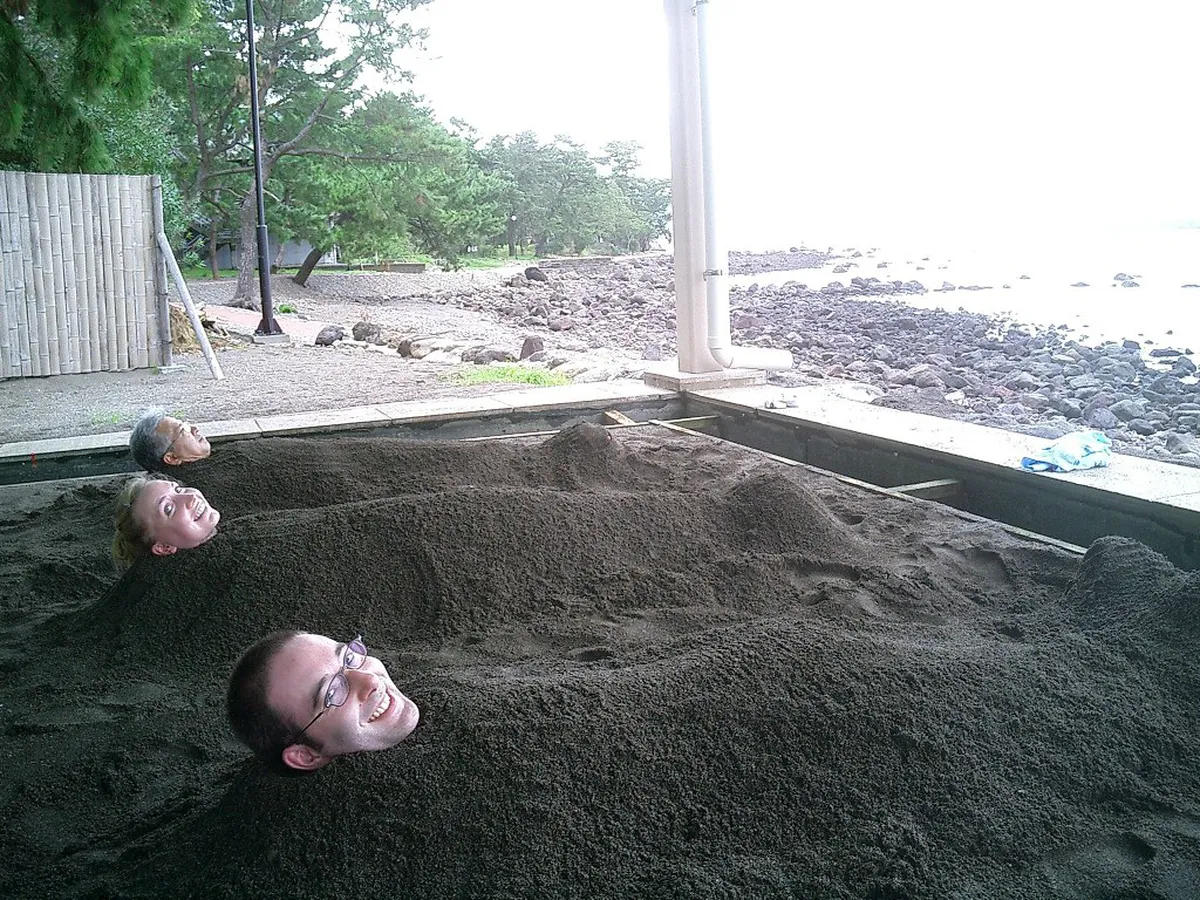
Back at ground level by 10:30, take the bus to Beppu Beach Sand Bath (Shoningahama) near Kitahama. This is the only place in Beppu where you are buried in naturally heated black sand on an actual beach. Entry is ¥1,500, swimwear is required, and yukata are provided. Staff bury you up to the neck and the heat penetrates muscle in a way a regular bath does not. Sessions last 10–15 minutes and you follow with a standard indoor bath. The facility is open 08:30–18:00 (closed second and fourth Wednesdays). Arrive before 11:30 to avoid a queue. For more context on what to expect, read the the Beppu beach sand bath.
After the sand bath you have two clear options for the afternoon. The first is a Yufuin half-day: take Bus 36 from Beppu Station (50 minutes, ¥900 one way) or the JR Yufuin no Mori limited express (45 minutes, ¥2,160 reserved seat). Yufuin's main street, Yufuin-no-Mori Dori, runs from the station to Lake Kinrin and is lined with craft shops, matcha cafes, and galleries. Allow two hours to walk the full length and return. The last bus back to Beppu departs around 20:00 — verify the timetable before you go as schedules change seasonally. The second option is a quiet afternoon in Beppu itself, described in the next section.
Myoban Onsen: The Local Afternoon Alternative
If you would rather not travel to Yufuin, the Myoban district gives you a completely different Beppu afternoon that almost no itinerary guide mentions. Myoban is one of Beppu's eight hot spring zones (the city's full name, Beppu Hatto, literally means "eight hot spring areas") and it sits above the city on a hillside 15 minutes from the station by Bus 26. The water here is an aluminium-sulphate type with a milky white colour and a sharp sulfur smell, chemically different from the sodium chloride baths in Kannawa.
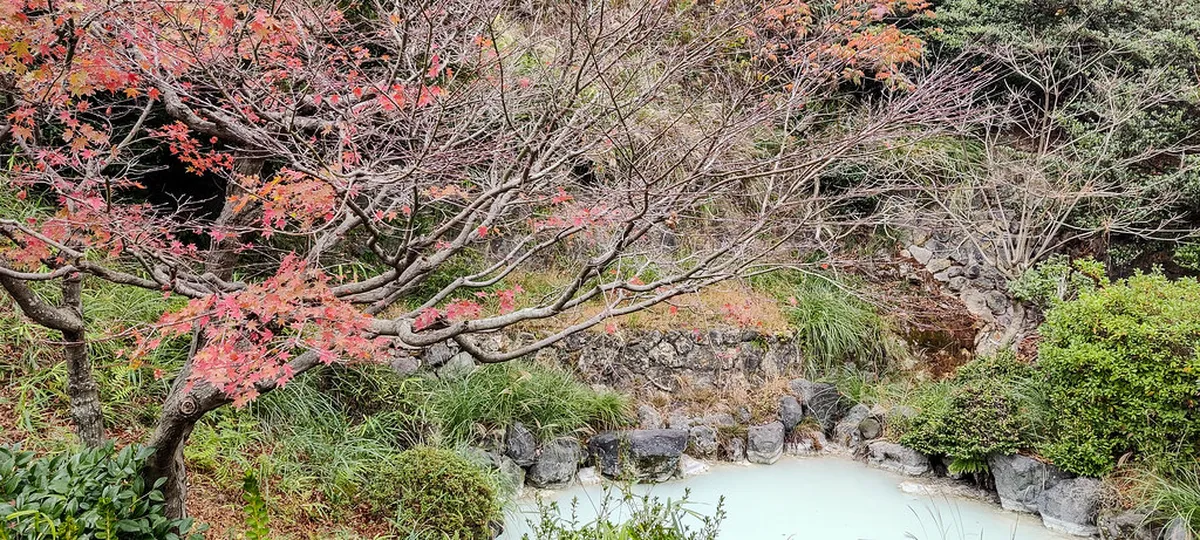
The unmissable sight in Myoban is the row of yunohana huts — low straw-roofed shelters where crystalised bath salts form naturally on wooden frames over weeks from the condensing steam. These yunohana crystals have been collected in Myoban since the Edo period and sold as medicinal bath additives. You can watch the process for free from the viewing platform outside Myoban Yunosato. The onsen at Myoban Yunosato itself (open 10:00–21:00, ¥700) is set in a garden with outdoor pools at three different temperatures and feels far less commercial than the Kannawa bathhouses.
Myoban has three bathing facilities within easy walking distance: Myoban Yunosato, Yama no Yu (a public bath for ¥100), and the outdoor rotenburo at Okamotoya Inn which visitors can use for ¥500. Spending two to three hours here before returning to the station for dinner is a genuine local experience. Most visitors leave Beppu without ever reaching Myoban, which is exactly why it is worth your afternoon.
Beppu Onsen Etiquette for First-Timers
Public baths in Beppu operate by rules that are consistently enforced. Knowing them before you arrive prevents awkward moments at the entrance. The most important rule: wash thoroughly at the shower stations before entering the bath. Every facility has individual shower seats with soap and shampoo. You rinse your entire body seated before stepping into the communal water.
Towels stay outside the bath. The small modesty towel you bring in stays in your hands or folded on your head — never dipped into the water. Large bath towels are left in the changing room. Tattoos are technically prohibited at many Beppu public baths under traditional house rules; Takegawara and most larger facilities enforce this. Private onsen rooms (kashikiri-buro) and certain modern hotels are tattoo-friendly — check when booking. Most facilities display a tattoo policy sign at the entrance.
Temperatures in Beppu baths run hot. The main pools at facilities like Takegawara and Hyotan Onsen sit at 42–45°C, which is hotter than most Western spas. First-timers often start in a lower-temperature pool (40–41°C) if one is available, then work up. Limit your first soak to 10–15 minutes. Dehydration is a real risk — drink water before and after. Never enter an onsen while intoxicated, and do not use a bath if you have open wounds.
Beppu 2-Day Budget Breakdown
Understanding the rough costs helps you allocate cash correctly. The numbers below are per person and exclude accommodation.
- Kamenoi Bus 2-day pass: ¥1,500
- 7 Hells combined ticket: ¥2,200
- Jigoku Mushi lunch (steam rental + ingredients): ¥1,500–2,000
- Takegawara Onsen (public bath): ¥100
- Hyotan Onsen (if doing sand bath Day 1): ¥1,000
- Beppu Ropeway round trip: ¥1,800
- Beppu Beach Sand Bath: ¥1,500
- Yufuin Bus return (if going): ¥1,800
- Meals (two days, breakfast + dinner): ¥4,000–7,000
Total for a budget-conscious two days: approximately ¥14,000–17,000 per person before accommodation. Add ¥2,000–3,000 if you do the Yufuin day trip and eat a full restaurant meal there. Mid-range visitors spending on a Kannawa ryokan should budget ¥30,000–40,000 per person all-in including overnight stay. For a full breakdown of pass options and value comparisons, see the the Beppu onsen pass.
Best Time to Visit Beppu
Spring (March–May) and autumn (October–November) are the most comfortable seasons. Temperatures sit between 15–23°C, which is pleasant for walking between the Hells and reduces the risk of heat exhaustion in the outdoor baths. Cherry blossoms peak in late March and early April in Beppu Park, five minutes by bus from the station. Autumn brings red maples around Kannawa and Myoban.
Winter visits (December–February) are genuinely rewarding for onsen. The steam from the Hells is more dramatic against cold air, and the contrast between freezing air and 42°C water in an outdoor rotenburo is the best argument for visiting out of season. Mt Tsurumi occasionally has light snow at the summit in January and February. Summer (June–September) brings humidity and heat but also the Beppu Hatto Onsen Festival in early April and summer fireworks over the bay in August. Golden Week (late April–early May) and Obon (mid-August) are peak crowd weeks — book accommodation months ahead or avoid entirely.
For a month-by-month breakdown of weather, events, and crowd levels, see the Beppu's weather month by month guide.
Extending to 3 Days or Trimming to 1
If you only have one day in Beppu, drop the Yufuin trip and the ropeway. Do the 7 Hells in the morning, hell-steamed lunch in Kannawa, and one public bath in the evening. This takes about 10 hours and costs under ¥5,000 excluding transport to the city.
A third day opens up Takasakiyama Monkey Park (30 minutes south by bus, ¥520 entry), Beppu Hoyoland for the unique mud onsen, or a proper half-day in Yufuin if you skipped it on Day 2. Takasakiyama is worth the detour if you have not seen wild Japanese macaques before — the colony numbers over 1,000 individuals and you walk through their territory, not the other way around. Read the how long to spend in Beppu guide for a full 3-day plan with Takasakiyama and Oita city options included.
The full Beppu itinerary guide expands on all of these options with day-by-day schedules for 1, 2, and 3-night stays, including logistics from Fukuoka and Nagasaki as starting points.
Frequently Asked Questions About Beppu
Frequently Asked Questions
How many days do you need in Beppu?
Two full days are ideal for a first-time visit to Beppu. This allows you to explore the 7 Hells, enjoy onsen experiences, and take a day trip to Yufuin or Mount Tsurumi. A single day feels rushed, while three days allow for deeper exploration or additional activities.
Is the 7 Hells pass worth it?
Yes, the common ticket for all 7 Hells (Jigoku Meguri) is definitely worth it. At ¥2,200, it offers significant savings compared to buying individual tickets, which cost ¥450 each. You will visit at least five or six of them, so the pass pays for itself quickly.
Can you visit Beppu and Yufuin in one day?
While technically possible, visiting both Beppu and Yufuin in one day is very rushed. You would only get a brief glimpse of each. It is much better to dedicate a full day to Beppu and a separate half-day or full day to Yufuin, as outlined in this 2-day itinerary.
How do you get from Beppu Station to the Hells?
From Beppu Station, take Kamenoi Bus #5, #7, or #9 directly to the Kannawa district, where most of the Hells are located. The bus ride takes about 15-20 minutes. Consider purchasing a Kamenoi Bus 1-day pass for unlimited rides, which is very economical for exploring the area.
What is the best onsen for first-timers in Beppu?
For first-timers, Takegawara Onsen offers a classic, historic public bath experience near Beppu Station. For a unique experience, Hyotan Onsen in Kannawa provides sand baths and private family baths. Always review traditional onsen etiquette before visiting.
Two days in Beppu is enough to cover the iconic sights without feeling rushed — the Hells circuit, a hell-steamed meal, a proper public bath, the ropeway, and the sand bath all fit with time to spare. The key decision on Day 2 is Yufuin versus staying local. Both are worth it. Yufuin adds a contrasting scenic town; Myoban keeps you in Beppu's quieter side. Either way, you leave with a clear sense of why this city's geothermal landscape is unlike anywhere else in Japan. For a broader look at what else the city offers, our Beppu attractions guide covers the full range of experiences beyond itineraries.
Book your Kannawa ryokan early if that is on your list, get the 2-day bus pass on arrival, and keep the morning of Day 1 free for a full four-hour Hells circuit without rushing. Everything else will fall into place.
Free: The Beppu Essentials guide
Top things to do, where to stay, a perfect day plan, getting around, and the best time to go — a Beppu mini-guide you can take offline.
You might also like

Continue reading
More guides you'll find useful