

6 Essential Stops for a Beppu Bay Scenic Drive
Discover the best of Beppu Bay with our 6-stop scenic drive guide, covering National Route 10, the Yamanami Highway, and the famous Seven Hells.
On this page
Driving along the shimmering coastline of Beppu Bay offers a rare sense of freedom in Japan. I first explored this route during a crisp autumn visit when the steam vents were most visible. This guide is designed for first-time visitors who want to see the volcanic landscape without the rush.
Our beppu bay scenic drive itinerary balances the iconic Seven Hells with hidden mountain vistas. These tips reflect the latest parking and entry rules for 2026. You will find that having your own wheels transforms Beppu from a tourist hub into a personal adventure.
We found that starting early helps you beat the tour buses at the most popular viewpoints. This route transitions from the sea level to high mountain passes in just a few hours. Prepare for a journey that blends coastal salt air with the thick sulfur of ancient hot springs. For a full overview of the region's highlights, see the Beppu attractions guide.
2-Day Beppu Bay At a Glance
This two-day plan covers the most dramatic landscapes between the Pacific Ocean and the mountains. We have grouped stops to minimize backtracking while maximizing your time at scenic lookouts. Each day focuses on a distinct geographical feature of the Oita coastline.
Day one prioritizes the ocean views and the high-altitude perspectives from Mount Tsurumi. Day two dives into the volcanic heart of the city and the famous mountain highways. This balance ensures you experience both the blue of the bay and the white steam of the hills.
Most stops are within a 20-minute drive of each other, making this a very relaxed road trip. You can easily adjust the pace if you find a particular hot spring you want to soak in longer. Be sure to keep some loose change ready for the various parking lots along the route.
- Day 1: Coastal curves and heights
- Morning: Route 10 drive and Beppu Ropeway ascent.
- Afternoon: Mount Tsurumi hiking and bay viewpoints.
- Evening: Kitahama seafood dinner and night views.
- Day 2: Volcanic steam and mountains
- Morning: Seven Hells tour and Jigoku Museum.
- Afternoon: Kannawa steam cooking and Yamanami Highway.
- Evening: Sunset at Sagiridai Lookout near Yufuin.
6 Essential Stops for a Beppu Bay Scenic Drive
Your journey begins at the coast before climbing into the clouds above the city. I recommend picking up your rental car near the main station for the best selection. Using a Beppu Transportation Guide: How to Get Around the Onsen Capital can help you understand local road signs and parking rules.
The first day focuses on the sheer scale of the bay from the water and the sky. We hit the Ropeway at 9:30 am and walked past the growing midday queue. The view from the top reveals the entire horseshoe shape of the Oita coastline.
On the second day, you will move inland to witness the raw power of the earth. The transition from the coastal flats to the Yamanami Highway is a highlight for any driver. This stretch of road is often cited as one of the most beautiful in all of Japan.
- Day 1: Coastal curves and heights
- Morning: Drive National Route 10 for bay views.
- Afternoon: Ride Beppu Ropeway to Mount Tsurumi summit.
- Evening: Watch the bay lights from a scenic night viewpoint.
- Time: 6–8 hours total driving and sightseeing.
- Logistics: Park at the large Ropeway lot (free).
- Optional: Visit the Beppu Art Museum near the coast.
- Day 2: Volcanic steam and mountains
- Morning: Follow the 1-Day Beppu Hells Walking Route Itinerary Guide by car.
- Afternoon: Explore the interactive Jigoku Onsen Museum in Kannawa.
- Evening: Drive the Yamanami Highway toward the Yufuin basin.
- Time: 7–9 hours including lunch and museum.
- Logistics: Buy a multi-hell pass for ~2,200 yen.
- Optional: Stop for steam-cooked vegetables at Jigoku Mushi.
| Stop | Time Needed | Cost | Best Timing |
|---|---|---|---|
| National Route 10 coastal drive | 30–60 min | Free | Before 8:30 AM (avoid commute) |
| Beppu Ropeway (Mt. Tsurumi) | 2–3 hours incl. summit hike | ¥1,800 round trip | 9:00 AM opening; last ascent 4:30 PM |
| Seven Hells (Jigoku Meguri) | 2.5–3.5 hours | ¥2,200 combo pass | Weekday before 10:00 AM |
| Jigoku Mushi Kobo (steam cooking) | 45–60 min | ~¥1,000–¥1,500 lunch | 11:30 AM–1:30 PM |
| Sagiridai Lookout (Yamanami Highway) | 20–30 min | Free (parking ~40 cars) | Sunset (~6:30–7:00 PM summer) |
| Lake Kinrin (Yufuin end) | 45–60 min detour | Free | Morning or late afternoon |
Beppu Station: Starting Your Coastal Journey
Most travelers arrive via the Kyushu Railway Company at the central Beppu Station. We found the luggage delivery service here to be a massive time-saver for drivers. You can drop your bags at the counter and have them sent directly to your hotel.
This service costs about $10 per bag and operates until late afternoon. It allows you to hop straight into your rental car without a trunk full of suitcases. Rental agencies like Toyota and Nippon are located within a five-minute walk of the east exit.
Be sure to check your vehicle for an ETC card reader before leaving the lot. While this route uses local roads, the card is essential for any highway detours. Staff usually speak basic English and can help you program your first destination into the GPS.
The luggage delivery process takes roughly five minutes at the counter. Hand your bags over, pay by cash or IC card, and receive a tracking slip — your hotel will have everything waiting by check-in. This hands-free start is one of the most underrated quality-of-life moves for drivers in Japan.
National Route 10: The Beppu Bay Shoreline
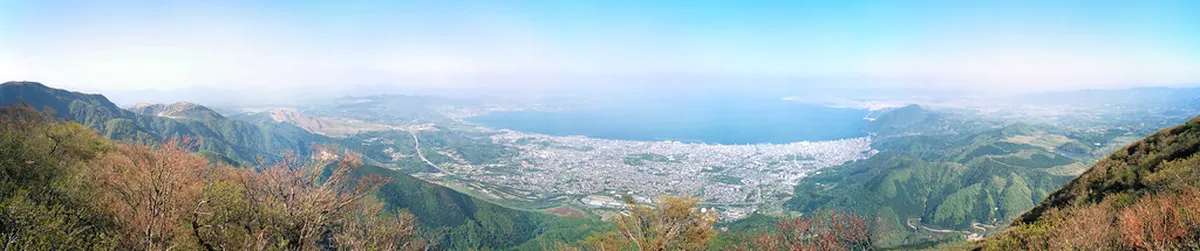
National Route 10 serves as the primary artery for any beppu bay scenic drive. This road hugs the water, offering uninterrupted views of the turquoise Pacific waves. I suggest driving north toward Hiji to see the bay from a quieter perspective.
There are several small turn-offs where you can stop to take photos of the horizon. The road is generally flat and wide, making it easy for those new to driving in Japan. Watch for local fish markets along the side of the road for a quick snack.
Traffic can get heavy during the morning commute, so aim to be on the road by 8:30 am. Most coastal parking areas are free and provide clean restroom facilities for travelers. The contrast between the blue water and the steaming green mountains is truly unique.
Route 10 at a glance: The best bay views appear roughly 3 km north of Beppu Station, where the road curves closest to the shoreline. Pull into the unmarked gravel area beside the guard rail for an unobstructed photograph. Facing south from this spot, you can frame the entire sweep of the bay with the city's steam columns rising in the background.
Beppu Ropeway: Aerial Views of the Bay
The Beppu Ropeway carries visitors 1,375 metres above sea level to the peak of Mount Tsurumi in about eight minutes. From the summit observation deck, the entire sweep of Beppu Bay unfolds below — blue water to the east, volcanic steam to the west, and Shikoku Island visible on clear days.
The ropeway operates from 9:00 am to 5:00 pm (last ascent 4:30 pm) with adult tickets at 1,800 yen round trip. Parking at the base station is free and can hold roughly 200 cars. Arriving at 9:00 am sharp means you ride with almost no queue and reach the top while early morning mist still clings to the ridgeline.
At the summit, a short 20-minute hiking trail circles the peak and visits several volcanic craters. The views from these secondary lookout points differ significantly from the main observation deck — you face directly over Kannawa's steam vents rather than the bay. Both angles are worth the walk.
Ropeway vs Yamanami Highway viewpoints: The ropeway gives a bird's-eye perspective straight down onto the city and bay, best for wide photography. The Yamanami Highway pull-offs show the bay from a lateral angle across rolling grassland — a more cinematic, horizontal composition. If time is limited, the ropeway wins for sheer elevation drama; the highway wins for mood and golden-hour colour.
Beppu Ropeway opens at 9:00 AM — arriving on the dot means you ride the first cabin with almost no queue and reach the 1,375 m summit while early morning mist still clings to the ridgeline. Adult tickets are ¥1,800 round trip; parking at the base station is free (200 cars).
After descending, check out the 10 Top Scenic Viewpoints in Beppu: Best City Views for lower-altitude bay panoramas that complement the ropeway experience.
The Seven Hells: A Volcanic Pitstop
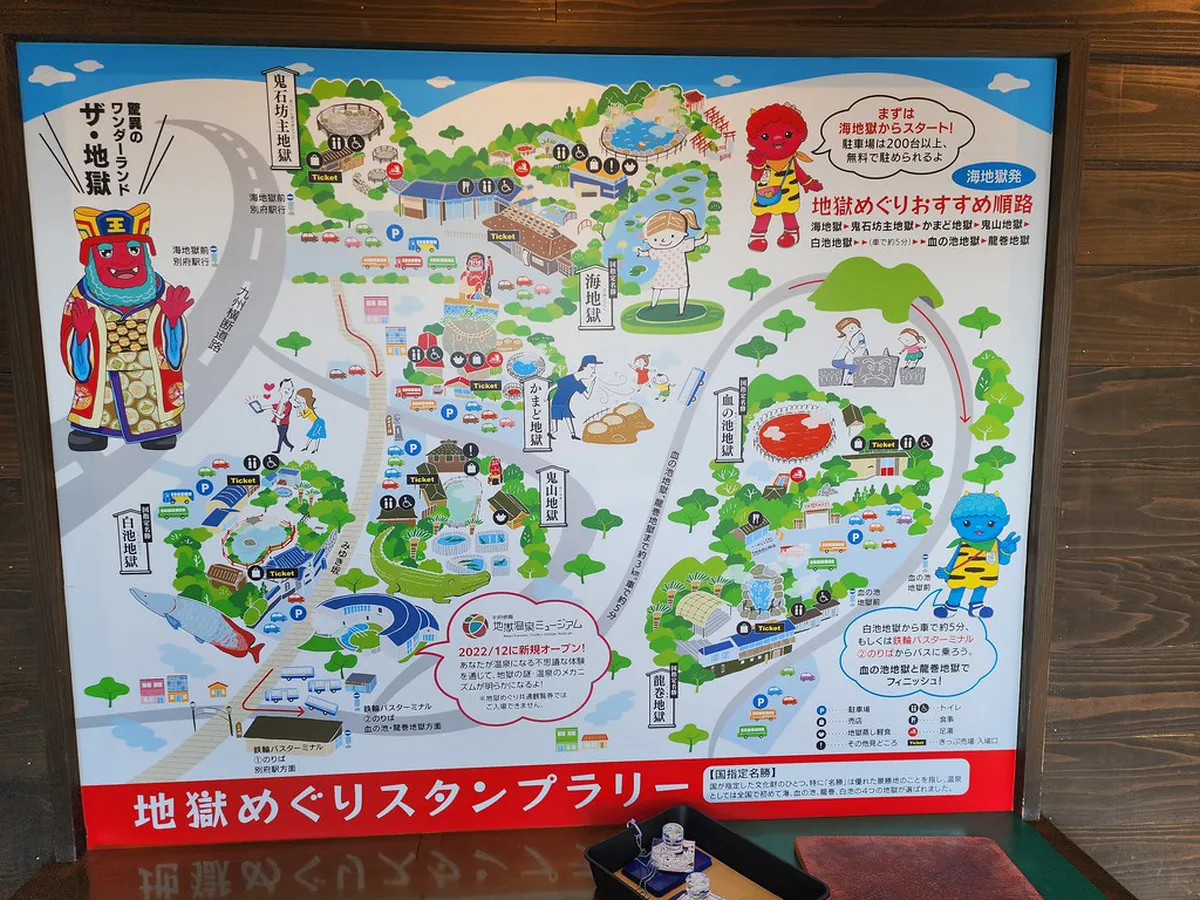
The Jigoku Meguri — or Seven Hells tour — is the most distinctive stop on any Beppu Bay scenic drive. Each of the seven geothermal pools has a completely different character: Umi Jigoku is a vivid cobalt blue, Chinoike Jigoku is blood red, and Tatsumaki Jigoku erupts like a geyser every 30 to 40 minutes.
A combined entry pass covering all seven hells costs 2,200 yen for adults and can be purchased at the ticket booth near Umi Jigoku. This is the largest hell and has the most parking — roughly 150 spaces in the adjacent free lot. Weekday mornings before 10:00 am see the thinnest crowds; weekend afternoons can add 20–30 minutes of queue time at each site.
The Jigoku Onsen Museum inside Umi Jigoku deserves extra time. The "Raindrop" interactive zone uses projection mapping to simulate a journey through underground hot spring channels. Visitors stand on a glass floor while animated water droplets swirl around their feet — it is the kind of engaging exhibit that is rarely mentioned in standard travel guides but consistently earns praise from visitors who stumble upon it.
Parking tip: Umi Jigoku and Shiraike Jigoku share an access road with dedicated lots. Oni-ishi Bozu and Kamado Jigoku have their own smaller lots (around 30 spaces each). Chinoike and Tatsumaki sit 2 km south in a separate cluster, with a shared 80-space lot. Plan your route to visit the northern cluster first, then drive south to avoid retracing.
Kannawa Onsen: Coastal Steam and Cuisine
Kannawa is the densest concentration of steam vents in Beppu and arguably in all of Japan. Walking its narrow lanes feels like moving through a low cloud — thermal plumes rise from every gap in the pavement, every garden wall, and every roadside pipe. This is Beppu Hatto at its most atmospheric.
The neighbourhood's signature experience is jigoku mushi, or "hell steaming" — a cooking method that uses natural geothermal steam to prepare food. At Jigoku Mushi Kobo Kannawa, visitors load a bamboo steamer with local vegetables, eggs, and pork, slide it into a vent chamber, and collect perfectly cooked food 15 minutes later. Lunch here costs roughly 1,000–1,500 yen and removes any need for a separate restaurant stop.
Driving through Kannawa requires patience. The main street is one lane wide in places, and delivery trucks frequently block the route mid-morning. If your ryokan is in the neighbourhood, confirm in advance that they have a dedicated parking lot — some offer a small lot around the corner that is easy to miss. Arriving after 2:00 pm avoids the worst of the truck traffic.
Kannawa's main street is one lane wide in places and delivery trucks frequently block the route mid-morning. Check your ryokan has a dedicated parking lot before arriving — some have overflow lots around the corner that are easy to miss. Arrive after 2:00 PM to avoid the worst of the truck traffic.
For a walking perspective of the same area, the 1-Day Beppu Walking Tour of Kannawa Guide covers the backstreets and hidden steam pipes that you cannot safely observe from a car window.
Yamanami Highway: The Scenic Exit to Aso
The Yamanami Highway (Route 11) begins in Beppu and climbs through a high plateau before descending into the Yufuin basin, ultimately connecting to Mount Aso. The 50 km stretch between Beppu and Yufuin is the most visually dramatic section, rising through volcanic grasslands that look strikingly like the Scottish Highlands.
The Sagiridai Lookout, at approximately 700 metres elevation, is the standout pull-off on this road. A wide gravel area accommodates around 40 cars, and the view stretches back across the entire Beppu Bay coastline. Sunset here — typically around 6:30–7:00 pm in late spring and summer — turns the bay a deep amber while the city's steam catches the last light.
Speed limits on the highway range from 50 to 70 km/h depending on the section. The road surface is excellent and the curves are gradual enough for any standard rental car. Watch for cyclists on the lower sections, particularly on weekends when cycle touring groups use the highway as a training route.
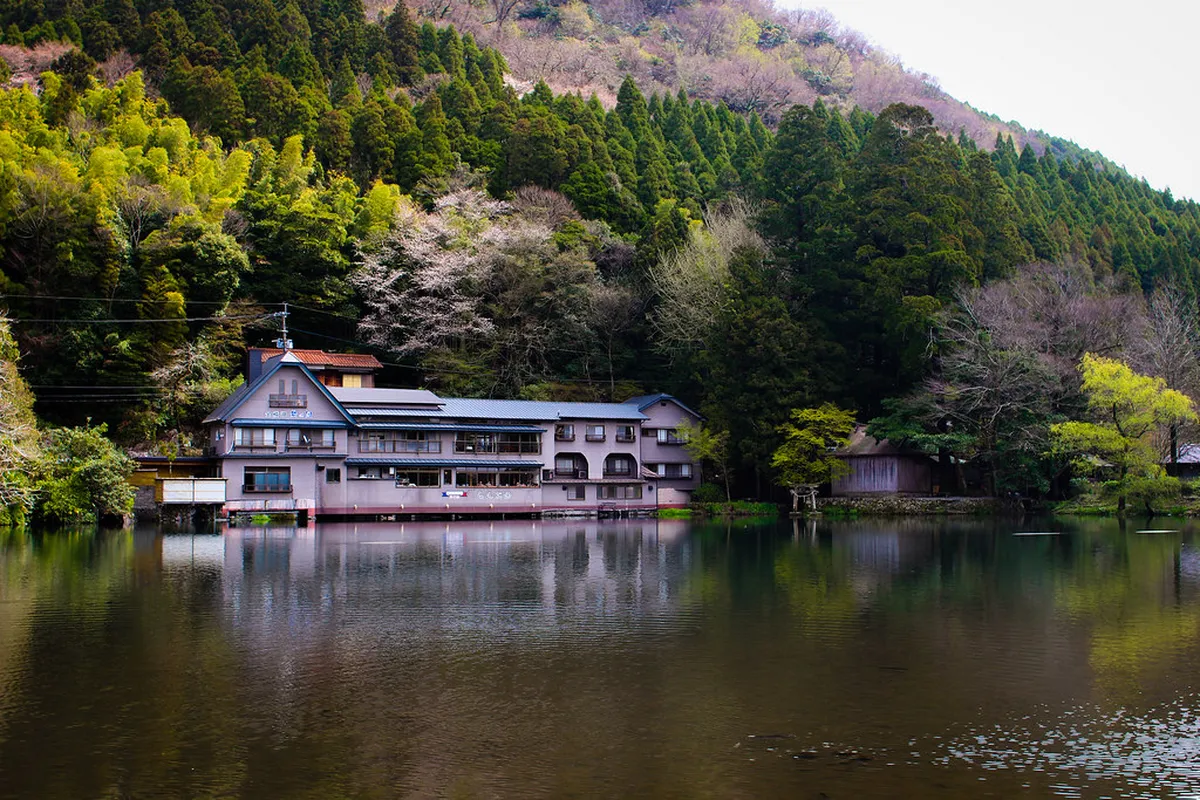
From the Yufuin basin end, a 35-minute detour to Lake Kinrin adds an elegant finish to the drive. The lake sits at the foot of Mount Yufu and is surrounded by cafes serving local cheesecake and Yufuin milk soft-serve. The Yufuin Onsen Tourism Association (Japanese) provides free printed maps for this section at the Yufuin Station tourist office.
Book in Advance: Securing Your Beppu Experience
While driving offers flexibility, some stops on your beppu bay scenic drive require planning. The Beppu Ropeway does not require reservations, but arriving 30 minutes before opening is wise. This ensures you get on the first cabin and enjoy the summit in relative peace.
If you plan to stay in a ryokan with a private onsen, book 2-3 months ahead. Popular spots in Kannawa fill up quickly, especially during the autumn foliage season. The Jigoku Onsen Museum tickets can be bought on-site, but weekends often see short queues.
We recommend checking the weather forecast three days before your planned mountain drive. Heavy fog can sometimes close the Yamanami Highway or obscure the Ropeway views. Having a backup indoor activity, like the bamboo craft center, is a smart move.
Is Driving in Beppu Difficult for Foreigners?
Many visitors worry about navigating Japanese roads, but Beppu is surprisingly driver-friendly. Signs are almost always bilingual, featuring both Japanese kanji and English Romanization. Most rental cars come equipped with a GPS that accepts phone numbers for easy destination entry.
Parking at the Seven Hells is plentiful and usually included in your Jigoku ticket costs. We noticed that the lots at Umi Jigoku are the largest and easiest to navigate. Just remember to stay on the left side of the road at all times.
Speed limits are lower than in many Western countries, typically around 40-50 km/h in the city. This slower pace actually makes it easier to spot the scenic turn-offs along the bay. Pedestrians and cyclists are common, so stay alert when driving through the narrow Kannawa streets.
Where to Stay: The Best Base for Drivers
Choosing the right base is vital when planning a beppu bay scenic drive. The Kitahama area is excellent if you want to be near the coastal Route 10. Most hotels here offer multi-story parking and are close to the nightlife district.
Alternatively, the Kannawa district puts you right in the heart of the volcanic steam. Driving through Kannawa can be tight, so check if your ryokan has a dedicated parking lot. I prefer staying in the hills for the cooler evening air and the sulfurous atmosphere.
If you are traveling with a full itinerary, staying near the highway entrance saves time. The Kankaiji area offers large resort hotels with expansive views of the entire bay. These spots often have the best 'infinity' onsens that overlook the city lights.
Add an Extra Day: Exploring Beyond the Bay
If you have more than 48 hours, I highly recommend extending your drive inland. The Yufuin Onsen Tourism Association (Japanese) provides maps for the stunning mountain roads nearby. A trip to Lake Kinrin in Yufuin takes only 35 minutes from the Beppu hills.
The drive through the Yufu-dake mountain pass is arguably the best in Kyushu. You will see rolling grasslands that look more like Scotland than typical Japanese forests. There are several cafes along this route where you can stop for locally made cheesecake.
Another option is to head south toward Oita City for a more urban coastal experience. This allows you to see the industrial side of the bay, which has its own unique beauty.
Frequently Asked Questions
What is the best route for a Beppu Bay scenic drive?
The best route starts on National Route 10 for coastal views before climbing the mountain roads toward the Beppu Ropeway. This path connects the sea to the summit efficiently. It offers the most diverse scenery in a single afternoon.
Can you see Beppu Bay from the Yamanami Highway?
Yes, several pull-off points on the lower sections of the Yamanami Highway provide sweeping views of the bay. The Sagiridai Lookout is a particularly famous spot for photographers. It is best visited at sunset for golden light.
Is it easy to drive around Beppu for foreign visitors?
Driving in Beppu is relatively simple due to clear English signage and well-maintained roads. Most rental cars include English GPS systems to help with navigation. Traffic is generally calm compared to larger Japanese cities.
Where are the best viewpoints along the Beppu coastal road?
The top viewpoints are the gravel pull-off on Route 10 about 3 km north of Beppu Station, the Mount Tsurumi summit reached by the Beppu Ropeway, and the Sagiridai Lookout on the Yamanami Highway. Each offers a different perspective: sea level, aerial, and high plateau respectively.
How long does the Seven Hells tour take by car?
Allow 2.5 to 3.5 hours to visit all seven hells by car. The northern cluster of five hells takes around 90 minutes including parking and walking. The southern cluster of two hells (Chinoike and Tatsumaki) takes a further 45 minutes, including the wait for Tatsumaki's geyser eruption.
What is the Raindrop experience at the Jigoku Onsen Museum?
The Raindrop zone is an interactive projection-mapping exhibit inside Umi Jigoku's museum. Visitors stand on a glass floor while animated water droplets simulate a journey through underground hot spring channels. It runs continuously throughout the day and is included with the standard museum entry fee.
For related Beppu deep-dives, see our Beppu Hoyoland mud bath guide and historic Takegawara Onsen guide.
A beppu bay scenic drive is the ultimate way to experience the geographical diversity of Oita. From the crashing waves of Route 10 to the volcanic mists of the Yamanami Highway, the views never cease. We found that having a car allowed us to find quiet corners that tour buses simply cannot reach.
Whether you are a first-timer or a repeat visitor, the freedom of the road adds a special layer to Beppu. Take your time at the lookouts and enjoy the unique rhythm of this steaming coastal city. Safe travels as you navigate one of the most beautiful driving routes in all of Japan.
Free: The Beppu Essentials guide
Top things to do, where to stay, a perfect day plan, getting around, and the best time to go — a Beppu mini-guide you can take offline.
You might also like


Continue reading
More guides you'll find useful


