

Takegawara Onsen Beppu Guide: 10 Essential Tips & Attractions
Master the Takegawara Onsen sand bath with our 2026 guide. Includes step-by-step instructions, pricing, etiquette, and the best nearby Beppu attractions.
On this page
Takegawara Onsen stands as the most iconic symbol of Beppu's rich hot spring heritage. Built originally in 1879, this historic bathhouse offers a glimpse into the Meiji era's architectural beauty. Visitors flock here to experience the famous sand bath, a unique ritual involving naturally heated volcanic earth. This comprehensive guide will help you navigate the procedures and history of this legendary site.
The surrounding neighborhood blends old-world charm with the grit of a former resort town's nightlife district. Stepping inside the high-ceilinged lobby feels like traveling back over a century in time. Whether you seek a traditional soak or a sand burial, this landmark remains a must-see destination. Prepare for a sensory journey that defines the spirit of Oita Prefecture.
Quick answer: Takegawara Onsen is a Meiji-era bathhouse in central Beppu open daily from 6:30 AM, charging around 300 yen for a regular bath and 1,500 yen for the signature sand bath. No reservation needed — simply walk in, pay at the counter, and follow the posted procedure.
History and Architecture of Takegawara Onsen
The current structure of Takegawara Onsen dates back to 1938, featuring a magnificent Karahafu-style gabled roof. This architectural style was traditionally reserved for prestigious shrines and elite residences. Seeing the dark wooden facade against the modern city skyline creates a striking visual contrast. It is widely considered one of the most celebrated historic buildings in Beppu today.
Inside, the lobby retains its high wooden ceilings and vintage posters from decades past. The atmosphere is thick with the scent of sulfur and the history of millions of bathers. Local residents still use these baths daily, maintaining a living connection to the city's past. Preserving this authenticity makes it a centerpiece of any cultural itinerary. For travelers exploring the wider Kyushu region, a visit here pairs well with day trips to Nagasaki, which lies about 90 minutes south by rail.
The bathhouse sits in the heart of the Kitahama district, the former resort core that boomed during Japan's high-growth era of the 1970s and '80s. Postwar prosperity turned Beppu into Japan's top onsen resort, drawing millions of visitors from across Kyushu and beyond. Fukuoka, the prefectural capital, sits nearby and serves as the transport hub for the region. Today the neighborhood shows its age gracefully — faded pachinko parlors beside century-old timber gates — and Takegawara anchors that nostalgia more than any other structure. The Oita prefectural government designated it a regional cultural asset, guaranteeing long-term preservation of the Karahafu roof and the original sand pit layout.
The Sand Bath Experience: A Step-by-Step Guide
The sand bath is a therapeutic ritual where you are buried in warm, mineral-rich volcanic sand. This process uses natural geothermal heat to induce deep sweating and relaxation. Many travelers find the heavy weight of the sand helps release deep-seated muscle tension. Learning how to experience a sand bath properly ensures you get the most benefit from your visit.
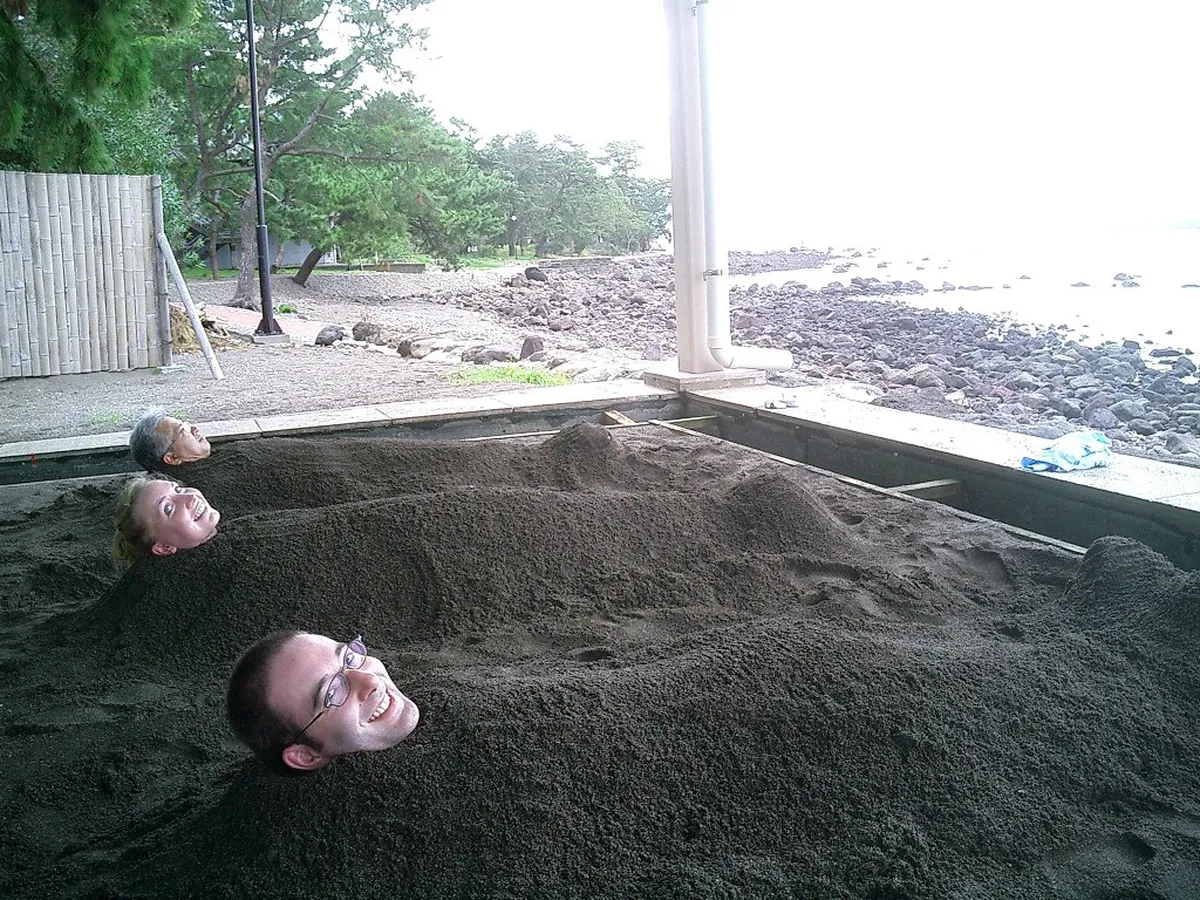
Staff members, known as sand-stewards, use shovels to carefully cover your body up to the neck. The heat is intense but manageable for most healthy adults during the short session. You will likely feel your pulse in your fingertips as the heat improves your blood circulation. Following the burial, a thorough rinse is required to remove all grit before entering the hot water.
- Check-in and Rental
- Pay the entry fee at the vending machine in the lobby (cash only, coins preferred).
- Collect your provided yukata — this thin cotton robe is what you wear into the sand.
- Store personal items in the coin-operated locker; the key attaches to your wrist.
- Sand Burial Process
- Walk to the sand pit area and lie on the designated indentation prepared by staff.
- A steward shovels warm volcanic sand over your body up to the chin — the pressure feels substantial but not painful.
- Stay buried for 10 to 15 minutes maximum. Beyond that, core temperature rises to uncomfortable levels.
- Breathe slowly and deeply; shallow panicked breathing amplifies the heat sensation.
- Post-Bath Cleanup
- Step 1: Use the dedicated rinse hose to wash sand from the yukata before removing it.
- Step 2: Shower thoroughly — fine volcanic grit lodges in hair and behind ears.
- Step 3: Enter the hot spring bath for a 5-minute soak to allow the minerals to absorb fully.
- Step 4: Finish with a brief cold-water rinse to close pores before dressing.
Sand bath health note: The sand reaches 40–45°C at body depth. Healthy adults tolerate 10–15 minutes well, but the combination of full-body constriction and sustained heat raises core temperature roughly 1°C — equivalent to a short sauna session. People with cardiovascular conditions, low blood pressure, or pregnancy should skip the sand bath and opt for the regular indoor pools instead.
People with cardiovascular conditions, low blood pressure, or pregnancy should skip the sand bath. The volcanic sand reaches 40–45°C and raises core body temperature by approximately 1°C. Stay buried no longer than 15 minutes — staff will prompt you when the session ends.
Traditional Hot Spring Soaking at Takegawara
Beyond the sand, the traditional indoor baths offer a classic public bathing experience. The water here is notably hot, often reaching temperatures that surprise first-time visitors. Simple stone tubs and high ceilings define the minimalist aesthetic of the bathing hall. It provides a raw and authentic look at Japanese bathing culture without modern frills.
The mineral content includes sodium, calcium, and magnesium, which are said to benefit the skin. Locals often gather here in the early morning to socialize and start their day. You should expect a no-nonsense environment where the focus is purely on the water. This is a great place to practice the etiquette rules outlined in our guide to Beppu attractions hub before attempting a more formal ryokan soak.
The spring type at Takegawara is classified as sodium chloride (salt spring), which feels warming on the skin and leaves a faint slickness long after you towel off. Water temperatures in the main pool hover around 43°C — significantly hotter than the 38–40°C most hotel baths maintain. If the heat feels too intense, edge to the shallowest section near the steps where cooler fresh water mixes in. Unlike many modern facilities, there are no jet baths, LED lighting, or aromatherapy add-ons; the appeal is purely the mineral-dense, sulfur-tinged water doing exactly what it has done since 1879.
Essential Etiquette for First-Time Visitors
Respecting local customs is vital when visiting a historic public bathhouse like Takegawara. Always wash your body thoroughly at the designated stations before entering any communal water. Keep your hair tied up and never let your towel touch the bathwater. Maintaining a quiet and respectful volume helps preserve the peaceful atmosphere for everyone.
Takegawara is generally known for being tattoo-friendly, unlike many modern Japanese spas. This makes it a popular choice for international tourists with ink who want an authentic experience. However, large or intimidating tattoos should still be handled with discretion and politeness. Always check for updated signage at the entrance regarding specific house rules.
A few additional rules that catch newcomers off guard: mobile phones must be kept in the locker — photography of other bathers is strictly prohibited and will result in removal. Bring your own small wash towel if you prefer, though rental is available. Do not shave inside the communal pools. After using the washing stations, angle your showerhead downward so splashing does not disturb neighboring bathers. These small courtesies are what allow Takegawara to remain a working neighborhood bath rather than a tourist-only showpiece.
The quietest window to visit is 7:00–9:00 AM, when local regulars dominate and tour groups have not yet arrived. The facility closes one day per month for maintenance — Tuesday is the most common closure day. Check local boards or the Beppu Tourism Association website before visiting.
Pricing, Hours, and Practical Booking Advice
In 2026, the Beppu sand bath entry fees remain very affordable for most travelers. A standard bath costs only a few hundred yen, while the sand bath experience is slightly higher. Rentals for towels and yukatas are available for a small additional charge at the front desk. Carrying small denominations of cash is recommended for the vending machines and lockers.
The bathhouse typically opens early in the morning and stays busy until late evening. Reservations are not accepted, so you may face a wait during weekends or holidays. Arriving right at opening time is the best way to avoid the mid-morning tour groups. Expect a wait time of thirty to sixty minutes during peak tourist seasons.
| Item | Price (approx.) |
|---|---|
| Regular hot spring bath | 300 yen |
| Sand bath (includes yukata) | 1,500 yen |
| Towel rental | 100 yen |
| Soap / shampoo set | 100 yen |
| Locker | 100 yen (refundable) |
Operating hours are approximately 6:30 AM to 10:30 PM daily, with the sand bath section closing slightly earlier (around 9:00 PM last entry) to allow staff cleanup time. The facility closes one day per month for maintenance — check local boards or the Beppu Tourism Association website before visiting on a Tuesday, which is the most common maintenance day. Crowd patterns: 7:00–9:00 AM is dominated by local regulars and is the quietest window; 10:00 AM–noon sees the first tour buses; late afternoons (3:00–5:00 PM) pick up again with after-work bathers.
Comparing Takegawara vs. Beppu Beach Sand Bath
Beppu offers two primary locations for sand bathing, each with a very different vibe. Takegawara provides a dark, historic, and moody indoor environment that feels very traditional. The Beppu Beach Sand Bath offers wide-open views of the ocean and a more modern facility. Choosing between them depends on whether you prefer architectural history or scenic coastal beauty.
Takegawara is much easier to access if you are staying near the main train station. The beach location requires a short bus or train ride to the northern part of the city. Prices are comparable, but the beach can be closed during inclement weather conditions. Many enthusiasts try both to compare the different mineral properties of the sand.
| Feature | Takegawara Onsen | Beppu Beach Sand Bath |
|---|---|---|
| Setting | Meiji-era wooden bathhouse, indoor | Open-air beachfront, ocean views |
| Vibe | Atmospheric, historic, local crowd | Scenic, modern, tourist-friendly |
| Sand bath price | ~1,500 yen | ~1,500 yen |
| Weather dependent? | No (indoor) | Yes (closes in storms) |
| Access from station | 8-min walk | Bus/train, 15-20 min |
| Best for | Culture seekers, rainy days | Photographers, sunny days |
Top Nearby Attractions in the Beppu Station Area
After your bath, the surrounding Kitahama district offers several interesting landmarks to explore. Beppu Tower is just a short walk away and provides panoramic views of the bay. The area comes alive at night with small bars and traditional izakayas.
For a bit of greenery, Beppu Park offers a peaceful escape from the urban center. It is particularly beautiful during the cherry blossom season in early April. Walking through these streets reveals the charmingly weathered side of Kyushu's famous spa city. Keep an eye out for small shrines tucked between modern buildings.
If you have a full day, the main Beppu attractions guide hub covers the full circuit from Takegawara to the famous Jigoku Hells of Kannawa, Beppu Ropeway, and the African Safari park to the north. The standard sightseeing loop pairs a morning soak at Takegawara with an afternoon Kamenoi Bus Day Pass run to the seven Jigoku hot spring ponds in the Kannawa district, roughly 25 minutes by bus from Beppu Station. Each hell charges its own small admission (typically 400–700 yen per pond), making a multi-site ticket better value if you plan to visit more than three.
Kamenoi Bus Pass and Day-Trip Planning
Quick answer: A Kamenoi Bus One-Day Pass costs 1,000 yen (2026) and covers unlimited rides on city routes including the Kannawa Hells loop. Buy it at Beppu Station or directly from the driver on your first boarding.
The most efficient Beppu day-trip sequence: arrive at Takegawara by 7:00 AM for the early-bird sand bath (30-minute session including rinse), walk back to Beppu Station, buy the Kamenoi Day Pass, then board the No. 2 or No. 5 bus toward Kannawa. The Kannawa Hells open at 8:00 AM, so a 7:00 AM start at Takegawara places you at the first hell by 8:30 AM before tour buses arrive. Finish the hells circuit by noon, then return to the station area for lunch before an afternoon Beppu Ropeway ride up Mt. Tsurumi.
The bus pass also covers the route to Beppu Beach Sand Bath in the Shibaseki area if you want to compare both sand bath experiences in one day — though that is a tiring combination that most visitors space over two days. For a curated walking itinerary around the Takegawara neighborhood itself, the route along Ekimae-dori and through the old arcade to the Kitahama waterfront takes about 45 minutes and surfaces several minor shrines, retro coffee shops, and the photogenic steam vents that rise from drainage grates throughout the district.
Where to Eat: Hell-Steamed Delicacies Nearby
No visit to Beppu is complete without trying food cooked by the earth's natural steam. Look for shops selling Jigoku Mushi (hell-steamed) specialties within the downtown area. The most famous item is the custard pudding, which has a distinct smoky sweetness from the geothermal vapor. Steamed vegetables and seafood are also popular for their healthy and natural preparation.
Several small restaurants near the bathhouse specialize in local Oita soul food. Try the Toriten, which is a delicious style of Japanese tempura fried chicken. This dish is a local favorite and pairs perfectly with a cold regional beer. Dining in these neighborhood spots supports the local community and offers authentic flavors.
Within a five-minute walk of Takegawara, look for the small stalls along the covered arcade selling individually portioned steamed sweet potatoes and corn — these are geothermally cooked and served hot for around 200 yen. Okamotoya Restaurant, about 10 minutes on foot toward Kitahama, is widely cited for its Jigoku Mushi karaage and egg pudding. For a more substantial meal, Aji no Taisho near the east exit of Beppu Station serves generous set lunches of grilled fish, rice, and pickles for under 1,000 yen — a favorite of the post-onsen crowd who want something light but satisfying.
Best Ryokans and Hotels Near Takegawara
Staying in the station area allows for easy access to the bathhouse and evening entertainment. Some traditional inns offer their own private hot springs for a more secluded experience. Booking a room with a meal plan allows you to taste high-end Kaiseki cuisine.
Modern business hotels provide a budget-friendly alternative for travelers on a tighter schedule. These hotels often feature small communal baths that use the same local spring water. Check for properties that offer views of the steaming city vents from their upper floors. Early booking is essential if you plan to visit during the popular festival months.
Hoshino Resorts Kai Beppu, roughly 15 minutes by bus from Takegawara, represents the premium end of the spectrum — private in-room cypress baths and a refined kaiseki dinner. For mid-range stays within walking distance, Beppu Kamenoi Hotel (the original Kamenoi brand) sits near Ekimae-dori and offers a large communal bath floor fed by the same salt spring as Takegawara. Budget travelers do well at the business hotels clustered around the station's east exit, most of which charge 6,000–9,000 yen per night and include access to small onsen floors. Whichever tier you choose, prioritize properties that advertise kaけ流し (kake-nagashi) — free-flowing spring water — over recycled heated water.
How to Get There: Transport and Parking Tips
Takegawara Onsen is conveniently located about an eight-minute walk from the Beppu Station east exit. The route takes you through a covered shopping arcade filled with local shops and cafes. Walking is the most efficient way to reach the bathhouse from the city center. If you are coming from further away, the Beppu Cable Car site provides transit connections.
Public parking is limited in the immediate vicinity of the historic building. Using the large lots near the station is often easier than navigating the narrow side streets. Buses run frequently from the station to other districts like the Kannawa Hells. Consider purchasing a Kamenoi Bus day pass if you plan to visit multiple hot springs in one trip.
From Fukuoka (Hakata Station), the Sonic limited express reaches Beppu in approximately 2 hours 15 minutes; the Relay Kamome + Sonic combo from Nagasaki takes around 3 hours 30 minutes. Day-trippers from Fukuoka can realistically do Takegawara plus the Kannawa Hells in a single day by catching the 7:00 AM Sonic and returning on a 7:00 PM departure. Driving from Fukuoka via the Oita Expressway takes about 1 hour 45 minutes; paid parking garages near Beppu Station charge roughly 200–300 yen per 30 minutes, with flat-rate evening fees after 6:00 PM. The station area is also covered by Beppu's bicycle-share network if you prefer to explore at your own pace.
Frequently Asked Questions
How much does Takegawara Onsen cost in 2026?
A basic hot spring bath costs approximately 300 yen. The sand bath experience is priced around 1,500 yen, which includes the required yukata rental. Prices are subject to change, so check the front desk for the latest rates.
Are tattoos allowed at Takegawara Onsen?
Yes, Takegawara Onsen is generally tattoo-friendly and welcomes all guests regardless of body art. This makes it a top choice for international travelers. However, always remain respectful of the quiet environment while bathing.
Do I need a reservation for the sand bath?
No, reservations are not accepted at Takegawara Onsen. It operates on a first-come, first-served basis. During busy periods, you may need to wait in the lobby for thirty minutes or more. Arriving at opening time (6:30 AM) is the best strategy to avoid queues.
What should I bring to the sand bath?
You only need to bring yourself and a small towel if you wish to save on rental fees. The bathhouse provides the yukata for the sand bath. Toiletries like soap and shampoo are often available for purchase at the counter. Cash in small denominations is essential as credit cards are not accepted.
How long should you stay in the Takegawara sand bath?
The recommended duration is 10 to 15 minutes. The volcanic sand reaches 40-45 degrees Celsius and raises your core body temperature noticeably — staying longer offers diminishing returns and can cause dizziness. Staff will prompt you when the session ends if needed.
What is the best time to visit Takegawara Onsen to avoid crowds?
Arrive at or before 7:00 AM to share the baths with local regulars and avoid tour groups. The mid-morning window from 10:00 AM to noon is the busiest period. Late afternoons from 3:00 PM to 5:00 PM are moderately busy but manageable on weekdays.
For related Beppu deep-dives, see our Beppu Hoyoland mud bath guide and Suginoi Hotel day pass details.
Takegawara Onsen remains a vital piece of Beppu's living history and a highlight of any Kyushu trip. The combination of stunning Meiji architecture and the unique sand bath creates an unforgettable experience. While the neighborhood is rustic, the warmth of the water and the locals is truly genuine. Pair your visit with the Kamenoi Bus Day Pass to extend the experience to Kannawa's Jigoku Hells — the full Beppu circuit in a single day is one of Japan's most rewarding and affordable travel days. Make sure to include this historic landmark in your next Japanese hot spring adventure.
Free: The Beppu Essentials guide
Top things to do, where to stay, a perfect day plan, getting around, and the best time to go — a Beppu mini-guide you can take offline.
You might also like


Continue reading
More guides you'll find useful


