7 Hells of Beppu Overview: Essential Tips for Your Visit (2026)
Plan your trip with our 7 Hells of Beppu overview. Discover the best Jigoku to visit, ticket prices, transport tips, and where to find the best hell-steamed pudding.
On this page
Beppu sits atop one of Japan's most active geothermal systems, and the result is a collection of seven spectacular hot springs known as the Jigoku, or hells. These are not bathing pools — the water exceeds 90 degrees Celsius — but viewing sites that range from a stunning cobalt-blue pond to pools of bubbling gray mud. Our editors have reviewed the full circuit, the bus routes, and the surrounding neighborhood to help you plan a smooth visit. Learning How to Visit Beppu Hells: A Complete 2026 Guide efficiently starts with understanding which hells sit in which district and which ones are genuinely worth the walk.
This guide was last refreshed in May 2026 to reflect current ticket pricing and bus changes. The city reached its tourism peak in the 1980s, but the hells remain well-maintained and remain the single biggest draw in Oita Prefecture. Some are beautifully serene gardens; others lean into a slightly dated roadside-attraction aesthetic. Knowing the difference in advance lets you spend your time at the sites that will actually impress you.
What Are the 7 Hells of Beppu?
The term Jigoku translates to hell, a name given centuries ago because the boiling water and sulfurous steam made the land completely uninhabitable. Local legends describe the vents as cursed ground where crops refused to grow and travelers feared to linger. Today, all seven sites carry the official designation as Places of Scenic Beauty and function as the city's primary tourist circuit, collectively called the Jigoku Meguri or Hell Tour.
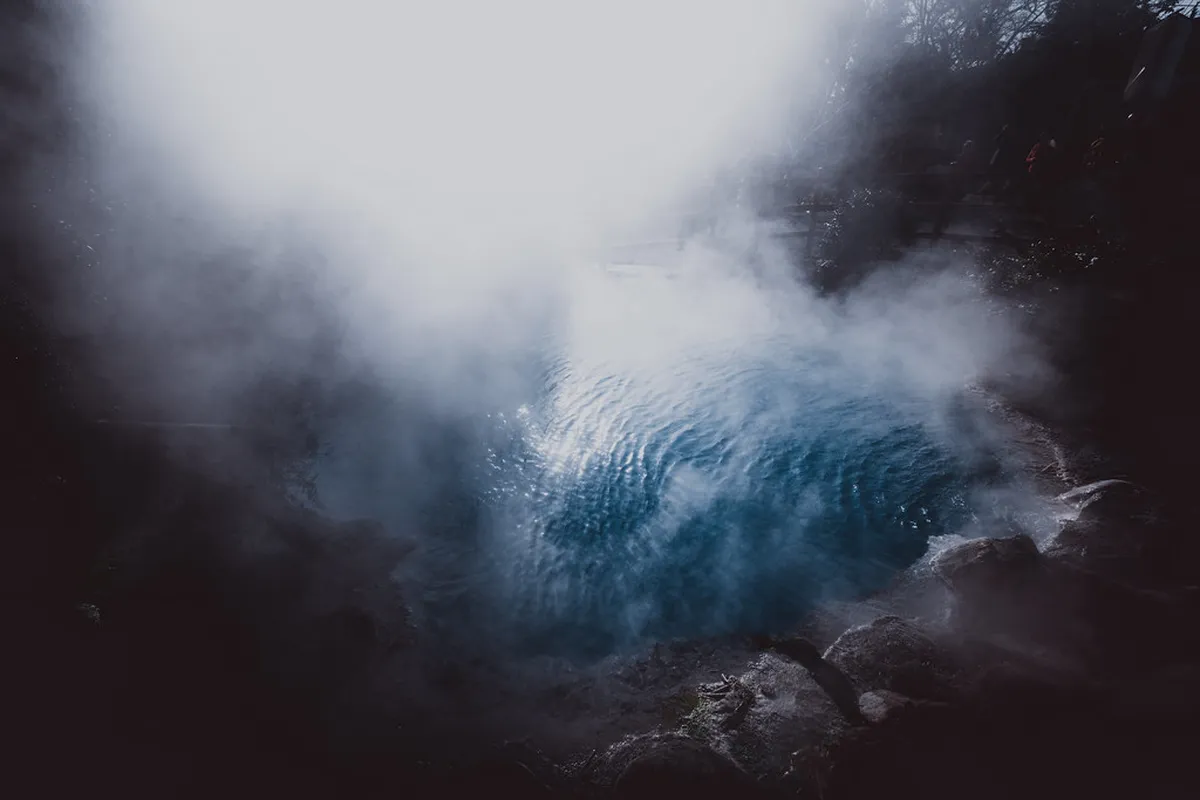
Each spring has a distinct chemical composition that produces a different color: cobalt blue, blood red, milky white, and churning gray mud. You cannot soak in the main pools, but several sites have foot baths fed by smaller, cooler springs on the same grounds. The combination of natural spectacle, steam, tropical garden layouts, and surprisingly good snack stalls makes the circuit one of the more memorable half-days you can spend in Kyushu.
Beppu's transition from a 1980s spa-town boom to a modern tourist hub left a fascinating architectural mix. Traditional thatched roofs sit next to concrete viewing platforms and gift shops that have barely changed since the post-war economic boom. This contrast is part of the charm. Most visitors find three to four hours is enough to complete the full circuit before heading to a traditional bathhouse for a real soak.
Hells of Beppu Map and District Locations
The seven hells split across two districts roughly three kilometers apart. Five are clustered in the Kannawa district, which sits in the steaming hills about 20 minutes by bus from Beppu Station. The remaining two — Chinoike Jigoku (Blood Pond Hell) and Tatsumaki Jigoku (Tornado Hell) — are in the Shibaseki district further north. All five Kannawa hells are within comfortable walking distance of each other on sloped, narrow streets lined with steam vents.
The standard visit order follows the Beppu Jigoku Association's recommended route: start at Umi Jigoku in Kannawa, work through the four remaining Kannawa springs, then take a short bus to Shibaseki to finish with the Blood Pond and the geyser. You can reverse the order, but starting in Kannawa makes logistical sense because that is where most buses from the station terminate. The walking distance between the five Kannawa sites is about 800 meters in total, with the steepest section between Kamado and Oniyama Jigoku.
For navigation, Google Maps handles the Beppu bus network reliably and will give you accurate departure times from each stop. If you want a printed reference, the tourist information desk inside Beppu Station hands out a free paper map of the full circuit with walking times marked between each hell. Picking one up before you board the bus takes about two minutes and saves a lot of uncertainty once you are in the steam-filled streets of Kannawa.
Breakdown of All 7 Hells: Which Ones Are Worth It
Not every hell delivers the same experience. Below is an honest assessment of all seven, split by district, so you can decide which sites deserve your time if you are on a tight schedule.
Kannawa District
- Umi Jigoku (Sea Hell) — The cobalt-blue pond is the visual centerpiece of the entire circuit. Iron sulfate gives the water its striking color, and the surrounding garden adds lotus ponds, red torii gates, and a well-maintained foot bath. Do not skip this one. Open 08:00–17:00, adult entry 500 yen individually.
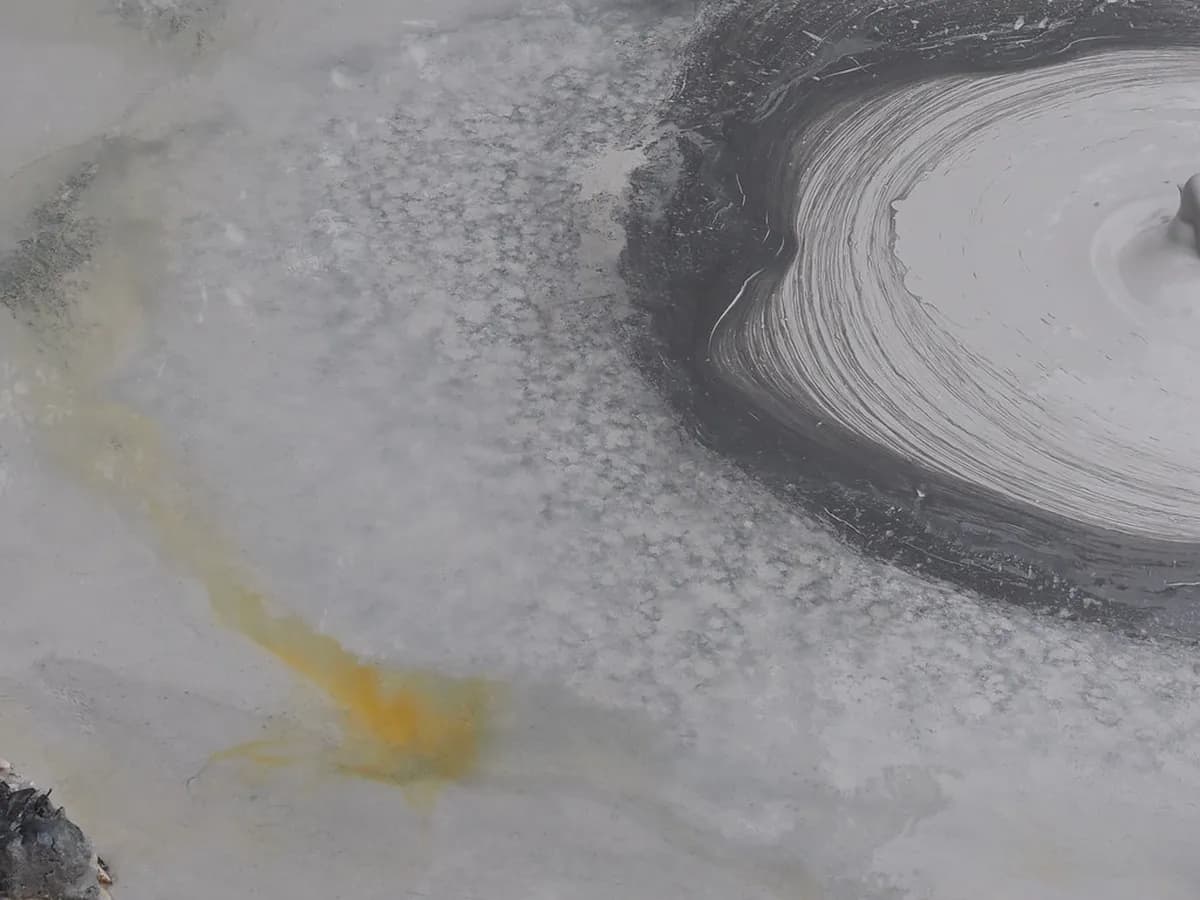
- Oniishibozu Jigoku (Shaven Monk Head Hell) — Gray mud that bubbles in round spheres, said to resemble the shaved heads of monks. The rhythmic sound is surprisingly meditative. The foot bath here tends to be less crowded than the one at Umi Jigoku. Worth a visit.
- Kamado Jigoku (Cooking Pot Hell) — The most varied site, with six different springs in one compound: blue water, boiling mud, a small geyser-style vent, and staff who perform steam demonstrations. Food stalls here sell steamed eggs and soy sauce pudding. Arrive before 10:00 or after 14:00 to avoid tour bus peaks; it is the most congested site on the circuit.
- Oniyama Jigoku (Crocodile Hell) — About 80 crocodiles are kept in enclosures heated by the natural spring. The main pond is heavily steamed and difficult to see clearly. The crocodile pens are cramped and the animals often look stressed. Honest verdict: skip it unless you have young children who specifically want to see crocodiles.
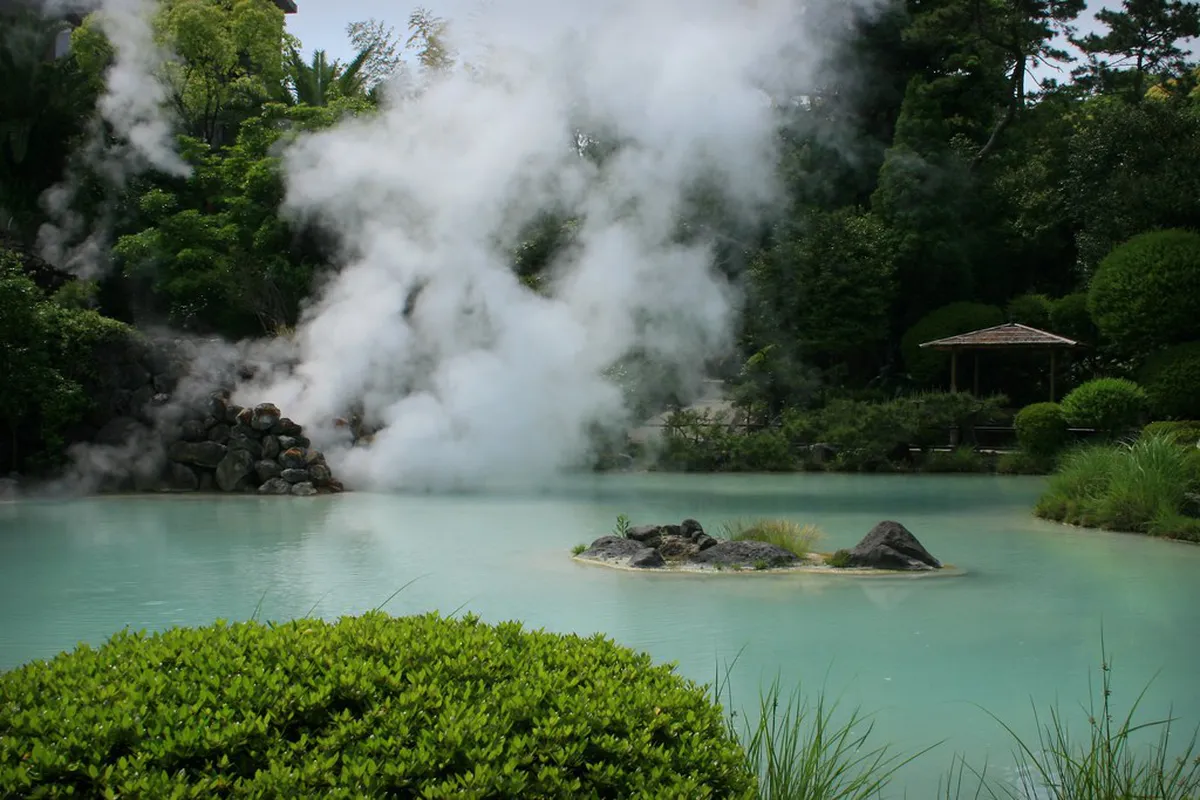
- Shiraike Jigoku (White Pond Hell) — Milky white water from boric acid and salt, surrounded by a calm Japanese garden and a small tropical fish aquarium. This is consistently the least crowded hell in Kannawa, making it the best spot for a quiet moment. Visit it.
Shibaseki District
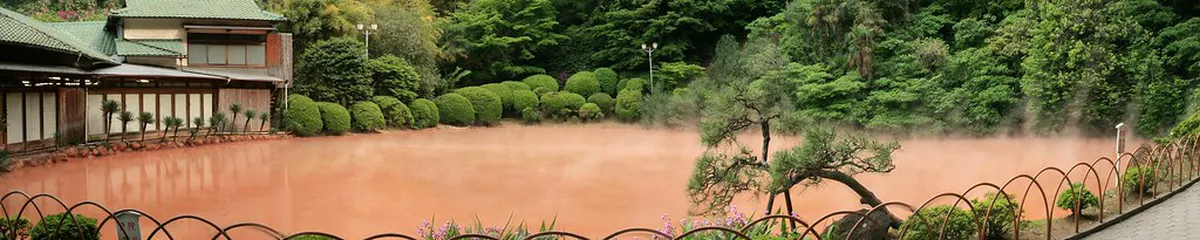
- Chinoike Jigoku (Blood Pond Hell) — Japan's oldest naturally occurring hell, over 1,300 years old. The iron-rich minerals in the mud give the water a deep red-orange color that is genuinely dramatic and photogenic. The souvenir shop sells a medicinal ointment made from the red clay. Worth the bus ride. A foot bath here draws from the same mineral-rich water.
- Tatsumaki Jigoku (Tornado Hell) — A geyser that erupts every 30 to 40 minutes for about ten minutes. A stone roof caps the plume to protect visitors, which limits how high you can see the water reach. Check the eruption schedule at the entrance and decide whether waiting makes sense for you. The adjacent azalea garden is beautiful in late April. Skip it if you are pressed for time; visit for the geyser spectacle if you are not.
If you only have two hours and need to triage, prioritize Umi Jigoku, Oniishibozu, and Chinoike Jigoku. These three give the widest range of colors, atmospheres, and visual impact.
| Hell | District | Color / Feature | Foot Bath? | Worth It? |
|---|---|---|---|---|
| Umi Jigoku (Sea Hell) | Kannawa | Cobalt blue; lotus garden | Yes | Must-see |
| Oniishibozu Jigoku | Kannawa | Gray bubbling mud spheres | Yes | Yes |
| Kamado Jigoku | Kannawa | 6 springs; steam demos; food stalls | No | Yes (go early) |
| Oniyama Jigoku | Kannawa | Crocodile enclosures | No | Skip (optional) |
| Shiraike Jigoku | Kannawa | Milky white; calm garden | No | Yes (least crowded) |
| Chinoike Jigoku (Blood Pond) | Shibaseki | Deep red-orange iron mud | Yes | Yes |
| Tatsumaki Jigoku (Tornado) | Shibaseki | Geyser every 30–40 min | No | Optional |
Admission Fees and the Combination Pass
As of 2026, individual entry to each hell costs 500 yen for adults and 250 yen for children in elementary and middle school. The combination pass that covers all seven hells costs 2,400 yen for adults and 1,200 yen for children. You can buy the pass at the ticket counter of any of the seven sites, and it remains valid for two consecutive days. You can also check current ticket availability and purchase the combo pass in advance through the official website for Beppu Jigoku.
The combination pass (¥2,400 adults, ¥1,200 children) is valid for two consecutive days, so you can split the circuit across a morning and evening or over two days if needed. Buy it at any of the seven ticket counters — cash is safest as credit card acceptance is not universal.
The math is straightforward: the combo pass saves money if you visit five or more hells (five individual tickets at 500 yen each equals 2,500 yen, already over the combo price). If you plan to visit only three or four specific springs, individual tickets are more economical. Keep your physical ticket or digital receipt safe because staff stamp it at each location. Most ticket counters accept cash, Suica, and Pasmo; credit card acceptance is expanding but is not universal across all seven sites, so bring cash as a backup.
Reviewing the Beppu Jigoku Meguri Ticket Costs & Budget Guide 2026 in detail can help you budget for the rest of your trip. Group discounts are sometimes available for parties of ten or more — ask at any ticket window on arrival.
How to Get to the Hells of Beppu
The most practical way to reach Kannawa is by local bus from the west exit of Beppu Station. Buses 5, 7, and 9 run every 10 to 15 minutes and drop you at the Kannawa bus stop in about 20 minutes. The one-way fare is approximately 330 yen. Understanding the full Beppu Transportation Guide: How to Get Around the Onsen Capital is helpful if you plan to combine the hells with other parts of the city.
The Kamenoi Bus Mini Pass costs 1,100 yen and covers unlimited rides on all Beppu city routes for one day, including the buses between Kannawa and Shibaseki. If you also plan to visit the Beppu African Safari or Yufuin as a day trip, upgrade to the Wide Pass at 1,800 yen, which extends coverage to both destinations. You can buy the Kamenoi Bus Pass at the tourist information counter inside Beppu Station, or exchange a voucher for the physical card directly in the arrivals hall at Fukuoka Airport if you are coming straight from there. The pass works by scratching off the date and showing the card to the driver as you board.
Once in Kannawa, the five hells there are walkable. To reach Chinoike and Tatsumaki Jigoku in Shibaseki, take bus 16 or 16A from the Kannawa bus terminal. The ride takes about five minutes and buses run twice per hour. To return, bus 26 or 26A goes back to Kannawa. If you are traveling in a group of three or four people, a taxi from Beppu Station directly to Kannawa costs around 2,000 yen and can make sense versus multiple individual bus fares. Solo travelers and couples are almost always better served by the day bus pass.
How Much Time Do You Need for the Hells?
The full circuit of all seven hells takes most visitors three to four hours, including the bus transfer between Kannawa and Shibaseki. Plan about 15 to 20 minutes per hell if you want to read the signs, use the foot baths, and browse the gift shops. Add 30 minutes if you intend to eat at Kamado Jigoku or wait for a Tatsumaki geyser eruption. Starting at 08:00 when the gates open lets you finish by midday before the largest tour bus groups arrive.
If you only visit the five Kannawa hells and skip Shibaseki, you can complete the route in about two hours. This is the right call for travelers with half a day in Beppu who also want to squeeze in lunch and a traditional onsen soak in the afternoon. The two Shibaseki hells — Blood Pond and Tatsumaki — are worth adding if you have the full day, but they are genuinely optional if time is tight, since the visual highlight of the entire circuit (Umi Jigoku) is in Kannawa.
A useful rule of thumb by traveler type: half-day visitors should do all five Kannawa hells and skip Shibaseki; full-day visitors should do all seven, eat jigoku mushi for lunch, and finish with a bath at Hyotan Onsen. Following a hells walking route itinerary will help you lock in the timing before arrival so you are not making decisions on the fly in unfamiliar streets.
Where to Stay in Beppu
Beppu is a proper city, not a quaint village, so accommodation is spread across several distinct zones. The two main areas to consider are Beppu Station and Kannawa, and the right choice depends on whether you prioritize convenience or atmosphere.
The area around Beppu Station offers the widest range of hotels at every price point, easy access to all bus lines, and proximity to the waterfront. It is the better base if you also plan to visit Yufuin or other parts of Oita as day trips. Budget travelers will find business hotels and guesthouses here, while the Hoshino Resorts Kai and the ANA InterContinental Beppu Resort sit on or near the waterfront with sea-view baths. The Super Hotel Beppu Ekimae is a well-reviewed mid-range option steps from the station with straightforward access to the bus stops.
Staying in Kannawa puts you within walking distance of five of the seven hells and gives access to the traditional ryokan experience that defines this part of the city. Evenings in Kannawa are quieter than the station area, with steam rising from the streets after dark. This is the better choice if the onsen and geothermal atmosphere is the main reason you are in Beppu. Hiromiya is a clean, affordable option in the heart of the Kannawa district, while Kannawaen offers modern Japanese rooms with private indoor baths and access to communal outdoor bathing.
Best Places for Hell-Steamed Cuisine
No visit to the hells is complete without trying Jigoku Mushi, food steamed using natural volcanic vapors. The Kannawa district is the center of this tradition, and the most popular dedicated venue is Jigoku Mushi Kobo Kannawa, where you can rent a steaming pot and cook your own ingredients. You purchase food vouchers from a vending machine, hand them to staff who load your pot, set a timer, and wait. Vegetables, seafood, and meat all pick up a clean, earthy flavor from the steam that ordinary cooking cannot replicate.
Kamado Jigoku is the most congested hell on the circuit, and tour buses peak between 10:00 and 14:00. Arrive at 08:00 when gates open, or after 14:30, to avoid queues at the steam demonstrations and food stalls.
Wait times at Jigoku Mushi Kobo can run over an hour on weekends, so put your name on the list before you start exploring the nearby hells. The venue is a short walk from the Kannawa bus stop and is well-signed. For something quicker, the stalls inside Kamado Jigoku sell steamed eggs and sweet potatoes for a few hundred yen each, and the Jigoku Pudding — a firm custard with bitter caramel — is sold near the entrance of Umi Jigoku and at several shops in the Kannawa shopping street. Learning about unique hell-steamed food in Beppu is a great way to go deeper on this culinary tradition before you arrive.
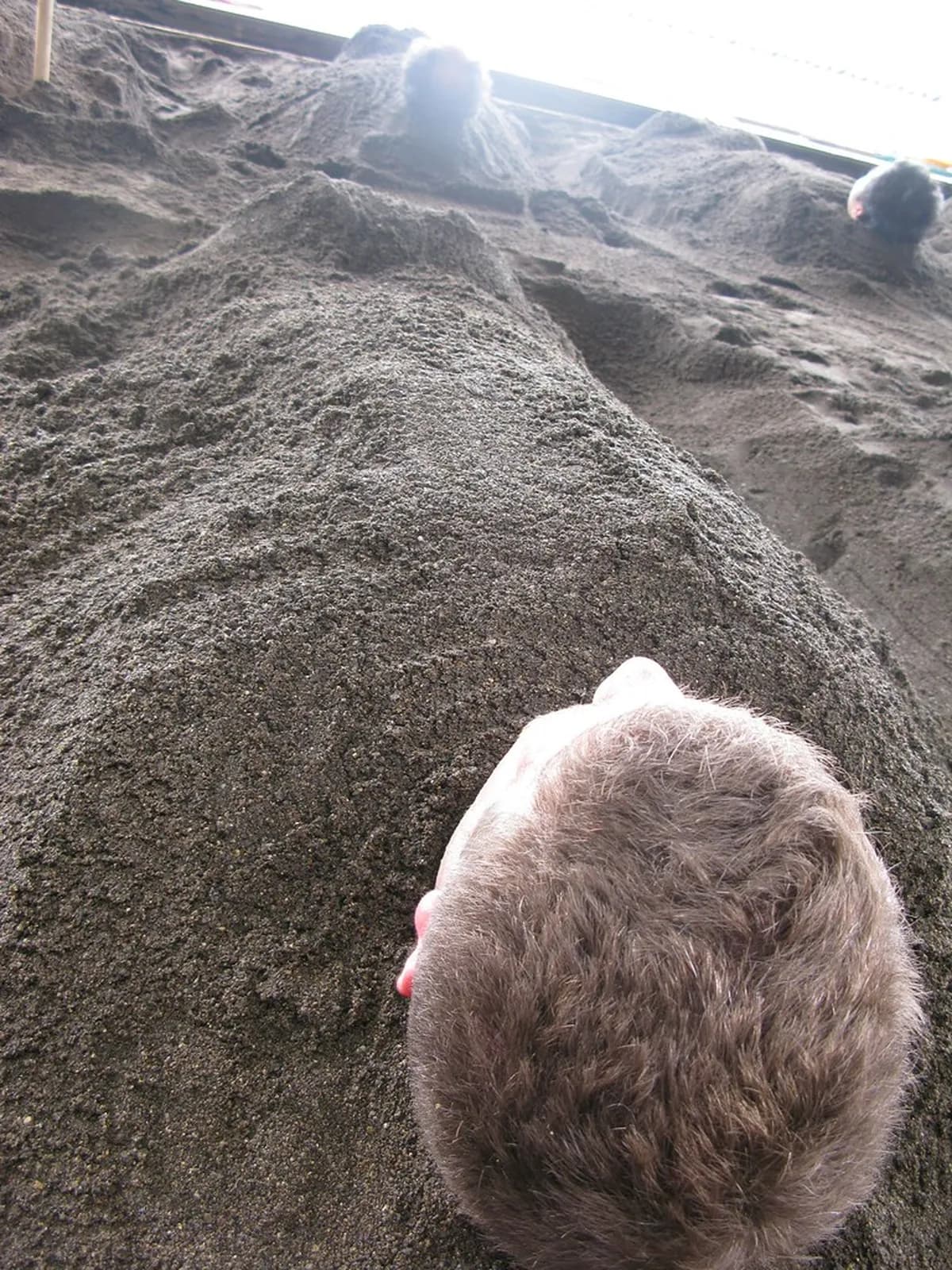
If you prefer a full onsen experience to round out the day, Hyotan Onsen, a short walk from the Kannawa hells, offers multiple indoor and outdoor baths along with a sand bath where attendants bury you up to the neck in geothermally heated sand. The sand bath runs about 30 minutes and is a genuinely different experience from a standard hot spring soak. It is a better use of your final hour in Beppu than a second pass at Tatsumaki Jigoku.
Beyond the Hells: African Safari and Rakutenchi
Beppu has two other attractions that never quite fit the onsen narrative but come up consistently in any honest guide to the city. The Kyushu Wildlife Park African Safari is about 40 minutes from Beppu by bus on the Kamenoi Wide Pass route. It is a drive-through safari on enclosed animal-shaped trucks where visitors can hand-feed lions, bears, and rhinoceroses. It sounds absurd for a Japanese onsen town, and it is — which is exactly why it works as a day trip add-on for families or travelers who enjoy genuinely unexpected experiences. Budget a full morning for the safari if you go, and buy the Wide Pass to cover the return bus fare.
The Rakutenchi Cable Car climbs the mountain behind the city and deposits you at a small retro amusement park at the top. The cable car ride itself offers the best elevated view of Beppu Bay and the surrounding geothermal landscape that you can get without hiking. The amusement park at the top is modest and skewed toward Japanese families, but the view from the top station is worth the 15 minutes each way. The Beppu Ropeway stop is on the Kamenoi bus network and takes about 25 minutes from the station.
Neither the safari nor the cable car competes with the hells as a core attraction, but they add clear value for travelers staying two or more nights. The safari suits families with children; the Rakutenchi Cable Car suits anyone who wants a clear visual payoff without the hour-long wait times of the more demanding mountain hikes around Oita.
Plan your wider Beppu trip
For the full city overview, browse our Beppu attractions guide. For complementary depth, see our Beppu hells walking route as well.
Related Beppu deep-dives
For complementary depth, see our Hyotan Onsen guide, Beppu Beach Sand Bath Guide: 10 Essential Tips and Attractions.
Frequently Asked Questions
Can you bathe in the 7 Hells of Beppu?
No, you cannot bathe in the main pools of the 7 Hells because the water temperatures are near boiling. However, several sites like Umi Jigoku and Oniishibozu offer small foot baths for visitors to enjoy. For a full soak, visit nearby bathhouses in the Kannawa district.
How long does it take to see all 7 Hells?
Most travelers need about 3 to 4 hours to complete the full circuit of all seven hells. This includes the bus ride between the Kannawa and Shibaseki districts. If you only visit the five hells in Kannawa, you can finish in about 2 hours.
Is the Beppu Jigoku combination pass worth the money?
The 2,200 yen combination pass is worth it if you plan to visit at least five of the seven hells. Since individual tickets cost 450 yen each, the pass provides a discount for those doing the full tour. It is valid for two consecutive days.
The 7 Hells of Beppu offer a fascinating look at the geological forces that have shaped this corner of Kyushu for centuries. The most rewarding approach is to start early in Kannawa, work through all five hells there, eat a hell-steamed lunch, then take the bus to Shibaseki for the Blood Pond and geyser if time allows. By matching your itinerary to your available hours — and knowing in advance that Oniyama and Tatsumaki are optional — you avoid the disappointment that catches some first-timers off guard. Beppu is a city that fully embraces its hellish reputation, and the combination of natural color, volcanic steam, and surprisingly good food makes it one of the more memorable day trips in western Japan.
Free: The Beppu Essentials guide
Top things to do, where to stay, a perfect day plan, getting around, and the best time to go — a Beppu mini-guide you can take offline.
You might also like


Continue reading
More guides you'll find useful