

10 Best Onsen Hotels and Experiences in Beppu (2026)
Discover the best onsen hotels in Beppu, from luxury ryokans with private baths to budget-friendly stays. Includes tips on the Seven Hells and steam cooking.
On this page
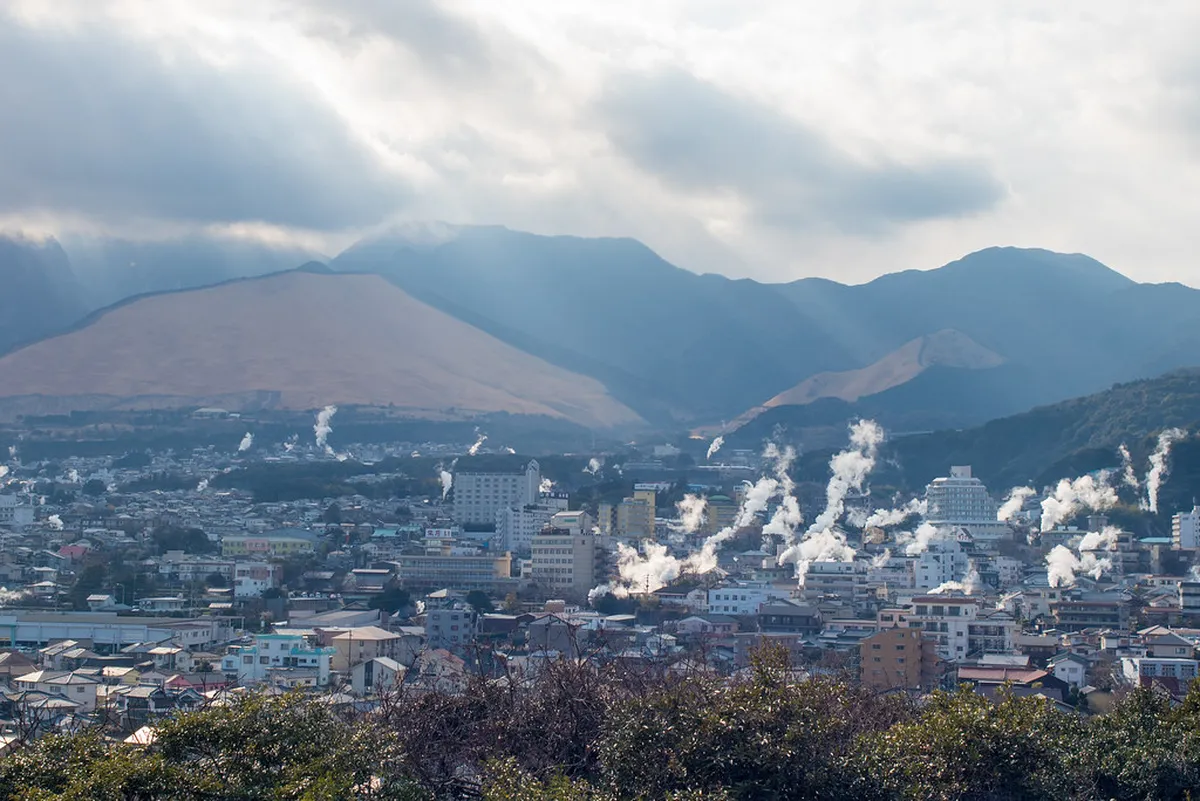
Beppu produces more hot spring water than any other onsen region in Japan. Steam rises from every street corner, the city sits on an active geothermal field, and every neighborhood smells faintly of sulfur — in the best possible way. This guide covers the best hotels with private onsen, the essential public bath experiences, and everything you need to plan a 2026 visit. For visitors seeking alternative onsen destinations, nearby Osaka and Tokyo travelers can arrange multi-region hot spring tours from Beppu.
Beppu is organized into eight hot spring zones called the Beppu Hatto. Which zone you base yourself in determines what kind of water you soak in, what you can see on foot, and how much you pay. Understanding the districts before you book is the most useful thing you can read before choosing a hotel.
Ryokan vs. Hotel: What These Terms Actually Mean
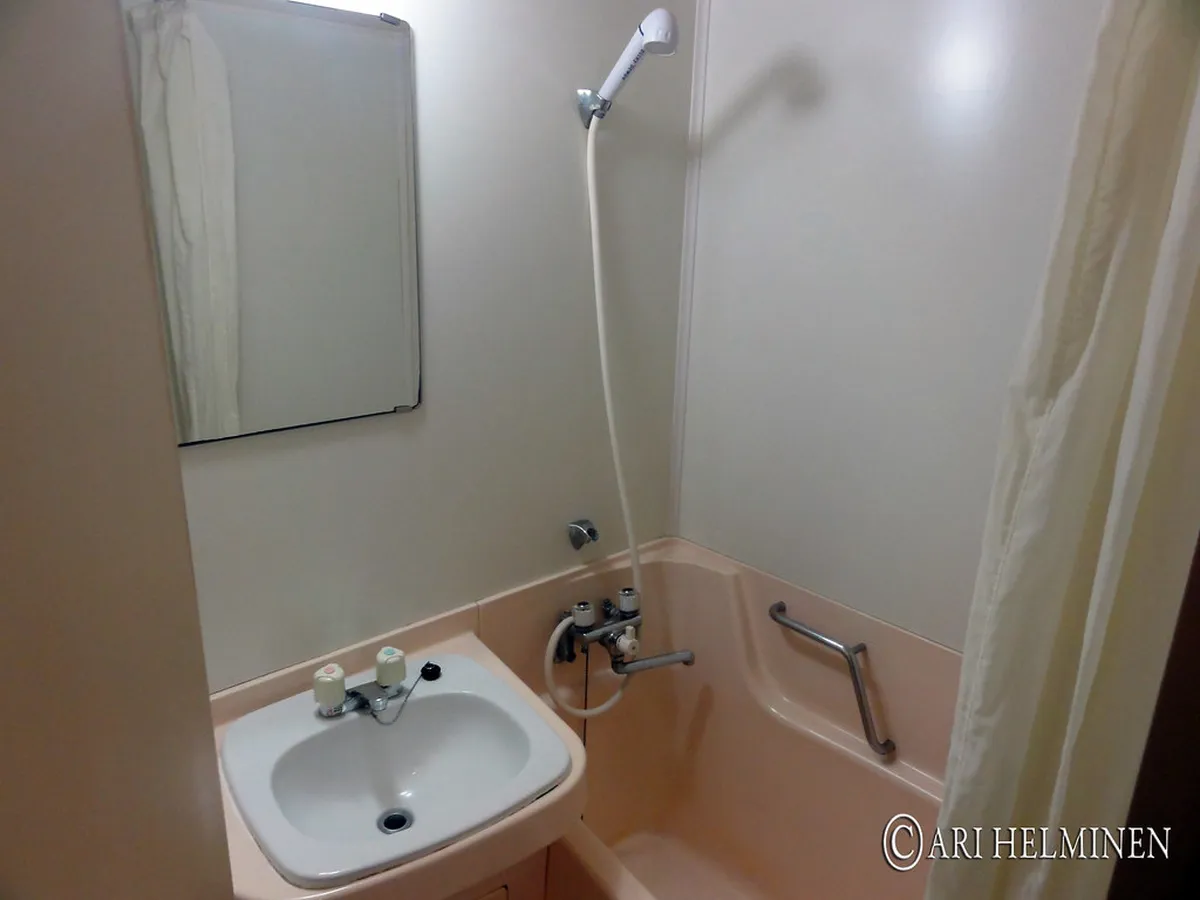
A ryokan is a traditional Japanese inn. Floors are tatami, beds are futons laid out at night, and dinner is kaiseki — a multi-course meal of seasonal and regional dishes served in your room. Hospitality is guided by omotenashi, an ethos of anticipating every need before it is expressed. Most ryokans include dinner and breakfast in the room rate, which makes the higher nightly price more comparable to a hotel + restaurant evening.
An onsen is simply a hot spring bath — it can be public or private, indoor or outdoor, in a ryokan or a Western-style hotel. When travellers search for a 8 Best Beppu Ryokan with Private Onsen, they are asking for both: the traditional inn experience and an in-room or in-villa bath fed by geothermal water. Most large resort hotels also have onsen, but the bathing is shared rather than private.
A kashikiri (private reserved bath) is the middle ground. Many hotels that do not include an in-room onsen allow guests to book a private bath room by the hour, usually at ¥1,000–¥2,000 per session. If a room-attached private bath is outside your budget, this is often a good alternative.
Top Beppu Hotels with Private Onsen (Ordered by Price)
| Property | Rate/night (approx.) | Meals included | Best for |
|---|---|---|---|
| Umino Hotel Hajime | ~$140 | None | Sea-view couples, budget |
| Beppu Yunosato Hayama | ~$171 | Breakfast | Groups, budget-conscious |
| Seaside Hotel Mimatsu Ooetei | ~$205 | Breakfast + dinner | Ocean-view priority |
| Galleria Midobaru | ~$230 | Breakfast | Design-minded travellers |
| Bettei Haruki | ~$240–$365 | Room only or kaiseki | Quiet adult retreat |
| Kannawaen | ~$510–$660 | Breakfast + dinner | Once-in-a-decade splurge |
The following hotels all include a private onsen attached to each guest room or villa — not simply a reservable shared bathroom. Rates are per night for two adults and are approximate 2026 prices; always confirm on the hotel's booking page before finalising. Beppu is significantly cheaper than Hakone or Nikko for equivalent private bath rooms, which starts around $140 USD here versus $280–$300 USD at comparable Hakone properties.
- Umino Hotel Hajime (~$140/night, no meals) — Budget pick. Semi-open-air ceramic onsen on the balcony with 180-degree views of Beppu Bay. Western bed options available alongside standard tatami rooms. Best for: couples who want sea views on a limited budget.
- Beppu Yunosato Hayama (~$171/night, breakfast included) — Traditional ryokan with tatami rooms and terrace onsen overlooking town. Three additional kashikiri baths available by reservation. Best for: groups up to six, budget-conscious travellers.
- Seaside Hotel Mimatsu Ooetei (~$205/night, breakfast and dinner included) — All private-onsen rooms face the ocean at 180 degrees. Public rooftop baths available for the classic Beppu Bay panorama. Best for: ocean-view priority, full-board stays.
- Yutorelo Beppu (~$210/night, breakfast and dinner included) — Six deluxe rooms with free-flowing ceramic onsen on the balcony. Separate kashikiri rooms bookable on arrival, first-come basis. Best for: couples wanting a modern feel with traditional bathing.
- Galleria Midobaru (~$230/night, breakfast included) — Architect-designed concrete and timber building where every room has a semi-open-air private onsen overlooking the bay. On-site art gallery, yoga, and cooking classes. Best for: design-minded travellers and couples.
- Bettei Haruki (~$240/night, room only; ~$365 with kaiseki dinner) — Adults-only boutique inn near the Haruki River. Semi-open-air baths on covered bamboo decks surrounded by greenery. Three reservable stone kashikiri baths. Best for: quiet adult retreat, autumn foliage season.
- Amane Resort Seikai (~$330/night, breakfast and dinner included) — Oceanfront resort with in-room ceramic tub onsen. The Junior Suite adds a private pool and jacuzzi and sleeps four. Best for: splurge stays, families, multi-couple groups.
- Beppu Showaen (~$435/night, breakfast and dinner included) — Detached Japanese-style villas connected by garden walkways. Each villa has indoor and outdoor stone onsen. Best for: families wanting the experience of living in a traditional Japanese home.
- Kappo Ryokan Yumesaki (~$465/night, breakfast and dinner included) — Architect-designed Kannawa district ryokan combining traditional sliding doors with modern comfort. One quadruple room with indoor private onsen; cypress and stone kashikiri baths for other rooms. Best for: food-focused travellers — the kaiseki here is exceptional.
- Kannawaen (Sanso Kannawaen) (~$510–$660/night, breakfast and dinner included) — Beppu's most luxurious option. Rooms overlook koi ponds and Japanese gardens. On-site facilities include a Noh theater stage, tea ceremony room, spa, gym, and four indoor public baths. Presidential Suite has a private pool (summer only). Best for: once-in-a-decade splurge, cultural immersion.
All ten properties accept tattoos in their private in-room baths since the water is for your exclusive use. For shared public baths at larger resort hotels, always confirm the policy directly — some have become more permissive since 2024, others have not.
Hyotan Onsen in Kannawa is the only hot spring in Japan to have received three Michelin stars and explicitly welcomes tattooed guests. Entry costs approximately ¥700–¥900 and the facility stays open until 01:00 — a good option for late arrivals from Fukuoka.
Additional Private Onsen Hotels Worth Considering in Beppu
If the ten hotels above are fully booked for your dates — private-onsen rooms are a limited inventory even at larger properties — these four additional options are worth checking directly with the hotel, since they rarely appear on the major English-language booking platforms.
- Terrace Midoubaru (~$185/night, breakfast included) — The more casual sibling property to Galleria Midobaru in the same Kannawa complex, with smaller semi-open-air private baths and the same bay views at a lower nightly rate. Best for solo travellers and design-conscious couples on a tighter budget.
- Kannawa Bettei (~$275/night, breakfast and dinner included) — A traditional ryokan annex a short walk from the Kannawa bus terminal, with stone in-room baths fed from a private well. Best for travellers who want to walk to the Seven Hells and Hyotan Onsen without a taxi.
- Amane Resort Gahama (~$320/night, breakfast and dinner included) — Sister property to Amane Resort Seikai, set slightly further along the coast with the same in-room ceramic tubs and a quieter shoreline. Best for repeat visitors who found Seikai already booked.
- Nagomitsuki (~$240/night, breakfast and dinner included) — A small eight-room ryokan with cypress private baths and a kaiseki menu built around Beppu-caught seafood. Best for travellers who prioritise food over facilities.
None of these four show up reliably on aggregator sites, so a direct phone or email booking — most Kannawa ryokans reply in English — is usually the fastest way to confirm a room.
Which District to Stay In: Water Chemistry and Neighborhood Feel
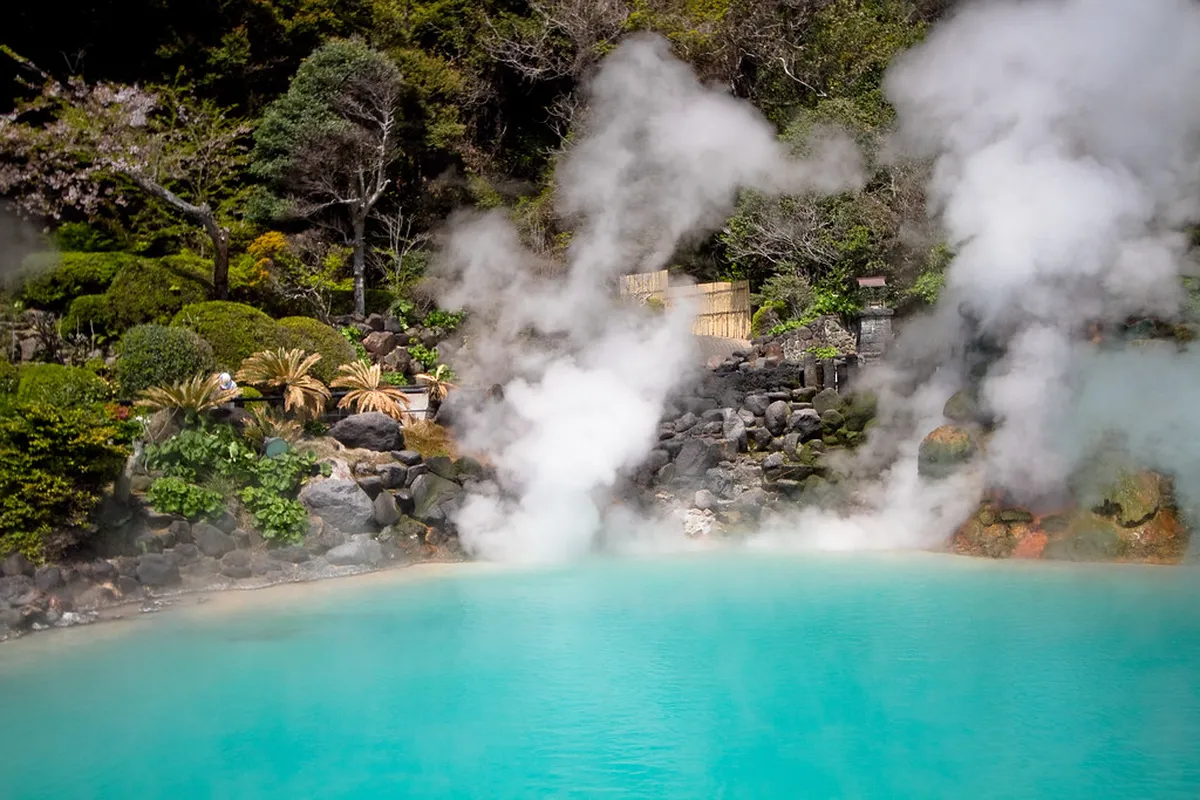
Most guides frame the Seaside vs. Mountains question as purely a scenery choice. The practical difference is also about water. Beppu's eight spring zones produce chemically distinct water, and that affects what the bath is actually good for — a fact no hotel comparison site covers in detail.
Hotels in the Kannawa zone sit above a bicarbonate-chloride spring. The water is nearly clear, slightly alkaline, and known for softening skin. This is the most atmospheric district — steam drifts across the lane-ways at dawn, the Seven Hells are walkable, and the food at Jigokumushi Kobo Kannawa is minutes away. If you want the full Beppu experience in one neighborhood, base yourself here.
Hotels in the Myoban zone, further uphill, draw sulfur-bicarbonate water. It runs milky white at around pH 2, leaves a faint sulfur smell on the skin, and is traditionally recommended for chronic joint pain and dermatitis. Myoban Yunosato has day-use baths for around ¥500 per adult, and the area is dramatically quieter than Kannawa. If you are staying in Myoban for the water quality, book a hotel there rather than relying on day-trips.
The Kitahama / seaside zone (where Umino Hotel Hajime, Seaside Hotel Mimatsu Ooetei, and Amane Resort are located) has simple sodium chloride spring water — clear, warm, and mild. The draw here is the ocean view and the proximity to Beppu Station for easy onward travel to Oita City or Fukuoka. Families and first-time visitors often find this area the most accessible.
When to Book: Seasonal Pricing and Availability in Beppu
Private-onsen rooms are scarce — most hotels on this page hold only a handful — so rates swing hard with the calendar. Expect a 20–40% premium over the prices quoted above during Japan's three peak windows: New Year (Dec 29–Jan 3), Golden Week (Apr 29–May 5), and Obon (Aug 13–16). Late March through early April, when Beppu Park's cherry blossoms are out, also books up fast even though the city is better known for autumn foliage.
Outside those windows, weekday stays (Sunday–Thursday) typically run 10–15% below Friday–Saturday rates at the same property. Most hotels above hold a free-cancellation window of three to seven days before arrival, but the smallest ryokans — six rooms or fewer, like Yutorelo Beppu — often require full prepayment with stricter, non-refundable terms. Confirm the cancellation policy before entering card details, since kashikiri and in-room onsen bookings are rarely refundable once the geothermal water has been piped in for your slot.
For a longer itinerary, many travellers arriving on the Sonic train break the journey with a night in Fukuoka first; see our guide to Fukuoka hotels by neighborhood for where to stay before continuing on to Beppu.
The Seven Hells (Jigoku): What to See and What to Skip
The Jigoku Meguri, or Hell Tour, visits seven extreme geothermal vents that are too hot or chemically hostile for bathing. They exist purely for viewing. A combined ticket covering all seven costs around ¥2,200 for adults and ¥1,000 for children (2026 prices). Individual tickets are around ¥450 per site, so the combined pass pays off if you visit more than five.
Umi Jigoku (Sea Hell) is the most famous — cobalt blue water at 98°C, fed by a spring discovered in 1712 after a volcanic eruption. It is beautiful but tends to fill with tour groups by mid-morning. Arrive before 09:30 or after 15:30. Chinoike Jigoku (Blood Pond Hell) runs a dramatic red from iron oxide and clay minerals. Tatsumaki Jigoku has a natural geyser that erupts every 30–40 minutes.
You can reasonably skip Kamado Jigoku and Oniyama Jigoku unless you are a thorough visitor — they are smaller and less visually striking. The free foot bath at Umi Jigoku is open to all visitors and is a good way to rest between sites. Check the full ticket breakdown for the Beppu Hells before you go, especially if travelling with children or seniors who qualify for reduced rates.
Ashiyu: Beppu's Free Foot Baths
Ashiyu are small public foot-soaking pools fed by the same geothermal water as the full baths. They are free to use, you stay clothed, and no towel is technically required (though bringing a small one is a good idea). For a traveller with tattoos who wants a genuine hot spring experience without worrying about public bath policies, ashiyu are the easiest option in the city.
The most convenient ashiyu are near Beppu Station (inside the station building itself and in the plaza outside), in the Kannawa district near the Mushiyu steam bath entrance, and at Umi Jigoku. Water temperatures vary — some run quite hot at around 42–45°C. Roll up your trousers, stay in for 10–15 minutes, and you will feel the difference in your legs after a long day of walking the Jigoku circuit.
Using an ashiyu is also a good social experience. Local residents stop here regularly, and the setting is informal enough that brief conversation happens naturally. It is one of the low-key moments in Beppu that packaged tour itineraries tend to skip entirely.
Steam Cooking and Steam Baths: Jigoku Mushi and Mushiyu
Jigoku Mushi (hell steaming) is cooking with geothermal steam rather than fire. The main public venue in Kannawa is Jigokumushi Kobo Kannawa, open 09:00–21:00 (closed Tuesdays). You choose your ingredients — chicken, shellfish, vegetables, sweet potato, pudding — pay at the machine, receive a basket and a timer, then carry your food into a room lined with wooden steam ovens. Staff help you load the basket and seal the lid. Chicken takes about 15 minutes, shellfish around 8 minutes. The mineral content of the steam gives a faint savory note that is impossible to replicate at home.
Mushiyu are steam baths rather than water baths. At Kannawa Mushiyu, you lie on a bed of sekisho herbs (Japanese sweet flag) inside a low stone chamber while steam rises through the floor. Sessions last about 10 minutes. Entry is approximately ¥520 and the facility is open 06:30–20:00 (last entry 19:30). It has been in continuous use for centuries and is considered the most historically significant public bath in Beppu. The heat is intense — arrive hydrated and do not attempt more than one session back-to-back.
If you want both experiences in one day without a hotel stay, pair them: cook lunch at Jigokumushi Kobo Kannawa, walk to Mushiyu for an afternoon session, then use the nearby ashiyu foot bath to cool down gradually. The entire loop is walkable from the Kannawa bus stop.
Family-Friendly and Budget Onsen Options
The most affordable full onsen experience in Beppu is Hyotan Onsen in Kannawa — the only hot spring in Japan with three Michelin stars. Entry costs approximately ¥700–¥900 for adults and ¥400 for children. The facility has sand baths, waterfall baths, mud baths, and a family-friendly layout that accommodates visitors who are not used to traditional single-sex public bathing. It stays open until 01:00, making it a good option after a late dinner.
Takegawara Onsen in central Beppu (established 1879) charges around ¥300 for the standard hot bath. The sand bath costs around ¥1,500 and includes a yukata rental. The Meiji-era wooden building is a striking piece of architecture. Lines for the indoor sand bath form quickly after 10:00, so arrive early. Children under 6 enter free.
Beppu Beach Sand Bath at Shoningahama beach runs around ¥1,500 for adults including the yukata. Staff bury you in naturally heated volcanic sand while you listen to the ocean. The outdoor setting makes this more comfortable for first-timers who find enclosed bathhouses intimidating. The experience lasts about 15 minutes before you are dug out and directed to a rinse shower. It is the only beachside sand bath in Japan and genuinely unusual — worth including even for travellers on a strict budget.
How to Get to Beppu and Getting Around
From Fukuoka (Hakata Station), the fastest option is the Sonic limited express train direct to Beppu Station — about 2 hours 10 minutes, ¥5,250 unreserved. The Sonic runs multiple times per day and requires no transfers. Alternatively, the highway bus from Fukuoka's Hakata Bus Terminal takes around 2 hours and costs ¥2,900–¥3,500, making it the budget choice.
From Oita Airport (for flights from Tokyo Haneda or Osaka Itami), the Airport Bus runs directly to Beppu Station in approximately 50 minutes at ¥1,500. From Tokyo, the flight to Oita takes around 1 hour 25 minutes from Haneda. If you prefer rail from Tokyo, the Shinkansen to Kokura (Hakata direction) followed by the Sonic express is around 6–7 hours total — practical only if you have a JR Pass.
Within Beppu, the My Beppu Free bus pass (¥1,000/day) covers unlimited rides on Kamenoi Bus routes across all major onsen districts including Kannawa, Myoban, and the Kitahama seaside zone. Day-trippers use it to reach the Seven Hells from the station without worrying about per-journey costs. The pass also includes discounts at several bathhouses and the Jigoku Meguri ticket windows. It is sold at Beppu Station's tourist information counter and through major accommodation. For a full breakdown of bus routes and the transportation options available, see our Beppu Transportation Guide: How to Get Around the Onsen Capital.
Onsen Etiquette and Tattoo Policy in 2026
The My Beppu Free bus pass (¥1,000/day) covers unlimited rides across all major onsen districts including Kannawa and Myoban, but it must be purchased at Beppu Station's tourist information counter. It is not available online or at the bus stops themselves.
The core rules of public onsen etiquette: wash and rinse thoroughly at the seated shower stations before entering the bath, do not bring a towel into the water, keep your voice low, and do not submerge your head. Entering the bath without washing first is the one action that will draw immediate and warranted disapproval from other bathers.
On tattoos: the safest option in any public bath remains a hotel or facility that explicitly states it is tattoo-friendly. Hyotan Onsen accepts tattooed guests. Most of the private-bath ryokans listed above do so by default since no other guests share the water. If you are booking a hotel with shared public facilities and carry visible tattoos, email ahead — many properties in Beppu have softened their policies since 2024 in response to international visitor volumes, but confirmation before arrival prevents awkward situations.
A practical tip for solo travellers who feel uncertain about public bathing for the first time: the ashiyu foot baths and Beppu Beach Sand Bath are both fully clothed experiences that provide a genuine hot spring encounter with no undressing required. Use them on your first day to get comfortable with the culture before committing to a full public bath.
Plan your wider Beppu trip
For the full city overview, browse our Beppu attractions guide. For complementary depth, see our 10 Best Ryokan in Beppu: Top Onsen Stays & Guide as well.
Related Beppu deep-dives
For complementary depth, see our Hyotan Onsen guide, 7 Hells of Beppu Overview: Essential Tips for Your Visit.
Frequently Asked Questions
Are tattoos allowed in Beppu onsen hotels?
Most private onsen in ryokans are tattoo-friendly since the bath is for your exclusive use. Some public bathhouses like Hyotan also allow tattoos. Always check the specific hotel policy before booking your stay.
How many days should I spend in Beppu?
Two to three days is ideal for experiencing the major hot springs and the Seven Hells. This timeframe allows you to enjoy a luxury ryokan stay and explore the Kannawa district. Longer stays are great for hiking Mount Tsurumi.
What is the best time of year to visit Beppu?
Winter is the best season because the steam from the hot springs is most visible in the cold air. Autumn is also popular for the beautiful foliage in the surrounding mountains. Summers can be quite humid and hot.
Beppu offers a thermal experience that you simply cannot find anywhere else in the world. From the milky sulfur baths of Myoban to the architect-designed private onsen at Galleria Midobaru, there is a stay for every traveller. Use the district chemistry section to match your hotel to the water type you are actually looking for, not just the view.
Book private-onsen ryokans as early as possible — the best rooms at Kannawaen and Kappo Ryokan Yumesaki fill months ahead of peak autumn and winter seasons. The healing waters of Kyushu are waiting to rejuvenate your body and spirit.
Free: The Beppu Essentials guide
Top things to do, where to stay, a perfect day plan, getting around, and the best time to go — a Beppu mini-guide you can take offline.
You might also like


Continue reading
More guides you'll find useful


