12 Best Ryokan in Yufuin: Top Onsen and Stay Guide (2026)
Discover the best ryokan in Yufuin for 2026. From luxury private onsen with Mt. Yufu views to budget-friendly traditional stays near the station.
On this page
Yufuin sits in a quiet valley beneath the twin peaks of Mount Yufu, and it remains one of Japan's most beloved onsen towns for a reason. Unlike the crowded bathhouses of nearby Beppu, this Oita Prefecture escape rewards visitors who slow down. The best way to do that is to stay in a traditional ryokan. Finding the best ryokan in Yufuin means looking beyond star ratings and focusing on water quality, meal style, and your tolerance for shared versus private bathing.
Most visitors arrive on the iconic Yufuin no Mori scenic train from Fukuoka — a two-and-a-half-hour journey through cedar forests that already sets a meditative tone before you reach the platform. What follows is a guide to twelve properties that cover every budget, group size, and bathing preference, refreshed in 2026 with current pricing and availability notes.
Yufuin Onsen: Kyushu's Premier Hot Spring Escape
The thermal waters here rank second in Japan for sheer discharge volume, which means almost every property channels fresh, free-flowing water rather than recycled or diluted supply. The springs are sodium bicarbonate in composition — clear, odorless, and famously gentle on the skin. You will notice the water feels slightly slippery, which regular visitors associate with a deep cleanse rather than chemical treatment.
Mount Yufu provides a dramatic backdrop that changes with each season. In autumn the slopes turn deep crimson and gold, making October and November the single most competitive booking window of the year. Spring brings cherry blossoms along the Oita River, while summer evenings see fireflies near the waterways. Walking toward Lake Kinrin at dawn, when low mist rolls across the water with Mt. Yufu silhouetted behind it, is the town's signature image — and the reason several of the ryokan below are specifically positioned to make that walk a two-minute stroll from your front door.
The town is compact. From Yufuin Station to the far end of Yunotsubo Street takes roughly twenty minutes on foot. Most ryokan are clustered in two zones: the central area around the station and the quieter lakeside area near Lake Kinrin. Choosing between them is the first real decision you make, and it shapes your entire stay.
The Charm of Rooms with Private Hot Springs
Traditional public onsen in Japan are gender-segregated, which means couples and families must separate before entering the water. Private baths — called kashikiri when they are communal facilities reserved by the hour, or heya-buro when they are attached directly to a guest room — remove that constraint entirely. This is the most common reason first-time ryokan visitors cite for wanting to upgrade their bath type.
There are three distinct bath categories you will encounter across Yufuin's ryokan. Public baths (either communal or divided by gender) are typically included in the base rate and are open on a fixed schedule. Kashikiri baths are bookable private rooms, often included in the rate, available for 45-minute to one-hour slots. In-room baths — either indoor, outdoor, or both — are attached to a specific guest room and can be used at any time of night or day. The pricing premium for in-room baths over kashikiri is significant, often adding ¥10,000–¥20,000 per person to the nightly rate.
For solo travelers and budget visitors, a property with multiple kashikiri options delivers the private experience without committing to a luxury room. For couples on a milestone trip or travelers with tattoos (most public baths still decline entry), in-room baths are the right answer. Understanding which bath type a property offers changes the value calculation completely.
Kashikiri (reservable private) baths are often included in the base room rate, while in-room baths carry a premium. If privacy matters but budget is tight, look for properties with multiple kashikiri options.
Onsen Hinoharu Ryokan: Central Tradition
Best for: Couples seeking a full half-board experience near Yunotsubo Street.
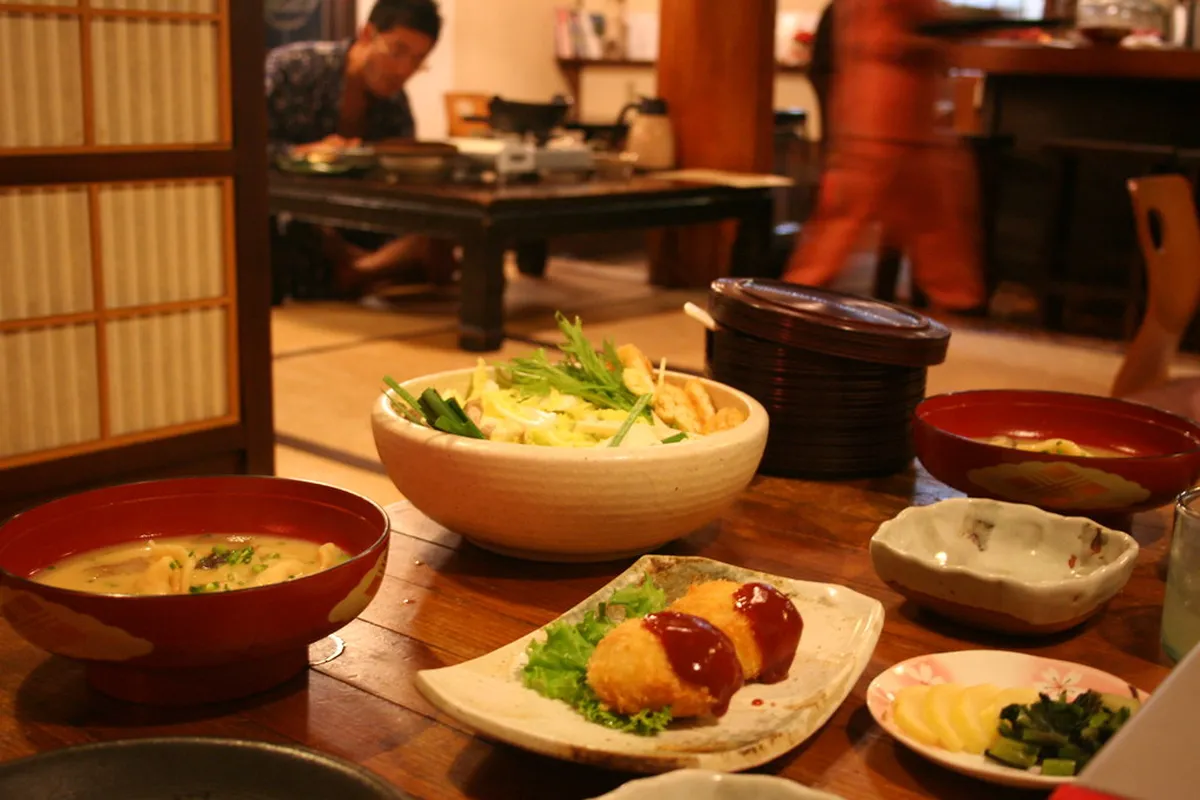
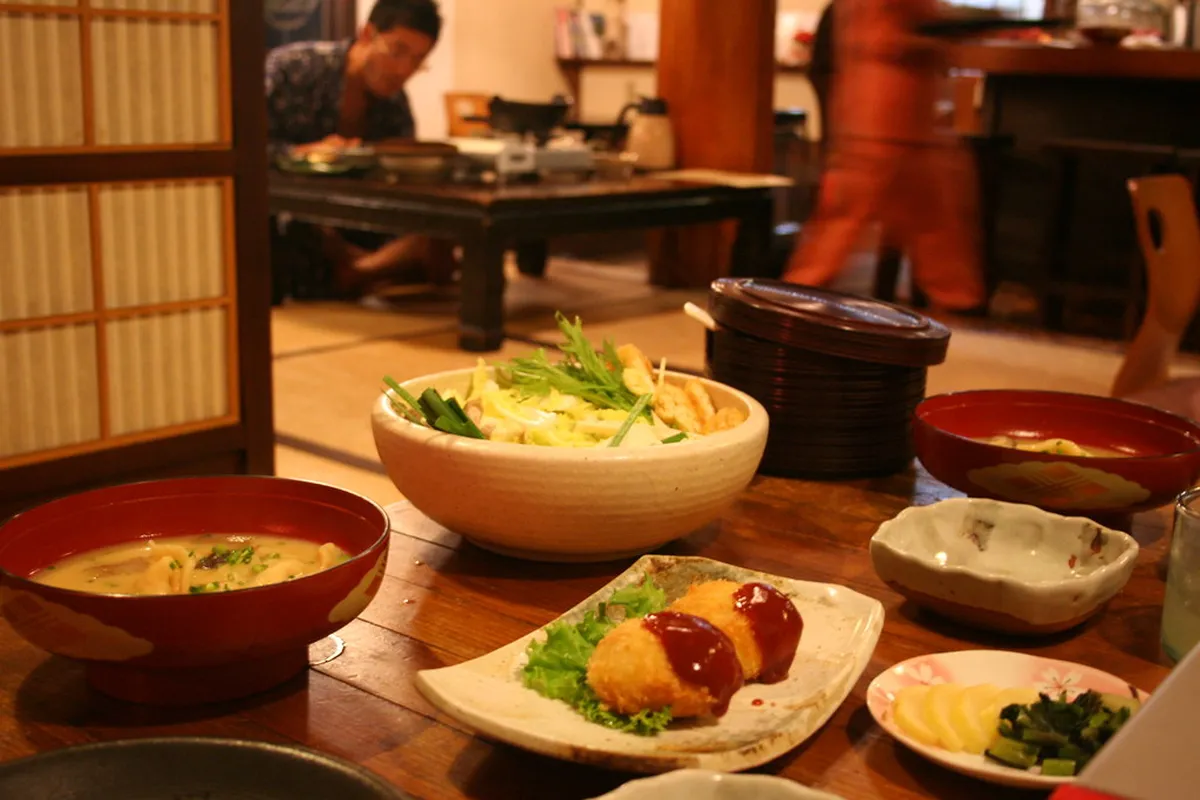
Hinoharu occupies a prime position in the center of town, a ten-minute walk from the station and close to the main shopping strip. The historic stone-paved entrance paths and tatami-floored rooms deliver a classic ryokan atmosphere without requiring a taxi. Breakfast and dinner — a kaiseki set using seasonal Oita produce and local wagyu — are served in the dining hall, making this the most approachable full-board option for first-timers.
The outdoor baths are beautiful, fed directly from the local spring source. Private kashikiri baths are available for reservation at check-in. Expect to pay ¥30,000–¥55,000 per person per night, including two meals. Check-in is at 15:00; check-out at 10:00.
Pro tip: Ask about rooms facing the inner garden — they tend to be quieter and have a better view than the street-facing options.
Ryokan Kotonokashin: Authentic and Accessible
Best for: First-time ryokan visitors and budget-conscious travelers.
Kotonokashin sits tucked in a quiet alley about ten to fifteen minutes on foot from the station. The tatami rooms are simply furnished — futon on the floor, low lacquered table, yukata in the closet — which gives a purer introduction to the ryokan format than some of the more boutique properties. The onsen area features two private baths (one open 24 hours, one open 06:30–03:00) that guests can use by locking the door, making it suitable for travelers with tattoos or anyone uncomfortable with communal bathing.
One important detail: meals at Kotonokashin are served in a communal restaurant-style dining area rather than in your room. Some guests find this disappointing if they expected in-room service, so set expectations accordingly. Rates without meals run from approximately ¥15,000 per night for two; meal plans are available at additional cost. Check-in is at 15:00.
Pro tip: The property is tricky to find on first arrival. Show the driver your booking confirmation printout — local taxi drivers recognise the inn immediately and will take you directly there from the station for around ¥1,000.
Yufu no Iro YADOYA Oohashi: Adults-Only Luxury
Best for: Couples seeking maximum privacy and seclusion.
This adults-only retreat on the edge of town is designed around the concept of total privacy. Every guest room includes both an indoor and an outdoor private onsen — no reservations, no timeslots, no shared facilities. The surrounding gardens buffer each room from neighbors, and the property accepts no children. It is the correct choice if your primary goal is soaking at 02:00 without planning around anyone else's schedule.
The property is a short taxi ride from the station, which adds a small practical friction point. Meals are kaiseki style and served in-room, preserving the private atmosphere through dinner. Rates typically fall between ¥42,000–¥75,000 per person including two meals. Check-in is at 15:00; check-out at 11:00.
Ryotei Tanokura: Premium Cypress Baths
Best for: Food-focused travelers and those who want the finest cypress bath in town.
Tanokura earns its reputation primarily through two things: the quality of its seasonal cuisine and the outdoor cypress (hinoki) baths, which fill the air with a clean, woody scent that rivals any aromatherapy treatment. The property sits near the end of the main shopping street, within walking distance of Lake Kinrin. Deluxe rooms come with a private outdoor cypress bath; standard rooms access the communal outdoor baths, which are still excellent.
Kaiseki dinners here lean heavily on seasonal wild vegetables alongside Oita beef, and the spring bamboo shoot courses are considered among the best in the region. Expect to pay ¥36,000–¥62,000 per person with meals. If visiting in spring, book the bamboo shoot season — March through May — for the best of the kitchen.
Pro tip: Spring bamboo shoot dishes (takenoko) are available March through May and represent some of the finest seasonal cooking in the valley.
Kanrogi no Yado Nanakawa: Modern Lakeside Elegance
Best for: Couples who want to catch the Lake Kinrin morning mist without leaving the neighbourhood.
Nanakawa's location — a two-to-three minute walk from Lake Kinrin — is its defining advantage. The famous morning mist that rolls across the lake at dawn, especially from October through February, is visible from the ryokan's own grounds. Guests who stay here can reach the lake shore before the day-trippers arrive and before the mist burns off, typically between 07:00 and 09:00.
The design blends contemporary comfort (western-style beds are available for guests who struggle with futon sleeping) with traditional Japanese aesthetics. In-room private baths are available in selected rooms. Rates generally run ¥34,000–¥58,000 per person including meals. Check-out is at 11:00, giving guests time for one final morning soak before departing.
Pro tip: This is the top pick for catching the iconic Yufuin morning mist. Book a lake-facing room and set your alarm for 06:30.
Yufuin Santokan: The Gourmet Choice
Best for: Travelers for whom kaiseki quality is the deciding factor.
Santokan draws food-focused visitors who want award-level kaiseki without flying to Kyoto. The kitchen highlights Oita's seasonal bounty — local seafood, mountain vegetables, and aged wagyu — across ten to fourteen courses per dinner service. Meals are served in-room, preserving the privacy of the experience. The sake selection is curated specifically to pair with the nightly menu, and the staff can arrange a local sake pairing on request.
Rooms are spacious with large windows overlooking a lush inner courtyard. The property is centrally located and walkable from the station. Rates run ¥38,000–¥68,000 per person with both meals. The higher-tier room categories also include private outdoor baths.
Yufuin Akarinoyado: Best for Solo Travelers
Best for: Solo travelers and budget-conscious visitors who still want private bath access.
Akarinoyado sits five minutes on foot from the station entrance, making it the most convenient property on this list for travelers arriving by train with heavy luggage. The private baths can be reserved at check-in at no extra charge — a significant advantage over properties where kashikiri baths carry an additional fee. Reserving an afternoon slot after a full day of walking Yunotsubo Street makes for a genuinely restorative mid-trip soak.
The rooftop terrace offers one of the clearest views of Mt. Yufu in the central town area. Rooms are clean and modern rather than traditional, which may disappoint guests seeking full tatami immersion, but the value proposition is hard to beat. Nightly rates run ¥10,000–¥18,000, with optional meal plans available.
Enokiya Ryokan: Top Pick for Families
Best for: Families with children, including pet-friendly stays in specific rooms.
Enokiya is one of the few Yufuin ryokan that explicitly accommodates families traveling with children and allows pets in designated rooms. The larger layout includes both communal baths and reservable private family baths — practical when you need to bathe young children without navigating a gender-separated public facility. The riverside setting provides a constant backdrop of running water that guests consistently find calming.
Meals are served in a communal dining area, which keeps costs lower than fully in-room service properties. Rates typically run ¥18,000–¥30,000 per person including meals, making it one of the better-value full-board options. Check-in is at 15:00. The lobby fireplace is an excellent gathering point during winter evenings.
Yuhuroten Toki No Manimani: Best for Large Groups
Best for: Large groups and extended families wanting a self-contained holiday home feel.
Toki No Manimani operates more like a holiday home than a conventional ryokan — the property is positioned right by the train station with a secluded forest setting that insulates guests from the town bustle. Multiple bathing options accommodate large groups without queuing conflicts. A complimentary shuttle service from the station is typically available on request.
The outdoor terrace is one of the best stargazing spots in the area, unaffected by significant light pollution. Group rates average ¥25,000–¥42,000 per person including breakfast. The property works best for groups of six or more who want the flexibility of a shared space rather than multiple separate ryokan rooms.
Kamenoi Bessou: Luxury in a Forest Setting
Best for: Travelers seeking the most iconic Yufuin estate experience.
Kamenoi Bessou is considered one of the "big three" elite ryokan in Yufuin, set within a 30,000-square-meter forested estate near Lake Kinrin. The detached cottage-style rooms offer maximum privacy — each villa is essentially its own world within the grounds. It is a place where guests tend to book far in advance, often over six months out for autumn and Golden Week dates.
Kaiseki dinners and breakfasts are served in-room. The on-site shop sells local jams, pottery, and handmade crafts. Premium rates start around ¥62,000 per person and exceed ¥110,000 during peak seasons. It is not a property for spontaneous bookings.
Sansou Murata: Artistic and Unique Design
Best for: Design and art enthusiasts willing to pay top-of-market rates.
Sansou Murata relocates traditional farmhouses from across Oita Prefecture and reassembles them as private villas on its mountain grounds. Each villa is uniquely decorated with original art pieces and features its own private hot spring bath. The aesthetic is unlike any other ryokan in the valley — part museum, part retreat. The on-site bar "The Theo" maintains an extensive rare whisky collection that becomes a destination in itself for whisky travelers.
All meals are served in-room with kaiseki menus that change seasonally. Rates range from ¥75,000–¥140,000 per person. This is the highest price point on this list and requires the most advance planning — the villas book up six to nine months ahead of major seasons.
In-Room Kaiseki vs Communal Dining: Which to Choose
This distinction rarely appears in Yufuin accommodation guides but it is one of the most practical decisions you will make. In-room kaiseki — where the meal is served in your tatami room by a dedicated attendant across multiple courses — is the full traditional ryokan experience. It is slow, private, and ceremonial. Properties that offer it include Yufu no Iro YADOYA Oohashi, Sansou Murata, Kamenoi Bessou, and Yufuin Santokan.
Communal dining halls, by contrast, seat guests at tables in a shared restaurant space. The food quality can be equally high — Enokiya and Onsen Hinoharu Ryokan both produce excellent kaiseki — but the atmosphere shifts from intimate to social. For solo travelers, communal dining occasionally offers the chance to meet other guests. For privacy-focused couples, it removes the seclusion that justifies the ryokan premium in the first place.
Ryokan Kotonokashin is the most important example to note here: it is frequently booked by first-time visitors expecting in-room service, only to find that meals are served in a dining area. Confirm the meal format with any property before booking if in-room dining is a priority for you. It is not listed on all booking platforms clearly.
Essential Tips for Booking Your Yufuin Stay
The booking window for Yufuin's best ryokan is one of the tightest of any onsen destination in Japan. Top properties during autumn foliage (October–November) and Golden Week (late April–early May) sell out three to six months in advance. Weekends year-round are nearly as competitive. If you are planning a specific-date stay at a first-choice property, booking five to six months ahead is not excessive — it is necessary.
Top ryokan in Yufuin sell out three to six months in advance for weekends and peak seasons like autumn. Booking late risks finding only budget or off-site options remaining.
Mid-week stays from Tuesday through Thursday are significantly easier to book and sometimes carry lower rates. If your dates are flexible, shifting a two-night stay to Wednesday–Friday opens up properties that would otherwise show unavailable. The Best Time To Visit Yufuin Travel Guide guide can help you weigh seasonal trade-offs before locking in dates.
Dietary restrictions and allergies must be communicated at the time of booking, not on arrival. Ryokan kitchens prepare kaiseki menus several days in advance based on seasonal market availability. Vegetarian requests are accommodated at most properties — Oita's vegetable culture is strong — but require advance notice of at least a week. Shellfish and severe allergen restrictions need even more lead time. Waiting until check-in to mention a dietary need almost guarantees a limited or modified meal that disappoints.
Most ryokan offer a shuttle from the station if you call on arrival. Walking is manageable if luggage is light. The Fukuoka to Yufuin: 8 Essential Travel Tips and Transport Options train route via the Yufuin no Mori is the most pleasant approach — the journey takes approximately two and a half hours and the reserved seats sell out quickly on weekends, so book that alongside your ryokan.
| Ryokan | Best For | Bath Type | Meal Style | Price Range (per person) |
|---|---|---|---|---|
| Onsen Hinoharu Ryokan | Couples, first-timers | Communal + kashikiri | Communal dining hall | ¥30,000–¥55,000 |
| Ryokan Kotonokashin | Budget travelers | Private kashikiri (2 baths) | Communal dining hall | ¥15,000+ |
| Yufu no Iro YADOYA Oohashi | Couples, adults-only | In-room (indoor + outdoor) | In-room kaiseki | ¥42,000–¥75,000 |
| Ryotei Tanokura | Food lovers | Communal + private cypress | In-room kaiseki | ¥36,000–¥62,000 |
| Kanrogi no Yado Nanakawa | Couples, lake views | In-room (selected rooms) | In-room kaiseki | ¥34,000–¥58,000 |
| Yufuin Santokan | Foodies | Communal + private (high-tier rooms) | In-room kaiseki | ¥38,000–¥68,000 |
| Yufuin Akarinoyado | Solo travelers, budget | Kashikiri (no extra charge) | Optional meal plan | ¥10,000–¥18,000 |
| Enokiya Ryokan | Families, pets | Communal + private family bath | Communal dining hall | ¥18,000–¥30,000 |
| Yuhuroten Toki No Manimani | Large groups | Multiple communal | Breakfast included | ¥25,000–¥42,000 |
| Kamenoi Bessou | Luxury estate | In-room | In-room kaiseki | ¥62,000–¥110,000+ |
| Sansou Murata | Design / art | In-room private | In-room kaiseki | ¥75,000–¥140,000 |
Frequently Asked Questions
How far in advance should I book a ryokan in Yufuin?
You should book at least 3 to 6 months in advance, especially for popular properties or weekend stays. Peak seasons like autumn and the New Year holiday sell out even earlier. Mid-week bookings offer more flexibility.
Are tattoos allowed in Yufuin onsen?
Many traditional public baths still have restrictions on tattoos, but private onsen are perfectly fine. Booking a room with a private bath or using a kashikiri bath ensures you can soak without any issues.
Do I need to bring my own yukata to the ryokan?
No, almost all ryokan provide yukata robes for guests to wear during their stay. You can wear these to the baths, to dinner, and even for a walk around the immediate neighborhood. Sizes are usually provided in the room.
Choosing the right ryokan is the most important decision you will make for your Yufuin trip. The water is the constant — mineral-rich, fresh, and extraordinary regardless of which property you choose. What differs is the meal style, bath format, location, and price. Match those variables to your group and your expectations will be exceeded. See our Yufuin Onsen guide to plan the rest of your trip.
Book early, communicate dietary restrictions upfront, and plan at least two soaks per day to fully appreciate what the springs offer. Yufuin remains one of Japan's most peaceful escapes, and it rewards guests who arrive with no particular agenda other than slowing down.
Free guide: Japan's Hidden Gems
12 under-the-radar places beyond Tokyo & Kyoto — with the best season to visit each and a local tip you won't find in the guidebooks.
You might also like


Continue reading
More guides you'll find useful