Yufuin Food Guide: 10 Best Places to Eat (2026)
Discover the best Bungo beef, street snacks, and lakeside cafes with our Yufuin food guide. Plan your 2026 trip with prices and local tips.
On this page
Fukuoka's nightlife may get the attention, but Yufuin's food scene is the best reason to linger longer than a day trip. This quiet onsen town in Oita Prefecture has built a culinary identity around one thing done exceptionally well: Bungo beef. But surrounding that flagship ingredient is a dense ecosystem of artisanal snack stalls, handmade soba shops, cheesecake specialists, and lakeside cafes that reward anyone willing to explore beyond the main tourist thoroughfare. Compared to Tokyo's fast-paced dining scene, Yufuin encourages lingering.
One mistake most first-timers make is sticking to the convenience shops near the station for lunch. The real culinary action runs along Yunotsubo Street and the paths toward Lake Kinrinko, where small producers sell directly to walkers. Most shops here close by 17:30, so the rhythm of eating in Yufuin is fundamentally different from a city — plan your main meal at midday, not in the evening.
Planning your meals around the Yufuin no Mori train schedule is a smart tactical move. The limited express arrives at noon, flooding popular lunch spots with day-trippers. If you follow a The Perfect 2-Day Yufuin Itinerary: 10 Essential Stops and eat at 11:00 sharp, you sidestep the worst of the queues and secure a seat at the most coveted tables.
Bungo Beef: Oita's Most Prized Wagyu
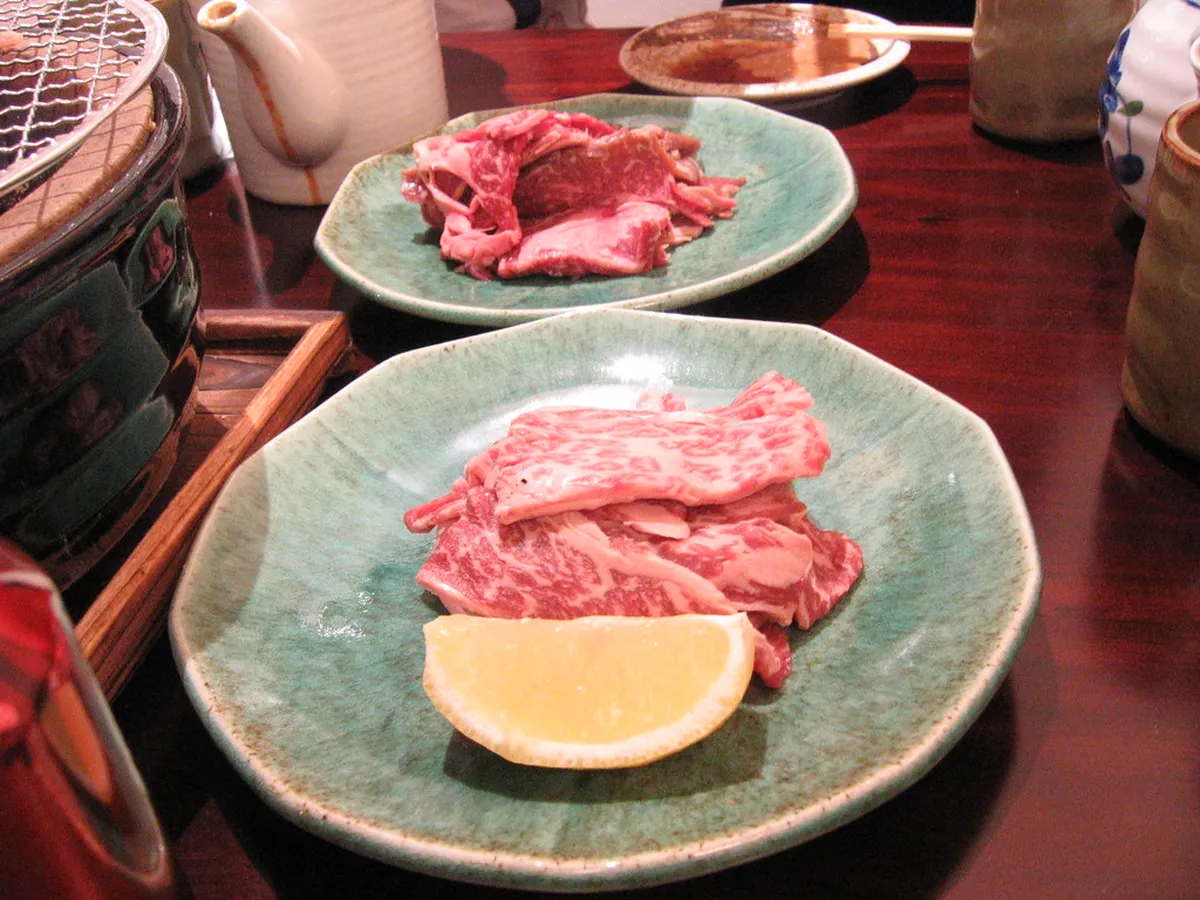
Bungo beef is the culinary centerpiece of the entire Oita region, and Yufuin is the best place to eat it. This premium wagyu must meet strict marbling and grading standards set by the Oita Wagyu Promotion Council before it earns the Bungo name. The result is a beef with exceptional fat distribution and a sweetness that distinguishes it from better-known Kobe or Matsusaka varieties. You pay less for it here than you would in Tokyo, which makes Yufuin genuinely good value for high-grade wagyu.
The most popular format is the clay pot rice preparation called mabushi. Bungo beef is grilled over charcoal, sliced, and served over rice in an earthen pot alongside small side dishes. What competitors rarely explain is that the correct way to eat mabushi involves three stages: eat the first bowl plain to appreciate the beef's natural flavor, add condiments like wasabi and pickled plum for the second bowl, then pour hot dashi broth over the remaining rice for a final ochazuke finish. Skipping any stage means missing the full experience the kitchen designed.
For high-end steaks and hamburgers, a handful of grill restaurants in the town center serve thick-cut Bungo beef cooked over bincho charcoal. Dinner sets typically run ¥7,000–¥12,000 per person. Lunch steak sets at the same restaurants cost roughly half that, making the midday window the smarter choice for budget-conscious travelers who still want the full beef experience.
Yufu Mabushi Shin: How to Eat There Without Wasting Time
Yufu Mabushi Shin, located near the station on the road toward Yunotsubo Street, is the restaurant most visitors specifically travel to Yufuin to eat at. The set meal — Bungo beef clay pot rice with soup, pickles, and condiments — runs approximately ¥3,500–¥4,500 depending on the grade of beef chosen. The shop opens at 11:00 and stops seating once ingredients are exhausted, which routinely happens by 14:30.
The practical advice most guides skip: arrive by 10:30 and join the queue before the doors open. The first seating accommodates a limited number of covers, and anyone who arrives after 12:00 on weekends faces waits of 60–90 minutes or is turned away entirely. On weekdays, an 11:00 arrival is usually sufficient. If the Shin location is full, the brand operates a satellite location near Yufuin Station with the same menu — less atmospheric but the identical food.
The three-stage eating method described above is printed on most menu cards at Shin, but the Japanese text is easy to overlook. Ask staff to walk you through it at the start — they are accustomed to explaining it to foreign visitors and will demonstrate with the condiment tray.
Street Food Walking Along Yunotsubo and Beyond
The most satisfying way to eat in Yufuin is to walk and graze rather than sit down for multiple formal meals. Yunotsubo Street — the pedestrian shopping lane that runs between the station and Lake Kinrinko — concentrates the best street food within a 1.2 km stretch. Budget two to three hours to cover it properly. Most stalls accept only cash, so carry small-denomination yen notes from the start.
The standout street snack is the Kinsho Croquette. These are fried fresh to order, with a creamy potato interior mixed with local Bungo beef and seasoning. A single croquette costs around ¥200–¥300 and is consumed standing outside the stall. The queue moves fast. Nearby, Milch serves miniature cheesecakes in both warm and cold versions at about ¥200 per cup. The hot version has a molten center that is genuinely different from the chilled option — get one of each.
Rice-ball cafe Tabimusubi, located close to the station, is worth the stop before you begin walking. The onigiri are made with Oita-grown rice cooked daily in a traditional iron pot, then hand-formed around fillings like chicken tempura or spicy cod roe. Most onigiri cost ¥300–¥500 and make an excellent breakfast or first snack of the day. The shop also does takeout, so you can carry one for the walk.
Further along, Yunotsubo Yokocho is the alley within the street that contains the highest density of vendors — grilled squid, soy-glazed dango, seasonal soft serve. Small plates here run ¥400–¥800 each. Eat slowly, compare stalls, and avoid the generic souvenir cookie sets near the station entrance — they are mass-produced and priced for tourists who have not walked the street yet.
Handmade Soba, Local Lunch Spots, and Budget Options
Ancient Rite Handmade Soba Noodles Spring sits directly in front of Lake Kinrinko and is one of the few restaurants in Yufuin that earns both the scenic view and the quality of food to back it up. The kitchen uses 100 percent buckwheat flour stone-milled daily, selected from Aizu and Ibaraki-grown grains and washed with local charcoal-filtered groundwater. The resulting noodle has a firm, earthy texture that is noticeably different from the softer supermarket-grade soba served at less serious restaurants. A cold seiro set runs ¥1,200–¥2,000; add tempura for around ¥600 more.
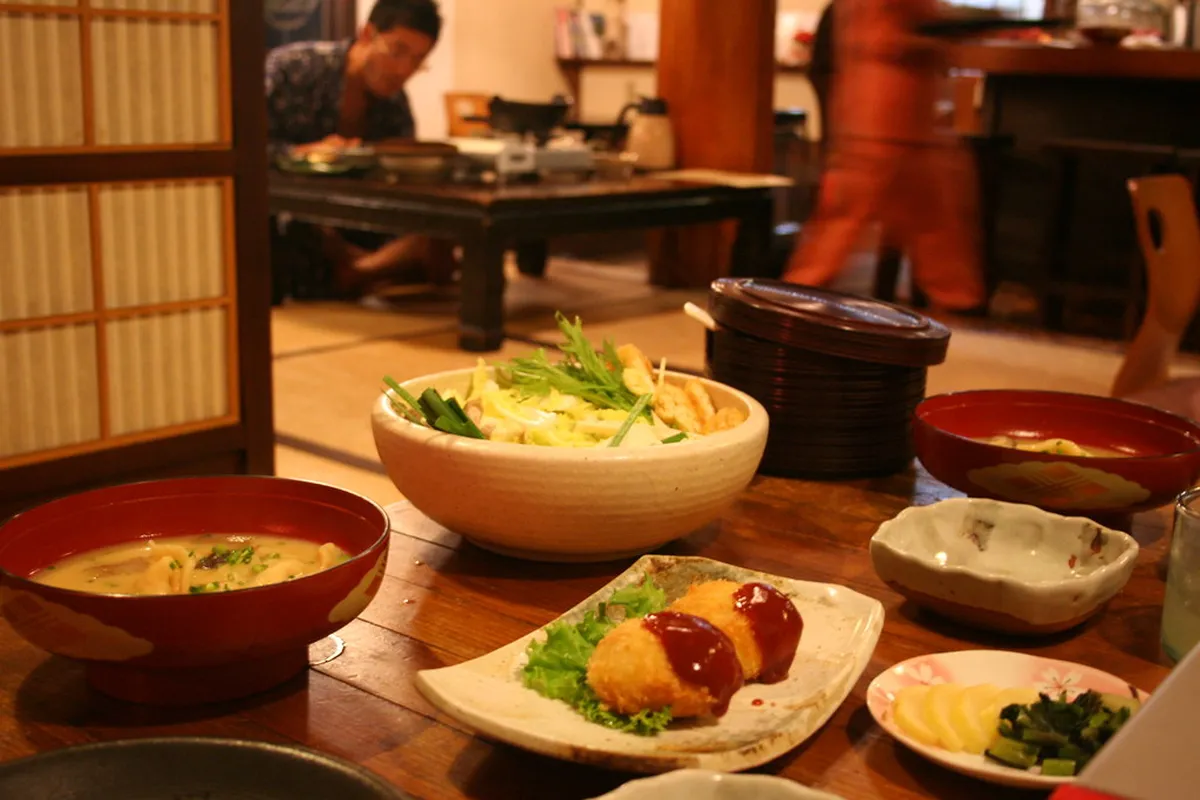
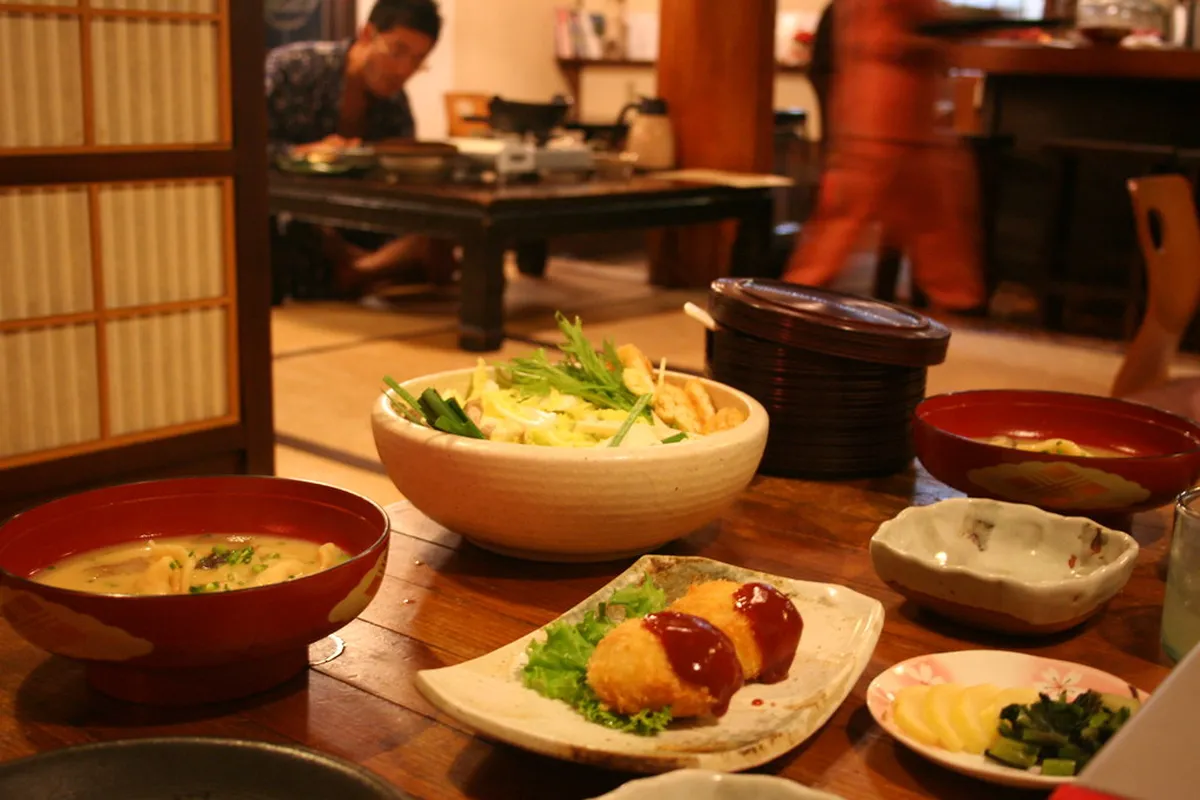
For a genuinely local experience that most foreign visitors miss, Yufuin Restaurant of Sweets (Amamichaya) serves Oita home-style cooking inside a 130-year-old farmhouse relocated and rebuilt on site. The house set meal — called the home set — includes regional specialties like chicken nanban and dumplings prepared with flat wheat flour in the Oita style. Prices are around ¥1,200–¥1,800, making this the best-value sit-down lunch in town for anyone seeking something other than beef.
Rice-ball Cafe Tabimusubi doubles as a quick option for those who want lunch without queuing. The menu runs until late afternoon, and the outdoor seating faces the mountains. If popular fillings sell out before you arrive, the salt and pickled plum versions are always available and satisfy the core experience of what makes Japanese onigiri worth eating.
Cafés Around Lake Kinrinko: Spend Time by a Mystical Lakeside
The area surrounding Lake Kinrinko operates on a slower frequency than the shopping street. Mist rises from the water during cold mornings, creating a backdrop that is disorienting in the best way. Arriving before 09:00 means experiencing the lake without tour bus crowds — by 10:30, the paths fill quickly. The shopping street is five minutes away by foot, so the lake makes a natural start or end point for your walking route.
Café La Ruche is the most established lakeside option, serving European-style pastries alongside locally roasted coffee. The outdoor terrace is heated in winter. Prices are moderately higher than street stalls — a coffee and pastry set runs around ¥900–¥1,400 — but the location justifies it. The Ancient Rite soba shop (above) shares the lakefront and opens at 11:00, meaning you can do coffee first, walk the lake path, then transition straight to a soba lunch without moving your car or doubling back.
Smaller tea houses are tucked into the trees along the northern edge of the lake. These serve matcha alongside seasonal wagashi — traditional sweets made from bean paste — usually for ¥600–¥900 per set. Few have English menus. A translation app handles the menu easily, and staff in these spots are patient with international visitors. The quiet here is the point: sit, look at the water, and resist the urge to rush back to the shopping street.
Yufuin Floral Village and Family-Friendly Food Stops
Yufuin Floral Village is a themed retail area off the main walking path that skews toward families and fans of whimsical architecture. Beyond the shops, it contains several small food stalls selling owl-shaped cookies, fruit ice creams, and seasonal sweets. Prices generally run ¥300–¥700 per item. The Floral Village opens at 09:30 and closes at 17:30 daily, matching the rhythm of the rest of the town.
For families with young children, the Floral Village food stalls offer the most approachable eating environment in Yufuin — easy to enter, easy to exit, no language barrier, and nothing unfamiliar enough to cause a problem. The themed cookies and soft serve are priced at the low end of the market by Yufuin standards. This is also a good spot to buy boxed sweets for souvenirs without the markup of the station stores.
Yufufu Yufuin Ekimae, located at the station, serves silky custard puddings made with fresh Oita dairy milk. Each jar costs around ¥400–¥600 and comes in seasonal flavors including matcha and caramel. The glass jars are designed for return — hand them back to the shop before boarding your train. This is the last practical food stop before departure and reliably has short queues compared to the street stalls mid-morning.
How to Plan a Smooth Yufuin Food Day
Yufuin essentially closes its kitchen by 17:30. Most casual restaurants and snack stalls shut as day-trippers depart, and finding dinner outside a ryokan is genuinely difficult after 18:00. If you are not staying in accommodation that includes dinner, identify your evening option before noon and book a reservation. The few restaurants that stay open late in the town center fill quickly from overnight guests.
A practical day-trip eating sequence: arrive at Yufuin Station by 10:30 and eat onigiri at Tabimusubi before the street fills. Walk Yunotsubo Street from station to lake, collecting croquette and cheesecake along the way. Reach the lake by 12:00 and take the soba lunch at Ancient Rite Spring or queue for the second seating at Yufu Mabushi Shin. Spend the post-lunch hours at the lake cafes. Return along the same route, stopping at Floral Village or the yokocho alley for afternoon snacks. Pick up a pudding jar at Yufufu before the 16:30 or 17:00 train. Knowing How To Get To Yufuin Travel Guide in advance helps you calibrate departure timing precisely.
Most casual restaurants and snack stalls along Yunotsubo Street close by 17:30 as day-trippers depart. Plan your last food stop well before sunset to avoid arriving at shuttered shopfronts.
Public restrooms are sparse along the main shopping street during busy weekends. Return your trash to the stall where you bought the food — most shops provide standing tables for this purpose. Avoid walking while eating; it is considered impolite in traditional Japanese towns and Yufuin takes its character seriously. Sit, eat, then continue walking.
Many smaller vendors along Yunotsubo Street still only accept cash. Bring small-denomination yen notes to avoid awkward moments at popular stalls.
Is Yufuin Worth Visiting for Foodies?
Compared to the sprawling markets of Fukuoka, Yufuin is a small, curated experience — and that is precisely its value. The town's food scene is built around a handful of exceptional ingredients: Bungo beef, mountain vegetables, fresh Oita dairy, and spring-water-washed grains. Nothing about the menu is trying to be something it is not. The result is a day of eating that feels coherent rather than scattered. Explore more about dining in Yufuin through the official regional tourism resources.
Value for money is genuinely good, particularly for high-grade wagyu. A Bungo beef mabushi set lunch costs roughly what a mid-tier ramen bowl costs in Tokyo. Budget travelers eat just as well by focusing on street food — a full day of snacking on Yunotsubo Street runs ¥2,000–¥3,500 and covers far more variety than a single restaurant meal.
If you appreciate the slow food ethos, Yufuin is the most rewarding food town in Kyushu below Fukuoka. The Yufuin Onsen Travel Guide experience pairs naturally with the food culture — both ask you to slow down, pay attention, and not rush. Travelers who build their itinerary around that rhythm consistently rate the town among the highlights of a Japan trip. Those who treat it as a two-hour station-to-lake sprint typically feel they missed something. They did.
Explore Yufuin Food and Dining
Use these guides to compare local dishes, dining areas and practical food experiences in Yufuin.
Building the rest of the trip? Our Yufuin attractions guide covers the sights, districts and logistics around this guide.
Frequently Asked Questions
What is the most famous food to try in Yufuin?
Bungo beef is the most famous local specialty you must try. It is often served as 'mabushi' rice or charcoal-grilled steak. This premium wagyu is celebrated for its rich marbling and deep flavor.
Do I need to make reservations for restaurants in Yufuin?
Reservations are highly recommended for dinner and popular lunch spots like Yufu Mabushi Shin. Most street food stalls do not require them. Booking ahead ensures you avoid long waits during peak tourist hours.
Are there vegetarian options in Yufuin?
Vegetarian options are available but can be limited in traditional beef-focused restaurants. Look for handmade soba shops or cafes offering vegetable-based dishes. Always confirm ingredients with staff as dashi often contains fish.
Yufuin remains one of the most rewarding culinary destinations in Kyushu for those who plan ahead. From the first bite of a hot croquette to the final spoonful of Bungo beef rice eaten in three stages, the flavors are specific to this town and to nowhere else. Remember to respect local etiquette, carry cash, and track the early closing times to get the most from your day.
Whether you are visiting for a few hours or staying overnight, the food here will be a highlight. This guide covers the practical sequence, the standout spots, and the local details that make the difference between a good visit and a great one. Enjoy your journey through the flavors of Oita in 2026.
Free guide: Japan's Hidden Gems
12 under-the-radar places beyond Tokyo & Kyoto — with the best season to visit each and a local tip you won't find in the guidebooks.
You might also like


Continue reading
More guides you'll find useful