Welcome to our comprehensive Kanzeonji Temple visitor guide for Dazaifu, Japan. This article is crafted for first-time visitors eager to explore the historical depth of this ancient city. We will help you navigate one of Japan's oldest and most significant Buddhist temples. Kanzeonji Temple offers a serene escape, rich with centuries of history and cultural treasures. We aim to provide practical advice on hours, admission, and access, plus a suggested itinerary for the wider ruins circuit around it. This guide was last updated in September 2026 to reflect current information.
Dazaifu served as the administrative center of Kyushu for over 500 years. Kanzeonji Temple stands as a testament to this powerful past. We recommend dedicating ample time to fully appreciate its grounds and Treasure House. You will uncover layers of Japanese heritage here.
Kanzeonji Temple Opening Hours and Exceptions
The temple grounds are free to enter. The Treasure House (Hozo), which holds the temple's Important Cultural Property statues, is open 9:00–17:00 (last entry 16:30) every day except announced temporary closures. It is closed September 28–30, 2026.
| Place | Regular hours | Exception dates | Hours on those dates | Why |
|---|---|---|---|---|
| Temple grounds (main hall, lecture hall, bell tower) | Open access, free; no fixed gate hours published | None announced | — | — |
| Treasure House (Hozo) | 9:00–17:00 (last entry 16:30), open every day | September 28–30, 2026 (Mon–Wed) | Closed | Temporary closure announced by Dazaifu City |
| Treasure House (Hozo) | 9:00–17:00 (last entry 16:30) | New Year and national holidays | No closure announced; listed as open every day | No regular closing day |
Kanzeonji Treasure House admission fees
| Ticket | Price |
|---|---|
| Adults | ¥600 |
| High school and university students | ¥400 |
| Elementary and junior high school students | ¥150 |
| Groups of 20 or more | Group discount (rate not published) |
The Fukuoka Tourist City Pass gets the group fare at the Treasure House. The Dazaifu Tourism Association lists shorter weekday hours (Monday–Thursday 9:00–16:30, last entry 16:00), so arrive before 16:00 Monday to Thursday to be safe. Verified against Dazaifu City: Kanzeonji (updated September 3, 2026), Dazaifu Tourism Association and Fukuoka Tourist City Pass.
Welcome to Kanzeonji Temple: A Glimpse into History
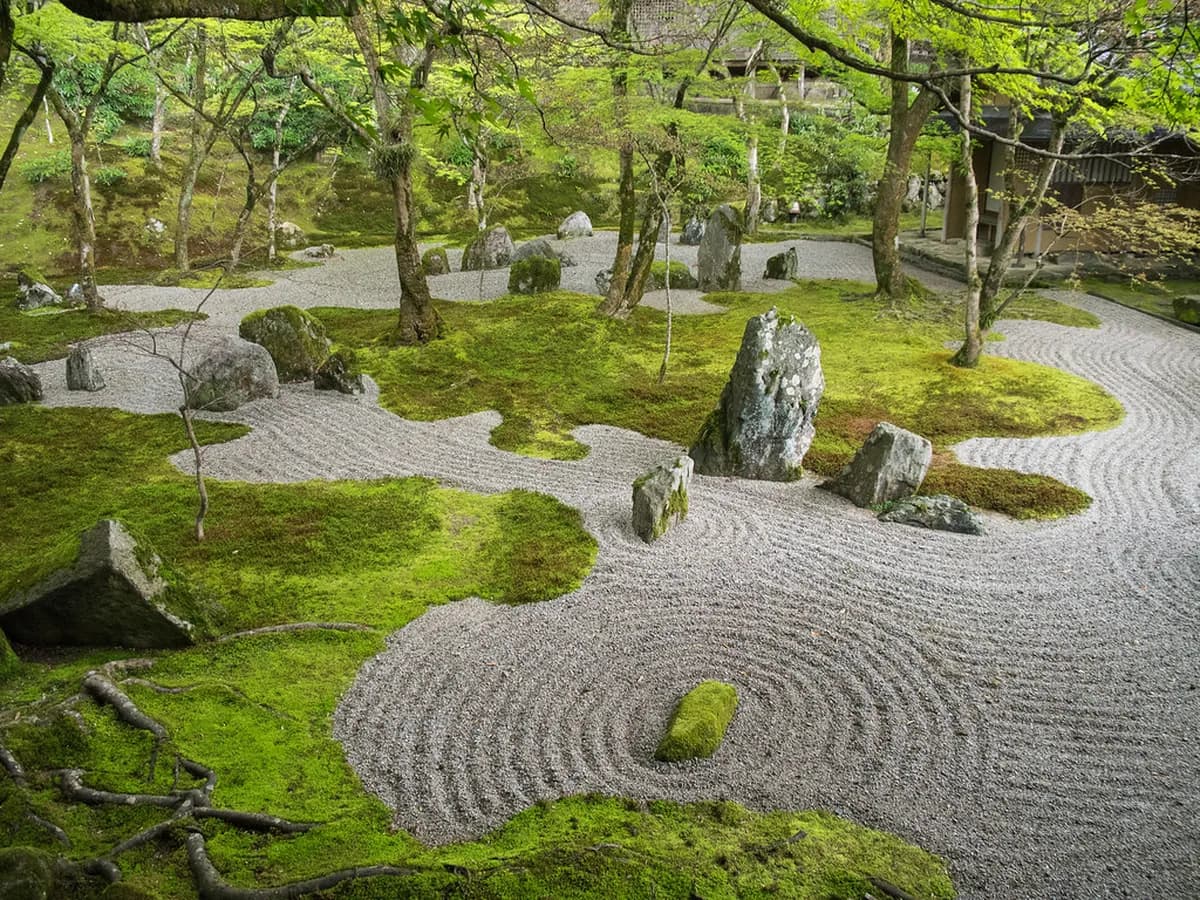
Kanzeonji Temple, founded in the 7th century, represents a crucial chapter in Japan's Buddhist history. Emperor Tenji established it as one of the nation's most important temples. It once housed a large complex and served as a central training ground for monks. The temple's name honors Kannon Bodhisattva, the goddess of mercy. Its historical significance extends beyond religious practice. It played a vital role in Dazaifu's political and cultural landscape. We encourage visitors to reflect on its deep roots in Japanese society.
While much of the original grandeur has faded, the remaining structures and artifacts still convey its past importance. The present Main Hall (Kondo) is a later reconstruction, but it stands on the temple's original stone foundation platform, and scattered stone pillar bases across the grass mark where a seven-story pagoda once rose — at its peak, the complex rivaled Todaiji in Nara in scale. The temple grounds themselves are peaceful and invite quiet contemplation. You can easily spend an hour exploring the main hall and surrounding areas.
Planning Your Visit: Essential Information
Before you set out, here are the essentials in one place. Entry to the Kanzeonji Temple grounds is free of charge, and no fixed gate hours are published for them. The adjoining Treasure House charges ¥600 for adults (¥400 for high school and university students, ¥150 for elementary and junior high students) and is open 9:00–17:00 (last entry 16:30) every day, apart from announced temporary closures such as September 28–30, 2026.
- Access: 20 minutes on foot from Nishitetsu Dazaifu Station, or 10 minutes from Nishitetsu Gojo Station.
- Grounds: free admission; no fixed hours published.
- Treasure House hours: 9:00–17:00 (last entry 16:30), open daily except announced closures, ¥600 for adults.
- Best station for the ruins circuit: Nishitetsu Gojo Station, which sits closer to the western district's cluster of sites.
If your plan is simply to see Kanzeonji and the Treasure House without the wider circuit, budget 60 to 90 minutes and go before 10:00 AM to have the grounds mostly to yourself. If you're building a longer day around it, read on for the full itinerary below.
Exploring Kanzeonji Temple Grounds & Kaidanin
Begin at Kanzeonji Temple's main grounds. Spend about an hour exploring the main hall and the tranquil surroundings, arriving around 9:00 AM if you want fewer crowds — a good place to reflect before moving on to the rest of the district.
Adjacent to Kanzeonji is Kaidanin Temple, one of only three official ordination halls in all of Japan (the others were at Todaiji in Nara and Shimotsuke Yakushiji in Tochigi). Monks once traveled from across Kyushu to be ordained here. This smaller temple shares a deep historical connection with Kanzeonji, admission is typically free, and hours mirror Kanzeonji's own — many visitors spend 15-20 minutes in its compact, quiet courtyard.
After Kaidanin, walk approximately 10 minutes to the Dazaifu Government Office Ruins (Tofuro), the administrative heart of ancient Kyushu. Entry is free, open 24/7; budget 30-45 minutes for the extensive foundations. Continue 15 minutes to the Chikuzen Kokubunji Ruins, the remains of an 8th-century provincial temple, free and always open — allow 20-30 minutes for the pagoda foundations. Nearby, Enokisha Shrine offers a quick, free stop with historical ties to the area.
Finally, walk about 20 minutes to the Kyakukan Guesthouse Ruins, an ancient diplomatic guesthouse for foreign envoys, free and always open — 20 minutes is enough. From here, the Mizuki Fortress ruins are a short walk: this defensive structure, built in 664, runs 1.2 kilometers long and is free to explore anytime. The location is 5-6-1 Kanzeon-ji, Dazaifu, Fukuoka.
The Treasure House: Ancient Statues and Hidden Gems
Kanzeonji Temple's Treasure House (Hozoden) is a must-see for its remarkable collection of Buddhist statues. It houses 16 important wooden statues, some dating back to the 8th century, carved from single blocks of wood and standing several meters tall — designated Important Cultural Properties, and spanning roughly five centuries of Buddhist sculpture, so you can trace clear stylistic shifts as you move through the hall. Admission is ¥600 for adults, ¥400 for high school and university students and ¥150 for elementary and junior high students. The Treasure House is open 9:00–17:00 (last entry 16:30) every day, except announced temporary closures such as September 28–30, 2026. We suggest verifying hours on the official Dazaifu City tourism website before your visit. Plan for 45-60 minutes inside to appreciate the artistry.
Beyond the statues, the Treasure House offers context to other significant artifacts. Notably, the famous Bonsho bell, a national treasure, was originally here. Most maps and older guidebooks still mark it at Kanzeonji, but this bell is now housed at the Kyushu National Museum, where it is displayed alongside detailed conservation notes. A replica stands at Kanzeonji Temple, so if seeing the actual National Treasure bell is your priority, plan the museum visit into your day. Understanding this distinction enriches your visit and saves disappointment on-site. The Treasure House provides valuable insight into the temple's enduring legacy and is well worth the admission fee for any visitor interested in Japanese Buddhist art.
Dazaifu's Western Ruins Circuit: A Suggested Itinerary
For visitors with a full day, we suggest a Western Ruins Circuit that combines Kanzeonji Temple with the other sites covered above, in a logical order that avoids backtracking, starting from Nishitetsu Gojo Station rather than Dazaifu Station.
- Full-day Western Ruins Circuit
- Morning, 9:00–11:00: Kanzeonji Temple & Kaidanin Temple, plus the Treasure House
- Midday, 11:00–13:00: Tofuro Ruins and Chikuzen Kokubunji Ruins
- Afternoon, 13:00–16:00: Kyakukan Guesthouse and Mizuki Fortress, or detour to Kyushu National Museum and Dazaifu Tenmangu
- Evening, 16:00–17:00: buffer for the Treasure House's earlier closing time
- Total time: 6-7 hours including walking; wear comfortable shoes, most paths are gravel
- Wet-weather swap: Tofuro Exhibition Hall or Kyushu National Museum instead of the outdoor Mizuki Fortress leg
A shorter half-day version covers just Kaidanin, Kanzeonji, the Tofuro park, and the Treasure House in about three hours — sensible if you're also visiting Dazaifu Tenmangu, the shrine that draws most first-time visitors to the city, on the same trip. Kanzeonji and Tenmangu are two different sites about a 15-20 minute walk apart: Kanzeonji is a quiet Buddhist temple, Tenmangu is Japan's head shrine to the deity of learning and far busier. Confusing the two, or assuming one stop covers both, is a common first-time mistake in Dazaifu.
Beyond the Temple: Nearby Historical Sites
Dazaifu offers many historical sites beyond the Western Ruins Circuit, each with a different time cost and payoff. For those wanting a livelier, more crowded spiritual site, Homangu Kamado Shrine is known for its role in matchmaking and protecting against bad luck. Access is a 10-minute bus ride from Nishitetsu Dazaifu Station; it's open daily roughly 8:30 AM to 5:00 PM, free admission. Budget about an hour — a good pick if you want a different spiritual experience from Kanzeonji's stillness without much extra travel effort.
The Onojo and Iwayajo Fortress Ruins are a more adventurous, time-hungry option for history enthusiasts who have already covered Kanzeonji, Tofuro, and Tenmangu. Built for defense during the same period as Mizuki Fortress, Iwayajo Castle is about a 50-minute walk from Nishitetsu Dazaifu Station or a 10-minute taxi ride; Onojo is further still, with no on-site facilities, so bring water. Both are free and always open. Choose these only with good mobility, a full extra half-day, and an interest in early medieval military sites — additions for a multi-day visit, not a substitute for the temple and ruins circuit.
Practical Tips for a Smooth Visit to Kanzeonji
Public transport around Dazaifu is efficient and reliable. Consider a Nishitetsu One-Day Pass if you plan extensive travel around the area, since it can save money across multiple train and bus rides during a full-circuit day.
The best time to visit Kanzeonji Temple in 2026 is during the spring (late March to early April, when plum and cherry blossoms overlap with the wider Dazaifu district) or the autumn foliage weeks in November. Weekday mornings before 10:00 AM see the fewest visitors. Avoid national holidays and the New Year period, when Dazaifu Tenmangu draws large crowds nearby. Wear comfortable walking shoes, since paths around Tofuro and Mizuki Fortress are unpaved gravel or compacted earth rather than paved walkway — worth noting if you're traveling with a stroller or have mobility limitations, as the Treasure House entrance also involves a short flight of steps.
When visiting temples and shrines in Japan, observe proper etiquette: bow before entering and leaving, and remove hats inside buildings. Photography is generally allowed on temple grounds but often restricted inside treasure houses or main halls — always check for posted signs. Learning about general temple etiquette can enhance your visit.
Frequently Asked Questions about Kanzeonji Temple
Which Kanzeonji Temple options fit first-time visitors? If you only have an hour, focus on the main hall grounds and the Treasure House's statues — this gives the clearest sense of the temple's history without the longer walk to the outer ruins. Travelers with more time should add Kaidanin Temple next door, since it's a five-minute detour with real historical weight, before deciding whether to continue on to the wider Western Ruins Circuit.
How much time should you plan for Kanzeonji Temple Dazaifu? We recommend planning 60 to 90 minutes to fully explore the Kanzeonji Temple grounds and its Treasure House. If you include the full Western Ruins Circuit, allow 4-5 hours for a comprehensive visit. This duration ensures you appreciate each historical layer.
What should travelers avoid when planning Kanzeonji Temple Dazaifu? Check for announced temporary closures of the Treasure House (it is closed September 28–30, 2026). Do not expect to see the original Bonsho bell at Kanzeonji; it is at the Kyushu National Museum. We also advise against rushing your visit, and against assuming a Dazaifu Tenmangu visit doubles as a Kanzeonji visit — they are separate sites. Allow time for reflection.
Is Kanzeonji Temple visitor guide worth including on a short itinerary? Yes, Kanzeonji Temple is worth including even on a short Dazaifu itinerary. Its historical importance and the Treasure House's artifacts make it a significant stop. You can focus on the main temple and Treasure House in 1.5 hours. It offers a unique glimpse into ancient Japan.
Frequently Asked Questions
How do I get to Kanzeonji Temple from Fukuoka?
From Fukuoka, take the Nishitetsu Tenjin Omuta Line to Nishitetsu Futsukaichi Station. Transfer to the Nishitetsu Dazaifu Line to Nishitetsu Gojo Station. Kanzeonji Temple is about a 10-minute walk from Gojo Station.
What are the opening hours for Kanzeonji Temple's Treasure House?
The Treasure House is open 9:00–17:00 (last entry 16:30) every day, according to Dazaifu City. Temporary closures are announced in advance, for example September 28–30, 2026.
Is there an admission fee for Kanzeonji Temple?
Entrance to the Kanzeonji Temple grounds is free of charge. However, the Treasure House charges ¥600 for adults, ¥400 for high school and university students and ¥150 for elementary and junior high students.
What other historical sites are near Kanzeonji Temple?
Many historical sites surround Kanzeonji Temple. These include Kaidanin Temple, Dazaifu Government Office Ruins (Tofuro), Chikuzen Kokubunji Ruins, and Mizuki Fortress. The Kyushu National Museum is also nearby.
Where is the original Bonsho bell located?
The original Bonsho bell, a designated National Treasure, is not at Kanzeonji Temple. It is housed and displayed at the Kyushu National Museum in Dazaifu. A replica bell can be seen at Kanzeonji Temple.
Kanzeonji Temple stands as a profound historical landmark in Dazaifu. It offers visitors a deep dive into Japan's ancient past and Buddhist heritage. We hope this guide helps you plan an enriching and memorable visit. You will discover many hidden stories within its grounds. Whether you explore the full Western Ruins Circuit or focus solely on the temple, Kanzeonji provides a unique cultural experience. We encourage you to savor the peaceful atmosphere and historical weight of this important site. It truly is a treasure of Dazaifu.
For the latest official information, see the Kanzeonji Temple on Wikipedia and Kanzeonji Temple official site.
Related Dazaifu guides: Kanzeonji & Tofuro guide.