8 Best Things To Do In Dazaifu: A Complete Day Trip Guide
Discover the best things to do in Dazaifu, from the iconic Tenmangu Shrine to hidden Inari paths. Includes transport tips, food guides, and more!
On this page
Dazaifu sits 30 minutes from Fukuoka by train, yet it feels a world apart. This compact city holds Japan's most important learning shrine, a world-class national museum, moss-carpeted Zen gardens, and a hidden hilltop shrine that most visitors miss entirely. You can cover the core attractions comfortably in a single day without a car.
This guide focuses on what to actually do in Dazaifu, not just the shrine. It covers the Kyushu National Museum, the seasonal gardens at Komyozenji Temple, the Kengo Kuma-designed Starbucks on the shopping street, and the practical question of whether to tag Yanagawa onto your day. Arrive before 10:00 AM to avoid tour-bus traffic on the Omotesando approach road.
Must-See Dazaifu Attractions
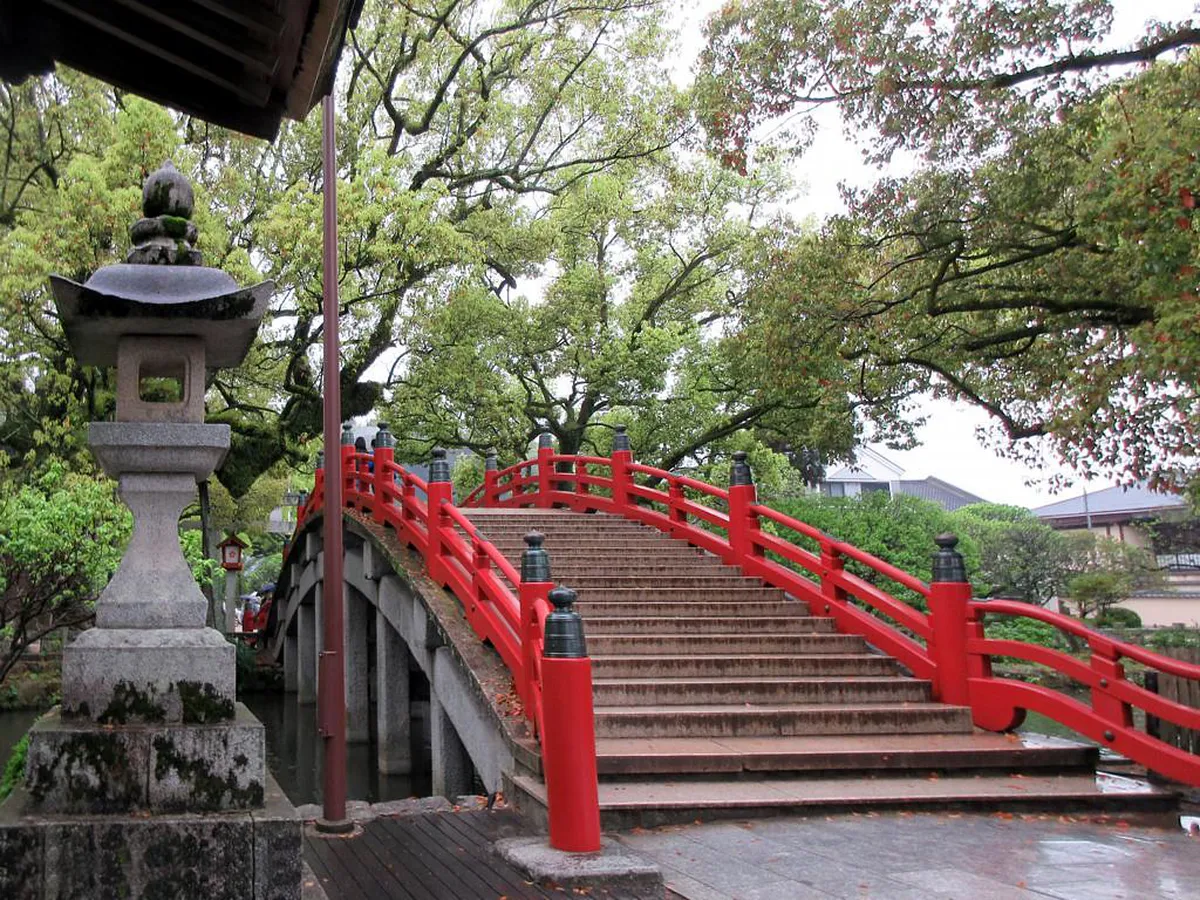
The Dazaifu Tenmangu Shrine is the reason most people come, and it earns the hype. Dedicated to Sugawara no Michizane, a 9th-century scholar deified as Tenjin — the god of learning and culture — the shrine draws students from across Japan, especially around university entrance exam season. The grounds cover several hectares and include a famous arched drum bridge over the central pond, scattered teahouses, and an ongoing program of contemporary art installations by international artists.
Entry to the shrine grounds is free and the gates open at 6:30 AM. The main hall is under renovation until 2027, but that is not a reason to stay away. In its place stands the Karihonden, a temporary hall designed by architect Fujimori Terunobu. It features a living roof garden of young trees and wild grasses — something you cannot see once the permanent hall reopens. Most visitors end up preferring it. The main torii gate, the bridge, and all surrounding gardens remain fully accessible.
The shrine grounds are most photogenic before 10:00 AM, before tour buses arrive. The Kengo Kuma-designed Starbucks on the Omotesando approach has a short queue on weekends between 10:00 and 11:30 AM — visit at opening (9:00–9:30 AM) to photograph it without a crowd.
- Around 6,000 plum trees bloom on the grounds in late February, weeks before cherry blossom season.
- Irises fill the garden pond area each June and July.
- Autumn foliage peaks in November, making it one of the best months to visit.
- A fire festival takes place every January; a poetry ceremony happens under the plum blossoms in March.
Omotesando: The Shopping Street and Its Famous Snack
The 300-metre approach road from Dazaifu Station to the shrine is lined with souvenir shops, tea stalls, and snack vendors. Walk it slowly — this is where you eat. The local specialty is Umegae Mochi, a palm-sized rice cake filled with sweet red bean paste and pressed on an iron griddle. Every shop on the street sells them, but they taste best eaten hot, straight from the pan. Look for shops where the iron mould is in full view and the cakes are pressed to order.
Roughly halfway down the street stands the most-photographed Starbucks in Kyushu. Architect Kengo Kuma designed the building using a lattice of 2,000 cedar wood sticks woven into the facade and ceiling. It contrasts deliberately with the old townscape around it and draws serious architecture tourists. The interior matches — no concrete or steel in sight. Expect a short queue on weekends, especially between 10:00 and 11:30 AM.
Most shops on the Omotesando open between 9:00 and 9:30 AM and close around 17:00. The street is most crowded on Saturday and Sunday afternoons. Arrive at opening time to browse without the crowds and snap photos of the Starbucks before it fills up.
Museums, Art, and Culture in Dazaifu
The Kyushu National Museum is one of only four national museums in Japan, and architecturally the most dramatic. The building is a massive structure clad in blue-tinted reflective glass that shifts colour with the light. You reach it from the shrine grounds via a long covered escalator tunnel — look up at the ceiling as you ascend, which is lined with video panels showing shifting abstract light patterns. This "rainbow tunnel" is the transition moment between ancient shrine and 21st-century museum.
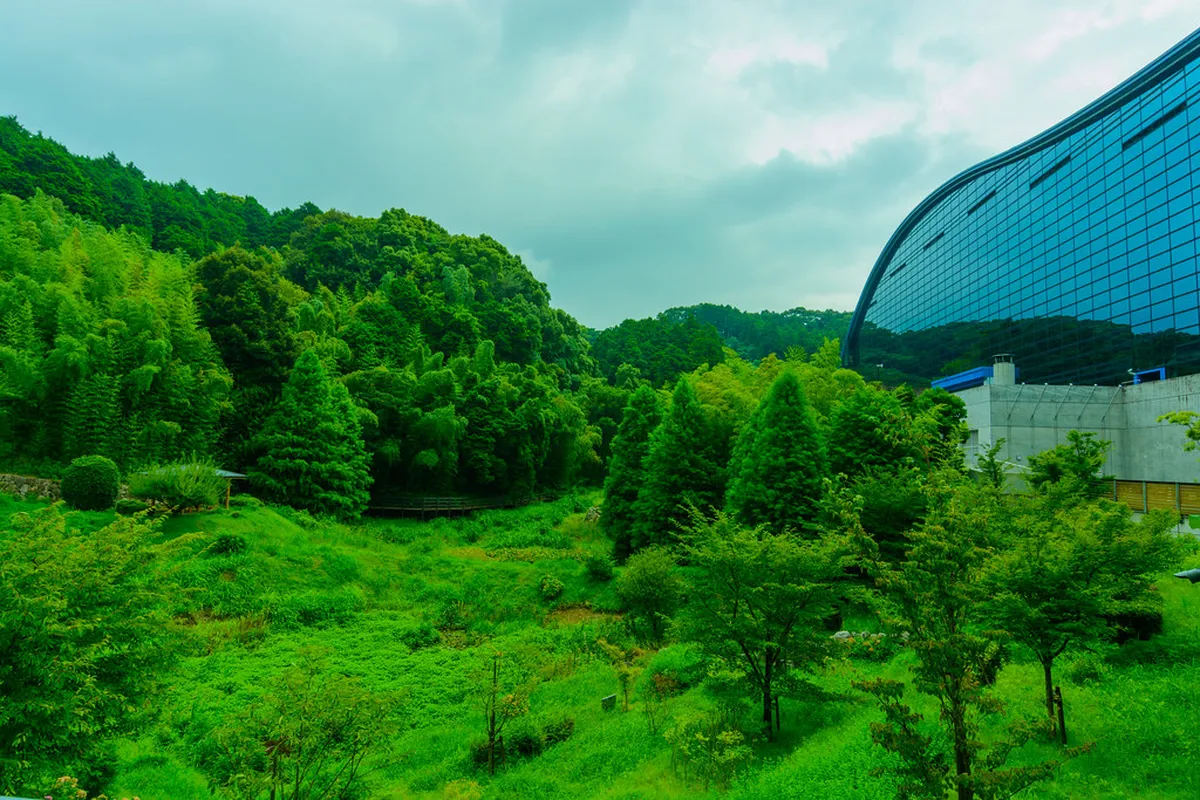
Inside, the permanent collection focuses on Kyushu's role as Japan's historical gateway to Asia. Highlights include samurai swords and lacquerware, Tang Dynasty artefacts brought via trade routes through Kyushu, and a 10-metre tall festival float (yamakasa) that was once carried at speed through the streets of Fukuoka. Admission for the permanent collection is ¥700 for adults, ¥350 for university students, free for high school students and under. The museum closes on Mondays; if Monday falls on a public holiday it opens and closes the following Tuesday instead. Seasonal special exhibitions carry a separate fee, usually ¥1,200–¥1,600.
Back at the shrine itself, the contemporary art program is underrated. The shrine regularly commissions site-specific installations from artists including Yayoi Kusama and Teamlab. These change seasonally and are integrated into the garden landscape — it is worth checking the Official Dazaifu Tenmangu Website ahead of your visit to see what is currently on display.
Parks, Gardens, and Outdoor Spots in Dazaifu
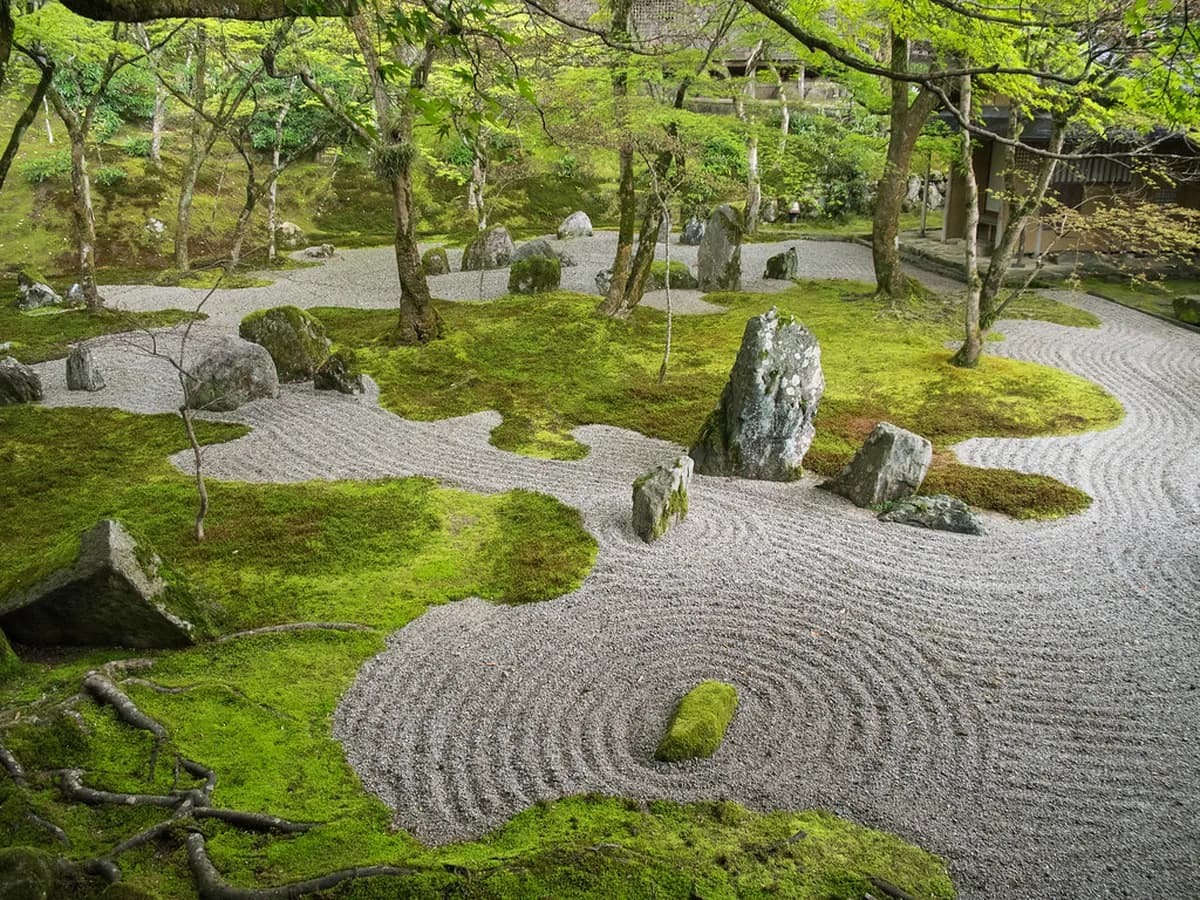
Komyozenji Temple sits a five-minute walk south of the main shrine and receives a fraction of the visitor numbers. It is a Zen temple founded in 1240 whose interior garden is carpeted entirely in moss. In autumn, the maple canopy turns the moss garden red and orange. In summer it is cool and deeply quiet. Entry costs ¥200. Spend 20 to 30 minutes here — it is the most peaceful spot in Dazaifu.
The shrine grounds themselves function as a public park at no charge. The Shinji-ike pond at the centre of the grounds reflects the main torii gate on calm mornings and is a reliable photography spot before the tour groups arrive. Iris varieties planted along the pond edges bloom from late May through July. The surrounding woodland paths are pleasant to walk even outside flowering season.
For a wider view over Dazaifu, climb the short trail beyond Tenkai Inari Shrine to the ridge behind the shrine complex. From here you can see the museum building, the city below, and on clear days the mountains of northern Kyushu. The entire trail from the main shrine to the ridge takes about 25 minutes on foot.
Tenkai Inari Shrine: The Hidden Gem Behind the Crowds
At the rear of the main Tenmangu complex, a stone staircase leads up into the hillside forest. Follow it for 10 to 15 minutes and you reach Tenkai Inari Shrine — a compact inari shrine marked by a tunnel of red torii gates and carved fox statues. Almost nobody you see on the Omotesando below makes it up here. The contrast is immediate: the noise drops, the crowd disappears, and the atmosphere shifts entirely.
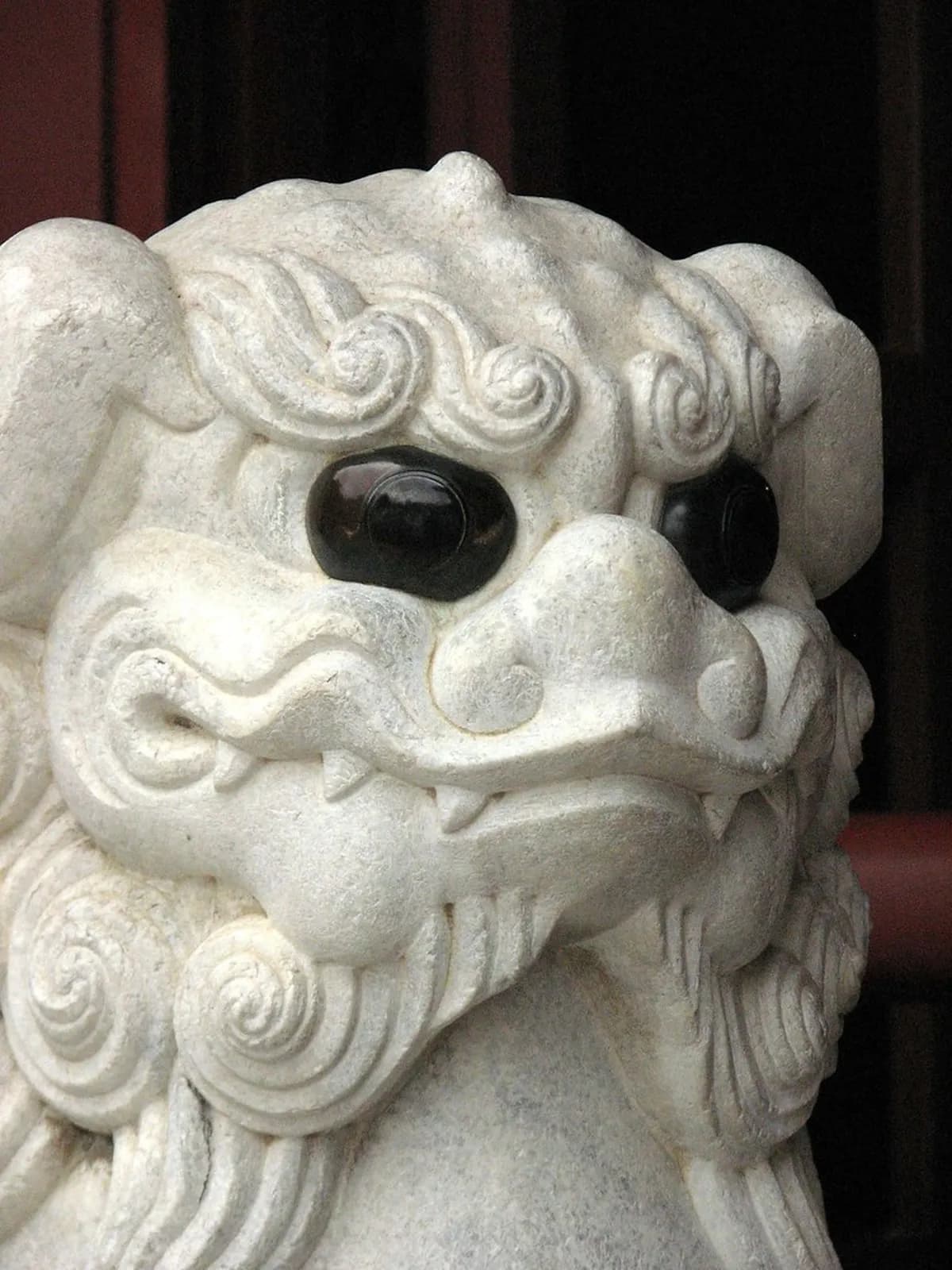
Inari shrines are associated with foxes (kitsune) as messengers of the god Inari, who oversees agriculture, industry, and worldly success. The stone foxes at Tenkai carry various objects — a key, a scroll, a jewel — each symbolising a different blessing. The torii tunnel is modest by Fushimi Inari standards in Kyoto, but the intimacy makes it more affecting than the famous Kyoto version for many visitors. Go in the late afternoon when the light filters through the red gates.
Family-Friendly and Budget-Friendly Options in Dazaifu
Most of Dazaifu is free or very cheap. The shrine grounds, Omotesando street, and the Tenkai Inari hike cost nothing. Komyozenji Temple charges ¥200. The Kyushu National Museum permanent collection is ¥700 for adults and free for children in high school or younger. A day covering all the main sites outside special exhibitions costs a family of four under ¥3,000 in admission fees.
Dazaifu Amusement Park (Dazaifu Enyukai) sits on the hill visible from the trail above the shrine. It is a small, old-fashioned theme park with gentle rides suited to young children. It is not a destination on its own, but it works as a supplement if you are visiting with kids who need a break from shrines. Check seasonal opening dates before you go — it closes on some weekdays outside school holidays.
For food on a budget, the Omotesando stalls are the best value. Two Umegae Mochi cakes cost around ¥200. There are also small ramen shops and teishoku lunch sets in side streets near the station, typically ¥700–¥1,000. Avoid the sit-down restaurants directly on the shrine approach, which charge tourist-area prices.
Dazaifu and Yanagawa Sightseeing Ticket: Is It Worth It?
The Nishitetsu Dazaifu and Yanagawa Sightseeing Ticket is only available at the Nishitetsu Fukuoka (Tenjin) Station ticket counter — not from machines. The ticket (¥3,340 adult, ¥1,680 child) only makes financial sense if you actually do the Yanagawa boat ride; skip it and buy a standard return ticket (¥820) if you prefer a slower pace in Dazaifu.
The Nishitetsu Dazaifu and Yanagawa Sightseeing Ticket bundles the train from Tenjin to Dazaifu, the onward train to Yanagawa, and the Yanagawa boat ride into one pass. It costs ¥3,340 for adults and ¥1,680 for children. Bought separately, the same components cost roughly ¥4,200 for an adult. The ticket is available at the Nishitetsu Fukuoka (Tenjin) Station ticket counter — not from machines — and can be bought on the day.
Whether to add Yanagawa depends on your pace. If you arrive in Dazaifu by 9:00 AM and move efficiently, you can cover the shrine, museum, and Komyozenji by noon, catch the Tabito train (the decorated tourist train between Dazaifu and Yanagawa), take the 70-minute boat cruise, and still reach Fukuoka by 18:00. If you prefer a slower morning with long stops at the museum or garden, skip Yanagawa and buy a standard return ticket to Dazaifu instead (¥820 round-trip). The sightseeing ticket makes financial sense only if you actually do the boat ride.
Yanagawa's local specialty is steamed eel (seiro-mushi) served over rice in a lacquered box. Several eel restaurants cluster at the terminus of the boat route. The combination ticket with a meal included is available and costs slightly more than the base pass.
How to Plan a Smooth Dazaifu Day Trip
Take the Nishitetsu Line from Nishitetsu Fukuoka (Tenjin) Station — this is a private rail company, separate from the Fukuoka city subway and from JR, so the station entrance is distinct. Take a train to Futsukaichi (15–25 minutes), then transfer to the short Dazaifu Line branch (5 minutes). The total journey is about 30 minutes. A single fare costs approximately ¥410; an IC card (Suica, Sugoca, or equivalent) works on this line. The Dazaifu transport guide explains the Nishitetsu vs. JR question in detail.
Coin lockers are available at Dazaifu Station for bags. The entire walkable core — Omotesando, shrine, museum, Komyozenji, and Tenkai Inari — fits within about 1.5 km. No taxis or buses are needed if you are able-bodied. For visitors with mobility limitations, the flat Omotesando street and the main shrine grounds are fully accessible; the Tenkai Inari trail involves uneven stone steps and is not wheelchair-accessible.
The Tofuro ruins and Kanzeonji Temple sit about 15 minutes' walk west of the main shrine and are worth including if you have a full day and an interest in the city's role as an ancient government seat. Kanzeonji holds the largest bell in Kyushu, cast in the 7th century, and a small sculpture hall displaying Buddhist statues removed from temples across the region over the centuries. Admission is ¥500.
Explore things to do in other cities
Building the rest of the trip? Our Dazaifu attractions guide covers the sights, districts and logistics around these meals.
Frequently Asked Questions
Is Dazaifu worth a day trip from Fukuoka?
Yes, Dazaifu is absolutely worth a day trip for its unique cultural sites. The train ride takes only 30 minutes from Tenjin Station. You can enjoy historic shrines, modern museums, and delicious local street food.
What is the best thing to eat in Dazaifu?
You must try the Umegae Mochi, which is a grilled rice cake filled with sweet bean paste. These are sold hot all along the main shopping street. They are the most famous local specialty in the city.
How long does it take to see Dazaifu Tenmangu Shrine?
Most visitors spend about 60 to 90 minutes exploring the main shrine grounds and gardens. If you add the hike to the inner shrine, plan for two hours. The grounds are extensive and very beautiful.
Dazaifu rewards visitors who look past the main shrine. The Kyushu National Museum, Komyozenji's moss garden, the Kengo Kuma Starbucks, and the quiet hilltop of Tenkai Inari each add something the shrine alone cannot. Plan for a full day, arrive early, and leave Yanagawa as an optional extension based on your energy level by noon.
Check the Official Dazaifu Tenmangu Website for current exhibition schedules and festival dates before you go. The plum blossom season in late February remains the single best time to visit — 6,000 trees in bloom, weeks before the cherry blossom crowds hit Fukuoka. Plan around it if your calendar allows.
For transport, timing, and a sample schedule, pair this with our complete Dazaifu day trip planning guide.
Free: The Fukuoka Essentials guide
Top things to do, where to stay, a perfect day plan, getting around, and the best time to go — a Fukuoka mini-guide you can take offline.
You might also like

Continue reading
More guides you'll find useful