12 Best Places Where to Stay in Miyajima: Best Ryokan and Hotels (2026)
Find where to stay in Miyajima with our guide to the 12 best ryokan and hotels. Plan your 2026 trip with expert pricing, onsen tips, and booking advice.
On this page
After three visits to Hiroshima and Miyajima over five years, I have found that staying overnight changes the entire experience. The island feels completely different once the last ferry departs for the mainland and the day-trippers leave. You can walk through the quiet streets without the usual daytime crowds while the shrine glows in the dark. Our editors have reviewed the best local options to help you decide where to stay in Miyajima — whether you want a classic ryokan, a private onsen, or a modern hotel near the ferry.
This guide was last refreshed in January 2026 after our most recent autumn return visit to the region. Selecting the right accommodation is the most important step for a memorable night on this sacred island. You can find more detailed planning resources on our travel blog to prepare for your journey.
Quick Pick: Best Ryokans for Every Traveler Type
If you want to skip straight to a recommendation, here is how the top options break down. For traditional luxury, Iwaso Ryokan is the benchmark — historic, forest-facing, and closest to Momijidani Park. For a private onsen experience, Miyajima Grand Hotel Arimoto has both indoor and outdoor baths with mountain views. If you want modern luxury without giving up a Western bed, Kurayado Iroha blends contemporary design with rooftop onsen views. For the best value ryokan, Kikunoya hits the sweet spot of price, location, and a small onsen. On a tight budget, Sakuraya or Ryoso Kawaguchi are the honest picks.
Families with young children tend to prefer Hotel Kikunoya or Livemax Resort Akino Miyajima because of their larger rooms and shuttle service. Solo travelers and backpackers do well at Miyajima Guesthouse Mikuniya near the temple. Couples seeking a romantic atmosphere without ryokan formality often choose Hotel Miyajima Villa or Kurayado Iroha. Knowing your traveler type before browsing rates will save time and prevent disappointment on arrival.
What to Consider When Choosing Your Hotel in Miyajima
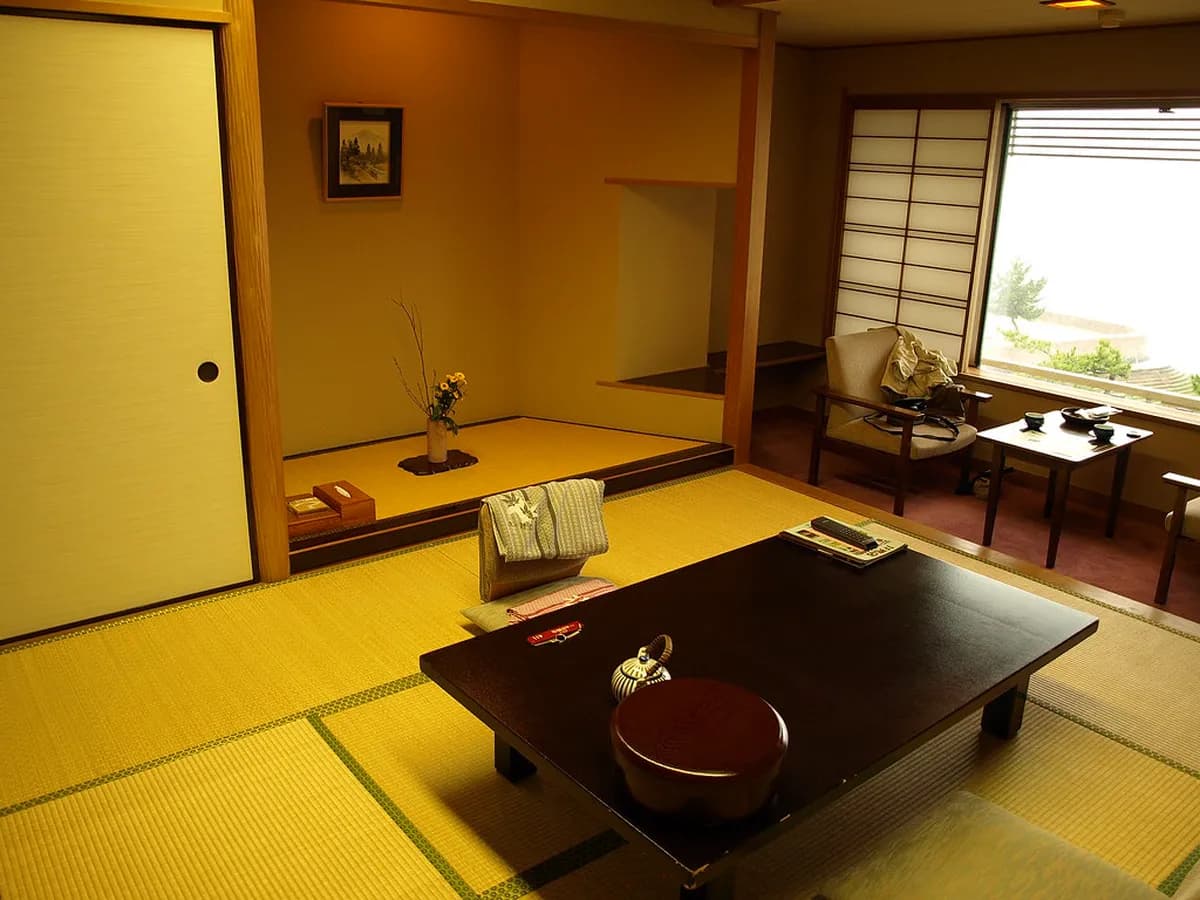
The first decision is whether you want a traditional ryokan or a modern hotel. Ryokans offer tatami rooms, futon bedding, yukata robes, and kaiseki meals — the full cultural package. Hotels offer larger beds, more flexibility, and sometimes a lower price. Both types can have onsen access, but the private onsen baths are almost exclusively found in the higher-end ryokans.
Location matters more on Miyajima than it does in most Japanese cities. The island has no vehicles, so everything is on foot. Properties near the ferry terminal are convenient for arrival, but some of the best ryokans like Iwaso are a 15-to-20-minute walk into Momijidani Park. If you have heavy luggage, check whether your hotel offers a free porter shuttle from the pier — most of the mid-range and above options do.
Think carefully about the meal plan. Almost all restaurants on the Omotesando shopping street shut down by 17:00–18:00 once the day-trippers leave. This is not an exaggeration: by early evening, the island has almost no functioning restaurants outside of accommodation. Booking a half-board plan (dinner and breakfast included) is not a luxury upgrade here — it is practical planning. The kaiseki dinners at island ryokans are also a genuine highlight of the stay, using oysters, conger eel, and seasonal seafood from the Seto Inland Sea.
Check-in windows at most Miyajima ryokans are strictly 15:00–18:00 because staff need time to prepare the kaiseki dinner. Arriving after 18:00 without prior notice may mean missing dinner service entirely. If your ferry is delayed, call the ryokan — most will hold dinner for an hour if you communicate ahead of time.
Miyajima Onsen: What to Expect from Island Hot Springs
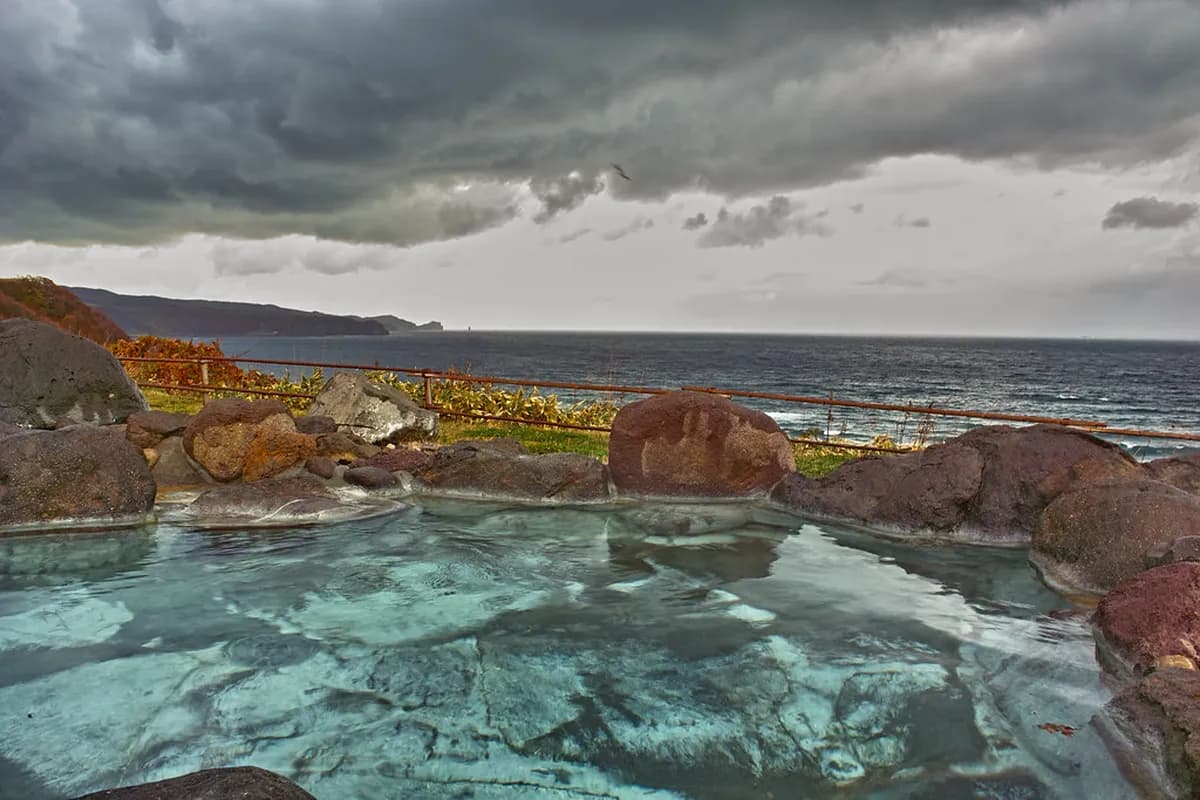
The natural onsen on Miyajima are fed by mineral-rich springs from the forested hills of Mount Misen. Soaking in a hot spring is a quintessential Japanese experience that many visitors miss during a quick day trip. Several local inns offer access to a Miyajima onsen, which is perfect for relaxing after a day of hiking. The mineral waters are said to ease tired muscles, and the setting — dark timber, garden views, steam rising over water — is genuinely restorative.
There are three main types of onsen access on the island. Public baths are shared facilities open to all guests, typically available from late afternoon until late at night and again from early morning. Semi-private baths can be reserved for a time slot, usually 45 minutes to an hour, for an added fee. Fully private baths are built into certain room types — these are the most sought-after and should be booked months in advance for peak autumn foliage season.
For the most scenic onsen experience, Kurayado Iroha offers rooftop baths with sea views, while Miyajima Grand Hotel Arimoto has outdoor baths facing the mountain.
The Iwaso Ryokan offers a free shuttle from the pier for guests with luggage — important on an island with no vehicles. For autumn foliage season (late October through mid-November), book at least two to three months in advance. Iwaso's garden onsen, surrounded by old maple trees, is at its most spectacular during this period.
Iwaso Ryokan: The Historic Benchmark on Miyajima
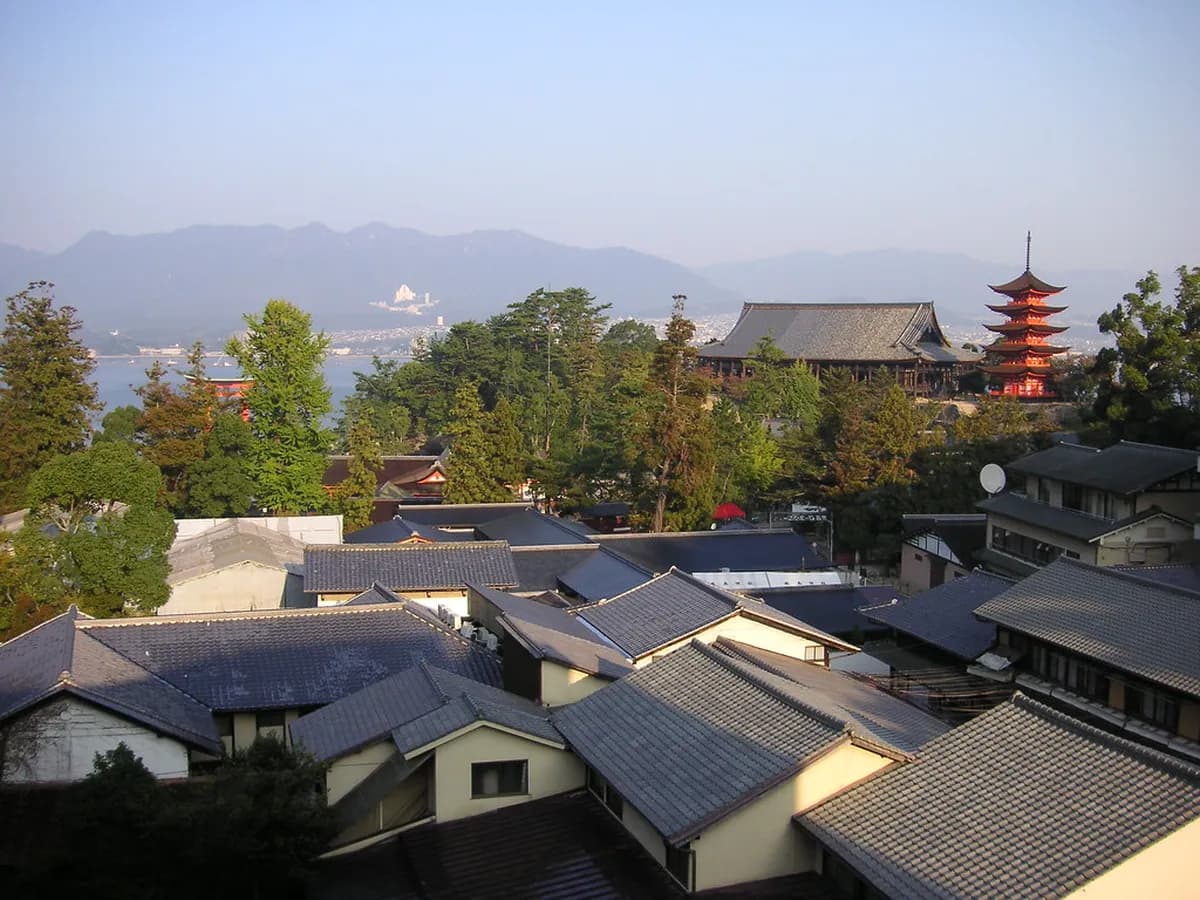
Iwaso is the oldest and most celebrated ryokan on the island, operating since 1854. Nestled within the lush forest of Momijidani Park, it sits about a 15-minute walk from the ferry pier — far enough from the crowds to feel genuinely remote after dark, close enough to reach the shrine in under 10 minutes on foot. Traditional wooden architecture, tatami rooms, and shoji screens give it the most authentically historic atmosphere of any property on the island.
Room rates start at roughly ¥50,000 per person per night, including the traditional kaiseki dinner and breakfast. The multi-course dinner is served in your room, featuring seasonal ingredients from the sea: grilled local fish, oysters from Hiroshima Bay, sticky conger eel, and mountain vegetables. This is not merely a meal — it is the primary event of the evening. The staff arrange the low table, bring each course in sequence, and then quietly set up the futon while you finish. It is one of the most immersive cultural experiences available in western Japan.
The open-air garden onsen here is the island's finest. Morning baths before breakfast, when mist sits over the maple trees and deer occasionally appear at the garden edge, are a specific highlight worth planning around. For the autumn foliage season (late October through mid-November), reserve at least three months in advance. A free shuttle from the pier handles the walk and the luggage.
The Best Ryokans in Miyajima: Full Picks for 2026
Choosing the right accommodation depends on your budget and whether you prefer traditional mats or Western-style beds. We have categorized these picks into three clusters: luxury traditional inns, modern boutique hotels, and budget-friendly options.
| Property | Rate (per person) | Onsen | Best for |
|---|---|---|---|
| Iwaso Ryokan | From ¥50,000 | Garden outdoor onsen | Historic, forest setting, couples |
| Kurayado Iroha | From ¥60,000 | Rooftop sea-view baths | Modern luxury, design-conscious |
| Miyajima Grand Hotel Arimoto | From ¥45,000 | Indoor & outdoor mountain baths | Private onsen, wide room choice |
| Kinsuikan | From ¥40,000 | Private bathing options | Waterfront torii views |
| Hotel Kikunoya | From ¥20,000 | Small onsen | Mid-range couples, families |
| Ryoso Kawaguchi | From ¥12,000 | Shared bath | Budget tatami, homemade meals |
- Iwaso Ryokan — Historic inn in Momijidani Park forest, private and shared onsen, kaiseki meals included. Around ¥50,000 per person. Best for: couples and solo travelers who want the definitive Miyajima night.
- Miyajima Grand Hotel Arimoto — Large property close to the shrine with indoor and outdoor onsen, Japanese and Western room options. Rates from ¥45,000 per person including dinner and breakfast. Best for: those who want private onsen access and a wide room choice.
- Kurayado Iroha — Minimalist modern design, rooftop onsen with sea views, steps from Itsukushima Shrine. Around ¥60,000 per person. Best for: design-conscious travelers seeking modern luxury.
- Kinsuikan — Waterfront location ideal for quiet torii moments at dawn and dusk, polished service, private bathing options. From ¥40,000 per person. Best for: those who want the torii at arm's reach without the formality of Iwaso.
- Jukeiso — Hillside position with panoramic shrine and sea views, private open-air bath available by time-slot. From ¥35,000 per person. Best for: view-chasers and those who prefer quieter hillside surroundings.
- Yamaichi Bekkan — Family-run, right by the ferry terminal, strong dining reputation especially for Hiroshima oysters. From ¥17,000 per person including meals. Best for: first-timers who want authentic hospitality at a reasonable price.
- Hotel Kikunoya — Near Itsukushima Shrine, small onsen, kaiseki meals, friendly staff. Rates from ¥20,000 per person. Best for: couples and families wanting a mid-range traditional stay with an onsen.
- Miyajima Morinoyado — Tucked into the forest, vegetarian meal options available, peaceful setting near Mount Misen trailhead. From ¥18,000 per person. Best for: hikers and nature lovers who want to be close to the trails.
- Mizuhasou Ryokan — Small and intimate, near Daisho-in temple, highly rated for dinner quality. From ¥22,000 per person. Best for: those who want a quiet, residential-area stay away from the main strip.
- Ryoso Kawaguchi — Smallest and most affordable traditional option, close to the shrine, from ¥12,000 per person. Best for: budget travelers who still want a tatami room and homemade meals.
For modern hotels, Hotel Miyajima Villa near the ferry terminal offers a panoramic onsen and Western beds from ¥35,000 per person. Hotel Miyajima Besso offers chic Queen Rooms and Suites across from the terminal from ¥30,000. For budget travelers, the Hotel Fork & Knife Miyajima and Miyajima Guesthouse Mikuniya start around ¥7,000–¥12,000 per person. Livemax Resort Akino Miyajima provides resort amenities with a shuttle from around ¥20,000.
Tide Timing and Why Your Hotel's Location Changes the Night
One practical detail that no accommodation booking platform tells you:
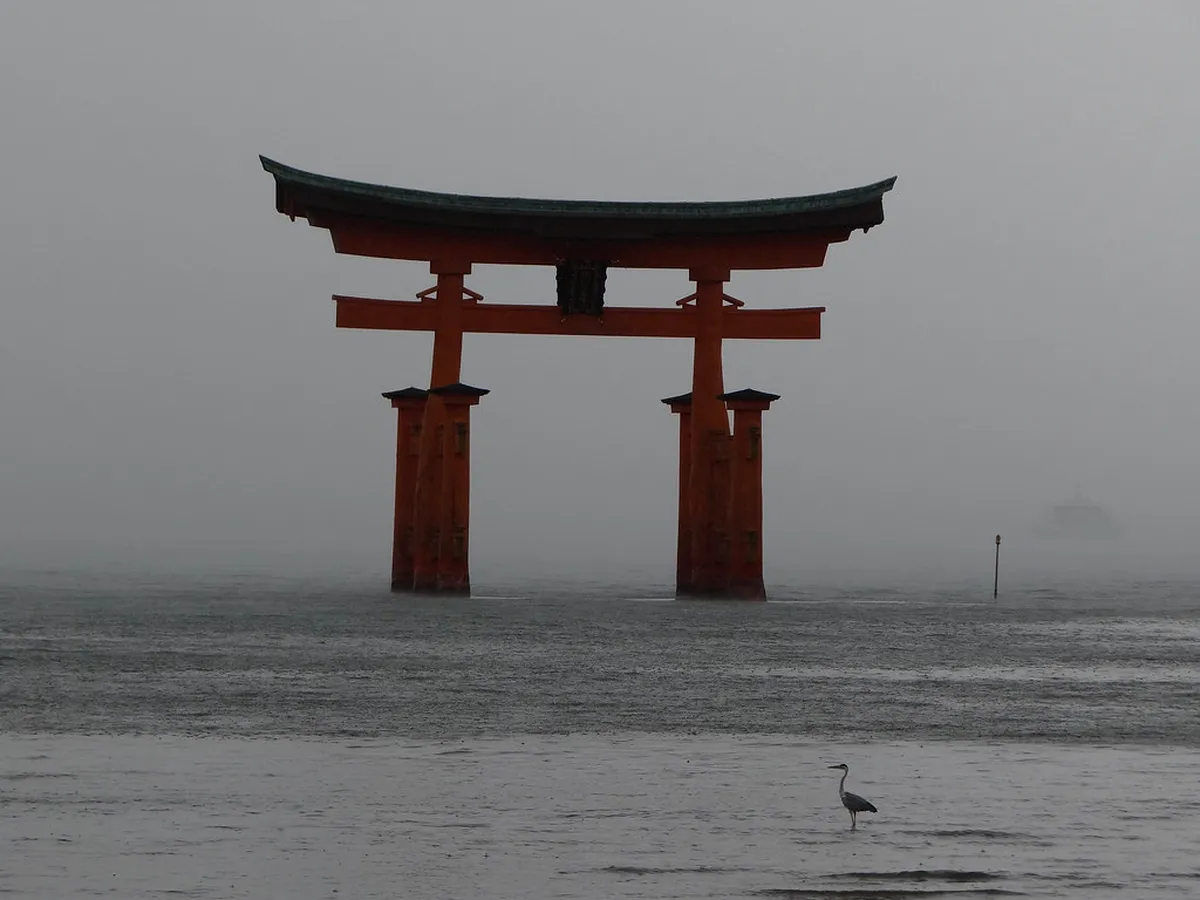
Properties near the ferry terminal, like Hotel Miyajima Villa, Yamaichi Bekkan, and Kinsuikan, are a 5-to-8-minute walk from the gate. This makes spontaneous tide-based visits easy, even at 05:30 in the morning. Iwaso and Miyajima Morinoyado, set deeper into the forest, are a 12-to-18-minute walk. That is fine for a planned visit, but less convenient for a quick 10pm check on whether the tide has dropped.
Before you check in, look up the Hiroshima tidal chart for your dates using the Japan Coast Guard's free tide prediction tool. If the low tide falls in the late evening on your night, a waterfront or near-shrine hotel will let you walk out to hug the gate posts after dinner. If low tide falls at dawn, any location works since you will be up for it anyway. Planning one stop around the Miyajima night light-up and another around the low-tide walk is the standard two-visit strategy for overnight guests.
Island or Hiroshima Mainland: Which Should You Choose?
Many travelers wonder if they should stay on the island or stick to a hotel in Hiroshima city. While staying in the city is often cheaper, you miss the chance to see the Miyajima night light-up. The shrine and the torii gate are beautifully illuminated after dark, creating a mystical atmosphere that day-trippers never see. The extra cost is worth it for the peace and the unique photo opportunities at night and at dawn before the first ferry arrives from the mainland.
Avoid booking the very cheap business hotels on the mainland if you want the true island atmosphere. While they save money, the commute across the water every morning feels like a chore during a short trip. Staying on the island also makes it easier to visit other Hiroshima attractions at your own pace. You can spend a full day hiking Mount Misen and then return to your hotel for a bath before a meal in your room.
The one case where mainland accommodation makes sense is if your priority is the Hiroshima Peace Memorial and you only have a single afternoon to spare for Miyajima. In that case, a day trip covering Itsukushima Shrine and the Omotesando street is sufficient. But for anyone with two or more nights in the region, one night on the island is the standard recommendation from everyone who has done both.
The Best Things to Do on Miyajima When Staying Overnight
The point of staying overnight is access to the island after the day crowds leave. The sequence most guests find most rewarding: evening sunset cruise or walk to the illuminated torii, dinner at your ryokan, a late onsen bath, and then an early morning walk to the gate before the 08:00 ferries start arriving. This covers the island at its most photogenic and most peaceful in a single overnight stay.
During the day, the three main activities for overnight guests are hiking Mount Misen, exploring Daisho-in Temple, and walking the Miyajima Omotesando shopping street before the stalls close. The Daisho-in hiking course starts right next to the temple and takes about 90 minutes up, with an option to take the ropeway down. From the summit you get views across the Seto Inland Sea toward Hiroshima on one side and the outer islands on the other. Check the Daisho-in Temple Miyajima visitor guide before heading out for opening times and trail conditions.
The deer are active throughout the day and into the evening. You will find 400 to 700 of them roaming freely across the island, including around the shrine path and near the ferry terminal. They are calm but persistent around food smells, so keep snacks in a bag rather than your hand. The best deer encounters happen in Momijidani Park in the early morning, and near the temple complex in the late afternoon. Read the full Miyajima deer guide for feeding rules and safety tips before your visit.
Practical Tips for Booking and Arriving
Planning a stay here requires some foresight, especially regarding your luggage and arrival time. Most hotels offer a free shuttle service from the pier, so look for staff holding signs when you get off the boat. Confirm the shuttle times in advance when you book. Handling heavy bags on the crowded ferry can be difficult, so consider using a luggage delivery service from your previous city — Yamato Transport operates between most major stations and can forward bags directly to select island hotels.
Check-in windows at most ryokans are strictly between 15:00 and 18:00, because they need time to prepare the kaiseki dinner. Arriving after 18:00 without notice may mean missing the dinner service, which is one of the main reasons to stay on the island. If your ferry from Hiroshima is delayed, call the hotel. Most will accommodate you for an hour or so past the stated window if you communicate ahead of time.
Remember that the island is a sacred place. Certain rules apply to visitors staying overnight: be respectful of quiet hours and avoid loud conversation through residential streets after 21:00. The local deer are active 24 hours a day, so keep your hotel door closed to prevent uninvited guests. The Miyajima Aquarium is a good option for the morning if you want a structured activity before checking out at 10:00–11:00.
Frequently Asked Questions
How many nights should I stay in Miyajima?
One night is usually enough to see the main sights and enjoy the evening peace. If you enjoy hiking or want a slower pace, staying two nights allows time for Mount Misen and the local museums.
Are the deer on Miyajima dangerous at night?
The deer are generally calm but can be persistent if they smell food. Follow the Miyajima deer guide and avoid feeding them to ensure a safe and pleasant interaction during your evening walk.
Is it better to stay on the island or in Hiroshima?
Staying on the island is better for a romantic or spiritual experience away from the city noise. Hiroshima is more convenient for nightlife and visiting the Peace Memorial Park on a tighter budget.
Making the choice to stay overnight on Miyajima is a decision you likely will not regret. The transition from a busy tourist spot to a quiet sanctuary is one of the most magical experiences in Japan. Whether you choose a luxury ryokan or a modern hotel, the island hospitality will leave a lasting impression. Plan your 2026 trip today and secure your spot on this unforgettable island.
Free: The Hiroshima Essentials guide
Top things to do, where to stay, a perfect day plan, getting around, and the best time to go — a Hiroshima mini-guide you can take offline.
You might also like
Continue reading
More guides you'll find useful