Miyajima Deer Guide Feeding Rules And Safety Travel Guide
Plan miyajima deer guide feeding rules and safety with top picks, neighborhood context, timing tips, and practical booking advice for a smoother trip.
On this page
Miyajima is a stunning island located just a short ferry ride from the city of Hiroshima. It is famous for its iconic floating torii gate and the hundreds of wild deer roaming the streets. Understanding the miyajima deer guide feeding rules and safety is essential for every visitor to this sacred site. These animals have lived on the island for roughly 6,000 years and are protected by deep religious tradition and formal law.
Travelers often arrive expecting the same experience they found in Nara Park. However, the management of wildlife here follows very different ecological and cultural guidelines. This guide covers the deer's history, how to interact with them safely, the no-feeding rules, and what to do during the rest of your day on the island. Prepare for a day of incredible views and unique animal encounters in one of Japan's most beautiful locations.
The History of Miyajima's Sacred Deer
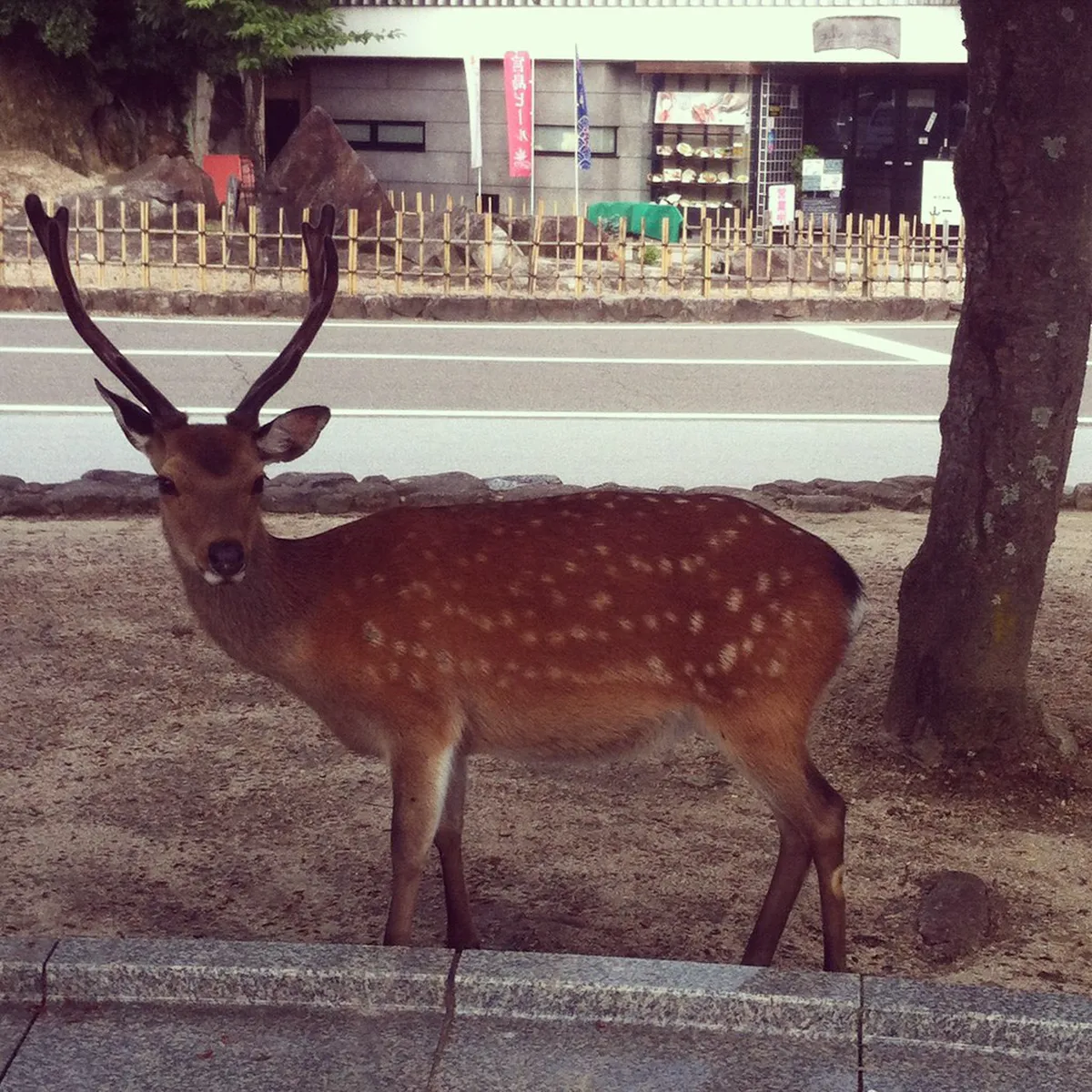
The best time to see deer in the town area is in the morning during their "shika no tsukin" (deer commute) down from the hills, or in the late afternoon before they return to the mountains. Keep all food and paper items in zipped compartments — the deer are especially persistent on Omotesando Shopping Street.
The deer on Miyajima are not a tourist gimmick introduced by the local tourism board. They have been on the island since before Itsukushima Shrine was built. Around 6,000 years ago, rising sea levels during the Jomon period separated Miyajima from the Hiroshima mainland, and the deer were already there. Some later swam across from the shore — sika deer are surprisingly strong swimmers.
The key to their protection lies in the Shinto concept of kegare, or ritual impurity. Miyajima was considered a divine island where shedding blood was a religious taboo. This meant no births, no deaths, and no killing of animals — including deer — on the island's sacred ground. No formal decree named the deer as divine messengers. Their safety came from the broader sanctity of the island itself. That religious conviction protected them for centuries before any written law existed.
By the Edo period (1603–1868), the deer had become as much a part of Miyajima's identity as the floating torii gate. Poets and travelers wrote about them in travel journals. In 1715, a monk formally included the deer among the Eight Views of Itsukushima. Practical coexistence systems emerged too: "shikado" (small deer gates) kept deer out of homes, while "shikoke" containers placed outside buildings offered kitchen scraps. After the Meiji government disrupted the island's religious structures, Hiroshima Prefecture stepped in with formal legal protection in 1879, declaring the island a no-hunting zone.
The Deer Today: Population, Behavior, and Conservation
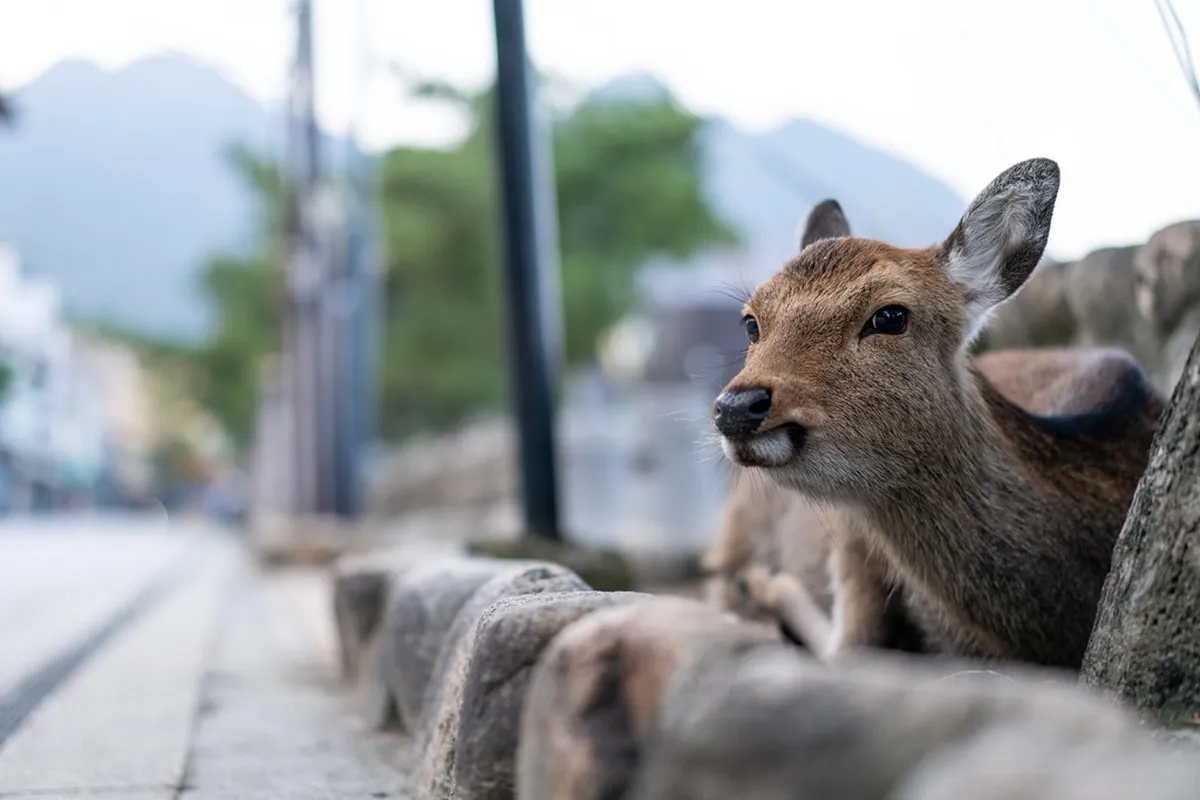
Approximately 500 sika deer currently live on Miyajima. Around 200 of them spend most of their time in the main town and visitor areas near the shrine; the rest live in the forested interior. Locals have a charming name for what these town-dwelling deer do each day: "shika no tsukin," or the deer commute. Each morning they come down from the forested hills to forage around the town and shrine. By evening, most head back into the mountains to sleep. It is a clockwork routine that developed over thousands of years of proximity to humans — not domestication, but deep adaptation.
The most significant management change in recent decades came in 2007, when the sale of deer crackers was banned across the entire island. Before the ban, deer had become reliant on human handouts and were losing their ability to distinguish food from non-food objects, including plastic packaging. After the ban, the population initially declined before stabilizing at around 500 — which wildlife managers at the city of Hatsukaichi consider a sustainable level for the island's ecosystem.
Today, the conservation approach blends centuries of religious tradition with modern ecological science. Strict rules around garbage disposal reduce the risk of deer swallowing plastic. The city monitors population health and aims to keep the deer genuinely wild rather than conditioned by feeding. This model has drawn attention from wildlife managers studying human-wildlife coexistence challenges in other parts of the world.
Deer Behavior by Season: A Month-by-Month Visitor Guide
The deer's routine shifts noticeably across the year, and knowing the seasonal pattern helps you time both safety and photography expectations beyond the daily morning-and-evening commute.
- Spring (April–June): Fawns are born and does become notably protective, often keeping newborns near the forest edge rather than the main street. Give mothers with fawns extra distance and never approach a fawn even if it appears alone.
- Summer (July–August): With daytime temperatures often reaching 30–33°C, deer retreat to shaded areas away from the shrine during midday. Encounters are calmer and more frequent in the early morning or after 5pm, when the heat breaks.
- Autumn (September–November): Rutting season brings the most caution-worthy period. Bucks grow full antlers, become territorial, and may spar with each other or act unpredictably near visitors. This is also the island's busiest foliage season, so expect larger crowds around Momijidani Park alongside more alert deer.
- Winter (December–February): The quietest season for tourists is also the calmest for deer behavior. With less vegetation in the hills, more deer forage in the town area throughout the day, but interactions tend to be gentler and less food-motivated than in warmer months.
Whatever the season, the underlying rule stays the same: never feed the deer, and let their behavior — not the calendar — guide how much distance you keep.
Miyajima Deer vs. Nara Deer: What's the Difference?
The most important rule on Miyajima is that you must never feed the deer. Unlike Nara Park, there are no deer crackers for sale here because feeding is banned. The Hiroshima Prefecture guidelines state that feeding makes deer dependent on humans. Human food and the confusion it creates around non-food objects can cause serious, fatal injuries to the animals' digestive systems.
The theological difference is also significant. The Nara deer are formally designated as divine messengers (shinshi) of Kasuga Taisha, linked to a myth in which the god Takemikazuchi arrived riding a white deer. The Miyajima deer have no equivalent founding legend. The three Munakata goddesses of Itsukushima Shrine are not associated with any particular animal. Miyajima's deer were protected by the island's overall sanctity, not a specific divine role.
Recent DNA analysis has confirmed that the two populations are genetically unrelated — entirely separate lineages that evolved independently. The Miyajima sika deer are also physically smaller than the Nara deer, an adaptive response to island life with limited resources. Smaller body size requires less food, which is a survival advantage on a small forested island. Both populations are protected and both are accustomed to people, but only in Nara can you legally offer them food.
What Visitors Should Know Before Meeting the Deer
Feeding deer is banned island-wide. Do not offer food or let the deer reach into open bags. During autumn rutting season, bucks with antlers can behave unpredictably. Keep children supervised at all times and do not pet or touch the deer.
Encountering Miyajima's deer up close is one of the island's genuine pleasures. A few important points will help you enjoy it safely and responsibly. The deer are wild animals, not pets, and they can bite, kick, or behave unpredictably — particularly bucks with antlers during the autumn rutting season, and does protecting fawns in spring.
- Do not feed the deer. Feeding is prohibited island-wide. Deer that associate humans with food become bold around roads and are more likely to ingest harmful plastic packaging.
- Do not touch or pet the deer. Let them approach on their own terms. Wild deer can also carry ticks that may transmit disease.
- Watch your belongings closely. The deer are famously curious and have learned that humans carry food. Keep snacks in sealed bags and be especially vigilant on Omotesando Shopping Street where deer are most persistent.
- If a deer grabs paper — a map, ticket, or bag — do not wrestle it back. Stay calm, and the deer will typically chew and move on. The paper poses a hazard to the deer, so the best prevention is keeping items secured before encounters happen.
- Keep children supervised at all times. Deer can become persistent around strollers if they smell food, and sudden movements from children can startle them.
The best time to see deer in the town areas is in the morning, when they come down from the hills, or in the late afternoon before they return to the mountains. During hot summer middays, many retreat to shaded areas and are less visible near the shrine. The Hiroshima attractions area offers excellent context for planning a full day around Miyajima's wildlife and cultural sites.
Recognizing Deer Warning Signs and What to Do If Bitten
Most deer encounters on Miyajima end without incident, but learning the animals' warning signals helps you avoid the rare aggressive moment. A deer that feels cornered typically lowers its head, pins its ears back, raises its tail, or stamps a front hoof repeatedly. Bucks add an extra cue: dipping the antlers toward you is a direct warning, most common during the autumn rut. Treat any of these signals as a request for space.
If you see these signs, back away slowly at an angle rather than turning your back or running — sudden movement can trigger a chase instinct. Keep a bag, jacket, or umbrella between yourself and the animal, avoid crouching to its eye level for photos, and don't let the deer back you into a narrow shopfront or alley near Omotesando Shopping Street.
For a minor bite or scratch, rinse the area with clean water as soon as possible and cover it with a bandage or antiseptic if you're carrying one. Puncture wounds from deer bites carry infection risk, so have it looked at the same day. Miyajima itself has very limited medical facilities, so anything beyond a minor scrape usually means the 10-minute ferry plus 30-minute JR train back to a clinic or hospital in Hiroshima. For an aggressive or visibly injured deer, report it to staff at the ferry terminal information counter or the Miyajima Tourist Association near the pier — they coordinate directly with Hatsukaichi City's wildlife management team.
Explore Itsukushima Shrine and the Floating Torii Gate
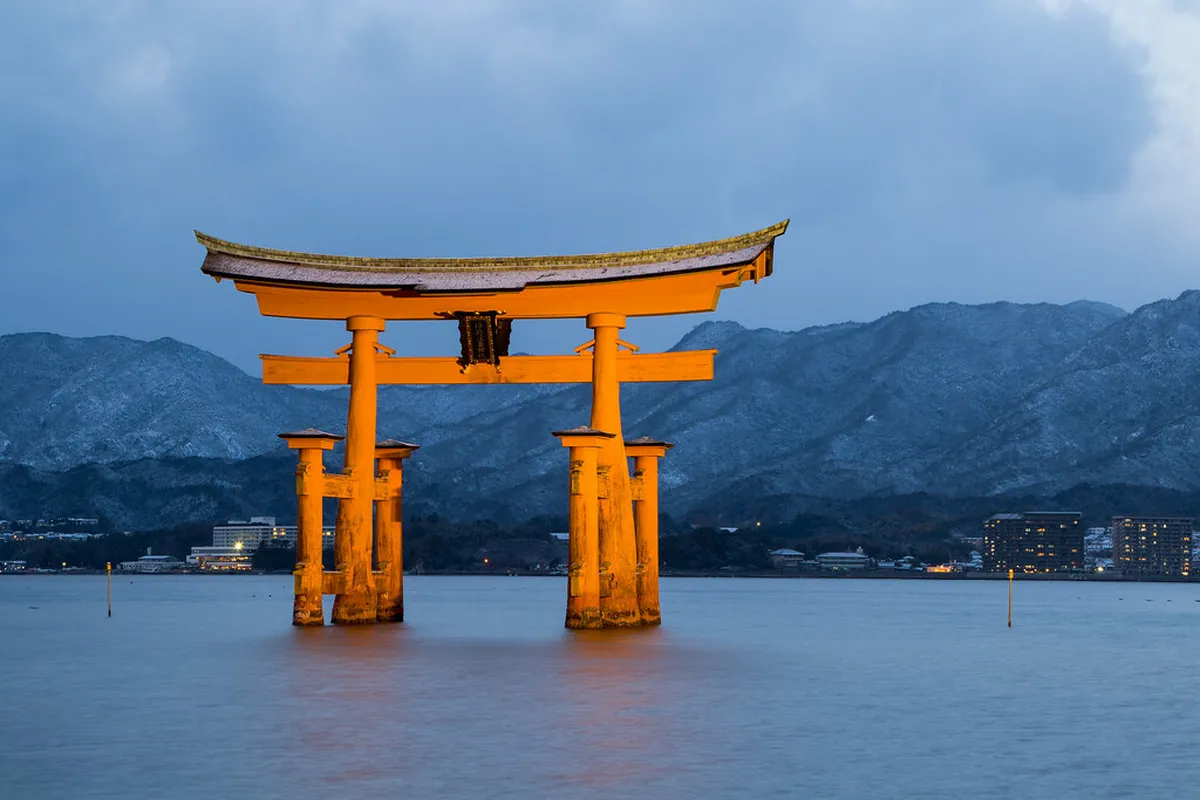
The Itsukushima Shrine is the centerpiece of the island's cultural treasures. Designated a UNESCO World Heritage site in 1996, it dates back to the 12th century when the powerful nobleman Taira no Kiyomori rebuilt it over the water. The shrine was designed so that worshippers could approach by boat, keeping the sacred island pure. Deer frequently rest on the sandy beaches right beside the shrine walls and in the shaded walkways near the outer torii.
The shrine's most famous feature is its vermilion torii gate, which appears to float at high tide when the base is submerged. At low tide you can walk across the sandy seabed to stand beside it — the gate stands about 16 metres tall, much larger than it looks from shore. To plan your timing, check a tide chart before you visit. Websites like tidetime.org list the exact tide times for Miyajima so you can plan the floating effect or the walk-up photo. The area around the gate and the shrine's main boardwalk offers the best photography angles throughout the day.
Hike Mount Misen and Visit Daisho-in Temple
Mount Misen offers the highest viewpoint on the island at 535 metres above sea level, with 360-degree views of the Seto Inland Sea on clear days. You can take the Miyajima Ropeway or choose one of three hiking trails: the Momijidani trail through maple valleys, the Daisho-in trail past ancient stone steps and shrines, or the Omoto trail through undisturbed forest. The Daisho-in Temple visitor guide provides details on the most spiritual path.
At the summit, the Reikado Hall houses the eternal flame said to have been burning continuously for 1,200 years since the monk Kobo Daishi first lit it. Deer are common on the forested trails, appearing noticeably wilder than those in the town. They have not been conditioned by tourist feeding at higher elevations and tend to move away rather than approach. Bring water in a sealed bottle — any snacks should be in a zipped compartment inside your pack to avoid attracting them.
The Miyajima autumn foliage in Momijidani Park along the trailhead is a spectacular sight in November. Deer graze peacefully in these wooded areas away from the busy shopping streets, making it one of the best locations to observe them in a natural setting outside the town center.
Try Miyajima's Famous Food on Omotesando Street
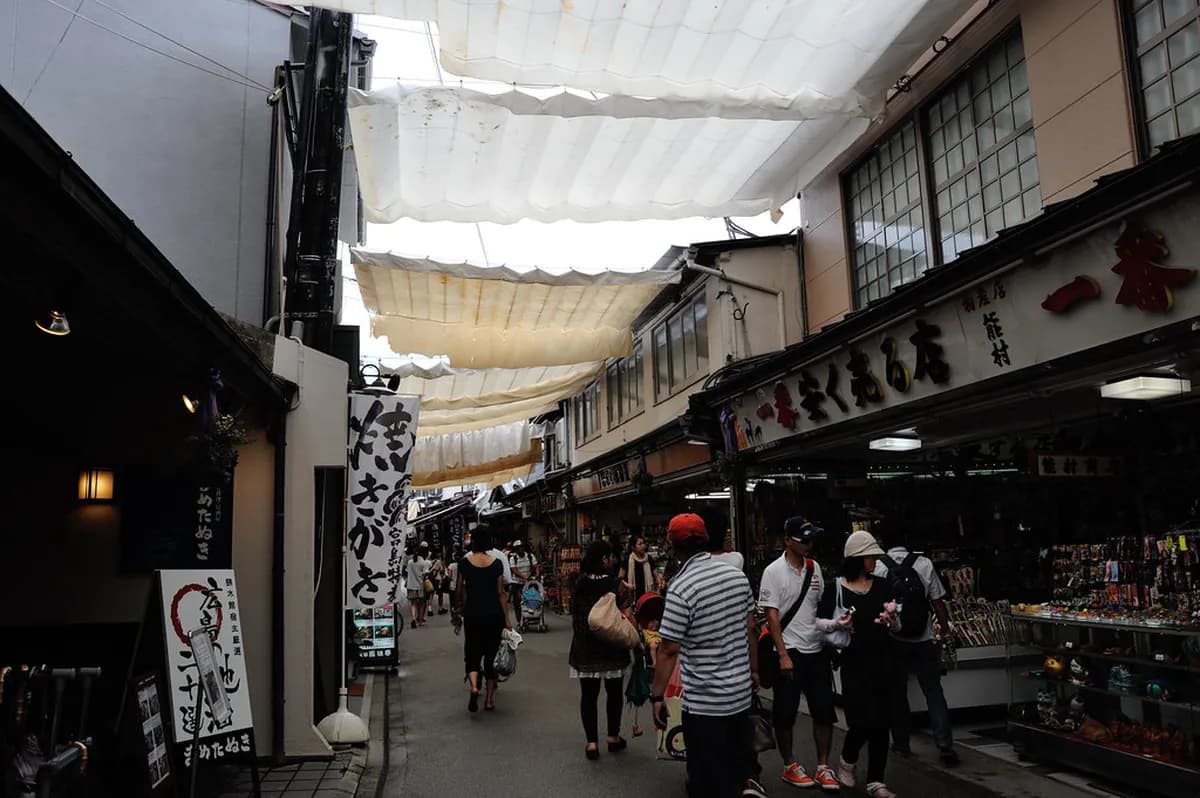
No visit is complete without a walk down Omotesando Shopping Street, the pedestrian avenue that runs from the ferry terminal toward the shrine. It is also the stretch where the deer are most active and most mischievous — keep bags closed and food out of sight. The street is lined with shops selling hand-carved rice scoops (shamoji), lacquerware, deer-themed souvenirs, and fresh food stalls.
The most iconic snack is momiji manju: soft, maple leaf-shaped cakes filled with sweet red bean paste, available in matcha, chocolate, and custard variations. One manju at a local bakery typically costs around 100 yen. The island's other great specialty is oysters — some of the best in Japan. From autumn through spring, street stalls and restaurants serve them grilled over charcoal, steamed, or raw on the half shell. Anago-meshi (conger eel glazed with a sweet-savory sauce over rice) is the island's other signature dish, best enjoyed at a sit-down restaurant near the shrine.
The Miyajima Omotesando shopping street guide covers the best stalls and shops in detail. Budget around 1,000–2,000 yen for a snack and drink, or 2,500–4,000 yen for a full anago-meshi or oyster meal at a restaurant.
Planning Your Miyajima Day: Getting There and Staying Over
Miyajima is easily reached from Hiroshima. Take the JR Sanyo Line from Hiroshima Station to Miyajimaguchi Station (about 30 minutes), then walk a few minutes to the ferry terminal. The JR ferry makes the 10-minute crossing and is covered by the Japan Rail Pass. Ferries run frequently throughout the day and require no advance booking. Arriving early — before 09:00 — lets you see the deer in the morning commute and photograph the shrine before crowds build.
For visitors who want the full island experience, staying overnight at one of the best ryokan and hotels in Miyajima is worth the cost. After the last day-trip ferry departs around 17:00, the island becomes remarkably quiet. The illuminated torii gate reflected in evening water, the deer wandering empty streets near the shrine — these are experiences unavailable to day visitors. Ryokan stays typically include kaiseki dinner and breakfast, with rates starting around 20,000–35,000 yen per person.
Check tide times before you go. High tide creates the classic floating gate effect; low tide lets you walk up to it. The morning deer commute, the shrine visit, lunch on Omotesando, and the Mount Misen hike fill a full day comfortably. If you are only doing a half day, prioritize the shrine area and the street food — the deer will find you on their own.
Frequently Asked Questions
Why can't I feed the deer on Miyajima?
Feeding is banned to protect the deer's health and maintain their wild instincts. Human food can cause illness and leads to aggressive behavior toward tourists. Official policy encourages the deer to live on natural island vegetation instead of snacks.
Is it safe to pet or touch the deer?
It is generally not recommended to touch the deer as they are wild animals. They may bite or kick if they feel threatened or annoyed. Enjoy watching them from a short distance to ensure a safe experience for everyone. Check the Miyajima Aquarium visitor guide for other safe animal interactions.
Miyajima Deer vs. Nara Deer: What's the Difference?
The main difference is the feeding policy; Nara allows crackers while Miyajima strictly forbids all feeding. Miyajima deer are also considered slightly more wild as they often retreat into the mountains. Both populations are sacred but managed under different local regulations.
What should I do if a deer takes something from me?
If a deer grabs paper or food, do not try to wrestle it back as you might get bitten. Most items like maps or plastic bags are harmful if swallowed by the animals. Keep all belongings secured inside zipped bags to prevent this from happening in the first place.
Visiting the deer on Miyajima in 2026 is a highlight for many travelers coming to Japan. By following the feeding rules and safety tips, you contribute to the welfare of these sacred animals and the long-term health of the island's ecosystem. The island offers a perfect blend of natural beauty, deep history, and unique wildlife encounters.
Remember to keep your food hidden and your camera ready for those perfect moments. Arrive early to catch the morning deer commute, check the tide times for the best torii gate shots, and leave time for Omotesando street food before the crowds peak. Safe travels as you discover the magic of Miyajima and its famous animal residents.
Free: The Hiroshima Essentials guide
Top things to do, where to stay, a perfect day plan, getting around, and the best time to go — a Hiroshima mini-guide you can take offline.
You might also like


Continue reading
More guides you'll find useful