Miyajima Autumn Foliage: Momijidani Park Peak Dates & Tips
Visited mid-November: the best Momijidani Park window, misty-morning pagoda views, how to dodge crowds, plus food and budget options.
On this page
I visited Miyajima in mid-November 2025 — here is why it is the sweet spot. The best time for most travelers is the window from mid-to-late November. Early November and early December are excellent shoulder months for fewer crowds. This updated guide reflects my recent trip to Momijidani Park and covers everything from peak timing to food and budget options for 2026.
Our late-November trip hit a misty morning near the pagoda. The soft light made the red maple leaves glow against the fog. Miyajima feels genuinely magical during this period. This guide helps you plan the perfect autumn visit without wasting a day to guesswork.
Expected Start Time and Peak Viewing Period for Hiroshima Autumn Foliage 2026
Momijidani Park is free to enter and open 24 hours. Arrive before 09:00 to photograph the vermillion bridge without crowds. The maples face east and catch morning light best before 10:00 — move to Itsukushima Shrine mid-morning before tour buses arrive around 10:30.
Hiroshima Prefecture stretches from mild coastal areas to mountain zones above 1,200 metres, so the colour window is longer than most visitors expect. In colder northern areas and upland spots, leaves start turning in mid-October and peak in early November. Along the southern Seto Inland Sea coast — including Miyajima — colour change typically begins in early November and peaks between 15 and 25 November. The biology of autumn leaf color shifts with temperature and light, with cooler nights triggering anthocyanin production in maple leaves.
For 2026, the forecast follows the same pattern, with Miyajima's Momijidani Park expected to hit peak colour in the third week of November. Cooler nights in late October accelerate the change; if October temperatures drop below 8°C at night, expect the peak to arrive a few days earlier than average. The Japan Meteorological Agency's autumn forecast (released in early October) is worth checking once it posts.
Mid-week visits between 10:00 and 14:00 see the fewest crowds. Weekend days in peak week can add 30 to 40 minutes to the ferry queue at Miyajimaguchi pier. Book your return ferry slot with some buffer — the last departures fill fast on Saturdays and Sundays in November.
Parks, Gardens, and Outdoor Spots: Momijidani Park Guide
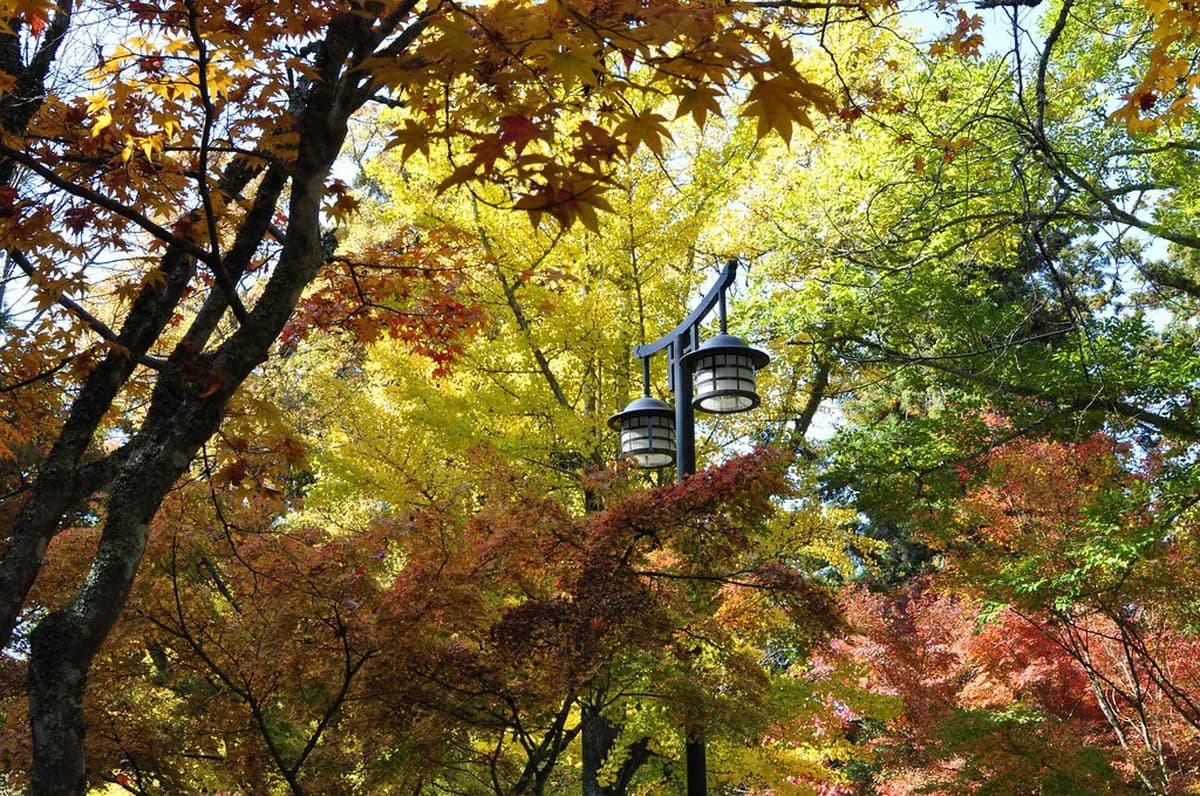
The Momijidani Park is the heart of the island's autumn beauty. It sits at the foot of Mount Misen and holds approximately 700 maple trees — Iroha maple, large maple, and striped maple — giving the park a staggered colour window that runs from early to late November. Walking through the valley feels like stepping into a painting, especially when morning mist clings to the valley floor. The park's natural landscape draws autumn enthusiasts from around the world seeking peak foliage views.
The vermillion Momijidani Bridge at the park entrance is the most photographed spot. Arrive before 09:00 to get a clean shot without crowds in the frame. The park is open 24 hours and free to enter. Hundreds of wild deer roam freely; read the Miyajima deer safety rules before you go, as the animals become bolder in autumn when visitor numbers rise.
Nearby Shinomiya Shrine, just a short walk from the park entrance, adds a quieter photo opportunity. Stone steps flanked by maples on both sides create a natural frame. The light through the canopy is best between 09:00 and 11:00 on clear autumn mornings. Most visitors walk straight past it on their way to the bridge, so it rarely feels crowded.
Omoto Park, slightly further from the main street along the Omoto River, is another underused option. It combines a primeval fir forest with autumn maples and is one of the "Eight Views of Itsukushima." Deer appear here regularly. The park gets far fewer visitors than Momijidani and is worth the ten-minute detour.
Must-See Miyajima Attractions for the Autumn Season
Itsukushima Shrine is the most famous landmark on the island. The Great Torii Gate standing in the sea looks best at high tide in late afternoon, when autumn-coloured hillsides frame it from the shore. During low tide you can walk out to the gate on the exposed sand. This UNESCO World Heritage site combines with the surrounding foliage for one of Japan's most recognisable autumn scenes.
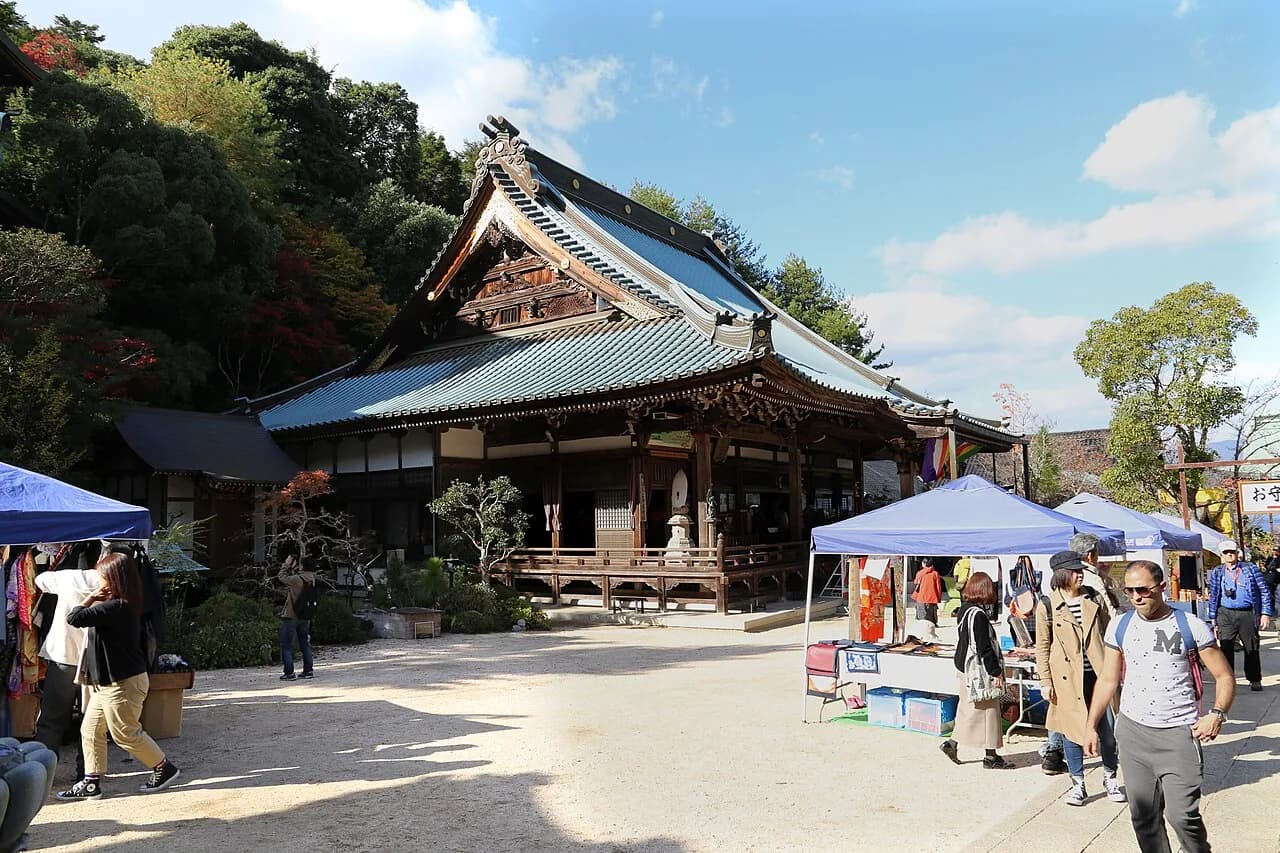
Daisho-in Temple, Miyajima's oldest temple and a key stop on the Daisho-in visitor trail, holds a "Red Maple Illumination" during peak foliage season each November evening. The grounds are planted with maple and Japanese maple trees. The illuminated colours after dark contrast sharply with daytime visits — the atmosphere is completely different and well worth returning for. The temple is open 08:00–17:00 and admission is free.
Senjokaku — the unfinished hall ordered by Toyotomi Hideyoshi in 1587 — is the island's most underrated autumn stop. A large ginkgo tree on the grounds turns deep golden yellow in late November into early December, peaking after most of Momijidani's maples have already fallen. Viewing the ginkgo through the open sides of the dimly lit hall makes the yellow appear almost luminous. The hall is open 08:30–16:30 and costs ¥100 to enter.
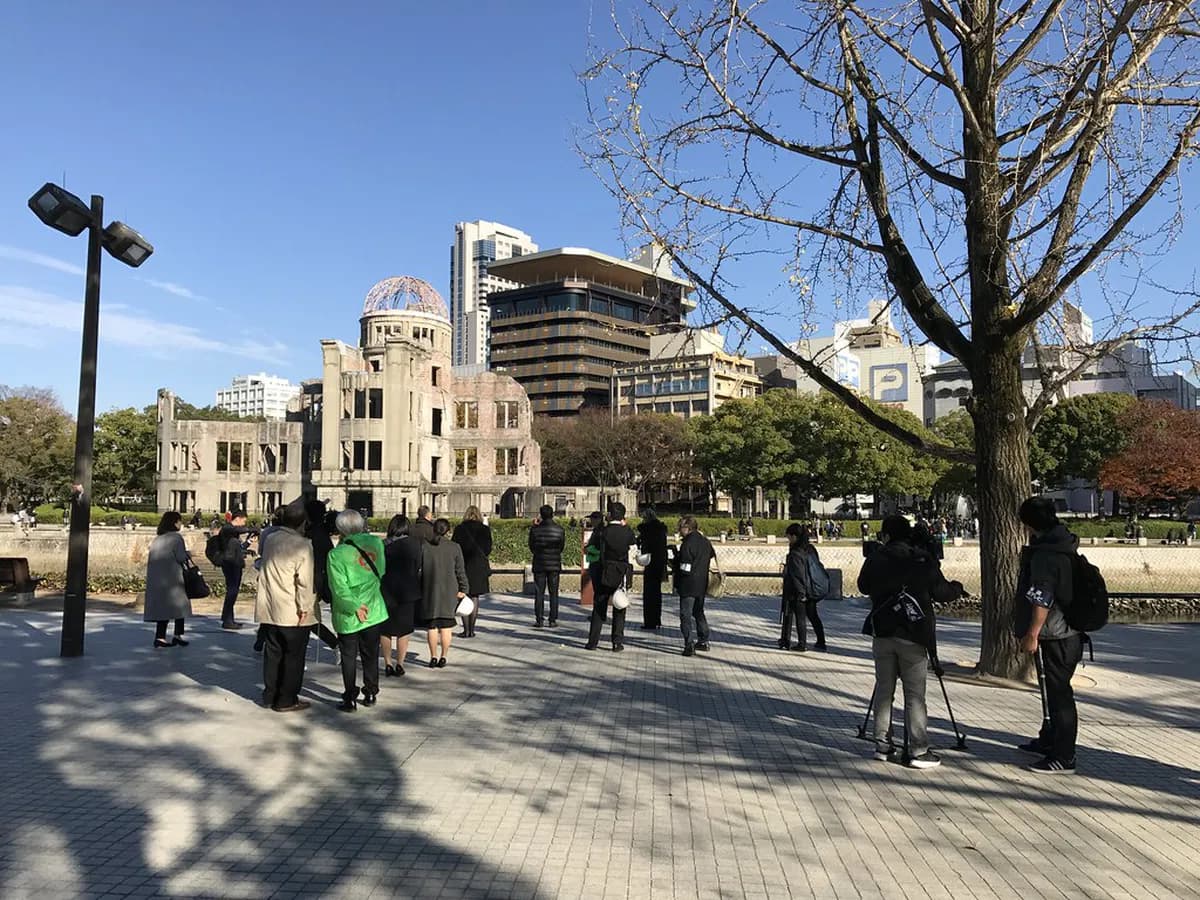
You can find many hiroshima attractions that pair well with Miyajima. The Peace Memorial Park in Hiroshima city is just a short boat ride away on the same JR ferry network. Many visitors combine both sites into a single full day, starting at the Peace Park in the morning and reaching Miyajima by early afternoon.
The Tree Species Stagger: Extending Your Colour Window
Weekend days during peak foliage week (mid-to-late November) can add 30–40 minutes to the ferry queue at Miyajimaguchi pier. Book your return ferry slot with buffer time — the last departures fill fast on Saturdays and Sundays in November. Overnight rates at island ryokan climb steeply during peak week; book at least two months ahead.
| Phase | Typical Dates | Best Spots |
|---|---|---|
| Iroha maples (scarlet) | ~15–20 November | Momijidani Park |
| Larger maple varieties (deep red) | ~20–25 November | Daisho-in Temple, lower Misen trails |
| Senjokaku ginkgo (golden) | ~25 Nov – 5 Dec | Senjokaku Hall (¥100 entry) |
Most guides treat Miyajima's autumn foliage as a single peak event in mid-November, but the island actually offers three distinct colour phases if you time your visit or your walking route strategically. Iroha maples in Momijidani Park peak first, around 15–20 November. Larger maple varieties in Daisho-in and on the lower Misen trails peak a few days later. The Senjokaku ginkgo peaks last, often running through the first week of December.
This stagger means late-arriving visitors — those who miss the November rush — can still catch spectacular colour at Senjokaku as late as 5 December in a warm year. It also means a single November visit can capture two colour phases in one morning: start at Momijidani for the scarlet maples, then walk to Senjokaku (about twelve minutes on foot) where the ginkgo may still be at full gold while the maples around it are already thinning.
No competitor guide treats the stagger as a planning tool. Knowing it lets you adjust your visit date by even a few days and see something most visitors miss entirely.
Museums, Art, and Culture in Miyajima
The Treasure Hall at Itsukushima Shrine houses ancient artifacts including samurai armor, lacquerware, and sacred fans. It provides deep context for the island's religious history and is worth thirty minutes before the main shrine visit. The building itself is traditional in style and positioned with good autumn views from the courtyard.
The History and Folklore Museum is located in an old merchant house a short walk from the shopping street. It shows how families lived on the island through the Edo period, with seasonal household items on display. The inner garden is quiet and undervisited in autumn. Admission is ¥300 for adults. It is one of the hidden spots away from the main crowds that rewards an early-morning stop.
Local woodcarving workshops along the shopping street offer short demonstrations of rice scoop (shamoji) carving. Miyajima has produced shamoji for centuries and the craft is considered a local art form. Watching a craftsman work is free. Some shops sell hand-carved pieces starting from around ¥1,500.
Family-Friendly and Budget-Friendly Options in Miyajima
Momijidani Park is free to enter and genuinely easy for all ages. The flat valley floor path near the bridge is pram- and wheelchair-accessible. Deer are calm around small children provided you do not offer food. The walk from the ferry terminal to the park takes about fifteen minutes on flat paved ground, making it manageable even for young kids or older visitors.
The Miyajima Ropeway (¥1,840 return for adults, ¥920 for children) is the family shortcut to Mount Misen's upper slopes and viewpoints over the Seto Inland Sea. Lines are shorter before 10:00 and after 14:00 in autumn. The cable car does close for periodic maintenance — confirm the schedule at the ferry terminal before committing to the hike.
Budget visitors can do the full Miyajima autumn experience for under ¥3,000 per person. The ferry from Miyajimaguchi costs ¥200 each way (or is covered by the JR Pass). Momijidani Park, Shinomiya Shrine, Itsukushima Shrine outer grounds, and Senjokaku combined cost ¥500 or less in entrance fees. Street food on the shopping street — grilled oysters and fresh momiji manju — provides a satisfying meal for ¥800–¥1,200.
Families with older children who want a half-day structure can follow this sequence: ferry at 09:00, Momijidani Park at 09:30, Itsukushima Shrine at 11:00, lunch on the shopping street, Senjokaku at 13:30, ropeway and Misen upper viewpoint at 14:30, and return ferry by 17:00. This covers the main sites without rushing.
How to Plan a Smooth Miyajima Autumn Day
The ferry runs between Miyajimaguchi Station (JR Sanyo Line) and Miyajima pier roughly every fifteen minutes during peak season. The journey takes ten minutes. JR Pass holders ride the JR West ferry for free; the Matsudai ferry costs ¥200 each way and is not covered by the Pass. Arrive at Miyajimaguchi by 08:30 on weekends to board without a long wait.
Walking order matters for light and crowd avoidance. Head directly to Momijidani Park first — the maples face east and catch morning light best before 10:00. Move to Itsukushima Shrine mid-morning before the day-tour buses arrive around 10:30. Save Senjokaku and Daisho-in for the afternoon when the main shrine area is most crowded. The night light-up at Daisho-in runs from sunset until approximately 21:00 in November — it is worth staying for if you book dinner on the island.
I recommend staying at a ryokan in Miyajima for the best experience. Booking a room at the Miyajima Grand Hotel Arimoto puts you on the island after the last day-trippers leave. The evening atmosphere is peaceful and genuinely traditional in a way a day visit cannot replicate. Overnight rates climb during peak foliage week — book at least two months in advance.
One common first-timer mistake: trying to rush the ropeway and all the shrines in a single day-trip. If you are short on time, prioritise Momijidani Park and Itsukushima Shrine and skip the Misen ropeway. The foliage at the valley floor is the visual highlight; the mountain summit, while beautiful, adds two hours you may not have.
Where to Eat: Miyajima and Hiroshima Autumn Food
Grilled oysters are the defining local dish. The Seto Inland Sea produces plump, briny oysters that peak in autumn when the water cools. You can find them at stalls along the Omotesando shopping street from around ¥300 per shell. The smell of roasting oysters drifts through the entire street in November — follow your nose rather than any particular map pin.
Try the local momiji manju cakes warm from the shop. These maple-leaf-shaped cakes come with red bean, custard, or chocolate fillings. The traditional red bean version is the right choice in cold weather. Several shops near the ferry terminal bake them fresh throughout the day.
Anago (conger eel) over rice is the other must-try dish on the island. It is richer than unagi and perfectly suited to cold autumn afternoons after a long walk. Several restaurants on and near the shopping street serve it as a set lunch for ¥1,500–¥2,500. Back in Hiroshima city, Shukkei-en Garden area has cafes that serve Hiroshima-style okonomiyaki with a view of the foliage-covered pond — a practical combination of food and scenery.
Frequently Asked Questions
When is the peak foliage period?
The peak usually occurs in mid-to-late November. You should plan your visit for the third week. This timing offers the most vibrant colors.
Is Momijidani Park free to enter?
Yes, the park is open to the public for free. You can enjoy the trails and bridges without a ticket. It is open twenty-four hours a day.
How do I get to the park?
The park is a ten-minute walk from Itsukushima Shrine. Simply follow the signs toward the Ropeway station. The path is clearly marked for visitors.
Miyajima in autumn is an experience you will never forget. The combination of red maples, ancient shrines, and the golden Senjokaku ginkgo gives the island a colour window longer than most visitors realise. I hope this guide helps you plan a wonderful trip. Enjoy the colours and the delicious local food.
Free: The Hiroshima Essentials guide
Top things to do, where to stay, a perfect day plan, getting around, and the best time to go — a Hiroshima mini-guide you can take offline.
You might also like
Continue reading
More guides you'll find useful