Miyajima Night Light Up And Illumination Guide
Plan miyajima night light up and illumination guide with top picks, neighborhood context, timing tips, and practical booking advice for a smoother trip.
On this page
When the sun sets over the Seto Inland Sea, Miyajima transforms into something most day-trippers never see. Hundreds of warm floodlights bathe the Great Torii Gate and Itsukushima Shrine in a deep orange glow that reflects off the dark water. The crowds thin to almost nothing, the deer settle quietly under the trees, and the island reverts to its original identity as a sacred shrine and sanctuary.
This guide covers the essential night illumination spots on Miyajima itself, the specialist night cruise that takes you directly under the Torii, and the best evening light-up destinations across the wider Hiroshima prefecture — from a digital art road in the city to artistically illuminated temples in Onomichi and a historic port town in Fukuyama. Whether you have one evening or a full overnight stay, there is a well-lit route here for 2026.
Itsukushima Shrine After Dark
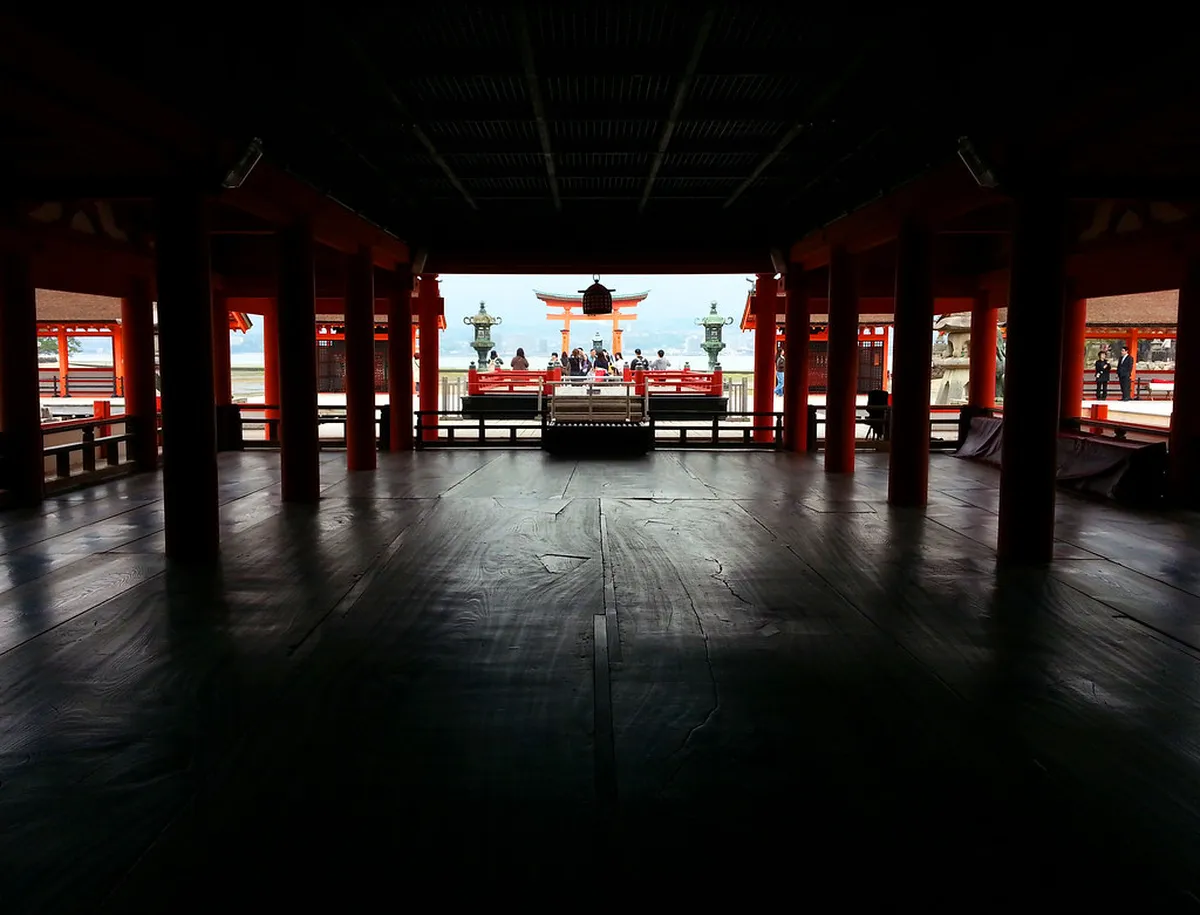
Itsukushima Shrine is lit every single night from sunset until approximately 23:00, without exception. The floodlights are positioned to highlight the vermilion corridors as they extend out over the sea, and at high tide the entire structure — including its reflections — appears to float. This is a fundamentally different experience from daytime visiting, where crowds and bright sunlight flatten the drama of the architecture.
The five-story pagoda and the Tahoto pagoda are also lit, so the full ceremonial landscape is illuminated rather than just the shrine itself. Walking the coastal path from the ferry terminal toward the shrine takes roughly 15 minutes on foot and passes traditional stone lanterns the entire way. If your timing lines up with high tide, the mirror effect on the water surface is strong enough to photograph without specialist equipment.
Most visitors who come just for the evening leave on the 20:40 or later ferry from Miyajima Pier. The last ferry back to Miyajimaguchi departs around 22:00, but check the current JR schedule before you go as times shift seasonally. Staying overnight at one of the best Miyajima ryokans removes all ferry pressure and lets you walk the shrine corridor after 21:00 when it is essentially empty.
The illumination at Itsukushima Shrine runs every night from sunset until approximately 23:00. If your timing aligns with high tide between 19:00 and 21:00, the reflected glow on the water is at its strongest — a combination that usually only comes together a few nights per month.
The Miyajima Night Cruise: Under the Torii by Boat
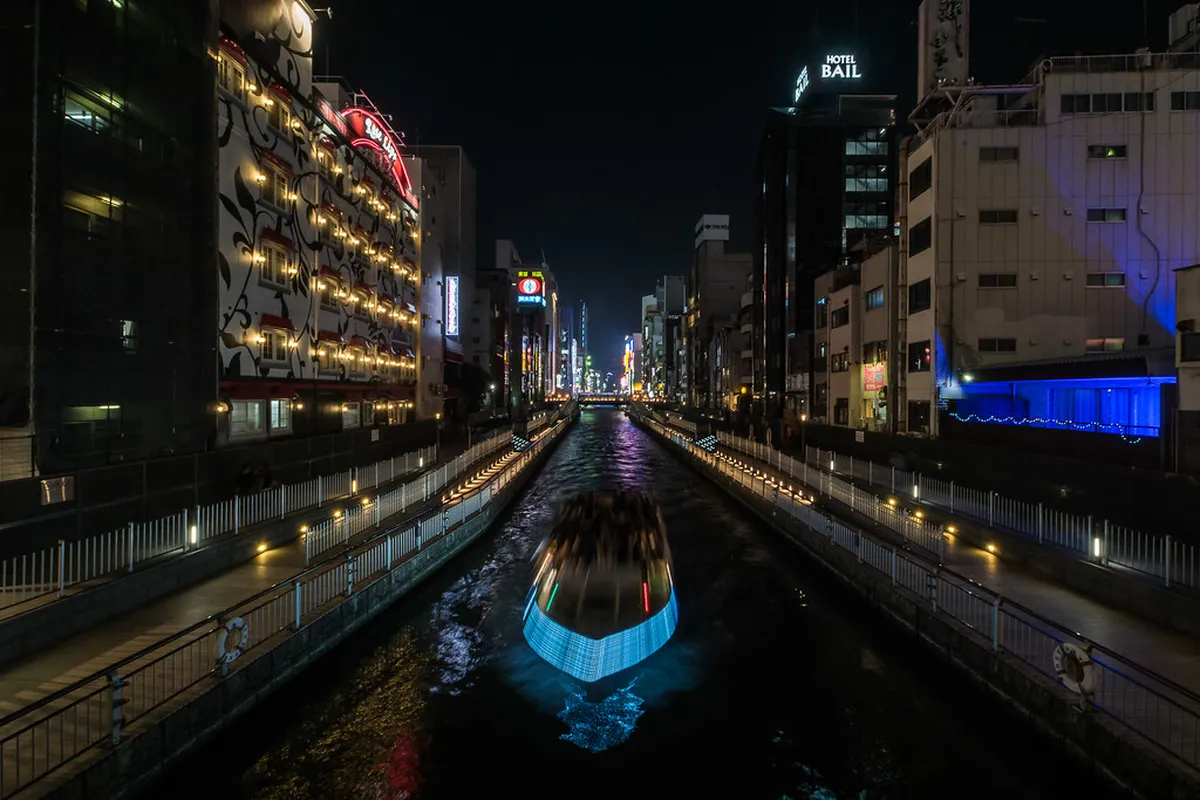
The most immersive way to see the Torii is from the water. A specialist night cruise departs from Pier 3 — a separate dock at the same port that is easy to miss. Coming off the JR or Matsudai ferry, both of which empty into the same terminal building, turn immediately left as you exit. Look for a small green sign pointing to Pier 3. Walk down the wooden platform, past the parking lot, and turn toward the water to find the ticket office and waiting room.
There are six cruises per evening. The fourth departure, at 19:55, is generally the best compromise between full darkness and available return ferries. The cruise before it — at 19:15 — can still be too bright for the spotlight to penetrate and show the gate clearly. The boat, a long low craft called the Mikasamaru 3, approaches the Torii from across the bay, mimicking the traditional supplicant's approach to the island shrine. Before sailing, a guide gives a briefing in Japanese with an English subtitle video available in the cabin; the boat itself is mostly smiles and gestures from that point.
The boat gets close enough to the torii gate that fitting the whole structure in a camera frame becomes difficult — it is that physically large up close. A guide commentary note worth knowing in advance: the mountain ridgeline of Miyajima, viewed from the sea, traces the silhouette of a sleeping female deity. Once you know what to look for, it is immediately obvious. The cruise finishes around 20:25 on the fourth departure, leaving time for the 20:40 ferry back to the mainland. Book at the Pier 3 ticket office on the day; advance phone reservations are possible but usually unnecessary. Current schedules and prices are on the Aqua-Net Hiroshima website.
Parks and Outdoor Spots on the Island
Momijidani Park is a highlight in autumn when the maple trees are floodlit to show off their red and orange leaves. The Miyajima autumn foliage guide has exact timing by year, but peak illumination usually falls in mid to late November. Outside of autumn the park is unlit at night, but the seaside promenade between the ferry terminal and the shrine remains well-signed and pleasant in any season.
Mount Misen provides a dark ridgeline backdrop that makes the coastal lights appear brighter by contrast. The ropeway stops running well before dark, so the upper trails are not a night option. The lower slopes and the deer grazing areas near the shrine are calm and accessible, and most Miyajima deer are at their most photogenic in the low-light hours when they rest near the stone lanterns.
One practical point most visitors overlook: Miyajima has no convenience stores, and this is not an oversight — it reflects centuries of religious tradition that forbids certain commercial and civic activities on the island. Shops along Omotesando shopping street close by around 17:00 to 18:00. Buy your snacks and any supplies before boarding the ferry, or plan dinner at a ryokan or restaurant that takes evening walk-ins.
All Omotesando shops and most restaurants close by 17:00–18:00. There are no convenience stores on Miyajima. Stock up on food and supplies before boarding the ferry if you plan to stay for the evening illumination without a ryokan dinner reservation.
Hiroshima City: Mariho Digital Art Road
Marina Hop in western Hiroshima city contains a 160-metre waterfront promenade that is fully mapped with projection lighting from sunset onward. The show runs for roughly 10 minutes and cycles every 20 to 30 minutes throughout the evening, changing design themes by season. It is one of the largest permanent projection-mapping installations in Japan and requires no ticket to walk through.
Access from JR Hiroshima Station takes about 40 minutes on Hiroden Bus Line 3; alight at Kannon Marina Hop and the promenade is a short walk from the stop. The surrounding Marina Hop complex includes an aquarium and waterfront restaurants, making it easy to combine with dinner. It is a strong evening option for anyone staying in the city rather than on the island, and pairs well with a visit to the Hiroshima attractions in the area.
Hiroshima City: Ryuo Park Night Views
Ryuo Park sits on a small hill on the western side of Hiroshima city and offers a clear panoramic view of the city lights, the harbor, and the distant silhouettes of the Seto Inland Sea islands. It is a favorite spot for local photographers, particularly on weekday evenings when the building lights are fully illuminated and the streets below are quieter.
The park has tennis courts and a baseball field but the draw at night is purely the viewpoint at the hilltop. Getting there requires a taxi — roughly 15 minutes from JR Hiroshima Station — as public transport options are limited after dark. There is no entrance fee and the park is open 24 hours. Taxis are available for the return from the hilltop; the local taxi density is high enough that calling one on-site is straightforward.
Onomichi: Artistically Illuminated Temples
Onomichi, a port town roughly one hour east of Hiroshima by shinkansen, is known as a temple town built across steep hillsides. At night, temples including Saikokuji and Jikoji are lit using LED lighting designed by internationally recognised lighting designer Motoko Ishii. The effect is precise and artistic rather than simply bright — each temple's architectural details are emphasised rather than washed out.
The lighting runs from sunset until around 22:00. Saikokuji is about 25 minutes on foot from JR Onomichi Station; Jikoji is closer at roughly 5 minutes from the station. Walking the full temple path takes around an hour and involves stairs, so wear shoes with grip. The view of the Onomichi Channel from the hillside temples at night, with the lit bridges in the background, is among the most undervisited night views in the Hiroshima region.
Fukuyama: Night Stroll Through Tomonoura
Tomonoura is a small historic port town in Fukuyama, about 70 minutes from Hiroshima by shinkansen. It prospered for centuries as a tidal waiting port — ships anchored here while waiting for favorable winds and currents in the Seto Inland Sea. The town's stone walls, traditional storehouses, and wooden fishing boats give it a preserved character that is rare in the region.
At sunset, the town's symbolic nightlight begins to glow, and combined with the red of the Seto Inland Sea at dusk the atmosphere shifts into something genuinely cinematic. The port is walkable in about 30 minutes without rushing. Access from Fukuyama Station is roughly 30 minutes by Tomotetsu Bus from JR Fukuyama Ekimae; alight at Tomoko bus stop. Note that the last return bus from Tomoko to Fukuyama Station on weekdays ends at 21:18, so plan your walk accordingly or budget for a taxi back.
Tomonoura works best as a dedicated half-day side trip rather than an add-on to a Miyajima evening, given the travel time involved. It suits visitors who have already seen the main Miyajima lights and want a less touristy coastal alternative for a second night.
How to Plan Your Miyajima Night Visit
The most important logistical decision is whether to stay overnight on the island or return the same evening. The last ferry from Miyajima back to Miyajimaguchi runs around 22:00, but this changes seasonally. If you plan to take the night cruise (4th departure at 19:55, finishing around 20:25) and still catch a ferry, the 20:40 service is your target. Miss that and the next reliable option is around 21:00. The 22:00 ferry gives the darkest possible conditions for photography but cuts the night short if you want to walk the shrine grounds afterward.
For tide timing, high tide produces the iconic floating reflection of the shrine and the Torii. Low tide exposes the sand flats, which give access to walk near the base of the gate but eliminate the reflections entirely. Tide tables for Miyajima are available from the Japan Meteorological Agency website; building your evening around a high tide that falls between 19:00 and 21:00 is the ideal combination. The official Japan tourism site provides additional planning resources for the region.
Wear comfortable shoes and bring a light jacket — the sea breeze after dark can be noticeably cooler than daytime temperatures even in summer. A small tripod or gorilla-pod significantly improves shrine and gate photographs. Most shop and restaurant closures happen by 18:00, so coordinate dinner before the lights come on or book a ryokan dinner in advance. Our Miyajima accommodation guide covers ryokan options that include evening meals.
Frequently Asked Questions
Which miyajima night light up and illumination guide options fit first-time visitors?
First-time visitors should prioritize the Great Torii Gate light-up and a 30-minute night cruise. These offer the most iconic views with minimal logistical effort. Walking the coastal path toward Itsukushima Shrine is also a must for its peaceful atmosphere. Check Joyinhiroshima.com for cruise details.
How much time should you plan for miyajima night light up and illumination guide?
Plan for at least two to three hours to enjoy the lights fully. This allows time for a slow walk along the shore, a short boat cruise, and some photography. If you are staying overnight, you can extend this to a full evening of exploration. Most lights stay on until 11:00 PM.
What should travelers avoid when planning miyajima night light up and illumination guide?
Avoid missing the last ferry if you are not staying overnight on the island. Many travelers also forget that most shops and restaurants close early, so eat dinner before 6:00 PM. Do not expect to enter the shrine buildings after sunset, as only the exterior is illuminated for viewing.
Is miyajima night light up and illumination guide worth including on a short itinerary?
Yes, it is highly worth it even for a one-day trip. Seeing the Torii gate lit up is a highlight of any visit to Hiroshima. If your schedule is tight, take a late afternoon ferry and stay for just an hour of illumination before returning. The visual impact is significant even in a short time.
Miyajima after dark is a different island from the one most visitors see. The absence of day-trip crowds, the glow of the Torii across the water, and the quiet of the shrine corridors at night combine to make it one of the most memorable evenings you can spend in Japan. Layer in a night cruise from Pier 3, a swing through Hiroshima's digital art promenade, or a weekend trip to Tomonoura, and the region's nighttime offering becomes genuinely substantial.
The key is logistics: know your ferry times, eat early, and time your visit to a high tide if photography is a priority. Use this guide to plan a 2026 evening that extends well beyond the postcard shot.
Free: The Hiroshima Essentials guide
Top things to do, where to stay, a perfect day plan, getting around, and the best time to go — a Hiroshima mini-guide you can take offline.
You might also like


Continue reading
More guides you'll find useful