
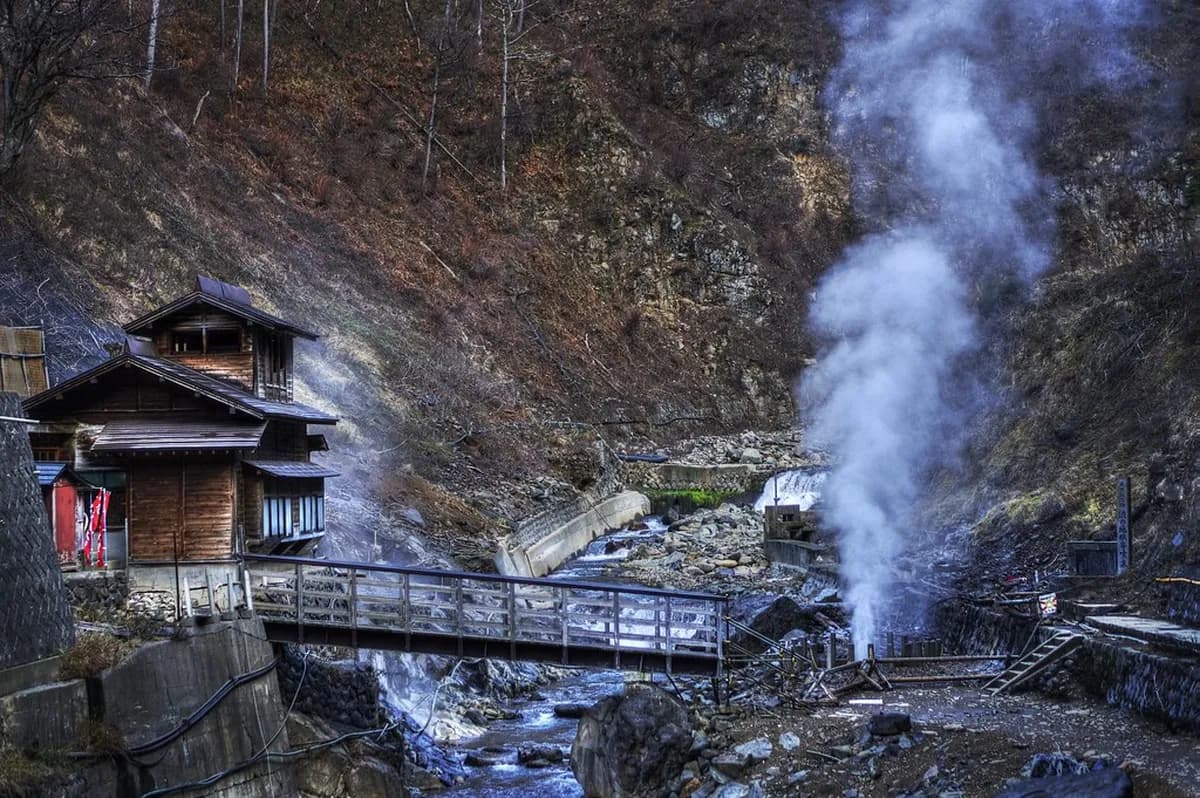
10 Best Onsen Near Tokyo for a Relaxing Escape (2026)
Discover the best onsen near Tokyo with our top 10 picks, travel times, costs, and practical tips for a perfect hot spring escape. Plan your trip now!
On this page
Japan's hot spring towns ring Tokyo on almost every compass point — volcanic highlands to the north in Gunma, a coastline of resorts to the southwest along the Izu Peninsula, and river valleys to the northwest in Tochigi. All are reachable by train or highway bus, most within two to three hours of central Tokyo. Use the complete Tokyo attractions guide for your city days, then compare these ten onsen options by travel time, water, scenery, cost, and access.
Popular Hot Springs in the Suburbs of Tokyo
The most-visited onsen destinations from Tokyo cluster into four geographic corridors. Kanagawa and the Izu Peninsula to the southwest cover Hakone, Atami, Yugawara, and Minamiizu. Gunma to the north is Japan's densest onsen prefecture, home to Kusatsu, Ikaho, Manza, and Shima. Tochigi to the northeast has Nikko-area Kinugawa and the volcanic Nasu highlands. Chiba's Boso Peninsula rounds out the map with a Pacific-facing option in Kamogawa. Within each corridor, journey times from Tokyo Station or Shinjuku range from 35 minutes (Atami by shinkansen) to around three and a half hours (Shima, Kusatsu by express bus).
For a single-day trip, the Kanagawa corridor is the easiest pick — Hakone Yumoto in 85 minutes, Atami in 35 minutes, Yugawara in 90 minutes. If you want an overnight stay with a traditional ryokan experience, Gunma's four towns reward the extra travel time with some of Japan's oldest and most atmospheric bath culture. Consider your priorities — speed of access, water type, scenery, or season — before choosing.
10 Best Onsen Near Tokyo for 2026
The ten destinations below span different water chemistries, landscapes, and budgets. Each entry includes the fastest realistic transit route from central Tokyo and an approximate cost range for public bath entry in 2026.
1. Hakone Yumoto
Hakone Yumoto sits at the entrance to the Hakone caldera region, with the Sukumo River running through a narrow valley lined with ryokan. It is the most straightforward onsen day trip from Tokyo: 85 minutes from Shinjuku on the Odakyu Romance Car, no transfers. Public bath entry runs ¥1,000–¥2,000 and most baths open by 10:00 and close around 19:00–21:00. Day-use plans at ryokan (including a private bath and meal) typically cost ¥5,000–¥12,000 per person. Visit midweek if possible — weekend queues at popular spots like Hakone Yuryo can stretch to 30 minutes.
2. Atami
Atami is Japan's most accessible coastal onsen: 35 minutes from Tokyo Station by JR shinkansen, making it a realistic half-day trip. The town has abundant natural spring water and a lively resort atmosphere, with fireworks displays running July through August. Public baths cost ¥500–¥1,500 and most open by 11:00. Ryokan like Atami Onsen Furuya Ryokan offer room-with-meals packages that represent good value given the short journey time.
3. Yugawara
Yugawara is frequently overlooked in favour of Hakone, which works in its favour — the town retains a quieter, more local atmosphere. It sits just inside Kanagawa Prefecture and takes about 90 minutes from Tokyo Station by JR Tokaido Line. Waters are mildly alkaline, easy on the skin, and well suited to longer soaks. Public bath entry runs ¥500–¥1,200. Worth pairing with a walk to Fudo Falls, a 20-minute stroll from the town centre.
4. Kusatsu
Kusatsu is arguably Japan's most famous onsen town and the centrepiece of Gunma's hot spring offer. Travel time is 2 hours 40 minutes from Ueno Station by limited express train to Naganohara-Kusatsuguchi Station then bus, or about 4 hours on the direct highway bus from Shinjuku. The town centres on Yubatake, a hot water field that feeds most of the area's baths and creates a cinematic scene of rising steam, especially in winter. Public baths are often free or charge ¥200–¥600. The distinctive yumomi water-cooling ceremony — where large wooden paddles stir the 60°C-plus spring water down to a safe bathing temperature — is demonstrated daily at Netsunoyu.
5. Ikaho
Ikaho Onsen climbs the slopes of Mount Haruna via a long stone staircase flanked by shops, cafes, and traditional inns. The town has two springs: Kogane no Yu (golden water with high iron content, giving it a reddish colour) and the more recently discovered Shirogane no Yu (clear silver water). The Ikaho Open-Air Bath draws water directly from the Kogane source. Beyond the baths, Mizusawa Kannon Temple nearby is a significant 7th-century Buddhist site, and the surrounding udon shops are a local institution. Journey time from Tokyo is about 2.5 hours: direct expressway bus from Shinjuku, or shinkansen to Takasaki then local train to Shibukawa and bus to Ikaho.
6. Manza
Manza sits at 1,800 metres elevation near Mt. Kusatsu-Shirane, making it one of the highest-altitude onsen in Japan. The water is among the most sulphurous and acidic in the country, giving it a milky white colour and a faint egg smell that signals genuine geothermal activity. Access from Tokyo takes about 3 hours 15 minutes by a combination of shinkansen to Takasaki, local train, and bus. In winter, the outdoor baths with snowfall views are a standout, and Manza Onsen Ski Resort's beginner and intermediate trails are within the same resort zone.
7. Shima
Shima is the most secluded of Gunma's four major onsen towns, reached in 3.5 hours on a direct expressway bus from Shinjuku. The Shima River runs through the village, and the ryokan Sekizenkan — a traditional wooden inn said to have inspired Studio Ghibli's Spirited Away — still operates much as it did a century ago. The Shima Seiryu no Yu outdoor bath sits directly beside the river. Beyond bathing, the area's cobalt-blue Lake Shima and the geological curiosity of the Shima Potholes (smoothly carved depressions in the riverbed) are worth an afternoon. More details at the official Shima Onsen site.
8. Kinugawa
Kinugawa Onsen runs along the Kinugawa River valley in Tochigi Prefecture and serves as a convenient base for visiting Nikko's UNESCO World Heritage shrines and temples. Journey time from Asakusa Station is about 2 hours 15 minutes on the Tobu Limited Express; a direct highway bus from Shinjuku takes the same time. The Sanraku hotel is a 10-minute walk from Kinugawa Onsen Station. Public baths cost ¥800–¥1,500.
9. Nasu
Nasu Onsen sits in the volcanic highlands of Tochigi and suits travellers who want to combine a soak with outdoor activity. JR express trains (Nasuno or Yamabiko) cover the 75 minutes to Nasu Shiobara Station, from where buses run to the resort area. The springs vary widely in mineral composition across the plateau, from sulphur-rich Nasu Yumoto to gentler springs at Shiobara nearby. The Nasu Kogen plateau is popular for hiking in autumn, when the beech forests turn. Public baths run ¥500–¥1,000.
10. Kamogawa
Kamogawa on the Boso Peninsula offers a Pacific-facing alternative to the more crowded Kanagawa resorts. Access from Tokyo Station is about 90 minutes by JR Boso Express Wakashio, or 2.5 hours by highway bus via the Aqua Line undersea tunnel. The Kamogawakan ryokan sits in a pine forest 5 minutes by taxi from Kamogawa Station. Kamogawa's combination of fresh seafood, sea views, and uncrowded baths makes it a good choice for travellers wanting to avoid the Hakone peak-season rush.
How to Enjoy Gunma's Onsen
Gunma is often called Japan's Onsen Kingdom, and with good reason — the prefecture packs Kusatsu, Ikaho, Manza, Shima, and Minakami into a relatively compact mountainous area north of Tokyo. Kusatsu and Ikaho are the two heavyweights: Kusatsu for its strong therapeutic waters and the Yubatake spectacle, Ikaho for its stone-step townscape and dual-spring character. Manza adds altitude and acidity. Shima adds seclusion and river scenery. Together they offer a range of experiences that no single onsen town can match.
A practical approach is to base yourself in Kusatsu for one or two nights and do a day excursion to either Ikaho or Shima. The Gunma prefectural gateway, Takasaki, is 50 minutes from Tokyo by shinkansen, and local trains and buses fan out from there. Between spring and autumn, renting a car near Takasaki Station gives you the flexibility to visit multiple towns in a single day without coordinating bus schedules. In winter, the Kusatsu Onsen Ski Resort and Manza Onsen Ski Resort make the combination of slopes-and-soak a natural itinerary for a two-night trip.
Onsen-hopping within Kusatsu itself is a legitimate half-day activity. The public baths — Sainokawara Open-Air Bath, Gozanoyu, and Otakinoyu — each draw water from the same Yubatake source but have different architectural characters. Admission to most is under ¥600. Add a visit to Netsunoyu for the yumomi ceremony and a browse of the Yoshigadaira Wetlands walking trail, and you have a full day without leaving town.
Why Choose a Private Onsen Near Tokyo?
Private onsen, called kashikiri onsen, let you book a bath exclusively for your group, usually for a 45–60 minute slot. Many ryokan offer them as room attachments or separate rentable facilities. They are worth seeking out for couples, families with small children, or anyone who finds communal bathing uncomfortable. Cost typically adds ¥1,000–¥3,000 per person on top of the room rate, or ¥2,000–¥5,000 for a standalone booking.
Beyond privacy, kashikiri baths matter for tattoo-bearing travellers. Many public onsen near Tokyo still maintain blanket tattoo bans — Hakone's busiest public facilities included. Private baths sidestep the rule entirely, since the space is reserved for your party only. If a private bath is important to you, filter your ryokan search specifically for facilities that advertise kashikiri onsen and confirm the policy when booking. Towns like Kusatsu and Ikaho have a wide enough range of accommodation that finding a property with a kashikiri option is straightforward even in peak season.
Tattoo-Friendly Onsen Near Tokyo
The tattoo question is the most common practical concern for foreign visitors, and the answer varies sharply by facility type. Large public bath complexes, particularly in Hakone and the Izu resort towns, tend to enforce blanket bans. Smaller public baths in towns like Yugawara and Kamogawa are less rigidly managed and sometimes permit tattoos if they are covered with waterproof patches, though this depends entirely on the individual facility and staff on duty.
The most reliable workaround is booking accommodation with a private or in-room bath. Kasugaen in Atami, several Kusatsu ryokan, and a number of Yugawara properties explicitly advertise tattoo-friendly private baths in their booking listings — search for タトゥーOK or "tattoo OK" on Japanese booking platforms. A handful of facilities in Kinugawa and Nasu have moved to cover-up policies rather than outright bans, accepting guests who keep tattoos under a waterproof dressing in shared baths. Always confirm in advance: policies change, and a misunderstanding at the front desk is a frustrating way to start a relaxation trip. For day trips, check out our broader guide to Day Trips From Tokyo Travel Guide for itinerary options that combine onsen with other activities.
Planning Your Onsen Trip from Tokyo
Transport booking matters most for limited express trains and highway buses in peak season (Golden Week in late April–early May, Obon in mid-August, and autumn foliage season in November). JR reserved seats on the Nasuno or Romance Car fill fast on Friday evenings. Highway buses to Kusatsu and Shima tend to sell out two to three weeks ahead for Saturday departures. Book through JR's online systems, Odakyu's website, or the highway bus portal well in advance.
Pack light: a small towel, a change of clothes, and any personal toiletries. Most onsen facilities provide soap, shampoo, and a basic towel, though your own items add comfort. The core etiquette rules: rinse thoroughly at the shower stations before entering the bath, no swimsuits in traditional onsen, no phones or cameras in the bathing areas, and tie up long hair. Drink water before and after soaking — the mineral-dense waters, especially the highly acidic ones at Kusatsu and Manza, are dehydrating. Consider combining an onsen visit with local food: Ikaho's udon restaurants by Mizusawa Kannon Temple and Kusatsu's hot spring manju (sweet buns) are both genuinely worth stopping for. For winter planning specifically, see our guide to Winter Day Trips From Tokyo Travel Guide.
Frequently Asked Questions
What is the best onsen near Tokyo for a day trip?
Hakone Yumoto is often considered the best onsen near Tokyo for a day trip due to its easy accessibility and wide range of ryokan and public baths. The scenic train ride and numerous nearby attractions make it a popular and convenient choice. You can reach it in under 90 minutes from Shinjuku.
Are there real onsens in Tokyo itself?
While central Tokyo has some 'sento' (public baths) and 'super sento' that use heated tap water or trucked-in spring water, true natural onsen are rare within the city limits. For an authentic onsen experience with natural hot spring water, you'll need to venture to the surrounding prefectures. Consider a day trip by train for the best options.
What are the top 3 onsen towns in Japan?
The top 3 onsen towns in Japan are widely regarded as Kusatsu Onsen (Gunma), Gero Onsen (Gifu), and Arima Onsen (Hyogo). Kusatsu is renowned for its highly acidic waters and iconic Yubatake, offering a truly unique and traditional experience. These destinations attract visitors from all over the world.
Does onsen help with eczema?
Some onsen waters, particularly those rich in sulfur or alkaline minerals, are traditionally believed to help alleviate skin conditions like eczema. However, individual results vary, and it's always best to consult a doctor before using onsen for therapeutic purposes. Always rinse off thoroughly after bathing to prevent irritation.
The onsen options within three hours of Tokyo range from the 35-minute shinkansen sprint to Atami to the slow-travel reward of a Shima Onsen expressway bus through the Gunma mountains. The brief and practical details above should help narrow the choice: whether the priority is speed, water type, season, tattoo policies, or combining a soak with skiing or UNESCO heritage sites. Once you have a destination in mind, the main action item is booking transport and accommodation early — popular routes fill weeks ahead in peak season. For more ideas on getting out of the city, see our guide to Cherry Blossom Day Trips From Tokyo Travel Guide.
Free: The Tokyo Essentials guide
Top things to do, where to stay, a perfect day plan, getting around, and the best time to go — a Tokyo mini-guide you can take offline.
You might also like

Continue reading
More guides you'll find useful


